2015 AUDI Q3 parking brake
[x] Cancel search: parking brakePage 85 of 258

M N
M N
0 ::i co ,...., \!) 1.1'1 ,...., 1.1'1 ,....,
selector lever position such as D/S and re
lease the button.
~ Wait briefly until the transmission has shift
ed (you will feel a slight movement).
~ Remove your foot from the brake pedal and
accelerate.
St opp ing tem porar ily
~ Keep the vehicle stationary using the brak
ing peda l, for examp le at traffic lights.
~ Do not press the accelerator pedal when do
ing this.
~ To prevent the veh icle from roll ing when you
start driving, set the parking brake when
stopp ing on steep inclines
c::, ,& .
~ The parking brake will re lease automatically
and the vehicle will s tart moving once you
press the accelerator peda l.
Stopping/p ar king
If the selecto r lever is not in the P position
when you ope n the dr iver's door, the vehicle
could ro ll. The message
Shift to P and turn
off i gniti on, o therwi se vehicle ca n roll aw ay
appears.
~ Press and ho ld the brake pedal unt il the ve-
hicle has come to a complete stop.
~ Apply the parking brake c::, page 71, Parking.
~ Se lect the P selector leve r position c::, ,& .
Stopping on an incline
~ Always press the brake peda l to hold the ve
hicle i n place and prevent it from " rolling
back "
c::> &_. Do not try to prevent the vehi
cl e from "roll ing back" when a gea r is en
gaged by increasing the engine speed
c::> (D .
Starting on an incline
~ Activate the parking b rake .
~ With the d riving gea r se lected, press the ac
c e lerator pedal ca refully. The parking brake
will release automat ica lly if yo ur seat belt is
f astened.
Unde r ce rtain circumstances, such as dr iv ing
in the moun tains, it may be useful to swi tch
tempo rari ly to the manua l shift prog ram in o r-
Automa tic tran sm iss ion 83
der to ad just the gears to the driving condi
tions by hand
c::, page 84.
On s lopes, activate the parki ng b rake first and
then move the selec to r l ever to the P posi tion.
T his prevents too much stress from being
placed on the locking mechanism .
A WARNING
-The vehicle can also roll when the engine
is stopped.
- Unintended vehicle movement can cause
serio us injury.
- Never leave your vehicle with the engine
ru nning while in gear. If you must leave
your veh icle when the engine is running,
activate the parking brake and move the
selector lever to P.
- Power is still transm itted to the wheels
when the engine is runn ing at idle. To
prevent the vehicle from "creeping", you
must keep your foot on the brake when
the eng ine is ru nning and the se lector
leve r is in D/S o r R or "t ipt ron ic" mode is
selec ted .
-Do not press the accelerator pedal when
changing the se lector lever posi tion
while the veh icle is stationary and the
engine is running .
- Never sh ift into R or P wh ile driving.
- Before driving down a steep slope, re-
duce your speed and shift into a lowe r
gear wi th "tiptronic".
- Do not ride the bra kes o r press the bra ke
pe dal too often or too long when d riving
down a hi ll. Constant braking causes the
brakes to overheat and substantially re
duces braking performance, increases
brak ing distance or causes complete fa il
ure of the brake system .
- To prevent the vehicle from ro lling back
when stopp ing o n inclines, always ho ld it
in place with the brake pedal or parking
brake .
- Never hold the vehicle on an incline with
a slipping clutch. The clutch opens auto matically when it becomes too hot from
Page 86 of 258

84 Automatic tr an smis sion
the overload. An indicator lamp mJ illu
minates and a dr iver message appears
Q page 85 when the clutch is overload
ed .
- If the engine must remain running, never
have any driving pos ition engaged whe n
checking under the hood . Make sure the
selector lever has securely engaged and is locked in P with the parking brake set
c!:> page 179. Othe rwise, any inc rease in
eng ine speed m ay set the vehicle in mo
t io n, even wi th the park ing brake ap
plied.
(D Note
- When stopping on an i ncl ine, do not try
to hol d the veh icle in place by pressing
the accelerator peda l whi le a driving gear
is selected. This can cause the transmis
s ion to overheat and can damage it. Acti
vate the park ing brake or press the brake
pedal to prevent the vehicle from ro lling .
- Allow ing t he vehicle to roll when the en
gine is stopped and the selector lever is i n N will damage the transmiss ion be
cause it is not lub ricated under those cir
cumstances.
{DI Tips
For safety reasons, the park ing brake is re
leased automatically only when the dr iv
er 's safety belt is engaged in the buck le.
Hill descent control
The hill descent control system assists the
driver when driving down declines.
Hill descent control is activated when these
lector lever is in D/S and you press the brake
pedal. The transmission automatically se lects
a gea r that is suitable for the incline . Hill de
scent control tries to maintai n the speed ach
i eved at the time of bra king, within physical
an d techn ic al limita tio ns.
If may still be ne c
ess ary to adjust the speed with the bra kes . Hill descent contro
l sw itches off once the de
cline leve ls out or yo u press the acce lerator
peda l.
On vehicles wi th the cru ise contro l system
Q page 73, hill descent control is also activat
ed when the speed is set.
A WARNING
--
Hill descent control cannot overcome
physical lim itations, so it may not be ab le
to maintain a co nstant speed under a ll
conditions. A lways be ready to apply the
b rakes .
Manual shift program
Using the manual shift program you can
manually select gears .
Fig. 88 Center co nsole: s hifti ng t he gears ma nually
Fig . 89 Stee ring w hee l: Shi ft padd les•
Gear selection w ith selector lever
T he t iptronic mode can be selected either w ith
the vehicle stat io nary or on the move .
.,. Push the selector lever to the right from 0/
S. An M appears in the instrument cluster
d isp lay as soon as the transm issio n has
shifted .
Page 88 of 258

86 Automatic transmis sion
Selector lever emergency re lease
If the vehicle's power supply fails , the selec
tor lever can be released in an emergency .
Fig. 90 Selector lever: remov ing the cove r
Fig. 9 1 Selecto r leve r: u sing th e em ergen cy release to
move out of the Pa rk pos iti on
T he emergency re lease mechanism is located
in the right area under the se lector lever shift
gate. Using the emergency release can be
complicated . We recommend contacting you r
author ized Audi dealer or qua lif ied repair fa
cility fo r ass istance, if necessary.
The auxiliary tool located under the floor pan
e l is needed for the eme rgency release . Use
the flat si de of the auxiliary tool.
Removing the selector lever cover
.,. Set the parking brake{®) 9 .&. to secure
your vehicle from ro lling .
.,. Insert the f lat s ide of the auxilia ry tool in
the slot nea r the sh ift cover a nd p ry the shift
cove r up
9 fig . 90 .
.,. Pull the frame with the cover upwards . You
c an fo ld the cove r upwa rds over the selec tor
l ever knob.
Releasing the selector lever manually
.,. Press and ho ld the yellow release b utton
9 fig . 91 .
.,. Press the b utton on the selector lever and
move the selector lever to position N .
.,. Clip the frame w ith the cover in again.
_& WARNING
-
If you re lease the parking lock manually,
apply the park ing brake to prevent the ve
h icle from mov ing (o r use the brake peda l
i f the park ing brake is inoperationa l).
If
you do not apply t he b rake, the vehicle
may r oll aw ay and ca use a n accident .
-
Page 171 of 258

M N
M N
0 ::i co ,...., \!) 1.1'1 ,...., 1.1'1 ,....,
@ Tips
-Do not tow a traile r during the break-in
period o f your vehicle .
- If you tow a t railer, your A udi may re
quire more frequent maintenance due to
the extra load
¢ page 23 7.
Parking on a slope
Do not park on a slope with a trailer. If it can
not be avoided, do so only after doing the fol
lowing:
When parking:
.,. Apply the foo t brake .
.,. Have someone place chocks under bo th t he
vehicle and the trai ler whee ls .
.,. With chocks in p lace, slowly re lease the
brakes unti l th e wheel chocks abso rb the
load .
.,. Turn the wheels towards the curb .
.,. Apply the parking brake .
.,. Move t he se lecto r leve r to P.
When restarting after parking:
.,. Apply the foot brake .
.,. Start the eng ine .
.,. Move t he selector lever to D/S .
.,. Re lease the park ing brake and slowly pull
out and away from the whee l choc ks .
.,. Stop and have someone retrieve the w heel
chocks.
(D Tips
If you move the sele ctor lever of t he a uto
mat ic t ransm ission to P before app lying
t he p ark ing brake an d befo re blocking the
wheels, you may have to use mo re force
later to move the lever out of the P posi
tion.
Trailer towin g 169
•
•
Page 181 of 258
M N M N
0 ::i co
rl I.O
"' rl
"' rl
Checking and filling Engine hood
Releasing and opening the engine hood
The engine hood is released from inside the
vehicle .
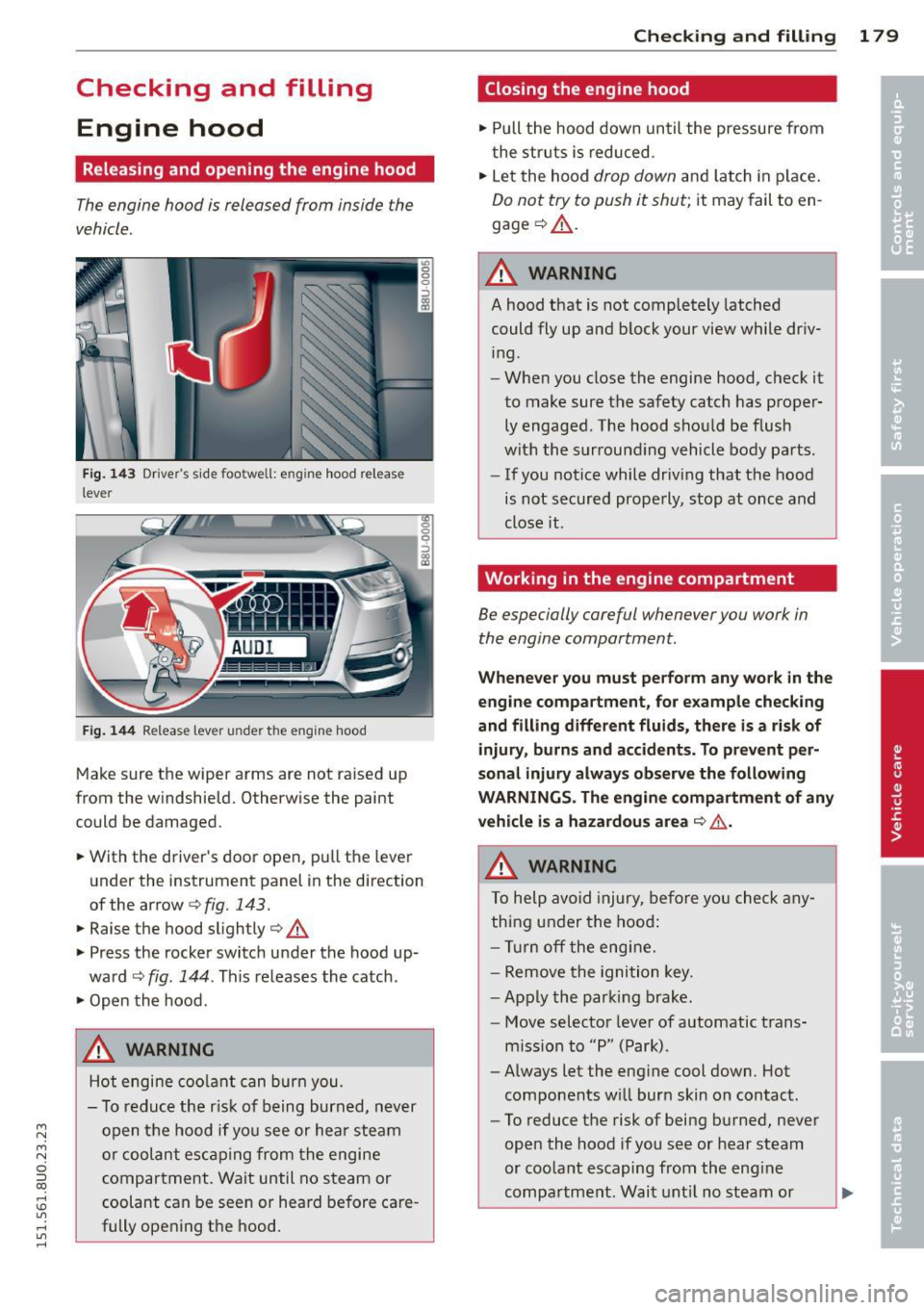
Fig. 1 43 Dr iver's side footwell: eng ine hood release
lever
F ig . 144 Re lease lever un der the engine hood
Make sure the wiper arms are not raised up
from the w indshield. Otherw ise the paint
could be damaged .
.. With the driver's door open, pu ll the lever
under the instrument panel in the direction
of the arrow
c> fig. 143.
.. Raise the hood slightly c> .&,
.. Press the rocker switch under the hood up
ward
c> fig. 144 . This releases the catch .
.. Open the hood.
A WARNING
Hot engine coo lant can burn you.
- T o reduce the r is k of being burned, never
open the hood if you see or hear steam
or coolan t escaping from the engine
compartment. Wait until no steam or
coolant can be seen or heard be fore care
fully opening t he hood.
Checkin g and fillin g 179
Closing the engine hood
.. Pull the hood down un til the pressure from
t he stru ts is reduced.
.. Let the hood
drop down and latch in p lace .
Do not try to push it shut; it may fail to en
gage¢ .&,.
A WARNING
-
A hood that is not completely latched
could fly up and b lock your view while dr iv
ing.
- When you close the engine hood , check it
to make sure the safety catch has proper
ly engaged. The hood shou ld be flush
with the surround ing vehicle body parts.
- If you notice while dr iving that the hood
is not secured properly, stop at once and
close it.
Working in the engine compartment
Be especially careful whenever you work in
the engine compartment.
Whene ve r you must pe rform an y wo rk in the
eng ine compa rtment , for e xample check ing
and filling different fluids, there is a risk of
injury , burns and accidents. To prevent per
so nal injury alway s observe th e foll owing
WARNINGS . Th e engin e compartm ent of an y
v e hicle i s a ha zardou s area
c> .&, .
A WARNING
To help avoid injury, be fore yo u check any
thing under the hood:
- Tu rn off the engi ne .
- Remove the ignition key.
- Apply the parking brake .
- Move selector leve r of automatic trans-
miss ion to "P" (Park) .
- Always let the engine cool down. Hot
components w ill bur n skin on contact.
- To reduce the risk of being burned, never
open the hood if you see or hear steam
or coo la nt escaping from the eng ine
compa rtment. Wait unt il no steam or
Page 182 of 258

180 Checking and filling
coolant can be seen or heard before
carefully opening the hood.
- Keep children away from the engine com
partment.
- Never spill fluids on hot engine compo
nents. They can cause a fire.
- Never touch the radiator fan. The auxili ary electric fan is temperature controlled
and can switch on suddenly.
- Never open the coolant reservoir cap
when the engine is still warm. The cool
ant system is pressurized and hot cool
ant could spray out .
- Protect your face, hands and arm from
steam or hot engine coolant by placing a
thick rag over the cap when you open the
coolant reservoir .
- Do not remove the engine cover under
any circumstances. This increases the
risk of burns.
- If work on the fuel system or the electri
cal system is necessary:
- Always disconnect the battery .
- Never smoke or work near heaters or
open flames. Fluids in the engine com
partment could start a fire.
- Keep an approved fire extinguisher im
mediately available.
- To avoid electrical shock and personal in
jury while the engine is running or being
started, never touch:
- Ignition cables
- Other components of the high voltage
electronic ignition system.
- If you must perform a check or repair
with the engine running:
- First, fully apply the parking brake,
move selector lever of automatic trans
mission to "P" (Park) .
-Always use extreme caution to prevent
clothing, jewelry, or long hair from get- ting caught in the
radiator fan, V-belts
or other moving parts, or from contact
ing hot parts. Tie back hair before
starting, and do not wear clothing that
will hang or droop into the engine .
- Minimize exposure to emission and
chemical hazards
c> A .
A WARNING
-California Proposition 65 Warning:
- Engine exhaust, some of its constituents,
and certain vehicle components contain
or emit chemicals known to the State of
California to cause cancer and birth de
fects and reproductive harm. In addition,
certain fluids contained in vehicles and
certain products of component wear con
tain or emit chemicals known to the
State of California to cause cancer and
birth defects or other reproductive harm.
- Battery posts, terminals and related ac
cessories contain lead and lead com
pounds, chemicals known to the State of
California to cause cancer and reproduc
tive harms. Wash hands after handling.
(D Note
When adding fluids, always make sure that
they are poured into the proper container
or filler opening, otherwise serious dam
age to vehicle systems will occur.
@ For the sake of the environment
To detect leaks in time, inspect the vehicle
floor pan from underneath regularly. If
you see spots from oil or other vehicle flu
ids, have your vehicle inspected by an au
thorized Audi dealer.
Page 203 of 258

M N
M N
0 ::i co ,...., \!) ..,.,
,...., ..,., ,....,
A WARNING ,~
Overloading a vehicle can cause loss of ve
hicle control, a crash or other accident, se
rious personal injury, and even death.
- Carrying more weight than your vehicle
was designed to carry will prevent the
vehicle from handling properly and in crease the risk of a loss of vehicle con
trol.
- The brakes on a vehicle that has been
overloaded may not be able to stop the
vehicle within a safe distance.
- Tires on a vehicle that has been overload
ed can fail suddenly causing loss of con
trol and a crash.
- Always make sure that the total load be
ing transported -including the weight of
a trailer hitch and the tongue weight of a
loaded trailer -does not make the vehi
cle heavier than the vehicle's Gross Vehi
cle Weight Rating.
A WARNING
- Incorrect tire pressures and/or underin
flation can lead to a serious or fatal acci
dent .
- Incorrect tire pressures and/or underin flation cause increased tire wear and can
affect the handling of the vehicle.
- Incorrect tire pressures and/or underin
flation can also lead to sudden tire fail
ure, including a blowout and sudden de
flation, causing loss of vehicle control.
Checking tire pressure
-
The correct tire pressure for the tires original
ly installed on your vehicle is listed on the tire
pressure label located on driver's side 8-pil lar .
The recommended tire pressures are on the
tire pressure label and in the table
c::;, page 199, Cold tire inflation pressure . This
means that the pressure must be checked and
adjusted when the tire has not been driven for more than a couple of miles (kilometers) at
low speeds during the previous three hours.
Tires and wheels 201
Air in the tires expands when the tire heats up
as a result of internal friction as it flexes in
use. The tire pressure is higher when the tire
has warmed up than when it is "cold."
It is the inflation pressure in a "cold" tire that
counts. Therefore, you should never let air out
of a warm tire to match "Cold tire inflation
pressure" recommendations
c::;, page 199 . The
tires would then be underinflated and could
fail suddenly .
The tire pressure label on your Audi lists the recommended cold tire inflation pressures at
maximum capacity for the new, original
equipment tires that were on your vehicle at
the time it was manufactured . For the loca
tion of the label
¢page 199, fig . 152 .
Most tires lose air naturally over time . They
can also lose some air if you drive over a pot
hole or hit a curb while parking.
It is usually
not possible to see whether the radial tires
used today are underinflated just by looking
at them.
Therefore, be sure to check tire pressures at
least once a month and always before going
on a long trip. Make sure to take the number
of people and the amount of luggage into ac
count when adjusting tire pressure for a trip -
even one that you would not consider to be "long." See
c::;, page 203, Tires and vehicle
load limits
for more important information .
Always use an accurate tire pressure gauge
when checking and adjusting inflation pres
sures. Check all of the tires and be sure not to
forget the spare tire. If the pressure in any tire is too high when the tire is "cold", let air out
of the tire slowly with the edge of the tire gauge and keep checking the pressure until
you reach the pressure that is correct for the load (passengers and luggage) and kind of
driving you plan to do.
If the pressure in any tire is too low, note the
difference between the pressure in the cold
tire and the pressure you need and add the air
that you need to reach the correct pressure for
the vehicle load (passengers and luggage) for
the tires on your vehicle as listed on the on .,.. •
•
Page 218 of 258
216 What do I do now?
What do I do now?
General information
.. Park the vehicle as far as possible from mov
ing traffic in the event of a flat tire. In the
event of a flat tire, park the vehicle on a lev
el surface . It you are on a steep incline, be
especially careful.
.. Set the parking brake .
.. Switch the emergency flashers on .
.. Put on a reflective vest, if ava ilable .
.. Set up the warning triang le, if available .
.. Have the passengers exit the vehicle. They
should move to a safe place, for example
behind a guard rai l.
A WARNING
Pay attention to the steps above. They are
for your protection and the for the safety
of other drivers.
A WARNING
Improper use of the vehicle jack can cause
serious personal injuries.
- Never use the screw driver hex head to
tighten wheel bolts, since the bolts can
not attain the necessary tightening tor
que if you use the hex head, potentially
causing an accident.
- The factory-suppl ied jack is intended on
ly for your vehicle model. Under no cir
cumstances should it be used to lift
heavy vehicles or other loads; you risk in
jur ing yourself.
- Never start the engine when the vehicle
is raised, which could cause an accident.
- Support the vehicle securely with appro
priate stands if work is to be performed
underneath the vehicle; otherwise, there
is a potential risk for injury.
- Never use the jack supplied with your
Audi on another vehicle, particularly on a
heavier one . The jack is only suitable for
use on the vehicle it came with .
Vehicle tool kit with
lifting jack
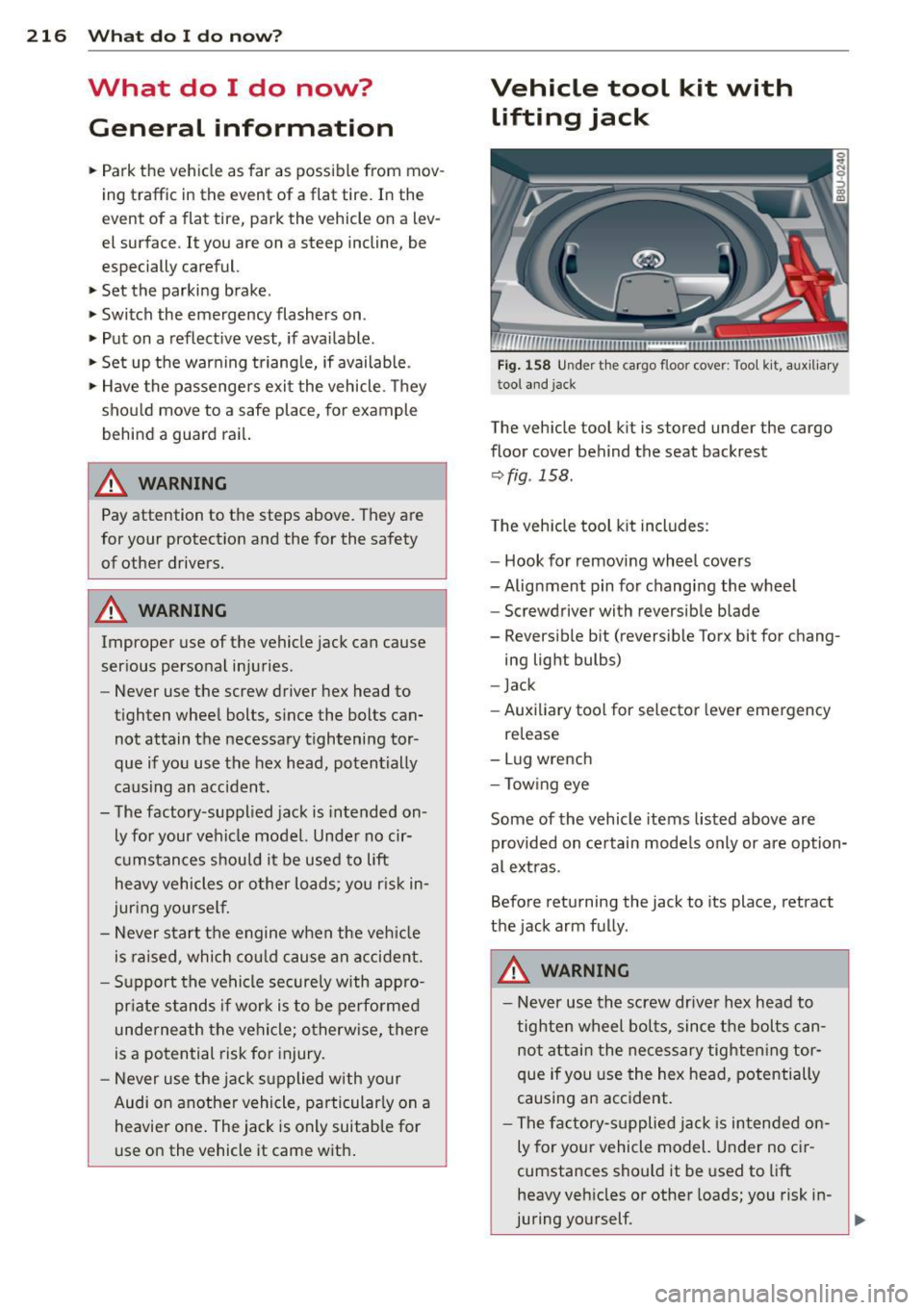
Fig. 158 Under the cargo floo r cover : Too l kit , auxiliary
too l and jack
The veh icle tool kit is stored under the cargo
floor cover behind the seat backrest
Q fig . 158 .
The vehicle tool kit includes :
- Hook for removing wheel covers
- Alig nment pin for changing the wheel
- Screwdriver with reversible blade
- Reversible bit (reversible Torx bit for chang-
ing light bulbs)
- Jack
- Auxil iary tool for selector lever emergency
release
- Lug wrench
-Towing eye
Some of the vehicle items listed above are
provided on certain models only or are option
al extras.
Before returning the jack to its place , retract
the jack arm fully .
A WARNING
-Never use the screw driver hex head to
tighten wheel bolts, since the bolts can
not attain the necessary tighten ing tor
que if you use the hex head, potentially
causing an accident.
- The factory-supplied jack is intended on
ly for your vehicle model. Under no cir
cumstances should it be used to lift
heavy veh icles or other loads; you risk in-
-
juring yourself. ~