2015 AUDI A3 CABRIOLET child seat
[x] Cancel search: child seatPage 131 of 302

M N
" > co ,...., \!) 1.1'1 ,...., 1.1'1 ,....,
A WARNING ,~ ~
Front seat passengers who are unbelted,
out of posit ion or too close to the airbag
can be seriously injured or k illed by the air
bag as it unfolds. To help reduce the r isk of
ser ious personal inju ry:
- Passengers must always s it in an upr ight
posit ion and never lean against o r place
any part of their body too close to the
area where the airbags are located.
- Passengers who are unbelted, out of po
sit ion or too close to the airbag can be
seriously injured by an airbag as it un
f olds with great force in the blink of an
eye.
- Always make sure that there are at leas t
10 inches (25 cm) between the front
passenger's breastbone and the instru
ment pane l.
- Always make sure that there are at least
4 inches (10 cm) between the front pas
senger's knees and the lower part of the
instrument panel.
- Each passenger m ust always s it on a seat
of the ir own and properly fasten and
wea r the safety belt be long ing to that
seat .
- Before driv ing, a lways adjust the front
passenger seat properly .
- For adjustable head restraints : before
dr iv ing, always a lso adjust the head re
straints properly .
- Always keep your feet on the f loor in
front of the seat . Never rest them on the
seat, instrument panel, out of the win
dow, etc. The airbag system and safety
belt w ill not be ab le to protec t you prop
e rl y and can even incre ase the ris k of in
jury in a crash .
- Never drive wi th the backrest recl ined o r
t il ted far bac k! T he farther the backrests
are t ilted back , the greater the ris k of in
jury d ue to incorrect positioning of the
safety belt and improper seating posi
t ion.
- Children must always ride in child seats
¢
page 169. Special precautions apply
Dri ving s afe ty 129
when instal ling a child seat on the front
passenger seat¢
page 146.
Proper seating positions for passengers
in rear seats
Rear sea t passengers mus t sit uprigh t wi th
both fee t on the floor consistent wi th their
physical size and be properly restrained whenever the vehicle is in use .
To reduce the risk of injury caused by an incor
rect seating posit ion in the event of a sudde n
braking maneuver or an accident, your pas
sengers on the rear bench sea t must always
obse rve the following:
... For ad justab le head restra ints: adjust the
head restra int so the uppe r edge is as even
as poss ible with the top of your head . If that
is not poss ible, try to adjus t the head re
s tr aint so that it is as close to this position
as poss ible
¢ page 130 .
... Keep both feet flat in the footwell in front of
the rear seat .
... Fasten and wea r safety be lts proper ly
¢ page 141 .
... Make sure that children are always properly
restrained in a child restraint that is appro
pr iate for the ir size and age
¢ page 169.
A WARNING
Passengers w ho are imp roperly seated on
the rea r seat can be se rio usly in jured in a
cr ash.
- Each passenge r must always si t on a seat
of their own and properly fa sten and
wear the safe ty belt belonging to that
seat.
- Safety belts only o ffer maximum pro tec
tion when the sa fety belts are properly
positioned on the body and securely
latched. By not sitting upr ight, a rear
seat passenger increases the r is k of per
sonal injury from imp roperly pos itioned
safety belts!
- For ad justab le head restra ints: always
ad just the head restraint properly so that
it can g ive maximum protect ion .
•
•
•
Page 132 of 302
130 Driving safety
Proper adjustment of head restraints
App lies to vehicles: with adj ustable head restraints
Correctly adjusted head restraints ore on im
portant port of your vehicle's occupant re
straint system and con help to reduce the risk of injuries in occident situations.
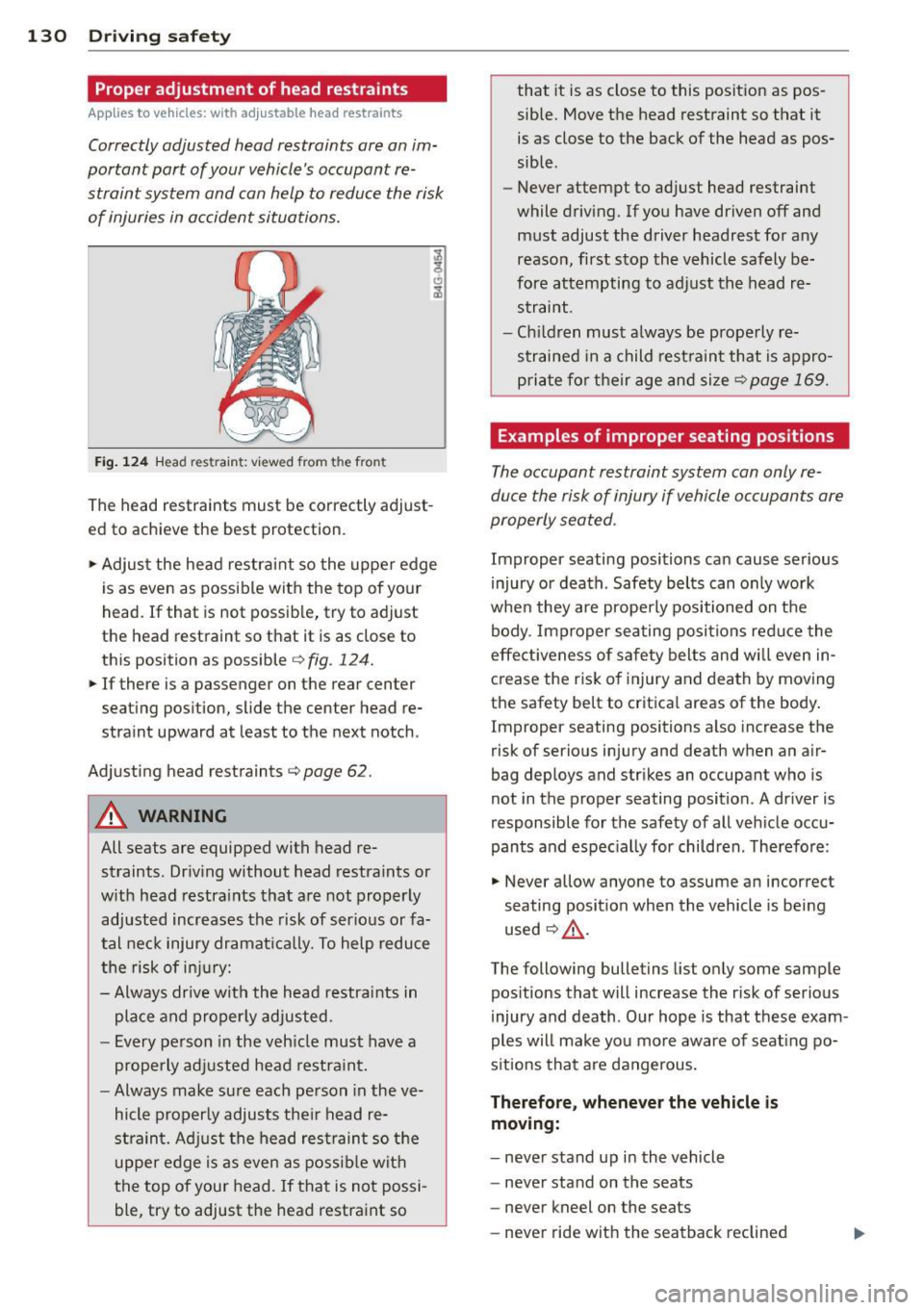
Fig. 124 H ead re str ain t: vi ew ed fro m the front
The head restraints must be correctly adjust
ed to achieve the best protection .
.. Adjust the head restr aint so the upper edge
is as even as possible with the top of your
head. If that is not possible, try to adjust
the head restraint so that it is as close to
this position as possible
c:> fig . 124.
.. If there is a passenger on the rear center
seating position, slide the center head re
stra int upward at least to the next notch .
Ad justing head restraints
c:> page 62.
A WARNING
All seats are equipped with head re
straints. Dr iving without head restraints or
with head restraints that are not properly
adjusted increases the risk of serious or fa
t al neck injury dramat ically. To help reduce
the risk of injury:
- Always drive with the head restra ints in
place and properly adjusted.
- Every person in the veh icle must have a
properly adjusted head restra int.
- Always make sure each person in the ve
hicle properly adjusts the ir head re
straint. Adjust the head restraint so the
upper edge is as even as possible wit h
the top of your head.
If that is not possi
ble, try to adjust the head restra int so that
it is as close to this posit ion as pos
sible. Move the head restraint so that it
is as close to the back of the head as pos
sible .
- Never attempt to adjust head restraint
while driving. If you have driven off and
must adjust the driver headrest for any reason, first stop the vehicle safely be
fore attempting to adjust the head re
straint .
- Ch ildren must always be prope rly re
strained in a child restraint that is appro
p ria te for their age and size
¢ page 169.
Examples of improper seating positions
The occupant restraint system con only re
duce the risk of injury if vehicle occupants ore
properly seated .
Improper seating positions can cause serious
injury or death. Safety belts can only work
when they are properly positioned on the body . Improper seating positions reduce the
effect iveness of safety belts and wi ll even in
crease the risk of injury and death by moving
the safety be lt to critica l areas of the body .
Imprope r seating positions a lso increase the
risk of serious injury and death when an air
bag deploys and strikes an occupant who is
not in the proper seating position . A dr iver is
responsible for the safety of all veh icle occu
pants and espec ially for children . T herefore :
.. Never allow anyone to assume an incorrect
seating position when the vehicle is being
used
c:> . &.
The following bulletins list only some sample
pos itions that will increase the risk of serious
injury and death . Our hope is that these exam
ples will make you more aware of seat ing po
s itions that are dangerous.
Therefore, whenever the vehicle is
moving:
- never stand up in the vehicle
- never stand on the seats
- never kneel on the seats
- never ride with the seatback reclined
Page 135 of 302

M N
" > co ,...., \!) 1.1'1 ,...., 1.1'1 ,....,
A WARNING ,~
Heavy loads will influence the way your ve
hicle handles. To help reduce the r isk of a
loss of control leading to ser ious personal
injury:
-Always keep in m ind when transporting
heavy objects, that a change in the cen
ter of gravity can also cause changes in
vehicle handling:
- Always distr ibute the load as even ly as
possible.
- Place heavy objects as far forward in
the luggage compartment as poss ible.
- Never exceed the Gross Ax le Weight Rat
ing or the Gross Vehicle Weight Rating
specified on the safety compliance stick
er on the left do or jamb. Exceeding per
missib le we ight standards can cause the
vehicle to s lide and handle differently.
- Please observe information on safe driv
ing co
page 126.
A WARNING
To help prevent poisonous exhaust gas
from be ing drawn into the veh icle, always
keep the rea r lid closed while dr iving.
- Never transport objects larger than those fitting completely into the luggage
area because the rear lid cannot be fully
cl osed.
- If you absolutely must drive w ith the rear
l id ope n, observe the follow ing notes to
reduce the risk of poisoning:
- Close all windows,
- Close the power top,
- Open all air ou tlets in the instrument
panel,
- Sw itch off the air recircu lation,
- Set the fresh ai r fan to the h ighest
speed.
A WARNING
Alw ays m ake s ure th at the doors, all win
dows, the power top an d the re ar lid are
securely closed and locked to reduce th e
Dri ving s afe ty 133
risk of injury when the vehicle is not being
used .
- After closing the rear lid, always make
sure that it is properly closed and loc ked.
- Never leave your vehicle unattended es
pecially with the rear lid left open. A
child cou ld craw l into the vehicle thro ugh
the luggage compartment and close the
rea r lid becoming t rapped and unable to
get out. Being trapped in a vehicle can
lead to serious pe rsonal inj ury.
- Never let ch ildren play in or around the
veh icle.
- Never let passengers ride in the luggage
compa rtment. Vehicle occupants must
always be properly restra ined in one of
the vehicle's seating pos it ions.
(D Tips
- Air circulati on helps to reduce window
fogging . S tale a ir escapes to the outside
through ven ts in the t rim panel. Be sure
t o keep these slots free an d ope n.
- T he tire pressure m ust correspond to the
load. The tire pressure is shown on the
t ire pressure label. T he tire pressure la
bel is located on the driver's side B-pilla r.
T he tire pressure label lists the recom
mended co ld tire inflation pressures fo r
the vehicle at its maxim um capacity
weight and the tires that were on your
vehicle at the time it was manufactured.
For recommended tire pressures f or nor
ma l load cond itions, p lease see chapter
co
page 235.
Tie-downs
The luggage compartment is equipped with
four tie-downs to secure luggage and other
items .
Use the t ie-downs to secure your cargo prop
erly co
page 132, Loading the luggage com
partment.
In a collision, the laws of physics mean th at
even smaller items that are loose in the vehi-
cle w ill become heavy m issiles that can cause .,.. •
•
Page 136 of 302

134 Driving saf ety
serious injury . Items in the vehicle possess en
ergy which vary with vehicle speed and the
weight of the item. Vehicle speed is the most
significant factor.
F or example, in a frontal collision at a speed
of 30 mph (48 km/h), the forces acting on a 10- lb (4.5 kg) object are about 20 times the
norma l weight of the item. Th is means that
the we ight of the item would suddenly be
about 200 lbs. (90 kg). You can imagine the
i njuries that a 200 lbs . (90 kg) item flying
freely through the passenger compartm ent
could cause in a collision like t his.
_& WARNING
Weak, damaged or improper straps used
to secure i tems to tie-downs can fail du r
ing hard braking or in a collision and cause
ser ious personal injury .
- Always use suitab le mounting straps and
properly secure items to the tie-downs in
the luggage compartment to help pre
vent items from shifting or flying for
ward as dangerous miss iles.
- When the rear seat backrest is folded
down, always use su itab le mounting
straps and properly secure items to the
t ie-downs in the luggage compartment
to help prevent items from flying for
ward as dangerous miss iles into the pas
senger compartment.
- Never attach a child safety seat tether
strap to a tie-down.
Reporting Safety
Defects
Applicable to U.S.A.
If y ou beli eve that your vehi cle
h as a def ect whi ch could cause
a cra sh or could cau se injur y or
d eath, yo u should immediatel y
inform the N ati onal High way
Tr affic S afe ty Admini stration (
NHTSA) in addition to notif y
in g Audi of Am eric a, Inc .
If NHTSA r ecei ves similar com
plaints, it may open an inve sti
gation , and if it finds that a
s afety defect s ex is ts in a group
of vehicles , it may order a recall
and r emed y campaign . Howe v
er, NHTSA cannot become in
vol ved in indi vidual problems
bet ween you, your dealer , or
Audi of A merica, Inc.
To c onta ct the NHTSA, you ma y
e ither c all:
Tel.: 1-888-3 27-4236 (TTY :
1-800-424-9153) or
1-800-424-9393
or you ma y write to:
NHTSA
U .S . D epartm ent of Tr ansport a
tion 1200 New Jer sey A ve ., S . E .
W est Building
W ashin gton , D C 20590
You can al so obtain other infor
mation about motor vehicle
s afety from:
h ttp: / /www .s af ercar.g ov
Page 140 of 302

138 Safety belts
Safety belts
General notes
Always wear safety belts!
Wearing safety belts correctly saves lives!
This chapter explains why safety be lts are nec
essary, how they work and how to adjust and
wear them correctly .
.. Read a ll the information that fo llows and
heed all of the instructions and WARNINGS.
A WARNING
Not wearing safety belts or wearing them
improperly increases the risk of ser ious
personal in jury and death .
- Safety belts are the sing le most effective
means avai lab le to reduce the risk of se
r ious injury and dea th in a utomob ile acci
dents. For your protection and that of
yo ur passenge rs, always co rrectly wear
safety belts when the vehicle is moving.
- Pregnant women, injured, or physically
im paired perso ns m ust also use safety
belts. Lik e all veh icle occup ants, they are
more like ly to be ser iously injured if they
do not wea r safety be lts . The best way to
protect a fetus is to protect the mother -
throughout the entire pregnancy.
Number of seats
Your Audi has a total of four seating positions: two in the front and two in the rear. Each seat
ing position has a safety belt .
A WARNING
Not wearing safety belts or weari ng them
improp erly increases th e risk of ser ious
pe rsonal i njury and deat h.
- Never st rap more than one pe rson, in
cl uding small ch ild ren, into any belt.
It is
e speci ally dange rous to pla ce a safety
belt over a child s itting on yo ur lap.
- N ever le t mo re people ride in the ve hicl e
than there are s afe ty be lts avail able. -
Be s ure everyone riding in the vehicle is
properly restrained w ith a separate safe
ty belt or child restra int.
t Safety belt warning light
Your vehicle hos o warning system for the
driver and front seat passenger (on USA mod
els only) to remind you about the importance
of buckling-up .
Fi g. 130 Safety belt warni ng light in the instrument
cluster -en larged
Before driv ing off, alway s:
.. Fasten yo ur safety belt and make su re you
are wearing it properly .
.. Make s ure that your passengers also buck le
up and properly wear their safety be lts.
.. Protect childre n w ith a child restraint sys-
tem app ropriate for the s ize and age.
The warn ing light . in the instrument clus
ter lights up when the ign ition is on as a re
minder to fasten the safety be lts. In addition,
you w ill hear a warn ing tone for a ce rtai n pe ri
od of t ime.
Fasten you r safety belt and make sure that
your pass eng ers also properly put on the ir
s afety belt s.
A WARNING .....=-
-Safety b elts are the s ingle most eff ect ive
means avai lable to reduce t he ri sk of se
rio us inju ry and de ath in au tomobile a cci
dents. Fo r you r protection and that of
your passengers, a lways cor rectly wear
safety belts when t he vehicle is moving .
Page 143 of 302

....,
N
r--. > co
rl I.O
"' rl
"' rl
Important safety instructions about
safety belts
Safety belts must always be correctly posi
tioned across the strongest bones of your
body.
~ Always wear safety belts as illustrated and
described in this chapter.
~ Make sure that your safety belts are always
ready for use and are not damaged.
A WARNING
Not wearing safety belts or wearing them
improperly increases the risk of serious
personal injury and death. Safety belts can
work only when used correctly.
- Always fasten your safety be lts correctly
before driving off and make sure all pas
sengers are correctly restrained.
- For maximum protection, safety belts must always be positioned properly on
the body .
- Never strap more than one person, in
cluding small children, into any belt.
- Never place a safety belt over a child sit ting on your lap.
- Always keep feet in the footwell in front
of the seat while the vehicle is being driv
en .
- Never let any person ride with their feet
on the instrument panel or sticking out
the window or on the seat.
- Never remove a safety belt while the ve
hicle is moving. Doing so will increase
your risk of being injured or killed.
- Never wear belts twisted.
- Never wear belts over rigid or breakable
objects in or on your clothing, such as
eye glasses, pens, keys, etc., as these may cause injury.
- Never allow safety belts to become dam
aged by being caught in door or seat
hardware .
- Do not wear the shoulder part of the belt
under your arm or otherwise out of posi
tion .
Safety belts 141
-Severa l layers of heavy clothing may in
terfere with correct positioning of belts and reduce the overall effectiveness of
the system .
- Always keep belt buckles free of anything
that may prevent the buckle from latch
ing securely .
- Never use comfort clips or devices that
create slack in the shoulder belt . Howev
er, special clips may be requ ired for the
proper use of some child restraint sys
tems .
- Torn or frayed safety belts can tear, and
damaged belt hardware can break in an
accident. Inspect belts regularly.
If web
bing , bindings, buckles, or retractors are
damaged, have belts replaced by an au
thorized Audi dealer or qualified work shop.
- Safety belts that have been worn and
loaded in an accident must be replaced
with the correct replacement safety belt
by an authorized Audi dealer . Replace
ment may be necessary even if damage
cannot be clearly seen . Anchorages that
were loaded must also be inspected.
- Never remove, modify, disassemble, or
try to repair the safety belts yourself.
- Always keep the bel ts clean. Dirty belts
may not work properly and can impair
the function of the inertia reel~
ta
ble Internal cleaning on page 206.
Safety belts
Fastening safety belts
Safety first -everybody buckle up!
Fig. 136 Bel t b uckle and to ngue on the drive r's seat
Page 144 of 302

142 Safet y belt s
To provide maximum protection, sa fety belts
must always be positioned correctly on the
wearer 's body .
.,. Adjust the front seat and head restr aint
properly ¢
page 60, Front seats .
.,. Make sure the seatback of the rear seat
bench is in an upright pos ition and securely
latched in place befo re using the belt¢.&, .
.,. Hold the belt by the tongue and pull it even
l y across the chest and pelvis¢.&, .
.,. Inse rt the tongue into the correct buckle of
you r seat until you hea r it latch securely
¢ fig . 136.
.,. Pull on the be lt to m ake s ure th at it is se-
curely latched in the b uckle .
Automatic safety belt retractors
Every safety belt is eq uipped w ith an automat
ic belt retractor on the shoulder be lt . T his fea
ture locks the be lt when the belt is pulled out
fast, dur ing hard bra king and in an acci dent.
The belt may also lock when yo u drive up or
down a steep hill or through a sharp curve. During normal driving the belt lets you move
freely .
Safety belt pret ensioners
The sa fe ty belts are equippe d wi th a be lt pre
tensioner that helps to tigh ten the safety bel t
and remove s lack when the pretensioner is ac
tivated ¢
page 144. The function of the pre
tensioner is monitored by a warning light
¢page 20.
Convert ible locking ret ractor
E very sa fe ty belt except the one on the dr iver
seat is eq uipped with a convertib le locking re
tractor that
must be used when the safety
be lt is used to attach a child seat. Be s ure to
read the important information about this
feature ¢
page 180 .
A WARNING
Improperly positioned safety belts can
cause se rious injury in an accident
¢ page 142, Safety bel t p osition.
- Saf ety belts offe r optim um pro te ction
only wh en the seatba ck is upr ight and be
lts are properly posit ioned on the
body.
- Never attach the safety be lt to the buck
le for another seat. Attaching the belt to
the wrong buckle will reduce safety be lt
effectiveness and can cause serious per
sonal injury .
- A passenger who is not proper ly restrain
ed can be seriously injured by t he safety
be lt itse lf w hen it moves from the stro n
ge r parts of the body into cr itica l areas
like the abdomen .
- Always lock the conve rtible locking re
tracto r when you are secu ring a child
seat in t he ve hicl e¢
page 182.
© Tips
Fo r information on safety belt pretens ion
ers, refer to¢
page 144.
Safety belt position
Correct belt position is the key to getting
maximum protection from safety belts .
Fig. 137 Safet y bel t pos it ion
Stan dard fea tures o n your veh icle he lp yo u ad
ju st the pos ition o f th e safety be lt to ma tch
your body s ize .
- he ight-adjus table fron t seats.
A WARNING
Imp ro pe rl y pos it io ned safety be lts ca n
cause ser ious perso nal injury in an a cci
dent.
-
- T he s hou lder be lt should lie as close to
the center o f the collar bone as possible
an d should fit well on the body. Hol d the
~
Page 148 of 302

146 Airbag system
Airbag system
Important things to know
Importance of wearing safety belts and
sitting properly
Airbags are only supplemental restraints. For
airbags to do their job , occupants must al
ways properly wear their safety belts and be
in a proper seating position.
F or your safety and the safety of your passen
gers, before driving off, always:
• Adjust the driver's seat and steering wheel
properly
¢ page 127,
• Adjust the front passenger's seat properly
¢ page 60,
• Wear safety be lts properly ¢ page 141,
• Always properly use the proper child re-
straint to protect children ¢
page 169.
In a collision, airbags must inflate within the
blink of an eye and with considerable force.
The supplemental airbags can cause injuries if
the driver or the front seat passenger is not
seated properly . Therefore in order to help the
a ir bag to do its job, it is important, both as a
d river and as a passenger to sit prope rly at all
times.
By keeping room between your body and the
steering wheel and the front of the passenger
compartment, the airbag can inflate fully and
comp letely and provide supplemental protec
tion in ce rtain frontal collisions
¢page 127,
Proper occupant seating positions.
F or details
on the operation of the seat adjustment con
t rols ¢
page 60.
It's especially important that children are
properly restrained ¢
page 169.
There is a lot that the driver and the passen
ge rs can and must do to help the individual
safety features installed in your Audi work to
gether as a system.
Proper seating pos ition is important so that
the front airbag on the driver side can do its
job. If you have a physical impairment or con- dition that
prevents you from sitting properly
on the driver seat with the safety belt properly
fastened and reaching the pedals , or if you
have concerns with regard to the function or
operation of the Advanced Airbag System ,
please contact your author ized Audi dealer or
qualified workshop, or call Audi Customer Re
lations at 1-800-822-2834 for possible modi
ficat ions to your veh icle.
When the airbag system deploys, a gas gener
ator will f ill the a irbags, break open t he pad
ded cove rs, and inflate between the steering
whee l and the dr iver and between the instru
ment panel and the front passenger. The air
bags will deflate immediately after deploy
ment so that the front occupants can see
t hr ough the windshie ld again without inter
ruption .
All of this takes pla ce in the blink of an eye, so
fast that many peop le don't even realize tha t
the airbags have deployed. The airbags a lso
inflate with a great dea l of force and nothing
should be in their w ay when they deploy.
Front airbags in combination with properly
worn safety belts slow down and lim it the oc
cupant's forward movement . T ogether they
help to prevent the drive r and front seat pas
senger from hitting parts of the inside of the
vehicle while reducing the forces acting on the
occupant during the crash . In this way they
help to reduce the risk of injury to the head
and upper body in the crash. Airbags do not
protect the arms or the lower parts of the
body.
Both front airbags wi ll not inflate in all fronta l
collisions . The triggering of the airbag system
depends on the vehicle dece lerat ion rate
caused by the co llision and registered by the
electron ic control unit. If this rate is below
the reference value programmed into the con
t rol unit , the airbags will not be triggered,
even though the car may be badly damaged as
a res ult of the collision . Vehicle damage, re
pair costs or even the lack of vehicle damage
is not necessari ly an indication of whether an
airbag shou ld inflate or not.
IJll-