2014 FORD SUPER DUTY child seat
[x] Cancel search: child seatPage 43 of 458

Transport Canada Deactivation Criteria
(Canada Only)
WARNING
This vehicle has special energy
management safety belts for the
driver and right front passenger.
These particular belts are specifically
designed to work with airbags to help
reduce the risk of injury in a crash. The
energy management safety belt is
designed to give or release additional belt
webbing in some accidents to reduce
concentration of force on an occupant's
chest and reduce the risk of certain bone
fractures and injuries to underlying organs.
In a crash, if the airbag is turned off, this
energy management safety belt might
permit the person wearing the belt to move
forward enough to incur a serious or fatal
injury. The more severe the crash, and the
heavier the occupant, the greater the risk
is. Be sure the airbag is turned on for any
person who does not qualify under the
National Highway Traffic Safety
Administration deactivation criteria. 1.
Infant: An infant (less than 1 year old)
must ride in the front seat because:
• my vehicle has no rear seat;
• the rear seat in my vehicle cannot
accommodate a rear-facing infant
seat;
• the infant has a medical condition
which, according to the infant's
physician, makes it necessary for the
infant to ride in the front seat so that
the driver can monitor the infant's
condition.
2. Child age 12 or under: A child age 12 or
under must ride in the front seat because: •
my vehicle has no rear seat;
• although children age 12 and under ride
in the rear seat whenever possible,
children age 12 and under have no
option but to sometimes ride in the
front seat because rear seat space is
insufficient;
• the child has a medical condition that,
according to the child's physician,
makes it necessary for the child to ride
in the front seat so that the driver can
monitor the child's condition.
3. Medical condition:
A passenger has a
medical condition that, according to his or
her physician:
• poses a special risk for the passenger
if the airbag deploys; and
• makes the potential harm from the
passenger airbag deployment greater
than the potential harm from turning
off the airbag and experiencing a crash
without the protection offered by the
airbag
Proper Driver and Front Passenger
Seating Adjustment WARNING
The National Highway Traffic Safety
Administration recommends a
minimum distance of at least 10
inches (25 centimeters) between an
occupant’ s chest and the driver airbag
module. To properly position yourself away from
the airbag:
•
Move your seat to the rear as far as you
can while still reaching the pedals
comfortably.
• Recline the seat slightly (one or two
degrees) from the upright position.
40
Super Duty (TFA) Supplementary Restraints System
Page 44 of 458
After all occupants have adjusted their
seats and put on safety belts, it is very
important that they continue to sit
properly. Properly seated occupants sit
upright, lean against the seat back, and
center themselves on the seat cushion,
with their feet comfortably extended on
the floor. Sitting improperly can increase
the chance of injury in a crash event. For
example, if an occupant slouches, lies
down, turns sideways, sits forward, leans
forward or sideways, or puts one or both
feet up, the chance of injury during a crash
is greatly increased.
Children and Airbags
WARNING
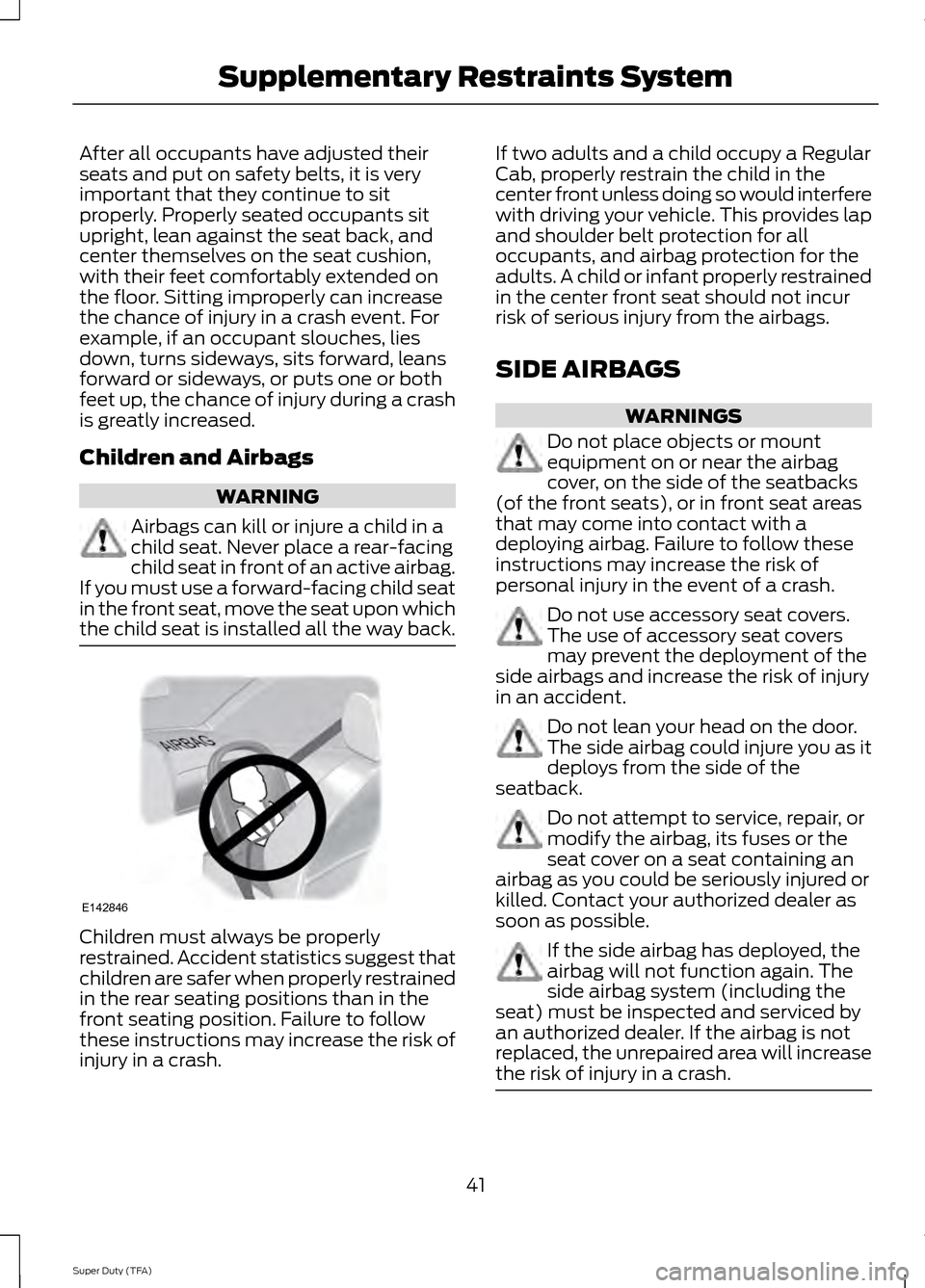
Airbags can kill or injure a child in a
child seat. Never place a rear-facing
child seat in front of an active airbag.
If you must use a forward-facing child seat
in the front seat, move the seat upon which
the child seat is installed all the way back. Children must always be properly
restrained. Accident statistics suggest that
children are safer when properly restrained
in the rear seating positions than in the
front seating position. Failure to follow
these instructions may increase the risk of
injury in a crash. If two adults and a child occupy a Regular
Cab, properly restrain the child in the
center front unless doing so would interfere
with driving your vehicle. This provides lap
and shoulder belt protection for all
occupants, and airbag protection for the
adults. A child or infant properly restrained
in the center front seat should not incur
risk of serious injury from the airbags.
SIDE AIRBAGS
WARNINGS
Do not place objects or mount
equipment on or near the airbag
cover, on the side of the seatbacks
(of the front seats), or in front seat areas
that may come into contact with a
deploying airbag. Failure to follow these
instructions may increase the risk of
personal injury in the event of a crash. Do not use accessory seat covers.
The use of accessory seat covers
may prevent the deployment of the
side airbags and increase the risk of injury
in an accident. Do not lean your head on the door.
The side airbag could injure you as it
deploys from the side of the
seatback. Do not attempt to service, repair, or
modify the airbag, its fuses or the
seat cover on a seat containing an
airbag as you could be seriously injured or
killed. Contact your authorized dealer as
soon as possible. If the side airbag has deployed, the
airbag will not function again. The
side airbag system (including the
seat) must be inspected and serviced by
an authorized dealer. If the airbag is not
replaced, the unrepaired area will increase
the risk of injury in a crash. 41
Super Duty (TFA) Supplementary Restraints SystemE142846
Page 46 of 458

The Safety Canopy will deploy during
significant side crashes or when a certain
likelihood of a rollover event is detected
by the rollover sensor. The Safety Canopy
is mounted to the roof side-rail sheet
metal, behind the headliner, above each
row of seats. In certain sideways crashes
or rollover events, the Safety Canopy will
be activated, regardless of which seats are
occupied. The Safety Canopy is designed
to inflate between the side window area
and occupants to further enhance
protection provided in side impact crashes
and rollover events.
The system consists of the following:
•
Safety canopy curtain airbags located
above the trim panels over the front
and rear side windows identified by a
label or wording on the headliner or
roof-pillar trim.
• A flexible headliner which opens above
the side doors to allow air curtain
deployment •
The crash sensors and monitoring
system have a readiness indicator. See
Crash Sensors and Airbag Indicator
(page 43). Children 12 years old and under should
always be properly restrained in the rear
seats. The Safety Canopy will not interfere
with children restrained using a properly
installed child or booster seat because it
is designed to inflate downward from the
headliner above the doors along the side
window opening.
The design and development of the Safety
Canopy included recommended testing
procedures that were developed by a
group of automotive safety experts known
as the Side Airbag Technical Working
Group. These recommended testing
procedures help reduce the risk of injuries
related to the deployment of side airbags
(including the Safety Canopy).
CRASH SENSORS AND
AIRBAG INDICATOR
WARNING
Modifying or adding equipment to
the front end of the vehicle (including
frame, bumper, front end body
structure and tow hooks) may affect the
performance of the airbag system,
increasing the risk of injury. Do not modify
the front end of the vehicle. Your vehicle has a collection of crash and
occupant sensors which provide
information to the restraints control
module which deploys (activates) the
front safety belt pretensioners, driver
airbag, passenger airbag, seat mounted
side airbags, and the Safety Canopy®.
Based on the type of crash (frontal impact,
side impact or rollover), the restraints
control module will deploy the appropriate
safety devices.
43
Super Duty (TFA) Supplementary Restraints SystemE75004
Page 72 of 458

Window Lock (If Equipped)
Unlock
A
Lock
B
Press the control to lock or unlock the rear
window controls.
Power Sliding Back Window
(If
Equipped) WARNINGS
When operating the power sliding
back window, you must make sure
all rear seat occupants and cargo are
not in the proximity of the back window. Do not leave children unattended in
your vehicle and do not let them play
with the power sliding back window.
They may seriously injure themselves. The control is on the overhead console. Press and hold the control to open the
window. Pull and hold the control to close
the window.
Accessory Delay
(If Equipped)
You can use the window switches for
several minutes after you switch the
ignition off or until you open either front
door.
GLOBAL OPENING
(IF EQUIPPED)
You can use the remote control to operate
the windows with the ignition off.
Note: To operate this feature, accessory
delay must not be active.
Opening the Windows
You can only open the windows for a short
time after you unlock your vehicle with the
remote control. After you unlock your
vehicle, press and hold the remote control
unlock button to open the windows.
Release the button once movement starts.
Press the lock or unlock button to stop
movement.
EXTERIOR MIRRORS
Power Exterior Mirrors WARNING
Do not adjust the mirrors when your
vehicle is moving.
69
Super Duty (TFA) Windows and MirrorsE163057AB E163058
Page 257 of 458
GENERAL INFORMATION
Notice to utility vehicle and truck
owners
WARNINGS
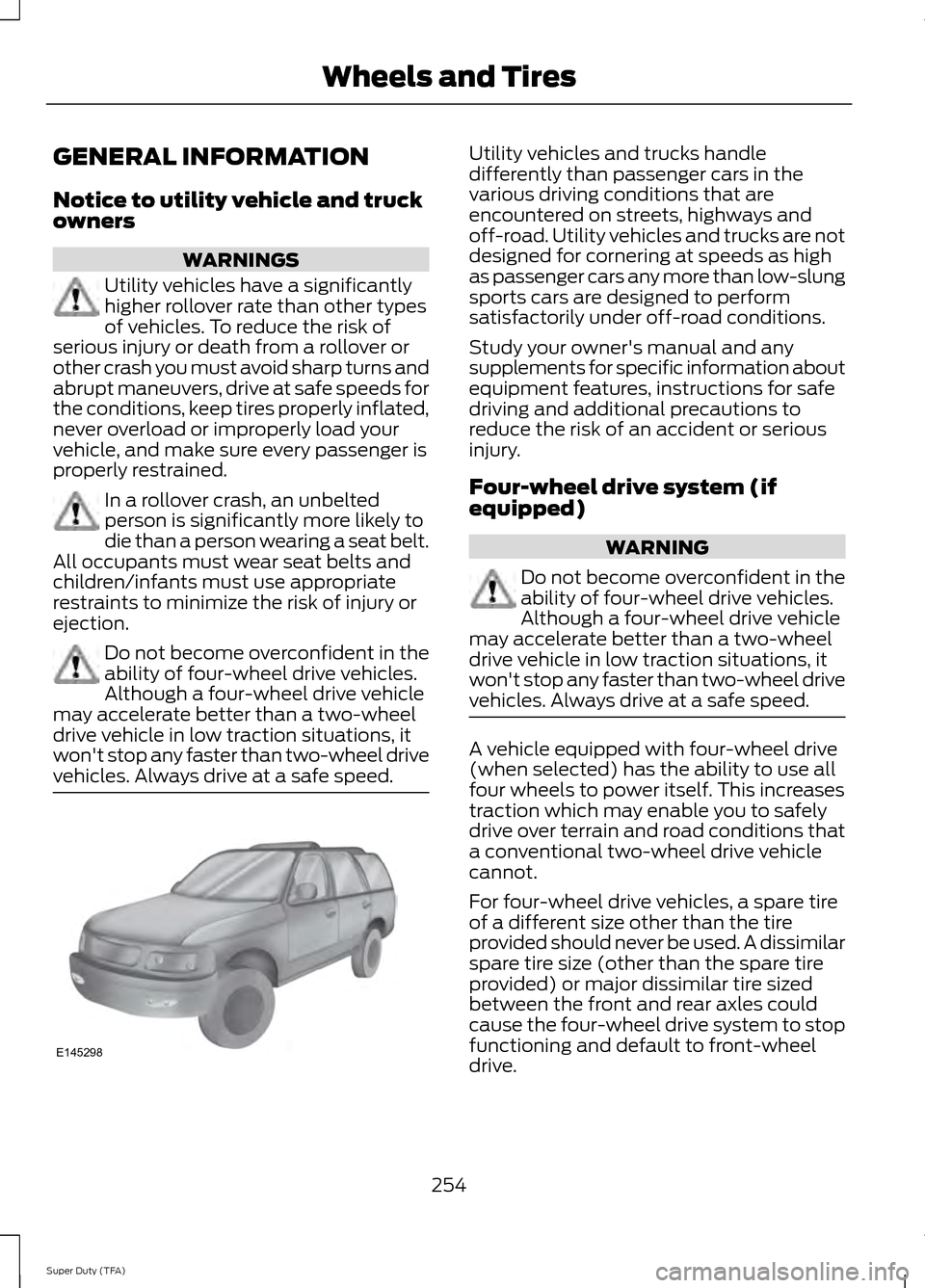
Utility vehicles have a significantly
higher rollover rate than other types
of vehicles. To reduce the risk of
serious injury or death from a rollover or
other crash you must avoid sharp turns and
abrupt maneuvers, drive at safe speeds for
the conditions, keep tires properly inflated,
never overload or improperly load your
vehicle, and make sure every passenger is
properly restrained. In a rollover crash, an unbelted
person is significantly more likely to
die than a person wearing a seat belt.
All occupants must wear seat belts and
children/infants must use appropriate
restraints to minimize the risk of injury or
ejection. Do not become overconfident in the
ability of four-wheel drive vehicles.
Although a four-wheel drive vehicle
may accelerate better than a two-wheel
drive vehicle in low traction situations, it
won't stop any faster than two-wheel drive
vehicles. Always drive at a safe speed. Utility vehicles and trucks handle
differently than passenger cars in the
various driving conditions that are
encountered on streets, highways and
off-road. Utility vehicles and trucks are not
designed for cornering at speeds as high
as passenger cars any more than low-slung
sports cars are designed to perform
satisfactorily under off-road conditions.
Study your owner's manual and any
supplements for specific information about
equipment features, instructions for safe
driving and additional precautions to
reduce the risk of an accident or serious
injury.
Four-wheel drive system (if
equipped)
WARNING
Do not become overconfident in the
ability of four-wheel drive vehicles.
Although a four-wheel drive vehicle
may accelerate better than a two-wheel
drive vehicle in low traction situations, it
won't stop any faster than two-wheel drive
vehicles. Always drive at a safe speed. A vehicle equipped with four-wheel drive
(when selected) has the ability to use all
four wheels to power itself. This increases
traction which may enable you to safely
drive over terrain and road conditions that
a conventional two-wheel drive vehicle
cannot.
For four-wheel drive vehicles, a spare tire
of a different size other than the tire
provided should never be used. A dissimilar
spare tire size (other than the spare tire
provided) or major dissimilar tire sized
between the front and rear axles could
cause the four-wheel drive system to stop
functioning and default to front-wheel
drive.
254
Super Duty (TFA) Wheels and TiresE145298
Page 449 of 458

Car Wash
See: Cleaning the Exterior.............................. 246
Center Console..............................................128
Removable Front Cupholders........................ 128
Changing a Bulb
..........................................240
Lamp Assembly Condensation................... 240
Replacing Brake/Tail/Turn/Reverse Lamp Bulbs................................................................... 241
Replacing Cargo Lamp and High-mount Brake Lamp Bulbs......................................... 241
Replacing Fog Lamp Bulbs (If Equipped........................................................... 241
Replacing Front Clearance and Identification Lamp Bulbs (If
Equipped)....................................................... 240
Replacing the License Plate Lamp Bulb.................................................................... 242
Changing a Fuse
............................................213
Fuses........................................................................\
213
Changing a Road Wheel
............................279
Dissimilar Spare Wheel and Tire Assembly
Information...................................................... 279
Location of the Spare Tire and Tools........280
Removing the Spare Tire (With Spare Tire Carrier Only).................................................... 281
Tire Change Procedure.................................... 282
Changing the 12V Battery.........................234 Battery Management System (If
Equipped)........................................................ 235
Changing the Engine Air Filter................244
Changing the Wiper Blades.....................236
Checking MyKey System Status................51
Checking the Wiper Blades
.....................236
Child Restraint and Safety Belt Maintenance.................................................34
Child Safety.......................................................14 General Information............................................. 14
Child Safety Locks.........................................26
Child Seat Positioning..................................25
Cleaning Leather Seats
.............................250
Cleaning Products.......................................246
Cleaning the Alloy Wheels
........................251
Cleaning the Engine....................................247
Cleaning the Exhaust.................................248 Cleaning the Exterior..................................246
Cleaning Plastic Exterior Parts...................... 247
Exterior Chrome................................................. 246
Stripes or Graphics (if equipped)................246
Underbody............................................................ 247
Cleaning the Instrument Panel and Instrument Cluster Lens........................249
Cleaning the Interior...................................249
Cleaning the Windows and Wiper Blades...........................................................248
Clearing All MyKeys
........................................51
Climate............................................................396 Climate Control Voice Commands.............397
Climate Control
.............................................102
Coolant Check See: Engine Coolant Check............................ 226
Crash Sensors and Airbag Indicator........43
Creating a MyKey
...........................................49
Programming/Changing Configurable
Settings............................................................... 50
Cruise Control.................................................60 Principle of Operation........................................ 172
Cruise control See: Using Cruise Control................................. 172
Customer Assistance
.................................207
D
Data Recording
..................................................9
Event Data Recording........................................... 9
Service Data Recording........................................ 9
Daytime Running Lamps.............................65
Digital Audio..................................................305 HD Radio Reception and Station
Troubleshooting........................................... 306
Direction Indicators
.......................................66
Lane Change.......................................................... 66
Driver and Passenger Airbags...................36 Children and Airbags............................................ 41
Passenger Airbag On and Off Switch ..........36
Proper Driver and Front Passenger Seating Adjustment....................................................... 40
Driving Aids
......................................................173
Driving Hints...................................................198
Driving Through Water
...............................199
DRL See: Daytime Running Lamps......................... 65
446
Super Duty (TFA) Index
Page 452 of 458

Information Messages..................................91
4WD........................................................................\
100
AdvanceTrac ™....................................................... 91
Alarm........................................................................\
. 91
Diesel Messages................................................... 92
Doors and Locks................................................... 95
Drivetrain................................................................. 95
Engine...................................................................... 96
Fuel........................................................................\
.... 96
Key........................................................................\
...... 97
Maintenance.......................................................... 97
MyKey®.................................................................... 97
Off Road.................................................................. 99
Park Aid................................................................... 98
Park Brake............................................................... 98
Power Steering..................................................... 98
Tire Pressure Monitoring System................... 99
Trailer...................................................................... 100
Installing Child Seats.....................................15 Child Seats............................................................... 15
Tether Strap Attachment................................... 21
Tether Strap Attachment (Rear SuperCab Only)..................................................................... 22
Using Cinch Tongue Lap and Shoulder Belts (All Front Center, Super Cab and Crew
Cab Rear Center Positions).......................... 18
Using Lap and Shoulder Belts.......................... 16
Using Lower Anchors and Tethers for CHildren (LATCH)........................................... 20
Using Tether Straps............................................. 20
Instrument Cluster
.........................................74
Instrument Lighting Dimmer.....................65
Interior Lamps.................................................66 Front Map Lamps (If equipped)..................... 67
Rear Dome and Map Lamps............................ 67
Interior Mirror
.....................................................71
Auto-Dimming Mirror........................................... 71
Introduction.........................................................7
J
Jump-Starting the Vehicle
.......................204
Connecting the Jumper Cables.................... 205
Jump Starting..................................................... 205
Preparing Your Vehicle.................................... 204
Removing the Jumper Cables....................... 205K
Keyless Entry....................................................54
SECURICODE™ KEYLESS ENTRY
KEYPAD.............................................................. 54
Keys and Remote Controls.........................45
L
Lighting Control
..............................................64
Headlamp Flasher............................................... 64
High Beams............................................................ 64
Lighting..............................................................64
Limited Slip Differential
.............................156
Load Carrying..................................................174
Load Limit........................................................174
Special Loading Instructions for Owners of
Pick-up Trucks and Utility-type
Vehicles.............................................................. 181
Vehicle Loading - with and without a Trailer.................................................................. 174
Locking and Unlocking
.................................53
Autolock and Autounlock.................................. 53
Battery Saver......................................................... 54
Illuminated Entry.................................................. 54
Power Door Locks................................................ 53
Remote Control..................................................... 53
Smart Unlocks....................................................... 53
Locks...................................................................53
Lug Nuts See: Changing a Road Wheel........................ 279
M
Maintenance..................................................222 General Information.......................................... 222
Manual Climate Control............................102
Manual Seats.................................................109 Manual Lumbar ................................................... 110
Moving the Seat Backward and Forward............................................................. 109
Recline Adjustment........................................... 109
Media Hub
........................................................311
Memory Function..........................................110
Easy Entry and Exit Feature.............................. 111
Message Center See: Information Displays................................ 80
449
Super Duty (TFA) Index