2014 AUDI S4 door lock
[x] Cancel search: door lockPage 87 of 296

Shift to N or P to start engine
This message appea rs whe n attempti ng to
sta rt the engine if the se le ctor lever for the
a u tomatic t ransmission is not in the P or N
p osition. The engine can on ly be sta rted w ith
the selector in these posit ions .
Is the key in the vehicle?
This m essage appears if the maste r key is re
moved from t he vehi cle w ith the eng ine run
ni ng.
If the mas ter key is no longe r in the ve
hicl e, yo u ca n not swi tch on the igni tion a fter
s t opping the eng ine a nd you also canno t st art
the eng ine again. Mo reover, yo u cannot lock
the vehicle from the outside with the key .
Shift to P otherwise vehicle can roll away.
Doors do not lo ck if lever is not in P.
This m essage appea rs for saf ety reaso ns
along w it h a wa rning signa l.
It appears if t he
s e lec to r l ever for the aut omat ic tra n sm iss io n
i s no t in the P po sition when switch ing off t he
ignit ion . Move the se lector lever to the P pos i
tion, othe rwise the veh icle is not sec ured
aga inst rolling away. You a lso cannot lock the
ve hicle using the locking button * on the door
h andle or using the remote key.
Convenience key defective! Use ignition lock
Thi s m essa ge appe ars if the eng ine mu st be
s ta rted or s to p ped using the ig nition key and
no t th e
I S TART ENGINE STOP! button.
On the road 85
Electromechanical
parking brake
Operation
The ele ctromechani cal parking brake replaces
the hand br ake.
Fi g. 98 Ce nter console: Park ing b rake
.,. Pull on the switch@¢ fig. 98 to apply the
parking brake. The ind icator lig ht in the
sw itch illuminates.
.,. Step o n the brake pedal or the accelerator
pedal and press the switch at the same t ime
t o re lease the par king brake. The indicator
light in the sw itch goes out.
Your vehicle is equipped with an e lectrome
c hanical p arking bra ke. The pa rking bra ke is
d esigned to p revent the ve hicle from rolling
u nin ten tionally and repla ces the hand b ra ke.
In add ition to the normal fu nctions of a tradi
t ional ha nd b rake, the electromechanical
par king b rake provides vario us conv enience
and sa fe ty f unct ion s.
When starting from rest
- The integral start ing ass ist helps you when
dr iving by automat ica lly releasi ng the par k
ing b ra ke ¢
pag e 86, Starting from rest .
-When start ing on inclines, the starting as
sis t preven ts the veh icle from unintentiona l
ly ro lling back . The braking force of the
pa rk ing brake is no t released u ntil su ffici ent
driving for ce h as been bui lt up at the
w heel s. ..,.
Page 88 of 296

86 On the road
Emerge ncy b rake function
An emergency brake ensures t hat the vehicle
can be slowed down even if the normal brakes
fail
c::> page 87, Emergency broking.
Indicat or light s
-If the par king b rake is closed w ith the igni
t ion
s witc hed on the . (USA mode ls) /
• (Canada models) indica tor lights come
on in the instrument cluster and the switch .
-If the parking brake is closed w ith the igni
tion
s witc hed off the . (USA mode ls) /
• (Canada models) indicator lights come
on in the instrument cluster and the switch
for about 20 seconds .
A WARNING
If a gear or a drive range (automat ic trans
m ission) is engaged with the vehicle sta
tionary and the engine runn ing, you must
in no instance accelerate o r release the
cl utch * careless ly. Otherw ise the vehicle
w ill sta rt to move immediately- r isk of an
accident .
@ Note
If the . symbol in the display or the.
(USA models) . (Canada models) indica
tor light i n the instrument cluster flashes,
t here is a mal function i n the brake system.
By pressing the
ISETI button, you can bring
up a driver message which explains the malfunct ion in more detai l. If the driver
message
Parking b rake! appears, there is
an operating malfunction in the park ing
brake wh ich you shou ld have repa ired im
mediately by an author ized Audi dealer or
qualified workshop c::>poge 15.
(D Tips
-You can apply the parking brake at any
time -even w ith the ignition switched
off . The ignit ion must be turned on and
the b rake peda l must be pressed in o rder
to release the pa rking brake . - Occasional noises when the parking
brake is applied and released are normal
and are not a cause for concern.
- When the vehicle is parked, the parking
brake goes through a self-test cycle at
regu lar interva ls. Any associated noises
are normal.
Parking
.. Press the brake pedal to stop the veh icle .
.. Pull the sw itch @
c::> page 85, fig . 98 to set
the parking brake .
.,. Automatic transmission: Move the selecto r
lever to P.
.. Turn the engine off
c::> ,&. .
.. Manual transmission: Shift into 1st gear.
.. When on inclines o r declines, turn the steer
ing wheel so that the vehicle will roll into
the curb if it begins to move.
A WARNING ...__
- When you leave your vehicle -even if on
ly br iefly -always remove the ignition
key . Th is app lies pa rticularly whe n chi l
d ren remai n in the vehicle. Otherwise the
children could st art the eng ine , release
the par king brake or operate electrical
equ ipment (e.g. power windows). The re
is the risk of an accident.
- When the veh icle is locked, no one -par
ticularly not children should remain in
the vehicle. Locked doors make it more
d ifficult for emergency workers to get in
to the vehicle -putting lives at risk.
Starting from rest
The starting assist function ensures that the
parking broke is released automatically upon
starting.
Stopping and applying par king brake
.. Pull the switch @¢ page 85, fig. 98 to ap-
ply the parking brake .
Ill>
Page 96 of 296

94 Transmission Starting the engine
.. The selecto r lever must be in P or N.
Starting off
.. Press and hold the brake pedal.
.. Press and hold the release button in these
lector lever handle, se lect t he des ired selec
tor lever position such as D/S and release
the button .
.. Wait briefly unti l the transmission has shift
ed (you will feel a slight movement) .
.. Remove your foot from the brake pedal and
acce lerate.
Stopping temporarily
.. Keep the vehicle stationary usin g the brak
ing peda l, for examp le at traffic lights .
.. Do not press the accelerator pedal when do
ing this .
.. To prevent the veh icle from rolling when you
start driving, set the parking brake when
stopping on steep inclines
c> _& .
.. The parking brake will release automatically
and the vehicle w ill start moving once you
press the accelerator pedal.
Stopping/parking
If the selector lever is not in the P position
when you open the dr iver's door, the vehicle
could roll. The message
Transmission: Car
may roll! Shift to park!
appears.
.. Press and hold the brake pedal until the ve-
hicle has come to a complete stop .
.. Apply the parking brake
c> page 86, Parking .
.. Select the P selector lever position c> _&.
Stopping on an incline
.. Always press the brake pedal to hold the ve
hicle in place and prevent it from "rolling
back"
c> _& . Do not try to prevent the vehi
cle from "roll ing back" when a gear is en
gaged by increasing the eng ine speed
c> (D.
Starting on an incline
.. Activate the parking brake.
.. With the driving gear se lected, press the ac
celerator pedal carefully. The park ing brake will release automatically if your seat
belt is
fastened .
Under certain circumstances, such as driving
in the mountains, it may be usefu l to switch
temporarily to the manual shift program in or
der to adjust the gears to the driving cond i
tions by hand
c> page 96.
On slopes, activate the parking brake first and
then move the selector lever to the P position .
This prevents too much stress from being
placed on the locking mechanism .
Vehicles with multitronic transmission: Your
vehicle is equipped with
hill hold assist allow
ing you to start while on an incline. The sys
tem is activated when the brake pedal is
pressed down and he ld
for a few seconds . The
brake pressure will hold for
a moment after
the brake pedal loosens to prevent the vehicle
from roll ing backwards wh ile starting up .
A WARNING
-The vehicle can also roll when the engine
is stopped.
- Unintended vehicle movement can cause
serious injury.
- Never leave your vehicle with the engine
r un ning while in gear. If you must leave
your veh icle when the engine is running,
activate the parking brake and move the
selecto r lever to P.
- Power is still transmitted to the wheels
when the engine is running at idle. To
prevent the vehicle from "creeping", you
must keep your foot on the brake when
the engine is running and the selector
lever is in
DIS or R or "tiptronic" mode is
selected .
- Do not press the accelerator pedal when changing the selector lever position
while the veh icle is stationary and the
engine is running.
- Never shift into R or P while driving.
- Before driving down a steep s lope, re-
duce your speed and shift into a lower
gear with "tiptronic".
Page 137 of 296

A WARNING
Always make sure that the doors, all windows, the sunroof and the rear lid are se
curely closed and locked to reduce the risk
of injury when the vehicle is not being
used.
- After closing the rear lid, always make
sure that it is properly closed and locked.
- Never leave your vehicle unattended es
pecially with the rear lid left open . A
child could crawl into the vehicle through
the luggage compartment and close the
rear lid becoming trapped and unable to
get out. Being trapped in a vehicle can
lead to serious personal injury.
- Never let children play in or around the
vehicle .
- Never let passengers ride in the luggage
compartment. Vehicle occupants must
always be properly restrained in one of
the vehicle's seating positions.
(D Tips
- Air circulation helps to reduce window
fogging. Stale air escapes to the outside
through vents in the trim panel. Be sure
to keep these slots free and open .
- The tire pressure must correspond to the
load. The tire pressure is shown on the
tire pressure label. The tire pressure la
bel is located on the driver's side B-pillar.
The tire pressure label lists the recom
mended cold tire inflation pressures for
the vehicle at its maximum capacity
weight and the tires that were on your
vehicle at the time it was manufactured.
For recommended tire pressures for nor
mal load conditions, please see chapter
c:>poge234.
Driving Safely 135
Tie-downs
App lies to veh icles : w ith tie -d owns
The luggage compartment is equipped with
four tie-downs to secure luggage and other
items .
Use the tie-downs to secure your cargo prop
erly
c:> page 134, Loading the luggage com
partment .
In a collision, the laws of physics mean that
even smaller i tems that are loose in the vehi
cle will become heavy missiles that can cause
serious injury. Items in the vehicle possess en
ergy which vary with vehicle speed and the
weight of the item. Vehicle speed is the most
significant factor.
For example, in a frontal collision at a speed
of 30 mph (48 km/h), the forces acting on a
10-lb (4.5 kg) object are about 20 times the
normal weight of the item . This means that
the weight of the item would suddenly be
about 200 lbs. (90 kg). You can imagine the
injuries that a 200 lbs. (90 kg) item flying
freely through the passenger compartment could cause in a collision like this.
A WARNING
----Weak, damaged or improper straps used
to secure items to tie-downs can fail dur
ing hard braking or in a collision and cause
serious personal injury.
- Always use suitable mounting straps and
properly secure items to the tie-downs in
the luggage compartment to help pre
vent items from shifting or flying for
ward as dangerous missiles.
- When the rear seat backrest is folded
down, always use suitable mounting
straps and properly secure items to the
tie-downs in the luggage compartment
to help prevent items from flying for
ward as dangerous missiles into the pas
senger compartment .
- Never attach a child safety seat tether
strap to a tie-down . •
•
Page 160 of 296

158 Airbag sys te m
make certain that the PA SSENGER AIR BAG
OFF
li ght stays on continuous ly whenever the
ignit ion is on. If the
PASS ENGER AIR BAG
OFF
light does not appear and not stay on all
the time, stop as soon as it is safe to do so
and
- react ivate the system by turning the ignition
off and then turning it on again;
- remove and reinstall the child restraint.
Make sure that the child restraint is properly
installed and that the safety belt for the
front passenger seat has been correctly
routed around the child restraint as descr i
bed in the child restraint manufacturer's in
structions;
- make sure that the convertible locking fea
ture on the safety belt for the front passen
ger seat has been activated and that t he
safety belt has been pulled tight. The belt
must not be loose o r have loops of slack so
that the sensor below the safety be lt latch
on the seat can do its job
c::> page 177 .
-make su re that th ings that may increase the
weight of the chi ld and child safety seat are
not being transported on the front passen
ger seat;
- make sure that the safety be lt tension sen
sor is not b locked. Shake the safety belt
latch on the front passenger seat back and
forth;
- If a strap or tether is being used to tie the child safety seat to the front passenger
seat, make sure that it is not so tight that it
causes the we ight-sensing mat to measure
more we ight than is actua lly on the seat.
If the PASSEN GER AIR BAG OFF light still
doe s not come on
and does not stay on con
tinuously (when the ignition is switched on),
- take the chi ld restraint off the front passen -
ger seat and install it properly at one of the
rear seat pos itions . Have the a irbag system
inspected by your authorized Audi dealer
immediately .
- move the ch ild to a rear seat pos it io n and
make sure that the child is properly restrain
ed in a child restraint that is appropriate for
i ts size and age. The
PA
SSENGER AIR BAG OFF light sho uld
NOT come on when the ignition is on and an
adult is s itting in a proper seating position on
the front passenger seat. If the
PAS SENGER
AIR BAG OFF
light comes on and stays on or
flashes for about 5 seconds wh ile driving, un
der these c ircumstances, make sure that:
- the adult on the front passenger seat is properly seated on the center of the seat
cushion with his or her back up aga inst the
backrest and the backrest is not recl ined
c::> page 129, Proper occupant seating posi
tions,
- the adult is not tak ing weight off the seat by
holding on to the passenger assist handle
above the fron t passenger door or support
ing thei r weig ht on the armrest,
- t he safety belt is being properly wo rn and
t hat there is not a lot o f slack in the safety
be lt webb ing,
- accesso ry seat covers or cushions o r othe r
t hings tha t may c ause an incorrect reading
or impression on the weight-sensing mat
under the upho lstery of the seat have been
removed from the front passenger seat,
- a sa fety belt extender has not bee n left in
the safety belt latch for the front passenger
seat.
In add ition to the
PASSENGER AIR BAG OFF
li ght in the center o f the instrument panel,
t h e message
PASSENGER AIR BAG OFF or
PASSENGER AIR BAG ON wi ll briefly appear
in the instrument cluster disp lay. This is to in
form the dr iver of the current front passenger
airbag status.
Important safety instructions on
monitoring the Advanced Airbag System
A WARNING
An a irbag system that is not functioning
properly cannot provide supplemental pro
tection in a frontal c rash.
- If the airbag ind icator light
c::> page 20
comes when the veh icle is being used,
have the system inspected immediately
by your au thorized A udi dealer .
It is
-
Page 175 of 296
Child safety seats
Infant seats
Babies and infants up to about one year old
and 20 lbs. or 9 kg need special rearward -fac
ing child restraints that support the back,
neck and head in a crash.
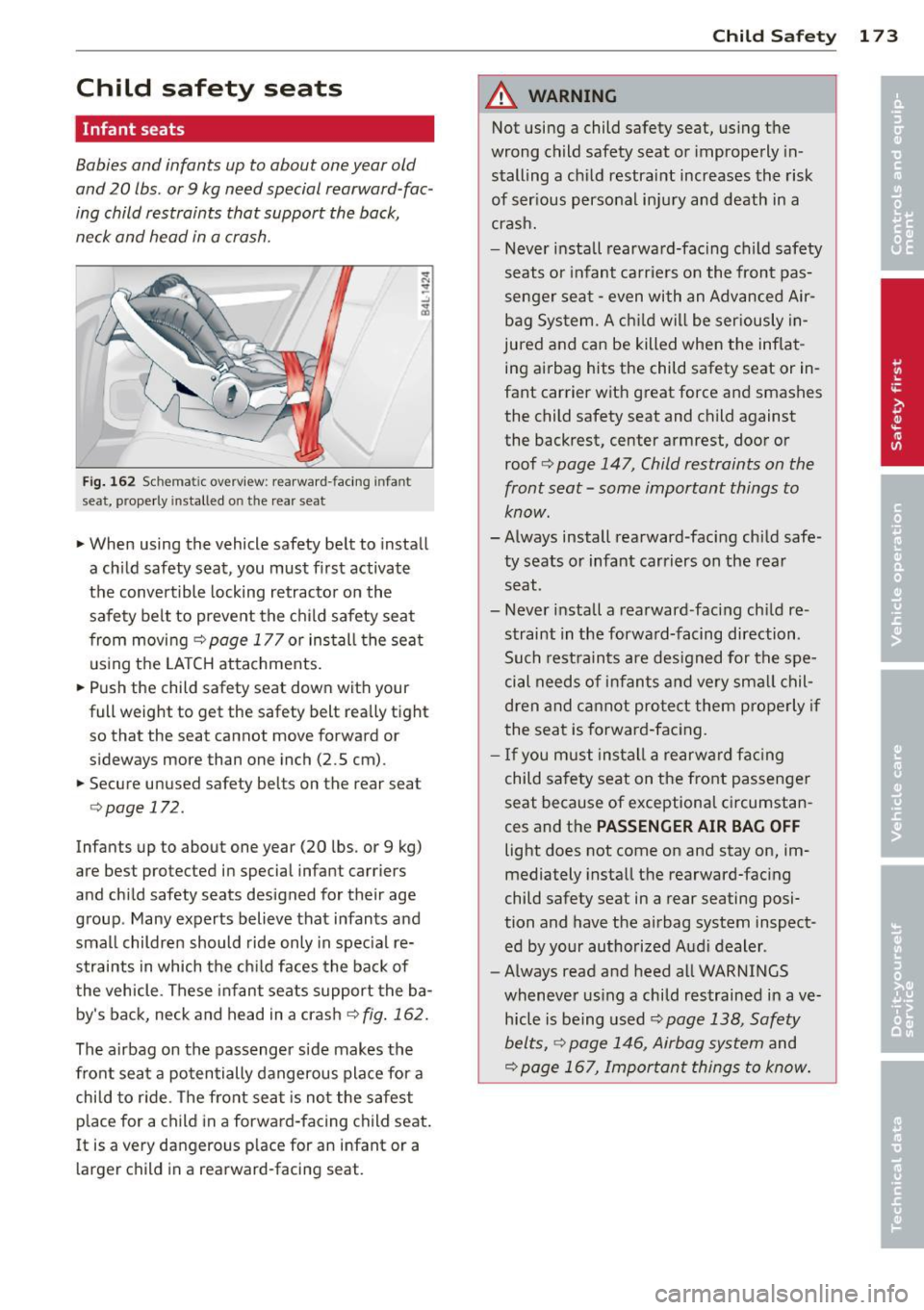
Fig . 162 Sche matic overv iew: rearward-fac ing infant
seat, properly installed o n the rear seat
.,. When using the vehicle safety belt to install
a ch ild safety seat, you must first activate
the convertible locking retracto r on the
safety be lt to prevent the child safety seat
from moving
¢ page 177 or install the seat
using the LA T CH attachments.
.,. Push the child safety seat down with your
full weight to get the safety belt rea lly tight
so that the seat cannot move forward or
sideways more than one inch (2.5 cm).
.,. Secure unused safety belts on the rear seat
¢page 172.
Infants up to about one year (20 lbs . or 9 kg)
are best protected in special infan t carriers
and child safety seats designed for their age
group . Many experts believe that infants and
small children should ride only in spec ial re
straints in which the ch ild faces the back of
the vehicle. These infant seats support the ba
by's back, neck and head in a crash
¢ fig . 162.
The airbag on the passenger side makes the
front seat a po tentially dangerous place for a
child to r ide . The front seat is not the safest
p lace for a child in a forward -facing child seat.
It is a very dangerous p lace for an infant or a
l arger ch ild in a rearward-facing seat.
Child Safety 173
A WARNING
Not using a child safety seat, using t he
wrong child safety seat or improperly in
stall ing a ch ild restraint increases the risk
of ser ious personal injury and death in a
crash.
- Never install rearwa rd-facing child safety
seats or infant ca rr ie rs on the front pas
senger seat -even with an Advanced Air
bag Sys tem. A ch ild will be ser iously in
jured and ca n be killed when the inflat
ing airbag hits the child safety seat or in
fant carrier with great force and smashes the child safety seat and child against
the backrest, center armrest, door or
roof ¢
page 147, Child restraints on the
front seat- some important things to
know .
-Always install rea rward -facing chi ld safe
ty seats or infant carriers on the rea r
seat .
- Never install a rea rward -facing ch ild re
straint in the forward-facing direction .
Such rest ra in ts are designed for the spe
cial needs of infants a nd ve ry sma ll chil
d ren and cannot pro te ct them p roperly if
the seat is forward -facing.
- If you must insta ll a rearwa rd fac ing
child safety seat on the front passenger
seat because of exceptiona l circumstan
ces and the
PASSENGER AIR BAG OFF
light does not come on and stay on, im
mediately insta ll t he rearward-facing
child safety seat in a rear seating posi
tion and have the airbag system inspect ed by your autho riz ed Audi dealer .
- Always read and heed all WARNINGS
wheneve r us ing a child restrained in ave
h icle is being used ¢
page 138, Safety
belts,
Q page 146, Airbag system and
¢ page 167, Impor tan t thi ngs to know .
Page 176 of 296
174 Child Safety
Convertible child safety seats
Properly used convertible child safety seats
can help protect toddlers and children over
age one who weigh between
20 and 40 lbs. (9
and 18 kg) in a crash.
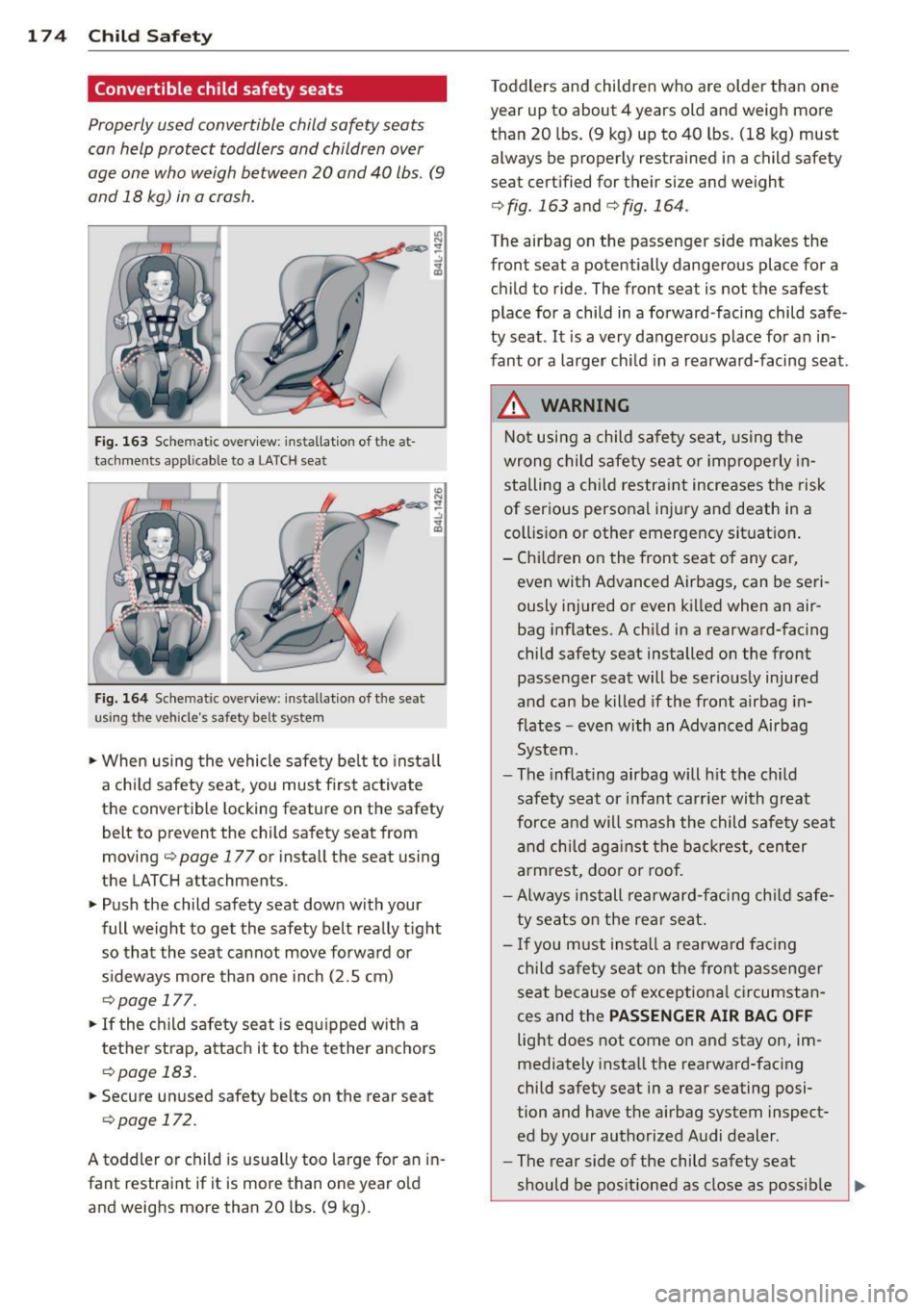
Fig. 163 Sche matic overview: installation of t he at
tachments applicable to a LATCH seat
Fig. 164 Schematic overview: installation of t he seat
us ing the veh icle's safety belt system
.. When using the vehicle safety belt to install
a child safety seat, you must first activate
the convertible locking feature on the safety
belt to prevent the child safety seat from
moving
c::> page 177 or install the seat using
the LATCH attachments .
.. Push the child safety seat down with your
full weight to get the safety belt really tight
so that the seat cannot move forward or sideways more than one inch (2.5 cm)
c::> page 177.
.. If
the child safety seat is equipped with a
tether strap, attach it to the tether anchors
i=>page 183.
.. Secure unused safety belts on the rear seat
c::> page 172.
A toddler or child is usually too large for an in
fant restraint if it is more than one year old
and weighs more than 20 lbs. (9 kg) . Toddlers
and children who are older than one
year up to about 4 years old and weigh more
than 20 lbs. (9 kg) up to 40 lbs. (18 kg) must
always be properly restrained in a child safety
seat certified for their size and weight
c::> fig . 163 and c::> fig . 164 .
The airbag on the passenger side makes the
front seat a potentially dangerous place for a
child to ride. The front seat is not the safest
place for a child in a forward-facing child safe
ty seat . It is a very dangerous place for an in
fant or a larger child in a rearward-facing seat.
_&. WARNING
Not using a child safety seat, using the
wrong child safety seat or improperly in
stalling a child restraint increases the risk
of serious personal injury and death in a
collision or other emergency situation.
- Children on the front seat of any car,
-
even with Advanced Airbags, can be seri
ously injured or even killed when an air bag inflates . A child in a rearward-facing
child safety seat installed on the front passenger seat will be seriously injured
and can be killed if the front airbag in
flates -even with an Advanced Airbag
System .
- The inflating airbag will hit the child
safety seat or infant carrier with great
force and will smash the child safety seat
and child against the backrest, center
armrest, door or roof.
- Always install rearward-facing child safe
ty seats on the rear seat.
- If you must install a rearward facing
child safety seat on the front passenger
seat because of exceptional circumstan
ces and the
PASSENGER AIR BAG OFF
light does not come on and stay on, im
mediately install the rearward-facing
child safety seat in a rear seating posi
tion and have the airbag system inspect
ed by your authorized Audi dealer .
- The rear side of the child safety seat
should be positioned as close as possible ..,.
Page 214 of 296

212 Fuel su ppl y and filli ng your fu el t ank
Refuelling
Fig. 176 R ig ht rear veh icle s ide: Open ing t he fuel fille r
fl ap
F ig. 177 F uel fi ller flap w ith atta ched fuel c ap
When activating the central lock ing, the fuel
fi ller flap is automatically un locked or loc ked.
Refuel the vehicle with the ig nition turned
off .
Tak ing th e fuel cap off
~ Turnoff the ignition .
~ Press the left side of the fuel filler flap to
open it
c::> fig. 176 -arrow- .
~ Unscrew fuel cap counter-clockwise and
hang it on the fuel filler flap
~ fig . 177.
Refu elling proc edure
~ Insert the fuel no zzle from the gasoline
pump into the fuel filler nec k as far as it will
go .
~ Select a medium refuelling rate so that the
nozzle switches off a utomatica lly when the
tank is full.
Putting the fuel cap back on
~ After filling your tank , tw ist the fuel cap
clockwise as far as it w ill go .
~ Close the fuel fille r flap. T
o avoid fuel spill ing or evaporating from th e
fuel tank always close fuel cap properly and
completely .
A WARNING
-Im proper refueling or handling of fuel can
cause fire, explosion and severe burns.
- Fuel is highly flammable and can cause
severe burns and other injur ies.
- Failure to shut the engine off while refu
eling and/or to insert the pump no zzle
fully into the fuel filler neck could cause fuel to spray out of filler neck or to over
flow . Fuel spray and overflowing fuel can
cause a fire .
- Never use a cellular telephone while re
fueling . The electromagnet ic rad iat io n
can cause sparks that can ignite fuel va
pors a nd cause a fire .
- Never get back into your vehicle whi le re
fue ling.
If in exceptional circumstances
you must get back in your vehi cle while
ref ueling, make ce rtain that you close
the door and touch metal to discharge
static electricity before touching the fill
er nozzle again . Static e lectricity can
cause sparks that can ignite fuel vapors re leased during refueling .
- Never smoke or have an open flame any
where in or near your veh icle when refu
eling or filling a portable fuel conta iner .
- For your safety, we strongly recommend
that you do not travel with a portable
fue l conta iner in your vehicle . The con
tainer, full or empty may leak and could
cause a fire, especially in a crash .
- If, u nder exceptional c ircumstances, you
must transport a portable fuel conta iner,
p lease observe the following:
- Never f ill a portable f uel container
whi le it is anywhere in or on the vehicle
(for example, in the luggage compart
ment, or on the trunk). Static electrici
ty can build up while filling and can ig
nite fuel vapors causing a fire .
- Always place a portable fue l conta iner
on the ground before fi lling.