2014 AUDI RS7 SPORTBACK lock
[x] Cancel search: lockPage 178 of 292

176 Child Safety
the convertible locking feature on the safety
belt to prevent the child safety seat from
moving ¢
page 179 or install the seat using
the LATCH attachments .
.,. Push the child safe ty seat down with your
full weight to get the safety belt really tight so that the seat cannot move forward or
sideways more than one inch (2.5 cm)
¢ page 179.
.,. If the child safety seat is equipped with a
tether strap, attach it to the tether anchors
¢page 185.
.,. Secure unused safety belts on the rear seat
¢ page 174.
A toddler or child is usually too large for an in
fant restraint if it is more than one year old
and weighs more than 20 lbs. (9 kg).
Toddlers and children who are older than one
year up to about 4 years old and weigh more
than 20 lbs (9 kg) up to 40 lbs. (18 kg) must
always be properly restrained in a child safety
seat certified for their size and weight
¢fig. 171 and ¢fig. 172.
The airbag on the passenger side makes the
front seat a potentially dangerous place for a
child to ride . The front seat is not the safest
place for a child in a forward-facing child safe
ty seat. It is a very dangerous place for an in
fant or a larger child in a rearward-facing seat.
A WARNING
Not using a child safety seat, using the
wrong child safety seat or improperly in
stalling a child restraint increases the risk
of serious personal injury and death in a
collision or other emergency situation.
- Children on the front seat of any car,
even with Advanced Airbags, can be seri
ously injured or even killed when an air
bag inflates. A child in a rearward-facing
child safety seat installed on the front
passenger seat will be seriously injured
and can be killed if the front airbag in
flates -even with an Advanced Airbag
System . -
The inflating airbag will hit the child
safety seat or infant carrier with great
force and will smash the child safety seat and child against the backrest, center
arm rest, door or roof .
- Always install rear-facing child safety
seats on the rear seat .
- If you must install a rearward facing
child safety seat on the front passenger
seat because of exceptional circumstan
ces and the
PASSENGER AIR BAG OFF
light does not come on and stay on, im
mediately install the rear-facing child
safety seat in a rear seating position and
have the airbag system inspected by your
Audi dealer.
- The rear side of the child safety seat
should be positioned as close as possible
to the backrest on the vehicle seat.
- For adjustable head restraints: adjust or remove the rear seat head restraint if it
is difficult to install the child seat with
the head restraint in place
¢ page 57. In
stall the head restraint again immediate
ly once the child seat is removed. Driving
without head restraints or with head re straints that are not properly adjusted increases the risk of serious or fatal neck
injury dramatically.
- Always read and heed all WARNINGS
whenever using a child restrained in ave
hicle is being used
¢page 133, Safety
belts,
¢ page 142, Airbag system and
¢ page 168, Important things to know.
A WARNING ~ -
If exceptional circumstances require the
use of a forward-facing child restraint on
the front passenger's seat, the child's safe
ty and well-being require that the follow ing special precautions be taken:
- Make sure the forward-facing seat has
been designed and certified by its manu
facturer for use on a front seat with a passenger front and side airbag .
Page 181 of 292
increases the risk of serious or fatal neck
injury dramatically.
- Children on the front seat of any car,
even with Advanced Airbags, can be seri
ously injured or even killed when an a ir
bag inf lates.
- Never let a child stand or knee l on any
seat, for examp le the front seat.
- Never let a child ride in the cargo area of
yo ur vehicle.
- Always remember that a ch ild lean ing
forward, sitt ing s ideways or out of posi
t ion in any way during an acc ident can be
struck by a deploying airbag. This will re
sult in se rious personal injury or death .
- If you must install a booster seat on the
front passenger seat because of excep
t ional circumstances the
PASSENGER
A IR BAG OFF
light must come on and
stay on, whe never the ignition is switch
ed on.
- If the PASS ENGER AIR BAG OFF light
does not come on and stay on, perform
the checks described¢
page 154, Moni
toring the Advanced Airbag System.
- T ake the child rest rain t off the fron t pas
senger seat and install it proper ly at one
of the rear seat positions if the
PASSEN
GER AIR BAG OFF
light does not stay on
whenever the ignition is switched on.
- Always read and heed all WARNINGS
whenever using a child restrained in ave
hicle is being used¢
page 133, Safety
belts,¢ page 142, Airbag system
and
¢page 168, Important things to know.
Installing a child safety
seat
Securing a child safety seat using a
safety belt
Safety belts for the rear seats and the front
passenger can be locked with the convertible
locking retractor to properly secure child
safety seats.
The safety belts emergency lock ing retractors
for the rear seats safety belts and for the
Child Sa fet y 1 79
front passenger's seat safety be lt have a con
vertib le locking retractor for child restraints .
The safety belt m ust be locked so that be lt
webb ing cannot unreel. The retractor can be
activated to lock the safety belt and prevent
the safety belt webbing from looseni ng up
dur ing normal dr iv ing . A child safety seat can
on ly be properly insta lled when the safety belt
is locked so that the chi ld and child safety
seat w il l stay in place .
Always remember : Even though your vehicle is
equipped with an Advanced Airbag system, all
c hi ldren, especially those 12 years and young
er, shou ld always r ide in the back seat prope r
ly restrained for the ir age and size.
A WARNING r----------
1 mp rope rly installed chi ld safety seats in-
crease the risk of serious personal injury
and death in a co llision.
- Always make s ure that the safety belt re
tractor is locked when insta lling a child
safety seat. An unlocked safety belt re
tractor cannot hold the child safety seat
in place dur ing norma l dr iving or in a
crash .
- Always buckle the child safety seat firmly
in place even if a ch ild is not sitt ing in it .
A loose child safety seat can fly around
during a sudden stop or in a collision.
- If the rea r set backrest is not secure ly
latched, the child and the child restra int
w ill be thrown forwa rd togethe r with the
backrest and will str ike parts of t he vehi
cle interior. The ch ild can be ser iously in
jured or killed.
- Never install rear-facing child s afety
seats or in fant carrie rs on the front pas
senger seat . A child will be serio usly in
jured and can be killed when the passen ger airbag inflates.
- The inflating airbag will hit the child
safety seat or infant carrier with great
force and will smash the child safety seat
and child against the backrest, center
armrest, door or roof . •
•
Page 183 of 292
-Make sure that the PA SSENGER AIR BA G
OFF
light comes on and stays on all the
t ime whenever the ignition is switched
on.
- If the
PA SS ENGER AIR BAG OFF light
does not come on and stay on, immedi
ately install the rear -facing child safety
seat in a rear seating position and have
the a irbag system inspected by your Audi
dealer.
Activating the convertible locking retractor
Use the convertible locking retractor to se
cure a child restraint .
Always heed the child safety seat manufactur
e r's instructions when install ing a ch ild re
straint in you r vehicle. To activate the conver
tible locking retractor:
.,. Place the child rest raint on a seat, prefera
bly on the rear seat.
.,. Slow ly pull the be lt
a ll th e wa y out .
.,. Route it around or through the chi ld re
straint be lt path ¢.&_ .
.,. Push the child safety seat down with your
full weight to get the safety belt rea lly tight.
.,. Insert the belt tongue into the buckle for
that seating position .
.,. Gu ide the safety belt back into the retractor
until the belt lies flat and snug on the child
safety seat .
.,. You should hear a "clicking " noise as the
belt w inds bac k into the ine rtia reel. Test the
convertible locking retractor by pulling on
the belt . You should no longer be able to
pull the belt out of the retractor . The con
vertib le locking retractor is now activated.
.,. Make sure that the red re lease button is fac
ing away from the chi ld restraint so that it
can be unbuckled qu ickly .
.,. Pull on the belt to make sure the safety belt
is p roperly t ight and fastened so t hat the
seat cannot move fo rward or sideways mo re
than one inch (2.5 cm).
Child Sa fet y 181
A WARNING
Using the wrong child restraint or an im
properly installed chi ld restraint can cause
serious pe rsonal injury or death in a c rash .
- Always make sure that the safety belt re-
tractor is loc ked when insta lling a child
safety seat. An unlocked safety belt re
tracto r cannot hold the child safety seat
in place dur ing no rma l dr iving o r in a
crash.
- Always buckle the child sa fety seat firmly
in place even if a ch ild is not si tt ing in it.
A loose child safe ty seat can fly around
during a s udden stop or in a crash .
- Always ma ke sure the seat backrest to
which the child res traint is installed is in
an upright position and securely latched
into place and cannot fold forward. Oth
erwise, the seatback with the child safety
seat attached to it could fly forward in
the event of an accident o r other emer
gency situation.
- Always read and heed all WARNINGS
whenever us ing a child restrained in ave
hicle is being used ¢
page 168. Special
precautions apply when insta lling a child
safety seat on the front passenger seat
¢ page 144, Child restraints on the front
seat -some important things to know.
-
Deactivating the convertible locking
retractor
The conv ertibl e locking retractor for child r e
straints will be deactivated automatically when the belt is wound all the way back into
the retractor.
.,. Press the red b utton on the safety belt buck
le . Th e belt tong ue will pop out of t he b uck
le .
.,. Guide the s afety belt all the way back into
i t s s towed position .
A lways let the safety be lt retract completely
into its stowed position. The safety belt can
now be used as an ordinary safety belt w ith
out the convertible locking retractor fo r child
restraints.
•
•
Page 184 of 292

182 Child Saf ety
If the convertible locking retracto r shou ld be
activated inadvertently, the safety belt must be unfastened and guided completely back in
to its stowed pos ition to deactivate th is fea
ture. If the convertible locking retractor is not
deactivated, the safety belt will gradually be
come tighter a nd uncomfortable to wear.
A WARNING
Improperly insta lled child safety seats in
crease the risk of ser ious personal inju ry
and death in a collision.
- Never unfasten the safety belt to deacti
vate the convert ible lo ck ing ret ractor for
child rest rain ts while the veh icle is mov
ing. You would not be restrained and
cou ld be ser iously injured in an accident.
- Always read and heed all WARNINGS
whenever using a child rest rained in ave
hicle is being used
¢page 168. Special
precautions apply when installing a ch ild
safety seat on the front passenger seat
¢ page 144, Child restraints on the front
seat -some important things to know.
LATCH Lower
anchorages and tethers
for children
Child Restraint System anchors and how
are they related to child safety
To provide a s imp ler and more prac ticable way
to attach the chi ld restraint on the vehicle
seat, Federa l reg ulations require specia l lower
anchorages in vehicles and devices on new
child restraints to attach to the vehicle ancho
rages.
The combination of the tether anchorages and
the lower anchorages is now generally called
the
LATCH system for " Lower Anchorages and
T ethers for Children."
F orward-facing child rest raints manufactured
after September 1, 1999, are required by U .S .
federal regulations to comply with new child head movement performance requirements. T
hese new performance req uirements make a
tethe r necessary on most new child seats.
Installing a c hild restra int tha t requires a top
tether wi thou t one can seriously impa ir the
performance of the chi ld restra int and its abil
ity to protect the child in a collision . Insta lling
a chi ld restraint that req uires a top tether
without the top tether may be a violat ion of
state law.
Child restraint manufacturers offer LA TCH
lower anchorages on their child seats w ith
hook-on or push-on connectors attached to
adjustable straps.
In addition to the LATCH lower anchorages,
these chi ld restraint systems usua lly require
the use of tether straps to he lp keep the chi ld
restraint firmly in place.
A WARNING ,.__ -
Improper installat ion of child restra ints
will increase the r isk of injury and death in
a crash.
- Always follow the instructions provided
by the manufacture r of the child re
straint you intend to install in your ve hi
cle.
- Never install a chi ld restrai nt without a
p roperly attached top tether strap if the
child res tra int m anufa cture r's instruc
tions require the top tether st rap to be
used .
- I mp roper use of child restraint LA TC H
lowe r ancho rage poin ts can lead to injury
in a co llision. The LATCH lower anchorage
points are designed to withstand on ly
those loads imposed by correctly fitted
child restraints.
- Never mo unt two child restraint systems
on one LATCH lower anchorage point.
- Never secure or attach any luggage or
other item to the LATCH lower anchorag
es.
Page 186 of 292
184 Child Safet y
proper installation of the child restraint
and proper use of the lower anchorages or safety belts in your vehicle.
- Never secure or attach any luggage or
other items to the
LATCH lower ancho
rages.
- Always read and heed the important in format ion about child restra ints in this
chapter and WARNINGS
<=:>page 168,
Child Safety .
Installing a child restraint with LATCH
lower anchorages
Whenever you install a child restraint always
follow the child restraint manufacturer's in
structions.
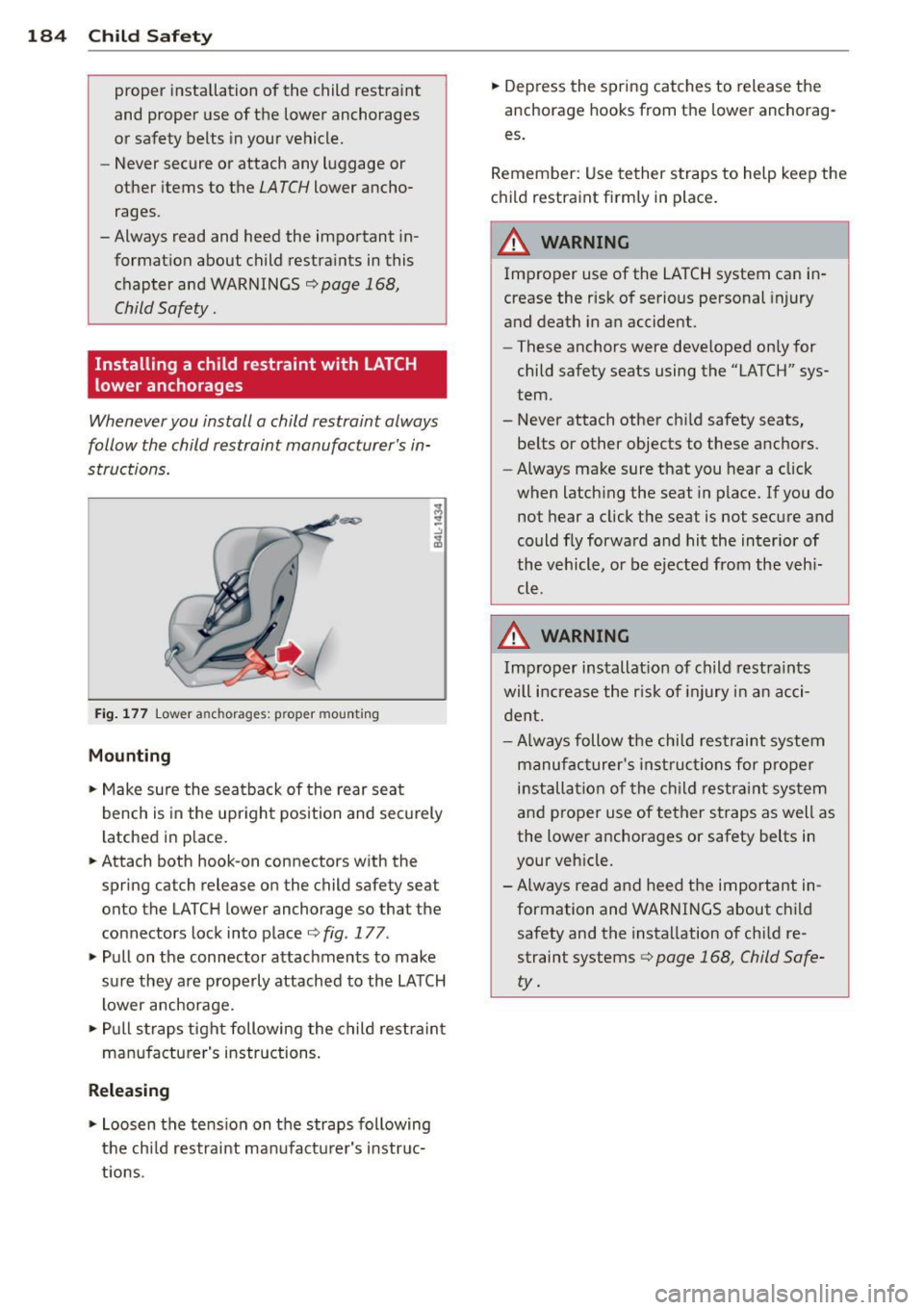
Fig. 177 Lower anchorages: proper mount ing
Mounting
.,. Make su re the seatback of the rear sea t
bench is in the upright pos ition and sec urely
latched in place.
.,. Attach both hook-on connectors w ith the
spring catch release on the child safety seat onto the LATC H lower anchorage so that the
connectors lock into place¢
fig. 177 .
.,. Pul l on the connector attachments to make
sure they are properly attached to the LATCH lower anchorage .
.,. Pull s traps tight following the child restra in t
m anuf acturer's instructions .
Releasing
.,. Loosen the te nsio n on the straps following
the ch ild restraint ma nufactu rer's i nstr uc
ti ons. .,.
Depress the spr ing catches to release the
anchorage hooks from the lower anchorag
es.
Remember: Use tether s traps to help keep the
c h ild restraint firm ly in place .
A WARNING ~
Improper use of the LATCH system can in-
crease the risk of serious personal in jury
and death in an accident.
- These anchors were deve loped on ly for
child safety seats using the "LATCH" sys
tem.
- Never attach other chi ld safety seats,
belts or other objects to these anchors.
- Always make sure that you hear a click
when latch ing the seat in p lace . If you do
not hear a click t he seat is not secu re and
could fly forwa rd and hit the inter ior of
the vehicle, or be ejected from the veh i
cle.
A WARNING
Imp roper installat ion of child restra ints
will increase the r isk of injury i n an acci
dent.
- Always follow the child restraint system
manufac turer' s inst ru cti ons for prope r
i n stalla tion of the c hild res trai nt system
and p roper use of te ther s traps as well as
the lower anchorages or safety belts in
your veh icle .
-A lways read and heed t he important in
formation and WARNINGS about ch ild
safety and the installation of ch ild re
straint systems¢
page 168, Child Safe
ty .
-
Page 191 of 292
Intelligent technology Notice about data
recorded by vehicle
control modules
Your vehicle is not equipped with an Event Da
ta Recorder (EDR), installed by some manu
facturers for the express purpose of capturing
data for retrieval after an accident or crash
event. EDR's are sometimes called "crash re
corders".
Some state laws restrict the retr ieval or down
loading of data stored by EDR's that were in
stalled in a vehicle for the express purpose of
retrieving data after an accident or crash
event without the owner's consent.
Although your vehicle is not equipped with an
EDR, it is equipped with a number of electron
ic control modules for various vehicle systems
such as, for examp le, engine function, emis
sion control, as well as for the airbags and
safety belts.
These electronic control modules also record
vehicle-related data during norma l vehicle op
eration for diagnostic and repair purposes.
The recording capacity of the electronic con
trol modules is limited to data (no sound is re
corded) and only a small amount of data is ac
tually recorded over a very limited period of
time and stored when a system fault or other
condition is sensed by a control unit. Some of
the data then stored may relate to vehicle
speed, direction, braking as we ll as restraint
system use and performance in the event of a
crash or other condition. Stored data can only be read and downloaded with special equip
ment.
Electronic Stabilization
Control (ESC)
Description
ESC helps to improve road holding and vehicle
dynamics to help reduce the probability of
skidding and loss of veh icle control. It works
only when the engine is running. ESC detects
Intelligent technology 189
certain difficult driving situations, including
when the vehicle is beginning to spin (yaw)
out of control and helps you to get the veh icle
back under control by se lectively braking the
wheels, and/or reducing engine power and
providing steering ass istance to help hold the
vehicle on the driver's intended course. The in
dicator light
JjJ in the instrument cluster
blinks when ESC is taking action to help you
control the vehicle.
ESC has limitations .
It is important to remem
ber that ESC cannot overcome the laws of
physics.
It will not always be able to help out
under all conditions you may come up against.
For example, ESC may not always be able to
help you master situations where there is a
sudden change in the coefficient of friction of
the road surface. When there is a section of dry road that is suddenly covered with water,
slush or snow, ESC cannot perform the same
way it would on the dry surface. If the vehicle
hydroplanes (rides on a cushion of water in
stead of the road surface), ESC will not be
able to help you steer the vehicle because con
tact with the pavement has been interrupted
and the vehicle cannot be braked or steered .
During fast cornering, particularly on winding
roads, ESC cannot always deal as effectively
with difficult driving situations than at lower
speeds.
Always adjust your speed and driving style to
road, traffic and weather conditions. ESC can
not override the vehicle's physical limits, in
crease the available traction, or keep a vehicle
on the road if road departure is a result of
driver inattention. Instead, ESC improves the
poss ibility of keeping the vehicle under con
trol and on the road dur ing extreme maneu
vers by usin g the driver 's steering inputs to
help keep the vehicle going in the intended di
rection. If you are traveling at a speed that
causes you to run off the road before ESC can
provide any assistance, you may not experi
ence the benefits of ESC.
ESC includes and/or works together with the
anti- lock brake system (ABS), brake assist sys -
tem, anti-slip regu lation (ASR), electronic
Ill>
•
•
Page 192 of 292
190 Intelligent technology
differential lock (EDL), dynamic steering* and
selective whee l torque control. ESC is switch
ed on all the t ime. In certa in situations when
you need less traction, you can switch off ASR
by pressing the button
[ill c> page 191,
fig. 180. Be sure to switch ASR on again when
you no longe r need less traction .
Anti-loc k br ak ing system (ABS)
ABS prevents the wheels from locking up
when braking. The vehicle can still be steered
even during hard brak ing. Apply steady pres
sure to the brake pedal. Do not pump the ped
al. A puls ing in the brake pedal ind icates that
the system is he lp ing you to b rake the vehicle.
B rake as sist sys tem
The brake assist system can decrease braking
d istance. It increases braking power when the
driver presses the brake pedal quick ly in emer
gency situations. You must p ress and hold the
b rake pedal until the situation is over. I n
vehicles w ith adaptive cru ise cont rol*, the
b rake assist system is more sens it ive if the
d istance detected to the vehicle ahead is too
smal l.
Anti-slip regulation (ASR)
ASR reduces engi ne power when the d rive
wheels begin to spin and ad apts the fo rce to
the road condit ions. This makes i t easier to
start, accelerate and drive up hills .
Electronic differential lock (EDL)
The EDL brakes wheels that are spinning and
transfers the d rive powe r to the other d rive
wheel o r whee ls if the vehi cle is equipped wi th
a ll-w hee l drive* . This function is available up
to about 75 mph (120 km/h).
I n extreme cases, ED L automat ica lly swit ches
off to help keep the brake o n the braked whee l
from overheating . EDL wi ll switch on again au
tomatically when conditions have returned to
norma l.
Dynamic steering*
On vehi cles w ith dy namic stee ring*, ESC helps
stabilize the steering i n critical s ituations.
Selective wheel torque control
T he sele ctive whee l torq ue con trol ope rates
when driving through c urves . The front whee l
on the inside of th e curve o r both wheels on
the inside of the curve are braked selectively
as needed. This minimizes sliding in the front
whee ls and allows for more precise driving
t hr ough curves. The appl icable system may
not act ivate when dr iv ing in wet or snowy con
ditions .
,&. WARNING
-ESC, ABS, ASR, EDL, dy namic steeri ng*
and the select ive wheel torq ue con trol
c a nnot ove rcome the laws of physics.
T his is especially important on slippery
or wet roads.
If the systems begin acting
to stabilize your veh icle, yo u should im
mediately change your speed to match
the road and traffic conditions. Do not
let the increased safety provided by
these systems tempt you to take r isks.
Doing so will increase the risk of a loss of
veh icle cont ro l, collision and ser ious per
sonal injur ies.
- Always adapt your speed to road, traffic
and wea ther conditions. The risk of los
ing con trol of t he vehicle increases when
d riving too fast, espec ially through
curves and on slippery or wet roads, and
when dr iving too close to vehicles up
ahead. ESC, ABS, the brake assist sys
tem, ASR, EDL, dynam ic steering* and
the selective wheel torque contro l can
not prevent collisions .
- Always accelerate with special care on
even, smooth su rfaces such as those that
are wet or covered with ice and snow .
The drive wheels can spin eve n w ith
these assistan ce systems that cannot al
ways he lp to re duce the risk of loss of ve
h icle control.
(D Tips
- ABS and ASR o nly wo rk correctly when
all four wheels are equipped with identi
cal tires. D iffe ren t tire si zes can lead to a
reduction in engine power.
-
...
Page 211 of 292
-Blend must contain not more than 15%
MTBE.
Seasonally adjusted gasoline
Many gasoline grades are blended to perform
espec ially we ll for winter or summer driving.
During seasonal change-over, we suggest that
you fill up at busy gas stat ions where the sea
sonal adjustment is more likely to be made in
time .
(D Note
-Methanol fuels which do not meet these
requirements may cause corrosion and
damage to plastic and rubber compo
nents in the fuel system .
- Do not use fue ls that fail to meet the
specified criter ia in this chapter.
- If you are unable to determine whether
or not a particular fue l blend meets the
specifications, ask your service station or
its fuel supp lier.
- Do not use fuel for which the contents
cannot be identified.
- Fuel system damage and performance
problems resulting from the use of fuels
different from those specified are not
the responsibility of Audi and are not
covered under the New Vehicle or the Emission Control System Warranties.
- If you experience a loss of fuel economy
or driveability and performance prob l ems due to the use of one of these fuel
blends, we recommend that you switch
to unblended fuel.
Gasoline additives
A major concern among many auto manufac
turers is carbon deposit build- up caused by
the type of gasoline you use.
Although gasoline grades differ from one manufacturer to another , they have certain
things in common. All gasoline grades contain
substances that can cause deposits to collect
on vital engine parts, such as fuel injectors
and intake valves. Although most gasoline brands include additives to keep engine and
Fuel supply and filling your fuel tank 209
fuel systems clean, they are not equally effec
tive .
A udi recommends using TOP TIER Detergent
Gasoline. For more info rmation on TOP TIER
Detergent Gasoline, please go to the official
website (www.toptiergas.com).
After an extended period of using inadeq uate
fuels, carbon deposit build-ups can rob your
engine of peak performance.
Q) Note
Damage or malf unct ion due to poor fue l
quality is not covered by the Aud i New Ve
hicle Limited Warranty.
Fuel tank
Fuel filler neck
The fuel filler neck is located on the right rear
side panel behind the fuel fille r flap.
If the power locking system should fail, you
can still open the flap manually -for deta iled
instruct ions see
c::;, page 211 .
You can find the fuel tank capacity of your ve
hicle in
c::;,page271.
The label on the inside of the fuel fi ller flap
tells you the correct fue l for your vehicle. For
more information about fuel specifications,
see
c::;, page 208.
Your vehicle fue l tank has an on board refuel
li ng vapor recovery system. This feature helps
to prevent fuel vapors from escaping from the
tank and polluting the environment while you refuel your vehicle . In order to fill the tank
properly while protecting the environment,
please fo llow this refueling procedure careful
ly.
_&. WARNING
Under normal operating conditions, never
carry additional fuel containers in your car.
Gas canisters and other containers used to
transport f uel can be dangero us. Such con
tainers, full or empty, may leak and could
cause a fire in a collision. If you must
•
•