2013 AUDI TT brake fluid
[x] Cancel search: brake fluidPage 191 of 262
-To avoid being burned, do not spill an
tifreeze or coolant on the exhaust sys tem or hot engine parts. Under certain
conditions, the ethylene glycol in en
gine coolant can catch fire.
- Antifreeze is poisonous. Always store an
tifreeze in its original container and well out of the reach of children.
- If you drain the coolant, it must be
caught and safely stored in a proper con
tainer clearly marked "poison".
(D Note
- Coolant pollutes the environment and
could cause an engine fire. Excess cool
ant will be forced out through the pres
sure relief valve in the cap when the en
gine becomes hot.
- If, in an emergency, only water can be
added, the correct ratio between water
and antifreeze¢
page 187 must be re
stored as soon as possible.
@ For the sake of the environment
Drained coolant should not be reused. Al
ways dispose of used coolant while observ ing all environmental regulations.
Radiator fan
The radiator fan switches on automatically by
itself
The electric radiator fan is controlled by ther
moswitches that switch on and off depending
on coolant and engine compartment tempera
tures.
An auxiliary electric radiator fan* switches on
and off depending on coolant temperature
and other vehicle operation conditions.
After you switch the engine off, the auxiliary
fan can continue running for up to 10 minutes
- even with the ignition off.
It can even switch
on again later by itself
c::> &., , if
- the temperature of the engine coolant rises due to the heat build-up from the engine in
the engine compartment, or
Checking and filling 189
- the engine compartment heats up because
the vehicle is parked in intense sunlight.
A WARNING
-To reduce the risk of personal injury nev
er touch the radiator fan .
- The auxiliary electric fan is temperature
controlled and can switch on suddenly
even when the engine is not running.
- The auxiliary radiator fan switches on au
tomatically when the engine coolant
reaches a certain temperature and will
continue to run until the coolant temper
ature drops.
Brake fluid
Checking brake fluid level
The brake fluid level can be checked with a
quick glance.
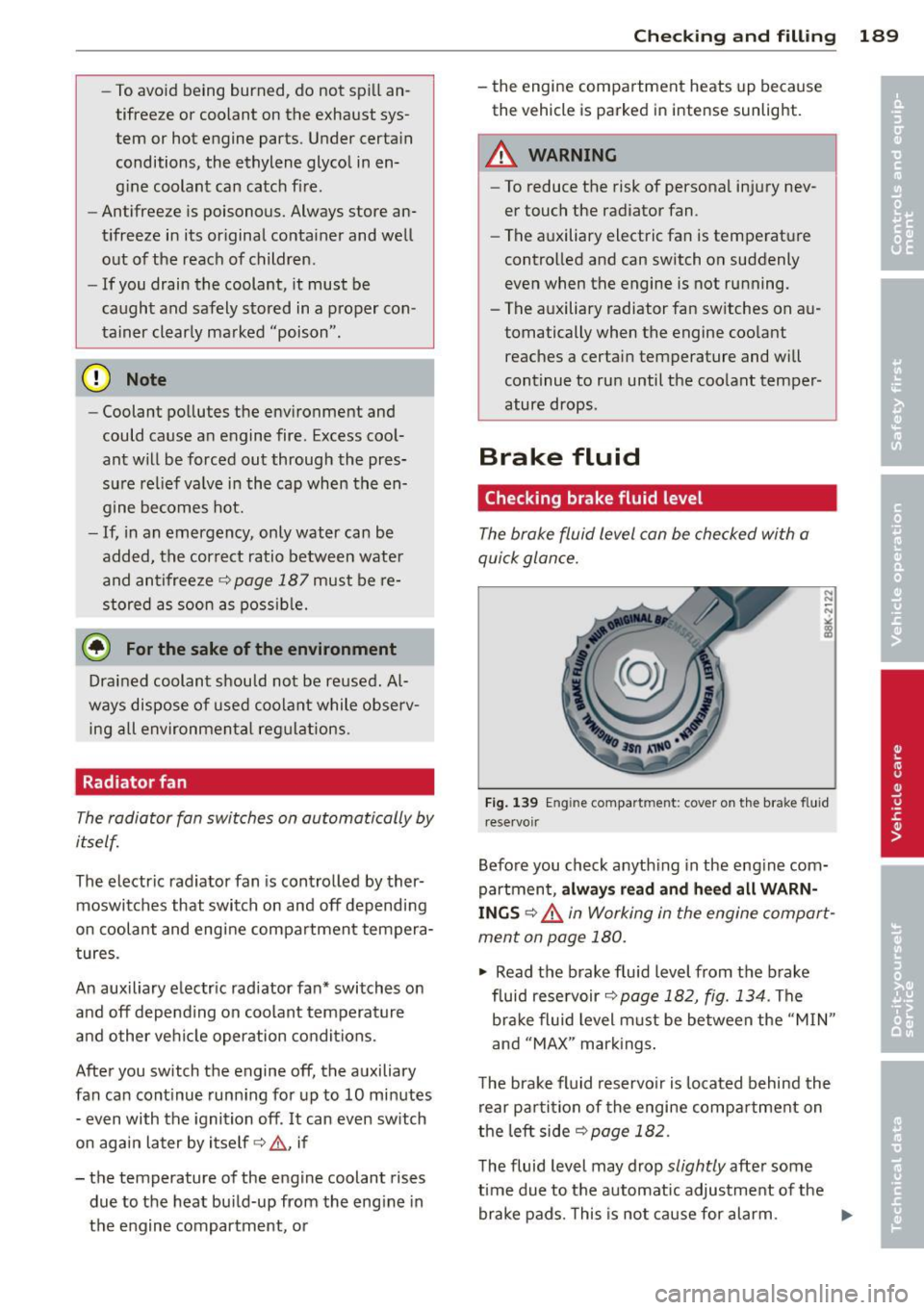
Fig. 139 Engin e compart ment: cover on th e br ake fluid
re se rvoir
Before you check anything in the engine com
partment,
always read and heed all WARN
INGS c::> .&. in Working in the engine compart
ment on page 180.
~ Read the brake fluid level from the brake
fluid reservoir
c::> page 182, fig. 134 . The
brake fluid level must be between the "MIN"
and "MAX" markings.
The brake fluid reservoir is located behind the
rear partition of the engine compartment on
the left side
c::> page 182.
The fluid level may drop slightly after some
time due to the automatic adjustment of the brake pads. This is not cause for alarm.
i,,.
Page 192 of 262

190 Checking and filling
If the brake fluid level falls considerably b e
l ow the "MIN" mark, the brake warning/ indi
cator light (U .S . mode ls:
1111 , Canad ian
model s:. ) will come on
c> page 14 . Do not
continue to ope ra te the vehicle. The comple te
brake system shou ld be thoroughly checked
by an author ized Audi dealer or ot her quali
fied fac ility and the cause corrected . If the
b rake fluid level is too low, the b rake war ning/
i ndicator ligh t w ill illuminate. Contact an a u
thor ized A udi dealer
immediatel y.
Changing brake fluid
Hove the broke fluid changed by on experi
enced technician.
Brake fl uid abso rbs moist ure from the a ir. If
the wate r content in the b ra ke fluid is too
h igh, cor ros ion in the br ake sys tem may result
after a per iod of t ime . The bo iling point of the
brake fluid wi ll also decrease considerab ly and
decrease braking performanc e.
Therefore, the brake fl uid mus t be changed
every tw o year s. Always use new b rake fluid
which conforms to Federal Motor Veh icle
Standard "FMVSS 1 16 DOT 4".
The brake flu id rese rvoi r can be difficul t to
r each, therefo re , we recommend that yo u
have the brake f luid changed by yo ur autho r
ized
Audi dealer. Your dea ler has the correct
too ls , the right brake f luid and the know-how
to do this for you.
A WARNING
- Brake fluid is poiso nous . It must be stor
ed only i n the closed orig inal container
o ut o f the reac h of children!
- Brake fa ilure can result from old o r inap
propriate b rake fluid . Observe these pre
caut ions :
- Use only bra ke fluid that meets SAE
specif ication
J 1 703 and co nforms to
Federal Motor Vehicle Standard 116 .
Always check with your a uthori zed Audi
dealer to ma ke sure you are using the
correct brake flu id. The correct type of brake flu
id is also ind icate d on the
brake f lu id rese rvoir.
- The brake fluid must be new. Heavy use
of the brakes can cause a vapo r lock if
the brake fluid is left in the system too
long. This can seriously affect the effi
c iency of t he brakes as well as your
safety . T his co uld resu lt in a n accide nt.
([) Note
Brake fluid will damage the paint of your
vehicle.
@ For the sake of the environment
Because o f the prob lem of proper disposal
of brake fluid as well as the spec ial too ls
required and the necessary expertise, we
recomme nd that you have the brake flu id
changed by yo ur autho rize d Aud i deale r.
Battery
General information
Your vehicle is equipped with a specia l bat
tery, an
ACM battery. This battery is located
in the luggage compartment and must be re
placed with an origina l equipment battery .
U nder normal opera ting condit ions, the bat
te ry is
maintenance-fr ee .
Have the battery checked when you take your
vehicle in for serv ice . You a re well advised to
replace a battery that is o lde r th an 5 years .
Disconnecting the battery terminals
Some vehicle functions (power window reg u
lators, for example) are lost if the battery te r
mina ls are disconnected . T hese functions have
to be relearned after the battery termina ls are
connected again . T o p revent t his, t he battery
shou ld only be disconne cted from the veh icle
elect ric a l sys tem when abso lutely ne cessary
f or rep air s.
Vehicles not driven for long periods
If you do not drive your vehicle ove r a period
of seve ral days o r weeks , e lectr ica l compo-
nents a re g radually cut back or switched off.
Ill-
Page 206 of 262

204 Tire s and wheel s
-If the tire pressure is too low or too high,
the tires w ill wear prematurely and the
vehicle will not handle well.
- If the tire is not flat and you do not have
to change a wheel immed iately, drive at
reduced speed to the nearest service sta
t ion to check the tire pressure and add
air as required.
(D Note
Dr iving without valve stem caps can cause
damage to the t ire va lves. To prevent this,
always make sure that facto ry installed
valve stem caps on all wheels a re securely
mounted on the valve.
@ For the sake of the environment
Underinf lated tires will a lso increase the
fue l cons umption .
Tires and vehicle load limits
There are limits to the amount of load or
weight that any veh icle and any t ire can c arry.
A vehicle that is overloaded w ill not h andle
well and is more difficult to stop. Over load ing
can not on ly lead to loss of vehicle contro l,
but can a lso damage important parts of the
vehicle and can lead to sudden tire failure, in
cluding a blowout and sudden deflation that
can cause the veh icle to crash .
Your safety and that of your passengers a lso
depends on making sure that load limits are
not exceeded. Vehicle load includes everybody
and eve ryth ing in and on the vehicle . These
l oad limits a re tech nica lly refe rred to as the
ve hicl e's
Gros s Vehicl e W eight Rat ing
("GVWR").
The "GVWR" includes the we ight of the basic
vehicle, all factory installed accesso ries , a fu ll
tank of f uel , oi l, coo lant and othe r fluids plus
maximum load. The maxim um load includes
the number o f passengers that the vehi cle is
intended to carry ("seating capacity") with an
assumed weig ht of 150 lbs (68 kg) for each
passenger at a designated seating position and the total weight of any luggage
in the ve
hicle .
T he
Gro ss Axle Weight Rating (" GAWR") is
the max imum load th at can be applied at e ach
of the vehicle's two axles .
T he Gross Vehicle Weight Rat ing and the
G ross Ax le Weight Ra ting are listed on the
sa fety comp liance s ticke r label lo cated on the
driver's side B-pillar. Your Audi has 4 seat ing
positions, 2 in the front and 2 in the rear fo r
total seat ing capac ity of 4. Each seating posi
t ion has a safety be lt c>
page 100 , Safety
bel ts.
The fact that there is an upper limit to yo ur
vehicle's Gross Vehicle Weight Rating means
that the total weight of whatever is being car
ried in the vehicle is lim ited. The more passen
gers in the vehicle or passengers who are
heavier than the standard we ights assumed
mean that less we ight can be carried as lug
gage.
The tire pressure label on your Aud i also lists
the max imum combi ned weig ht of all of the
occupants and luggage or other cargo t hat
t h e vehi cle can carry . Fo r th e lo cat ion of the
la bel c>page200,
fig.1 42.
_& WARNING ~
Overloading a vehicle can c ause loss o f ve-
h icle cont ro l, a c rash or other accident, se
rious pe rsonal injury, and even death.
- Ca rrying more we igh t tha n your veh icle
was des igned to carry wi ll prevent the
veh icle from handling proper ly and in
crease the risk of the loss of ve hicle con
trol.
- The brakes on a vehicle that has been
overloaded may not be able to stop the
veh icle w ith in a safe distance .
- Tires on a vehicle that has been over load
ed can fail s uddenly , incl uding a blowout
a nd sudden deflation, causing loss of
control and a crash .
Page 209 of 262

A WARNING
Sudden tire failure can lead to loss of con
trol, a crash and serious personal injury !
- Never drive a vehicle when the tread on
any tire is worn down to the wear indica
tors.
- Worn tires are a safety hazard, they do
not grip well on wet roads and increase
your risk of "hydroplaning " and loss of
control.
- Always keep chemicals that can cause
tire damage, such as grease, oil, gasoline
and brake fluid away from t ires.
- Tires age even if they are not be ing used
and can fail suddenly, especially at high
speeds . Tir es that are more than 6 years
old can only be used in an emergency
and then with special care and at lower
speeds.
- Never mount used tires on your vehicle if
you are not sure of their" previous histo
ry ." Old used tires may have been dam
aged even though the damage cannot be
seen that can lead to sudden tire failure
and loss of vehicle control.
Tires and wheels 207
New tires and replacing tires and wheels
New tires and wheels have to be broken in .
Fig. 146 Tir e specifica tion codes on t he s idew all o f a
t ire
No. Description
CD Passenger car tire (where applicable)
@ Nominal width of tire in mill imeters
® Ratio of height to width (aspect ratio)
© Radial
® Rim diameter code
® Load index and speed rating
(f) U.S. DOT tire identification number
® Audi Original tire
® Sever snow conditions
@ Tire ply composition and materials used
@ Maximum toad rating
@ Treadwear, traction and temperature
grades
@ Maximum permissible inflation pres-
sure
The tires and rims are essential parts of the
vehicle's design . The tires and rims approved
by Audi are spec ially matched to the charac
teristics of the vehicle and can make a major
contribution to good road holding and safe .,.
•
Page 247 of 262
in "P" (Park position) (automatic trans
missi on) or Neutral (manual transmis
sion) and the hand brake is f irmly ap
plied .
@) For the sake of the environment
-Changi ng t he eng ine settin gs w ill ad
versely affect em ission levels. This is det
rimental to the enviro nment and increas
es fuel consumption .
- Always observe env ironmental regula
tions when disposing of old engine oil,
used brake fluid, dirty engine coolant,
spent batter ies or worn out t ires.
- Undeployed airbag modules and preten
s ioners might be classified as Perchlo
rate Mate rial -spec ia l hand ling may ap
ply, see www.dts c.ca .gov/haza rdous
was te/perch lorate. When the veh icle or
parts of the res traint system includ ing
a irbag modules safety belts wit h preten
sioners are scrapped, all applicable laws
and regulations must be observed. Your
a uthorized Audi dea ler is familiar w ith
these requirements and we recommend
that you have your dea ler perform this
se rv ice for you .
Additional accessories,
modifications and
parts replacement
Additional accessories and parts
replacement
Always consult an authorized Audi dealer be
fore purchasing acce ssories.
Your veh icle inco rporates the latest safety de
sig n featu res e nsu ring a high standard of ac
tive and passive safe ty .
This safety could be comp romised by non-ap
p roved changes to the ve hicle. For this reason ,
if pa rts have to be replaced, p lease observe
t he following points when ins tall ing addition
a l accessories:
Con sumer In formation 245
Approved Audi accesso ries and genuine Aud i
parts are available from authorized A udi deal
ers.
T hese de alers a lso have the necessary facili
ties, tools and tra ined spec ialists to install the
parts and accessories proper ly .
A WARNING
Using the wrong spare parts or using non
approved accessories can cause damage to
the vehicle and ser ious persona l injury.
- Use on ly accessories express ly approved
by Audi and gen uine Audi spare parts
- These parts and accessories have been
specially designed to be used on yo ur ve
hicle.
- Never install accessor ies such as tele
phone crad les or beverage ho lders o n air
bag covers or withi n the airbag deploy
ment zones . Do ing so will increase t he
ris k of injury if a irbags are triggered in an
accident!
- Before you check anything in the engine
compa rtment, always r ead and heed a ll
W ARNINGS
r:::;.page 174 .
(D Note
- If items other than genu ine A udi spare
parts, add-on equipmen t and accessory
items are used o r if repair wo rk is not
performed a ccord ing to spe cified met h
ods, this ca n resu lt in seve re damage to
yo ur vehicle's engine and body (such as
co rrosion) and adversely affect yo ur vehi
cle's warranty .
- T he innovat ive aluminium concep t of
yo ur Audi T T means that all servicing, re
pairs or other work on the vehicle body
must be carr ied out exclusive ly by an
Audi workshop .
- If emergency repairs must be performed
elsewhere, have the veh icle examined by
an authorized Audi dealership as soon as
possible .
- The manufacturer cannot be held liable
for damage wh ic h occurs due to failure
to comply with these stipu lations .
•
•
Page 250 of 262

248 Index
Connecting ...... ..... ... .. .. .... . 190
Disconnecting . ....... ... .. .. .... . 190
Important warn ings . .... ... .. .... . 192
Locat ion 192
Low . .. .. .... ........... ........ . 156
Replacing the battery ......... .. ... 191
State of charge ..... .... .. .. .. .. .. . 156
W inte r operation .......... ... .. .. . 190
Working on the battery .. ...... .. .. . 192
Battery voltage ................ .... .. 19
Before driving . . . . . . . . . . . . . . . . . . . . . . . 90
Blended gasoline ........... ... .. .. . 176
Body cavity sealing . . . . . . . . . . . . . . . . . . 170
Boost . .. .. .. .. . .......... .. .. .... .. 28
Booster seats .............. ... .. .. . 138
Boost pressure indicator . ... .. .... .. . . 28
Brake fluid
Changing the brake flu id . .. .. .. .. .. .
190
Chec king the bra ke fluid level . .. .... . 189
What is the correct brake fl uid leve l? .. 189
What should I do if the brake fluid warn-
ing light comes on? .. ... .. .. ... ... .
189
Brake fl uid reservo ir ........ .. .. .... . 189
Brake system .............. .... .... . 189
Anti -lock brake system ........ .. .... 18
Brake ass ist system . .. .. .. .. .. .. .. . 150
Brake fl uid . ... .. ..... ... .. .. .. .. . 189
Brake flu id spec ifica tions for refill and re-
p la cemen t ... ......... .. .. .. .. .. .
190
Brake light defect ive . ... .. .. .... .. . . 20
Brake pads .. .. .. ..... ... .. .. .... . 159
General information . ... .. .. ... ... . 153
How does the moisture or road sa lt affect
the brakes? .............. .. .. .... .
153
Malfunc tio n . . . . . . . . . . . . . . . . . . . . . . . 14
Warn ing/ indicator l ights ....... .. .... 14
Worn brake pads symbol . . . . . . . . . . . . . 18
Break- in period ............ .. .. .. .. . 159
Brake pads ... ........... .. .. .... . 159
Tires
Bulbs
C
159
23 1
Califo rni a Proposit ion 65 Warning .. .. . 18 1
Battery specif ic .. ..... ... .. .. .... . 193
Capac it ies . .. ..... ........... ... .. . 240
Car care . ... .... .. ... .. .. ... .... . .. 164
Interior . . . . . . . . . . . . . . . . . . . . . . . . . . 170
Plastic and vinyl . .... .. ..... ... .. .. 168
Care of ex ter ior .. .. ............. .. .. 164
Cargo area
refer to Luggage compartment ....... . 96
Cata lytic co nverter ... ... ..... ... .. .. 160
CD cha nger . .... .. ............. .... . 64
Certification . . . . . . . . . . . . . . . . . . . . . . . 246
Chang ing a flat t ire ... ... ..... ... .. .. 224
Chang ing engine oil ................ . 186
Chassis
Undercoating .. .. ............. .. ..
170
also refer to Audi magnet ic r ide .. .. .. . 78
Checking
Battery ac id leve l ... ... ..... ... .. ..
193
Engine coolant level . . . . . . . . . . . . . . . . 187
Checking t ire press ure ........... .. .. 2 02
Child restraint
Danger of using child rest raints in the
front seat . ...... ................ .
110
Child restraints
Where can I get additional informat ion
about child restraints and the ir use? ..
149
Child restraint system anchors . ... .. .. 143
Child saf ety . .. .. .. .. .. ...... ... .. .. 130
Co nvertib le loc king retractor ... .. .... 140
G ui dance fixtures for lower anc ho rages 1 4 5
Important sa fe ty instru ctions for using
child safety seats ... .... .... ... .. ..
133
Important things to know whe n driving
with children .... ............... ..
130
Installing a c hild restra int using the
LATCH system . . . . . . . . . . . . . . . . . . . . .
146
Mounting and releasing the anchorage
hook ...... ... .. .. ... ....... .... .
146
Tether anchors . .. ............. .... 14 7
Tether straps .. .. ............. .... 14 7
Child safety seat ..... ... ..... ... .. .. 135
Co nvertib le locking retractor ......... 140
Installing ... .. .. ... .. .. ... ..... .. 140
U nused safety be lts on the rear seat 135
Child safety seats
Booster seats .... ............... ..
138
Co nvertib le child seats ............ . 136
How do I properly i nstall a child safety
. h" l ? 133 seat in my ve 1c e .............. .. . .
Page 253 of 262

Driving to minimize pollution and noise 161
F ue l . .... .. .. ... ... .... ... .. .. ... 178
F ue l economy ... ........ ... .. .. .. . 161
Leakage from your veh icle .. .. .. .. .. . 180
Lett ing the vehicle stand and warm up. 162
Prope r disposal of drained brake fluid . 190
Prope r disposal of dra ined engine coo l-
ant ..... ... ................... .. 188
Pr ope r disposal of drained engine
oil . . . . . . . . . . . . . . . . . . . . . . . . . 185, 186
Recycl ing use d engine oil ... .. .. .. .. . 185
Un leaded fu el . . . . . . . . . . . . . . . . . . . . . 176
What should I do with an old battery? . 191
E PC
refer to Electronic powe r control . . . . . . 19
ESC (E lectronic Stabilization Control)
War ning/ indicator lights ....... ... ... 17
Event Data Recorder (EDR) . . . . . . . . . . . . 150
E xhau st tail p ipes
C le a ning . .. ............. .... .. .. . 170
Expansion tank ..................... 187
Exterior mirrors Ad justing .. ............. .... .. .. .. 47
Dimm ing . .. ............. .... .. .... 47
H eating ........................... 47
F
Fan ..... ... . .. .. ............. .. .. .. 67
Radiator . .. ............. .... .. ... 189
F astening
Booste r seats ... ...... ... .. .. .. .. . 138
Convertible c hild safety seats ... .. ... 136
Infant seats .. .. ......... .. .. .. ... 135
F asten ing eyelets .......... .. .. .. .. .. 59
F lat t ire
Changing .. ................. .. ... 224
Fl oor mats . . . . . . . . . . . . . . . . . . . . . . . . . . 95
F og lights . .. .... ......... .. .. .. .. .. 44
Foldi ng master key with remote control .. 32
F oot pedals .. .. .. .. .. .... ... .. .. .... 95
For the sake of the environment Gasoline fumes and the environment . . 178
L e tting you r engine warm up . .. .. .. .. 7 2
Refue ling .. ............. .... .. .. . 17 8
Saving fue l by early upshifting . ... .. .. 1 0
Inde x 251
Front ai rbags
Description . ... .... . ... ...... ... .. 112
How they wor k ... .. . .. ... .... ... .. 117
Fron tal coll is ions and the laws of p hysics 101
Front seats . . . . . . . . . . . . . . . . . . . . . . . . . 54
Adjust ing . . . . . . . . . . . . . . . . . . . . . . . . . 92
Adjusting the manual seats . . . . . . . . . . . 55
Child rest raints in the front seat ...... 110
Fuel Additives . . . . . . . . . . . . . . . . . . . . . . . . . 176
B le nded gasol ine ........ .......... 176
Current fuel mileage ................ 23
Fille r neck . . . . . . . . . . . . . . . . . . . . . . . . 17 7
Fuel gauge . . . . . . . . . . . . . . . . . . . . . . . . 12
F uel supply too low . . . . . . . . . . . . . . . . . 20
Gasoline . ... .. .... . ... ...... ... .. 176
Gasoline add itives .. . .. .. ..... ... .. 177
Octane rating .. .. .. . ... ...... ... .. 176
Recommendation . .... ............. 176
Ref uell ing . .. .. .. .. ............... 178
Rese rve ... .. .. .. .... ....... ....... 12
T ank capac ity .. ... ................ 240
U nlocking the fuel fi ller flap by hand .. 179
Fuel economy messages (efficiency pro-
gram) .............................. 27
Fuse a rrangement ... . .. .. ..... ... .. 2 29
G
Garage doo r opener ( Hom eLink ®) ....... 87
Gas d ischarge lamps ................. 231
Ga uges
Engine coolant temperature . . . . . . . . . . 11
Fuel ga uge . . . . . . . . . . . . . . . . . . . . . . . . 12
Tachometer . . . . . . . . . . . . . . . . . . . . . . . 10
Gearshift leve r .... .. . .. ... .... ... .. . 80
General illustration Instruments and controls ............. 8
Generator Warning/ind icator lights ............ . 16
G lossary of tire and loading terminology 197
Glove compartme nt . . . . . . . . . . . . . . . . . . 64
Gross Vehicle Weight Rating (GVWR) . .. 238
•
•