2013 AUDI A4 SEDAN warning light
[x] Cancel search: warning lightPage 32 of 294
30 Driver information display
the approp riate service on your vehicle. You
a lso have the possibility to reset the oil
change schedule after having performed an
oil change according to Audi specifications.
Select
I CAR I function button > Service interval
display > Reset oil change interval
or ICARI
function button> Car systems control button
> Servicing & checks > Reset oil change inter
val.
(CT;) Note
If you disconnect the battery terminals, no
calculations can be made for the service
interva l display during this time and no
service reminder will appear. Remember
that observing the proper serv ice interva ls
is vitally important to extending the life of
your vehicle, particularly the engine, and
maintaining its value. Even if the mileage
driven is low, the maximum period of one
year from one serv ice to the next must not
be exceeded.
@ Tips
-Do not reset the display between oil
changes, otherw ise the display will be in
correct.
- The information in the Service Reminder
remains stored even when the vehicle
battery is disconnected.
On-Board Diagnostic
system (OBD)
Malfunction Indicator Lamp (MIL)
The Malfunction Indicator Lamp (MIL) II in
the instrument cluster is part of the On-Board
Diagnostic (OBD II) system.
The warning/indicator light illuminates when
the ignition is switched on and goes out after
the engine starts and the idle has stabi lized .
This indicates that the MIL is working proper
l y.
If the light does not go out after the engine
is started, or illuminates while you are driv
ing, a malfunction may exist in the engine sys- tern.
If the
light illuminates, the catalytic con
verter could be damaged.
Continue driving
with reduced power (avoid
ing sustained high speeds and/or rapid accel
erations) and have the condition corrected.
Contact your authorized Audi dea ler.
If the light illuminates, the electronic speed
limiter may also be malfunct ioning. For more
information
q page 31, El ectronic speed
limiter .
An improperly closed fuel filler cap may also
cause the MIL light to illuminate
~page 212.
On-Board Diagnostics
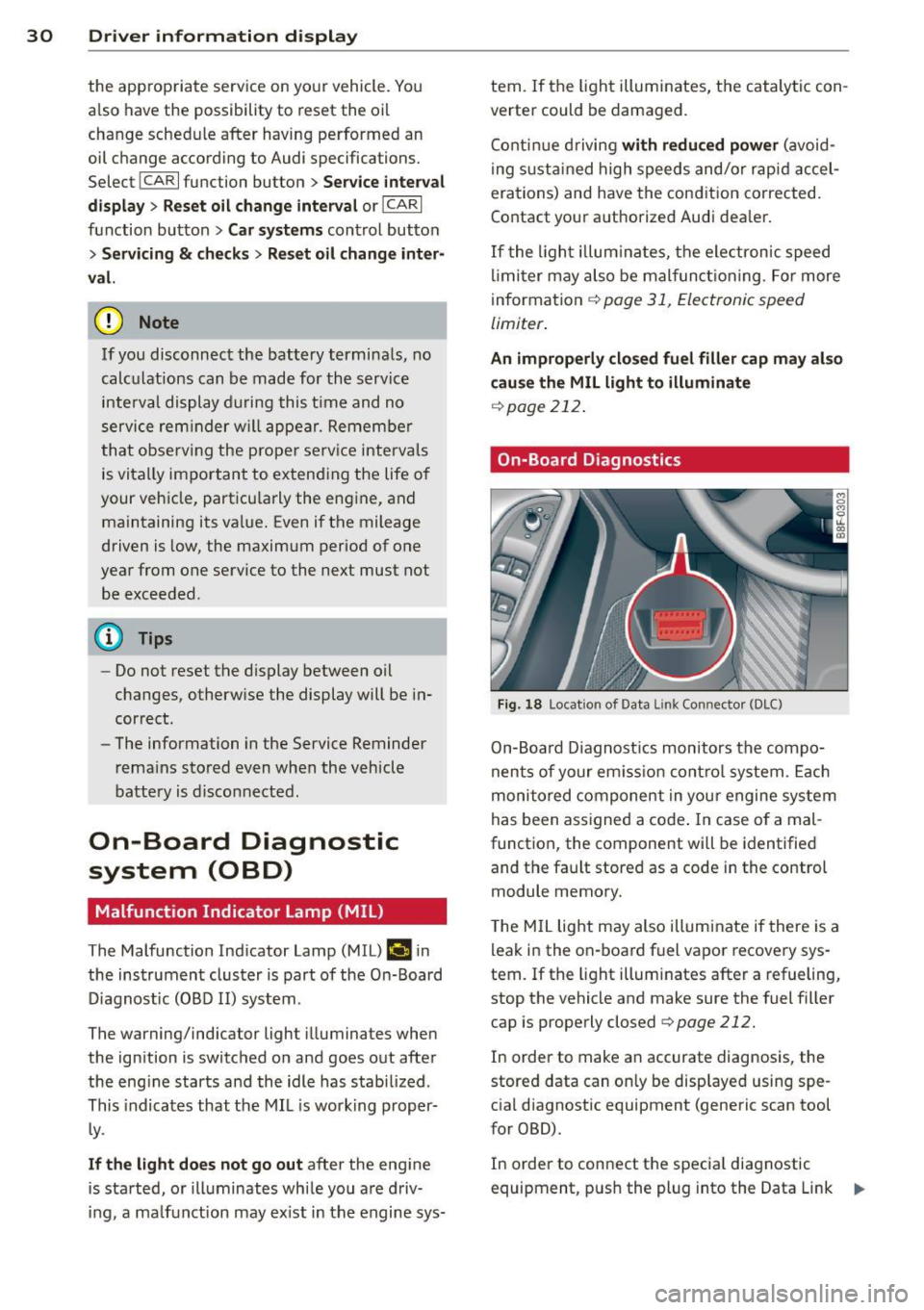
Fig. 18 Locat ion of Data L ink Connector (DLC)
On-Board Diagnostics monitors the compo
nents of your em ission control system . Each
monitored component in your engine system
has been assigned a code . In case o f a mal
function, the component will be identified
and the fault stored as a code in the control
module memory.
T he MIL light may also illuminate if there is a
leak in the on-board fuel vapor recovery sys
tem.
If the light illuminates after a refueling,
stop the vehicle and make sure the fuel filler
cap is properly closed
q page 212.
In order to make an accurate diagnosis, the
stored data can on ly be displayed using spe
cial diagnostic equipment (generic scan tool
for OBD).
In order to connect the special diagnostic
equipment, push the plug into the Data Link ..,.
Page 33 of 294

Connector (DLC). The DLC is located to the
right of the hood release¢
fig. 18.
Your authorized Audi dealer or qualified work
shop can interpret the code and perform the
necessary repair.
~ WARNING
Do not use the diagnostic connector for
personal use. Incorrect usage can cause
malfunctions, which can increase the risk
of a coll is ion!
Electronic speed limiter
-
Your veh icle may be factory equipped with
tires that are rated for a maximum speed of 130 mph (210 km/h). This is may be less than
the maximum speed of your ve hicle. To reduce
the risk of sudden tire failure and loss of con
trol if the vehicle is operated at excess ive
speeds, your vehicle has an e lectronic speed
limiter. The electronic speed limiter prevents
your vehicle from going faster than the t ire
speed rating. For more information
¢page 241.
If the engine contro l unit receives fau lty vehi
cle roadspeed signals, the Malfunction Indica
tor Light (MIL)
(llllij will illuminate . If this oc
curs, contact the nearest authorized Audi
dealer for assistance .
A WARNING
-
Always observe the posted speed limits
and adjust your speed to suit prevailing
road, traffic and weather conditions. Never
drive your vehicle faster than the maxi
mum speed rating of the tires insta lled .
Driver information display 31
Page 39 of 294

- You cannot open the doors or the rear lid
from the
outside (increased security, for ex
ample when you are stopped at a red light).
- The diodes in the power locking switches il
luminate when all the doors are closed and
locked.
- Front doors: you can unlock and open the
doors from the inside by pu lling on the door
handle .
- Rear doors: pull the door handle
once to re
lease the lock . Pull the hand le
again to open
the door.
- If you have a crash and the airbag is activat
ed, the doors automatically unlock.
A WARNING
- The power locking switch works with the
ignition off and automatically locks the
entire vehicle when it is actuated .
- On a vehicle locked from the outside the
power locking system switch is inopera
t ive .
- locked doors make it more difficult for
emergency workers to get into the vehi
cle, which puts lives at risk . Do not leave
anyone behind in the vehicle, especially
ch ildren.
@ Tips
Your vehicle is locked automatically at a
speed of
9 mph (15 km/h) (Auto lock)
r=:>poge 32. You can unlock the vehicle
again using the opening function in the
power locking system switch[@].
Setting power locking
In the radio/MM!*, you con set which doors
the central locking system will unlock.
~ Select : ICARI funct ion button > Central lock
ing .
Or
~ Select: ~ I C~ A~R ~I funct ion button > Car systems
control button > Vehicle settings > (Central
locking)*.
Single door unlocking /Unlock doors * -
you
can specify which doors unl ock when you open
the vehicle .
Opening and closing 3 7
- Select ing off/All and pressing the Im button
on the remote control key unlocks the entire
veh icle.
- Selecting
on/Driver and pressing the Im but
ton on the remote control key once un locks
only the driver's door. In vehicles with a con
venience key*, only the door whose handle
you pull will unlock. If you press the
l@J but
ton twice, the entire vehicle will unlock . If
you press the
Ii button, the entire vehicle
w ill always lock .
luggage comp. lock/Lock exterior trunk han
dle -
If you select On, you can no longer open
the luggage compartment using the rear lid
handle
r=:> page 39, fig. 28. In this case, the
rear lid can be opened with the
l""'I bu tto n on
the master key
r=:> page 35, fig. 22 or with the
l""'I * button in the driver's door.
Tone when locking -if you select On, a tone
will sound when you lo ck the vehicle.
Auto Lock /Lock when driving -if you select
On, the entire vehicle w ill lock automatically
when the speed reaches 9 mph (IS km/h).
Emergency locking
Fig. 25 D rive r's doo r: lock cylinder
Fig . 26 Fro nt passenger 's doo r/ rear doors*: eme rgency
lock .,..
Page 41 of 294

Rear lid
Opening/closing rear lid
Fig. 27 Drive r"s door: re m ote rear lid rele ase
Fig. 28 Rear lid: handle
Opening the rear lid
.,. Press the button .c::5 on the remote control
master key for at least one second. The rear
lid unlocks and opens slightly . Or
.,. Pull the release button
.c::5 in the driver's
door
q fig. 2 7. Or
.,. Press the handle on the rear lid
¢fig . 28.
Closing the rear lid
.,. Pull the rear lid down at the grip on the in
side and allow it to drop gently to close it
¢ ,&. .
A WARNING
-After closing the rear lid, always pull up
on it to make sure that it is properly
closed. Otherwise it could open sudden ly
when the veh icle is moving .
- To help prevent poisonous exhaust gas
from being drawn into the vehicle, al
ways keep the rear lid closed while driv
ing. Never transport objects larger than
those which fit comp letely into the lug-
Opening and closing 39
gage area, because then the rear lid can
not be fully closed.
- Never leave your vehicle unattended es
pecia lly with the rear lid left open. A
child could craw l into the car through the
luggage compartment and pull the lid
shut, becoming trapped and unable to
get out. To reduce the risk of personal in
jury, never let childre n play in or around
your vehicle. Always keep the rear lid as
well as the vehicle doors closed when not
in use.
- Always ensure that no one is within
range of the rear lid when it is moving, in
particular close to the hinges -fingers or
hands can be pinched .
@ Tips
When the vehicle is locked, the rear lid can
be opened separately by pressing the but
ton
.c::5 on the master key . When you close
the rear lid aga in, it locks automat ica lly.
Rear lid emergency release
Applies to vehicles: wi th fixed rear seat back rest
Fig. 29 Rear be nch s eat: eme rgen cy re lease cab le
On vehicles with fixed seat backrest*, the rear
lid can be opened from the rear bench seat us
ing the emergency re lease .
.,. Carefully pull the left side of the rear bench
seat out of its retainer until you can reach
the release cable¢
fig. 29.
.,. Remove the adhesive tape @.
.,. Pull on the loop ® until the rear lid releas
es .
... Tape the release cable back in place and
press the bench seat back into its retainer .
liJ,
Page 43 of 294

Opening th e windows
"' Press the switch to the firs t stop and hold it
until the window reaches the desi red posi
tion.
"' Press the switch briefly to the se cond stop
to automatically open the window .
Cl os ing th e windows
"' Pull the swi tch to the first sto p and hold it
until the window reaches the desi red posi
tion .
"' Pu ll the switch brief ly to the sec on d st op to
automatica lly close the window.
P ow er w ind ow switch es
@ Driver's door
@ Passenger's door
© Left rea r door
@ R ight rear door
® Safety button
Child safety loc ks
When the safety button® is pressed
c::> fig. 32, the ~ symbol in the button lights
up . The power w indow switches in the rear
doors are switched off.
A WARNING
- When you leave your veh icle - even if on
ly briefly - always remove the ign ition
key. This applies part icularly when chil
dren remain in the vehicle. Otherw ise the
children cou ld s tart the engine or oper
ate e lectr ica l equipment (e.g . power win
dows). The power windows a re f unction
al until the driver's door or passenger's
door has been opened.
- Pay close attention when closing the win
dows to prevent pinching of hands or
limbs.
- When locking the vehicle from outside,
the vehicle must be unoccupied s ince the
windows can no longer be opened in an
emergency.
Opening and clo sin g 41
(D Tips
After the ignition has been switched off,
the w indows can still be opened or closed
for about 10 minutes. The power windows
are not switched off until the driver's door
or passenger's door has been opened .
Convenience opening/closing
The windows and the power sunroof can be
opened and closed with the mechanical key or the emergency key.
Fig. 33 Key turns for opening and clos ing
Convenience opening feature
"' -0 0 t!, ., a,
"' Use the emergency key or pull the mechani
cal key out of the maste r key
c:? page 34.
"' Insert the key into the lock of the dr iver's
door.
"' Turn the key to position¢
fig. 33 @until all
the windows have reached the desired posi
tion and the power sunroof is open.
Convenience clo sing f eature
"' Use the emergency key or pull the mechani
cal key out of the master key¢
page 34.
"' Turn the key in the lock of the driver's door
to the lock position @ unt il the windows
and the power sunroof are closed¢
A.
A WARNING
- Never close the w indows and the power
sunroof inattentively and without check ing - there is r isk of injury.
- You must always watch when the win
dows are be ing raised so that no one can
be trapped. If you re lease the key, the
clos ing action is immediately canceled.
Page 46 of 294

44 Clear vision
Clear vision
Lights
Switching the lights on and off
Fig . 36 Instrument panel: headlight control switch
Light switch -~ -
Turn the switch c:> fig . 36 to the correspond ing
position . When the lights are switched on, the
,o o~ symbol turns on.
0 -The lights are off or the daytime running
lights are on:
- USA models: The daytime running lights are
activated when the light switch
c:> fig . 36 is
in the
O position or the AUTO position (only
in daylight conditions) . The daytime running
lights function can be turned on and off in
the radio or MMI* menu
Exterior lighting
c:> page 45, c:> ,&. .
-Canada models: The daytime running lights
are activated when the light switch
c:>fig . 36
is in the O position, :oo; position or the AUTO
position (only in daylight conditions). The
daytime running lights function cannot be
turned off
c:> & .
AUTO* -Automatic headlights switch on and
off depending on brightness, for example in
twilight, during rain or in tunnels
c:> & .
:o o; -Side marker lights
io -Low beam headlights
Fog lights/rear fog light(s)*
Press the appropriate button c:> fig. 36:
}0 -Fog lights
0$ -Rear fog light(s)
adaptive light*
When switched on, adaptive light adapts to
curves in the road depending on the vehicle
speed and the steering angle. This provides
b etter lighting through the curve . The system
operates at speeds between app roximately
6 mph (10 km/h) and 68 mph (110 km/h).
Static cornering light* (vehicles with adaptive
light) - the cornering light switches on at
speeds up to approximately 25 mph (40 km/
h) when a certain steering wheel angle is
reached or when a turn signal is activated. The
area to the side of the vehicle is illuminated
better when turning .
The adaptive light and the co rnering light only
function when the switch is in the AU TO posi
tion (automatic headlights*) .
A WARNING
--
- Daytime running lights and automatic
headlights* are only intended to assist
the driver . They do not relieve the driver
of his responsibility to check the head
lights and to turn them on manually ac
cording to the current light and visibility
conditions. For example, fog cannot be
detected by the light sensors*. So always
switch on the headlights
io under these
weather conditions and when driving in
the dark.
- Crashes can happen when you cannot see
the road ahead and when you cannot be
seen by other motorists. Always turn on
the headlights so that you can see ahead
and so that others can see your car from
the back.
- Please obey all laws when using the
lighting systems described here.
(D Note
The rear fog lights* should only be turned
on in accordance with traffic regulation, as
the lights are bright for following traffic. ..,.
Page 47 of 294

(D Tips
-The light sensor * for headl ight control is
l ocated in the rear view m irror mount.
You should therefore not apply any st ick
ers to the windsh ield in this area in order
to prevent malfunctions or failures .
- Some exterior lighting functions can be
adjusted
¢ page 45.
-When yo u remove you r key from the igni
tion w hile the vehicle's lights are turned
on, a buzzer sounds as long as the driv
er's door is open.
- In cool or damp weather, t he ins ide of
the headlights, turn signa ls and tail
li ghts can fog ove r due to the tem pera
ture diffe ren ce betw een the inside and
outside. They will clear shor tly after
swi tching t hem on. This d oes not aff ect
the service life of the ligh ting.
- In the even t of a ligh t sensor malfunc
tion, the drive r is no tifie d in the inst ru
ment cluster disp lay ~
page 2 2.
Turn signals and high beam lever
The lever operates the turn signal s, the high
beams and the headlight flasher .
Fig. 37 Turn sig na l and high beam leve r
Turn signals ¢i ¢
The turn s ignals activate when you move the
l ever into a turn s ignal position when the ign i
tion is sw itched on.
(D -right turn signal
@ -Left turn signa l
The turn s ignal b links three times if you just
tap the lever . Clear
vi
sion 45
High beams and headlight flasher @:D
Move the lever to the corresponding posit io n:
@ -high beams on
@-high beams off or headlight flasher
T he ind icator light
II in the instr ument clus
ter turns on .
Notes on these features
-The turn signals on ly wor k w it h t he ignition
t urned on. The indica tor l igh ts
11 or II in
the instrument cluste r also blink .
- Aft er you have tu rned a corner, the turn s ig
na l swi tches off au tom atically .
- The
high beam wo rks only when the head
lights a re on. The indicator Ligh t. in the
instrumen t clus ter illuminates when the
high beams are on .
- The
headligh t flasher works on ly as long as
you ho ld the lever -even if the re are no
lights switched o n. The ind icator light
Ill i n
the inst rument cluster illuminates when you
use the headlight flasher.
&_ WARNING
Do not use the h igh beam or head light
flasher if you kn ow that these could b lind
oncom ing traffic.
Adjusting exterior lighting
The functions are selected in the radio or
MM!* .
.. Select: I CAR ! function b utton > Exter io r
light ing .
Or
.. Select: I CAR I function button > Car Systems
cont ro l butto n > Vehicle settings > Exterior
lighting .
Coming home (light when leav ing car )*,
Leaving home (light when unlocking car)*
The coming home function illumi nates the
area around the vehicle when the ignition is
switched off and the drive r's door is open ed.
Depend ing on ve hicle equipment, t he fu nction
can be sw itched on and off or the length of
time the lights rem ain on* can be ad justed . .._
Page 50 of 294

48 Clear vis ion
Turn the knob to the desi red position :
Q/P -In t his position , you can adjust the
d river's and front passenger's exter ior mirro rs
by turn ing the knob in the des ired direc tion.
(jjjl -The m irrors are h eated depending on the
outside temperatu re.
P assenger exterio r mirro r tilt funct ion*
( only with memory for ext erior mirrows)
To help you see the curb when backing into a
pa rking space, the surface of the m irror t ilts
slig htly . The knob m ust be in the
P posit ion
for this to happen .
You can ad just the ti lted mirro r surface by
turning the knob in the desired direction .
When you move out of reverse and into ano th
e r gear, t he new mirror posi tion is stored and
assigned to the key you are using .
The mir ro r goes bac k into its origina l posit io n
once yo u drive forward f aste r tha n 9 mph
(1 5 km/h) or switch the ignition off .
_& WARNING
Curved mirror s urfaces (convex or spheri
cal *) increase your field of view . Remem
ber that vehicles or other objects will ap
pear smaller and farther away than when
seen in a flat m irror. If you use this mirror
to estimate distances of following veh icles
when c hanging lanes , you co uld estimate
incorrectly and ca use an accident .
{CT) Note
- If you wash the vehicle in an automatic
ca r wash, you must fold t he exterior m ir
r o rs in to reduce the r is k of damage to
the mirrors .
(i) Tips
- The exterior mirro r settings are sto red
wi th the memory funct ion* c::>
page 58.
-If there should be a ma lfunct ion in the
electrical system, yo u can st ill adjust the
exter ior mirro rs by press ing the edge of
t h e m irror. Dimming the mirrors
F
ig. 43 Auto matic dimmin g rearview m ir ro r*
Manu al d imming rear view m irror
• Pull the lever on the bottom of the m irror
back .
Automat ic dimming rearview mirror*
....
• Press the button @c::> fig. 43. The indica tor
light @turns on . The rearview and exter io r*
mirrors dim a utomatically when light shines
on them, for example from head lights on a
veh icle to the rear.
_& WARNING ..__
Electro lyte fluid can leak from automatic
d imm ing mirrors if the glass is b roken .
E lec trolyte fluid can irritate skin, eyes a nd
r espirato ry system.
- Repeated or prolonged expos ure to e lec
trolyte can cause irritation to the respira
t ory syste m, especially among people
with asthma or o ther resp irator y condi
tions . Ge t fresh air immediately by leav
ing the vehicle o r, if that is no t possib le,
open windows and doors all the way.
- If electroly te gets into the eyes, fl ush
them thorough ly with large amounts of
clean water fo r at least 15 minutes;
medical attention is recommended.
- If electrolyte contacts skin, fl ush affect
ed area with clean water fo r at least 15
minutes and then wash affected area
with soap and water; medical attention
is recommended. Thoroughly wash af
fected cloth ing and shoes before reuse.