2012 Seat Ibiza 5D window
[x] Cancel search: windowPage 5 of 280

Table of Contents
Manual structure . . . . . . . . . . . . . . . . . . . . 5
Content . . . . . . . . . . . . . . . . . . . . . . . . . . . . . . . . 6
Safety First . . . . . . . . . . . . . . . . . . . . . . . . . . . . 7
Safe driving . . . . . . . . . . . . . . . . . . . . . . . . . . . . . . . 7
Brief introduction . . . . . . . . . . . . . . . . . . . . . . . . . 7
Proper sitting position for occupants . . . . . . . . . 10
Pedal area . . . . . . . . . . . . . . . . . . . . . . . . . . . . . . . 16
Storing objects . . . . . . . . . . . . . . . . . . . . . . . . . . . 16
Seat belts . . . . . . . . . . . . . . . . . . . . . . . . . . . . . . . . . 18
Brief introduction . . . . . . . . . . . . . . . . . . . . . . . . . 18
Why wear seat belts? . . . . . . . . . . . . . . . . . . . . . . 20
Seat belts . . . . . . . . . . . . . . . . . . . . . . . . . . . . . . . 24
Seat belt tensioners* . . . . . . . . . . . . . . . . . . . . . . 27
Airbag system . . . . . . . . . . . . . . . . . . . . . . . . . . . . . 29
Brief introduction . . . . . . . . . . . . . . . . . . . . . . . . . 29
Front airbags . . . . . . . . . . . . . . . . . . . . . . . . . . . . . 33
Side airbags . . . . . . . . . . . . . . . . . . . . . . . . . . . . . 37
Deactivating airbags* . . . . . . . . . . . . . . . . . . . . . . 40
Child safety . . . . . . . . . . . . . . . . . . . . . . . . . . . . . . . 42
Brief introduction . . . . . . . . . . . . . . . . . . . . . . . . . 42
Child seats . . . . . . . . . . . . . . . . . . . . . . . . . . . . . . . 44
Securing child seats . . . . . . . . . . . . . . . . . . . . . . . 47
Operating Instructions . . . . . . . . . . . . . 53
Cockpit . . . . . . . . . . . . . . . . . . . . . . . . . . . . . . . . . . . 53
Overview . . . . . . . . . . . . . . . . . . . . . . . . . . . . . . . . 53
Instruments . . . . . . . . . . . . . . . . . . . . . . . . . . . . . . 55 LPG system* . . . . . . . . . . . . . . . . . . . . . . . . . . . . . 56
Digital instrument panel display . . . . . . . . . . . . . 57
Warning lamps . . . . . . . . . . . . . . . . . . . . . . . . . . . 63
Steering column controls* . . . . . . . . . . . . . . . . . 76
General information . . . . . . . . . . . . . . . . . . . . . . . 76
Audio Control . . . . . . . . . . . . . . . . . . . . . . . . . . . . . 77
Audio + Telephone Control . . . . . . . . . . . . . . . . . . 78
Opening and closing . . . . . . . . . . . . . . . . . . . . . . 80
Central locking . . . . . . . . . . . . . . . . . . . . . . . . . . . 80
Keys . . . . . . . . . . . . . . . . . . . . . . . . . . . . . . . . . . . . 85
Radio frequency remote control* . . . . . . . . . . . . . 86
Anti-theft alarm system* . . . . . . . . . . . . . . . . . . . 88
Rear lid . . . . . . . . . . . . . . . . . . . . . . . . . . . . . . . . . . 91
Windows . . . . . . . . . . . . . . . . . . . . . . . . . . . . . . . . 93
Panoramic tilting sunroof* . . . . . . . . . . . . . . . . . . 96
Lights and visibility . . . . . . . . . . . . . . . . . . . . . . . . 98
Lights . . . . . . . . . . . . . . . . . . . . . . . . . . . . . . . . . . . 98
Interior lights . . . . . . . . . . . . . . . . . . . . . . . . . . . . . 105
Visibility . . . . . . . . . . . . . . . . . . . . . . . . . . . . . . . . . 106
Windscreen wipers . . . . . . . . . . . . . . . . . . . . . . . . 107
Rear view mirrors . . . . . . . . . . . . . . . . . . . . . . . . . . 110
Seats and storage compartments . . . . . . . . . . 113
The importance of correct seat adjustment . . . . . 113
Head restraints . . . . . . . . . . . . . . . . . . . . . . . . . . . 114
Front seats . . . . . . . . . . . . . . . . . . . . . . . . . . . . . . . 116
Rear seats . . . . . . . . . . . . . . . . . . . . . . . . . . . . . . . 118
Storage compartment . . . . . . . . . . . . . . . . . . . . . . 120
Ashtrays, cigarette lighter and power socket . . . 123
First-aid kit, warning triangle, fire extinguisher* 125
Luggage compartment . . . . . . . . . . . . . . . . . . . . . 126
Air conditioning . . . . . . . . . . . . . . . . . . . . . . . . . . . 128
Heating . . . . . . . . . . . . . . . . . . . . . . . . . . . . . . . . . 128
Air conditioning* . . . . . . . . . . . . . . . . . . . . . . . . . . 131 Climatronic . . . . . . . . . . . . . . . . . . . . . . . . . . . . . . 134
General notes . . . . . . . . . . . . . . . . . . . . . . . . . . . . 136
Driving . . . . . . . . . . . . . . . . . . . . . . . . . . . . . . . . . . . . 138
Steering . . . . . . . . . . . . . . . . . . . . . . . . . . . . . . . . . 138
Safety . . . . . . . . . . . . . . . . . . . . . . . . . . . . . . . . . . . 139
Ignition lock . . . . . . . . . . . . . . . . . . . . . . . . . . . . . . 139
Starting and stopping the engine . . . . . . . . . . . . 141
Start-Stop function* . . . . . . . . . . . . . . . . . . . . . . . 144
Manual gearbox . . . . . . . . . . . . . . . . . . . . . . . . . . 147
Automatic gearbox* . . . . . . . . . . . . . . . . . . . . . . . 148
Handbrake . . . . . . . . . . . . . . . . . . . . . . . . . . . . . . . 155
Acoustic parking aid system* . . . . . . . . . . . . . . . 157
Cruise speed* (Cruise control system) . . . . . . . . 159
Practical Tips . . . . . . . . . . . . . . . . . . . . . . . . . 163
Intelligent technology . . . . . . . . . . . . . . . . . . . . . 163
Brakes . . . . . . . . . . . . . . . . . . . . . . . . . . . . . . . . . . 163
Anti-lock brake system and traction control ABS 164
Electronic Stability Control (ESC)* . . . . . . . . . . . . 165
Driving and the environment . . . . . . . . . . . . . . . 168
Running-in . . . . . . . . . . . . . . . . . . . . . . . . . . . . . . . 168
Exhaust gas purification system . . . . . . . . . . . . . 169
Economical and environmentally friendly driving 171
Driving abroad . . . . . . . . . . . . . . . . . . . . . . . . . . . . 173
Trailer towing . . . . . . . . . . . . . . . . . . . . . . . . . . . . . 173
Vehicle maintenance and cleaning . . . . . . . . . 176
General notes . . . . . . . . . . . . . . . . . . . . . . . . . . . . 176
Care of the vehicle exterior . . . . . . . . . . . . . . . . . . 177
Vehicle interior maintenance . . . . . . . . . . . . . . . . 182
3
Table of Contents
Page 10 of 280
8Safe driving
you and your passengers can achieve the greatest possible benefit from the
safety equipment fitted. This manual includes important warnings that you
and your passengers should note in order to reduce the risk of injury.
Safety is everyone's business!
Before setting off
The driver is always responsible for the safety of the passen-
gers and the safe operation of the vehicle.
For your own safety and the safety of your passengers, always note
the following points before every trip:
– Make sure that the vehicle's lights and turn signals are working
properly.
– Check tyre pressure.
– Ensure that all windows provide a clear and good view of the
surroundings.
– Secure all baggage. ⇒ page 16.
– Make sure that no objects can interfere with the pedals.
– Adjust front seat, head restraint and rear vision mirrors properly
according to your size.
– Ensure that the passenger in the central rear seat always has
the head restraint in the correct position for use.
– Instruct passengers to adjust the head restraints according to
their height. –
Protect children with appropriate child seats and properly ap-
plied seat belts ⇒ page 42.
– Assume the correct sitting position. Instruct your passengers al-
so to assume a proper sitting position. ⇒ page 10.
– Fasten your seat belt securely. Instruct your passengers also to
fasten their seat belts properly. ⇒ page 18.
What affects driving safety?
Driving safety is largely determined by your driving style
and the personal behaviour of all vehicle occupants.
As a driver, you are responsible for yourself and your passengers.
When your concentration or driving safety is affected by any cir-
cumstance, you endanger yourself as well as others on the road
⇒
, for this reason:
– Always pay attention to traffic and do not get distracted by pas-
sengers or telephone calls.
– Never drive when your driving ability is impaired (e.g. by medi-
cation, alcohol, drugs).
– Observe traffic laws and speed limits.
– Always reduce your speed as appropriate for road, traffic and
weather conditions.
– When travelling long distances, take breaks regularly - at least
every two hours.
– If possible, avoid driving when you are tired or stressed.
Page 14 of 280
12Safe driving
WARNING
● An incorrect sitting position of the front passenger can lead to severe
injuries.
● Adjust the front passenger seat so that there is at least 25 cm be-
tween your chest and the dash panel. If distance is less than 25 cm, the
airbag system may not protect you properly.
● If your physical constitution prevents you from maintaining the mini-
mum distance of 25 cm, contact a specialised workshop. The workshop
will help you decide if special specific modifications are necessary.
● Always keep your feet in the footwell when the vehicle is moving;
never rest them on the dash panel, out the window or on the seat. An in-
correct sitting position exposes you to an increased risk of injury in case
of a sudden braking or an accident. If the airbag is triggered, you could
sustain severe injuries due to an incorrect sitting position.
● To reduce the risk of injury to the front passenger in events such as
sudden braking manoeuvres or an accident, never travel with the back-
rest tilted far back! The airbag system and seat belts can only provide op-
timal protection when the backrest is in an upright position and the front
passenger is wearing his or her seat belt properly. The further the seat
backrests are tilted to the rear, the greater the risk of injury due to incor-
rect positioning of the belt web or to the incorrect sitting position!
● Adjust the head restraint correctly in order to achieve maximum pro-
tection.
Correct sitting position for passengers in the rear seats
Passengers in the rear seats must sit up straight, keep their
feet on the footwells, have the rear central head restraint
positioned for use and wear their seat belts properly.
To reduce the risk of injury in the event of a sudden braking ma-
noeuvre or an accident, passengers on the rear seat bench must
consider the following:
– Adjust the head restraint to the correct position ⇒ page 13.
– Always keep both feet in the footwell in front of the rear seat.
– Fasten your seat belt securely ⇒ page 18.
– Use an appropriate child restraint system when you take chil-
dren in the vehicle ⇒ page 42.
WARNING
● If the passengers in the rear seats are not sitting properly, they could
sustain severe injuries.
● Adjust the head restraint correctly in order to achieve maximum pro-
tection.
● Seat belts can only provide optimal protection when seat backrests
are in an upright position and the vehicle occupants are wearing their
seat belts correctly. If passengers In the rear seats are not sitting in an
upright position, the risk of injury due to incorrect positioning of the seat
belt increases.
Page 16 of 280
14Safe driving
Rear head restraints
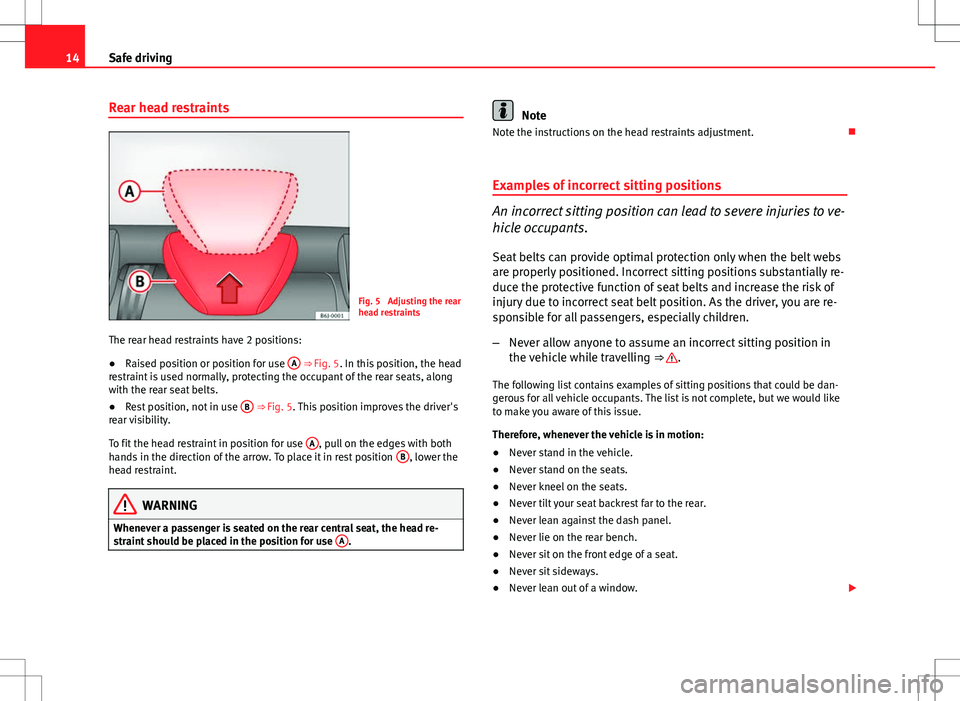
Fig. 5 Adjusting the rear
head restraints
The rear head restraints have 2 positions:
● Raised position or position for use A
⇒ Fig. 5. In this position, the head
restraint is used normally, protecting the occupant of the rear seats, along
with the rear seat belts.
● Rest position, not in use B
⇒ Fig. 5. This position improves the driver's
rear visibility.
To fit the head restraint in position for use A
, pull on the edges with both
hands in the direction of the arrow. To place it in rest position B, lower the
head restraint.
WARNING
Whenever a passenger is seated on the rear central seat, the head re-
straint should be placed in the position for use A
.
Note
Note the instructions on the head restraints adjustment.
Examples of incorrect sitting positions
An incorrect sitting position can lead to severe injuries to ve-
hicle occupants.
Seat belts can provide optimal protection only when the belt webs
are properly positioned. Incorrect sitting positions substantially re-
duce the protective function of seat belts and increase the risk of
injury due to incorrect seat belt position. As the driver, you are re-
sponsible for all passengers, especially children.
– Never allow anyone to assume an incorrect sitting position in
the vehicle while travelling ⇒
.
The following list contains examples of sitting positions that could be dan-
gerous for all vehicle occupants. The list is not complete, but we would like
to make you aware of this issue.
Therefore, whenever the vehicle is in motion:
● Never stand in the vehicle.
● Never stand on the seats.
● Never kneel on the seats.
● Never tilt your seat backrest far to the rear.
● Never lean against the dash panel.
● Never lie on the rear bench.
● Never sit on the front edge of a seat.
● Never sit sideways.
● Never lean out of a window.
Page 17 of 280
15
Safe driving
● Never put your feet out of a window.
● Never put your feet on the dash panel.
● Never put your feet on the surface of a seat.
● Do not allow anyone to travel in the footwell.
● Never travel without wearing the seat belt.
● Do not allow anyone to travel in the luggage compartment.
WARNING
● Any incorrect sitting position increases the risk of severe injuries.
● Sitting in an incorrect position exposes the vehicle occupants to se-
vere injuries if airbags are triggered, by striking a vehicle occupant who
has assumed an incorrect sitting position.
● Before the vehicle moves, assume the proper sitting position and
maintain it throughout the trip. Before every trip, instruct your passen-
gers to sit properly and to stay in this position during the trip ⇒ page 10,
Proper sitting position for occupants.
Safety FirstOperating InstructionsPractical TipsTechnical Specifications
Page 19 of 280
17
Safe driving
– Distribute the load evenly in the luggage compartment.
– Place heavy objects as far forward as possible in the luggage
compartment.
– Place the heavy objects first.
WARNING
● Loose luggage and other objects in the luggage compartment could
cause serious injuries.
● Always put objects in the luggage compartment.
● During sudden manoeuvres or accidents, loose objects can be thrown
forward, injuring vehicle occupants or even third parties. This increased
risk of injury will be further increased if a loose object is struck by an in-
flating airbag. If this happens, objects can be transformed into “mis-
siles”. Risk of fatal injury.
● Please note that the centre of gravity may shift when transporting
heavy objects; this may affect vehicle handling and lead to an accident.
Therefore, it is essential to adjust your speed and driving style accord-
ingly, to avoid accidents.
● Never exceed the allowed axle weights or allowed maximum weight.
If the allowed axle load or the allowed total weight is exceeded, the driv-
ing characteristics of the vehicle may change, leading to accidents, inju-
ries and damage to the vehicle.
● Never leave your vehicle unattended, especially when the rear lid is
open. Children could climb into the luggage compartment, closing the
door behind them; they will be trapped and run the risk of death.
● Never allow children to play in or around the vehicle. Close and lock
all the doors and rear lid when you leave the vehicle. Before you lock the
vehicle, make sure that there are no adults or children in the vehicle.
● Never transport passengers in the luggage compartment. All vehicle
occupants must have their seat belt fastened ⇒ page 18.
Note
● Air circulation in the vehicle helps reduce fogging of the windows. Used
air escapes through ventilation slits in the side trim of the luggage compart-
ment. Ensure that the ventilation slits are never covered.
Safety FirstOperating InstructionsPractical TipsTechnical Specifications
Page 55 of 280

53
Cockpit
Operating Instructions Cockpit
Overview Overview of the dash panel
This overview will help you to familiarise yourself with the
controls and displays. Door release lever
Light switch . . . . . . . . . . . . . . . . . . . . . . . . . . . . . . . . . . . . . . . . . . . . . . . 98
Light dimmer for instrument panel lighting* . . . . . . . . . . . . . . . .100
Headlight range control* . . . . . . . . . . . . . . . . . . . . . . . . . . . . . . . . . . 100
Air vents
Turn signal and dipped beam lever and cruise control sys-
tem* . . . . . . . . . . . . . . . . . . . . . . . . . . . . . . . . . . . . . . . . . . . . . . . . . . . . . 104, 159
Instrument panel and warning lamps:
– Instruments . . . . . . . . . . . . . . . . . . . . . . . . . . . . . . . . . . . . . . . . . . . . 55
– Control and warning lamps . . . . . . . . . . . . . . . . . . . . . . . . . . . . . . 63
Horn (only works when the ignition is on)/ and driver
front airbag* . . . . . . . . . . . . . . . . . . . . . . . . . . . . . . . . . . . . . . . . . . . . . . 29
Steering and starter lock . . . . . . . . . . . . . . . . . . . . . . . . . . . . . . . . . . 139
Windscreen wiper and windscreen wash lever* and opera-
tion of the multifunction display* . . . . . . . . . . . . . . . . . . . . . . . . . .107, 107, 59
Radio
Glove compartment/Storage compartment . . . . . . . . . . . . . . . . .120
Passenger airbag* . . . . . . . . . . . . . . . . . . . . . . . . . . . . . . . . . . . . . . . . 33
1
23456
7
8
910
111213
Switches for:
–
Heating and ventilation . . . . . . . . . . . . . . . . . . . . . . . . . . . . . . . . . 128
– Air conditioning* . . . . . . . . . . . . . . . . . . . . . . . . . . . . . . . . . . . . . . . 131
– Climatronic* . . . . . . . . . . . . . . . . . . . . . . . . . . . . . . . . . . . . . . . . . . . . 134
Cigarette lighter / Power socket . . . . . . . . . . . . . . . . . . . . . . . . . . . . 123
Drink holder/Ashtray . . . . . . . . . . . . . . . . . . . . . . . . . . . . . . . . . . . . . . 122
Controls on the centre console:
- Start-Stop operation button . . . . . . . . . . . . . . . . . . . . . . . . . . . . . . 144
- LPG gas system control button . . . . . . . . . . . . . . . . . . . . . . . . . . . . 143
- Tyre pressure monitoring* . . . . . . . . . . . . . . . . . . . . . . . . . . . . . . . . 71
- Heated rear window . . . . . . . . . . . . . . . . . . . . . . . . . . . . . . . . . . . . . . 102
- Heated seats* . . . . . . . . . . . . . . . . . . . . . . . . . . . . . . . . . . . . . . . . . . . 117
- Central locking* . . . . . . . . . . . . . . . . . . . . . . . . . . . . . . . . . . . . . . . . . . 83
Dash panel switches:
- ESC OFF . . . . . . . . . . . . . . . . . . . . . . . . . . . . . . . . . . . . . . . . . . . . . . . . . 139, 165
- Hazard warning lights . . . . . . . . . . . . . . . . . . . . . . . . . . . . . . . . . . . . 103
- Airbag disconnection warning lamp* . . . . . . . . . . . . . . . . . . . . . .30, 40
Handbrake lever . . . . . . . . . . . . . . . . . . . . . . . . . . . . . . . . . . . . . . . . . . 155
Automatic*/manual gear lever . . . . . . . . . . . . . . . . . . . . . . . . . . . . . 148, 147
Storage space
Pedals . . . . . . . . . . . . . . . . . . . . . . . . . . . . . . . . . . . . . . . . . . . . . . . . . . . . 16
Steering column control lever* . . . . . . . . . . . . . . . . . . . . . . . . . . . . . 138
Bonnet release lever . . . . . . . . . . . . . . . . . . . . . . . . . . . . . . . . . . . . . . 197
Steering column controls for audio and telephone* . . . . . . . . .76
14
151617
18192021222324
Safety FirstOperating InstructionsPractical TipsTechnical Specifications
Page 56 of 280
54Cockpit
Fuse housing . . . . . . . . . . . . . . . . . . . . . . . . . . . . . . . . . . . . . . . . . . . . . 226
Control for adjusting electric exterior mirrors* . . . . . . . . . . . . . . .111
Electric window controls* . . . . . . . . . . . . . . . . . . . . . . . . . . . . . . . . . . 93
Note
Some of the items of equipment listed here are fitted only on certain model
versions or are optional extras.
252627