2011 SKODA OCTAVIA ECU
[x] Cancel search: ECUPage 201 of 248

The fire extinguisher must be checked by an authorised person or company annu-
ally (please observe the differing legal requirements).
WARNING
If the fire extinguisher is not correctly attached, in case of sudden manoeu-
vres or an accident it can be “thrown” through the interior compartment and
cause injuries. Note
● The fire extinguisher must comply with the relevant and valid legal require-
ments.
● Pay attention to the expiration date of the fire extinguisher. If the fire extin-
guisher is used after the expiration date, its proper function is no longer assured.
● The fire extinguisher is only supplied in certain countries within the scope of
delivery.
Vehicle tool kit Fig. 162 Luggage compartment: Storage
compartment for vehicle too kit
The vehicle tool kit and the lifting jack with sticker are housed in a plastic box in
the spare wheel ⇒ fig. 162 or in the compartment for the spare wheel. There is al-
so space here for the removable ball for the trailer towing device. The box is at-
tached with a strap on the spare wheel. The vehicle tool kit contains the following parts (depending on equipment fitted):
● Wire clamps for removing the full wheel trims,
● Plastic clip for a wheel bolt cover,
● Wheel wrench,
● Towing eye,
● Adapter for the wheel bolts lock,
● Replacement lamp,
● Screwdriver for removing the fog lights 1)
.
Before placing the lifting jack back in its storage area, screw in the arm of the lift-
ing jack fully. WARNING
● The factory-supplied lifting jack is only intended for your model of vehicle.
On no account attempt to lift a heavier vehicle or other loads - risk of injury!
● Ensure that the vehicle tool kit is safely attached in the luggage compart-
ment. Note
Ensure that the box is always secured with the strap.
Spare wheel Fig. 163 Luggage compartment: Spare
wheel
The spare wheel lies in a well under the floor covering of the luggage compart-
ment and is fixed in place using special screws ⇒
fig. 163. £1)
Valid for Octavia RS and Octavia Scout. 199
Breakdown assistance Using the system Safety Driving Tips General Maintenance Breakdown assistance Technical data
Page 202 of 248
Before removing the spare wheel, you must take out the box with the vehicle tool
kit box ⇒ fig. 162 .
One should check the inflation pressure in the spare wheel (at best when general-
ly checking the tyre air pressures - see sign on the fuel filler flap ⇒ page 192) to
ensure that the spare wheel is always ready to use.
Temporary spare wheel
A warning label displayed on the rim of the temporary spare wheel indicates that
your vehicle is equipped with a temporary spare wheel.
Please observe the following notes when driving with a temporary spare wheel:
● The warning label must not be covered after installing the wheel.
● Do not drive faster than 80 km/h with this spare wheel and pay particular at-
tention while driving. Avoid accelerating at full throttle, sharp braking and fast
cornering.
● The inflation pressure for this spare wheel is identical to the inflation pressure
of the standard tyres. The temporary spare wheel R 18 must have an inflation
pressure of 420
kPa (4.2 bar)!
● Use this spare wheel only to reach the nearest specialist garage as it is not in-
tended for continuous use.
● No other summer or winter tyres must be mounted on the rim of the spare
wheel R 18.
Changing a wheel Preliminary work The following steps should be carried out before actually changing the wheel.
– If it is necessary to change a wheel, park the vehicle as far away as possible
from the traffic flow. The place you choose should be level.
– Have all the occupants get out. While changing a tyre, the occupants of the
vehicle should not stand on the road (instead they should remain behind a
crash barrier).
– Apply the handbrake firmly.
– Engage 1st gear or if your vehicle is fitted with an automatic gearbox, position
the selector lever into position P .
– If a trailer is coupled, uncouple it. –
Take the vehicle tool kit ⇒ page 199
and the spare wheel ⇒ page 199 out of
the luggage compartment. WARNING
● If you find yourself in flowing traffic switch on the hazard warning lights
system and place the warning triangle on the side of the road at the prescri-
bed distance from your vehicle. Comply with the national legal regulations. In
this way you are protecting not only yourself but also other road users.
● Never start the engine with the vehicle sitting on the raised jack - danger
of suffering injury. CAUTION
If you have to change a wheel on a slope first block the opposite wheel with a
stone or similar object in order to secure the vehicle from unexpectedly rolling
away. Note
Comply with the national legal regulations.
Changing a wheel Always change a wheel on a level surface as far as possible.
–
Take off the full wheel trim ⇒ page 201
or the caps ⇒ page 201.
– In the case of light alloy wheels remove the wheel trim cap ⇒
page 202.
– First of all slacken the safety wheel bolt and afterwards the other wheel bolts
⇒ page 202.
– Jack up the vehicle until the wheel to be changed is clear of the ground
⇒ page 203.
– Unscrew the wheel bolts and place them on a clean surface (cloth, paper, etc.).
– Take off the wheel.
– Fit on the spare wheel and tighten the wheel bolts slightly.
– Lower the car.
– Tighten the wheel bolts firmly, alternately and diagonally using the wheel
wrench (crosswise) and lastly the wheel safety bolt ⇒
page 202.
– Mount the full wheel trim/wheel trim cap or the caps. £200
Breakdown assistance
Page 203 of 248

Note
● All bolts must be clean and must turn easily.
● You must never grease or oil the wheel bolts!
● When fitting on unidirectional tyres, ensure that the tyres rotate in the correct
direction ⇒ page 192
.
Subsequent steps After changing the wheel, you must perform the following steps.
–
Stow and attach the replaced wheel in the spare wheel well using a special
screw ⇒ fig. 163 .
– Stow the vehicle tool kit in the space provided.
– Check the tyre pressure on the spare wheel just mounted as soon as possible.
– Have the tightening torque of the wheel bolts checked with a torque wrench
as soon as possible. Steel and light alloy wheels must be tightened to a tight-
ening torque of 120 Nm.
– Change the damaged wheel or consult a specialist garage about possibilities
for getting repairs done. WARNING
It is necessary to observe the guidelines given on ⇒
page 194 if the vehicle is
subsequently fitted with tyres which are different to those it was fitted with
at the works. Note
● If you find, when changing the wheel, that the wheel bolts are corroded and
difficult to turn, the bolts must be replaced before checking the tightening torque.
● Drive cautiously and only at a moderate speed to a workshop where the tight-
ening torque can be checked.
Full wheel trim Pulling off
–
Hook the clamp found in the vehicle tool kit into the reinforced edge of the full
wheel trim. –
Push the wheel key through the clamp, support the wheel key at the tyre and
pull off the wheel trim.
Install
– First press the full wheel trim onto the wheel at the valve opening provided.
Then press the full wheel trim into the wheel in such a way that its entire cir-
cumference locks correctly in place. CAUTION
● Use the pressure of your hand, do not knock on the full wheel trim! Heavy
knocks mainly on the points where the full wheel trim has not been inserted into
the wheel, can result in damage to the guide and centring elements of the full
wheel trim.
● Check for yourself that the safety wheel bolt is located in the hole in the area
of the valve before fitting the full wheel trim onto a steel wheel which is attached
with a safety wheel bolt ⇒
page 203, Securing wheels against being stolen.
Wheel bolts with caps Fig. 164 Removing the cap.
Pulling off
– Push the plastic clip sufficiently far onto the cap until the inner catches of the
clip are positioned at the collar of the cap and detach the cap ⇒ fig. 164 .
Install
– Push the caps fully onto the wheel bolts.
The caps are located in the well of the luggage compartment. 201
Breakdown assistance Using the system Safety Driving Tips General Maintenance Breakdown assistance Technical data
Page 205 of 248

Raise vehicle
You have to raise the vehicle with a lifting jack in order to be able
to take off the wheel.
Fig. 167 Changing a wheel: Jacking
points for positioning lifting jack
Fig. 168 Attach lifting jack
Position the lifting jack by selecting the jacking point which is closest to the wheel
to be removed
⇒ fig. 167 . The jacking point is located directly below the engraving
in the lower sill. The engraving is only visible after opening the door.
– Position the lifting jack below the jacking point and move it up until its claw is
positioned directly below the vertical web of the lower sill.
– Align the lifting jack so that its claw grasps the web ⇒ fig. 168 at the right be-
low the embossing in the side surface of the base plate.
– Make sure that the base plate of the lifting jack rests with its entire surface on
level ground and is located vertical to the point ⇒
fig. 168 where the claw
grasps the web.
– Turn the lifting jack up further until the wheel is just clear of the ground. WARNING
● Always raise the vehicle with the doors closed - risk of injury.
● Never position any body parts such as arms or legs under the vehicle, while
the vehicle is raised with a lifting jack.
● Secure the base plate of the lifting jack with suitable means to prevent
possible moving. A soft and slippery ground under the base plate may move
the lifting jack, causing the vehicle to fall down. It is therefore always neces-
sary to place the lifting jack on a solid surface or use a wide and stable base.
Use a non-slip base (e.g. a rubber foot mat) if the
surface is smooth, such as
cobbled stones, a tiled floor, etc.
● Attach the lifting jack only at the attachment points provided for this pur-
pose.
Securing wheels against being stolen You need a special adapter for slackening the safety wheel bolts.
Fig. 169 Illustration image: Safety
wheel bolt with adapter
– Pull off the full wheel trim/cap from the wheel hub or cap from the safety
wheel bolt.
– Insert the adapter B with its toothed side fully into the inner toothing of the
safety wheel bolt A right down in such a way that only the outer hexagon is
jutting out ⇒ fig. 169 .
– Insert the wheel wrench fully onto the adapter B .
– Slacken the wheel bolt, or tighten it firmly ⇒ page 202.
– Reinstall the full wheel trim/wheel cap after removing the adapter or place the
cap onto the safety wheel bolt. £ 203
Breakdown assistance Using the system Safety Driving Tips General Maintenance Breakdown assistance Technical data
Page 218 of 248
Turn signal light (at the front)
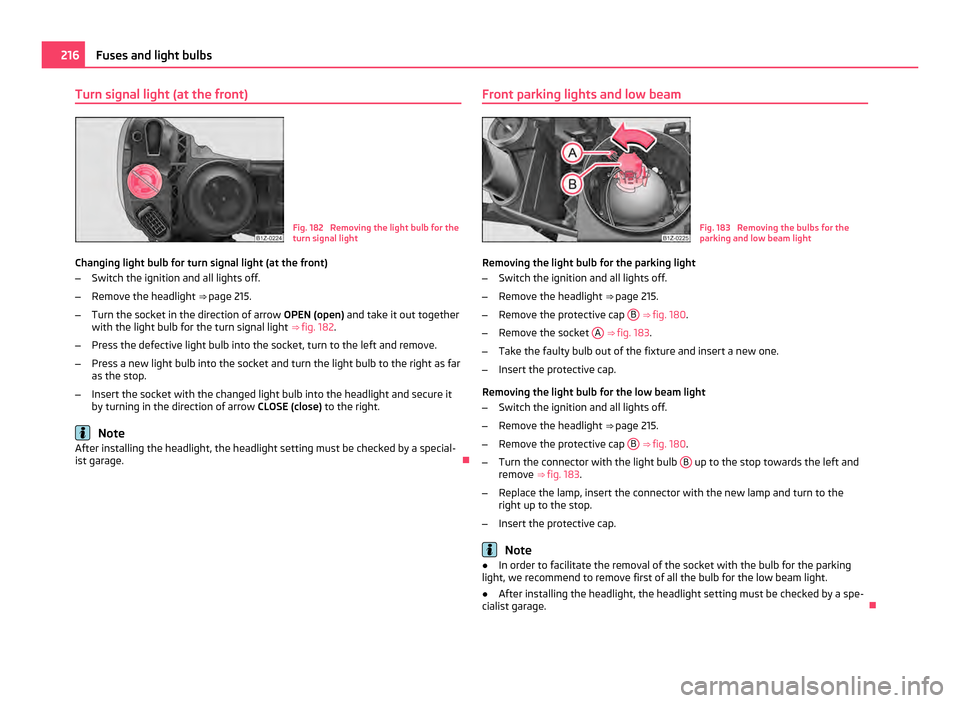
Fig. 182 Removing the light bulb for the
turn signal light
Changing light bulb for turn signal light (at the front)
– Switch the ignition and all lights off.
– Remove the headlight ⇒ page 215.
– Turn the socket in the direction of arrow OPEN (open) and take it out together
with the light bulb for the turn signal light ⇒ fig. 182 .
– Press the defective light bulb into the socket, turn to the left and remove.
– Press a new light bulb into the socket and turn the light bulb to the right as far
as the stop.
– Insert the socket with the changed light bulb into the headlight and secure it
by turning in the direction of arrow CLOSE (close) to the right.Note
After installing the headlight, the headlight setting must be checked by a special-
ist garage. Front parking lights and low beam Fig. 183 Removing the bulbs for the
parking and low beam light
Removing the light bulb for the parking light
– Switch the ignition and all lights off.
– Remove the headlight ⇒ page 215.
– Remove the protective cap B
⇒ fig. 180 .
– Remove the socket A
⇒ fig. 183 .
– Take the faulty bulb out of the fixture and insert a new one.
– Insert the protective cap.
Removing the light bulb for the low beam light
– Switch the ignition and all lights off.
– Remove the headlight ⇒ page 215.
– Remove the protective cap B
⇒
fig. 180 .
– Turn the connector with the light bulb B up to the stop towards the left and
remove ⇒ fig. 183 .
– Replace the lamp, insert the connector with the new lamp and turn to the
right up to the stop.
– Insert the protective cap. Note
● In order to facilitate the removal of the socket with the bulb for the parking
light, we recommend to remove first of all the bulb for the low beam light.
● After installing the headlight, the headlight setting must be checked by a spe-
cialist garage. 216
Fuses and light bulbs
Page 244 of 248

Overview of the engine compartment . . . . . . . . . . 182
P Paint
. . . . . . . . . . . . . . . . . . . . . . . . . . . . . . . . . . . . . . . . 172
Paint damage . . . . . . . . . . . . . . . . . . . . . . . . . . . . . . . . 172
Parking . . . . . . . . . . . . . . . . . . . . . . . . . . . . . . . . . . . . . 102
Parking aid Front and rear . . . . . . . . . . . . . . . . . . . . . . . . . . . . . . 103
rear . . . . . . . . . . . . . . . . . . . . . . . . . . . . . . . . . . . . . . . . 102
Parking light . . . . . . . . . . . . . . . . . . . . . . . . . . . . . . . . . 46
Parking the vehicle . . . . . . . . . . . . . . . . . . . . . . . . . . 102
Passive Safety . . . . . . . . . . . . . . . . . . . . . . . . . . . . . . . . 131
Payload . . . . . . . . . . . . . . . . . . . . . . . . . . . . . . . . . . . . . 221
Pedals . . . . . . . . . . . . . . . . . . . . . . . . . . . . . . . . . . . . . . . 101
Petrol . . . . . . . . . . . . . . . . . . . . . . . . . . . . . . . . . . . . . . . 176
Petrol engines Starting the engine . . . . . . . . . . . . . . . . . . . . . . . . 100
Polishing . . . . . . . . . . . . . . . . . . . . . . . . . . . . . . . . . . . . 172
Power socket . . . . . . . . . . . . . . . . . . . . . . . . . . . . . . . . . 77
Power steering . . . . . . . . . . . . . . . . . . . . . . . . . . . . . . 159 Warning light . . . . . . . . . . . . . . . . . . . . . . . . . . . . . . . . 24
Power windows . . . . . . . . . . . . . . . . . . . . . . . . . . . . . . . 38 Button in the driver's door . . . . . . . . . . . . . . . . . . . 38
Button in the front passenger door and in the rear doors . . . . . . . . . . . . . . . . . . . . . . . . . . . . . . . . . 40
Operational faults . . . . . . . . . . . . . . . . . . . . . . . . . . . . 41
with central locking system . . . . . . . . . . . . . . . . . . 40
R Radiator fan . . . . . . . . . . . . . . . . . . . . . . . . . . . . . . . . . 186
Rear-view mirror Exterior mirror . . . . . . . . . . . . . . . . . . . . . . . . . . . . . . . 57
Interior mirror . . . . . . . . . . . . . . . . . . . . . . . . . . . . . . . . 57
Rear armrest . . . . . . . . . . . . . . . . . . . . . . . . . . . . . . 66, 81
Rear fog light . . . . . . . . . . . . . . . . . . . . . . . . . . . . . . . . . 48 Warning light . . . . . . . . . . . . . . . . . . . . . . . . . . . . . . . . 23
Rear seats . . . . . . . . . . . . . . . . . . . . . . . . . . . . . . . . . . . . 64 Rear window
heater . . . . . . . . . . . . . . . . . . . . . . . . . . . . . . . . . . . . . . . 52
Rear window heater . . . . . . . . . . . . . . . . . . . . . . . . . . . 52
Recharge battery . . . . . . . . . . . . . . . . . . . . . . . . . . . . 189
Recommendation for changing gears . . . . . . . . . . . 13
Refuelling . . . . . . . . . . . . . . . . . . . . . . . . . . . . . . . . . . . 178
Remote control . . . . . . . . . . . . . . . . . . . . . . . . . . . . . . . 36 Synchronisation . . . . . . . . . . . . . . . . . . . . . . . . . . . . . . 37
Removing the seats . . . . . . . . . . . . . . . . . . . . . . . . . . . 65
Replacement of parts . . . . . . . . . . . . . . . . . . . . . . . . 197
Replacing fuses . . . . . . . . . . . . . . . . . . . . . . . . . . . . . . . 211
Replacing the wiper blades . . . . . . . . . . . . . . . . . . . . 56
Roof aerial . . . . . . . . . . . . . . . . . . . . . . . . . . . . . . . . . . 170
Running in the vehicle . . . . . . . . . . . . . . . . . . . . . . . . . 161
S
Safe securing . . . . . . . . . . . . . . . . . . . . . . . . . . . . . . . . . 32
Safety . . . . . . . . . . . . . . . . . . . . . . . . . . . . . . . . . . . . . . . 131
Safety information Engine compartment . . . . . . . . . . . . . . . . . . . . . . . . 181
Safety wheel bolts . . . . . . . . . . . . . . . . . . . . . . . . . . . 203
Saving electrical energy . . . . . . . . . . . . . . . . . . . . . . 162
Seat belt height adjuster Seat belts . . . . . . . . . . . . . . . . . . . . . . . . . . . . . . . . . . 137
Seat belts . . . . . . . . . . . . . . . . . . . . . . . . . . . . . . . . . . . 135 Belt tensioners . . . . . . . . . . . . . . . . . . . . . . . . . . . . . 138
Cleaning . . . . . . . . . . . . . . . . . . . . . . . . . . . . . . . . . . . . 175
fastening . . . . . . . . . . . . . . . . . . . . . . . . . . . . . . . . . . . 137
Safety information . . . . . . . . . . . . . . . . . . . . . . . . . . 136
taking off . . . . . . . . . . . . . . . . . . . . . . . . . . . . . . . . . . . 138
Warning light . . . . . . . . . . . . . . . . . . . . . . . . . . . . . . . 28
Seat belt warning light . . . . . . . . . . . . . . . . . . . . . . . 137
Seat heaters . . . . . . . . . . . . . . . . . . . . . . . . . . . . . . . . . . 66
Selector lever . . . . . . . . . . . . . . . . . . . . . . . . . . . . . . . . . 110
Selector lever-emergency unlocking . . . . . . . . . . . . 113
Selector lever lock Warning light . . . . . . . . . . . . . . . . . . . . . . . . . . . . . . . . 27
Selector lever positions . . . . . . . . . . . . . . . . . . . . . . . . 110
Service reminder indicator . . . . . . . . . . . . . . . . . . . . . 12 Setting temperature
Heating . . . . . . . . . . . . . . . . . . . . . . . . . . . . . . . . . . . . . 87
Setting the clock . . . . . . . . . . . . . . . . . . . . . . . . . . . . . . 13
Shifting . . . . . . . . . . . . . . . . . . . . . . . . . . . . . . . . . . . . . . 101
Side airbag . . . . . . . . . . . . . . . . . . . . . . . . . . . . . . . . . . 142
Side lights . . . . . . . . . . . . . . . . . . . . . . . . . . . . . . . . . . . . 44
Snow chains . . . . . . . . . . . . . . . . . . . . . . . . . . . . . . . . . 196
Spare wheel . . . . . . . . . . . . . . . . . . . . . . . . . . . . . . . . . 199
Speedometer . . . . . . . . . . . . . . . . . . . . . . . . . . . . . . . . . . 11
Stability system . . . . . . . . . . . . . . . . . . . . . . . . . . . . . . 154
START-STOP . . . . . . . . . . . . . . . . . . . . . . . . . . . . . . . . 105
Starting the engine . . . . . . . . . . . . . . . . . . . . . . . . . . . 99 after fuel tank has run empty . . . . . . . . . . . . . . . 100
Diesel engines . . . . . . . . . . . . . . . . . . . . . . . . . . . . . 100
Petrol engines . . . . . . . . . . . . . . . . . . . . . . . . . . . . . 100
START STOP . . . . . . . . . . . . . . . . . . . . . . . . . . . . . . . . . 208
Steering active driver-steering recommendation . . . . . . . 156
Steering force assistance . . . . . . . . . . . . . . . . . . . . . 159
Storage compartment Lighting . . . . . . . . . . . . . . . . . . . . . . . . . . . . . . . . . . . . . 51
Storage compartments . . . . . . . . . . . . . . . . . . . . . . . . 77
Storage facilities . . . . . . . . . . . . . . . . . . . . . . . . . . . . . . 77
Sun . . . . . . . . . . . . . . . . . . . . . . . . . . . . . . . . . . . . . . . . . . 52
Sun screen . . . . . . . . . . . . . . . . . . . . . . . . . . . . . . . . . . . 53
Switching off the engine . . . . . . . . . . . . . . . . . . . . . 100
Switch off Anti-spin regulation (ASR) Warning light . . . . . . . . . . . . . . . . . . . . . . . . . . . . . . . 26
T Tailgate Lighting . . . . . . . . . . . . . . . . . . . . . . . . . . . . . . . . . . . . . 52
Taking care of your vehicle . . . . . . . . . . . . . . . . . . . . 170
TCS . . . . . . . . . . . . . . . . . . . . . . . . . . . . . . . . . . . . . . . . . 156 Warning light . . . . . . . . . . . . . . . . . . . . . . . . . . . . . . . 26
Telephone . . . . . . . . . . . . . . . . . . . . . . . . . . . . . . . . 116, 122
Temperature outside . . . . . . . . . . . . . . . . . . . . . . . . . . . . . . . . . . . . . . 15
The first 1 500 kilometres . . . . . . . . . . . . . . . . . . . . . . 161 242
Index