2011 AUDI R8 SPYDER ECU
[x] Cancel search: ECUPage 116 of 244

114 Safety belts
vulnerable, soft tissue and cause serious injury.
- Always read and heed all WARNINGS and
other important information
¢page 110.
Pregnant women must also be properly
restrained
The best way to protect the fetus is to make
sure that expectant mothers always wear
safety belts correctly -throughout the preg
nancy .
Fig. 120 Safety belt position during p regnancy
To provide maximum protection, safety belts
must always be positioned correctly on the
wearer's body
¢ page 113.
.,. Adjust the front seat and head restraint cor
rectly¢
page 66, Seats and storage .
.,. Hold the belt by the tongue and pull it even
ly across the chest so that it sits as low as
possible on the pelvis and there is no pres
sure on the abdomen
c> fig. 120 c> ,& .
.,. Insert the tongue into the correct buckle of
your seat until you hear it latch securely
¢page 112, fig. 118.
.,. Pull on the belt to make sure that it is se
curely latched in the buckle.
_& WARNING
Improperly positioned safety belts can
cause serious personal injury in an acci
dent.
- Expectant mothers must always wear the
lap portion of the safety belt as low as
possible across the pelvis and below the
rounding of the abdomen. -
Always read and heed all WARNINGS and
other important information
c> & in Fas
tening safety belts on page 113.
Unfastening safety belts
Unbuckle the safety belt with the red release
button only a~er the vehicle has stopped.
Fig. 121 Releasing the tongue from the buck le
.,. Push the red release button on the buckle
c> fig . 121 . The belt tongue will spring out
of the buckle
c> ,& .
.,. Let the belt wind up on the retractor as you
guide the belt tongue to its stowed position .
_& WARNING
Never unfasten safety belt while the vehi
cle is moving. Doing so will increase your
risk of being injured or killed.
Improperly worn safety belts
Incorrectly positioned safety belts can cause
severe injuries .
Wearing safety belts improperly can cause se rious injury or death. Safety belts can only
work when they are correctly positioned on
the body. Improper seating positions reduce
the effectiveness of safety belts and will even
increase the risk of injury and death by mov
ing the safety belt to critical areas of the
body . Improper seating positions also in
crease the risk of serious injury and death
when an airbag deploys and strikes an occu pant who is not in the correct seating posi
tion. A driver is responsible for the safety of all vehicle occupants and especially for chil
dren. Therefore:
Page 148 of 244

146 Child Safety
will receive serious or possibly even fata l in
jury.
I n o rder for the airbag to offe r protection, it is
important that all vehicle occupants, especia l
l y any children, who must be in the front seat
because of exceptional circumstances, be
properly restrained and as far away from the
a irbag as poss ible. By keep ing room between
the child's body and the front of the passen
ger compartment, the airbag can inflate com
pletely and provide supplemental protection
in certain frontal collisions.
_& WARNING
Not using a booster seat, us ing the boos
ter sea t imprope rly, incorre ct ly ins talling a
booste r seat or using the vehicle safety
belt improperly increases the risk of seri
ous personal injury and death in a collision
or other emergency s ituation. To help re
duce the risk of ser ious persona l injury
and/or death:
-Always make sure to position the should
er port ion of the three-po int belt over
the midd le of ch ild's shou lder .
- Never let the shoulder port ion of the belt
rest against or across the neck, face,
chin , or throat of the child .
- Always make sure the lap belt portion of
the three-po int be lt is worn snug and
passes as low as possib le across the
child's pelvis. Neve r let the belt pass over
the soft abdomen .
- Failure to properly route safety belts
over a ch ild 's body will cause severe inju
ries in an ac ciden t or other emergency
situa tion
9 page 109 .
-Children on the front seat of any car,
even w ith Advanced A irbags, can be seri
o usly injured or even killed when an air
bag inf lates .
- Never le t a child sta nd or knee l on the
sea t.
- Never let a child ride in the ca rgo a rea of
yo ur vehicle .
- Always remember that a ch ild lean ing
forward, si tting s ideways or out of posi-
.
tion in any way d uring an accident can be
struck by a dep loying a irbag. This will re
sult in ser ious personal injury or death.
- If you must install a booster seat on the
front passenger seat because of excep
tional circumstances the
PASSENGER
AIR BAG OFF
li ght m ust come on and
stay on, whenever the ignition is switch
ed on.
- If the
PASSENGER AIR BAG OFF light
does not come on and stay on, pe rform
the che cks descr ibed
9 page 128, Moni
toring the Advan ced Airbag System.
- If the PASSENGER AIR BAG OFF li ght
does not come on and stay on whenever
the igni tion is switched on the infla ting
a ir bag w ill hi t the child sa fety seat or in
fant car rier with g reat force an d will
smash the child safety seat and child
aga inst the backrest, door or roof. Have
the airbag system inspected immed iately
by your Audi dea ler.
- Always read and heed all WAR NINGS
whenever using a child restrained in ave
h icle is being used
¢ page 109, Safety
belts, ~page 117, Airbag system
and
~ page 138, Important things to know.
Installing a child safety
seat
' Securing a child safety seat using a
safety belt
Safety belts for the front passenger con be
locked with the convertible locking retractor
to properly secure child safety seats .
The safety belts emergency locking retractors
for the front passenger's seat safety belt have
a convertible locking retracto r fo r ch ild re
st ra ints . The safety be lt must be loc ked so
that be lt webb ing ca nnot unree l. The retrac
tor can be act ivated to lock the safety belt and
prevent the safety be lt webb ing from loosen
ing up during norma l dr iv ing. A chi ld safety
seat can only be properly insta lled when t he
safety belt is locked so that the child and child
safety seat will stay in place. .,.
Page 176 of 244

174 Fuel supply and filling your fuel tank
• Pull the red loop in the direction of the ar
row until the fuel filler flap opens
¢ fig.
138 .
• Once the fuel filler flap is open, secure the
cable on the crossmember again.
• Close the engine compartment lid
¢ page
176 .
Page 178 of 244
176 Checking and filling
thick rag over the cap when you open the coolant reservoir .
-If work on the fuel system or the electri
cal system is necessary:
- Always disconnect the battery .
- Never smoke or work near heaters or
open flames. Fluids in the engine com partment could start a fire .
- Keep an approved fire extinguisher im
mediately available.
- To avoid electrical shock and personal in
jury while the engine is running or being
started, never touch:
- Ignition cables
- Other components of the high voltage
electronic ignition system.
- If you must perform a check or repair
with the engine running:
- First, fully apply the parking brake,
move selector lever of R tronic to "N"
(Neutral); put manual transmission in
Neutral.
- Always use extreme caution to prevent
clothing, jewelry, or long hair from get
ting caught in the radiator fan, V-belts
or other moving parts, or from contact
ing hot parts . Tie back hair before
starting, and wear no clothing that will
hang or droop into the engine.
- Minimize exposure to emission and
chemical hazards~&. .
.&_ WARNING
California Proposition 65 Warning:
- Engine exhaust, some of its constituents,
and certain vehicle components contain
or emit chemicals known to the State of
California to cause cancer and birth de
fects and reproductive harm. In addition,
certain fluids contained in vehicles and
certain products of component wear con
tain or emit chemicals known to the
State of California to cause cancer and
birth defects or other reproductive harm .
- Battery posts, terminals and related ac cessories contain lead and lead com
pounds, chemicals known to the State of California to cause cancer and
reproduc
tive harms. Wash hands after handling.
@ Note
When adding fluids, always make sure that
they are poured into the proper container
or filler opening, otherwise serious dam
age to vehicle systems will occur.
@ For the sake of the environment
To detect leaks in time, inspect the vehicle
floor pan from underneath regularly. If
you see spots from oil or other vehicle flu
ids, have your vehicle inspected by an au
thorized Audi dealer.
Closing the engine compartment lid
... Make sure that the rear spoiler is retracted
~page 152.
""Pull the engine compartment lid down until
the pressure from the struts is reduced.
.., Press the engine compartment lid closed
c::>& .
A WARNING ,_
A engine compartment lid that is not com
pletely latched could fly up and block your
view while driving.
- When you close the engine compartment lid, check it to make sure the safety catch
has properly engaged . The engine com
partment lid should be flush with the
surrounding vehicle body parts .
- If you notice while driving that the en
gine compartment lid is not secured properly, stop at once and close it.
Page 190 of 244
188 Checking and filling
(D Note
-Your vehicle is equipped with a specia l
battery. Installing a different type of
battery can cause prob lems in the vehi
cle electrical system. When replacing the
vehicle battery, always install one with
the same spec ificat ions as the original
batte ry .
- Make sure that the gas venting hose is
always connected to the o riginal open ing
on the battery side. Otherw ise gasses or
ba tte ry acid cou ld leak out .
- Battery ho lder and term inals a lways
have to be secured cor rectly.
- Read and follow the warnings under
9 page 185, Working on the battery be
fore performing any work on the batte ry.
@ For the sake of the environment
Because of the problem of proper disposal
of a battery, we recommend your author
ized Audi dealer change the batte ry for
you . Batter ies contain s ulf uric ac id and
lead and must always be disposed of prop
erly in compliance with all environmenta l
reg ulations. D isposing of vehicle batteries
improperly is very dangerous to the envi
ronment. Make sure that the removed bat
tery ca nnot overbalance, otherwise sulfu
r ic acid might escape!
Windshield washer
container
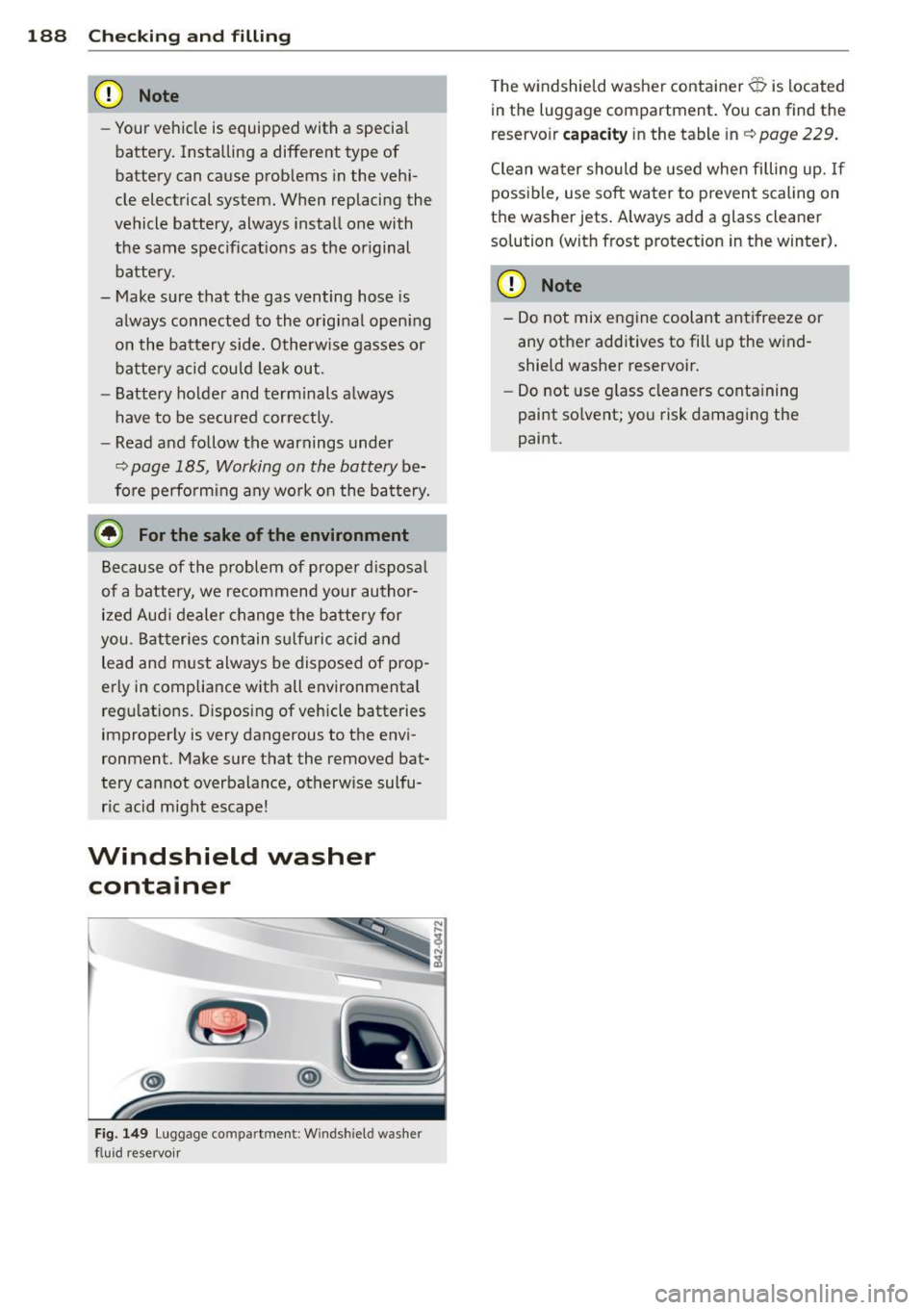
Fig. 149 Luggage co m pa rtment : W inds hield washer
fl uid reservo ir
T he windshield washer container O is located
in the luggag e compartment. You can find the
reservo ir
c a pacit y in the table in c::> page 229.
Clean water should be used when filling up. If
possible, use soft water to prevent scaling on
the washer jets . Always add a glass cleaner
solution (with frost protection in the winter) .
(D Note
-Do not mix engine coolant antifreeze or
any other additives to fill up the wind
shield washer reservoir.
- Do not use g lass cleaners conta ining
pai nt so lvent; you risk damaging the
paint.
Page 198 of 244

196 Tires and wheels
wheels you have to adjust the tire pressures
on all wheels.
A WARNING
Incorrect tire pressures and/or underinfla
tion can lead sudden tire failure, loss of
control, collision, serious personal injury
or even death.
- When the warning symbol
RI] appears in
the instrument cluster, stop and inspect
the tires .
- Incorrect tire pressure and/or underinfla
tion can cause increased tire wear and
can affect the handling of the vehicle and
stopping ability .
- Incorrect tire pressures and/or underin flation can also lead to sudden tire fail
ure, including a blowout and sudden de
flation, causing loss of vehicle control.
- The driver is responsible for the correct
tire pressures for all tires on the vehicle .
The applicable pressure values are locat
ed on a sticker on the driver's side 8-pil
lar.
- Only when all tires on the vehicle are fil
led to the correct pressure, the tire pres
sure monitoring system can work cor
rectly.
- The use of incorrect tire pressure values
can lead to accidents or other damage.
Therefore it is essential that the driver
observe the specified tire pressure values
for the tires and the correct pressures for
the function of the tire pressure monitor
ing system .
- Always inflate tires to the recommended
and correct tire pressure before driving
off .
- Driving with underinflated tires bend
more, letting them get too hot resulting
in tread separation, sudden tire failure
and loss of control.
- Excessive speed and/overloading can
cause heat build-up, sudden tire failure
and loss of control.
- If the tire pressure is too low or too high,
the tires will wear prematurely and the
vehicle will not handle well. -
If the tire is not flat and you do not have
to change a wheel immediately, drive at
reduced speed to the nearest service sta
tion to check the tire pressure and add
air as required .
(D Note
Driving without valve stem caps can cause
damage to the tire valves. To prevent this,
always make sure that factory installed
valve stem caps on all wheels are securely mounted on the valve.
@ For the sake of the environment
Underinflated tires will also increase the
fuel consumption .
Tires and vehicle load limits
There are limits to the amount of load or
weight that any vehicle and any tire can carry .
A vehicle that is overloaded will not handle
well and is more difficult to stop. Overloading
can not only lead to loss of vehicle control,
but can also damage important parts of the
vehicle and can lead to sudden tire failure, in cluding a blowout and sudden deflation that
can cause the vehicle to crash.
Your safety and that of your passengers also depends on making sure that load limits are
not exceeded. Vehicle load includes everybody
and everything in and on the vehicle . These
load limits are technically referred to as the
vehicle 's
Gross Vehicle Weight Rating
("GVWR").
The "GVWR" includes the weight of the basic
vehicle, all factory installed accessories, a full
tank of fuel, oil, coolant and other fluids plus
maximum load. The maximum load includes
the number of passengers that the vehicle is
intended to carry ("seating capacity") with an
assumed weight of 150 lbs. (68 kg) for each
passenger at a designated seating position
and the total weight of any luggage in the ve-
hicle. ..,_
Page 207 of 244

the wheel bolts. These are available from au
thorized Audi dealers.
A WARNING
Using the wrong snow chains for your vehi
cle or installing them incorrectly can in
crease the risk of loss of control leading to
serious personal injury.
- Snow chains are available in different
sizes. Always make sure to follow the in
structions provided by the snow chain
manufacturer .
- When driving with snow chains, never
drive faster than the speed permitted for
your specific snow chains.
- Always observe local regulations.
- Remove snow chains before driving on
roads not covered with snow to avoid
damaging tires and wearing the snow
chains down unnecessarily.
- Snow chains, which come into direct con
tact with the wheel rim, can scratch or
damage it. Therefore, make sure that the
snow chains are suitably covered . Check
the position of the snow chains after
driving a few yards and correct if neces
sary. Follow the instructions from the
snow chain manufacturer when doing so.
(D Tips
Where snow chains are mandatory oncer
tain roads, this normally also applies to ve
hicles with all-wheel drive.
Wheel bolts
Wheel bolts must always be tightened to the
correct torque.
The design of wheel bolts is matched to the
factory installed rims. If different rims are fit
ted, the correct wheel bolts with the right
length and correctly shaped bolt heads must
be used. This ensures that wheels are fitted
securely and that the brake system functions
correctly .
Tires and wheels 205
In certain circumstances, you may not use
wheel bolts from a different vehicle -even if it
is the same model
r:!> page 211.
A WARNING
Improperly tightened or maintained wheel
bolts can become loose causing loss of
control, a collision and serious personal in
jury.
- Always keep the wheel bolts and the
threads in the wheel hubs clean so the
wheel bolts can turn easily and be prop erly tightened.
- Never grease or oil the wheel bolts and
the threads in the wheel hubs. They can
become loose while driving if greased or
oiled, even if tightened to the specified
torque.
- Only use wheel bolts that belong to the
rim being installed.
- Never use different wheels bolts on your
vehicle.
-Always maintain the correct tightening
torque for the wheel bolts to reduce the
risk of a wheel loss. If the tightening tor
que of the wheel bolts is too low, they
can loosen and come out when the vehi
cle is moving.
If the tightening torque is
too high, the wheel bolts and threads
can be damaged and the wheel can be
come loose.
(D Note
The specified torque for the wheel bolts is
90 ft lb (120 Nm) with a tolerance of ± 7 .4
ft lb( ± 10 Nm). Torque wheel bolts diago
nally. After changing a wheel, the torque
must be checked as soon as possible with a
torque wrench -preferably by an author
ized Audi dealer or qualified workshop.
Low aspect ratio tires
Your Audi is factory-equipped with low aspect
ratio tires. These tires have been thoroughly
tested and been selected specifically for your model for their superb performance, road feel
and handling under a variety of driving
IJ>,
•
•
Page 212 of 244

210 Consum er Inf orm ati on
steadi ly reduced the scope of maintenance
and repairs which can be carried out by vehicle
owners.
Als o, sa fe ty a nd en vir onm ent al con
cerns p lace very strict limits on the nature of
repairs and adjustments to engine and trans
miss ion parts which an owner can perform .
Maintenance, adjustments and repa irs usua lly
require special tools, testing devices and oth
er equipment available to specially trained
workshop personnel in order to assure proper pe rformance, reliab ility and safety of the vehi
cle and its many systems .
Improper maintenance, adjustments and re pa irs can impair the operation and reliab ility
of your vehicle and even void your vehicle war
ranty. Therefore , proof of servic ing in accord
ance w ith the ma intenance schedule may be a
condition for upholding a poss ible warranty
claim made within the warranty period.
Above all, operational safety can be adversely
affected, c reating unnecessary risks for you
and your passengers .
If in doubt about any se rv icing, have it done
by your author ized Audi dealer or any other
p roperly equipped and qualified workshop .
We strong ly urge you to give yo ur a utho rized
Aud i dealer the opportunity to perfo rm all
schedu led maintenance and necessary repairs.
Your dea ler has the facilities, original parts
and trained spec ialists to keep your vehicle
running properly .
Performing limit ed ma int enance your self
The following pages describe a limited num
ber of proced ures which can be performed on
your ve hicle with ordinary too ls, shou ld the
need arise and trained personnel be unavaila
ble. Before performing any of these proce
dures, always thoroughly read all of the app li
cable text and carefully follow the instruc
tions given . Always rigorously observe the
WARNINGS p rovided.
Before you ch eck a nything in th e eng ine
co mpartm ent , alwa ys re ad and h eed all
WA RNINGS
c::> .&. and c::> ..&. in Working in the
engine compartment on page 175.
A WARNING
- Serious personal injury may occur as a re
sult of improperly performed mainte
nance, adjustments or repa irs .
- Always be extremely careful when work
ing on the vehicle . Always follow com
monly accepted safety pract ices and gen
eral common sense. Never r is k personal
injury.
- Do not attempt any of the maintenance ,
checks or repairs descr ibed on the fol
lowing pages if you are not fu lly fam iliar
with these or other procedures with re
spect to the vehicle, or are uncertain how
to proceed .
- Do not do any work without the proper
too ls and equipment. Have the necessa ry
work done by your authorized A udi deal
er or another proper ly equipped and
qualified workshop.
- Always remove the ignition key before
anyone gets under the veh icle.
- Always support your veh icle with safety
stands if it is necessary to work under neath the vehicle . The jack* is not ade
quate for this purpose and cou ld collapse
causing ser ious personal inju ry.
- If you must work underneath the vehicle
with the wheels on the ground, a lways
make sure the vehicle is on level ground,
that the wheels a re a lways secure ly
b locked and that t he engine cannot be
started.
- Always make sure the transmission se
lec to r l ever is in "N" (Neut ral) (R t ron ic)
or Neutral (manual transmission) and
the hand bra ke is f irmly app lied.
@ For the sake of the environment
- Changing the engine sett ings will ad
verse ly affect emission leve ls. Th is is det
r imental to the environment and increas
es fuel consumpt ion .
- Always observe environmenta l regu la
tions when disposing of old eng ine oil,
used brake flu id, dirty engine coo lant,
spent batte ries o r worn out tires.