Page 350 of 472
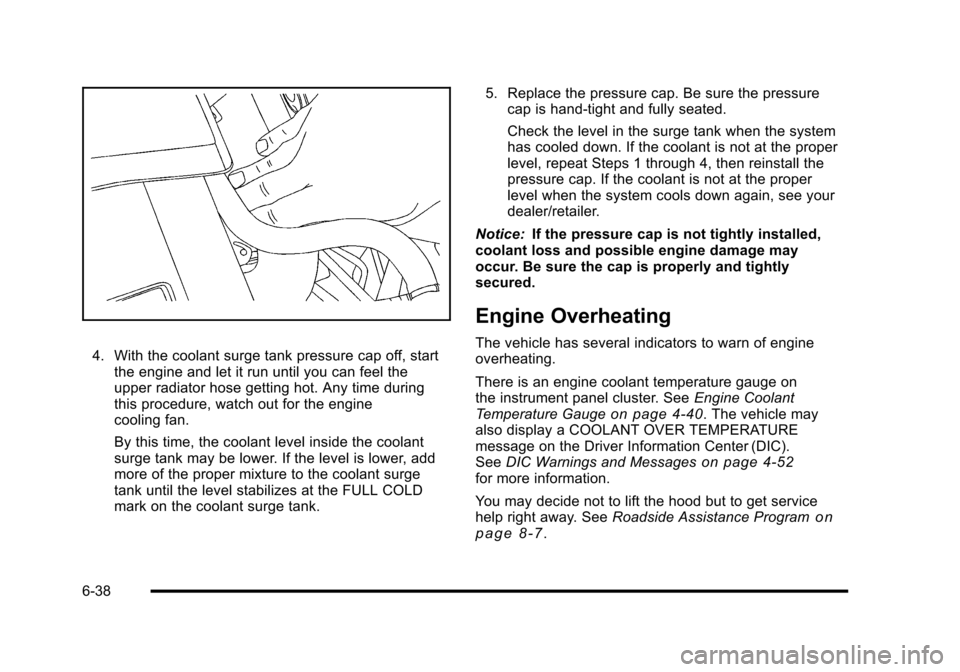
4. With the coolant surge tank pressure cap off, start the engine and let it run until you can feel the
upper radiator hose getting hot. Any time during
this procedure, watch out for the engine
cooling fan.
By this time, the coolant level inside the coolant
surge tank may be lower. If the level is lower, add
more of the proper mixture to the coolant surge
tank until the level stabilizes at the FULL COLD
mark on the coolant surge tank. 5. Replace the pressure cap. Be sure the pressure
cap is hand-tight and fully seated.
Check the level in the surge tank when the system
has cooled down. If the coolant is not at the proper
level, repeat Steps 1 through 4, then reinstall the
pressure cap. If the coolant is not at the proper
level when the system cools down again, see your
dealer/retailer.
Notice: If the pressure cap is not tightly installed,
coolant loss and possible engine damage may
occur. Be sure the cap is properly and tightly
secured.
Engine Overheating
The vehicle has several indicators to warn of engine
overheating.
There is an engine coolant temperature gauge on
the instrument panel cluster. See Engine Coolant
Temperature Gauge
on page 4‑40. The vehicle may
also display a COOLANT OVER TEMPERATURE
message on the Driver Information Center (DIC).
See DIC Warnings and Messages
on page 4‑52for more information.
You may decide not to lift the hood but to get service
help right away. See Roadside Assistance Program
on
page 8‑7.
6-38
Page 351 of 472
If you do decide to lift the hood , make sure the vehicle
is parked on a level surface.
Then check to see if the engine cooling fan is running.
If the engine is overheating, the fan should be running.
If it is not, do not continue to run the engine and have
the vehicle serviced.
Notice: Engine damage from running your engine
without coolant is not covered by your warranty.
See Overheated Engine Protection Operating Mode
on page 6‑41for information on driving to a safe
place in an emergency.
Notice: If the engine catches fire while driving
with no coolant, the vehicle can be badly damaged.
The costly repairs would not be covered by the
vehicle warranty. See Overheated Engine Protection
Operating Mode
on page 6‑41for information on
driving to a safe place in an emergency.
If Steam Is Coming From Your Engine
{WARNING:
Steam from an overheated engine can burn you
badly, even if you just open the hood. Stay away
from the engine if you see or hear steam coming
from it. Turn it off and get everyone away from
the vehicle until it cools down. Wait until there
is no sign of steam or coolant before you open
the hood.
If you keep driving when the vehicles engine is
overheated, the liquids in it can catch fire. You or
others could be badly burned. Stop the engine if
it overheats, and get out of the vehicle until the
engine is cool.
See Overheated Engine Protection Operating
Mode
on page 6‑41for information on driving to
a safe place in an emergency.
6-39
Page 374 of 472
Tires
Your new vehicle comes with high-quality tires
made by a leading tire manufacturer. If you ever
have questions about your tire warranty and
where to obtain service, see your vehicle
Warranty booklet for details. For additional
information refer to the tire manufacturer.
{WARNING:
.Poorly maintained and improperly used
tires are dangerous.
.Overloading your tires can cause
overheating as a result of too much
flexing. You could have an air-out and
a serious accident. SeeLoading the
Vehicle
on page 5‑28.
(Continued)
WARNING: (Continued)
.Underinflated tires pose the same
danger as overloaded tires. The resulting
accident could cause serious injury.
Check all tires frequently to maintain the
recommended pressure. Tire pressure
should be checked when your tires are
cold. See Inflation - Tire Pressure
on
page 6‑70
.
.Overinflated tires are more likely to be
cut, punctured, or broken by a sudden
impact —such as when you hit a
pothole. Keep tires at the recommended
pressure.
.Worn, old tires can cause accidents.
If your tread is badly worn, or if your tires
have been damaged, replace them.
See High-Speed Operation
on page 6‑72for
inflation pressure adjustment for high speed
driving.
6-62
Page 463 of 472

E
EDR . . . . . . . . . . . . . . . . . . . . . . . . . . . . . . . . . . . . . . . . . . . . . . . 8-18
Electrical Equipment, Add-On . . . . . . . . . . . . . . . . . . . . 6-100
Electrical SystemEngine Compartment Fuse Block . . . . . . . . . . . . . . . .6-104
Fuses and Circuit Breakers . . . . . . . . . . . . . . . . . . . . . .6-101
Headlamp Wiring . . . . . . . . . . . . . . . . . . . . . . . . . . . . . . . .6-100
Instrument Panel Fuse Block . . . . . . . . . . . . . . . . . . . .6-101
Power Windows and Other Power Options . . . . . .6-100
Windshield Wiper Fuses . . . . . . . . . . . . . . . . . . . . . . . . .6-100
Engine
Air Cleaner/Filter . . . . . . . . . . . . . . . . . . . . . . . . . . . . . . . . . 6-27
Check and Service Engine Soon Lamp . . . . . . . . . . . 4-41
Compartment Overview . . . . . . . . . . . . . . . . . . . . . . . . . . . 6-14
Coolant . . . . . . . . . . . . . . . . . . . . . . . . . . . . . . . . . . . . . . . . . . . 6-34
Coolant Temperature Gauge . . . . . . . . . . . . . . . . . . . . . . 4-40
Cooling System . . . . . . . . . . . . . . . . . . . . . . . . . . . . . 6-32, 6-33
Drive Belt Routing . . . . . . . . . . . . . . . . . . . . . . . . . . . . . . . . 7-13
Exhaust . . . . . . . . . . . . . . . . . . . . . . . . . . . . . . . . . . . . . . . . . . 3-37
Oil . . . . . . . . . . . . . . . . . . . . . . . . . . . . . . . . . . . . . . . . . . . . . . . . 6-19
Oil Pressure Gauge . . . . . . . . . . . . . . . . . . . . . . . . . . . . . . 4-44
Overheated Protection Operating Mode . . . . . . . . . . 6-41
Overheating . . . . . . . . . . . . . . . . . . . . . . . . . . . . . . . . . . . . . . 6-38
Starting . . . . . . . . . . . . . . . . . . . . . . . . . . . . . . . . . . . . . . . . . . . 3-24 Engine Oil
Life System . . . . . . . . . . . . . . . . . . . . . . . . . . . . . . . . . . . . . . . 6-25
Entry/Exit Lighting . . . . . . . . . . . . . . . . . . . . . . . . . . . . . . . . . 4-15
Event Data Recorders . . . . . . . . . . . . . . . . . . . . . . . . . . . . . 8-18
Extender, Safety Belt . . . . . . . . . . . . . . . . . . . . . . . . . . . . . . 2-26
Exterior Lamps . . . . . . . . . . . . . . . . . . . . . . . . . . . . . . . . . . . . 4-11
Exterior Lighting Battery Saver . . . . . . . . . . . . . . . . . . . . 4-15
F
Filter Engine Air Cleaner . . . . . . . . . . . . . . . . . . . . . . . . . . . . . . . 6-27
Finish Damage . . . . . . . . . . . . . . . . . . . . . . . . . . . . . . . . . . . . 6-98
Flash-to-Pass . . . . . . . . . . . . . . . . . . . . . . . . . . . . . . . . . . . . . . . .4-5
Flashers, Hazard Warning . . . . . . . . . . . . . . . . . . . . . . . . . . .4-3
Flat Tire . . . . . . . . . . . . . . . . . . . . . . . . . . . . . . . . . . . . . . . . . . . 6-89
Floor Mats . . . . . . . . . . . . . . . . . . . . . . . . . . . . . . . . . . . . . . . . . 3-50
Fluid Automatic Transmission . . . . . . . . . . . . . . . . . . . . . . . . . . 6-31
Power Steering . . . . . . . . . . . . . . . . . . . . . . . . . . . . . . . . . . . 6-41
Windshield Washer . . . . . . . . . . . . . . . . . . . . . . . . . . . . . . . 6-42
Fog Lamps Bulb Replacement . . . . . . . . . . . . . . . . . . . . . . . . . . . . . . . . 4-13
Light . . . . . . . . . . . . . . . . . . . . . . . . . . . . . . . . . . . . . . . . . . . . . . 4-45
Front Air Dam . . . . . . . . . . . . . . . . . . . . . . . . . . . . . . . . . . . . . 3-22
i - 5