2010 CADILLAC ESCALADE steering
[x] Cancel search: steeringPage 432 of 616

If a weight!distributing hitch is being used, it isrecommended to allow the shocks to inflate, therebyleveling the vehicle prior to adjusting the hitch.
Autoride®
With this feature, improved vehicle ride and handling isprovided under a variety of passenger and loadingconditions.
The system is fully automatic and uses a computercontroller to continuously monitor vehicle speed, wheelto body position, lift/dive and steering position of thevehicle. The controller then sends signals to each shockabsorber to independently adjust the damping level toprovide the optimum vehicle ride.
Autoride also interacts with the tow/haul mode that,when activated, will provide additional control of theshock absorbers. This additional control results in betterride and handling characteristics when the vehicle isloaded or towing a trailer. See“Tow/Haul Mode”underTowing a Traileron page 6!42for more information.
Towing a Trailer
If the vehicle has a two–mode hybrid engine, see theTwo–mode Hybrid manual for more information.
Do not tow a trailer during break!in. SeeNew VehicleBreak-Inon page 3!26for more information.
{WARNING:
The driver can lose control when pulling a trailer if
the correct equipment is not used or the vehicle is
not driven properly. For example, if the trailer is
too heavy, the brakes may not work well—or
even at all. The driver and passengers could be
seriously injured. The vehicle may also be
damaged; the resulting repairs would not be
covered by the vehicle warranty. Pull a trailer only
if all the steps in this section have been followed.
Ask your dealer/retailer for advice and information
about towing a trailer with the vehicle.
Notice:Pulling a trailer improperly can damage thevehicle and result in costly repairs not covered bythe vehicle warranty. To pull a trailer correctly,follow the advice in this section and see yourdealer/retailer for important information abouttowing a trailer with the vehicle.
To identify the trailering capacity of the vehicle, read theinformation in“Weight of the Trailer”that appears laterin this section.
6-42
Page 441 of 616

During the trip, check occasionally to be sure that theload is secure and the lamps and any trailer brakesstill work.
Following Distance
Stay at least twice as far behind the vehicle ahead asyou would when driving the vehicle without a trailer.This can help to avoid heavy braking and sudden turns.
Passing
More passing distance is needed when towing a trailer.The combination will not accelerate as quickly and islonger so it is necessary to go much farther beyond thepassed vehicle before returning to the lane.
Backing Up
Hold the bottom of the steering wheel with one hand.Then, to move the trailer to the left, move that hand tothe left. To move the trailer to the right, move your handto the right. Always back up slowly and, if possible,have someone guide you.
Making Turns
Notice:Making very sharp turns while traileringcould cause the trailer to come in contact with thevehicle. The vehicle could be damaged. Avoidmaking very sharp turns while trailering.
When turning with a trailer, make wider turns thannormal. Do this so the trailer will not strike softshoulders, curbs, road signs, trees or other objects.Avoid jerky or sudden maneuvers. Signal wellin advance.
If the trailer turn signal bulbs burn out, the arrowson the instrument panel will still flash for turns. It isimportant to check occasionally to be sure the trailerbulbs are still working.
6-51
Page 447 of 616

Section 7 Service and Appearance Care
Service. . . . . . . . . . . . . . . . . . . . . . . . . . . . . . . . . . . . . . . . . . . . . 7-4Accessories and Modifications . . . . . . . . . . . . . . . . . . 7-4California Proposition 65 Warning . . . . . . . . . . . . . . . 7-5California Perchlorate MaterialsRequirements . . . . . . . . . . . . . . . . . . . . . . . . . . . . . . . . . 7-5Doing Your Own Service Work . . . . . . . . . . . . . . . . . . 7-6Adding Equipment to the Outside of theVehicle . . . . . . . . . . . . . . . . . . . . . . . . . . . . . . . . . . . . . . . . 7-6
Fuel. . . . . . . . . . . . . . . . . . . . . . . . . . . . . . . . . . . . . . . . . . . . . . . . . 7-7Gasoline Octane . . . . . . . . . . . . . . . . . . . . . . . . . . . . . . . . 7-8Gasoline Specifications . . . . . . . . . . . . . . . . . . . . . . . . . 7-8California Fuel . . . . . . . . . . . . . . . . . . . . . . . . . . . . . . . . . . 7-8Additives . . . . . . . . . . . . . . . . . . . . . . . . . . . . . . . . . . . . . . . . 7-9Fuel E85 (85% Ethanol) . . . . . . . . . . . . . . . . . . . . . . . . . 7-9Fuels in Foreign Countries . . . . . . . . . . . . . . . . . . . . . 7-10Filling the Tank . . . . . . . . . . . . . . . . . . . . . . . . . . . . . . . . . 7-11Filling a Portable Fuel Container . . . . . . . . . . . . . . . 7-13
Checking Things Under the Hood. . . . . . . . . . . . . . . 7-14Hood Release . . . . . . . . . . . . . . . . . . . . . . . . . . . . . . . . . 7-15Engine Compartment Overview . . . . . . . . . . . . . . . . 7-16Engine Oil . . . . . . . . . . . . . . . . . . . . . . . . . . . . . . . . . . . . . 7-17Engine Oil Life System . . . . . . . . . . . . . . . . . . . . . . . . 7-20Engine Air Cleaner/Filter . . . . . . . . . . . . . . . . . . . . . . . 7-22
Automatic Transmission Fluid . . . . . . . . . . . . . . . . . . 7-24Cooling System . . . . . . . . . . . . . . . . . . . . . . . . . . . . . . . . 7-28Engine Coolant . . . . . . . . . . . . . . . . . . . . . . . . . . . . . . . . 7-29Engine Overheating . . . . . . . . . . . . . . . . . . . . . . . . . . . 7-34Overheated Engine ProtectionOperating Mode . . . . . . . . . . . . . . . . . . . . . . . . . . . . . 7-37Engine Fan Noise . . . . . . . . . . . . . . . . . . . . . . . . . . . . . 7-37Power Steering Fluid . . . . . . . . . . . . . . . . . . . . . . . . . . 7-38Windshield Washer Fluid . . . . . . . . . . . . . . . . . . . . . . 7-39Brakes . . . . . . . . . . . . . . . . . . . . . . . . . . . . . . . . . . . . . . . . . 7-40Battery . . . . . . . . . . . . . . . . . . . . . . . . . . . . . . . . . . . . . . . . . 7-43Jump Starting . . . . . . . . . . . . . . . . . . . . . . . . . . . . . . . . . . 7-44
All-Wheel Drive. . . . . . . . . . . . . . . . . . . . . . . . . . . . . . . . . . . 7-49
Rear Axle. . . . . . . . . . . . . . . . . . . . . . . . . . . . . . . . . . . . . . . . . 7-50
Front Axle. . . . . . . . . . . . . . . . . . . . . . . . . . . . . . . . . . . . . . . . . 7-51
Headlamp Aiming. . . . . . . . . . . . . . . . . . . . . . . . . . . . . . . . 7-52
Bulb Replacement. . . . . . . . . . . . . . . . . . . . . . . . . . . . . . . . 7-54High Intensity Discharge (HID) Lighting . . . . . . . . 7-54LED Lighting . . . . . . . . . . . . . . . . . . . . . . . . . . . . . . . . . . . 7-55Back-Up Lamps . . . . . . . . . . . . . . . . . . . . . . . . . . . . . . . 7-55License Plate Lamp . . . . . . . . . . . . . . . . . . . . . . . . . . . . 7-56Replacement Bulbs . . . . . . . . . . . . . . . . . . . . . . . . . . . . 7-56
7-1
Page 461 of 616
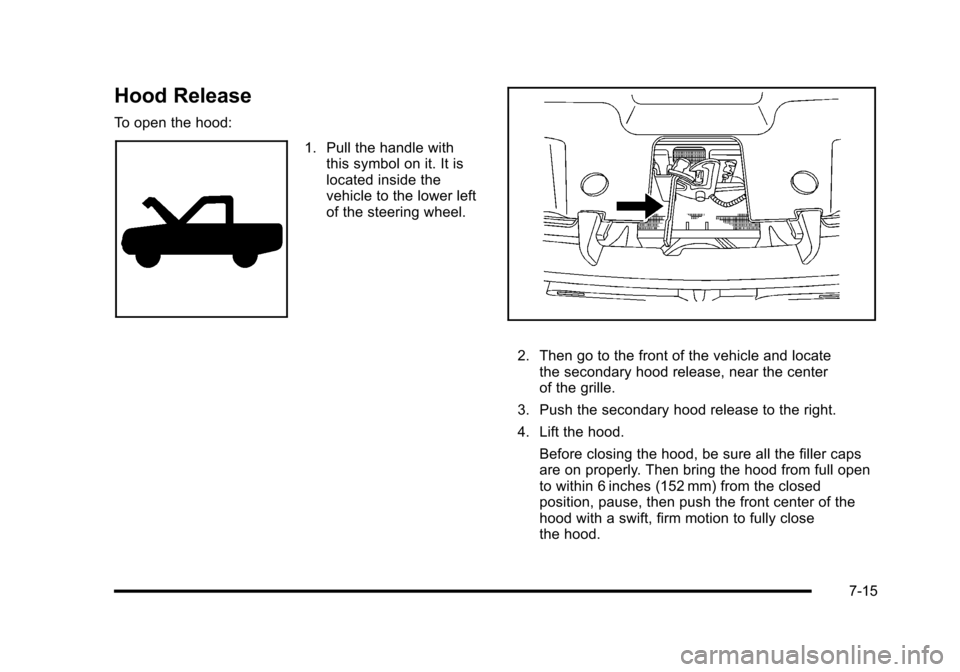
Hood Release
To open the hood:
1. Pull the handle withthis symbol on it. It islocated inside thevehicle to the lower leftof the steering wheel.
2. Then go to the front of the vehicle and locatethe secondary hood release, near the centerof the grille.
3. Push the secondary hood release to the right.
4. Lift the hood.
Before closing the hood, be sure all the filler capsare on properly. Then bring the hood from full opento within 6 inches (152 mm) from the closedposition, pause, then push the front center of thehood with a swift, firm motion to fully closethe hood.
7-15
Page 463 of 616

A.Engine Air Cleaner/Filter on page 7!22.
B. Coolant Surge Tank and Pressure Cap.SeeCooling System on page 7!28.
C. Remote Positive (+) Terminal. SeeJump Startingon page 7!44.
D.Battery on page 7!43.
E. Engine Oil Fill Cap. See“When to Add Engine Oil”underEngine Oil on page 7!17.
F. Automatic Transmission Dipstick (Out of View).See“Checking the Fluid Level”underAutomaticTransmission Fluid on page 7!24.
G. Remote Negative (!) Terminal (GND) (Out ofView). SeeJump Starting on page 7!44.
H. Engine Oil Dipstick (Out of View). See“CheckingEngine Oil”underEngine Oil on page 7!17.
I. Engine Cooling Fan (Out of View). SeeCoolingSystem on page 7!28.
J. Power Steering Fluid Reservoir (Out of View).SeePower Steering Fluid on page 7!38.
K. Brake Master Cylinder Reservoir. See“BrakeFluid”underBrakes on page 7!40.
L.Underhood Fuse Block on page 7!111.
M. Windshield Washer Fluid Reservoir. See“AddingWasher Fluid”underWindshield Washer Fluidonpage 7!39.
Engine Oil
Checking Engine Oil
It is a good idea to check the engine oil level at eachfuel fill. In order to get an accurate reading, the oil mustbe warm and the vehicle must be on level ground.
The engine oil dipstick handle is a yellow loop. SeeEngine Compartment Overviewon page 7!16for thelocation of the engine oil dipstick.
1. Turn off the engine and give the oil several minutesto drain back into the oil pan. If this is not done, theoil dipstick might not show the actual level.
2. Pull out the dipstick and clean it with a paper towelor cloth, then push it back in all the way. Remove itagain, keeping the tip down, and check the level.
7-17
Page 484 of 616

Power Steering Fluid
SeeEngine CompartmentOverviewon page 7!16for reservoir location.
When to Check Power Steering Fluid
It is not necessary to regularly check power steeringfluid unless you suspect there is a leak in the system oryou hear an unusual noise. A fluid loss in this systemcould indicate a problem. Have the system inspectedand repaired.
How to Check Power Steering Fluid
To check the power steering fluid:
1. Turn the key off and let the engine compartmentcool down.
2. Wipe the cap and the top of the reservoir clean.
3. Unscrew the cap and wipe the dipstick with aclean rag.
4. Replace the cap and completely tighten it.
5. Remove the cap again and look at the fluid levelon the dipstick.
The level should be at the FULL COLD mark.If necessary, add only enough fluid to bring the level upto the mark.
What to Use
To determine what kind of fluid to use, seeRecommended Fluids and Lubricantson page 8!10.Always use the proper fluid.
Notice:Use of the incorrect fluid may damage thevehicle and the damages may not be covered by thevehicle's warranty. Always use the correct fluidlisted inRecommended Fluids and Lubricantsonpage 8!10.
7-38
Page 508 of 616

Tire Terminology and Definitions
Air Pressure:The amount of air inside the tire
pressing outward on each square inch of the tire.
Air pressure is expressed in pounds per square
inch (psi) or kilopascal (kPa).
Accessory Weight:This means the combined
weight of optional accessories. Some examples of
optional accessories are, automatic transmission,
power steering, power brakes, power windows,
power seats, and air conditioning.
Aspect Ratio:The relationship of a tire's height
to its width.
Belt:A rubber coated layer of cords that is
located between the plies and the tread. Cords
may be made from steel or other reinforcing
materials.
Bead:The tire bead contains steel wires wrapped
by steel cords that hold the tire onto the rim.
Bias Ply Tire:A pneumatic tire in which the plies
are laid at alternate angles less than 90 degrees
to the centerline of the tread.
Cold Tire Pressure:The amount of air pressure
in a tire, measured in pounds per square inch (psi)
or kilopascals (kPa) before a tire has built up heat
from driving. SeeInflation - Tire Pressureon
page 7!65.
Curb Weight:The weight of a motor vehicle with
standard and optional equipment including the
maximum capacity of fuel, oil, and coolant, but
without passengers and cargo.
DOT Markings:A code molded into the sidewall
of a tire signifying that the tire is in compliance
with the U.S. Department of Transportation (DOT)
motor vehicle safety standards. The DOT code
includes the Tire Identification Number (TIN), an
alphanumeric designator which can also identify
the tire manufacturer, production plant, brand, and
date of production.
GVWR:Gross Vehicle Weight Rating. See
Loading the Vehicleon page 6!32.
GAWR FRT:Gross Axle Weight Rating for the
front axle. SeeLoading the Vehicleon page 6!32.
GAWR RR:Gross Axle Weight Rating for the rear
axle. SeeLoading the Vehicleon page 6!32.
7-62
Page 525 of 616

WARNING: (Continued)
vehicle and tire size combination and road
conditions. Follow that manufacturer's
instructions. To help avoid damage to the vehicle,
drive slowly, re!adjust or remove the device if it is
contacting the vehicle, and do not spin the
wheels. If you do find traction devices that will fit,
install them on the rear tires.
If a Tire Goes Flat
It is unusual for a tire to blowout while you are driving,especially if you maintain your vehicle's tires properly.If air goes out of a tire, it is much more likely to leak outslowly. But if you should ever have a blowout, here area few tips about what to expect and what to do:
If a front tire fails, the flat tire creates a drag that pullsthe vehicle toward that side. Take your foot off theaccelerator pedal and grip the steering wheel firmly.Steer to maintain lane position, and then gently braketo a stop well out of the traffic lane.
A rear blowout, particularly on a curve, acts much like askid and may require the same correction you woulduse in a skid. In any rear blowout remove your foot fromthe accelerator pedal. Get the vehicle under control bysteering the way you want the vehicle to go. It may bevery bumpy and noisy, but you can still steer. Gentlybrake to a stop, well off the road if possible.
{WARNING:
Lifting a vehicle and getting under it to do
maintenance or repairs is dangerous without the
appropriate safety equipment and training. If a
jack is provided with the vehicle, it is designed
only for changing a flat tire. If it is used for
anything else, you or others could be badly
injured or killed if the vehicle slips off the jack.
If a jack is provided with the vehicle, only use
it for changing a flat tire.
If a tire goes flat, the next part shows how to use thejacking equipment to change a flat tire safely.
7-79