2008 CHEVROLET CORVETTE belt
[x] Cancel search: beltPage 381 of 432
Maintenance Schedule......................................6-2
Introduction...................................................6-2
Maintenance Requirements..............................6-2
Your Vehicle and the Environment....................6-2
Using the Maintenance Schedule......................6-3
Scheduled Maintenance...................................6-4
Additional Required Services............................6-6
Maintenance Footnotes...................................6-7Owner Checks and Services............................6-8
At Each Fuel Fill............................................6-9
At Least Once a Month...................................6-9
At Least Once a Year.....................................6-9
Recommended Fluids and Lubricants...............6-12
Maintenance Replacement Parts.....................6-14
Engine Drive Belt Routing..............................6-15
Maintenance Record.....................................6-16
Section 6 Maintenance Schedule
6-1
Page 387 of 432
Additional Required Services (cont’d)
Service and Miles (Kilometers)25,000
(40 000)50,000
(80 000)75,000
(120 000)100,000
(160 000)125,000
(200 000)150,000
(240 000)
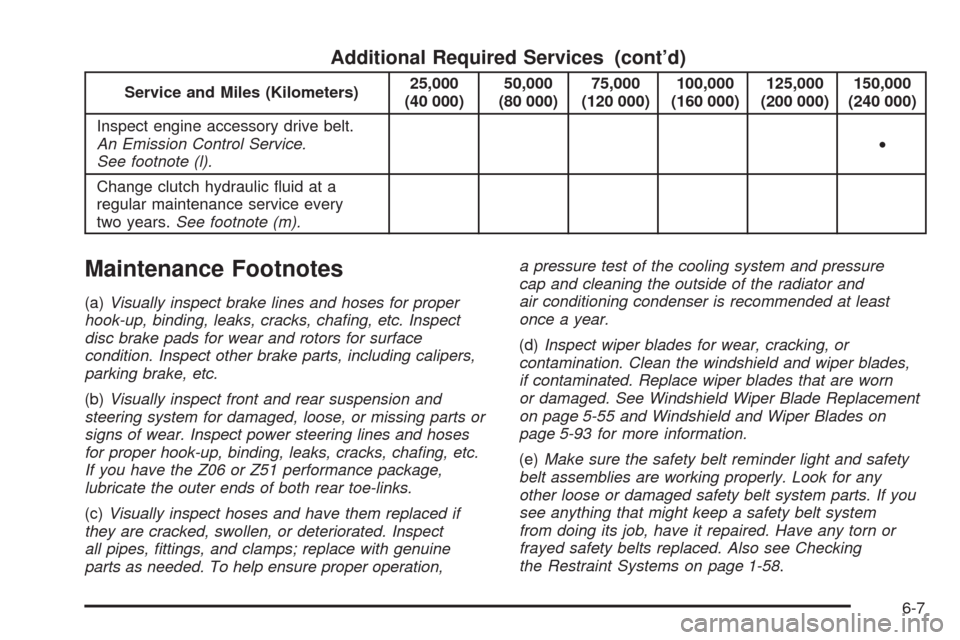
Inspect engine accessory drive belt.
An Emission Control Service.
See footnote (l).•
Change clutch hydraulic uid at a
regular maintenance service every
two years.See footnote (m).
Maintenance Footnotes
(a)Visually inspect brake lines and hoses for proper
hook-up, binding, leaks, cracks, chafing, etc. Inspect
disc brake pads for wear and rotors for surface
condition. Inspect other brake parts, including calipers,
parking brake, etc.
(b)Visually inspect front and rear suspension and
steering system for damaged, loose, or missing parts or
signs of wear. Inspect power steering lines and hoses
for proper hook-up, binding, leaks, cracks, chafing, etc.
If you have the Z06 or Z51 performance package,
lubricate the outer ends of both rear toe-links.
(c)Visually inspect hoses and have them replaced if
they are cracked, swollen, or deteriorated. Inspect
all pipes, fittings, and clamps; replace with genuine
parts as needed. To help ensure proper operation,a pressure test of the cooling system and pressure
cap and cleaning the outside of the radiator and
air conditioning condenser is recommended at least
once a year.
(d)Inspect wiper blades for wear, cracking, or
contamination. Clean the windshield and wiper blades,
if contaminated. Replace wiper blades that are worn
or damaged. See Windshield Wiper Blade Replacement
on page 5-55 and Windshield and Wiper Blades on
page 5-93 for more information.
(e)Make sure the safety belt reminder light and safety
belt assemblies are working properly. Look for any
other loose or damaged safety belt system parts. If you
see anything that might keep a safety belt system
from doing its job, have it repaired. Have any torn or
frayed safety belts replaced. Also see Checking
the Restraint Systems on page 1-58.
6-7
Page 388 of 432

(f)Lubricate all key lock cylinders and body door
hinges. Lubricate all hinges and latches, including those
for the hood, rear compartment, console door, and
any folding seat hardware. More frequent lubrication
may be required when exposed to a corrosive
environment. Applying silicone grease on weatherstrips
with a clean cloth will make them last longer, seal
better, and not stick or squeak.
(g)A fluid loss in any vehicle system could indicate a
problem. Have the system inspected and repaired
and the fluid level checked. Add fluid if needed.
(h)Change automatic transmission fluid and filter if the
vehicle is mainly driven under one or more of these
conditions:
In heavy city traffic where the outside temperature
regularly reaches 90°F (32°C) or higher.
In hilly or mountainous terrain.
Uses such as high performance operation.
(i)Drain, flush, and refill cooling system. This service
can be complex; you should have your dealer/retailer
perform this service. See Engine Coolant on page 5-28
for what to use. Inspect hoses. Clean radiator,
condenser, pressure cap, and filler neck. Pressure
test the cooling system and pressure cap.(j)If you drive regularly under dusty conditions, the filter
may require replacement more often.
(k)If you drive regularly under dusty conditions, inspect
the filter at each engine oil change.
(l)Visually inspect belt for fraying, excessive cracks, or
obvious damage. Replace belt if necessary.
(m)Drain, flush, and refill clutch hydraulic system at a
regular service interval (IorII) every two years.
This service can be complex; you should have your
dealer/retailer perform this service. See Hydraulic Clutch
on page 5-27.
Owner Checks and Services
These owner checks and services should be performed
at the intervals specied to help ensure vehicle safety,
dependability, and emission control performance. Your
dealer/retailer can assist with these checks and services.
Be sure any necessary repairs are completed at once.
Whenever any uids or lubricants are added to the
vehicle, make sure they are the proper ones, as shown
inRecommended Fluids and Lubricants on page 6-12.
6-8
Page 395 of 432
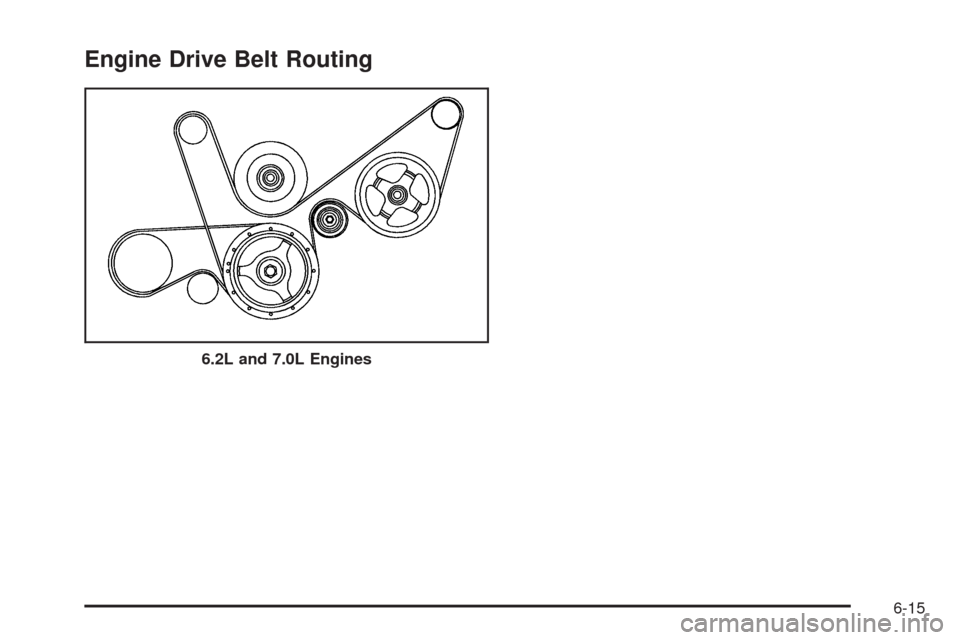
Engine Drive Belt Routing
6.2L and 7.0L Engines
6-15
Page 416 of 432
Vehicle Data Recording and
Privacy
Your GM vehicle has a number of sophisticated
computers that record information about the vehicle’s
performance and how it is driven. For example,
your vehicle uses computer modules to monitor and
control engine and transmission performance, to monitor
the conditions for airbag deployment and deploy
airbags in a crash and, if so equipped, to provide
antilock braking to help the driver control the vehicle.
These modules may store data to help your
dealer/retailer technician service your vehicle. Some
modules may also store data about how you operate the
vehicle, such as rate of fuel consumption or average
speed. These modules may also retain the owner’s
personal preferences, such as radio pre-sets, seat
positions, and temperature settings.
Event Data Recorders
This vehicle has an Event Data Recorder (EDR). The
main purpose of an EDR is to record, in certain crash or
near crash-like situations, such as an airbag deployment
or hitting a road obstacle, data that will assist in
understanding how a vehicle’s systems performed.
The EDR is designed to record data related to vehicle
dynamics and safety systems for a short period of time,
typically 30 seconds or less. The EDR in this vehicle
is designed to record such data as:
How various systems in your vehicle were operating
Whether or not the driver and passenger safety
belts were buckled/fastened
How far, if at all, the driver was pressing the
accelerator and/or brake pedal
How fast the vehicle was traveling
This data can help provide a better understanding of the
circumstances in which crashes and injuries occur.
Important:EDR data is recorded by your vehicle only
if a non-trivial crash situation occurs; no data is
recorded by the EDR under normal driving conditions
and no personal data (e.g., name, gender, age,
and crash location) is recorded. However, other parties,
such as law enforcement, could combine the EDR
data with the type of personally identifying data routinely
acquired during a crash investigation.
7-18
Page 419 of 432
A
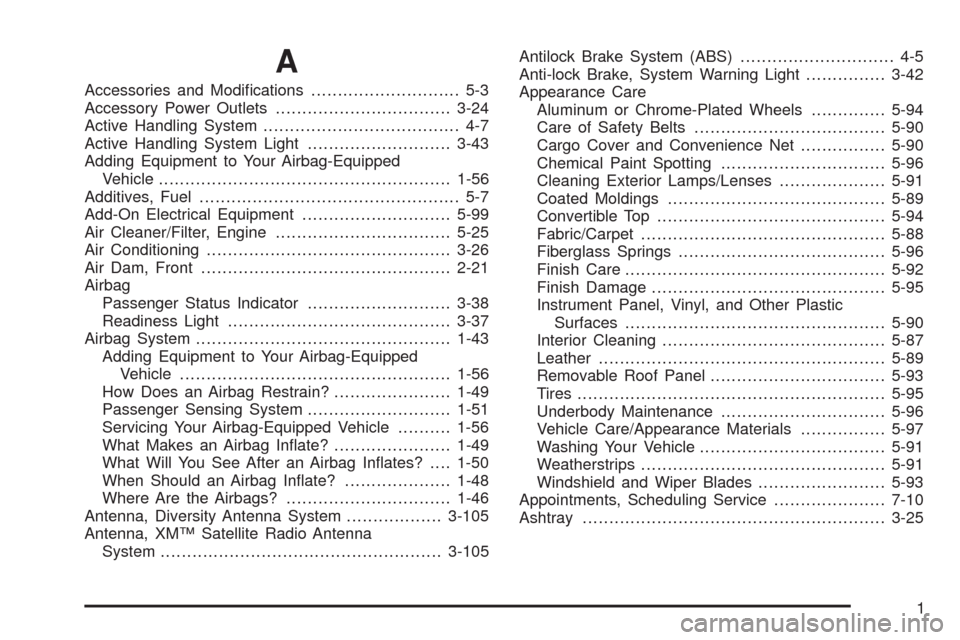
Accessories and Modications............................ 5-3
Accessory Power Outlets.................................3-24
Active Handling System..................................... 4-7
Active Handling System Light...........................3-43
Adding Equipment to Your Airbag-Equipped
Vehicle.......................................................1-56
Additives, Fuel................................................. 5-7
Add-On Electrical Equipment............................5-99
Air Cleaner/Filter, Engine.................................5-25
Air Conditioning..............................................3-26
Air Dam, Front...............................................2-21
Airbag
Passenger Status Indicator...........................3-38
Readiness Light..........................................3-37
Airbag System................................................1-43
Adding Equipment to Your Airbag-Equipped
Vehicle...................................................1-56
How Does an Airbag Restrain?......................1-49
Passenger Sensing System...........................1-51
Servicing Your Airbag-Equipped Vehicle..........1-56
What Makes an Airbag Inate?......................1-49
What Will You See After an Airbag Inates?....1-50
When Should an Airbag Inate?....................1-48
Where Are the Airbags?...............................1-46
Antenna, Diversity Antenna System..................3-105
Antenna, XM™ Satellite Radio Antenna
System.....................................................3-105Antilock Brake System (ABS)............................. 4-5
Anti-lock Brake, System Warning Light...............3-42
Appearance Care
Aluminum or Chrome-Plated Wheels..............5-94
Care of Safety Belts....................................5-90
Cargo Cover and Convenience Net................5-90
Chemical Paint Spotting...............................5-96
Cleaning Exterior Lamps/Lenses....................5-91
Coated Moldings.........................................5-89
Convertible Top...........................................5-94
Fabric/Carpet..............................................5-88
Fiberglass Springs
.......................................5-96
Finish Care.................................................5-92
Finish Damage............................................5-95
Instrument Panel, Vinyl, and Other Plastic
Surfaces.................................................5-90
Interior Cleaning..........................................5-87
Leather......................................................5-89
Removable Roof Panel.................................5-93
Tires..........................................................5-95
Underbody Maintenance...............................5-96
Vehicle Care/Appearance Materials................5-97
Washing Your Vehicle...................................5-91
Weatherstrips..............................................5-91
Windshield and Wiper Blades........................5-93
Appointments, Scheduling Service.....................7-10
Ashtray.........................................................3-25
1
Page 420 of 432
Audio System.................................................3-84
Audio Steering Wheel Controls....................3-103
Diversity Antenna System............................3-105
Navigation/Radio System, see Navigation
Manual.................................................3-103
Radio Reception........................................3-104
Setting the Clock.........................................3-85
Theft-Deterrent Feature...............................3-103
XM™ Satellite Radio Antenna System...........3-105
Audio System(s).............................................3-85
Automatic Door Lock.......................................2-12
Automatic Transmission
Fluid..........................................................5-27
Operation...................................................2-26
B
Battery..........................................................5-45
Exterior Lighting Battery Saver......................3-19
Run-Down Protection...................................3-20
Brake
Emergencies................................................ 4-5
Brakes..........................................................5-42
System Warning Light..................................3-41
Braking........................................................... 4-4
Braking in Emergencies..................................... 4-5
Break-In, New Vehicle.....................................2-21Bulb Replacement...........................................5-52
Halogen Bulbs............................................5-52
Headlamp Aiming........................................5-51
Headlamps, Front Turn Signal, and
Parking Lamps.........................................5-53
High Intensity Discharge (HID) Lighting...........5-52
Replacement Bulbs......................................5-55
Taillamps, Turn Signal, and Stoplamps............5-54
Buying New Tires...........................................5-74
C
Calibration.............................................2-37, 2-39
California Fuel.................................................. 5-6
California Perchlorate Materials Requirements....... 5-4
California Proposition 65 Warning....................... 5-4
Canadian Owners................................................ ii
Capacities and Specications..........................5-107
Carbon Monoxide...........................2-13, 2-35, 4-19
Care of
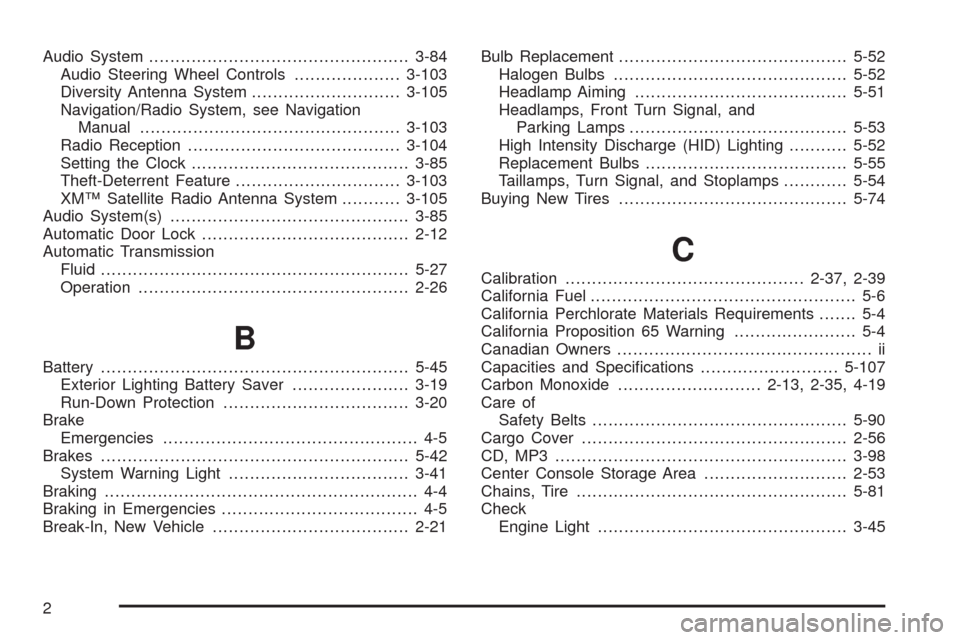
Safety Belts................................................5-90
Cargo Cover..................................................2-56
CD, MP3 .......................................................3-98
Center Console Storage Area...........................2-53
Chains, Tire...................................................5-81
Check
Engine Light...............................................3-45
2
Page 423 of 432
Engine
Air Cleaner/Filter.........................................5-25
Check and Service Engine Soon Light............3-45
Coolant......................................................5-28
Coolant Temperature Gage...........................3-44
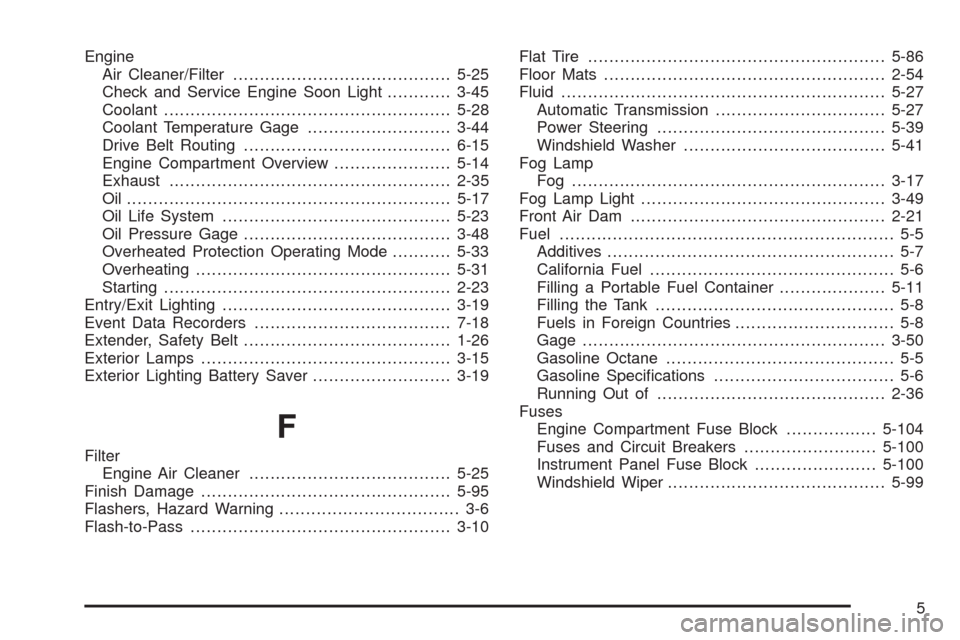
Drive Belt Routing.......................................6-15
Engine Compartment Overview......................5-14
Exhaust.....................................................2-35
Oil .............................................................5-17
Oil Life System...........................................5-23
Oil Pressure Gage.......................................3-48
Overheated Protection Operating Mode...........5-33
Overheating................................................5-31
Starting......................................................2-23
Entry/Exit Lighting...........................................3-19
Event Data Recorders.....................................7-18
Extender, Safety Belt.......................................1-26
Exterior Lamps...............................................3-15
Exterior Lighting Battery Saver..........................3-19
F
Filter
Engine Air Cleaner......................................5-25
Finish Damage...............................................5-95
Flashers, Hazard Warning.................................. 3-6
Flash-to-Pass.................................................3-10Flat Tire........................................................5-86
Floor Mats.....................................................2-54
Fluid.............................................................5-27
Automatic Transmission................................5-27
Power Steering...........................................5-39
Windshield Washer......................................5-41
Fog Lamp
Fog ...........................................................3-17
Fog Lamp Light..............................................3-49
Front Air Dam................................................2-21
Fuel............................................................... 5-5
Additives...................................................... 5-7
California Fuel.............................................. 5-6
Filling a Portable Fuel Container....................5-11
Filling the Tank............................................. 5-8
Fuels in Foreign Countries.............................. 5-8
Gage .........................................................3-50
Gasoline Octane........................................... 5-5
Gasoline Specications.................................. 5-6
Running Out of...........................................2-36
Fuses
Engine Compartment Fuse Block.................5-104
Fuses and Circuit Breakers.........................5-100
Instrument Panel Fuse Block.......................5-100
Windshield Wiper.........................................5-99
5