2006 VOLKSWAGEN GOLF PLUS Cool
[x] Cancel search: CoolPage 16 of 541
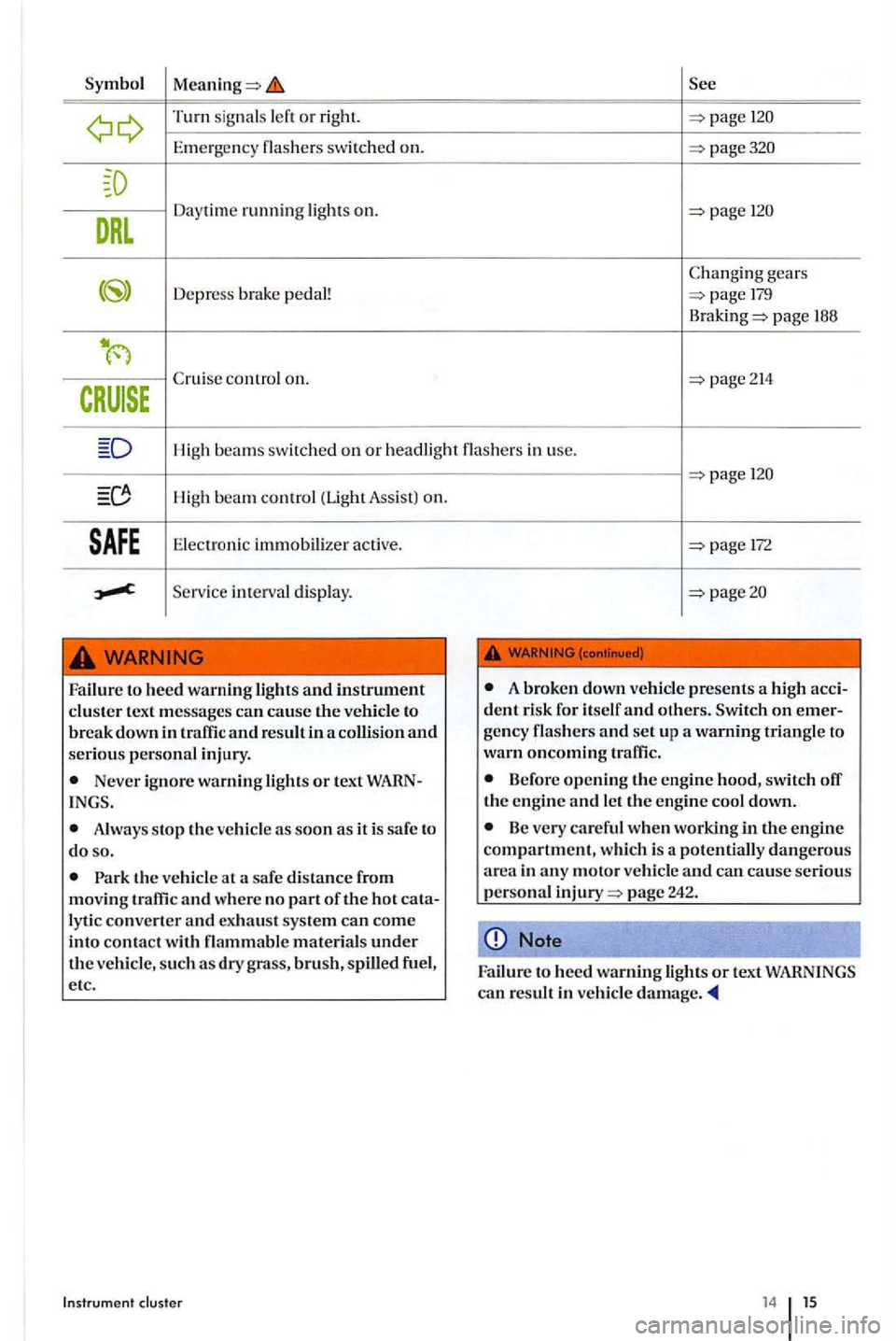
Turn signal s or right.
Emerg ency sw itch ed on.
gear s
Depr ess brake pedal!
page 188
High beams swi tched on or headli ght in use .
High be a m control (Light Assis t) on.
Elec tron ic immobili zer active.
Serv ic e int erva l di splay.
to heed warning ligh ts and instrument cluster text messages can cause the vehicle to break down in traffic and result in a collision and serious personal injury.
Never ignore warning lights or text WARN
Always stop th e vehicle as soon as it is safe to do so.
the vehicle at a safe distance from moving traffic and where no part of the hot cata
lyti c converter and exhau st sys tem can come into contact w ith brush, spilled fuel,
e tc .
Instrument
172
A broken down vehicle presents a high accident risk for itself and others. on emerge ncy flashers and set up
Before opening the engine hood, switch the en gine and let the engine cool down.
Be very careful when working in the engine compartment, which is
14 15
Page 126 of 541
may not come on in fog or heavy rain. You have to
s witch on the low-beam headlight s yourself.
cool o r h umid weather, th e in sid es of th e headligh ts , a nd turn sign als
can t e mporaril y fog up. Thi s is normal and does not affec t th e servi ce life of th e ve hicle's lighti ng
read and note t h e intr oductory
o n page
Instrum ent
page
Dynamic headlight range adjustment
ve hicles with the Adaptiv e Front Lighti ng th e hea dlight range is automati cally
adj uste d to the ve hicl e loading con dition once the
l ow bea ms are switch ed on.
H
eadli ghts that are aimed too high because of the way the vehicle is loaded can blind
Always adjust headli ght s to load ing
page
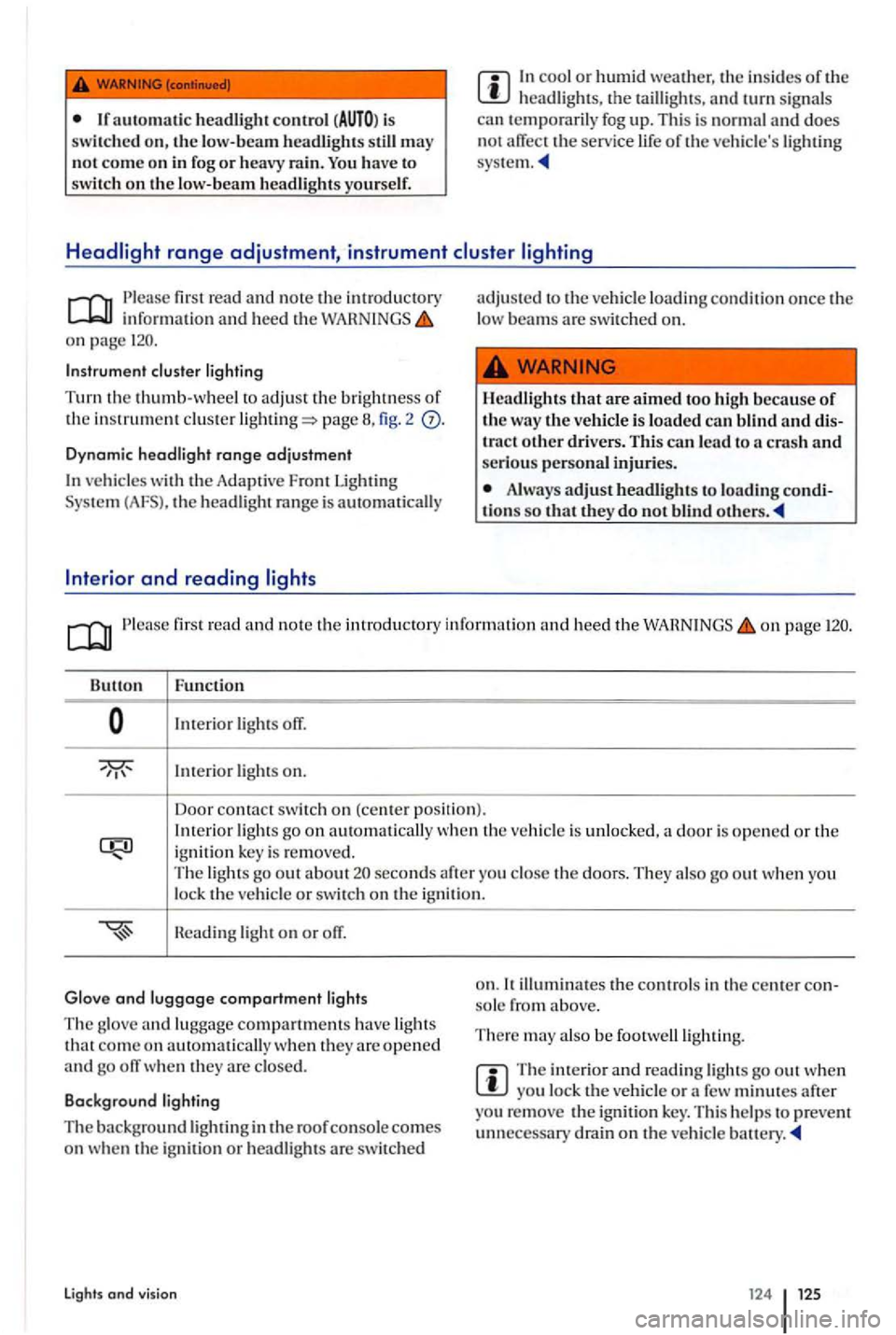
Int erior lig ht s off.
lmerior light s on.
Door conta ct
switch on (ce nter positio n). Int erior lig ht s go on wh en th e ve hicl e is unlock ed ,
seconds after th e doors. They also go out when you
lock th e
come on automati cally w hen they are open ed and go off when th ey are closed.
Background lighting
T he
background lighting in the roof console comes on w he n th e ig nit ion or headlig hts are s wit c hed
lights and v ision
o n . so le from above.
There m ay also be foo twe lllighting.
Th e interio r and rea din g lights go out when yo u lock the ve hicle or a few minutes aft er
yo u re m ove the ign ition key. Thi s help s to p reve nt
un necessary drain on the vehicl e
Page 141 of 541
Driving a
first read and note the introductory informat io n and heed the WARNINGS on page 137.
F
or good h andli ng w he n driving a loa ded ve hicl e,
please observe the following:
Secure ly stow page 138.
Dr ive especially caref ully and acce le rate gently.
Avoid sudd en braking and driv ing man eu ve rs.
Brake earlier than you wou ld if yo u were not
drivi ng a loa ded vehicle.
page 152.
If applicabl e, observe information rega rdin g driv in g w ith roof page 149.
Weights and
firs t read and no te the introductory information and heed the WARNINGS o n page 137.
The gross weight of any vehicle depends on its en gin e, basic equipment, an y factory- in stalled
optional equipment for the given model, and any retrofitted accessories. T he gross vehicle weig ht
rat ing
catio n Label loca ted on the door pillar of the dri ver
door.
The gross vehicl e we ight rating includ es the
weight of the ve hicle itself w ith of its tank of gaso line, the
Before driving
lo ads can ch ange the way your vehicle
h andles and incre ase stop ping dista nces. loads that are not properly sto wed or secured can shift suddenly, causing loss of co ntrol and serio us injury.
the load prope rly to keep it from
shifting.
A lways remember w hen tra nsp o rtin g
h eavy obje cts th at th ey vehicle's cente r of gravity and also the way it handles.
- Always dis
tribute the load as eve nly as
possible. -h eavy obj ec ts as far forward in
th e luggage compartment as poss ible. -If your ve hicle has tie-downs in the
Always tie down heavy items securely wit h
s uitable straps.
Secure ly latch th e rear backrest in the upright position .
Never excee d th e Gross Axle Weight Ratin g
o r the Gross Weight Ratin g on the safe ty compliance sti cker on the left door jamb. Exceeding permissi b le weight ca n ca use the
ve hicl e to skid and ha ndl e diff erently.
Always adapt speed and drivi ng to th e
h ea vie r load and th e we ight di stribution in the vehicle.
Always accelerate gently and avo id
s udd en braking an d drivin g maneuvers.
Always brake ea rlier than yo u wo uld if you were not drivin g a loaded ve hicle .
engine oil and coola nt, lbs/68 kg per seatin g position ) and ca rgo .
T
he gross axle weig ht ra tin gs sp ec ify th e imum allowab le load for ax le.
The cargo payload may not be increased by using
a roof rack without commen surat ely reducing th e
we ig ht from vehicle Dete rmin ing
th e gross vehicle weight page 276.
pay load cons is ts of th e co mbin ed w eight of th e following:
Passe ngers.
Tota l luggage and othe r ca rgo .
Roof load including the roof rack system.
Tong ue weig ht for trailer towing.
Page 154 of 541
Never drive fa ster than mph mph -
Never try to stop the swaying by accelerating.
fir st read a nd note the imroductory informatio n and heed the on page
If the ve hicle was fac tory-equipped with a trail er
hi tch, all technical and lega l require m em s fo r
trailer towi ng have already been m et.
use a trai le r hitc h w hich is approve d for the
g ro ss wei ght rating of the trailer yo u want to tow. The hit ch mus t be s uitabl e fo r your vehicle and
tr ailer and be securely bolt ed to the ve hicle's chassis. use a trail er hitc h with a re movable ball mount. Alway s check and follow the trail er
hi tch manufacturer's information. Neve r in stall a o r tra ile r hitch on yo u r vehicle.
D o n
ot use a bumper-mounted trai le r h itch
Never insta
ll a trailer hitch on the bumper o r or on th e bumper mountings. The traile r hit ch mus t not in terfe re wit h the impact-absorbing bumper syste m . D o not make any changes to the ve hicl e exhaust and brake sys te m s. From time to time, check that all hitch m oumin g bolts are securely fas ten ed . W hen not towing. re m ove the trailer hi tch. Thi s help s ke ep the hitch from causin g damage if your ve hicl e is hit from behind.
Eng ine cooling syste m
Tow ing a tra
iler makes the e ngin e
If you arc dri ving a new ve hicle or ave-do not tow
a t railer
mil es
need
load it h as to pull.
When you are not towin g, remove the trailer
models need trail er hit ch to tow or tow -s tart other ve hicl es. may
Trailer brakes
If your trail er has its own brake s, make sure it
meet s all regulati ons. Th e trailer bmke sys te m
mu st never be directly connecte d to the ve hicle's brake system .
Safety c
hain s
A lways u
se safety chains be tween yo ur vehicle and
th e trailer.
Trail er rear lights
Tra
ile r lights must meet all regulation s.
Neve r
connect the tmil er l ights directly to the e lec
trica l s ys tem of your ve hicl e. Be su re to check wit h
your authorized Volkswagen dealer or authorized Volk swagen Faci lit y about correct w iring, sw itches and re lay s.
Outside mirrors
I f
the s ta ndard ou ts id e mirror, addition al outs ide m irrors are needed and required b y law in so me coumrie s I states I provin ces. The o uts id e
mirr o rs mus t b e adjuste d b efore driv in g and g ive good v iew to the rear.
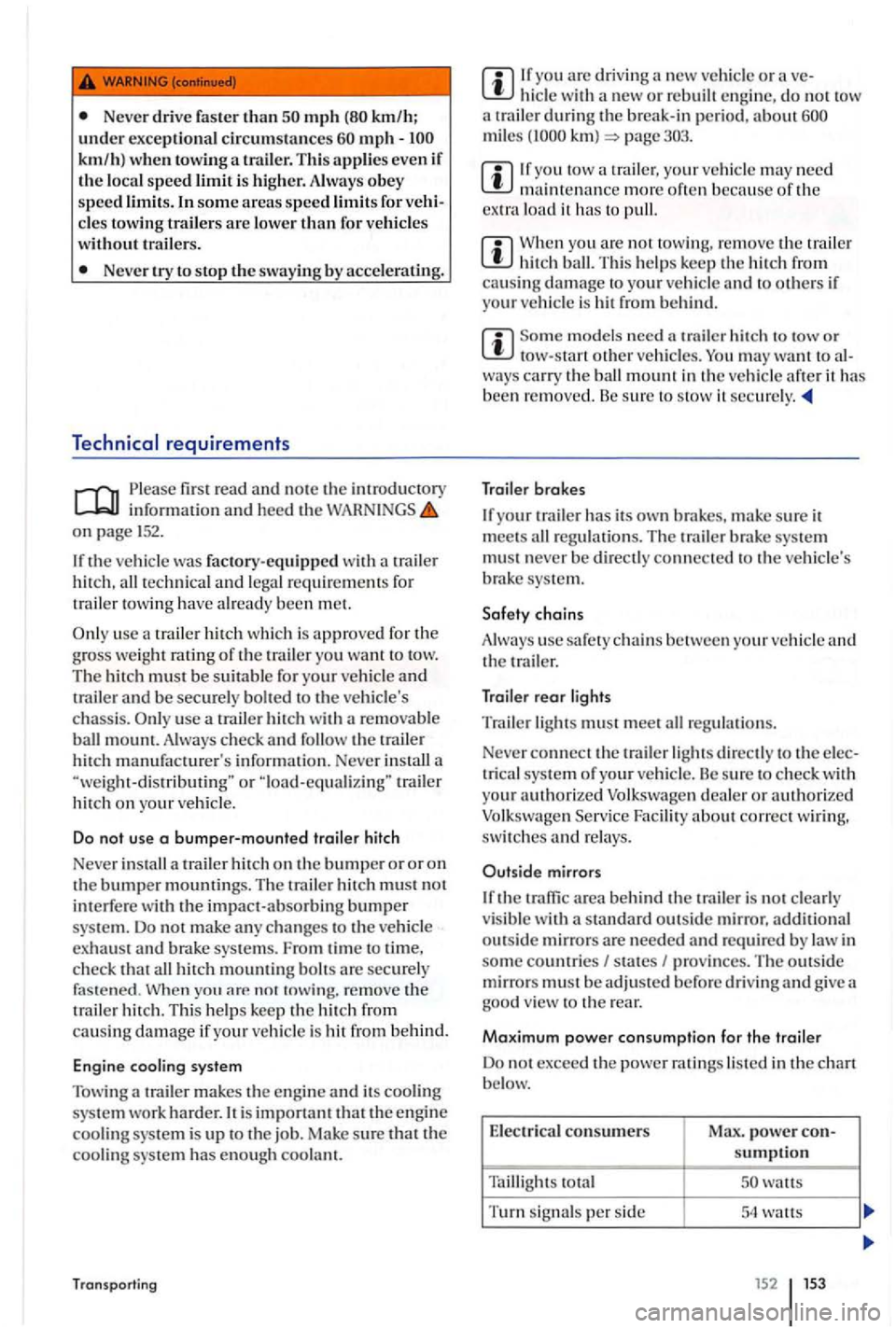
Max im um power consump tio n f or th e trailer
D o no t excee d the power ratin gs liste d in the chart below.
E l
ectrical consumers power con-sumptio n
Taillight s
Turn signals pe r sid e 54 wat ts
Page 159 of 541
Note
can use one of these adapte rs if required for the proper in stallation of bi cycle rack or
m ent s are m el. Wh en u sin g bicycle rack s or carri ers make sure that th e tailli ghts are n o t
bl ocke d.
Retrofitting a
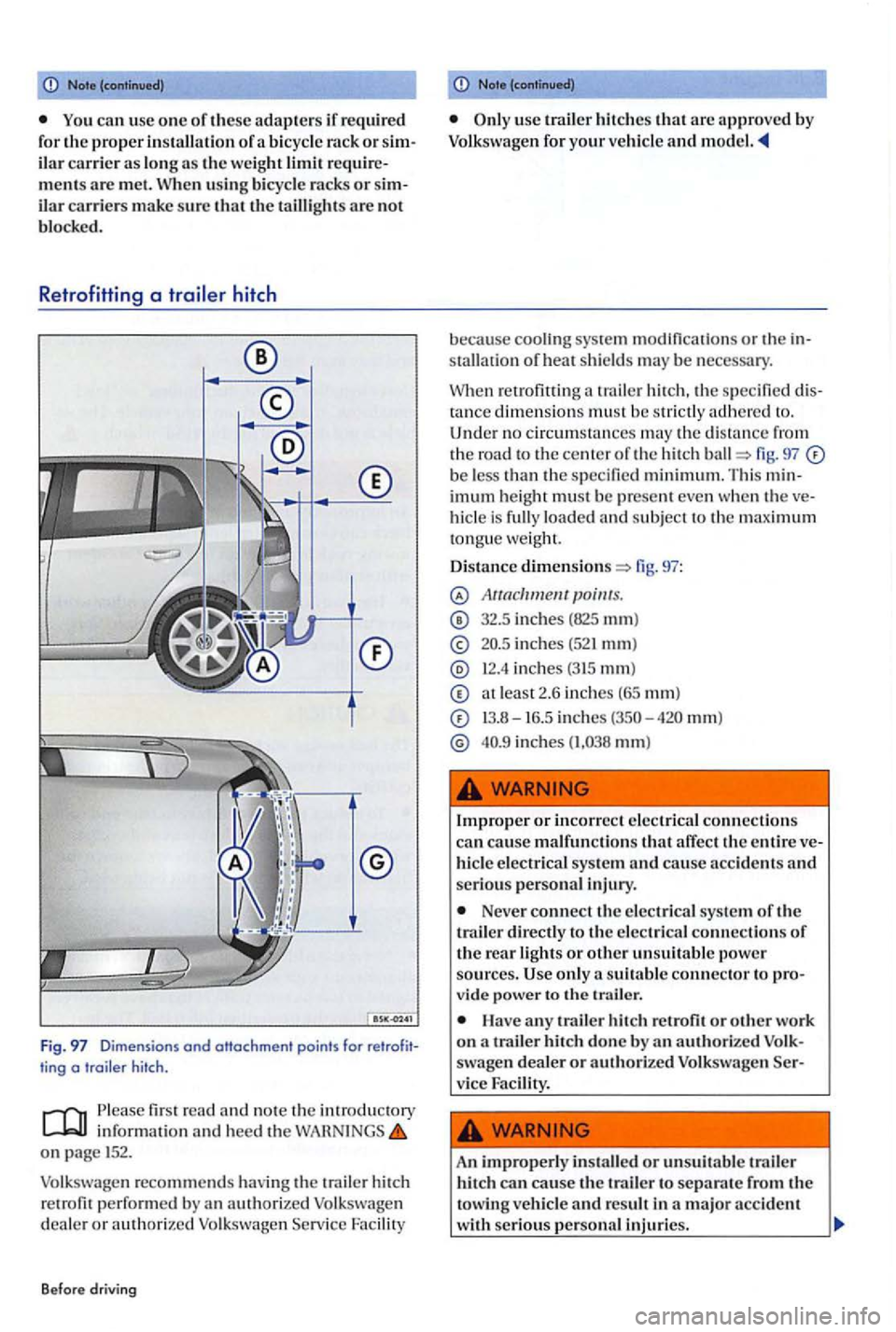
Fig. 97 Dimensions ond ottochment points for ting o hitch.
first re ad and not e th e intr oductory information and h eed th e on page 152 .
V o lk sw age n rec
ommends hav in g the trai le r hit ch
r e trofit perf o rm ed b y an Volk swag en deale r o r authorized Volk s wa gen Servic e Facility
B efore driving
Note (continued)
use hitches that a re approved by for your vehicl e and
because cooli ng sys te m m od ification s or th e sta llation of heat shield s may be necessary.
Wh en re trofi tting
traile r hi tch, th e specified ta nce dimensions must be stri ctly adhered to. Under no circums ta nces m ay the distance f ro m
th e road to the center o f the hitch fig. 97 be le ss than th e s pecifi ed min im um. Thi s imum height must be present ev e n whe n the hi cle is full y load ed and subje ct to the maximum tongue weigh
D istance fig. 97:
32.5 inch es (825 mm)
in ches ( 52 1 mm)
inc hes (315 mm )
atleast2 .6 in ches (6 5 mm)
13.8-16.5 inches mm)
in ches
Imprope r or incorrect elec tri cal connection s
ca n cause malfunction s that affect th e e ntire hicl e elec tri cal sys te m and cau se acc id e nt s and serio us perso na l injury.
Neve r connect th e e lectrical syste m of the
trailer directly to the e lec trical connectio ns of the rear light s or oth er unsuitabl e power sources . U se only v ide po w er t o th e trailer.
H ave a ny trailer hit ch r etrofit or other work on a trailer hit ch don e by an authorized swage n deal er or authorize d Volkswage n
An improperly in stalled or uns uitable trailer hitcl1 can cause th e trai le r to separate fro m the
towing vehicl e and result in major accident with serious perso nal injuries.
Page 164 of 541
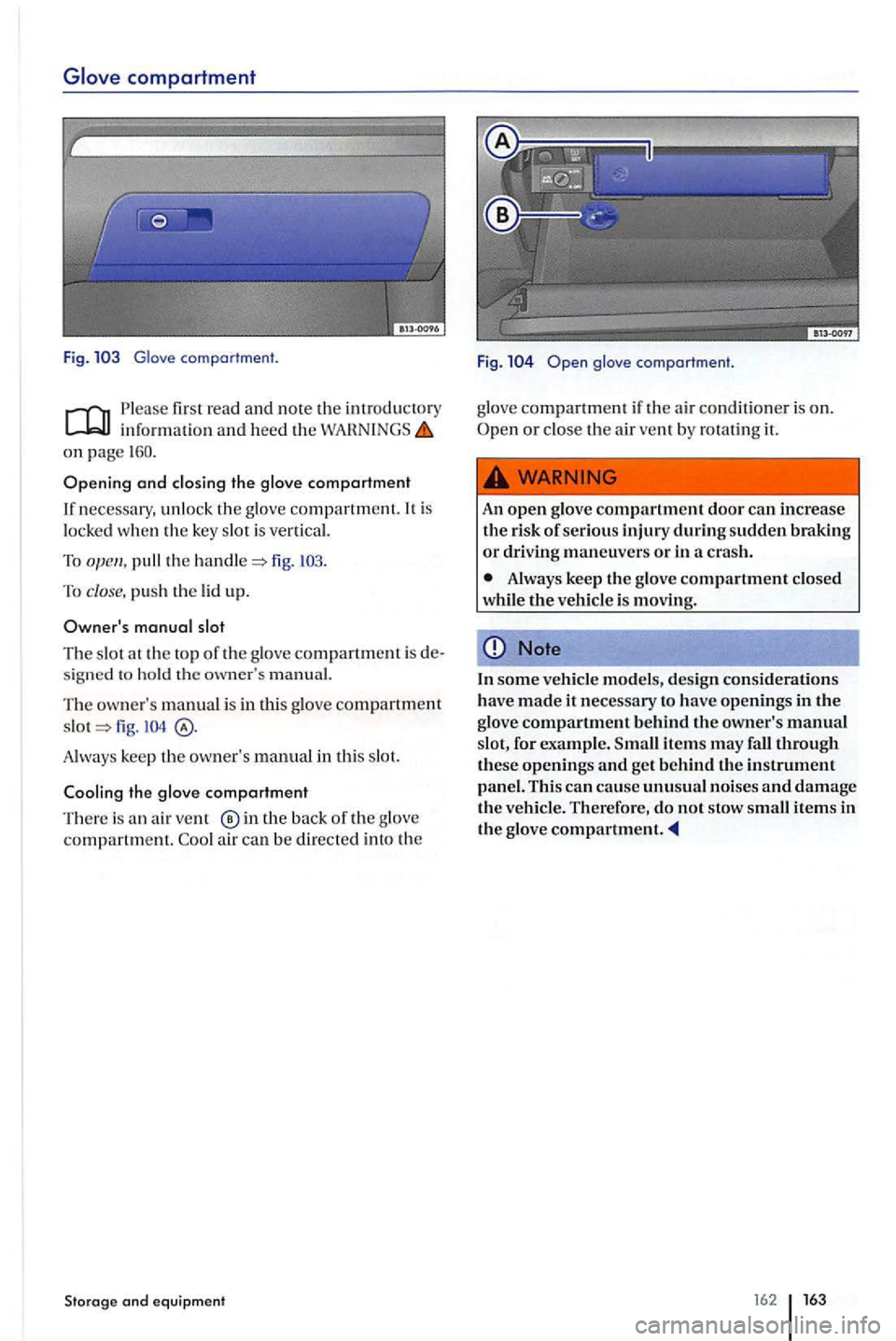
Glove comportment.
first rea d and note the introductory inf ormation and heed the on page
necessary, unlock the glove compartment. It is
l ocked when the key slot is vertical.
To fig.
To close, pus h th e lid up.
fig.
Always keep the owner's manual in thi s slot.
Cooling the glove comportment
T here is ® in the back of the g lov e compartment. air can be directed into the
Storage and equipment
Fig.
Note
In some vehicle models, design considerations
have made it necessary to hav e openings in the glove compartment behind the owner's manual
s lot , for example . Small item s may
items in the glove
162 163
Page 179 of 541
If the engine has been driven hard for long time, the engine co uld overheat when it is stopped. To reduce the risk of engine damage, le t the engine id le in for about 2 minutes before you switch ofT the ignition.
read and n o te the int rod uctory information and heed th e on page 172.
The immobilize r helps to pre vent the en g in e from bein g s tarted and driven w ith an unauthorized ve
hicle key.
Th ere is mi croc hip insid e the ve hicle key. T he chip deactivates the immobilize r automatically
w hen the ve hicl e key is inserted int o the ig nition swit ch .
The electron ic immobilizer is automatically acti
vated when the ve hicle key is pulle d out of the ig
niti on switch. ve hicles with the vehicle
key mus t be outsid e the page 41.
While driving
ve hicles wit h automatic transmi ssions,
the engine has been switched ofT, the radiator fan in the engi ne com partment may ke ep running for several minutes, or may start run
nin g afte r th e ve hicl e has been parke d for a w hile, even if th e ig nition is switch ed ofT a nd the ignition
key has been removed. The rad iator fan shuts off automatically when the en g ine has coole d down enough .
Th e e ng in e can there fore onl y be started with a correct ly coded genuine Volk swagen ve hicle key. ve hicle keys are availab le from authorized Volkswage n dea lers, authorized Volk swage n vice Fac ilities, and from certain independent repair facilit ies and locksmiths who a re qualified to m ake vehicle page 34.
I
fan unauthorize d ve hicle key is used, SAFE or Im mobiliz er active ! appears in the in strument clu ste r display. The ve hicl e cannot be operated w ith this key.
Using gen uine Volkswage n key s helps minimi ze the risk of malfu nctions .
Page 227 of 541
Never switch th e fan off for an extended p eriod of time, sin ce no fresh ai r will enter the senger compartment.
air causes driver and passenger fatigue and reduces their alertness, whi ch can cause cidents, collision s, and serious personal
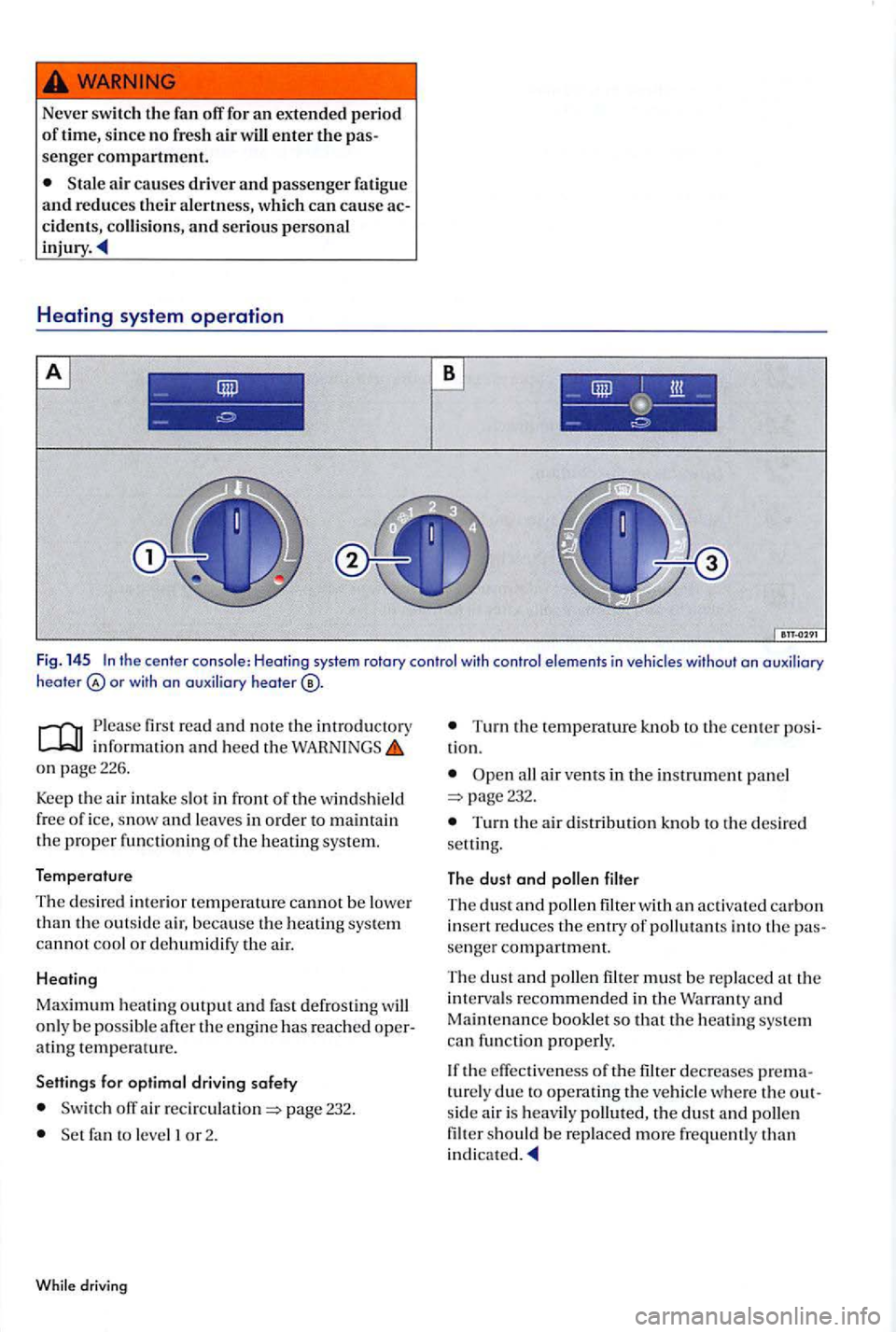
Heating system operation
A
Fig . 145 In th e center console: Heati ng system rotary con trol with control elements in
fir st r ea d and the introductor y information and heed the on page226.
K
eep the air imak e slo t in front of the wind shield fr ee of ice, snow and leaves in order to m aint ain
t h e prop er fun ctioni ng of th e heatin g sys te m.
Temperature
T he desired interior t emperatur e cannot be lowe r
t han th e out sid e a ir, beca use the heating system cannot cool or dehumidify the air.
Heating
Maximum heatin g ou tp ut and fast defrosting only be poss ible after the engine has reac hed ati ng temperature.
for optimal driving safety
off air pag e 232.
Turn the temperature knob to th e ce nter tion.
Ope n
Turn the air di stribution knob to th e des ired
se ttin g.
The dust and filter
T he du st and filt er wit h an activated carbon insert red uces th e entry of pollutant s int o the
turely due to ope ra tin g the vehicl e w here th e side air is heavily pollut ed, th e dust and polle n filt er sh ould be rep laced more frequently than