2006 FORD TRANSIT warning
[x] Cancel search: warningPage 218 of 234
5.8 Air Bag Supplemental Restraint System (SRS)
5.8.1 Air Bags
Front Seats
Side airbags are not compatible with swiveling
front seats.
Do not specify the base vehicle with side airbags
when planning to retrofit a swiveling device on
the front seats and/or an armrest on the outer
side of the front seats, this may affect the function
and/or deployment of the side airbags.
The airbag sensors for side airbags are located
nearby the bottom of the B-pillar
WARNING: Modifications or
reinforcements in the area of the
sensors may affect the side airbag
fire timing and result in uncontrolled
side air bag deployment.
Please note that vehicles not equipped with side
airbags but equipped with front airbags only are
not affected.
Drilling or grinding operations in this area are only
permitted when battery cables are disconnected.
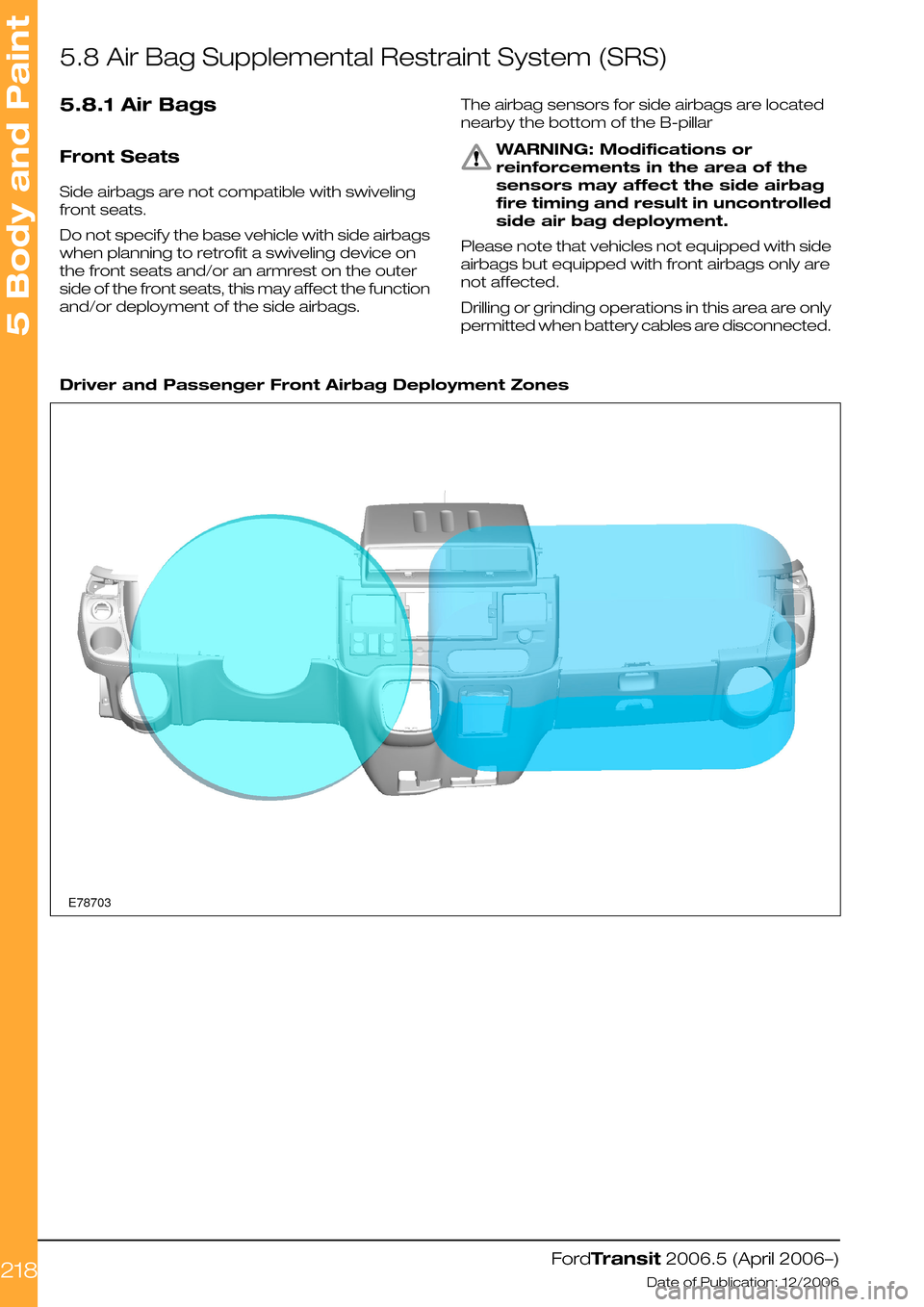
Driver and Passenger Front Airbag Deployment Zones
FordTransit 2006.5 (April 2006–)
Date of Publication: 12/2006
5 Body and Paint
218E78703
Page 220 of 234

5.9 Safety Belt System
WARNING: Follow removal and
installation procedures for the seat
belt system to ensure correct
function of the restraints system.
The removal and reinstallation of the seat belt,
strainer or any component of the seat belt system
should be avoided. In case the removal and
re-installation system is required during the
conversion, however, follow the guidelines for
removal and installation of the seat belt system
as described in the workshop manual. Please
consult your local National Sales Company
representative for further information
When removing the seat belt system, a seat belt
webbing forked retainer should be applied to the
webbing 200mm below the webbing button stop.
This prevents a situation where all the webbing
runs back into the retractor and the retractor
becomes locked.
When reinstalling, fit the retractor to the body first
and gently pull the webbing out of the retractor
to allow fitment of the D loop. Then remove the
forked retainer. If the retractor is locked, allow a
small amount of webbing to reel back into the
retractor to allow the webbing lock to release. Do
not attempt to release the retractor by pulling on
the webbing with significant force or by manually
interfering with the locking mechanism.
FordTransit 2006.5 (April 2006–)
Date of Publication: 12/2006
5 Body and Paint
220
Page 221 of 234

5.10 Corrosion Prevention
5.10.1 General
Avoid drilling into closed frame body members
to avoid the risk of corrosion from swarf.
If drilling is required, however:
•Re-paint metal edges and protect against
corrosion after cutting or drilling operations.
•Endeavor to remove all swarf from inside the
side member and treat to prevent corrosion.
•Apply corrosion protection inside and outside
of the chassis frame.
5.10.2 Repairing Damaged Paint
After cutting or reworking any sheet metal on
the vehicle the damaged paint must be repaired.
Ensure all materials are compatible with the
relevant Ford specifications and maintain the
original performance where possible. Consult
the Vehicle Converter Advisory Service
[email protected] for specifications.
5.10.3 Under Body Protection and
Material
WARNING: Do not over-coat or
contaminate surfaces of
components such as brakes or
catalytic converters.
Ensure all materials are compatible with the
relevant Ford specifications and maintain the
original performance where possible.
Some proprietary products affect the original
coatings. For specifications of corrosion
protection materials, please consult your local
National Sales Company representative or the
Vehicle Converter Advisory Service
[email protected].
5.10.4 Painting Road Wheels
WARNING: Do not paint wheel clamp
surfaces in contact with other
wheels, brake drum or disc, hub and
holes or surface under wheel nuts.
Any further treatment in these areas
may affect the wheel clamp
performance and the vehicle safety.
Mask the wheel when changing the
color or repairing paint.
5.10.5 Contact Corrosion
When using different materials with a different
electrochemical potential, ensure that materials
are isolated from each other to prevent contact
corrosion caused by a potential difference.
Use appropriate isolation materials.
Where possible, choose materials with low level
of electrochemical potential difference.
FordTransit 2006.5 (April 2006–)
Date of Publication: 12/2006
5 Body and Paint
221
Page 230 of 234

A
About This Manual................................................6
Accessory Drive..................................................77
Adding Connectors, Terminals and Wiring....
162
Additional 'Theatre Lighting' for rear of vehicle
interior...............................................................118
Additional External Lamps...............................116
Additional Ignition, Instrument Panel Illumination
and Air Conditioning On Signals...................124
Additional Internal Lamps ................................118
Additional Vehicle Signals / Features.............147
Aids for Vehicle Entry and Exit..........................33
Air Bags..............................................................218
Air Bag Supplemental Restraint System (SRS)..
218
Air Flow Restrictions...........................................76
Alternative Type Approval....................................7
Ancillary Equipment - Sub Frame Mounting....
228
Antenna Location...............................................24
Anti-Lock Control - Stability Assist..................65
Auxiliary Fuses, Fuse Box and Relays (Fuses -
Standard)..........................................................119
Auxiliary Heater Installation...............................76
Auxiliary Heater Systems..................................75
B
Back Panel Removal................................177, 214
Battery and Cables............................................98
Battery Information............................................98
Body....................................................................175
Body Closures..................................................203
Body Structures - General Information.........175
Body System - General
Information—Specifications.........................200
Brake Hoses General........................................62
Brake System.....................................................62
C
Cab Roof Removal...........................................214
Cab Van Floor....................................................185
CAN-Bus System Description and Interface....
90
Cellular Phone....................................................115
Center of Gravity ...............................................46
Central Junction Box (CJB)...............................91
Charge Balance Guidelines..............................97
Charging System...............................................95
Chassis Cab.......................................................179
Circit Diagram.....................................................94
Circuit Diagram...................................................93
Circuit Diagrams.................................................97
Climate Control System..................................106
Clutch...................................................................82
Commercial and Legal Aspects.........................7
Communications Network...............................90
Connectors........................................................133
Contact Corrosion............................................221
Contact Information.............................................9
Conversion Affect on Fuel Economy and
Performance.....................................................25
Conversion Affects on Parking Aids................33
Conversion Homologation...............................23
Conversion Type.................................................14
Corrosion Prevention.......................................221
Customer Connection Points.........................120
D
Drilling and Welding..............................................8
Driver's Standing Head Room........................214
Driver Field of View.............................................33
Driver Reach Zones...........................................33
Driveshaft.............................................................61
E
Electrical Conversions.......................................95
Electrically operated Door Mirrors..................117
Electrics for Tow bar........................................136
Electromagnetic Compatibility (EMC)............24
Electronic Engine Controls................................81
End of Life Vehicle (ELV) Directive...................26
Engine Cooling....................................................75
Engine..................................................................66
Engine Power Curves.......................................66
Engine RPM (Revs Per Minute) Speed
Controller..........................................................157
Engine Run Signal (D+ Alternative)................132
Exhaust Heat Shields.........................................86
Exhaust Pipes and Supports............................86
Exhaust System.................................................86
Extended Chassis Frame...............................226
Extensions and Optional Exhausts..................86
Exterior Lighting.................................................116
F
Fitting of Equipment Containing an Electric
Motor..................................................................97
Frame and Body Mounting............................222
Frame Drilling and Tube Reinforcing.............228
Front, Rear and Side Under-run Protection....
38
Front and Rear Brakes......................................64
Front End Accessory Drive 2.2l Diesel............79
Front End Accessory Drive 2.4l Diesel and 2.3l
Petrol...................................................................77
Front End Integrity for Cooling, Crash,
Aerodynamics and Lighting..........................198
Front Suspension...............................................58
Fuel System........................................................88
Fuses and Relays..............................................119
G
General........................................................62, 221
General Component Package Guidelines.....33
General Information and Specific Warnings....
95
General........................................................62, 221
General Product Safety Requirement...............7
Index
230
Page 232 of 234

Special Vehicle Options (SVO) and Aftermarket
Kits....................................................................146
Springs and Spring Mounting....................58, 59
Suspension System...........................................57
T
Tachograph Mounting......................................110
Tachograph.......................................................109
Tank and Dry Bulk Carriers..............................199
Terminology...........................................................7
Tipper Bodies....................................................199
Tire Manufacturers.............................................60
Towing Requirements.......................................54
Towing..................................................................54
U
Under Body Protection and Material.............221
V
Van Floor - Load Compartment Tie Downs for
Van ,Bus and Kombi......................................200
Vehicle Duty Cycle Guidelines..........................25
Vehicle Electrical Capacity - Alternator...........97
Vehicle Ride and Handling Attributes..............25
Vehicle Speed Output (Signal)........................131
Vehicle Transportation Aids and Vehicle
Storage..............................................................32
W
Warnings, Cautions and Notes in This Manual..
6
Warranty on Ford Vehicles..................................7
Wheel Clearance................................................60
Wheels and Tires................................................60
Windscreen wipers..........................................130
Wiring Specification...........................................119
Index
232