2005 KIA Rio warning
[x] Cancel search: warningPage 203 of 238
Battery
7-31
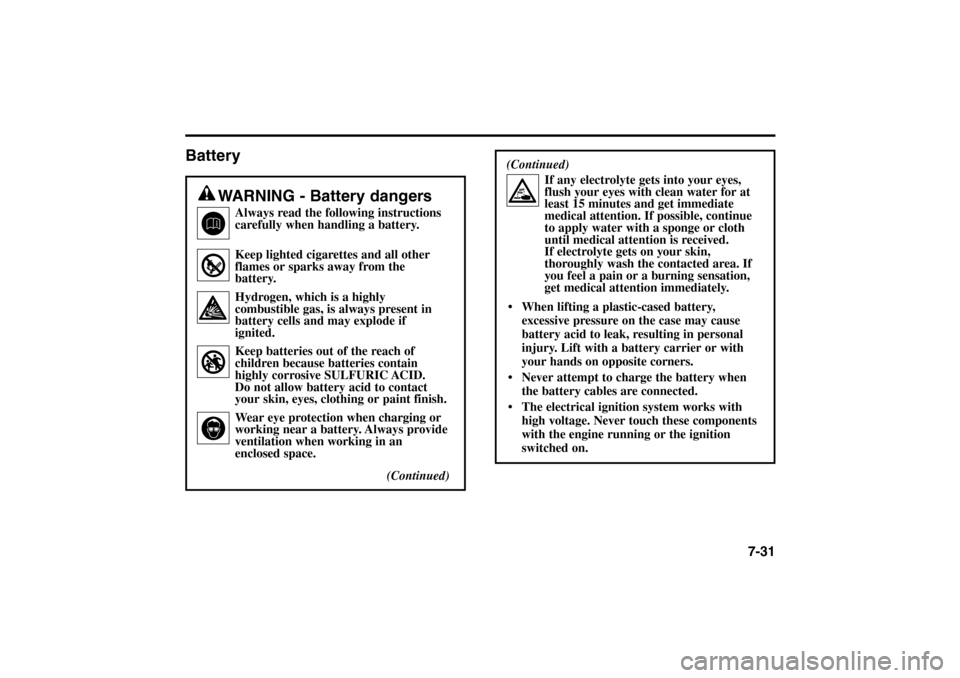
WARNING - Battery dangers
Always read the following instructions
carefully when handling a battery.
Keep lighted cigarettes and all other
flames or sparks away from the
battery.
Hydrogen, which is a highly
combustible gas, is always present in
battery cells and may explode if
ignited.
Keep batteries out of the reach of
children because batteries contain
highly corrosive SULFURIC ACID.
Do not allow battery acid to contact
your skin, eyes, clothing or paint finish.
Wear eye protection when charging or
working near a battery. Always provide
ventilation when working in an
enclosed space.
(Continued)
(Continued)
If any electrolyte gets into your eyes,
flush your eyes with clean water for at
least 15 minutes and get immediate
medical attention. If possible, continue
to apply water with a sponge or cloth
until medical attention is received.
If electrolyte gets on your skin,
thoroughly wash the contacted area. If
you feel a pain or a burning sensation,
get medical attention immediately.
• When lifting a plastic-cased battery,
excessive pressure on the case may cause
battery acid to leak, resulting in personal
injury. Lift with a battery carrier or with
your hands on opposite corners.
Never attempt to charge the battery when
the battery cables are connected.
The electrical ignition system works with
high voltage. Never touch these components
with the engine running or the ignition
switched on.
RIO ENG CNA 7-2.qxd 7/29/05 5:18 PM Page 31
Page 205 of 238

7-33
WARNING - Recharging Battery
When recharging the battery, observe the
following precautions:
The battery must be removed from the
vehicle and placed in an area with good
ventilation.
Do not allow cigarettes, sparks, or flame
near the battery.
Watch the battery during charging, and stop
or reduce the charging rate if the battery
cells begin gasing (boiling) violently or if the
temperature of the electrolyte of any cell
exceeds 49°C (120°F).
Wear eye protection when checking the
battery during charging.
(Continued)
(Continued)
Disconnect the battery charger in the
following order.
1. Turn off the battery charger main switch.
2. Unhook the negative clamp from the
negative battery terminal.
3. Unhook the positive clamp from the
positive battery terminal.✻ ✻
NOTICE
Before performing battery maintenance or
recharging, turn OFF all accessories and stop
the engine.
When remounted battery, disconnect the
negative (–) battery cable first. When re-
installing the battery, reconnect the negative (–)
battery cable last.
RIO ENG CNA 7-2.qxd 7/29/05 5:18 PM Page 33
Page 207 of 238
7-35
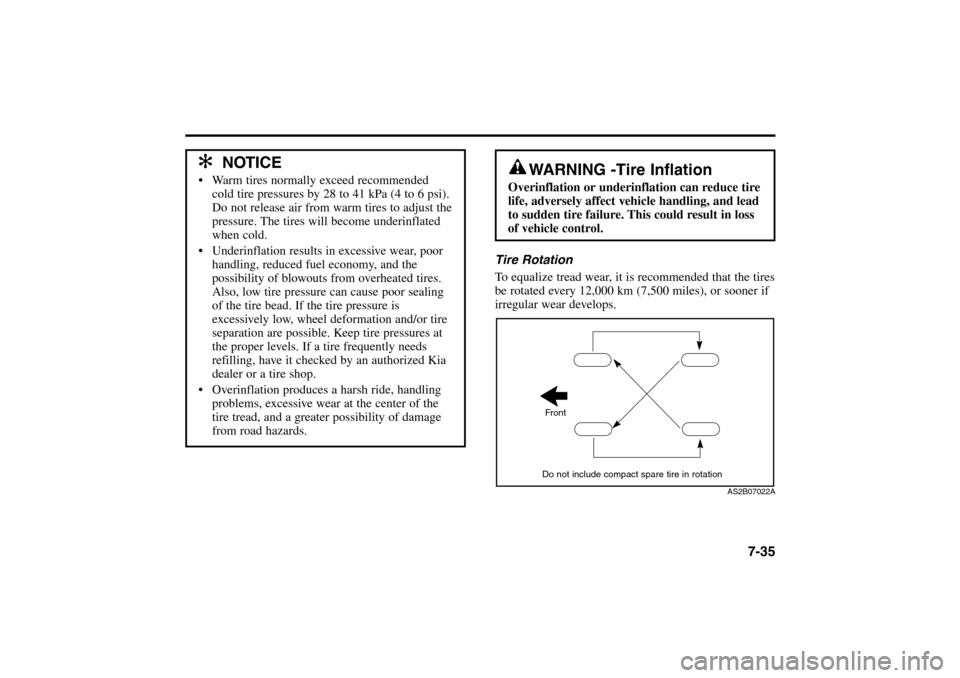
Tire Rotation
To equalize tread wear, it is recommended that the tires
be rotated every 12,000 km (7,500 miles), or sooner if
irregular wear develops.
✻ ✻
NOTICE
Warm tires normally exceed recommended
cold tire pressures by 28 to 41 kPa (4 to 6 psi).
Do not release air from warm tires to adjust the
pressure. The tires will become underinflated
when cold.
Underinflation results in excessive wear, poor
handling, reduced fuel economy, and the
possibility of blowouts from overheated tires.
Also, low tire pressure can cause poor sealing
of the tire bead. If the tire pressure is
excessively low, wheel deformation and/or tire
separation are possible. Keep tire pressures at
the proper levels. If a tire frequently needs
refilling, have it checked by an authorized Kia
dealer or a tire shop.
Overinflation produces a harsh ride, handling
problems, excessive wear at the center of the
tire tread, and a greater possibility of damage
from road hazards.
WARNING -Tire Inflation
Overinflation or underinflation can reduce tire
life, adversely affect vehicle handling, and lead
to sudden tire failure. This could result in loss
of vehicle control.
AS2B07022A
Do not include compact spare tire in rotationFront
RIO ENG CNA 7-2.qxd 7/29/05 5:18 PM Page 35
Page 213 of 238

Temperature – A, B and C
The temperature grades are A (the highest), B and C,
representing the tire’s resistance to generate heat and to
dissipate heat when tested under controlled conditions
on a specified indoor laboratory test wheel. Sustained
high temperatures can cause the material of the tire to
degenerate and reduce tire life, and excessive
temperature can lead to sudden tire failure. Grade C
corresponds to a level of performance that all
passenger vehicle tires must meet under the Canadian
Motor Vehicle Safety Standard No. 109. Grades A and
B represent higher levels of performance on the
laboratory test wheel than the maximum required by
law.
7-41
Tread Wear
The tread wear grade is a comparative rating based on
the wear rate of the tire when tested under controlled
conditions on a specified government test course. For
example, a tire graded 150 would wear one-and-a-half
times as well on the government course as a tire
graded 100.
The relative performance of tires depends upon the
actual conditions of their use. Variations in driving
habits, service practices and differences in road
characteristics and climate may significantly affect
performance.
Traction – A, B and C
The traction grades, from highest to lowest, are A, B
and C, and they represent the tire’s ability to stop on
wet pavement as measured under controlled conditions
on specified government test surfaces of asphalt and
concrete. A tire marked C may have poor traction
performance.
WARNING -Tire Temperature
The temperature grade for a tire is established
for a tire that is properly inflated and not
overloaded. Excessive speed, underinflation, or
excessive loading, either separately or in
combination, can cause heat build-up and
possible sudden tire failure. This can cause loss
of vehicle control and death or personal injury.
RIO ENG CNA 7-2.qxd 7/29/05 5:18 PM Page 41
Page 214 of 238

Maintenance7-42
1. Remove the headlight bulb cover by turning it
counterclockwise.
2. Disconnect the electrical connector from the bulb
assembly.
3. Unsnap the headlight bulb retaining wire by
depressing the end of it and pulling it upward.
4. Remove the bulb.
5. Install a new bulb by aligning the bulb with the
three(3) slots on the headlight assembly and snap the
headlight bulb retaining wire into position.
6. Connect the headlight bulb electrical connector.
7. Install the headlight bulb cover.
Bulb ReplacementHeadlight Bulb Replacement
WARNING - Halogen Bulbs
Wear eye protection when changing a bulb.
Allow the bulb to cool before handling it.
Halogen bulbs contain pressurized gas. If
broken, a halogen bulb will explode and will
produce flying pieces of glass.
Always handle halogen bulbs carefully to
avoid scratches and abrasion. If the bulbs
are lit, avoid contact with liquids. Never
touch the glass with bare hands. Residual oil
may cause the bulb to overheat and burst
when lit. A bulb should be operated only
when installed in the headlight assembly.
If a bulb becomes damaged or cracked,
replace it immediately and carefully dispose
it.
1B3106004B
RIO ENG CNA 7-2.qxd 7/29/05 5:18 PM Page 42
Page 221 of 238
7-49
Exterior CareExterior General CautionIt is very important to follow the manufacturer’s
directions when using any chemical cleaner or polish.
Read all warning and caution statements that appear on
the label.Finish MaintenanceWashing
To help protect your vehicle’s finish from rust and
deterioration, wash it thoroughly and frequently
at least once a month with lukewarm or cold
water. Pay special attention to the removal of any
accumulation of salt, dirt, mud, or other foreign
materials. Make sure the drain holes in the lower edges
of the doors and rocker panels are kept clear and clean.
Insects, tar, tree sap, bird droppings, industrial fallout
and similar deposits can damage your vehicle’s finish
if not removed immediately. Even prompt washing with plain water may not
completely remove all these deposits. A mild soap,
safe for use on painted surfaces, can be used.
After washing, rinse the vehicle thoroughly with
lukewarm or cold water. Do not allow soap to dry on
the finish.
✻ ✻
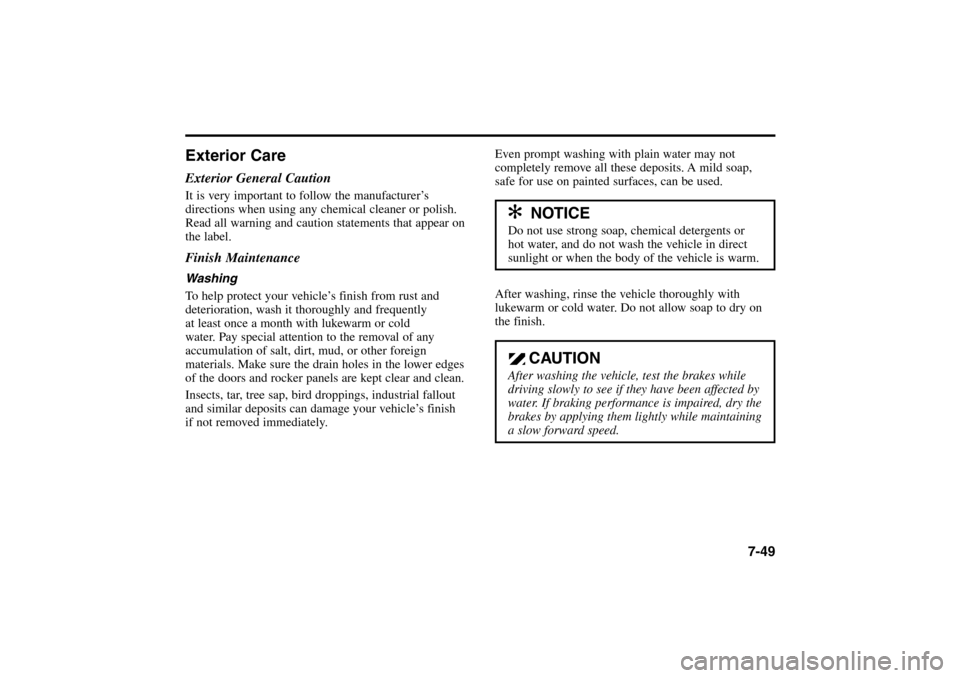
NOTICE
Do not use strong soap, chemical detergents or
hot water, and do not wash the vehicle in direct
sunlight or when the body of the vehicle is warm.
CAUTION
After washing the vehicle, test the brakes while
driving slowly to see if they have been affected by
water. If braking performance is impaired, dry the
brakes by applying them lightly while maintaining
a slow forward speed.
RIO ENG CNA 7-2.qxd 7/29/05 5:18 PM Page 49
Page 232 of 238

Interior Care ....................................................................7-52
Interior Features ..............................................................4-40
Interior Lights .................................................................3-65K
eyless Entry System......................................................3-3
Keys ..................................................................................3-2
Label Information ..........................................................5-13
Lighting ...........................................................................4-33
Lubricant Specifications .................................................7-47
Lubricants and Fluids......................................................7-26
Luggage Net ....................................................................3-68M
aintenance Schedule ...................................................7-5
Maintenance Services .......................................................7-3
Manual Transaxle ..............................................................4-7
Mirrors ............................................................................3-62
O
verheating .....................................................................6-2
Overloading.....................................................................5-13
Owner Maintenance ........................................................7-10
Parking Brake ................................................................7-21
Power Outlet ...................................................................3-70
Power Steering.......................................................4-22, 7-22
R
ear Hatch .....................................................................3-54
Rear Window Defroster ..................................................4-38
Road Warning ...................................................................6-2
Roof Rack .......................................................................3-69
Safety Belts ....................................................................3-20
Seats ................................................................................3-11
Special Driving Conditions...............................................5-7
Specifications ................................................................... 8-2
Starting the Engine............................................................4-4
Steering Wheel ................................................................3-62
Suggestions for Economical Operation ............................5-6
Sunglass Holder ..............................................................3-67Tilt Steering ...................................................................4-22
Tires and Wheels.............................................................7-34
Tonneau Cover ................................................................3-71
Towing ............................................................................6-14
Trailer Towing.................................................................5-12
Trunk Lid ........................................................................3-55V
ehicle Break-In Process ................................................1-3
W
arnings and Indicators ...............................................4-27
Windows ...........................................................................3-8
Index9-2
RIO ENG CNA 9.qxd 7/29/05 5:19 PM Page 9-2