2004 YAMAHA YBR125 service
[x] Cancel search: servicePage 7 of 83

VII
TWO-WHEELED MACHINES ARE SINGLE TRACK VEHICLES. THEIR SAFE USE AND OPERATION ARE DEPENDENT
UPON THE USE OF PROPER RIDING TECHNIQUES AS WELL AS THE EXPERTISE OF THE OPERATOR.
EVERY OPERATOR SHOULD KNOW THE FOLLOWING REQUIREMENTS BEFORE RIDING. HE OR SHE SHOULD.
1. OBTAIN THOROUGH INSTRUCTIONS FORM A COMPETENT SOURCE ON ALL ASPECTS OF MACHINE
OPERATION.
2. OBSERVE THE WARNINGS AND MAINTENANCE REQUIREMENTS IN THE OWNERíS MANUAL.
3. OBTAIN QUALIFIED TRAINING IN SAFE AND PROPER RIDING TECHNIQUES.
4. OBTAIN PROFESSIONAL TECHNICAL SERVICE AS INDICATED BY THE OWNERíS MANUAL AND/OR WHEN
MADE NECESSARY BY MECHANICAL CONDITIONS.
SAFE RIDING
1. Always make pre-operation checks. Careful checks may help prevent an accident.
2. Many accidents involve inexperienced operators.
a. Know your skills and limits. Staying within your limits may help you to avoid an accident.
b. Only lend your machine to experienced operators.
3. Many machine accidents have been caused by machine operator errors. A typical error made by the operator is veering
wide on a turn due to EXCESSIVE SPEED or undercornering (insufficient lean angle for the speed). Never travel faster
than warranted by conditions.
4. Ride cautiously in unfamiliar areas. You may encounter hidden obstacles which could cause an accident.
5. The operatorís posture is important for proper control. The operator should keep both hands on the handlebars and
both feet on the operator footrests during operation to maintain control of the machine.
6. Never ride under the influence of alcohol or drugs.
SAFETY INFORMATION
VII
TWO-WHEELED MACHINES ARE SINGLE TRACK VEHICLES. THEIR SAFE USE AND OPERATION ARE DEPENDENT
UPON THE USE OF PROPER RIDING TECHNIQUES AS WELL AS THE EXPERTISE OF THE OPERATOR.
EVERY OPERATOR SHOULD KNOW THE FOLLOWING REQUIREMENTS BEFORE RIDING. HE OR SHE SHOULD.
1. OBTAIN THOROUGH INSTRUCTIONS FORM A COMPETENT SOURCE ON ALL ASPECTS OF MACHINE
OPERATION.
2. OBSERVE THE WARNINGS AND MAINTENANCE REQUIREMENTS IN THE OWNERíS MANUAL.
3. OBTAIN QUALIFIED TRAINING IN SAFE AND PROPER RIDING TECHNIQUES.
4. OBTAIN PROFESSIONAL TECHNICAL SERVICE AS INDICATED BY THE OWNERíS MANUAL AND/OR WHEN
MADE NECESSARY BY MECHANICAL CONDITIONS.
SAFE RIDING
1. Always make pre-operation checks. Careful checks may help prevent an accident.
2. Many accidents involve inexperienced operators.
a. Know your skills and limits. Staying within your limits may help you to avoid an accident.
b. Only lend your machine to experienced operators.
3. Many machine accidents have been caused by machine operator errors. A typical error made by the operator is veering
wide on a turn due to EXCESSIVE SPEED or undercornering (insufficient lean angle for the speed). Never travel faster
than warranted by conditions.
4. Ride cautiously in unfamiliar areas. You may encounter hidden obstacles which could cause an accident.
5. The operatorís posture is important for proper control. The operator should keep both hands on the handlebars and
both feet on the operator footrests during operation to maintain control of the machine.
6. Never ride under the influence of alcohol or drugs.
SAFETY INFORMATION
Page 30 of 83

4-2 NOTE:
Pre-operation checks should be made each time the motorcycle is used. Such an inspection can be thoroughly accomplished
in a very short time; and the added safety it assures is more than worth the time involved. If any maintenance service or
adjustment is needed, consult the chart above to refer to the pages in which the service or adjustment is described.
1. The engine, exhaust pipe, and muffler will be very hot after the engine has been run.
Be careful not to touch them or to allow any clothing item to contact them during inspection or repair.
2. If any item is not working properly, have it inspected and repaired before operating the motorcycle.
ITEMROUTINE
PAGE
Sidestand
Fittings / FastenersCheck all chassi fittings and fasteners.
Tighten / Adjust, if necessary
Check fuel level / top up as required.
Fuel tank
Lights, signals and switches
BatteryCheck electrolyte level.
Replenish with ìdistilled waterî if necessary.6-22
4-6 , 6-5
4-6 , 6-28 ~ 6-30
6-25 ~ 6-276-22
4-7
Check for proper operation
Front brake and clutch
lever pivotsCheck for smooth operation.
Lubricate if necessary
Check for smooth operation.
Lubricate if necessary
6-22 Check for smooth operation.
Lubricate if necessary Rear brake and shift pedal
shafts
WARNING:
4-2 NOTE:
Pre-operation checks should be made each time the motorcycle is used. Such an inspection can be thoroughly accomplished
in a very short time; and the added safety it assures is more than worth the time involved. If any maintenance service or
adjustment is needed, consult the chart above to refer to the pages in which the service or adjustment is described.
1. The engine, exhaust pipe, and muffler will be very hot after the engine has been run.
Be careful not to touch them or to allow any clothing item to contact them during inspection or repair.
2. If any item is not working properly, have it inspected and repaired before operating the motorcycle.
ITEMROUTINE
PAGE
Sidestand
Fittings / FastenersCheck all chassi fittings and fasteners.
Tighten / Adjust, if necessary
Check fuel level / top up as required.
Fuel tank
Lights, signals and switches
BatteryCheck electrolyte level.
Replenish with ìdistilled waterî if necessary.6-22
4-6 , 6-5
4-6 , 6-28 ~ 6-30
6-25 ~ 6-276-22
4-7
Check for proper operation
Front brake and clutch
lever pivotsCheck for smooth operation.
Lubricate if necessary
Check for smooth operation.
Lubricate if necessary
6-22 Check for smooth operation.
Lubricate if necessary Rear brake and shift pedal
shafts
WARNING:
Page 31 of 83

4-3
OIL QUANTITY:
Total amount:
1.2 L ( 0.264 Imp gal, 0.317 US gal)
Periodic oil change:
1.0 L ( 0.220 Imp gal, 0.264 US gal) Engine oil (See page 6-6 for details)
Make sure the engine oil is at the specified level. Add oil as
necessary.
Check the oil level in a daily manner and top it up if
necessary.
CAUTION:Tires
To ensure maximum performance, long service, and safe
operation, note the following:
1. Tire air pressure
Always check and adjust the tire pressure before
operating the machine.
Tire inflation pressure should be checked and adjusted
when the temperature of the tire equals the ambient air
temperature.
Tire inflation pressure must be adjusted according to
total weight of cargo, rider, passenger and accessories
(fairing, saddlebags, etc. if approved for this model),
and vehicle speed.
WARNING:
4-3
OIL QUANTITY:
Total amount:
1.2 L ( 0.264 Imp gal, 0.317 US gal)
Periodic oil change:
1.0 L ( 0.220 Imp gal, 0.264 US gal) Engine oil (See page 6-6 for details)
Make sure the engine oil is at the specified level. Add oil as
necessary.
Check the oil level in a daily manner and top it up if
necessary.
CAUTION:Tires
To ensure maximum performance, long service, and safe
operation, note the following:
1. Tire air pressure
Always check and adjust the tire pressure before
operating the machine.
Tire inflation pressure should be checked and adjusted
when the temperature of the tire equals the ambient air
temperature.
Tire inflation pressure must be adjusted according to
total weight of cargo, rider, passenger and accessories
(fairing, saddlebags, etc. if approved for this model),
and vehicle speed.
WARNING:
Page 34 of 83

4-6
1. It is dangerous to ride with a worn-out tire. When
the tire tread begin to show signs of wear, replace
the tire immediately. Brakes, tires and related wheel
parts should be left to a Yamaha dealer.
2. Patching a punctured tube is not recommended. If
it is absolutely necessary to do so, use great care
and replace the tube as soon as possible with a
good quality replacement.
Fitting/Fasteners
Alway check the tightness of chassis fittings and fasteners
before a ride. Use the chart on page 6-5 to find the correct
torque.
Switches
Check the operation of the starter switch, main switch,
ì Engine Stopî switch.
WARNING:Wheels
To ensure maximum performance, long service, and safe
operation, note the following:
1. Always inspect the wheels before a ride. Check for
cracks, bends, or warpage of the wheel; be sure the
spokes are tight and undamaged. If any abnormal
condition exists in a wheel, consult a Yamaha dealer or
other qualified mechanic. Do not attempt even small
repairs to the wheel. If a wheel is deformed or cracked,
it must be replaced.
2. Tires and wheels should be balanced whenever either
one is changed or replaced. Failure to have a wheel
balanced can result in poor performance, adverse
handling characteristics, and shortened tire life.
3. After installing a tire, ride conservatively to allow the
tire to seat itself on the rim properly. Failure to allow
proper seating may cause tire failure, resulting in
damage to the motorcycle and injury to the rider.
4-6
1. It is dangerous to ride with a worn-out tire. When
the tire tread begin to show signs of wear, replace
the tire immediately. Brakes, tires and related wheel
parts should be left to a Yamaha dealer.
2. Patching a punctured tube is not recommended. If
it is absolutely necessary to do so, use great care
and replace the tube as soon as possible with a
good quality replacement.
Fitting/Fasteners
Alway check the tightness of chassis fittings and fasteners
before a ride. Use the chart on page 6-5 to find the correct
torque.
Switches
Check the operation of the starter switch, main switch,
ì Engine Stopî switch.
WARNING:Wheels
To ensure maximum performance, long service, and safe
operation, note the following:
1. Always inspect the wheels before a ride. Check for
cracks, bends, or warpage of the wheel; be sure the
spokes are tight and undamaged. If any abnormal
condition exists in a wheel, consult a Yamaha dealer or
other qualified mechanic. Do not attempt even small
repairs to the wheel. If a wheel is deformed or cracked,
it must be replaced.
2. Tires and wheels should be balanced whenever either
one is changed or replaced. Failure to have a wheel
balanced can result in poor performance, adverse
handling characteristics, and shortened tire life.
3. After installing a tire, ride conservatively to allow the
tire to seat itself on the rim properly. Failure to allow
proper seating may cause tire failure, resulting in
damage to the motorcycle and injury to the rider.
Page 37 of 83
5-2 Starting a cold engine
1. Turn the fuel cock to ìONî.
2. Turn the main switch to ìONî and the engine stop switch
to ì ì.
3. Shift transmission into neutral.
NOTE:
When the transmission is in neutral, the neutral indicator
light should be on. If the light does not come on, ask a
Yamaha dealer to inspect it.
4. Fully open the starter (CHOKE) and completely close
the throttle grip.
5. Kick the starter to start the engine.
6. After starting the engine, turn back the starter to an
intermediate position.
NOTE:
To obtain maximum engine life and service, do not ever
thoroughly accelerate it while the engine is cold.
7. After warming up the engine, turn back the stater
(CHOKE) completely.
NOTE:
The engine is warm when it responds normally to the throttle
with the starter turned off.
Starting a warm engine
The starter lever is not required when the engine is warm.
CAUTION:
If the engine fails to start with the procedures above, try to
start again with the throttle grip opened 1/4 to 1/2.
Warming up the engine
For extended engine life always warm the engine up never
accelerate hard while the engine is cold. To check if engine
temperature is normal, rev the engine with the choke closed
and check to see if it responds normally.
CAUTION:
See the ìBreak-in sectionî prior to operating the motorcycle
for the first time.
5-2 Starting a cold engine
1. Turn the fuel cock to ìONî.
2. Turn the main switch to ìONî and the engine stop switch
to ì ì.
3. Shift transmission into neutral.
NOTE:
When the transmission is in neutral, the neutral indicator
light should be on. If the light does not come on, ask a
Yamaha dealer to inspect it.
4. Fully open the starter (CHOKE) and completely close
the throttle grip.
5. Kick the starter to start the engine.
6. After starting the engine, turn back the starter to an
intermediate position.
NOTE:
To obtain maximum engine life and service, do not ever
thoroughly accelerate it while the engine is cold.
7. After warming up the engine, turn back the stater
(CHOKE) completely.
NOTE:
The engine is warm when it responds normally to the throttle
with the starter turned off.
Starting a warm engine
The starter lever is not required when the engine is warm.
CAUTION:
If the engine fails to start with the procedures above, try to
start again with the throttle grip opened 1/4 to 1/2.
Warming up the engine
For extended engine life always warm the engine up never
accelerate hard while the engine is cold. To check if engine
temperature is normal, rev the engine with the choke closed
and check to see if it responds normally.
CAUTION:
See the ìBreak-in sectionî prior to operating the motorcycle
for the first time.
Page 41 of 83
PERIODIC MAINTENANCE AND MINOR REPAIRS
6-1 Perodic inspection, adjustment, and lubrication will keep
your motorcycle in the safest and most efficient condition
possible. Safety is an OBLIGATION of the motorcycle
owner.
The maintenance and lubrication schedule chart should be
considered strictly as a guide to general maintenance and
lubrication intervals. YOU MUST TAKE INTO
CONSIDERATION THAT WEATHER, TERRAIN,
GEOGRAPHICAL LOCATIONS, AND A VARIETY OF
INDIVIDUAL USES ALL TEND TO DEMAND THAT EACH
OWNER ALTER THIS TIME SCHEDULE TO SHORTER
INTERVALS TO MATCH THE ENVIRONMENT.
The most important points of motorcycle inspection,
adjustment, and lubrication are explained in the following
pages.If you are not familiar with motorcycle service, this work
should be done by a Yamaha dealer.CAUTION:
PERIODIC MAINTENANCE AND MINOR REPAIRS
6-1 Perodic inspection, adjustment, and lubrication will keep
your motorcycle in the safest and most efficient condition
possible. Safety is an OBLIGATION of the motorcycle
owner.
The maintenance and lubrication schedule chart should be
considered strictly as a guide to general maintenance and
lubrication intervals. YOU MUST TAKE INTO
CONSIDERATION THAT WEATHER, TERRAIN,
GEOGRAPHICAL LOCATIONS, AND A VARIETY OF
INDIVIDUAL USES ALL TEND TO DEMAND THAT EACH
OWNER ALTER THIS TIME SCHEDULE TO SHORTER
INTERVALS TO MATCH THE ENVIRONMENT.
The most important points of motorcycle inspection,
adjustment, and lubrication are explained in the following
pages.If you are not familiar with motorcycle service, this work
should be done by a Yamaha dealer.CAUTION:
Page 42 of 83
NOTE:
If you do not have necessary tools required during a service
operation, take your motorcycle to a Yamaha dealer for
service.
Modifications to this motorcycle not approved by
Yamaha may cause loss of performance, excessive
emissions, and render it unsafe for use. Consult a
Yamaha dealer before attempting any changes.
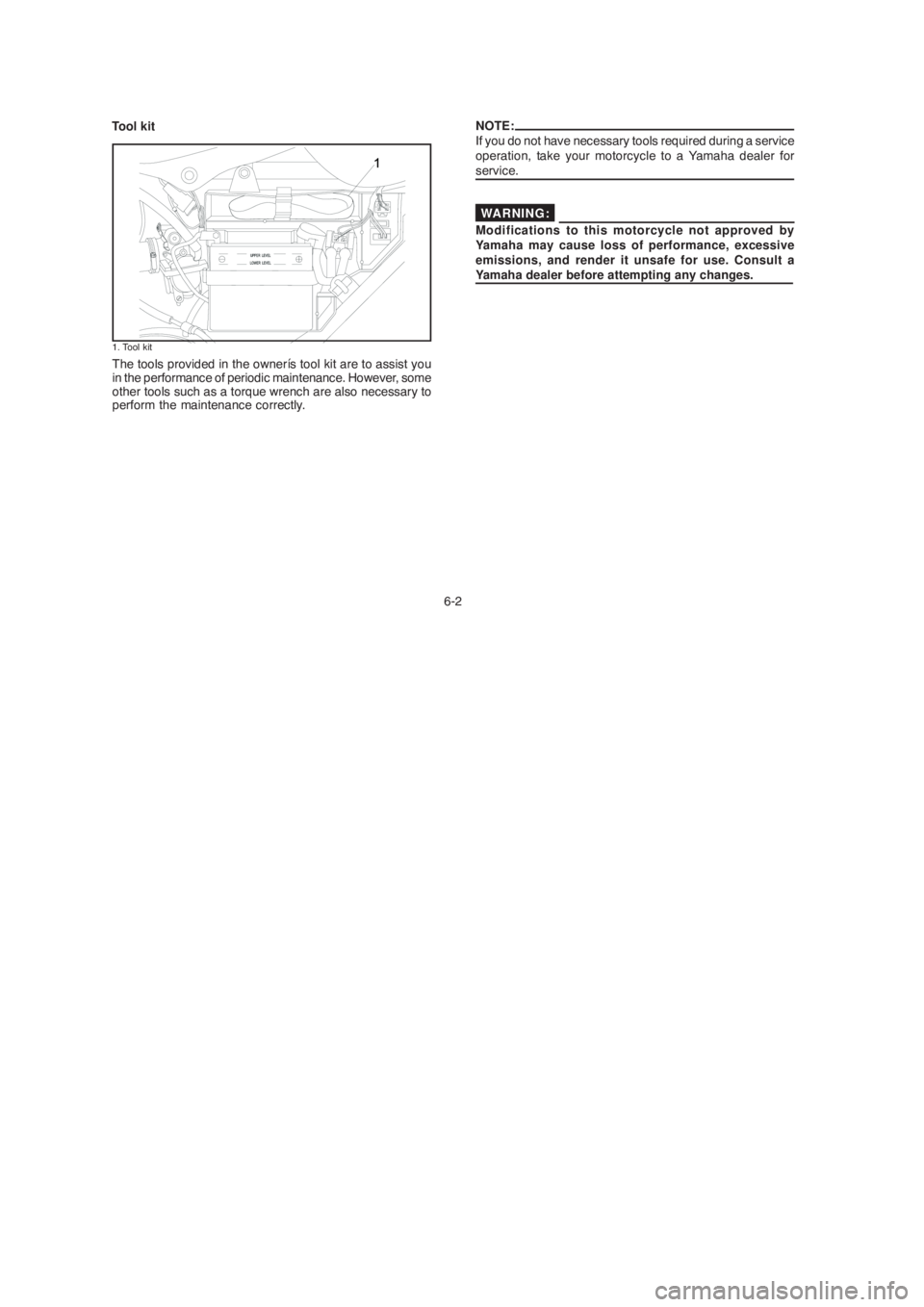
6-2 Tool kit
The tools provided in the ownerís tool kit are to assist you
in the performance of periodic maintenance. However, some
other tools such as a torque wrench are also necessary to
perform the maintenance correctly.
1. Tool kit
WARNING:
NOTE:
If you do not have necessary tools required during a service
operation, take your motorcycle to a Yamaha dealer for
service.
Modifications to this motorcycle not approved by
Yamaha may cause loss of performance, excessive
emissions, and render it unsafe for use. Consult a
Yamaha dealer before attempting any changes.
6-2 Tool kit
The tools provided in the ownerís tool kit are to assist you
in the performance of periodic maintenance. However, some
other tools such as a torque wrench are also necessary to
perform the maintenance correctly.
1. Tool kit
WARNING:
Page 44 of 83

6-4 *
**
***: It is recommended that these items be serviced by a Yamaha dealer.
: Molybdenum disulfide grease.
: Lithium soap based grease.
ITEM
Front forks*
Centerstand and
sidestand*
Control cables: throttle /
clutch / front brakeRear shock absorber*
Drive chain
Fittings / fastenersCheck operation / oil leakage.
Check operation, looseness.
Adujst / Check operation
Lubricate every 12,000 Km. Check chain slack / lubricate, adjust if necessary.
Check and looseness.REMARKS1,000KM
Lights and flashers
Nuts and bolts
Motorcycle AspectCheck operation.
Check tighten.
General Check
EVERY
3,000KM
OR EVERY3,000KM
Check operation / oil leakage.
Every 500 Km
6-4 *
**
***: It is recommended that these items be serviced by a Yamaha dealer.
: Molybdenum disulfide grease.
: Lithium soap based grease.
ITEM
Front forks*
Centerstand and
sidestand*
Control cables: throttle /
clutch / front brakeRear shock absorber*
Drive chain
Fittings / fastenersCheck operation / oil leakage.
Check operation, looseness.
Adujst / Check operation
Lubricate every 12,000 Km. Check chain slack / lubricate, adjust if necessary.
Check and looseness.REMARKS1,000KM
Lights and flashers
Nuts and bolts
Motorcycle AspectCheck operation.
Check tighten.
General Check
EVERY
3,000KM
OR EVERY3,000KM
Check operation / oil leakage.
Every 500 Km