2003 CADILLAC ESCALADE fuel cap
[x] Cancel search: fuel capPage 328 of 486
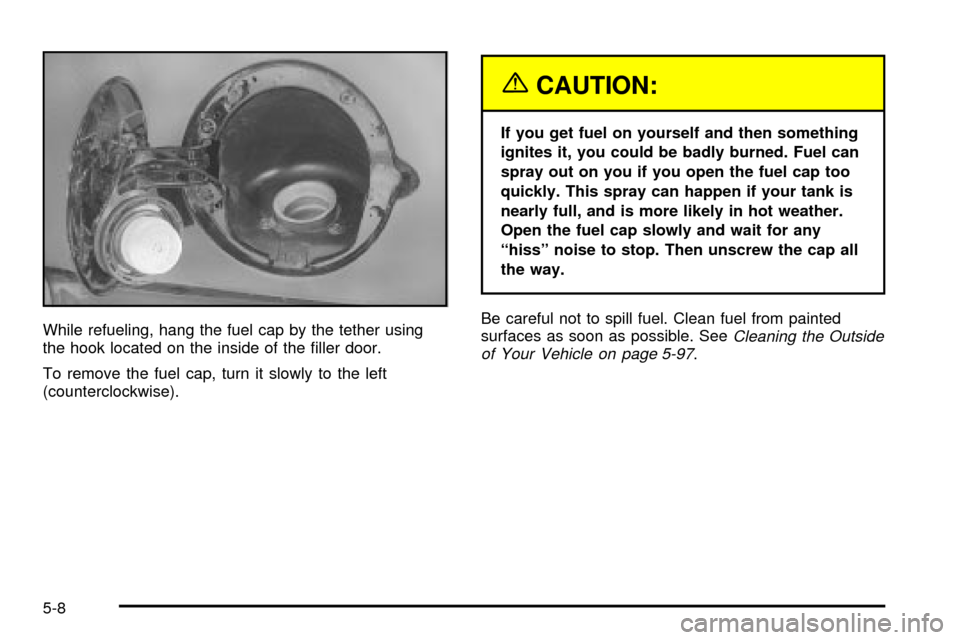
While refueling, hang the fuel cap by the tether using
the hook located on the inside of the ®ller door.
To remove the fuel cap, turn it slowly to the left
(counterclockwise).
{CAUTION:
If you get fuel on yourself and then something
ignites it, you could be badly burned. Fuel can
spray out on you if you open the fuel cap too
quickly. This spray can happen if your tank is
nearly full, and is more likely in hot weather.
Open the fuel cap slowly and wait for any
ªhissº noise to stop. Then unscrew the cap all
the way.
Be careful not to spill fuel. Clean fuel from painted
surfaces as soon as possible. See
Cleaning the Outside
of Your Vehicle on page 5-97.
5-8
Page 329 of 486
When you put the fuel cap back on, turn it to the right
(clockwise) until you hear a clicking sound. Make
sure you fully install the cap. The diagnostic system can
determine if the fuel cap has been left off or improperly
installed. this would allow fuel to evaporate into the
atmosphere. See
Malfunction Indicator Lamp on
page 3-44.
Notice:If you need a new fuel cap, be sure to get the
right type. Your dealer can get one for you. If you get
the wrong type, it may not ®t properly. This may
cause your malfunction indicator lamp to light and
may damage your fuel tank and emissions system.
See ªMalfunction Indicator Lampº in the Index.
Filling a Portable Fuel Container
{CAUTION:
Never ®ll a portable fuel container while it is in
your vehicle. Static electricity discharge from
the container can ignite the gasoline vapor.
You can be badly burned and your vehicle
damaged if this occurs. To help avoid injury to
you and others:
·Dispense gasoline only into approved
containers.
·Do not ®ll a container while it is inside a
vehicle, in a vehicle's trunk, pickup bed or
on any surface other than the ground.
·Bring the ®ll nozzle in contact with the
inside of the ®ll opening before operating
the nozzle. Contact should be maintained
until the ®lling is complete.
·Don't smoke while pumping gasoline.
5-9
Page 356 of 486
5. Then replace the pressure cap. Be sure the
pressure cap is hand-tight and fully seated.
Engine Fan Noise
Your vehicle has a clutched engine cooling fan. When
the clutch is engaged, the fan spins faster to provide
more air to cool the engine. In most everyday driving
conditions, the fan is spinning slower and the clutch is
not fully engaged. This improves fuel economy and
reduces fan noise. Under heavy vehicle loading, trailer
towing and/or high outside temperatures, the fan
speed increases as the clutch more fully engages. So
you may hear an increase in fan noise.This is normal and should not be mistaken as the
transmission slipping or making extra shifts. It is merely
the cooling system functioning properly. The fan will
slow down when additional cooling is not required and
the clutch disengages.
You may also hear this fan noise when you start the
engine. It will go away as the fan clutch partially
disengages.
Power Steering Fluid
5-36
Page 387 of 486

In¯ation -- Tire Pressure
The Certi®cation/Tire label, which is on the rear edge of
the driver's door, shows the correct in¯ation pressures
for your tires when they're cold. ªColdº means your
vehicle has been sitting for at least three hours or driven
no more than 1 mile (1.6 km).
Notice:Don't let anyone tell you that underin¯ation
or overin¯ation is all right. It's not. If your tires
don't have enough air (underin¯ation), you can get
the following:
·Too much ¯exing
·Too much heat
·Tire overloading
·Bad wear
·Bad handling
·Bad fuel economyIf your tires have too much air (overin¯ation), you
can get the following:
·Unusual wear
·Bad handling
·Rough ride
·Needless damage from road hazards
When to Check
Check your tires once a month or more.
Also, check the tire pressure of the spare tire.
How to Check
Use a good quality pocket-type gage to check tire
pressure. You can't tell if your tires are properly in¯ated
simply by looking at them. Radial tires may look
properly in¯ated even when they're underin¯ated.
Be sure to put the valve caps back on the valve stems.
They help prevent leaks by keeping out dirt and
moisture.
5-67
Page 433 of 486

ApplicationCapacities
English Metric
After re®ll, the level must be rechecked. Add enough engine oil so that the ¯uid is within the proper operating
range. See
Engine Oil on page 5-14.
Fuel Tank Capacity
Escalade
Escalade ESV26.0 gallons
31.0 gallons98.0 L
117.0 L
Air Conditioning Refrigerant Capacity
Escalade
Escalade ESV2.71 lbs
3.0 lbs1.23 kg
1.36 kg
Wheels and Tires
ApplicationCapacities
English Metric
Wheel Nut Torque 140 lb-ft 190Y
Tire Pressure See the Certi®cation/Tire label on the rear edge of the driver's door.
5-113
Page 470 of 486

Automatic Transmission Shift Lock Control
System Check.............................................6-14
Automatic Transmission...................................5-21
Fluid..........................................................5-21
Operation...................................................2-24
B
Backing Up....................................................4-61
BATTERY NOT CHARGING.............................3-63
Battery Replacement......................................... 2-7
Battery Run-Down Protection............................3-19
Battery..........................................................5-43
Before Leaving on a Long Trip.........................4-40
Before You Drive............................................3-85
Before You Go Off-Roading..............................4-19
Bench Seat Split (50/50)..................................1-13
Bench Seat, Split (60/40).................................1-10
Bench Seat....................................................1-19
Body Lubrication Service..................................6-13
Brake Adjustment............................................5-42
Brake Fluid....................................................5-39
Brake Pedal, Throttle.......................................2-22
Brake Pedal Travel.........................................5-42
Brake Wear...................................................5-41
Brake............................................................2-27
Parking......................................................2-27
System Inspection.......................................6-17
System Warning Light..................................3-40Brake (cont.)
Brakes..........................................................5-39
Braking in Emergencies..................................... 4-8
Braking........................................................... 4-6
Break-In, New Vehicle.....................................2-20
Bucket Seats, Rear.........................................1-25
Bulb Replacement...........................................5-57
Center High-Mounted Stoplamp (CHMSL)........5-63
Front Turn Signal, Sidemarker and Daytime
Running Lamps........................................5-62
Halogen Bulbs............................................5-57
Headlamp Aiming........................................5-53
Headlamps.................................................5-58
High Intensity Discharge (HID) Lighting...........5-57
Replacement Bulbs......................................5-64
Taillamps....................................................5-63
Buying New Tires...........................................5-70
C
Cadillac Owner PrivilegesŸ............................... 7-6
California Fuel.................................................. 5-5
Canada ± Customer Assistance.......................... 7-4
Canadian Owners................................................ ii
Capacities and Speci®cations..........................5-112
Carbon Monoxide...................4-43, 4-54, 2-15, 2-31
Care of.........................................................5-96
Safety Belts................................................5-96
Your Cassette Tape Player..........................3-103
2
Page 484 of 486

T
Tachometer....................................................3-36
Taillamps.......................................................5-63
Temperature and Compass Display....................2-33
Testing the Alarm............................................2-19
Theft-Deterrent, Radio....................................3-101
Theft-Deterrent Systems...................................2-18
Content Theft-Deterrent................................2-18
Passlock
ž...................................................2-19
Third Row ± Lap Belt......................................1-43
Third Row......................................................1-70
Throttle, Adjustable..........................................2-22
TIGHTEN FUEL CAP......................................3-65
Tilt Wheel........................................................ 3-7
Tilting the 50/50 Split Bench Seat.....................1-15
Tilting the Full Bench Seat...............................1-21
Tire In¯ation Check.........................................6-11
Tires.............................................................5-66
Buying New Tires........................................5-70
Chains.......................................................5-74
Changing a Flat Tire....................................5-76
If a Tire Goes Flat.......................................5-75
In¯ation -- Tire Pressure...............................5-67
Inspection and Rotation................................5-68
Spare Tire..................................................5-93
Uniform Tire Quality Grading.........................5-71
Wheel Alignment and Tire Balance.................5-72
Wheel Replacement.....................................5-73
When It Is Time for New Tires......................5-69Tires (cont.)
To Use the Engine Coolant Heater....................2-23
Top Strap Anchor Location...............................1-63
Top Strap......................................................1-61
Torque Lock...................................................2-30
Total Weight on Your Vehicle's Tires..................4-59
Tow/Haul Mode Light.......................................3-49
Tow/Haul Mode Selector Button........................2-26
Towing..........................................................4-50
Recreational Vehicle.....................................4-50
Towing a Trailer..........................................4-54
Your Vehicle...............................................4-50
TRACTION ACTIVE........................................3-68
Traction Control Operation................................4-12
TRACTION SYS LIMITED................................3-68
Traction.........................................................3-42
Off Light.....................................................3-42
Road Sensing Suspension.............................. 4-9
Stabilitrak
žSystem......................................4-10
Trailer Brakes.................................................4-59
Trailer Wiring Harness.....................................4-64
Trailer...........................................................4-53
Recommendations.......................................4-53
TRANS HOT IDLE ENGINE.............................3-66
Transfer Case................................................5-50
TRANSMISSION HOT.....................................3-66
Transmission Operation, Automatic....................2-24
Transmission, Transaxle, Transfer Case Unit
Repair Manual............................................7-11
16