Page 258 of 395
5-25
5. Raise the vehicle by turning the wheel wrench
clockwise in the jack. Raise the vehicle far enough
off the ground so there is enough room for the
compact spare tire to fit underneath the wheel well.
6. Remove all the wheel nuts and take off the flat tire.
7. Remove any rust or dirt
from the wheel bolts,
mounting surfaces and
spare wheel.
CAUTION:
Rust or dirt on the wheel, or on the parts to
which it is fastened, can make the wheel nuts
become loose after a time. The wheel could come
off and cause an accident. When you change a
wheel, remove any rust or dirt from the places
where the wheel attaches to the vehicle. In an
emergency, you can use a cloth or a paper towel
to do this; but be sure to use a scraper or wire
brush later, if you need to, to get all the rust or
dirt off.
Page 259 of 395
5-26
CAUTION:
Never use oil or grease on studs or nuts. If you
do, the nuts might come loose. Your wheel could
fall off, causing a serious accident.
8. Install the compact spare tire on the
wheel
-mounting surface.
9. Then reinstall the wheel
nuts with the rounded
end of the nuts toward
the wheel. Tighten each
nut by hand until the
wheel is held against
the hub.
10. Lower the vehicle by turning the wheel wrench
counterclockwise. Lower the jack completely.
Page 271 of 395
6-7
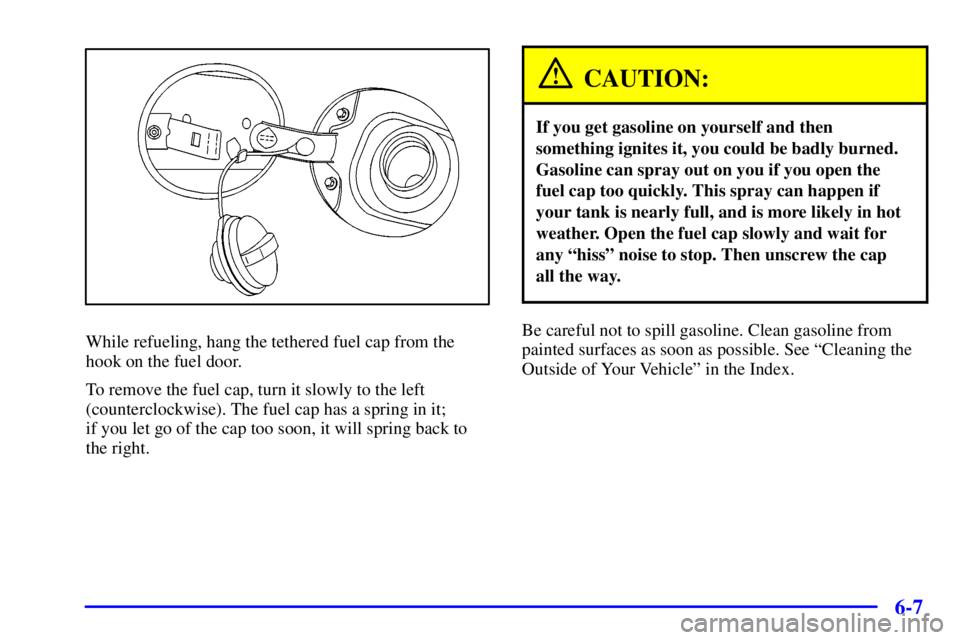
While refueling, hang the tethered fuel cap from the
hook on the fuel door.
To remove the fuel cap, turn it slowly to the left
(counterclockwise). The fuel cap has a spring in it;
if you let go of the cap too soon, it will spring back to
the right.
CAUTION:
If you get gasoline on yourself and then
something ignites it, you could be badly burned.
Gasoline can spray out on you if you open the
fuel cap too quickly. This spray can happen if
your tank is nearly full, and is more likely in hot
weather. Open the fuel cap slowly and wait for
any ªhissº noise to stop. Then unscrew the cap
all the way.
Be careful not to spill gasoline. Clean gasoline from
painted surfaces as soon as possible. See ªCleaning the
Outside of Your Vehicleº in the Index.
Page 272 of 395

6-8
When you put the fuel cap back on, turn it to the right
(clockwise) until you hear a clicking sound. Make sure
you fully install the cap. The diagnostic system can
determine if the fuel cap has been left off or improperly
installed. This would allow fuel to evaporate into the
atmosphere. See ªMalfunction Indicator Lampº in
the Index.
NOTICE:
If you need a new fuel cap, be sure to get the
right type. Your dealer can get one for you. If you
get the wrong type, it may not fit properly. This
may cause your malfunction indicator lamp to
light and may damage your fuel tank and
emissions system. See ªMalfunction Indicator
Lampº in the Index.
Filling a Portable Fuel Container
CAUTION:
Never fill a portable fuel container while it is in
your vehicle. Static electricity discharge from the
container can ignite the gasoline vapor. You can
be badly burned and your vehicle damaged if this
occurs. To help avoid injury to you and others:
�Dispense gasoline only into
approved containers.
�Do not fill a container while it is inside a
vehicle, in a vehicle's trunk, pickup bed or
on any surface other than the ground.
�Bring the fill nozzle in contact with the
inside of the fill opening before operating
the nozzle. Contact should be maintained
until the filling is complete.
�Don't smoke while pumping gasoline.
Page 275 of 395
6-11 Engine Compartment Overview
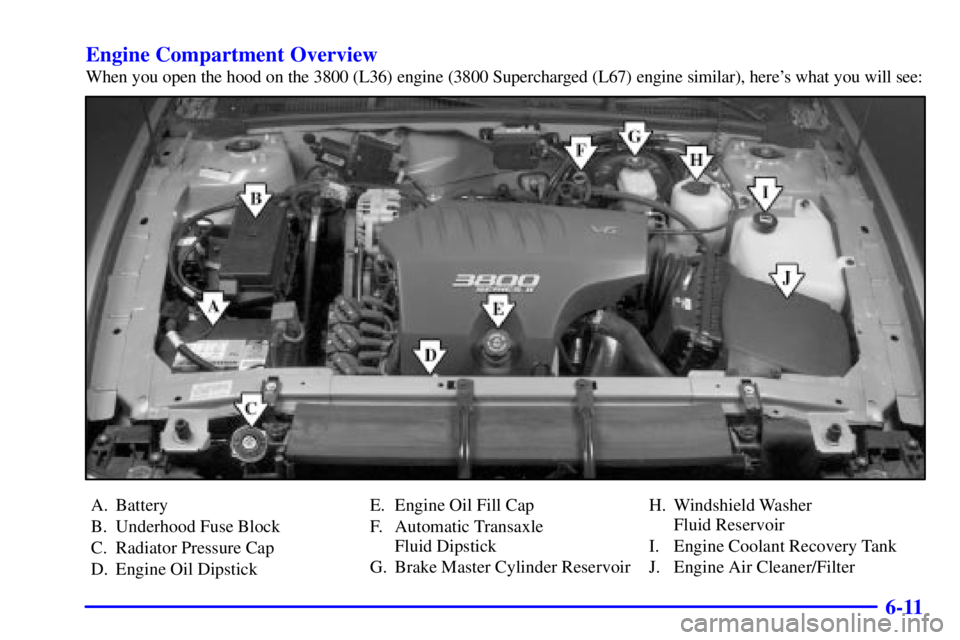
When you open the hood on the 3800 (L36) engine (3800 Supercharged (L67) engine similar), here's what you will see:
A. Battery
B. Underhood Fuse Block
C. Radiator Pressure Cap
D. Engine Oil DipstickE. Engine Oil Fill Cap
F. Automatic Transaxle
Fluid Dipstick
G. Brake Master Cylinder ReservoirH. Windshield Washer
Fluid Reservoir
I. Engine Coolant Recovery Tank
J. Engine Air Cleaner/Filter
Page 287 of 395
6-23
Then, without shutting off the engine, follow these steps:
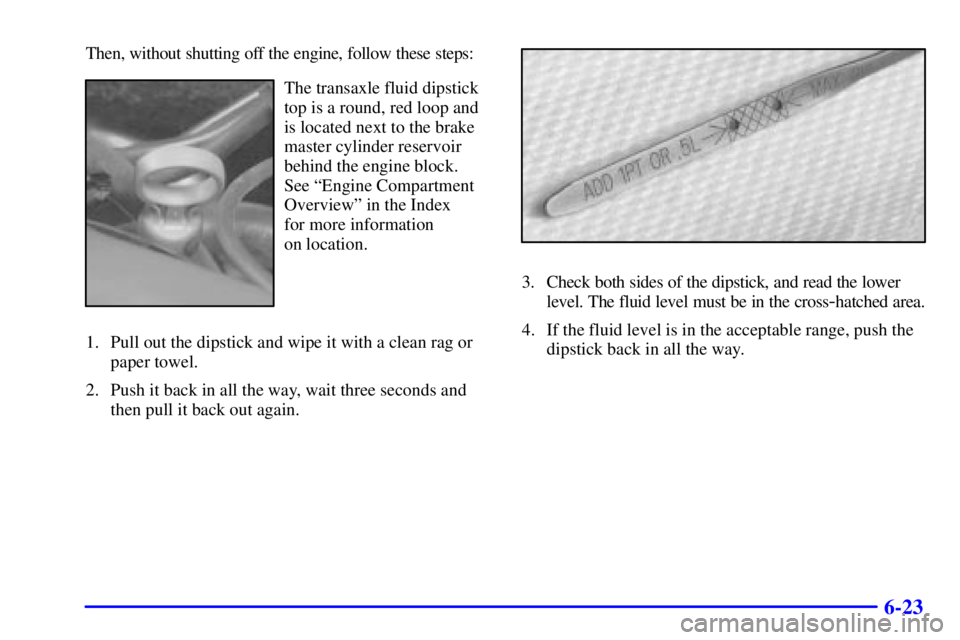
The transaxle fluid dipstick
top is a round, red loop and
is located next to the brake
master cylinder reservoir
behind the engine block.
See ªEngine Compartment
Overviewº in the Index
for more information
on location.
1. Pull out the dipstick and wipe it with a clean rag or
paper towel.
2. Push it back in all the way, wait three seconds and
then pull it back out again.
3. Check both sides of the dipstick, and read the lower
level. The fluid level must be in the cross
-hatched area.
4. If the fluid level is in the acceptable range, push the
dipstick back in all the way.
Page 300 of 395
6-36 Headlamps
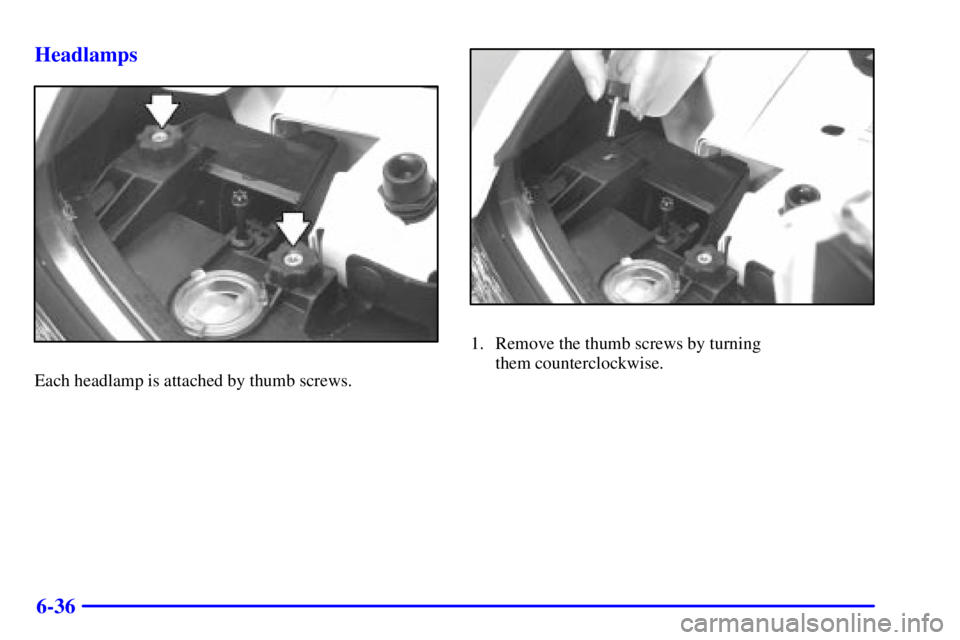
Each headlamp is attached by thumb screws.
1. Remove the thumb screws by turning
them counterclockwise.
Page 301 of 395
6-37
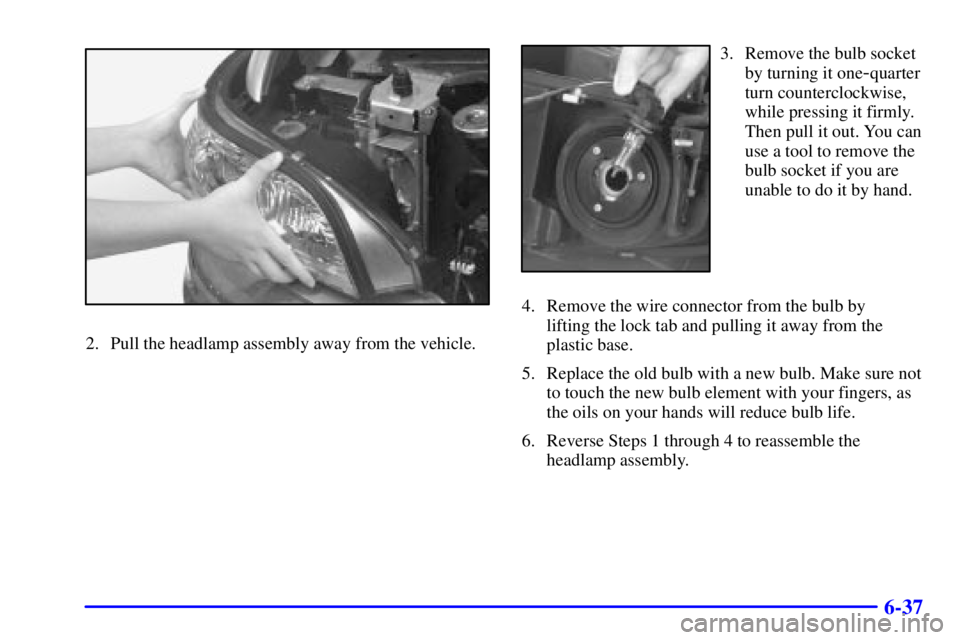
2. Pull the headlamp assembly away from the vehicle.
3. Remove the bulb socket
by turning it one
-quarter
turn counterclockwise,
while pressing it firmly.
Then pull it out. You can
use a tool to remove the
bulb socket if you are
unable to do it by hand.
4. Remove the wire connector from the bulb by
lifting the lock tab and pulling it away from the
plastic base.
5. Replace the old bulb with a new bulb. Make sure not
to touch the new bulb element with your fingers, as
the oils on your hands will reduce bulb life.
6. Reverse Steps 1 through 4 to reassemble the
headlamp assembly.