Page 64 of 321
2-15
Engine Coolant Heater (If Equipped)
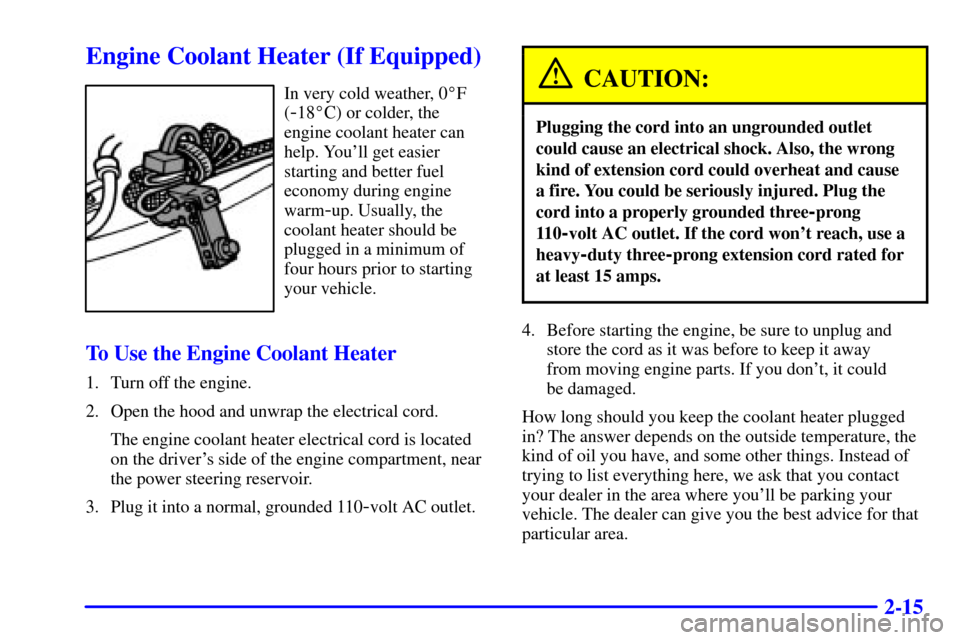
In very cold weather, 0�F
(
-18�C) or colder, the
engine coolant heater can
help. You'll get easier
starting and better fuel
economy during engine
warm
-up. Usually, the
coolant heater should be
plugged in a minimum of
four hours prior to starting
your vehicle.
To Use the Engine Coolant Heater
1. Turn off the engine.
2. Open the hood and unwrap the electrical cord.
The engine coolant heater electrical cord is located
on the driver's side of the engine compartment, near
the power steering reservoir.
3. Plug it into a normal, grounded 110
-volt AC outlet.
CAUTION:
Plugging the cord into an ungrounded outlet
could cause an electrical shock. Also, the wrong
kind of extension cord could overheat and cause
a fire. You could be seriously injured. Plug the
cord into a properly grounded three
-prong
11 0
-volt AC outlet. If the cord won't reach, use a
heavy
-duty three-prong extension cord rated for
at least 15 amps.
4. Before starting the engine, be sure to unplug and
store the cord as it was before to keep it away
from moving engine parts. If you don't, it could
be damaged.
How long should you keep the coolant heater plugged
in? The answer depends on the outside temperature, the
kind of oil you have, and some other things. Instead of
trying to list everything here, we ask that you contact
your dealer in the area where you'll be parking your
vehicle. The dealer can give you the best advice for that
particular area.
Page 192 of 321
6-9 Engine Compartment Overview
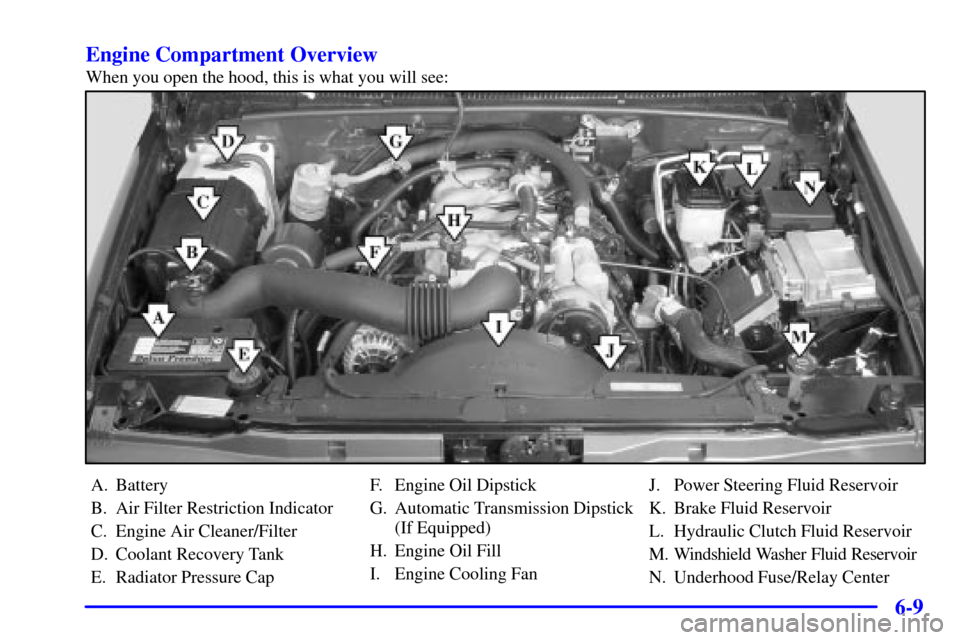
When you open the hood, this is what you will see:
A. Battery
B. Air Filter Restriction Indicator
C. Engine Air Cleaner/Filter
D. Coolant Recovery Tank
E. Radiator Pressure CapF. Engine Oil Dipstick
G. Automatic Transmission Dipstick
(If Equipped)
H. Engine Oil Fill
I. Engine Cooling FanJ. Power Steering Fluid Reservoir
K. Brake Fluid Reservoir
L. Hydraulic Clutch Fluid Reservoir
M. Windshield Washer Fluid Reservoir
N. Underhood Fuse/Relay Center
Page 210 of 321
6-27
Radiator Pressure Cap
(Gasoline Engine)
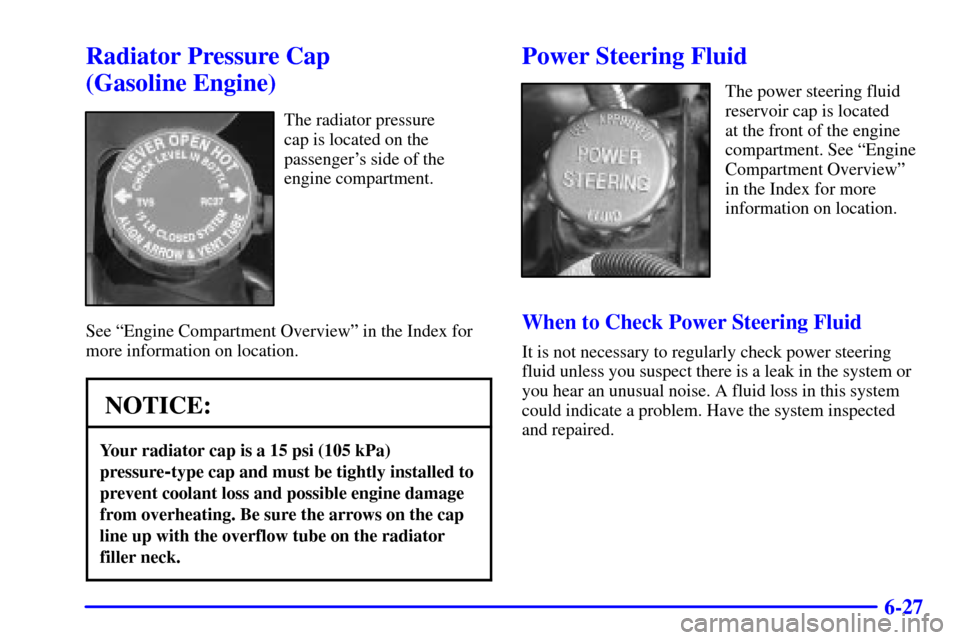
The radiator pressure
cap is located on the
passenger's side of the
engine compartment.
See ªEngine Compartment Overviewº in the Index for
more information on location.
NOTICE:
Your radiator cap is a 15 psi (105 kPa)
pressure
-type cap and must be tightly installed to
prevent coolant loss and possible engine damage
from overheating. Be sure the arrows on the cap
line up with the overflow tube on the radiator
filler neck.
Power Steering Fluid
The power steering fluid
reservoir cap is located
at the front of the engine
compartment. See ªEngine
Compartment Overviewº
in the Index for more
information on location.
When to Check Power Steering Fluid
It is not necessary to regularly check power steering
fluid unless you suspect there is a leak in the system or
you hear an unusual noise. A fluid loss in this system
could indicate a problem. Have the system inspected
and repaired.
Page 212 of 321
6-29
Open the cap labeled WASHER FLUID ONLY.
Add washer fluid until the tank is full.
NOTICE:
�When using concentrated washer fluid,
follow the manufacturer's instructions for
adding water.
�Don't mix water with ready
-to-use washer
fluid. Water can cause the solution to freeze
and damage your washer fluid tank and
other parts of the washer system. Also,
water doesn't clean as well as washer fluid.
�Fill your washer fluid tank only
three
-quarters full when it's very cold.
This allows for expansion if freezing
occurs, which could damage the tank
if it is completely full.
�Don't use engine coolant (antifreeze) in
your windshield washer. It can damage
your washer system and paint.
Brakes
Brake Fluid
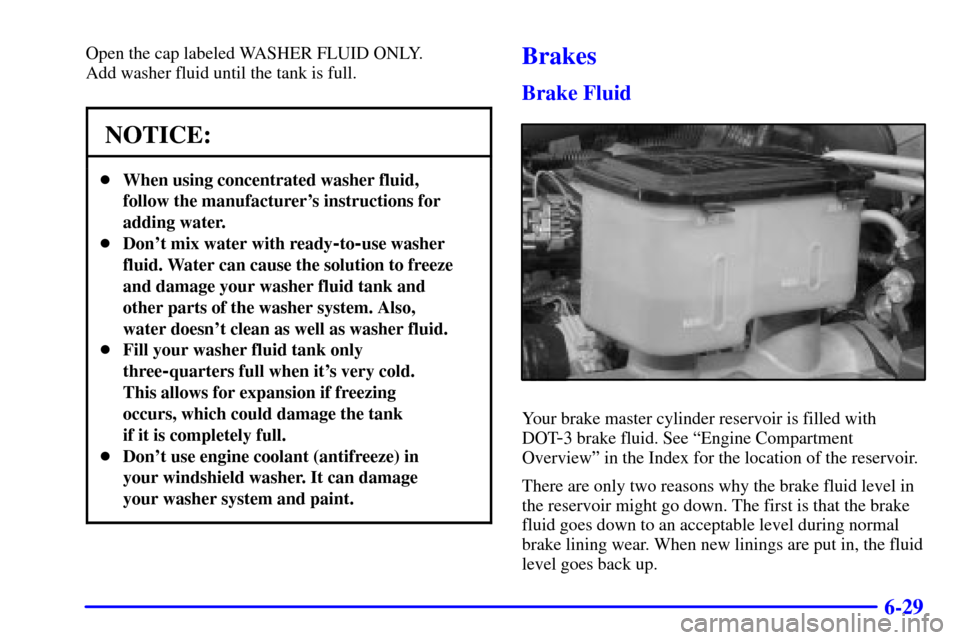
Your brake master cylinder reservoir is filled with
DOT
-3 brake fluid. See ªEngine Compartment
Overviewº in the Index for the location of the reservoir.
There are only two reasons why the brake fluid level in
the reservoir might go down. The first is that the brake
fluid goes down to an acceptable level during normal
brake lining wear. When new linings are put in, the fluid
level goes back up.