Page 282 of 429
4-32 Electronic Level Control (Option)
On vehicles equipped with the optional electronic level
control, the rear of the vehicle is automatically kept
level as you load or unload your vehicle. However, you
should still not exceed the GVWR or the GAWR.
If the engine is running or the ignition key is in
ACCESSORY or when retained accessory power (RAP)
is active, you may hear the compressor operating when
you load or unload your vehicle, and periodically as the
system self
-adjusts. This is normal. See ªRetained
Accessory Powerº in the Index.
The compressor should operate for brief periods of time.
If the sound continues for an extended period of time,
your vehicle needs service.
Using heavier suspension components to get added
durability might not change your weight ratings. Ask
your dealer to help you load your vehicle the right way.
Towing a Trailer
CAUTION:
If you don't use the correct equipment and drive
properly, you can lose control when you pull a
trailer. For example, if the trailer is too heavy, the
brakes may not work well
-- or even at all. You
and your passengers could be seriously injured.
Pull a trailer only if you have followed all the
steps in this section. Ask your dealer for advice
and information about towing a trailer with
your vehicle.
Page 292 of 429
5-2
Hazard Warning Flashers
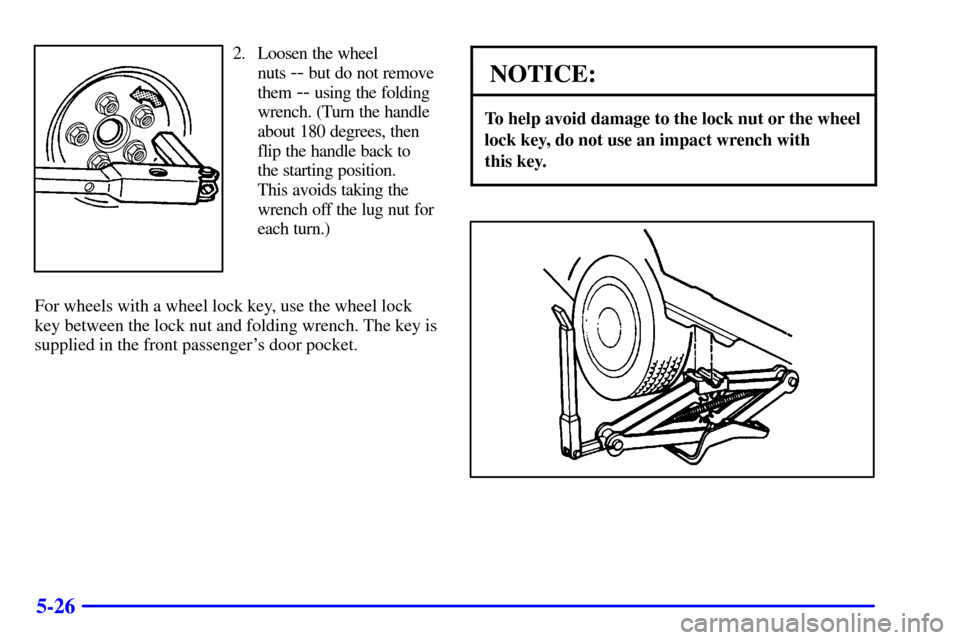
Your hazard warning flashers let you warn others. They
also let police know you have a problem. Your front and
rear turn signal lamps will flash on and off.
Your hazard warning
flashers button is located on
top of the steering column.
Press the button in to turn
on your flashers.
Your hazard warning flashers work no matter what
position your key is in, and even if the key isn't in.
To turn off the flashers, push the button down and it will
pop back up by itself.
When the hazard warning flashers are on, your turn
signals won't work.
Other Warning Devices
If you carry reflective triangles, you can set one up at
the side of the road about 300 feet (100 m) behind
your vehicle.
Page 316 of 429
5-26
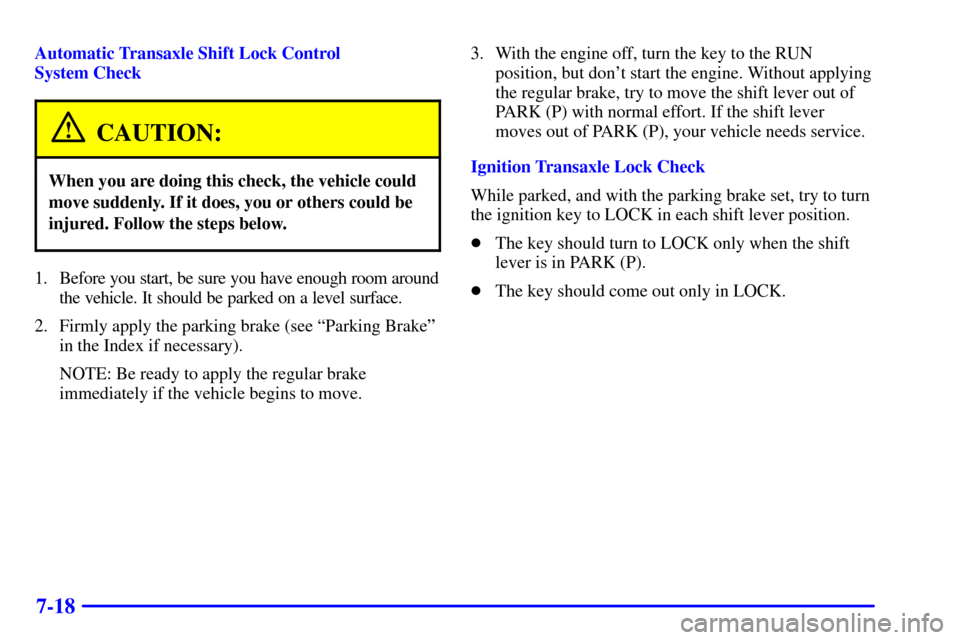
2. Loosen the wheel
nuts
-- but do not remove
them
-- using the folding
wrench. (Turn the handle
about 180 degrees, then
flip the handle back to
the starting position.
This avoids taking the
wrench off the lug nut for
each turn.)
For wheels with a wheel lock key, use the wheel lock
key between the lock nut and folding wrench. The key is
supplied in the front passenger's door pocket.NOTICE:
To help avoid damage to the lock nut or the wheel
lock key, do not use an impact wrench with
this key.
Page 339 of 429
6-15
How to Reset the Change Engine Oil Message
1. With the ignition key in RUN but the engine off,
fully push and release the accelerator pedal slowly
three times within five seconds.
2. Turn the key to OFF.
If the CHANGE ENGINE OIL message comes
back on, the engine oil life monitor has not reset.
Repeat the procedure.
What to Do with Used Oil
Did you know that used engine oil contains certain elements
that may be unhealthy for your skin and could even cause
cancer? Don't let used oil stay on your skin for very long.
Clean your skin and nails with soap and water, or a good hand
cleaner. Wash or properly throw away clothing or rags
containing used engine oil. (See the manufacturer's warnings
about the use and disposal of oil products.)
Used oil can be a real threat to the environment. If you
change your own oil, be sure to drain all free
-flowing oil
from the filter before disposal. Don't ever dispose of oil by
putting it in the trash, pouring it on the ground, into
sewers, or into streams or bodies of water. Instead, recycle
it by taking it to a place that collects used oil. If you have
a problem properly disposing of your used oil, ask your
dealer, a service station or a local recycling center for help.
Engine Air Cleaner/Filter
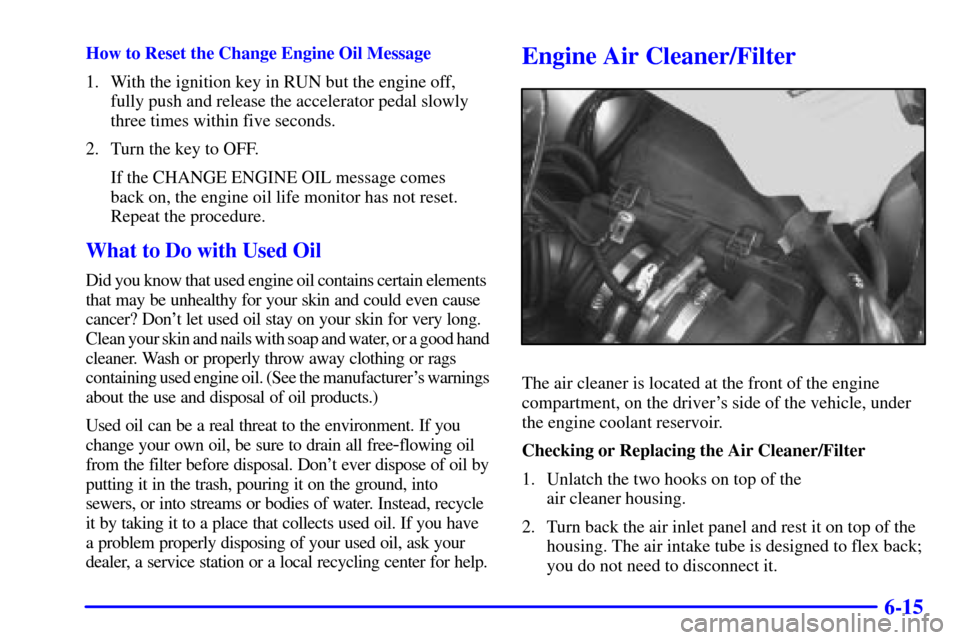
The air cleaner is located at the front of the engine
compartment, on the driver's side of the vehicle, under
the engine coolant reservoir.
Checking or Replacing the Air Cleaner/Filter
1. Unlatch the two hooks on top of the
air cleaner housing.
2. Turn back the air inlet panel and rest it on top of the
housing. The air intake tube is designed to flex back;
you do not need to disconnect it.
Page 349 of 429
6-25 How to Check Power Steering Fluid
Turn the key off, let the engine compartment cool down,
wipe the cap and the top of the reservoir clean, then
unscrew the cap and wipe the dipstick with a clean rag.
Replace the cap and completely tighten it. Then remove
the cap again and look at the fluid level on the dipstick.
When the engine compartment is hot, the level should be
at the ªHº mark. When it's cold, the level should be at
the ªCº mark. If the fluid is at the ADD mark, you
should add fluid.
What to Use
To determine what kind of fluid to use, see
ªRecommended Fluids and Lubricantsº in the Index.
Always use the proper fluid. Failure to use the proper
fluid can cause leaks and damage hoses and seals.
Windshield Washer Fluid
What to Use
When you need windshield washer fluid, be sure to read
the manufacturer's instructions before use. If you will be
operating your vehicle in an area where the temperature
may fall below freezing, use a fluid that has sufficient
protection against freezing.
Adding Washer Fluid
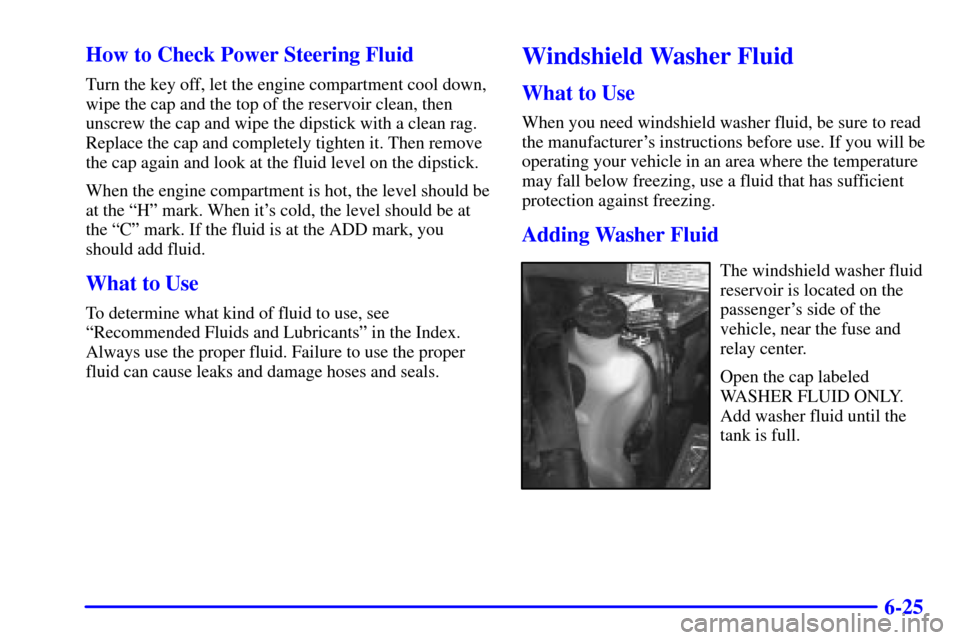
The windshield washer fluid
reservoir is located on the
passenger's side of the
vehicle, near the fuse and
relay center.
Open the cap labeled
WASHER FLUID ONLY.
Add washer fluid until the
tank is full.
Page 384 of 429

6-60
Fuses Usage
SWC
BACKLIGHTSteering Wheel Radio Control
Switches (Illumination)
PCM/PASS
KEY/CLUSTERInstrument Cluster to
PRNDL Indicators
PWR MIRROR Power Remote Control
Mirror Switch
CRUISE Cruise Control Module, Switch and
Release Switch
PCM/CRANK Power Control Module (PCM),
Ignition Crank
PASS KEY PASS
-Key III System
PWR LOCK Body Control Module (BCM)
HTD MIRROR Heated Mirrors
RH T/LP Not Used
RR FOG LP Not Used
CIGAR/DLC Cigarette Lighter and Data Link
Connector (DLC)
T/SIG Turn Signal Switch
PWR
QTR VENTInterior Lamp and Multifunction
Switch (Power Vent Switch)
FRT
WPR/WSHRWindshield Wiper/Washer
Motor and SwitchFuses Usage
HAZARD Turn Signal Switch
RR PWR SCKT Rear Electric Accessory
Plug Housing
DRL Daytime Running Lamps (DRL)
Control Module
LH T/LP Not Used
RR
DEFOG/HTD
MIRRORSRear Window Defogger Relay,
Heated Mirrors
FRT PWR SCKT Front Electric Accessory
Plug Housing
SIR Inflatable Restraint Control Module
HVAC
BLOWERHeater
-A/C Control
MALL/
CLUSTERInstrument Cluster, BCM,
Electronic Level Control (ELC)
Sensor and Relay
STOP LAMP Stoplamp Switch
CLUSTER
BATTModule/Electronic Brake Control
Module/Electronic Brake Traction
Control Module (EBCM/EBTCM)
Page 407 of 429
7-17 At Least Once a Year
Key Lock Cylinders Service
Lubricate the key lock cylinders with the lubricant
specified in Part D.
Body Lubrication Service
Lubricate all key lock cylinders, hood latch assemblies,
secondary latches, pivots, spring anchor and release
pawl, hood and door hinges, rear folding seats, fuel door
hinge, liftgate hinges, power sliding door cable and
sliding door track(s). Part D tells you what to use. More
frequent lubrication may be required when exposed to a
corrosive environment.Starter Switch Check
CAUTION:
When you are doing this check, the vehicle could
move suddenly. If it does, you or others could be
injured. Follow the steps below.
1. Before you start, be sure you have enough room
around the vehicle.
2. Firmly apply both the parking brake
(see ªParking Brakeº in the Index if necessary) and
the regular brake.
NOTE: Do not use the accelerator pedal, and be
ready to turn off the engine immediately if it starts.
3. Try to start the engine in each gear. The starter
should work only in PARK (P) or NEUTRAL (N).
If the starter works in any other position, your
vehicle needs service.
Page 408 of 429
7-18
Automatic Transaxle Shift Lock Control
System Check
CAUTION:
When you are doing this check, the vehicle could
move suddenly. If it does, you or others could be
injured. Follow the steps below.
1. Before you start, be sure you have enough room around
the vehicle. It should be parked on a level surface.
2. Firmly apply the parking brake (see ªParking Brakeº
in the Index if necessary).
NOTE: Be ready to apply the regular brake
immediately if the vehicle begins to move.3. With the engine off, turn the key to the RUN
position, but don't start the engine. Without applying
the regular brake, try to move the shift lever out of
PARK (P) with normal effort. If the shift lever
moves out of PARK (P), your vehicle needs service.
Ignition Transaxle Lock Check
While parked, and with the parking brake set, try to turn
the ignition key to LOCK in each shift lever position.
�The key should turn to LOCK only when the shift
lever is in PARK (P).
�The key should come out only in LOCK.