1999 DODGE RAM Ignition system
[x] Cancel search: Ignition systemPage 1453 of 1691

* Air in fuel system:
* Coolant leak into combustion chamber:
* Block heater malfunction in cold weather:
* Clogged or defective fuel filter:
* Poor fuel quality:
* Fuel injector malfunctioning or loose:
* Restricted or blocked fuel injection or supply lines:
* Intake/exhaust valves not adjusted properly (tight):
* Intake heaters malfunctioning:
* Internal engine damage.
BLUE EXHAUST SMOKE
* Air filter dirty or plugged:
* Air intake system restricted:
* Air leak in intake between turbocharger and intake
manifold:
* Restricted exhaust:
* Restricted turbocharger drain tube:
* Crankcase ventilation plugged:
* Valve stems, guides or seals worn or defective:
* Piston rings improperly gapped, worn or broken:
* Internal engine wear:
* Turbocharger failure.
INTERMITTENTS
INTERMITTENT PROBLEM DIAGNOSIS
Intermittent fault testing requires duplicating circuit or
component failure to identify problem. These procedures may lead to
PCM setting a Diagnostic Trouble Code (FTC) which may help in
diagnosis.
If problem vehicle does not produce DTCs, monitor voltage or
resistance values using a Digital Volt-Ohmmeter (DVOM) while
attempting to reproduce conditions causing intermittent fault. A
status change on DVOM indicates a fault has been located.
Use a DVOM to pinpoint faults. When monitoring voltage,
ensure ignition switch is in ON position or engine is running. Ensure
ignition switch is in OFF position or negative battery cable is
disconnected when monitoring circuit resistance. Status changes on
DVOM during test procedures indicate area of fault.
TEST PROCEDURES
Intermittent Simulation
To reproduce conditions creating an intermittent fault, use
following methods:
* Lightly vibrate component
* Heat component
* Wiggle or bend wiring harness
* Spray component with water
* Remove/apply vacuum source
Monitor circuit/component voltage or resistance while
simulating intermittent. If engine is running, monitor for diagnostic
trouble codes. Use test results to identify a faulty component or
circuit.
Page 1455 of 1691

Check the following:
* Check secondary ignition system
* Check engine vacuum
* Check fuel pressure
* Check Engine Coolant Temperature (ECT) sensor calibration
* Check Throttle Position (TP) sensor calibration
* Check Manifold Absolute Pressure (MAP) calibration
* Check minimum idle airflow
* Check Idle Air Control (IAC) motor operation
* Check engine mechanical condition
* Check evaporative system
* Check EGR system
* Check coolant temperature sensor and connector
* Check Intake Air Temperature (IAT) sensor calibration
STARTS BUT STALLS
Check the following:
* Check secondary ignition system
* Check PCM power and ground circuits
* Check fuel pressure
* Check Engine Coolant Temperature (ECT) sensor calibration
* Check Throttle Position (TP) sensor calibration
* Check Manifold Absolute Pressure (MAP) calibration
* Check minimum idle airflow
* Check Idle Air Control (IAC) motor operation
HESITATION OR STUMBLE
Check the following:
* Check secondary ignition system
* Check PCM power and ground circuits
* Check engine vacuum
* Check fuel pressure
* Check Engine Coolant Temperature (ECT) sensor calibration
* Check Throttle Position (TP) sensor calibration
* Check Manifold Absolute Pressure (MAP) calibration
* Check minimum idle airflow
* Check oxygen sensor switching
* Check oxygen sensor heater
* Check Idle Air Control (IAC) motor operation
* Check engine mechanical condition
* Check evaporative system
* Check EGR system
* Check Intake Air Temperature (IAT) sensor calibration
* Check Park/Neutral Position (PNP) switch.
SURGING
Check the following:
* Check secondary ignition system
* Check PCM power and ground circuits
* Check engine vacuum
* Check fuel pressure
* Check Engine Coolant Temperature (ECT) sensor calibration
* Check Throttle Position (TP) sensor calibration
* Check Manifold Absolute Pressure (MAP) calibration
* Check minimum idle airflow
Page 1456 of 1691

* Check oxygen sensor switching
* Check Idle Air Control (IAC) motor operation
* Check evaporative system.
LACK OF POWER
Check the following:
* Check secondary ignition system
* Check PCM power and ground circuits
* Check fuel pressure
* Check Engine Coolant Temperature (ECT) sensor calibration
* Check Throttle Position (TP) sensor calibration
* Check Manifold Absolute Pressure (MAP) calibration
* Check minimum idle airflow
* Check oxygen sensor switching
* Check Idle Air Control (IAC) motor operation
* Check EGR system.
KNOCKING
Check the following:
* Check secondary ignition system
* Check PCM power and ground circuits
* Check fuel pressure
* Check Engine Coolant Temperature (ECT) sensor calibration
* Check Throttle Position (TP) sensor calibration
* Check Manifold Absolute Pressure (MAP) calibration
* Check minimum idle airflow
* Check oxygen sensor switching
* Check Idle Air Control (IAC) motor operation
* Check evaporative system.
ENGINE MISFIRE
Check the following:
* Check secondary ignition system
* Check PCM power and ground circuits
* Check fuel pressure
* Check minimum idle airflow
* Check oxygen sensor switching
* Check Idle Air Control (IAC) motor operation
* Check EGR system.
BACKFIRE
Check the following:
* Check secondary ignition system
* Check PCM power and ground circuits
* Check fuel pressure
* Check Manifold Absolute Pressure (MAP) calibration
* Check minimum idle airflow
* Check oxygen sensor switching
* Check EGR system.
ROUGH OR ERRATIC IDLE
Check the following:
Page 1457 of 1691

* Check secondary ignition system
* Check PCM power and ground circuits
* Check engine vacuum
* Check fuel pressure
* Check Engine Coolant Temperature (ECT) sensor calibration
* Check Throttle Position (TP) sensor calibration
* Check Manifold Absolute Pressure (MAP) calibration
* Check minimum idle airflow
* Check oxygen sensor switching
* Check oxygen sensor heater
* Check Idle Air Control (IAC) motor operation
* Check engine mechanical condition
* Check evaporative system
* Check EGR system
* Check Intake Air Temperature (IAT) motor operation
* Check Park/Neutral Position (PNP) switch.
POOR FUEL ECONOMY
Check the following:
* Check secondary ignition system
* Check PCM power and ground circuits
* Check engine vacuum
* Check fuel pressure
* Check Engine Coolant Temperature (ECT) sensor calibration
* Check Throttle Position (TP) sensor calibration
* Check Manifold Absolute Pressure (MAP) calibration
* Check minimum idle airflow
* Check oxygen sensor switching
* Check oxygen sensor heater
* Check Idle Air Control (IAC) motor operation
* Check engine mechanical condition
* Check evaporative system
* Check EGR system
* Check Intake Air Temperature (IAT) motor operation
* Check Park/Neutral Position (PNP) switch.
INTERMITTENTS
INTERMITTENT PROBLEM DIAGNOSIS
Intermittent fault testing requires duplicating circuit or
component failure to identify the problem. These procedures may lead
to PCM setting a Diagnostic Trouble Code (FTC) which may help in
diagnosis.
If problem vehicle does not produce FTC, monitor voltage or
resistance values using a DVOM while attempting to reproduce
conditions causing intermittent fault. A status change on DVOM
indicates a fault has been located.
Use a DVOM to pinpoint faults. When monitoring voltage,
ensure ignition switch is in ON position or engine is running. Ensure
ignition switch is in OFF position or negative battery cable is
disconnected when monitoring circuit resistance. Status changes on
DVOM during test procedures indicate area of fault.
TEST PROCEDURES
Intermittent Simulation
To reproduce the conditions creating an intermittent fault,
use the following methods:
Page 1465 of 1691

located in power distribution center at driver's side front corner of
engine compartment, near the battery. Automatic Shutdown (ASD) relay
may also be referred to as Auto Shutdown (ASD) relay.
Battery Temperature Sensor
Battery temperature sensor delivers input signal to
Powertrain Control Module (PCM) to indicate the battery temperature.
PCM uses battery temperature input to modify rate of output from the
charging system. Battery temperature sensor is snapped into battery
tray below driver's side battery.
Battery Voltage
Battery voltage input signal provides operating voltage to
Powertrain Control Module (PCM). This input signal keeps PCM memory
alive and informs PCM what generator output voltage is when engine is
running. PCM memory is used to store Diagnostic Trouble Codes (DTCs),
store APPS sensor voltages from previous key cycles and provide a
speed control adaptive memory.
Brake Switch
Brake switch delivers input signal to Powertrain Control
Module (PCM) to indicate when brakes are applied. PCM uses input
signal for controlling cruise control system and transmission torque
converter clutch operation on A/T models. Brake switch is located near
top of brake pedal and may also be referred to as brakelight switch.
CKP Sensor
Crankshaft Position (CKP) sensor delivers input signal (35
tooth wheel with gap) to Engine Control Module (ECM) to indicate
engine speed and crankshaft position. ECM uses CKP signal along with
other input signals for controlling injector firing sequence and
timing. Sensor is located below fuel transfer pump, on side of engine
block. See Fig. 2.
Cruise Control System Switches
Cruise control system functions, controlled by momentary
contact switches, are monitored through multiplexed input signal to
Powertrain Control Module (PCM). Resistance monitored at this input
signal, in conjunction with the length of time the PCM measures the
resistance, determines which switch feature has been selected.
Data Link Connector (DLC)
Data Link Connector (DLC) provides an input signal to
Powertrain Control Module (PCM) when using scan tool to retrieve
Diagnostic Trouble Codes (DTCs) from PCM. Input signal may also be
used when performing various tests on the PCM and electronic control
system. DLC is a 16-pin connector located at lower edge of driver's
side of instrument panel, just above accelerator pedal.
Fuel Level Sensor
The Powertrain Control Module (PCM) sends a 5-volt signal to
the fuel level sensor. The fuel level sensor will return a signal to
PCM. This signal is used for fuel gauge operation and to prevent
setting a false misfire or fuel system trouble codes. If fuel level is
less than 15 percent, PCM will not set code.
Ignition Sense
Ignition switch position input to Powertrain Control Module
(PCM). PCM uses input to determine proper output functions, including
cruise control, generator output, sensor supply and transmission
functions.
Transmission Speed Sensor (A/T Models)
Page 1469 of 1691
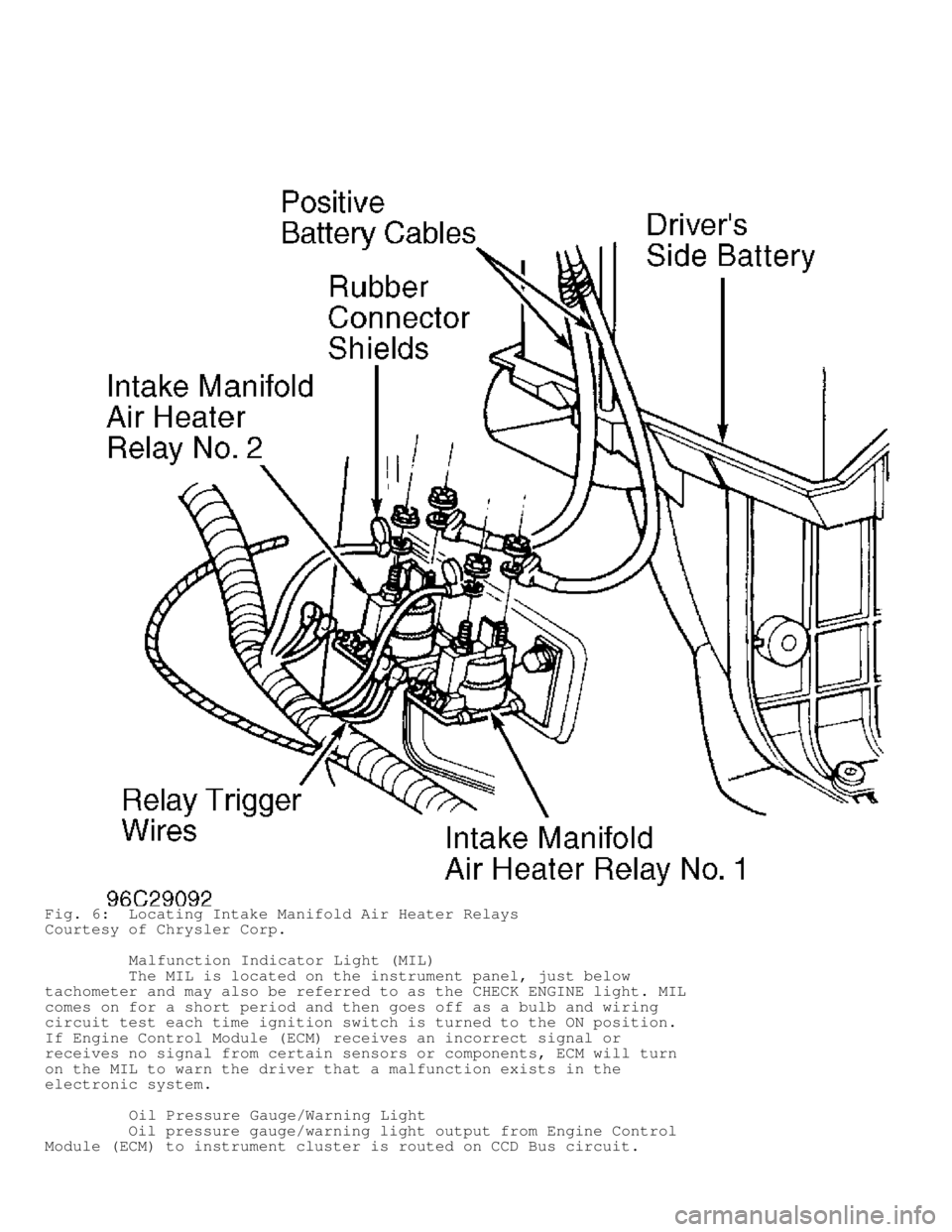
Fig. 6: Locating Intake Manifold Air Heater Relays
Courtesy of Chrysler Corp.
Malfunction Indicator Light (MIL)
The MIL is located on the instrument panel, just below
tachometer and may also be referred to as the CHECK ENGINE light. MIL
comes on for a short period and then goes off as a bulb and wiring
circuit test each time ignition switch is turned to the ON position.
If Engine Control Module (ECM) receives an incorrect signal or
receives no signal from certain sensors or components, ECM will turn
on the MIL to warn the driver that a malfunction exists in the
electronic system.
Oil Pressure Gauge/Warning Light
Oil pressure gauge/warning light output from Engine Control
Module (ECM) to instrument cluster is routed on CCD Bus circuit.
Page 1470 of 1691

WAIT-TO-START Warning Light
WAIT-TO-START warning light is located on instrument panel,
just below the speedometer. WAIT-TO-START warning light will come on
for a short period and then go off as a bulb and wiring circuit test
each time ignition switch is turned to the ON position. If Engine
Control Module (ECM) determines intake manifold air temperature is
less than 59
F (15C) by input signal received from intake manifold
air temperature sensor, ECM delivers output signal to operate WAIT-TO-
START warning light and intake manifold air heater for a preheat
cycle.
WAIT-TO-START warning light will remain on until intake
manifold air heater preheat cycle is complete. WAIT-TO-START warning
light will flash on and off if intake manifold air temperature sensor
signal to ECM is not within a specified value and Diagnostic Trouble
Code (FTC) will be stored in ECM memory.
WATER-IN-FUEL Warning Light
WATER-IN-FUEL warning light is located on instrument panel,
just below tachometer. WATER-IN-FUEL warning light will come on for a
short period and then go off as a bulb and wiring circuit test each
time ignition switch is turned to the ON position. If Engine Control
Module (ECM) determines water exists in fuel/water separator by input
signal from Water-In-Fuel (WIF) sensor, ECM will deliver output signal\
to turn on the WATER-IN-FUEL warning light.
ECM/PCM OUTPUT SIGNALS
A/C Clutch Relay
The Engine Control Module (ECM) controls A/C compressor
operation by controlling ground circuit for A/C clutch relay. ECM de-
energizes A/C clutch relay if engine coolant temperature is more than
257
F (125C). The A/C clutch relay is located in power distribution
center at driver's side front corner of engine compartment, near the
battery.
Automatic Shutdown (ASD) Relay
The Engine Control Module (ECM) controls ASD operation by
controlling ground circuit for ASD relay. ASD provides voltage to
operate generator field control for charging system. ASD relay is
located in power distribution center at driver's side front corner of
engine compartment, near the battery. Automatic Shutdown (ASD) relay
may also be referred to as Auto Shutdown (ASD) relay.
CCD Bus
These circuits are connected between Engine Control Module
(ECM) and Powertrain Control Module (PCM) to allow communication
between modules.
Cruise Control System
Engine Control Module (ECM) regulates cruise control system
operation by controlling vacuum at cruise control servo. Vacuum is
controlled by use of vacuum and vent solenoids in cruise control
servo.
Data Link Connector
Engine Control Module (ECM) provides output information at
Data Link Connector (DLC) when using scan tool to perform various
tests on the ECM and electronic control system. Data link connector is
a 16-pin connector located at lower edge of driver's side of
instrument panel, just above the accelerator pedal.
5-Volt Sensor Supply Output
Powertrain Control Module (PCM) supplies a 5-volt reference
Page 1471 of 1691

signal to the transmission solenoid assembly for transmission
temperature sensor.
Generator Field
Engine Control Module (ECM) provides output signals to
generator field for regulating charging system voltage at 12.9-15.0
volts. ECM contains an internal electronic voltage regulator for
controlling the charging system voltage.
Generator Light
If Engine Control Module (ECM) senses a low charging system
condition, generator light on instrument panel (if equipped) will be
turned on. Generator light may also come on momentarily at low idle
speed when all accessories are on.
Malfunction Indicator Light (MIL)
The MIL is located on the instrument panel, just below
tachometer and may also be referred to as the CHECK ENGINE light. MIL
comes on for a short period and then goes off as a bulb and wiring
circuit test each time ignition switch is turned to the ON position.
If Engine Control Module (ECM) receives an incorrect signal or
receives no signal from certain sensors or components, ECM will turn
on the MIL to warn the driver that a malfunction exists in the
electronic system.
Overdrive Indicator Light (A/T Models)
Engine Control Module (ECM) delivers output signal to operate\
transmission overdrive indicator (O/D OFF) light in accordance with
position of the transmission overdrive switch. If overdrive is turned
off with transmission overdrive switch, transmission overdrive
indicator light will be turned on. Transmission overdrive indicator
light is located on instrument panel, just below the speedometer.
Tachometer
Engine Control Module (ECM) delivers output signal to operate\
tachometer on instrument panel to indicate engine RPM.
Transmission Overdrive Solenoid (A/T Models)
Engine Control Module (ECM) delivers output signal to
transmission overdrive solenoid for controlling transmission overdrive
shifts. Transmission overdrive solenoid is located on transmission
valve body.
Transmission Relay (A/T Models)
Transmission relay may be referred to as transmission control
relay or transmission 12-volt supply relay. Transmission relay ground
circuit is controlled by the Engine Control Module (ECM). When ground
circuit is completed, transmission relay supplies voltage to solenoid
assembly on the transmission. Transmission relay is located in power
distribution center at driver's side front corner of engine
compartment, near the battery.
Transmission Temperature Warning Light (A/T Models With
Heavy-Duty Transmission)
Engine Control Module (ECM) delivers output signal to turn on\
transmission temperature warning light if transmission fluid
temperature is determined to be greater than 280
F (138C) by the
transmission temperature sensor. Transmission temperature warning
light is located on instrument panel, just below the tachometer.
Transmission Torque Converter Clutch Solenoid (A/T Models)
Engine Control Module (ECM) delivers an output signal to
operate transmission torque converter clutch solenoid for torque