Page 127 of 191
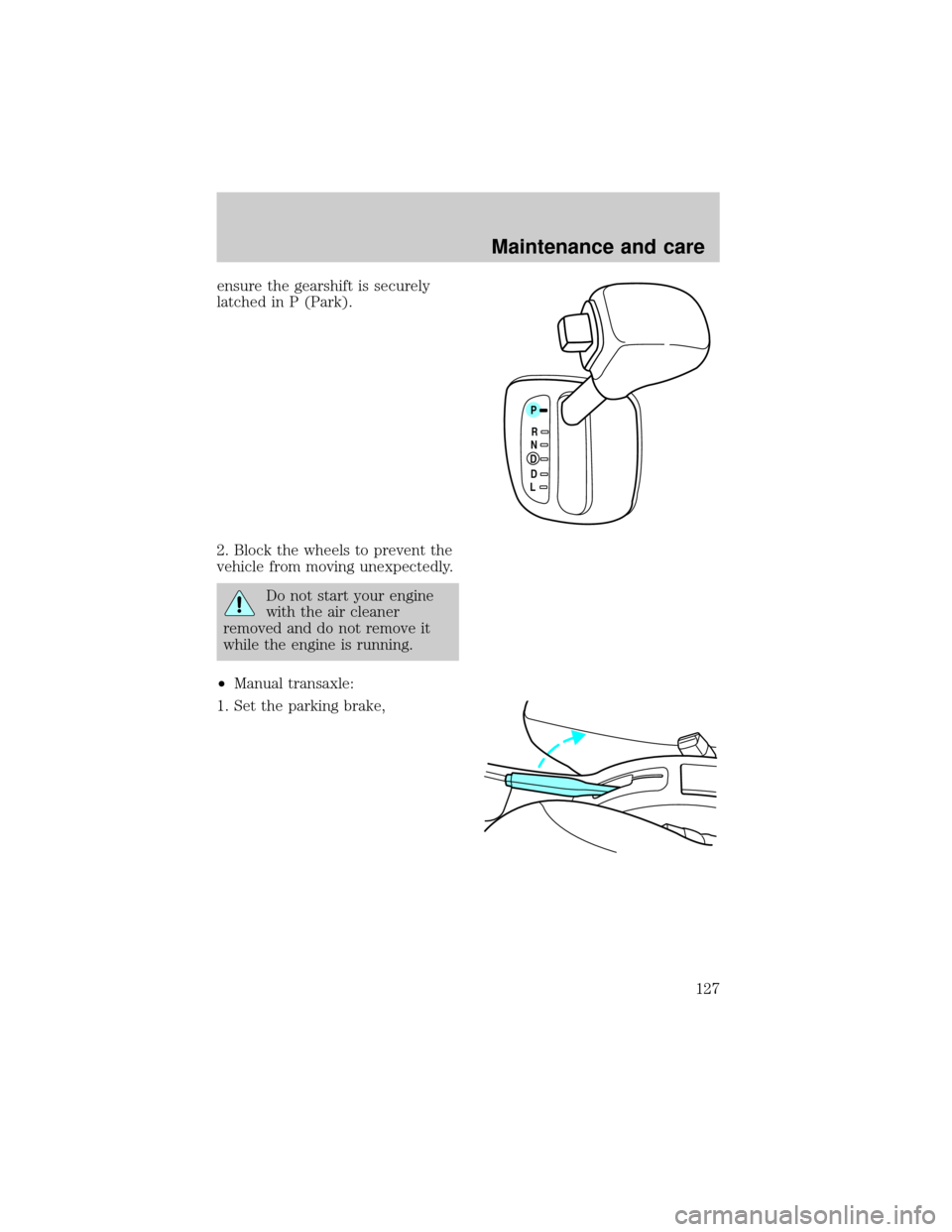
ensure the gearshift is securely
latched in P (Park).
2. Block the wheels to prevent the
vehicle from moving unexpectedly.
Do not start your engine
with the air cleaner
removed and do not remove it
while the engine is running.
²Manual transaxle:
1. Set the parking brake,
P
RNDDL
Maintenance and care
127
Page 130 of 191
IDENTIFYING COMPONENTS IN
THE ENGINE COMPARTMENT
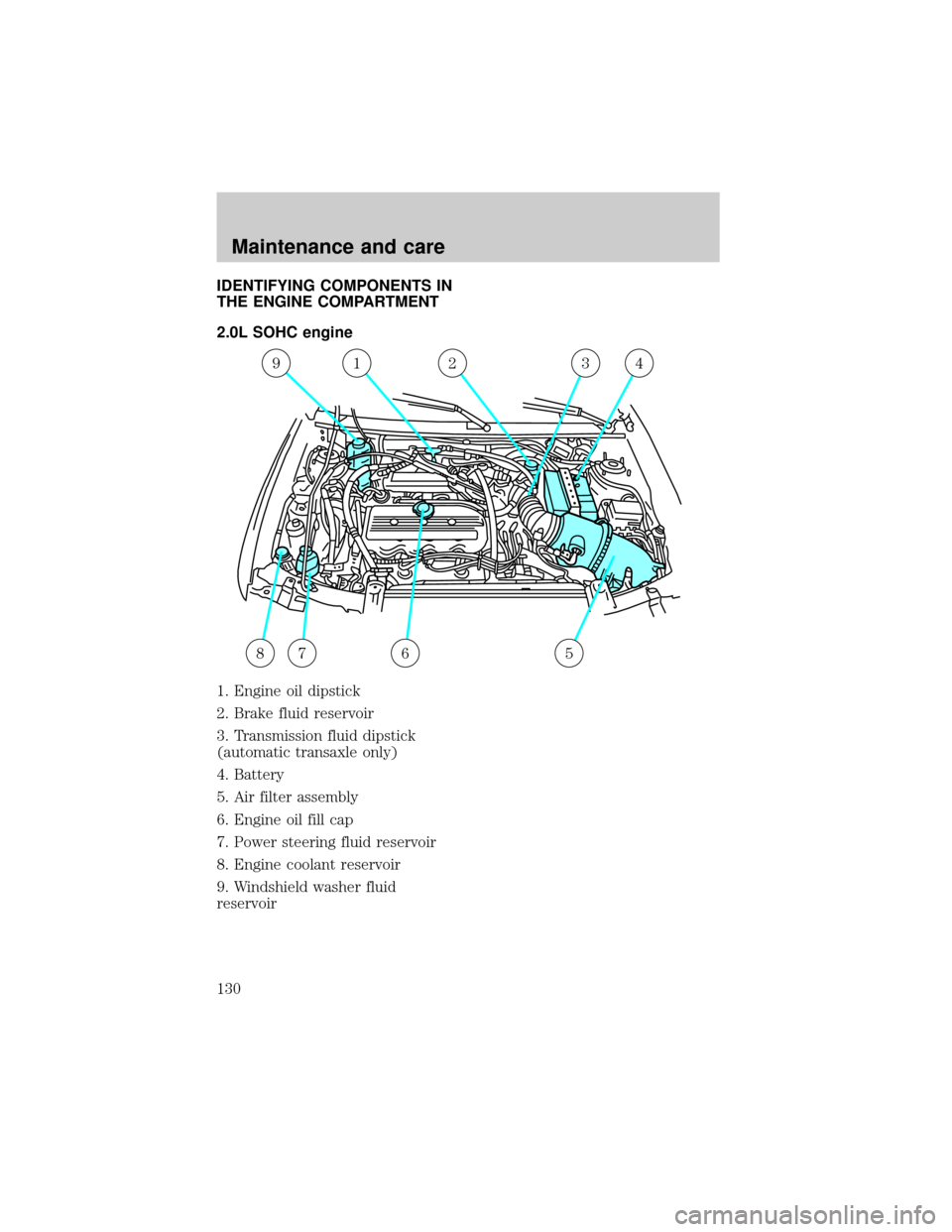
2.0L SOHC engine
1. Engine oil dipstick
2. Brake fluid reservoir
3. Transmission fluid dipstick
(automatic transaxle only)
4. Battery
5. Air filter assembly
6. Engine oil fill cap
7. Power steering fluid reservoir
8. Engine coolant reservoir
9. Windshield washer fluid
reservoir
91234
8756
Maintenance and care
130
Page 131 of 191
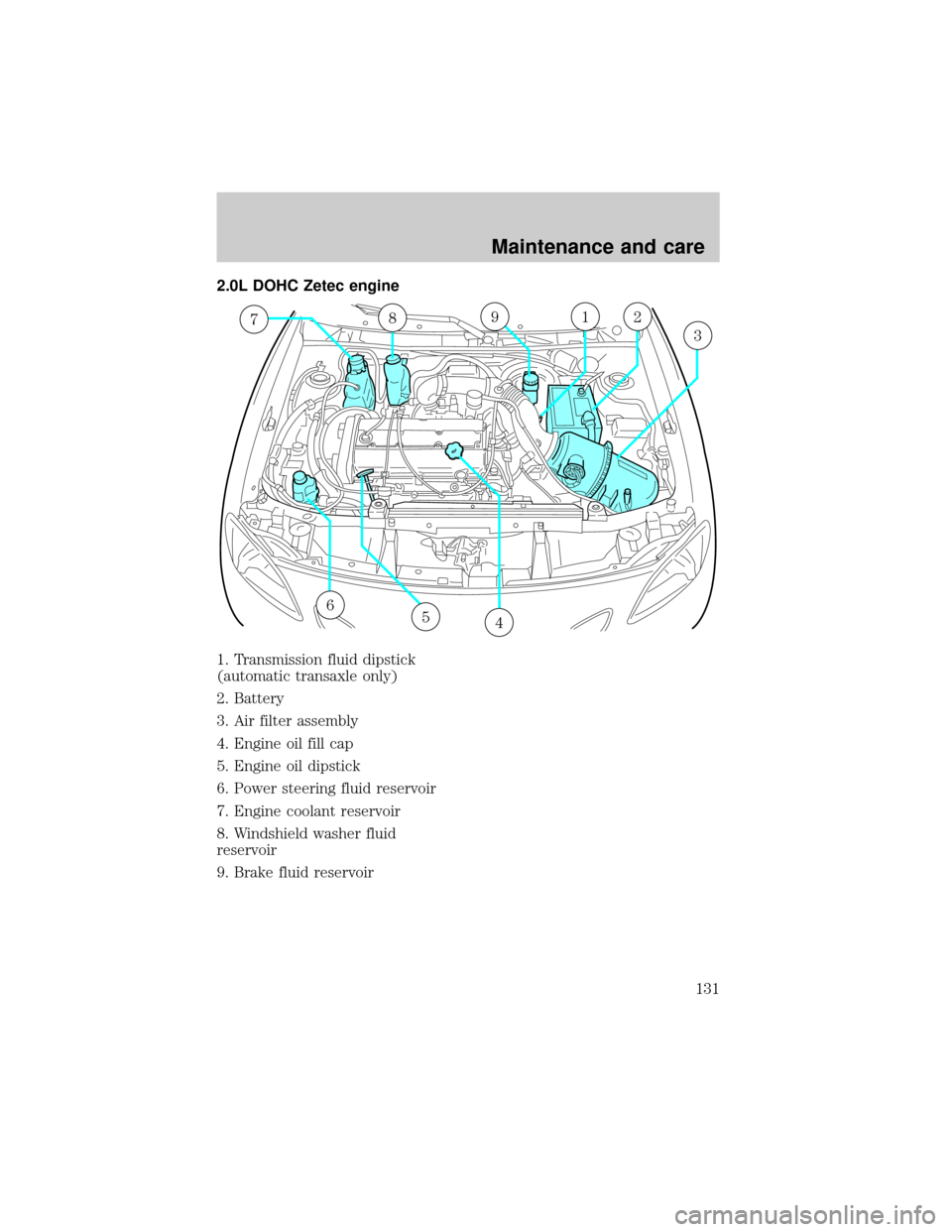
2.0L DOHC Zetec engine
1. Transmission fluid dipstick
(automatic transaxle only)
2. Battery
3. Air filter assembly
4. Engine oil fill cap
5. Engine oil dipstick
6. Power steering fluid reservoir
7. Engine coolant reservoir
8. Windshield washer fluid
reservoir
9. Brake fluid reservoir
98712
3
4
65
Maintenance and care
131
Page 132 of 191
ENGINE OIL
Checking the engine oil
Check the engine oil each time you
fuel your vehicle.
1. Make sure the vehicle is on level
ground.
2. Turn the engine off and wait a
few minutes for the oil to drain
into the oil pan.
3. Set the parking brake and
ensure the gearshift is securely
latched in P (automatic transaxle)
or 1st (manual transaxle).
4. Open the hood. Protect yourself
from engine heat.
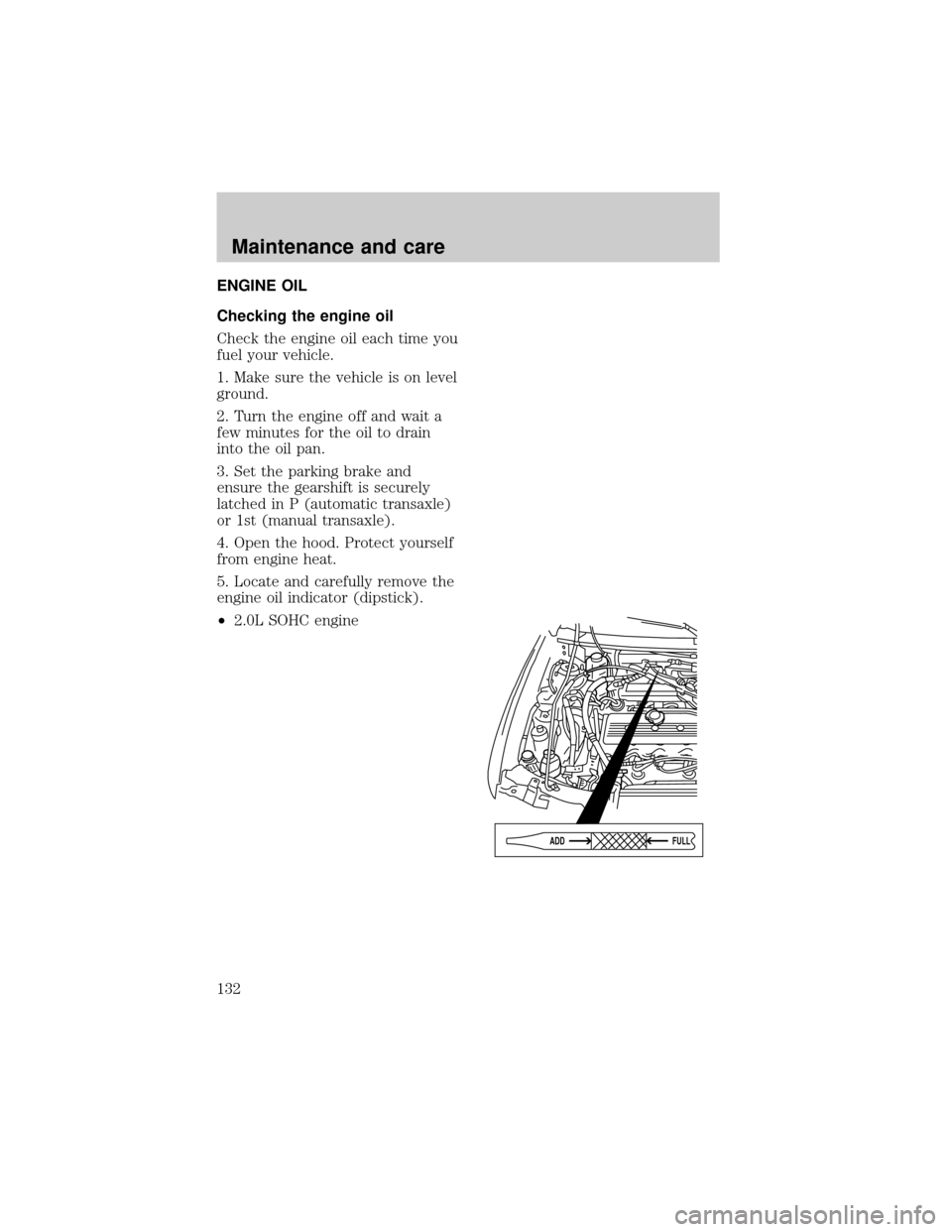
5. Locate and carefully remove the
engine oil indicator (dipstick).
²2.0L SOHC engine
ADDFULL
Maintenance and care
132
Page 136 of 191
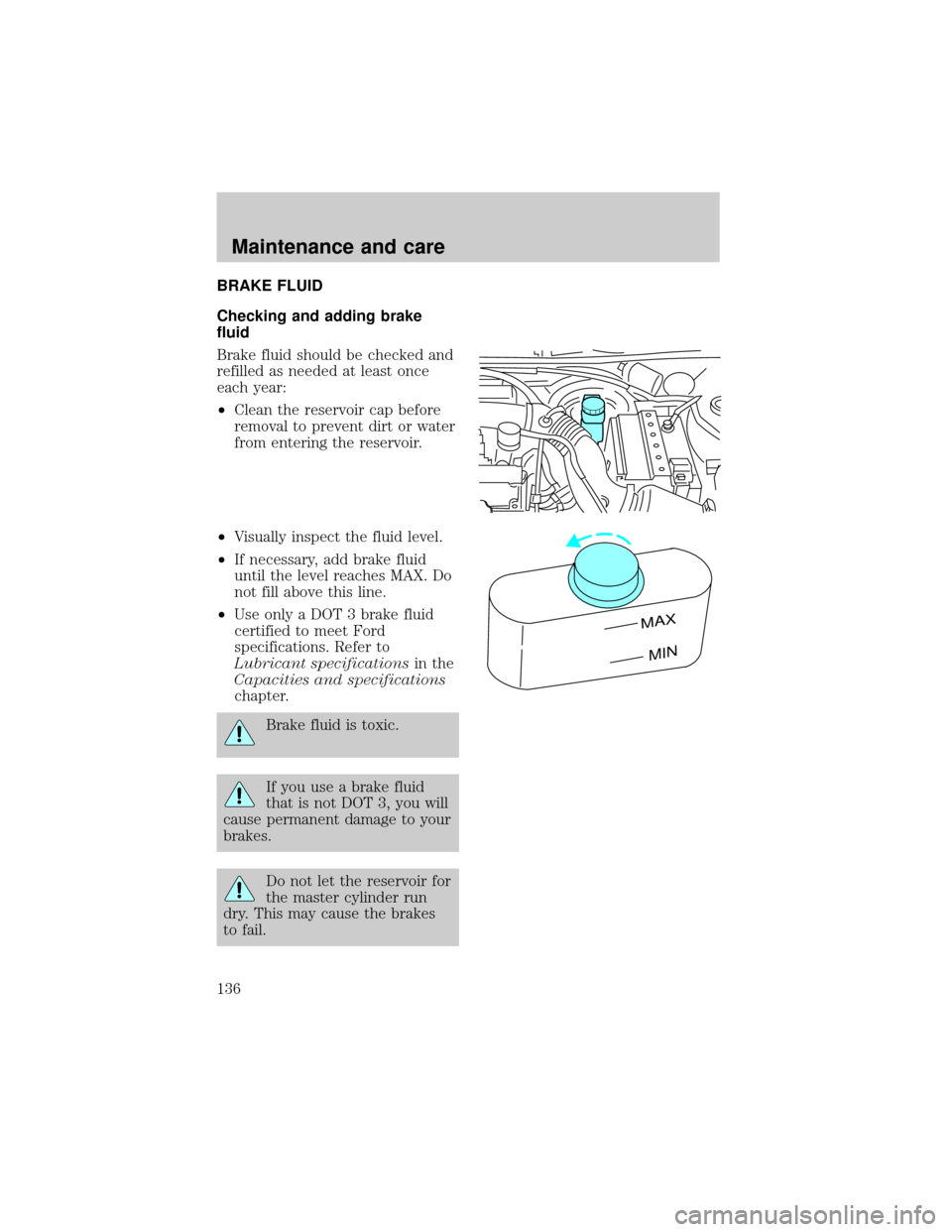
BRAKE FLUID
Checking and adding brake
fluid
Brake fluid should be checked and
refilled as needed at least once
each year:
²Clean the reservoir cap before
removal to prevent dirt or water
from entering the reservoir.
²Visually inspect the fluid level.
²If necessary, add brake fluid
until the level reaches MAX. Do
not fill above this line.
²Use only a DOT 3 brake fluid
certified to meet Ford
specifications. Refer to
Lubricant specificationsin the
Capacities and specifications
chapter.
Brake fluid is toxic.
If you use a brake fluid
that is not DOT 3, you will
cause permanent damage to your
brakes.
Do not let the reservoir for
the master cylinder run
dry. This may cause the brakes
to fail.
MAX
MIN
Maintenance and care
136
Page 137 of 191
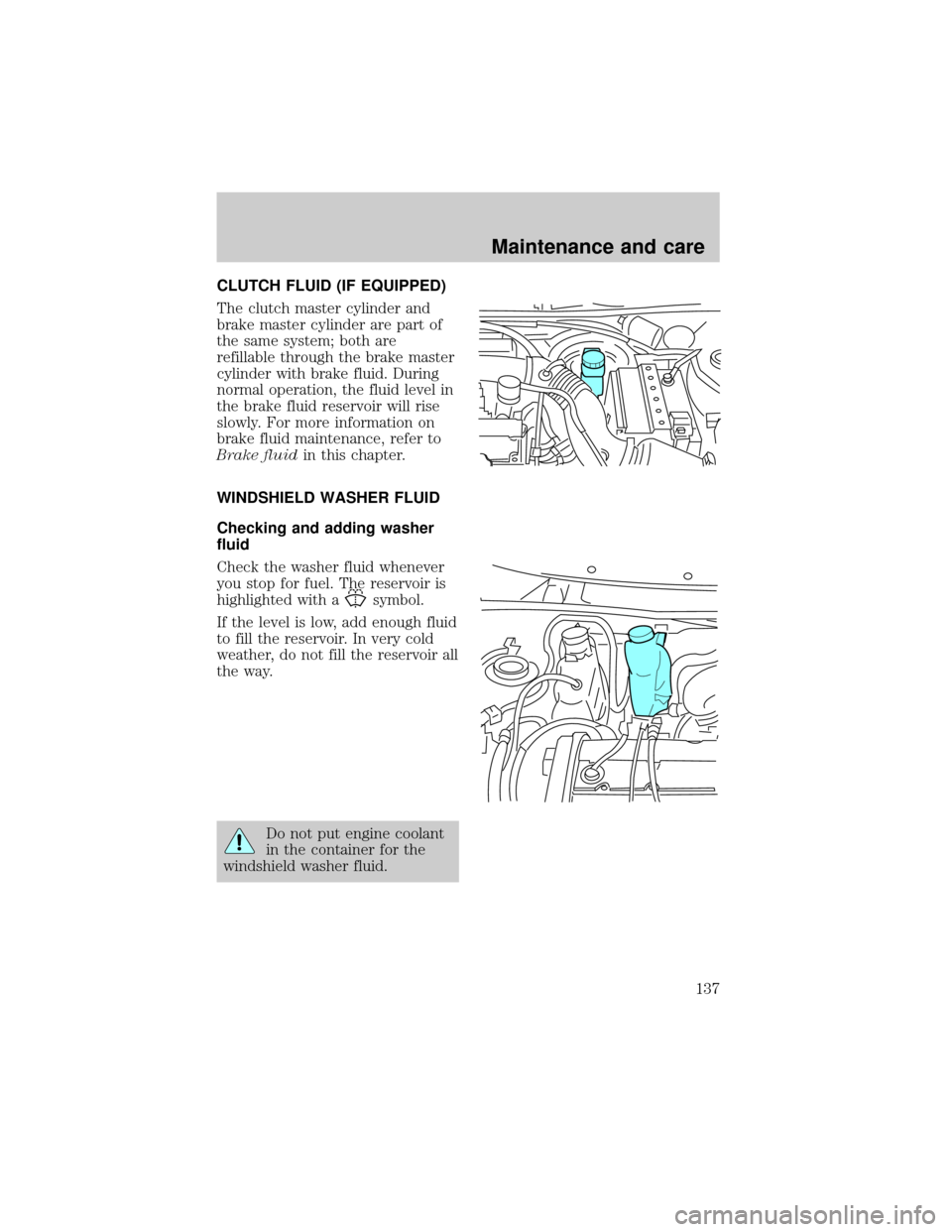
CLUTCH FLUID (IF EQUIPPED)
The clutch master cylinder and
brake master cylinder are part of
the same system; both are
refillable through the brake master
cylinder with brake fluid. During
normal operation, the fluid level in
the brake fluid reservoir will rise
slowly. For more information on
brake fluid maintenance, refer to
Brake fluidin this chapter.
WINDSHIELD WASHER FLUID
Checking and adding washer
fluid
Check the washer fluid whenever
you stop for fuel. The reservoir is
highlighted with a
symbol.
If the level is low, add enough fluid
to fill the reservoir. In very cold
weather, do not fill the reservoir all
the way.
Do not put engine coolant
in the container for the
windshield washer fluid.
Maintenance and care
137
Page 144 of 191
fluid at least twice a year. The
fluid level should be checked if the
transmission is not working
properly, i.e., if the transaxle slips
or shifts slowly or if you notice
some sign of fluid leakage.
Transmission fluid should be
checked at normal operating
temperatures 66ÉC-77ÉC
(150ÉF-170ÉF) on a level surface.
The normal operating temperature
can be reached after approximately
32 km (20 miles) of driving.
If your vehicle has been operated
for an extended period at high
speeds, in city traffic during hot
weather or pulling a trailer, the
vehicle should be turned off for
about 30 minutes to allow the fluid
to cool before checking.
1. Park the vehicle on a level
surface and engage the parking
brake.
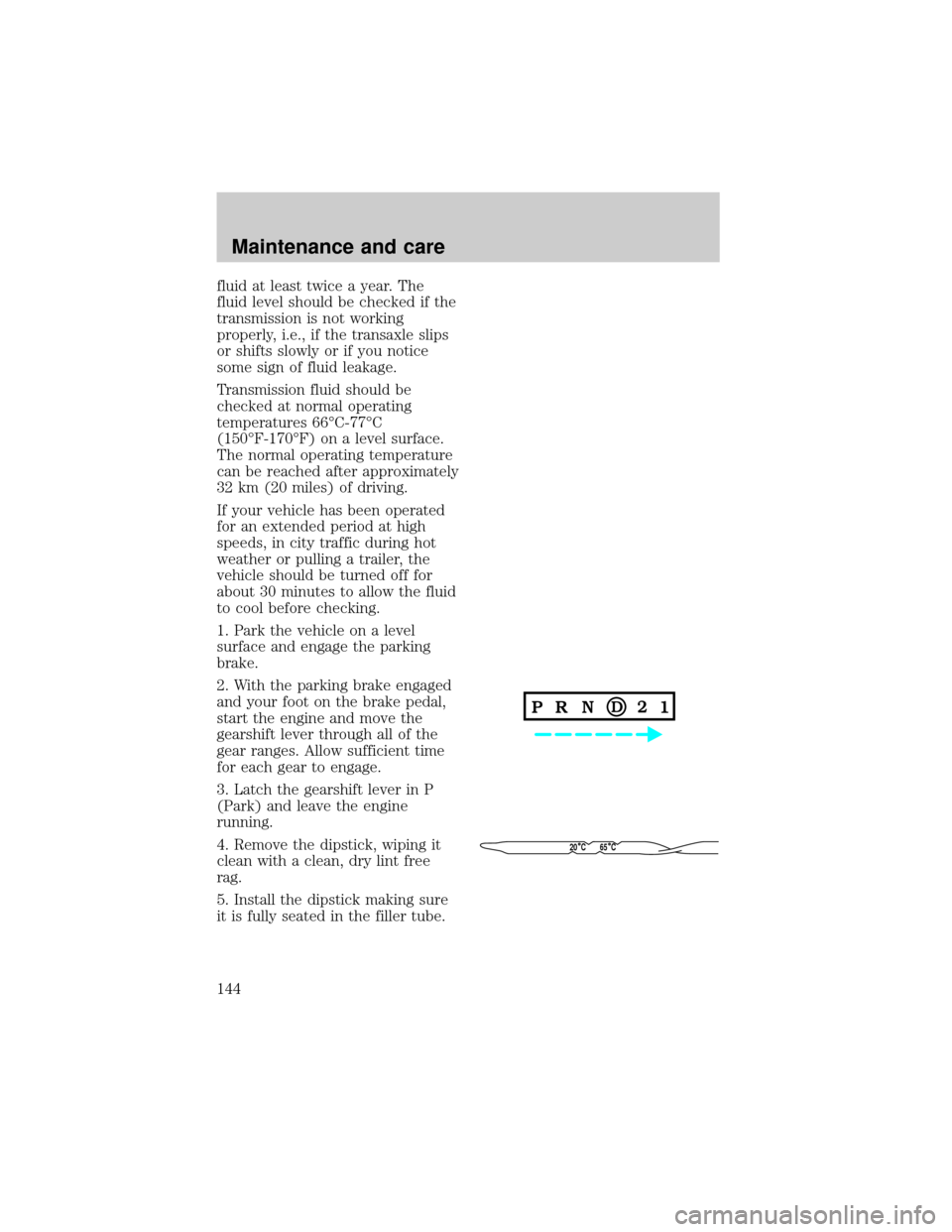
2. With the parking brake engaged
and your foot on the brake pedal,
start the engine and move the
gearshift lever through all of the
gear ranges. Allow sufficient time
for each gear to engage.
3. Latch the gearshift lever in P
(Park) and leave the engine
running.
4. Remove the dipstick, wiping it
clean with a clean, dry lint free
rag.
5. Install the dipstick making sure
it is fully seated in the filler tube.
20 C65 C
Maintenance and care
144
Page 154 of 191
SNOW TIRES AND CHAINS
Snow tires must be the
same size and grade as the
tires you currently have on your
vehicle.
The tires on your vehicle have all
weather treads to provide traction
in rain and snow. However, in some
climates, you may need to use
snow tires and chains. If you need
to use snow tires and chains, you
must install steel wheels of the
same size and specifications as
those originally installed.
Follow these guidelines when using
snow tires and chains:
²Use only SAE Class S chains.
²Install chains securely, verifying
that the chains do not touch any
wiring, brake lines or fuel lines.
²Drive cautiously. If you hear the
chains rub or bang against your
vehicle, stop and re-tighten the
chains. If this does not work,
remove the chains to prevent
damage to your vehicle.
²If possible, avoid fully loading
your vehicle.
²Do not use tire chains on
aluminum wheels. Chains may
chip the wheels.
²Do not use tire chains with
38 cm (15 inch) wheel/tire
options. Using chains on this
size tire may cause damage to
steering, suspension and/or body
components.
Maintenance and care
154