Page 91 of 191
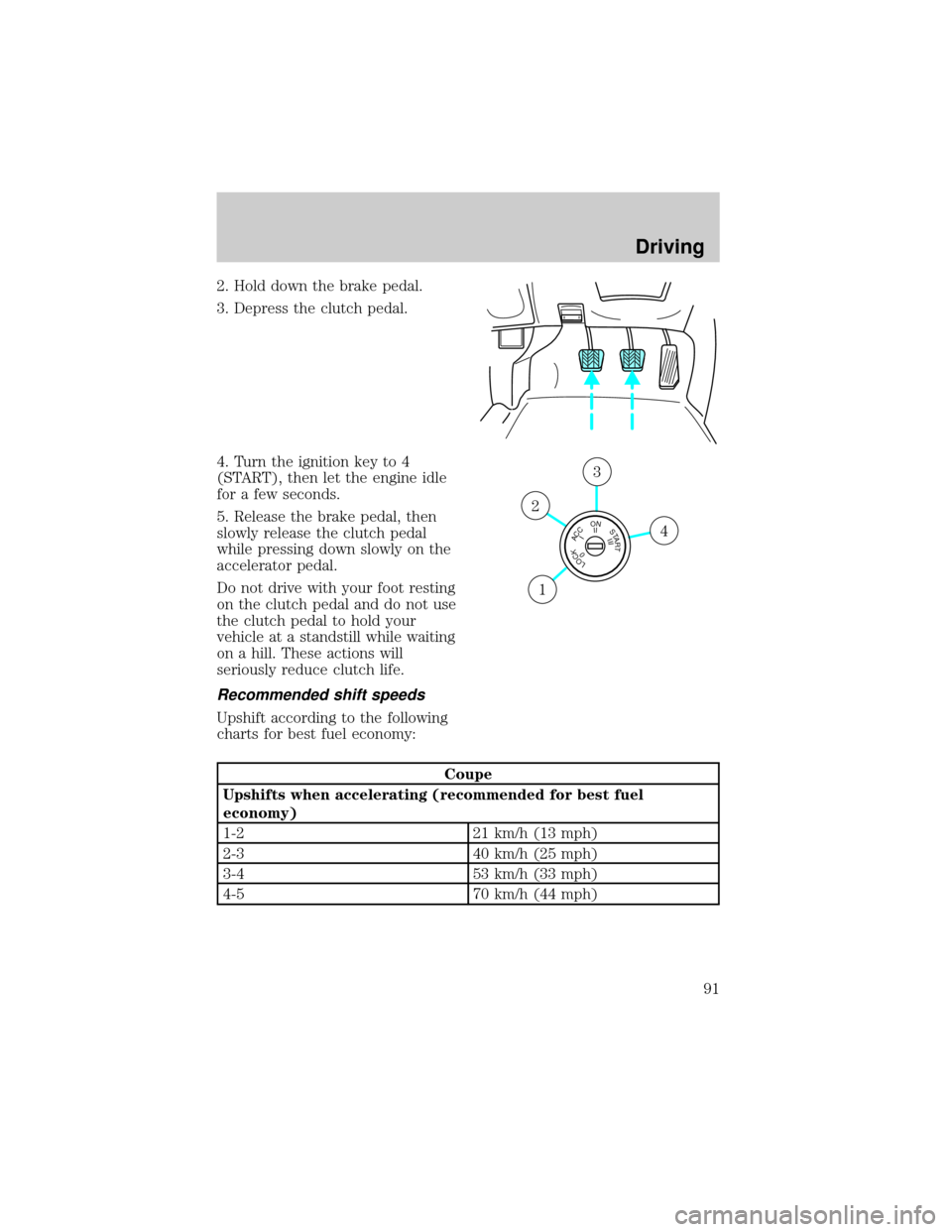
2. Hold down the brake pedal.
3. Depress the clutch pedal.
4. Turn the ignition key to 4
(START), then let the engine idle
for a few seconds.
5. Release the brake pedal, then
slowly release the clutch pedal
while pressing down slowly on the
accelerator pedal.
Do not drive with your foot resting
on the clutch pedal and do not use
the clutch pedal to hold your
vehicle at a standstill while waiting
on a hill. These actions will
seriously reduce clutch life.
Recommended shift speeds
Upshift according to the following
charts for best fuel economy:
Coupe
Upshifts when accelerating (recommended for best fuel
economy)
1-2 21 km/h (13 mph)
2-3 40 km/h (25 mph)
3-4 53 km/h (33 mph)
4-5 70 km/h (44 mph)
LOCKACCONSTART0IIIIII4
3
2
1
Driving
91
Page 92 of 191
Sedan/Wagon
Upshifts when cruising (recommended for best fuel economy)
1-2 18 km/h (11 mph)
2-3 32 km/h (20 mph)
3-4 46 km/h (29 mph)
4-5 61 km/h (38 mph)
Parking your vehicle
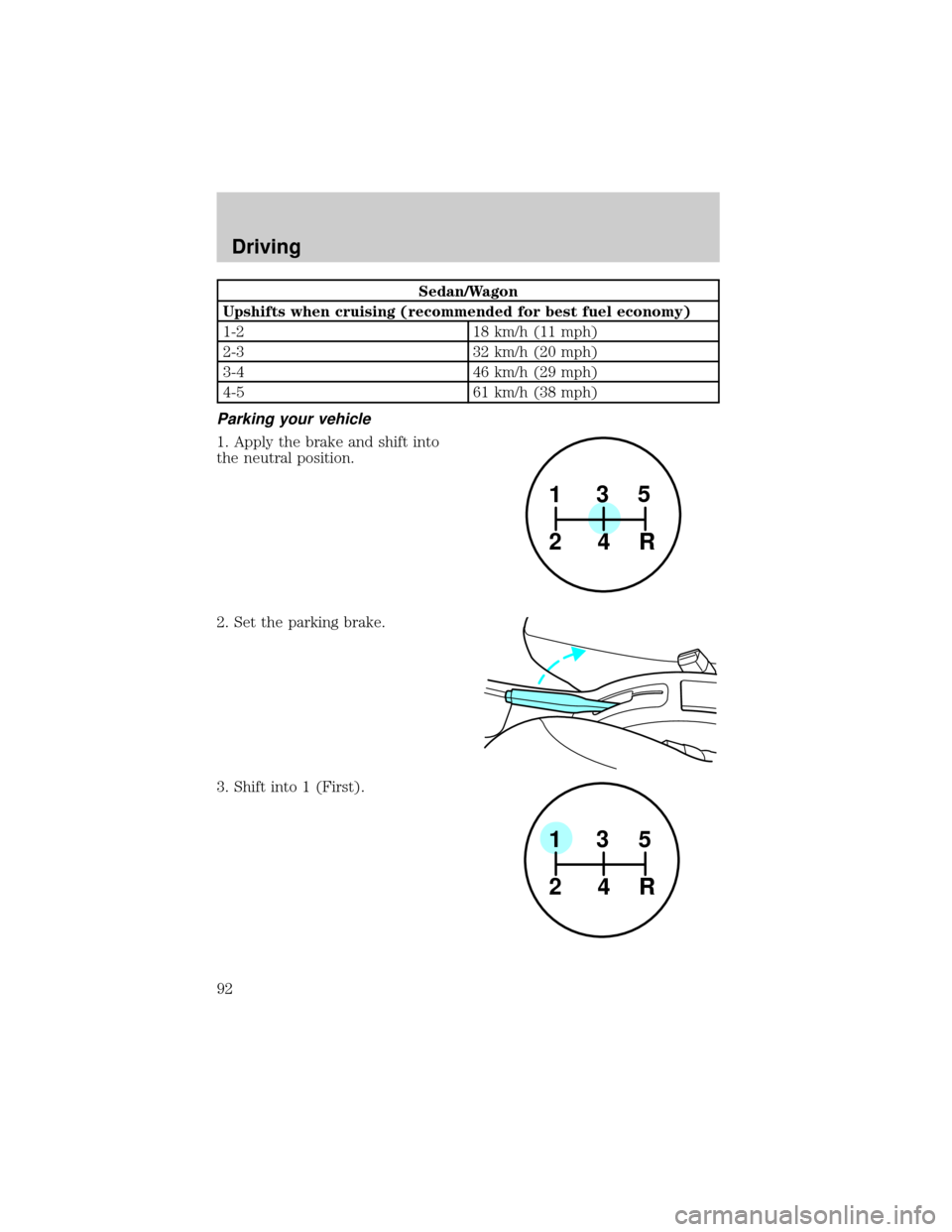
1. Apply the brake and shift into
the neutral position.
2. Set the parking brake.
3. Shift into 1 (First).
1
24R35
1
24R35
Driving
92
Page 93 of 191
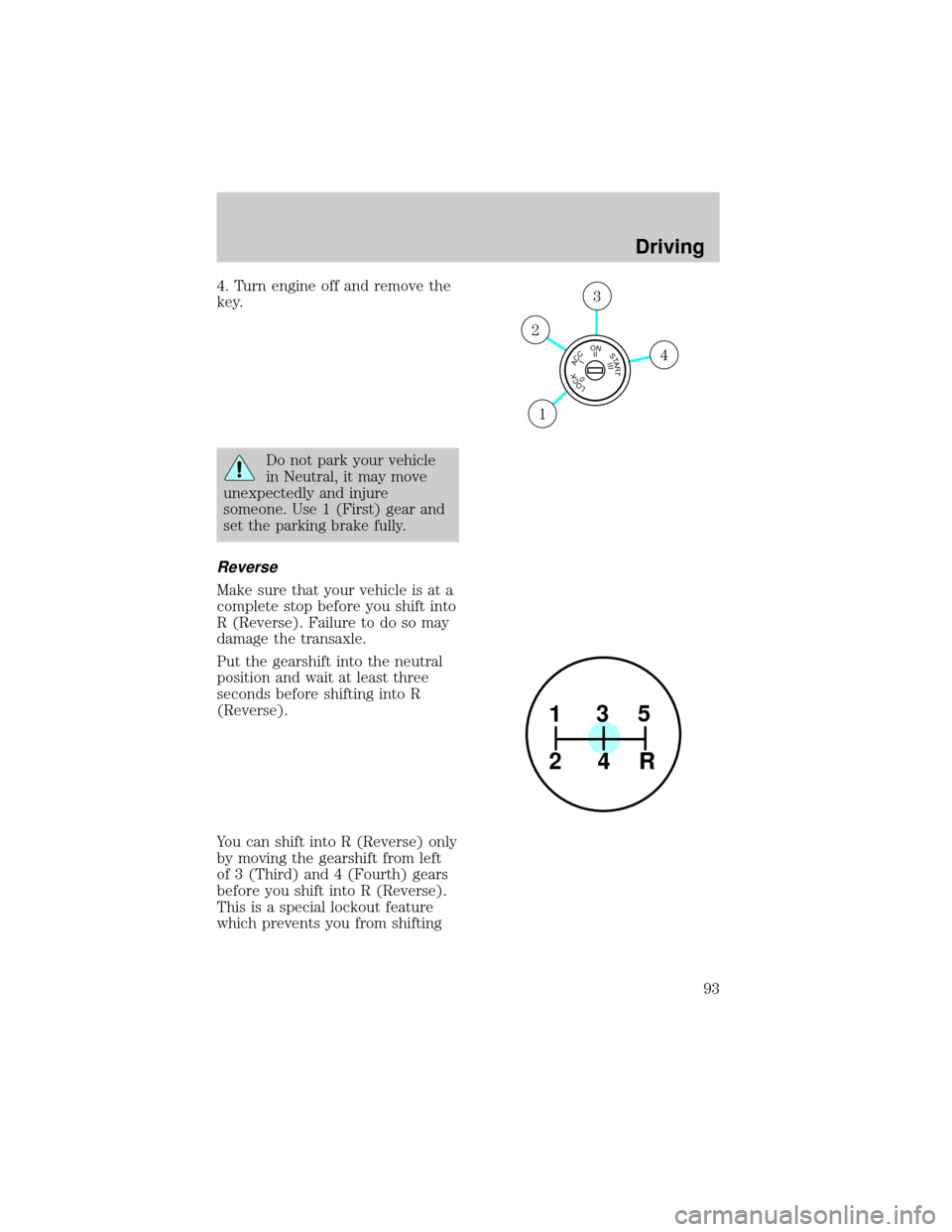
4. Turn engine off and remove the
key.
Do not park your vehicle
in Neutral, it may move
unexpectedly and injure
someone. Use 1 (First) gear and
set the parking brake fully.
Reverse
Make sure that your vehicle is at a
complete stop before you shift into
R (Reverse). Failure to do so may
damage the transaxle.
Put the gearshift into the neutral
position and wait at least three
seconds before shifting into R
(Reverse).
You can shift into R (Reverse) only
by moving the gearshift from left
of 3 (Third) and 4 (Fourth) gears
before you shift into R (Reverse).
This is a special lockout feature
which prevents you from shifting
LOCKACCONSTART0IIIIII4
3
2
1
1
24R35
Driving
93
Page 94 of 191
into R (Reverse) when you
downshift from 5 (Fifth).
Automatic transaxle
(if equipped)
Hold the brake pedal down
while you move the
gearshift lever from position to
position. If you do not hold the
brake pedal down, your vehicle
may move unexpectedly and
injure someone.
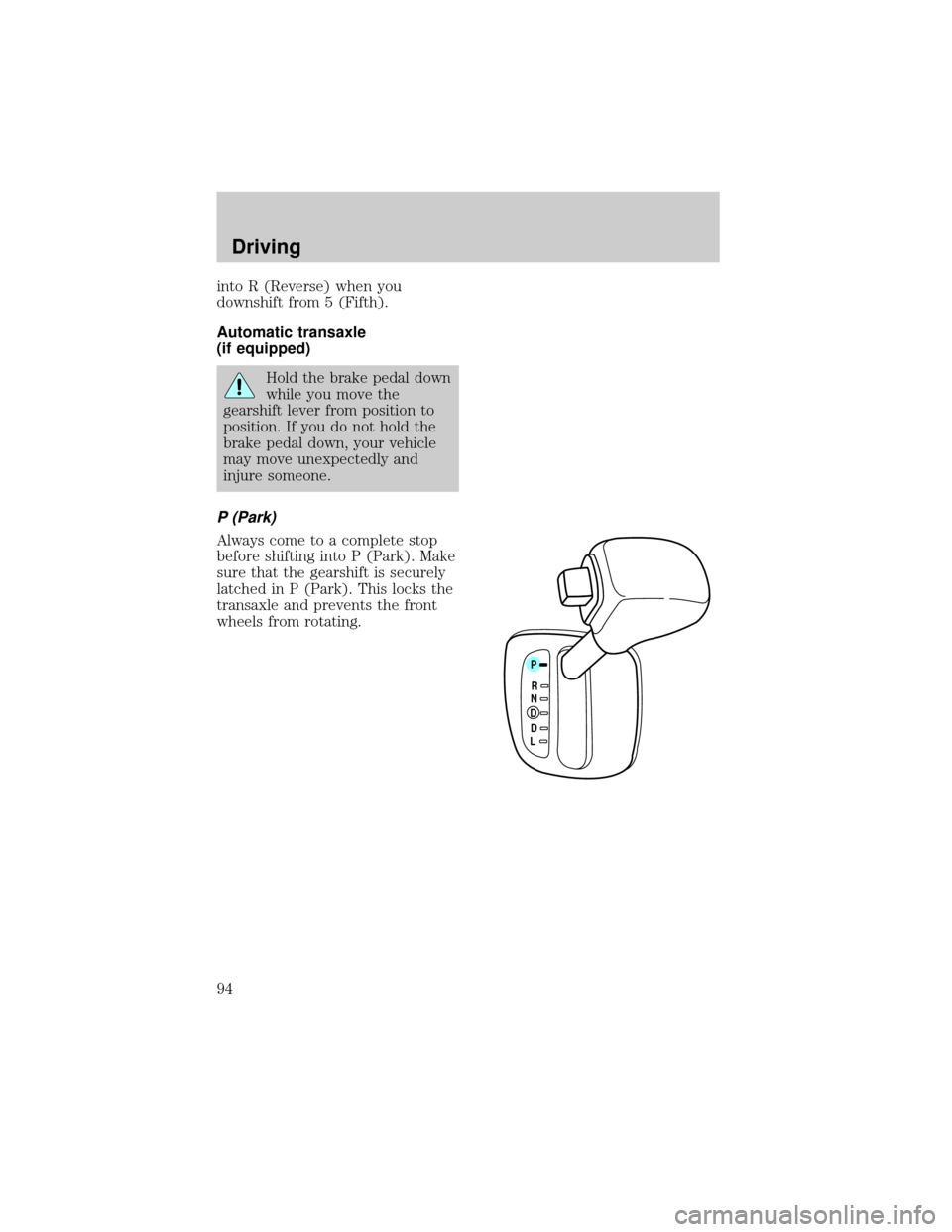
P (Park)
Always come to a complete stop
before shifting into P (Park). Make
sure that the gearshift is securely
latched in P (Park). This locks the
transaxle and prevents the front
wheels from rotating.
P
RNDDL
Driving
94
Page 95 of 191
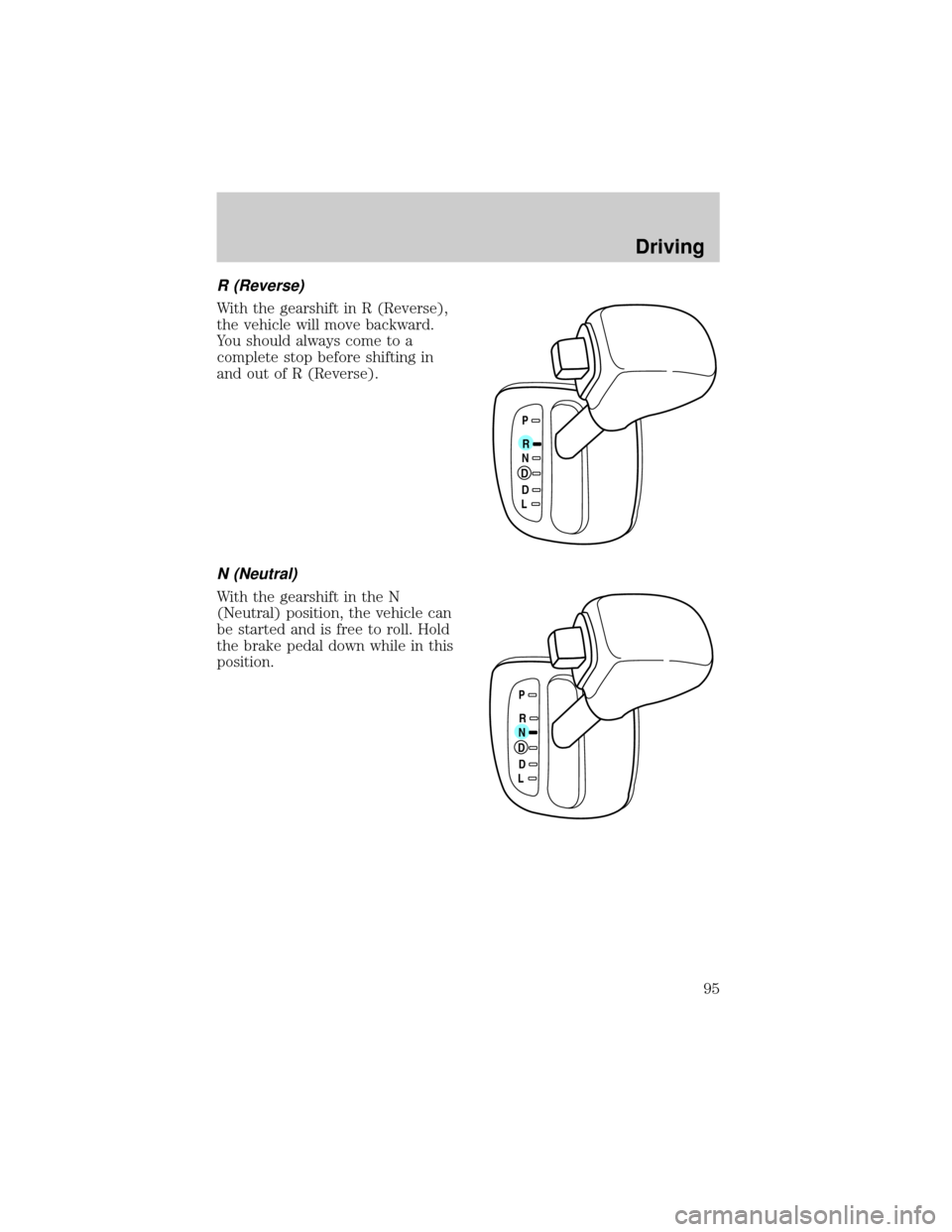
R (Reverse)
With the gearshift in R (Reverse),
the vehicle will move backward.
You should always come to a
complete stop before shifting in
and out of R (Reverse).
N (Neutral)
With the gearshift in the N
(Neutral) position, the vehicle can
be started and is free to roll. Hold
the brake pedal down while in this
position.
P
RND
DL
P
RND
DL
Driving
95
Page 97 of 191
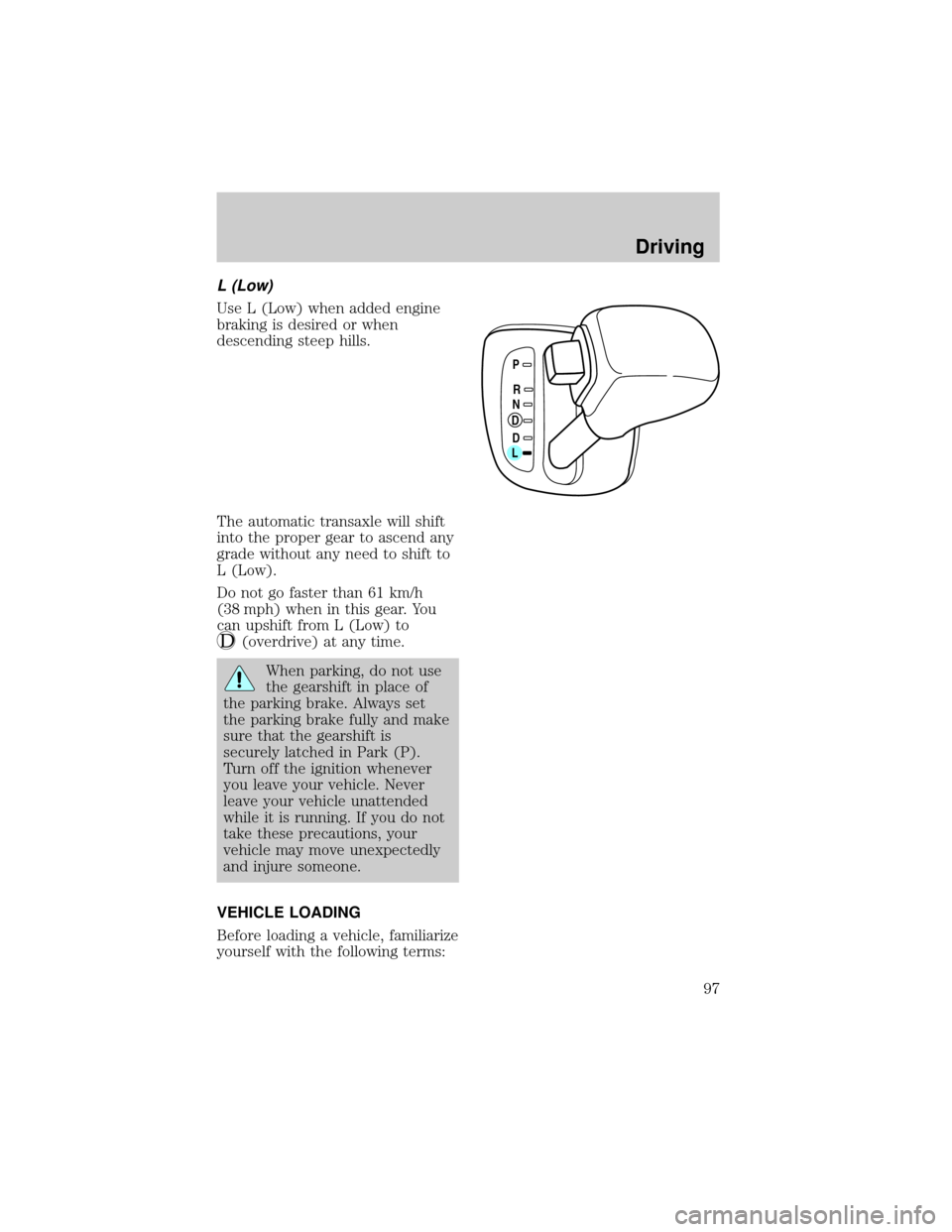
L (Low)
Use L (Low) when added engine
braking is desired or when
descending steep hills.
The automatic transaxle will shift
into the proper gear to ascend any
grade without any need to shift to
L (Low).
Do not go faster than 61 km/h
(38 mph) when in this gear. You
can upshift from L (Low) to
(overdrive) at any time.
When parking, do not use
the gearshift in place of
the parking brake. Always set
the parking brake fully and make
sure that the gearshift is
securely latched in Park (P).
Turn off the ignition whenever
you leave your vehicle. Never
leave your vehicle unattended
while it is running. If you do not
take these precautions, your
vehicle may move unexpectedly
and injure someone.
VEHICLE LOADING
Before loading a vehicle, familiarize
yourself with the following terms:
P
RN
D
DL
Driving
97
Page 100 of 191
a higher weight limit than the
originals do not increase the
GVWR and GAWR limitations.
TRAILER TOWING
Your vehicle is capable of towing a
trailer up to 454 kg (1 000 lbs.)
gross trailer weight with a
maximum tongue load of 45 kg
(100 lbs.). Do not tow a trailer
until your vehicle has been driven
at least 800 km (500 miles).
Towing a trailer places an
additional load on your vehicle's
engine, transaxle, brakes, tires and
suspension. Inspect these
components carefully after towing.
Do not exceed the GVWR
or the GAWR specified on
the Safety Compliance
Certification Label.
Towing trailers beyond the
maximum recommended
gross trailer weight exceeds the
limit of the vehicle and could
result in engine damage,
transaxle damage, structural
damage, loss of control, and
personal injury.
Preparing to tow
Use the proper equipment for
towing a trailer, and make sure it
is properly attached to your
vehicle. See your dealer or a
reliable trailer dealer if you require
assistance.
Driving
100
Page 101 of 191
Hitches
Do not use hitches that clamp onto
the vehicle bumper. Use a load
carrying hitch. You must distribute
the load in your trailer so that 10 ±
15% of the total weight of the
trailer is on the tongue.
Safety chains
Always connect the trailer's safety
chains to the vehicle. To connect
the trailer's safety chains, cross the
chains under the trailer tongue and
allow slack for turning corners.
If you use a rental trailer, follow
the instructions that the rental
agency gives to you.
Trailer brakes
Electric brakes and manual,
automatic or surge-type brakes are
safe if installed properly and
adjusted to the manufacturer's
specifications. The trailer brakes
must meet local and Federal
regulations.
Do not connect a trailer's
hydraulic brake system
directly to your vehicle's brake
system. Your vehicle may not
have enough braking power and
your chances of having a
collision greatly increase.
Trailer lamps
Trailer lamps are required on most
towed vehicles. Make sure your
trailer lamps conform to local and
Federal regulations. See your
Driving
101