Page 126 of 405
Oil Pressure Gage
0
h
120
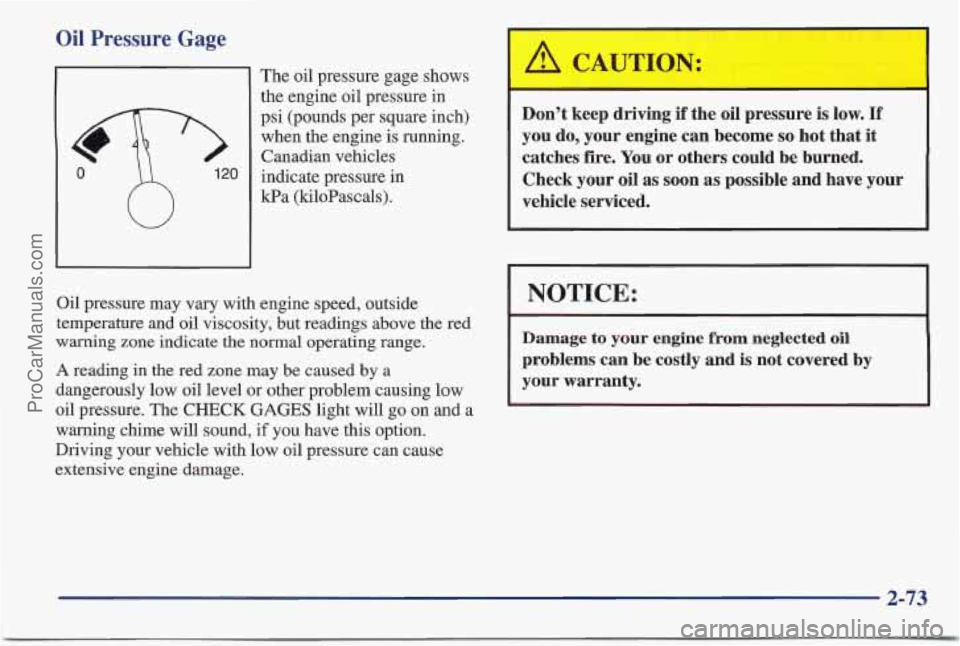
The oil pressure gage shows
the engine oil pressure in
psi (pounds per square inch)
when the engine is running.
Canadian vehicles
indicate pressure in
kPa (kiloPascals).
Oil pressure may vary with engine speed, outside
temperature and oil viscosity, but readings above the red
warning zone indicate
the normal operating range.
A reading in the red zone may be caused by a
dangerously low oil level or other problem causing low
oil pressure. The
CHECK GAGES light will go on and a
warning chime will sound, if you have this option.
Driving your vehicle with low oil pressure can cause
extensive engine damage.
A CAUTION:
Don’t keep driving if the oil pressure is low. If
you do, your engine can become so hot that it
catches fire. You
or others could be burned.
Check your oil as
soon ass possible and have your
vehicle serviced.
I NOTICE:
~~~ ~~ ~~
Damage to your engine from neglected oil
problems can be costly and is not covered by
your warranty.
1
2-73
ProCarManuals.com
Page 268 of 405
When to Add Oil
If the oil is at or below the ADD mark, then you’ll need
to add at least one quart of oil. But you must use the
right kind. This
part explains what lund of oil to use. For
crankcase capacity, see “Capacities and Specifications”
in the Index.
What Kind of Oil to Use
Oils recommended for your vehicle can be identified by
looking for the “Starburst” symbol. This symbol
indicates that the oil has been certified by the American
Petroleum Institute (API).
Do not use any oil which
does not carry this Starburst symbol.
NOTICE:
Don’t add too much oil. If your engine has
so much oil that the oil level gets above the
cross-hatched area that
shows the proper
operating range, your engine could be damaged.
The engine oil fill cap is behind the engine oil dipstick
and engine fans.
Be sure to
fill it enough to put the level somewhere in
the proper operating range. Push the dipstick all the way
back in when you’re through.
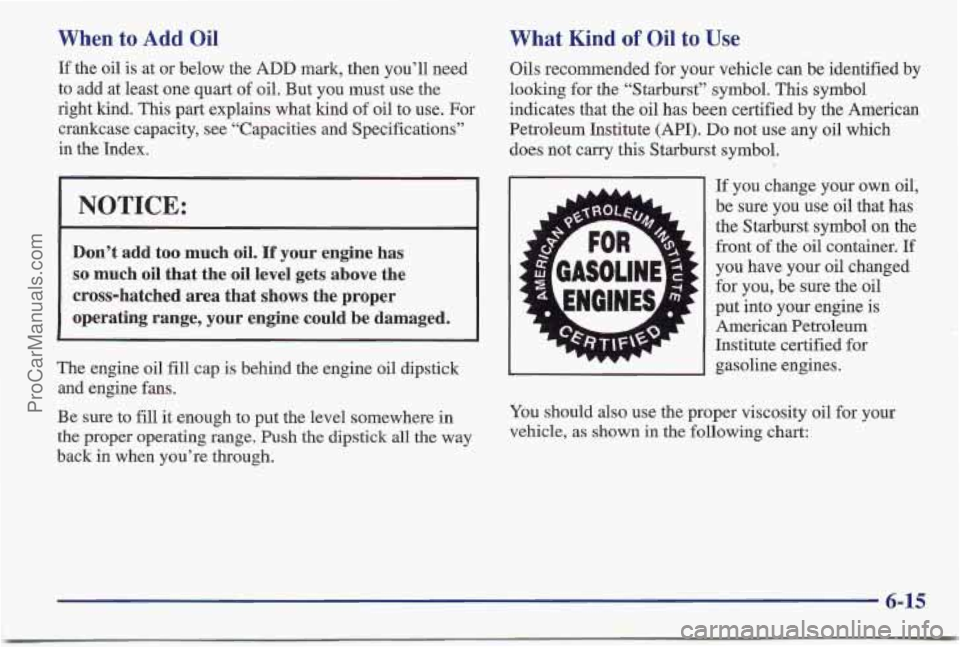
If you change your own oil,
be sure you use oil that has
the Starburst symbol on the
front
of the oil container. If
you have your oil changed
for you, be sure the oil
put into your engine is
American Petroleum
Institute certified for
-_
I I gasoline engines.
You should also use the proper viscosity oil for your
vehicle, as shown in the following chart:
6-15
ProCarManuals.com
Page 269 of 405
RECOMMENDED SAE VISCOSITY GRADE ENGINE OILS
FOR BEST FUEL ECONOMY AND COLD STIIRTING, SELECT THE LOWEST
SAf YSCDSJTY =DE OIL FOR THE EXPECTED TEMPERATURE RANGE.
HOT
WEATHER I
“F
k 100 -
+ 80 -
+60.
+40-
+ 20.
0.
7 “C
. +30
- +27
- + 16
- +4
--7
- -18
WEATHER
LOOK
FOR THIS
SYMBOL
I - SAE 5W-M -
DQ NOT USE SAE ZOW-50 OR ANY OTHER GRADE OIL NOT RECOMMENDED
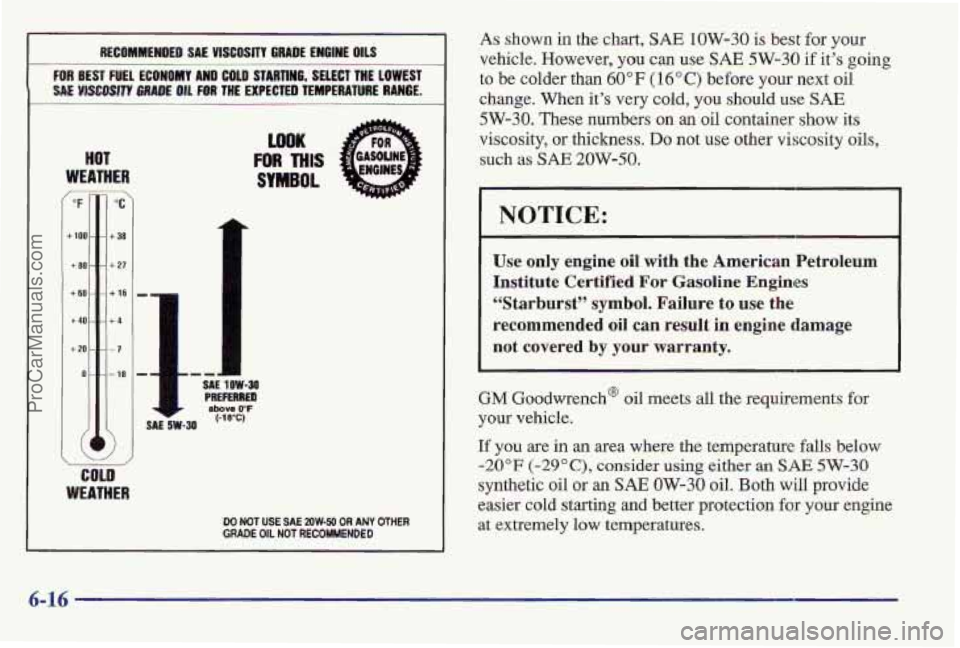
As shown in the chart, SAE 1OW-30 is best for your
vehicle. However, you can
use SAE 5W-30 if it’s going
to be colder than 60
OF ( 16 O C) before your next oil
change. When it’s
very cold, you should use SAE
5W-30. These numbers on an oil container show its
viscosity,
or thickness. Do not use other viscosity oils,
such
as SAE 2OW-50.
NOTICE:
Use only ‘engine oil with thle American Petroleum
Institute Certified For Gasoline Engines
“Starburst” symbol. Failure
to use the
recommended oil can result
in engine damage
not covered by your warranty.
GM Goodwrench@ ail meets all the requirements for
your vehicle.
If
you are in an area where the temperature falls below
-20°F (-29”C), consider using either an SAE 5W-30
synthetic oil or an SAE OW-30 oil. Both will provide
easier cold starting
and better protection for your engine
at extremely low temperatures.
6-16
ProCarManuals.com