Page 231 of 405
Cooling System
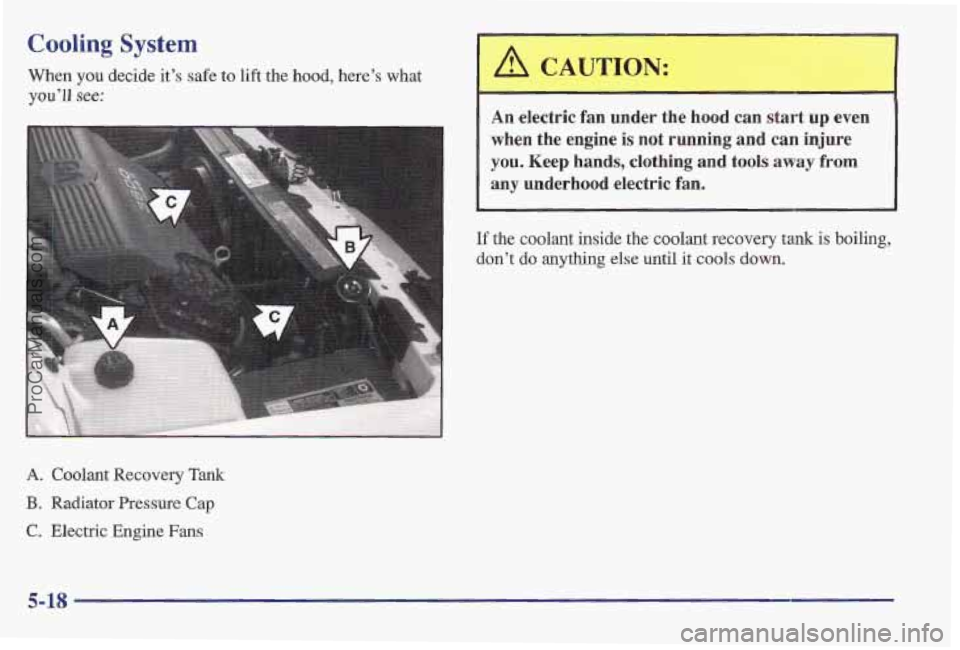
you’ll see:
When you decide it’s safe to lift the hood, here’s what
A. Coolant Recovery Tank
E. Radiator Pressure Cap
C. Electric Engine Fans
1
’ A CAUTION:
r
An electric fan under the hood can start up even
when the engine
is not running and can injure
you. Keep hands, clothing and tools away from
any underhood electric fan.
If the coolant inside the coolant recovery tank is boiling,
don’t do anything
else until it cools down.
5-18
ProCarManuals.com
Page 235 of 405
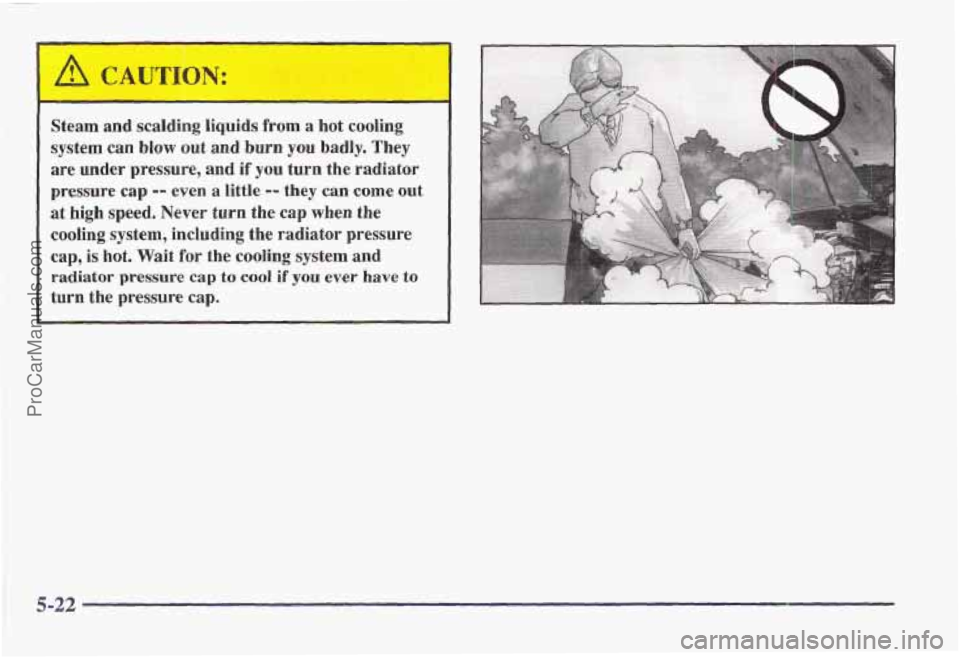
~ Steam and scalding
liquids from a hot cooling
system can
blow out and burn you badly. They
are under pressure, and if
you turn the radiator
pressure
cap -- even a little -- they can come out
at high speed. Never turn the cap when the
cooling system, including the radiator pressure
cap,
is hot. Wait for the cooling system and
radiator pressure
cap to cool if you ever have to
turn
the pressure cap.
5-22
ProCarManuals.com
Page 236 of 405
How to Add Coolant to the Radiator
2. Then keep turning the pressure cap, but now push
down as you turn it. Remove the pressure cap.
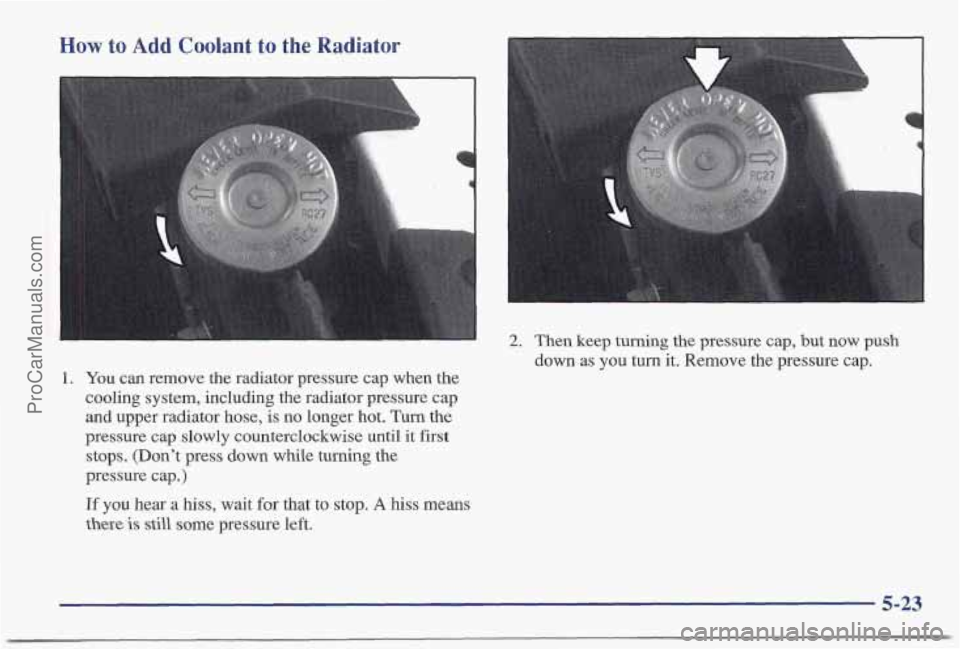
1. You can remove the radiator pressure cap when the
cooling system, including the radiator pressure cap
and upper radiator
hose, is no longer hot. Turn the
pressure cap
slowly counterclockwise until it first
stops.
(Don’t press down while turning the
pressure cap.)
If you hear a hiss, wait for that to stop. A hiss means
there is still some pressure left.
5-23
ProCarManuals.com
Page 237 of 405
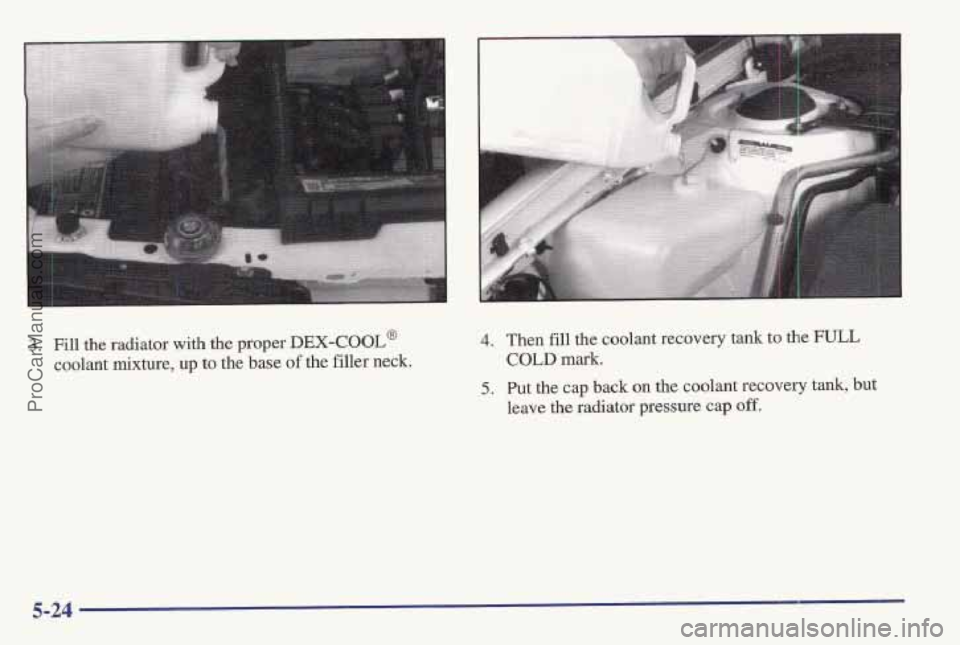
3. Fill the radiator with the proper DEX-COOL@
coolant mixture, up to the base of the filler neck
4. Then fill the coolant recovery tank to the FULL
COLD mark.
5, Put the cap back on the coolant recovery tank, but
leave the radiator pressure cap
off.
5-24
ProCarManuals.com
Page 238 of 405
6.
7.
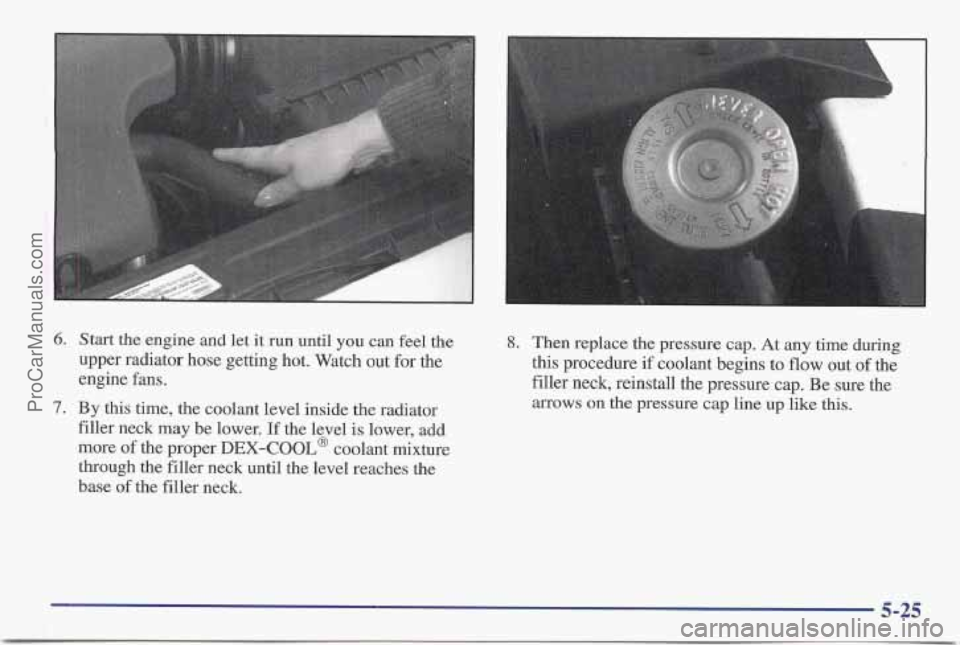
Start the engine and let it run until you can feel the
upper radiator hose getting hot. Watch out for the
engine fans.
By this time, the coolant level inside the radiator
filler neck
may be lower. If the level is lower, add
more of the proper
DEX-COOL@ coolant mixture
through the filler neck until the level reaches the
base
of the filler neck.
8. Then replace the pressure cap. At any time during
this procedure if coolant begins to flow out of the
filler neck, reinstall the pressure cap. Be sure the
arrows on the pressure cap line up like this.
5-25
ProCarManuals.com
Page 254 of 405
v Section 6 Service and Appearance Care
Here you will find information about the care of your Pontiac. This section begins with service and fuel information,
and then it shows how to check important fluid and lubricant levels. There is also technical information about your
vehicle, and a
part devoted to its appearance care.
6-2
6-3
6-5
6-6
6-9
6-13
6-18
6-2 1
6-24
6-27
6-28
6-29
6-30
6-33
6-34
6-42
6-42
6-50 Service
Fuel
Fuels in Foreign Countries
Filling Your Tank
Checking Things Under the Hood
Engine Oil
Air Cleaner
Automatic Transaxle Fluid
Engine Coolant
Radiator Pressure Cap
Power Steering Fluid
Windshield Washer Fluid
Brakes
Battery
Bulb Replacement
Windshield Wiper Blade Replacement
Tires
Appearance
Care
6-5 1
6-53
6-53
6-54
6-55
6-56
6-56
6-56
6-57 6-58
6-58
6-59
6-65
6-66
6-66
6-67
6-67
6-67 Cleaning the Inside
of
Your Pontiac
Care
of Safety Belts
Cleaning Glass Surfaces Cleaning the Outside of Your Pontiac
Cleaning Aluminum
or Chrome Wheels
Cleaning Tires Sheet Metal Damage
Finish Damage
Appearance Care Materials Chart
Vehicle Identification Number (VIN)
Service Parts Identification Label
Electrical System
Replacement Bulbs
Capacities and Specifications
Air Conditioning Refrigerants
Engine Specifications
Normal Maintenance Replacement Parts
Vehicle Dimensions
ProCarManuals.com
Page 264 of 405
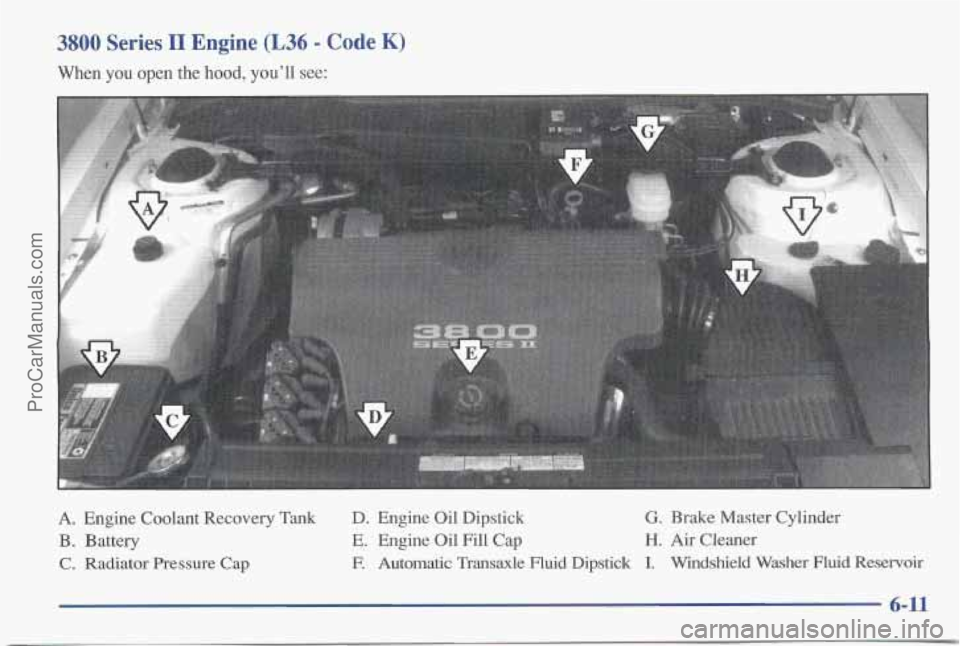
3800 Series I1 Engine (L36 - Code K)
When you open the hood, you’ll see:
A. Engine Coolant Recovery Tank
B. Battery
C. Radiator Pressure Cap
D. Engine Oil Dipstick G. Brake Master Cylinder
E. Engine Oil Fill Cap H. Air Cleaner
E Automatic Transaxle Fluid Dipstick I. Windshield Washer Fluid Reservoir
6-11
ProCarManuals.com
Page 265 of 405
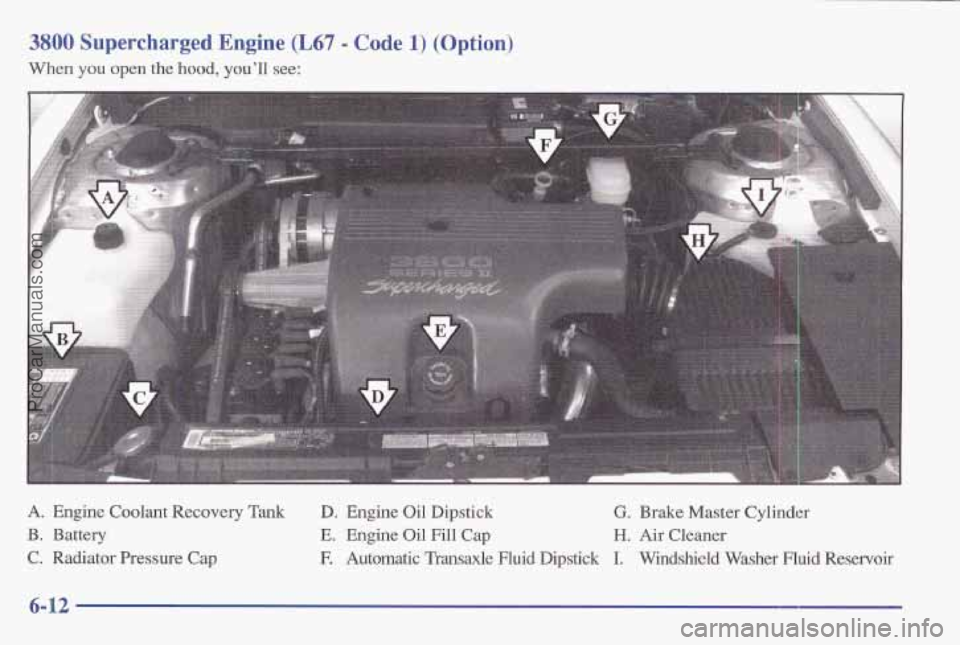
3800 Supercharged Engine (L67 - Code 1) (Option)
When you open the hood, you'll see:
A. Engine Coolant Recovery Tank D. Engine Oil Dipstick G. Brake Master Cylinder
B. Battery
E. Engine Oil Fill Cap H. Air Cleaner
C. Radiator Pressure Cap E Automatic Transaxle Fluid Dipstick I. Windshield Washer Fluid Reservoir
6-12
ProCarManuals.com