Page 117 of 236
Parking brakes
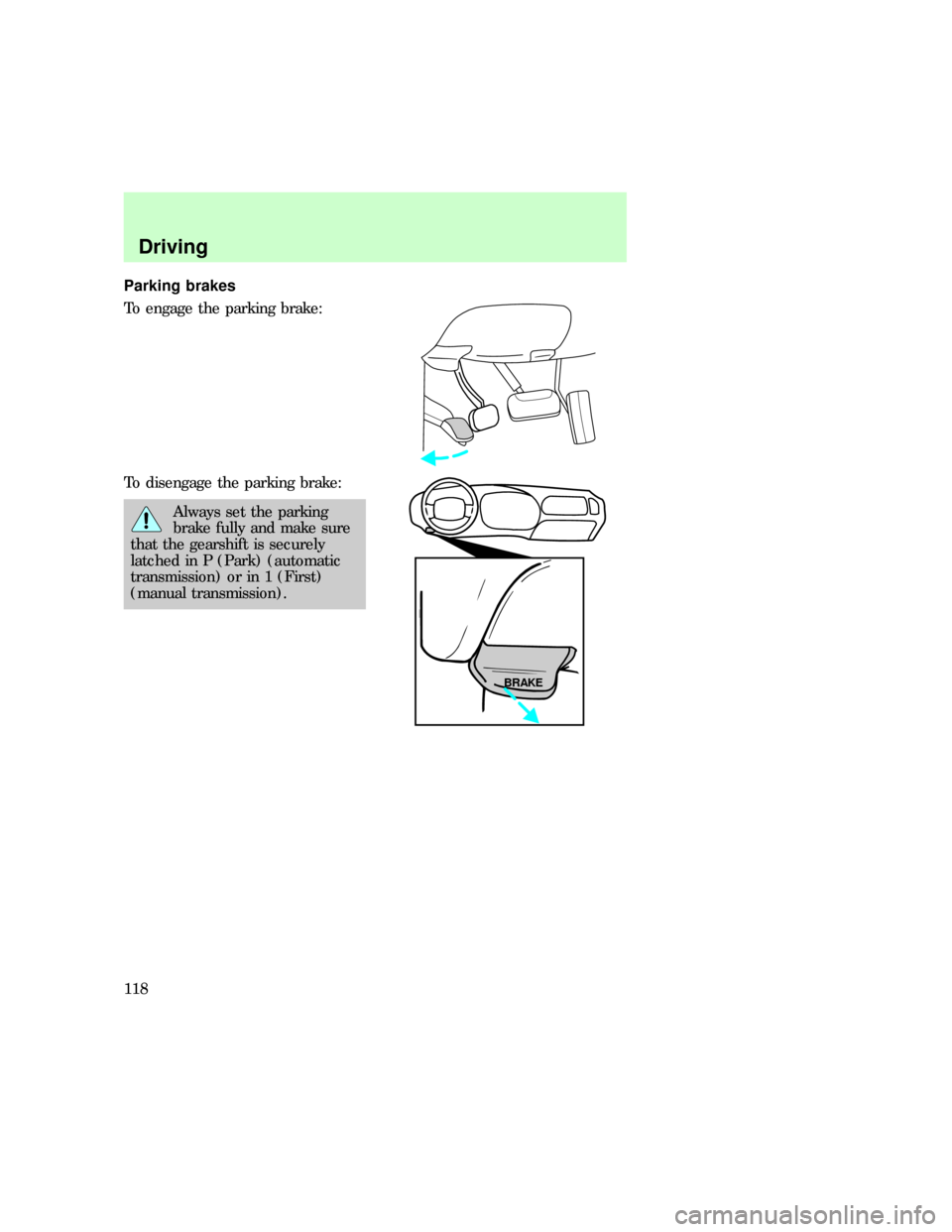
To engage the parking brake:
To disengage the parking brake:
Always set the parking
brake fully and make sure
that the gearshift is securely
latched in P (Park) (automatic
transmission) or in 1 (First)
(manual transmission).
BRAKE
com_traction-lok.01
Driving
118
Page 145 of 236
USING THE LUGGAGE RACK
(IF EQUIPPED)
Maximum load is 100 lbs, evenly
distributed. If it is not possible to
distribute the load, position it as
far rearward as possible.
Adjustable tie down loops must be
used to secure the load.
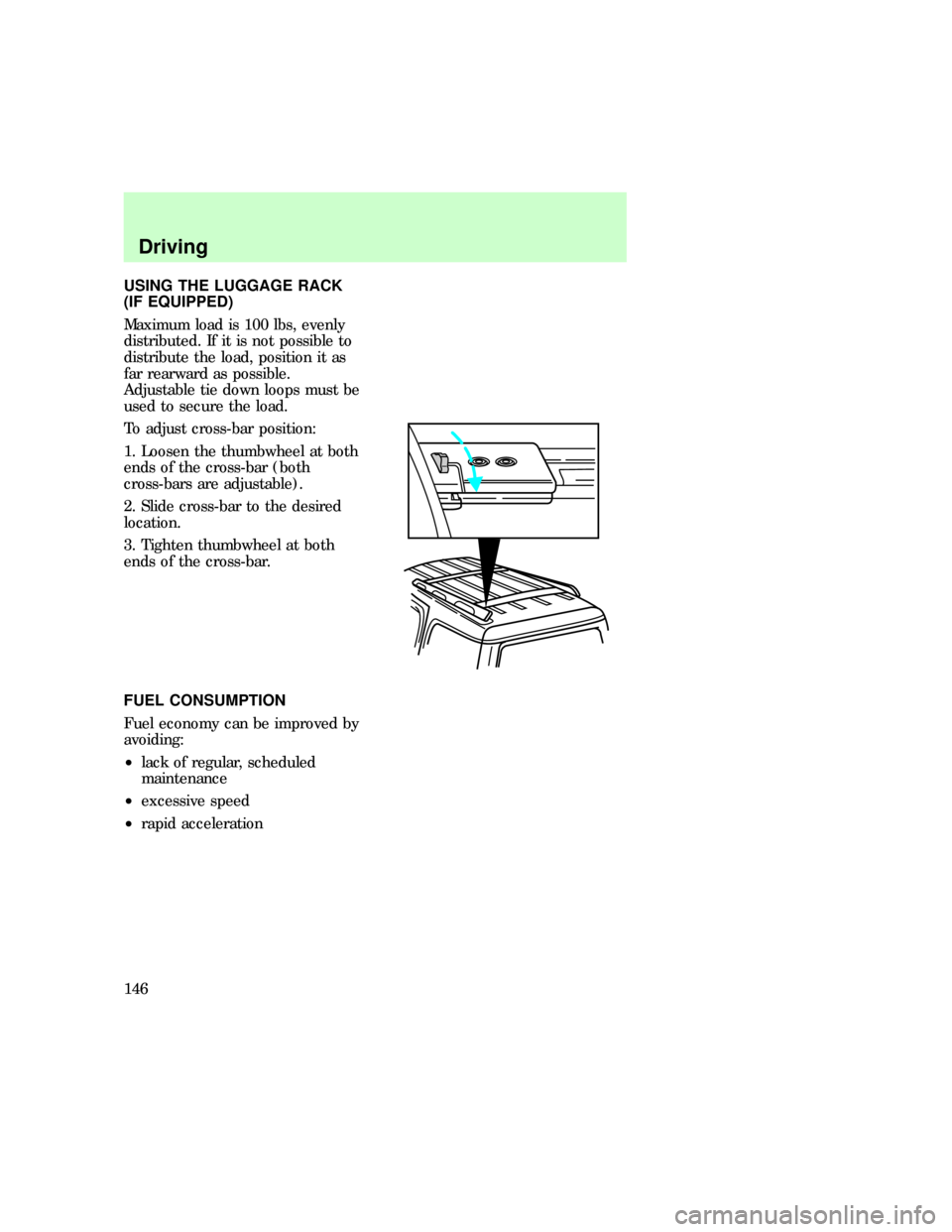
To adjust cross-bar position:
1. Loosen the thumbwheel at both
ends of the cross-bar (both
cross-bars are adjustable).
2. Slide cross-bar to the desired
location.
3. Tighten thumbwheel at both
ends of the cross-bar.
FUEL CONSUMPTION
Fuel economy can be improved by
avoiding:
²lack of regular, scheduled
maintenance
²excessive speed
²rapid acceleration
com_fuel_consumption.01
Driving
146
Page 158 of 236
16. Install the lug nuts and tighten
until snug.
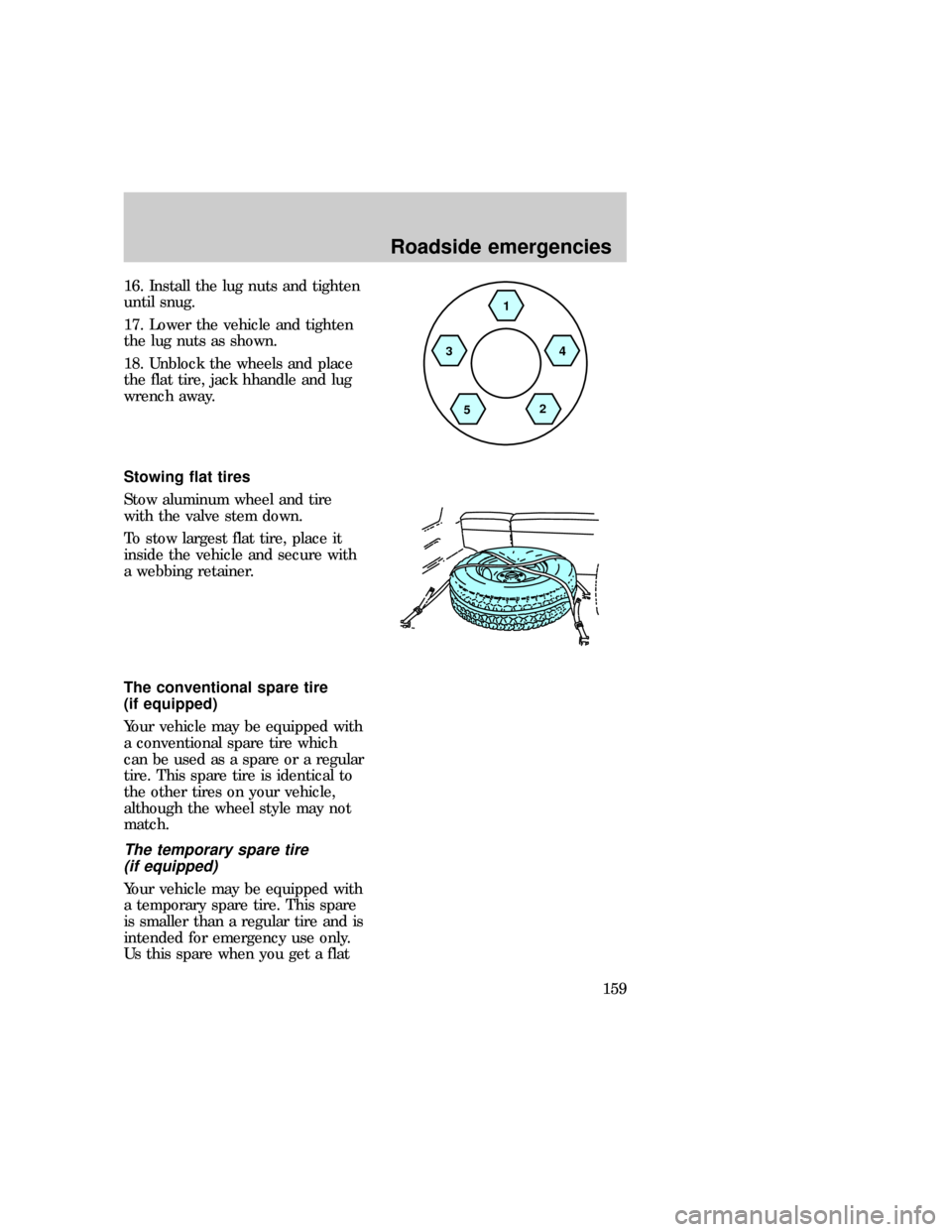
17. Lower the vehicle and tighten
the lug nuts as shown.
18. Unblock the wheels and place
the flat tire, jack hhandle and lug
wrench away.
Stowing flat tires
Stow aluminum wheel and tire
with the valve stem down.
To stow largest flat tire, place it
inside the vehicle and secure with
a webbing retainer.
The conventional spare tire
(if equipped)
Your vehicle may be equipped with
a conventional spare tire which
can be used as a spare or a regular
tire. This spare tire is identical to
the other tires on your vehicle,
although the wheel style may not
match.
The temporary spare tire
(if equipped)
Your vehicle may be equipped with
a temporary spare tire. This spare
is smaller than a regular tire and is
intended for emergency use only.
Us this spare when you get a flat
1
4
2
5 3
uno_stowing_flat_tires
uno_conventional_spare
uno_temporary_spare
Roadside emergencies
159
Page 165 of 236
could get caught in moving
parts. Take precautions with
long hair.
²Do not work on a vehicle with
the engine running in an
enclosed space, unless you are
sure you have enough
ventilation.
²Keep all lit cigarettes, open
flames and other lit material
away from the battery and all
fuel related parts.
If you disconnect the battery, the
engine must ªrelearnº its idle
conditions before your vehicle will
drive properly, as explained in
Batteryin this chapter.
Working with the engine off
²Automatic transmission:
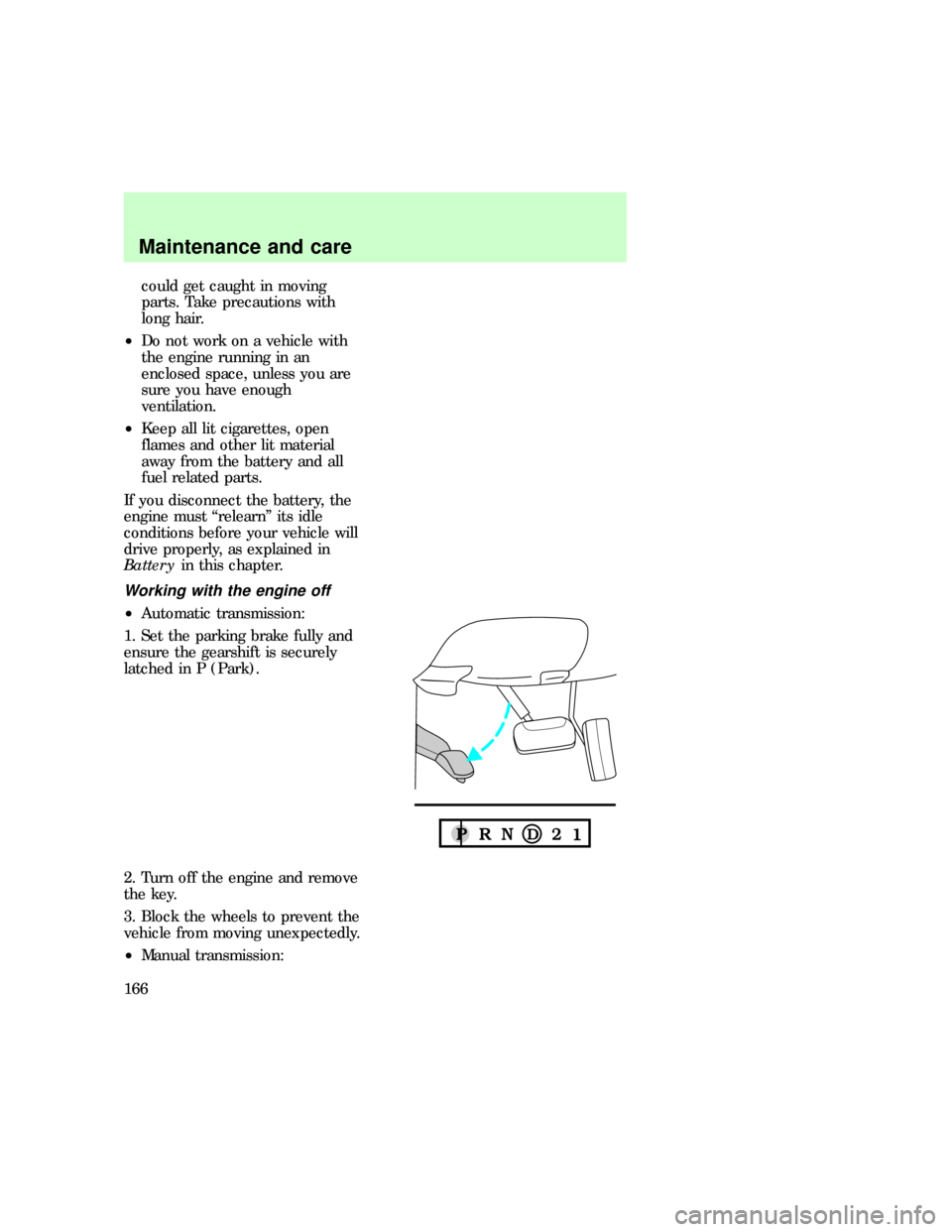
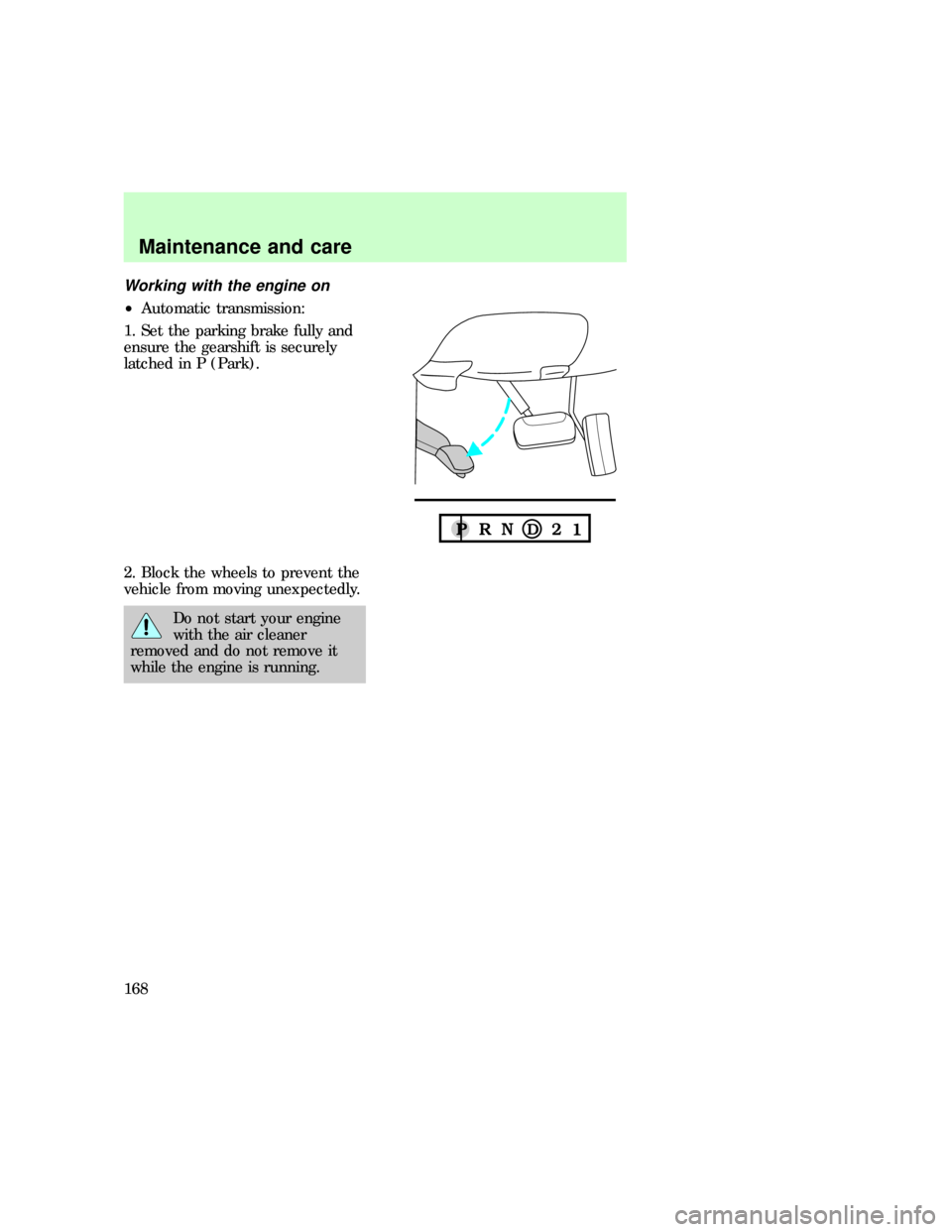
1. Set the parking brake fully and
ensure the gearshift is securely
latched in P (Park).
2. Turn off the engine and remove
the key.
3. Block the wheels to prevent the
vehicle from moving unexpectedly.
²Manual transmission:
uno_working_off
Maintenance and care
166
Page 167 of 236
Working with the engine on
²Automatic transmission:
1. Set the parking brake fully and
ensure the gearshift is securely
latched in P (Park).
2. Block the wheels to prevent the
vehicle from moving unexpectedly.
Do not start your engine
with the air cleaner
removed and do not remove it
while the engine is running.
Maintenance and care
168
Page 168 of 236
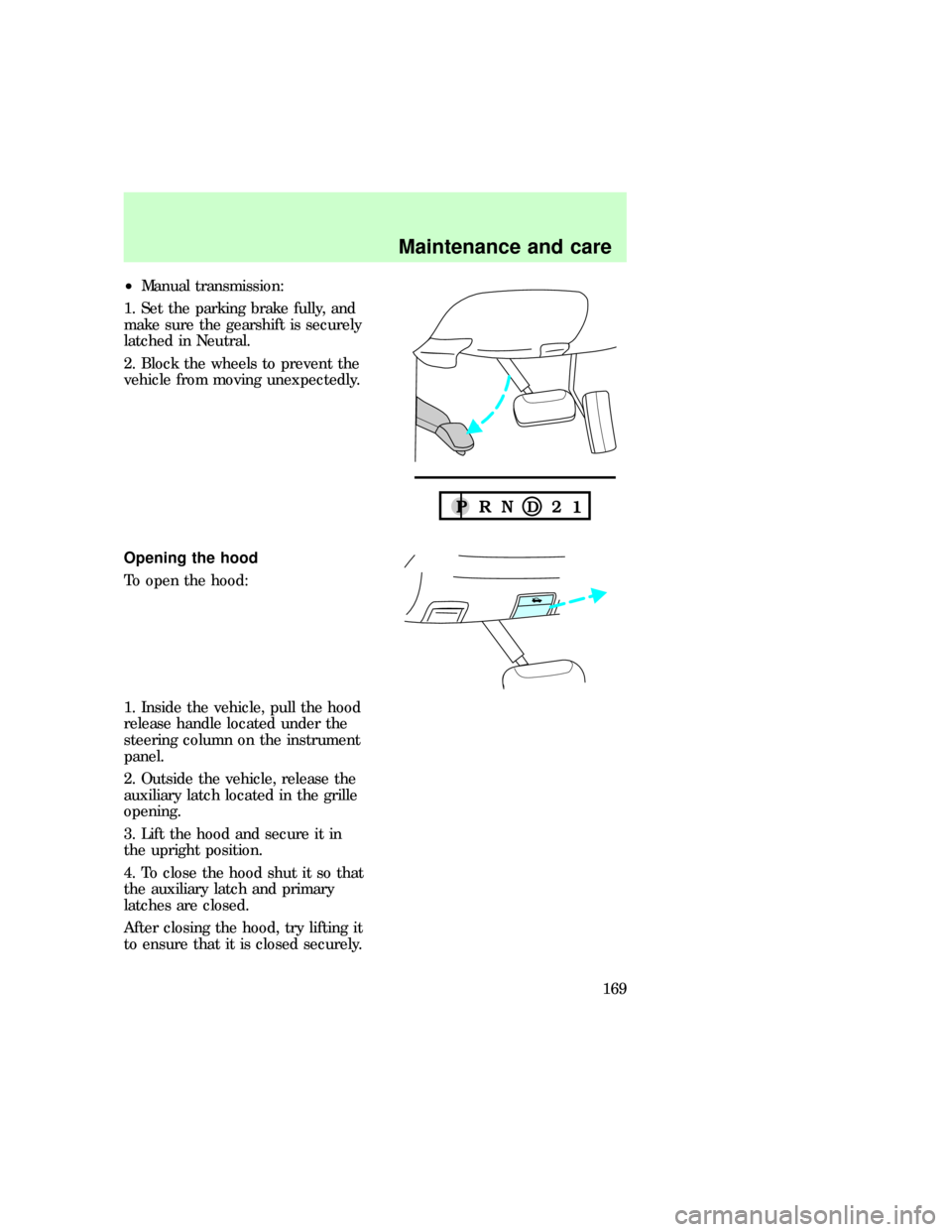
²Manual transmission:
1. Set the parking brake fully, and
make sure the gearshift is securely
latched in Neutral.
2. Block the wheels to prevent the
vehicle from moving unexpectedly.
Opening the hood
To open the hood:
1. Inside the vehicle, pull the hood
release handle located under the
steering column on the instrument
panel.
2. Outside the vehicle, release the
auxiliary latch located in the grille
opening.
3. Lift the hood and secure it in
the upright position.
4. To close the hood shut it so that
the auxiliary latch and primary
latches are closed.
After closing the hood, try lifting it
to ensure that it is closed securely.
uno_opening_hood
com_engine-comp
Maintenance and care
169
Page 173 of 236
1. Make sure the vehicle is on level
ground. If the engine is warm, turn
the engine off and wait a few
minutes for the oil to drain into
the oil pan.
2. Set the parking brake and
ensure the gearshift is securely
latched in P (Park).
3. Open the hood. Protect yourself
from engine heat.
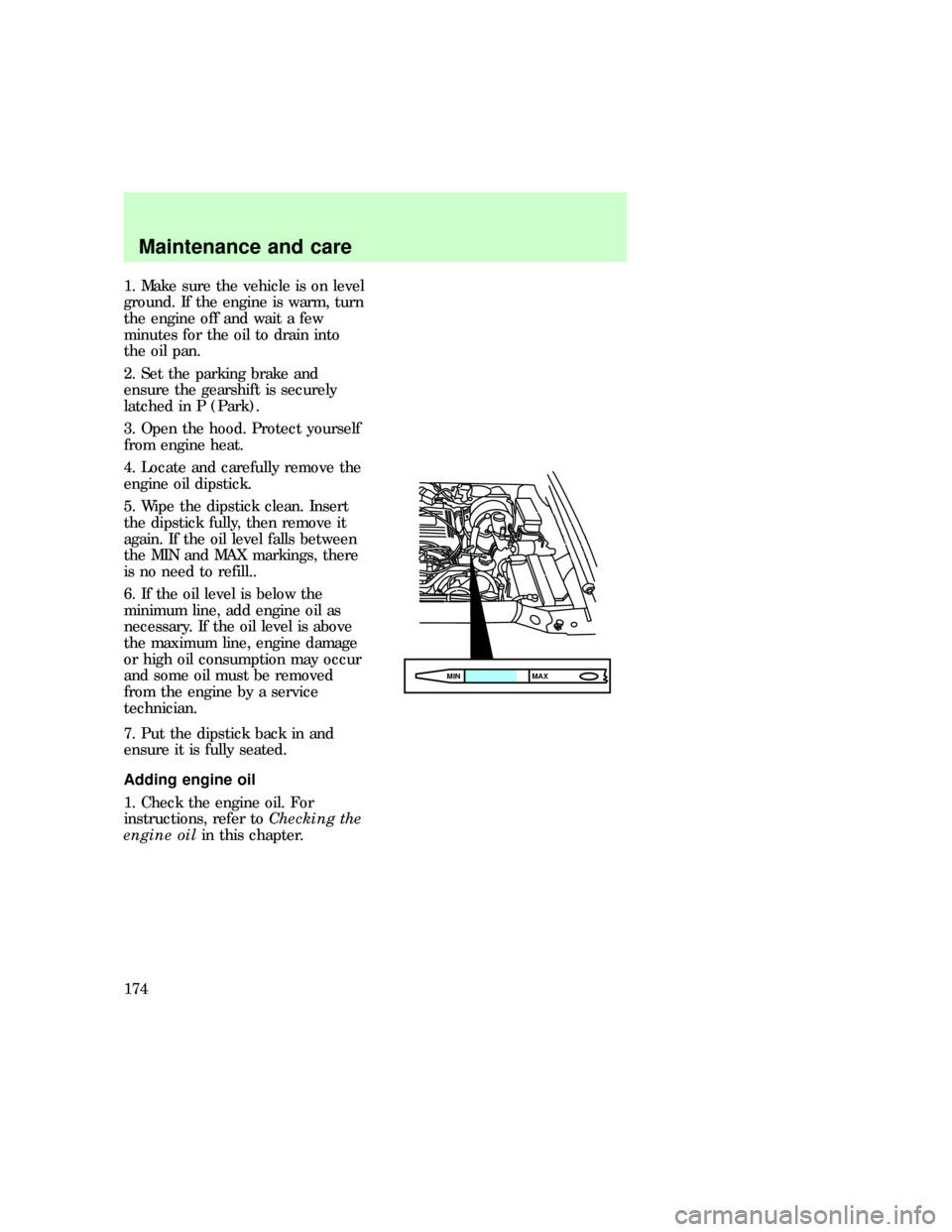
4. Locate and carefully remove the
engine oil dipstick.
5. Wipe the dipstick clean. Insert
the dipstick fully, then remove it
again. If the oil level falls between
the MIN and MAX markings, there
is no need to refill..
6. If the oil level is below the
minimum line, add engine oil as
necessary. If the oil level is above
the maximum line, engine damage
or high oil consumption may occur
and some oil must be removed
from the engine by a service
technician.
7. Put the dipstick back in and
ensure it is fully seated.
Adding engine oil
1. Check the engine oil. For
instructions, refer toChecking the
engine oilin this chapter.
MAX MIN
com_adding_engine_oil.01
Maintenance and care
174
Page 192 of 236
Changing your air cleaner filter
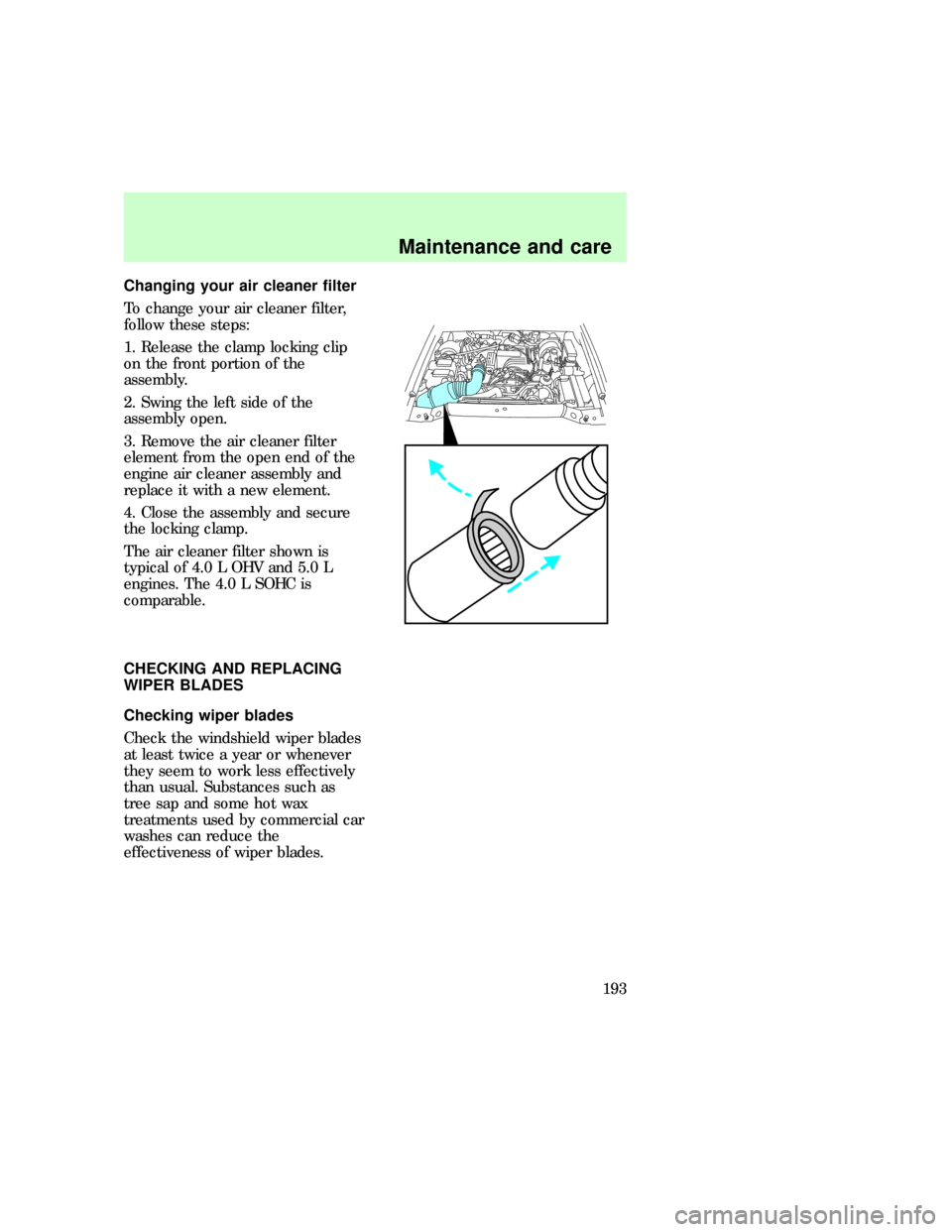
To change your air cleaner filter,
follow these steps:
1. Release the clamp locking clip
on the front portion of the
assembly.
2. Swing the left side of the
assembly open.
3. Remove the air cleaner filter
element from the open end of the
engine air cleaner assembly and
replace it with a new element.
4. Close the assembly and secure
the locking clamp.
The air cleaner filter shown is
typical of 4.0 L OHV and 5.0 L
engines. The 4.0 L SOHC is
comparable.
CHECKING AND REPLACING
WIPER BLADES
Checking wiper blades
Check the windshield wiper blades
at least twice a year or whenever
they seem to work less effectively
than usual. Substances such as
tree sap and some hot wax
treatments used by commercial car
washes can reduce the
effectiveness of wiper blades.
uno_wipers_title
uno_checking_wipers
Maintenance and care
193