Page 115 of 191
²exceed 80 km/h (50 mph) under
any circumstances
²load the vehicle beyond the
maximum vehicle load rating
listed on the Safety Compliance
Certification Label
²use tire chains
²drive through an automatic car
wash (because of the vehicle's
reduced ground clearance)
²try to repair the temporary
spare tire or remove it from its
wheel
²use the wheel for any other type
of vehicle
Tire changing procedure
1. Park on a level surface.
2. Activate the hazard flashers.
3. Set the parking brake.
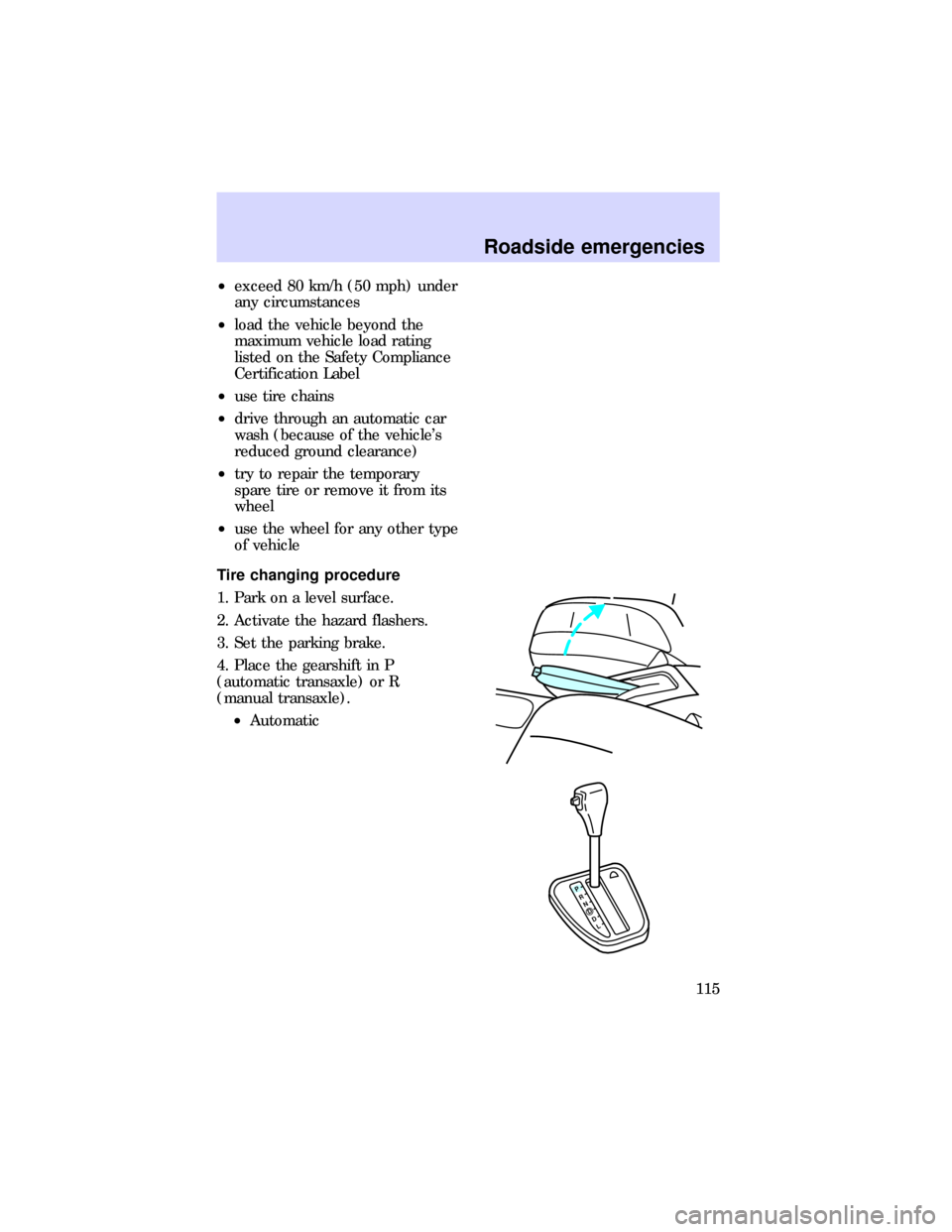
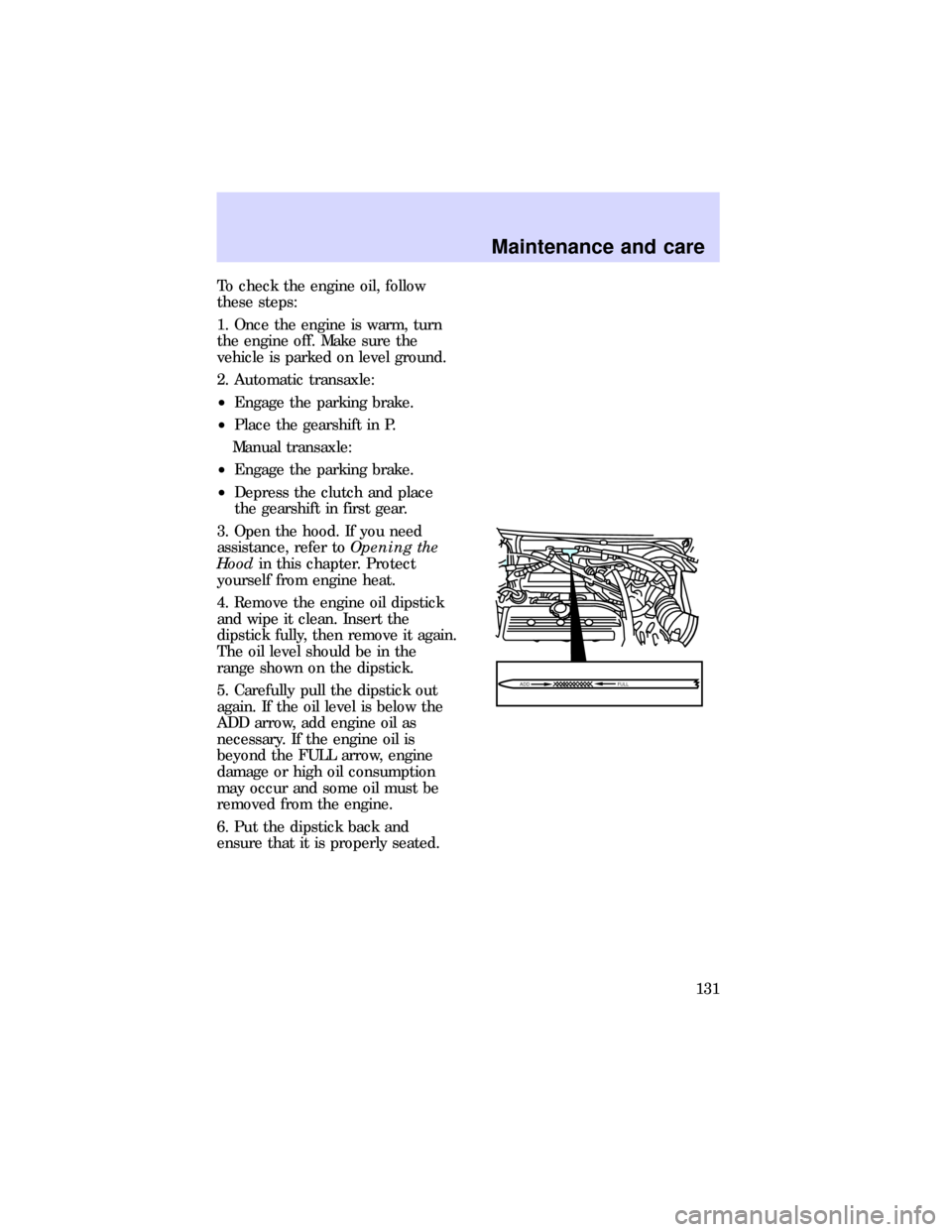
4. Place the gearshift in P
(automatic transaxle) or R
(manual transaxle).
²Automatic
P
R
N
D
D
L
Roadside emergencies
115
Page 125 of 191
²Never get under a vehicle that is
supported only by a jack. If you
must work under a vehicle, use
safety stands.
²Keep all lit cigarettes and other
smoking materials away from
the battery and all fuel-related
parts.
Working with the engine off
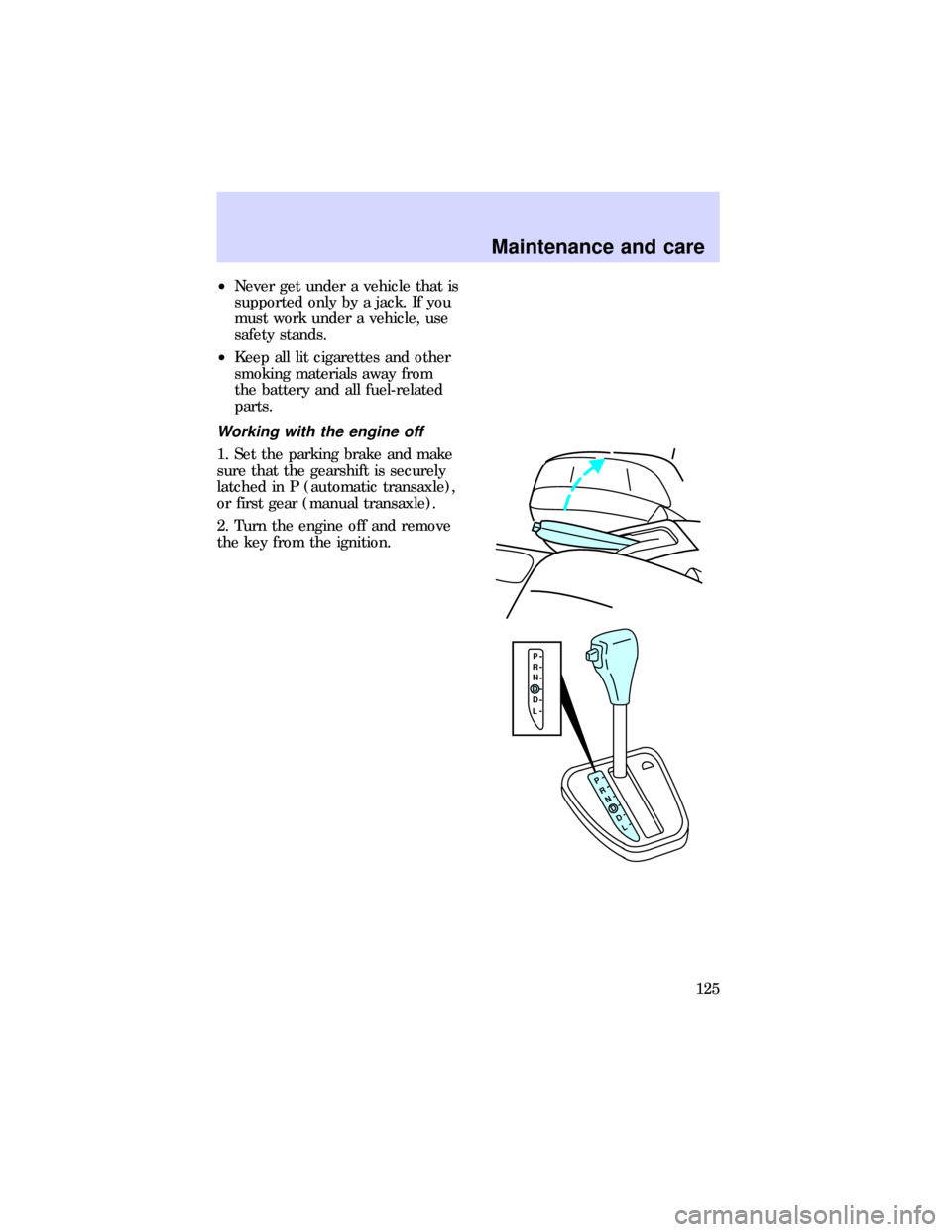
1. Set the parking brake and make
sure that the gearshift is securely
latched in P (automatic transaxle),
or first gear (manual transaxle).
2. Turn the engine off and remove
the key from the ignition.
P
R
N
D
D
L
R
N
D
D
LP
Maintenance and care
125
Page 127 of 191
Working with the engine on
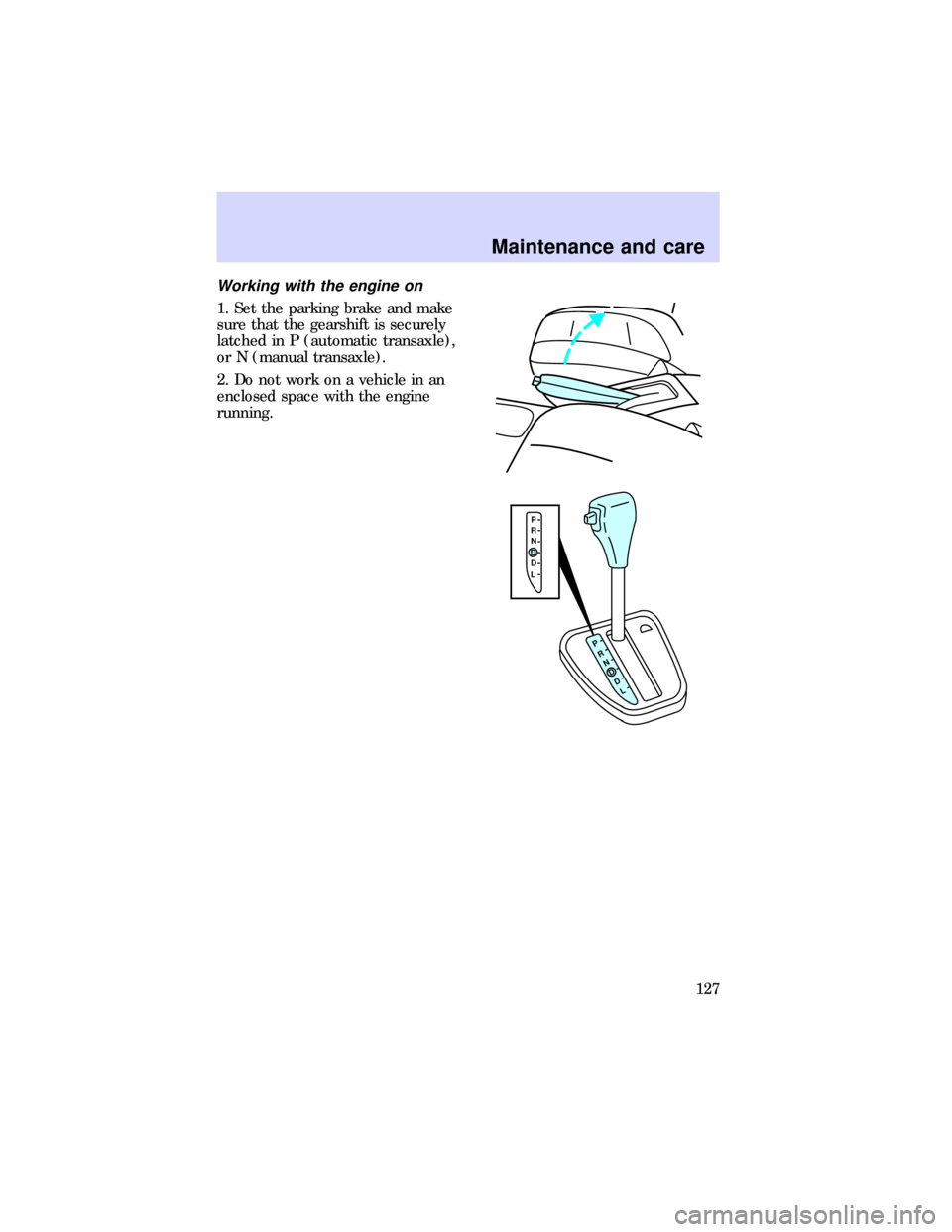
1. Set the parking brake and make
sure that the gearshift is securely
latched in P (automatic transaxle),
or N (manual transaxle).
2. Do not work on a vehicle in an
enclosed space with the engine
running.
P
R
N
D
D
L
R
N
D
D
LP
Maintenance and care
127
Page 129 of 191
IDENTIFYING COMPONENTS IN
THE ENGINE COMPARTMENT
41
3
9
6
5
2
7
8
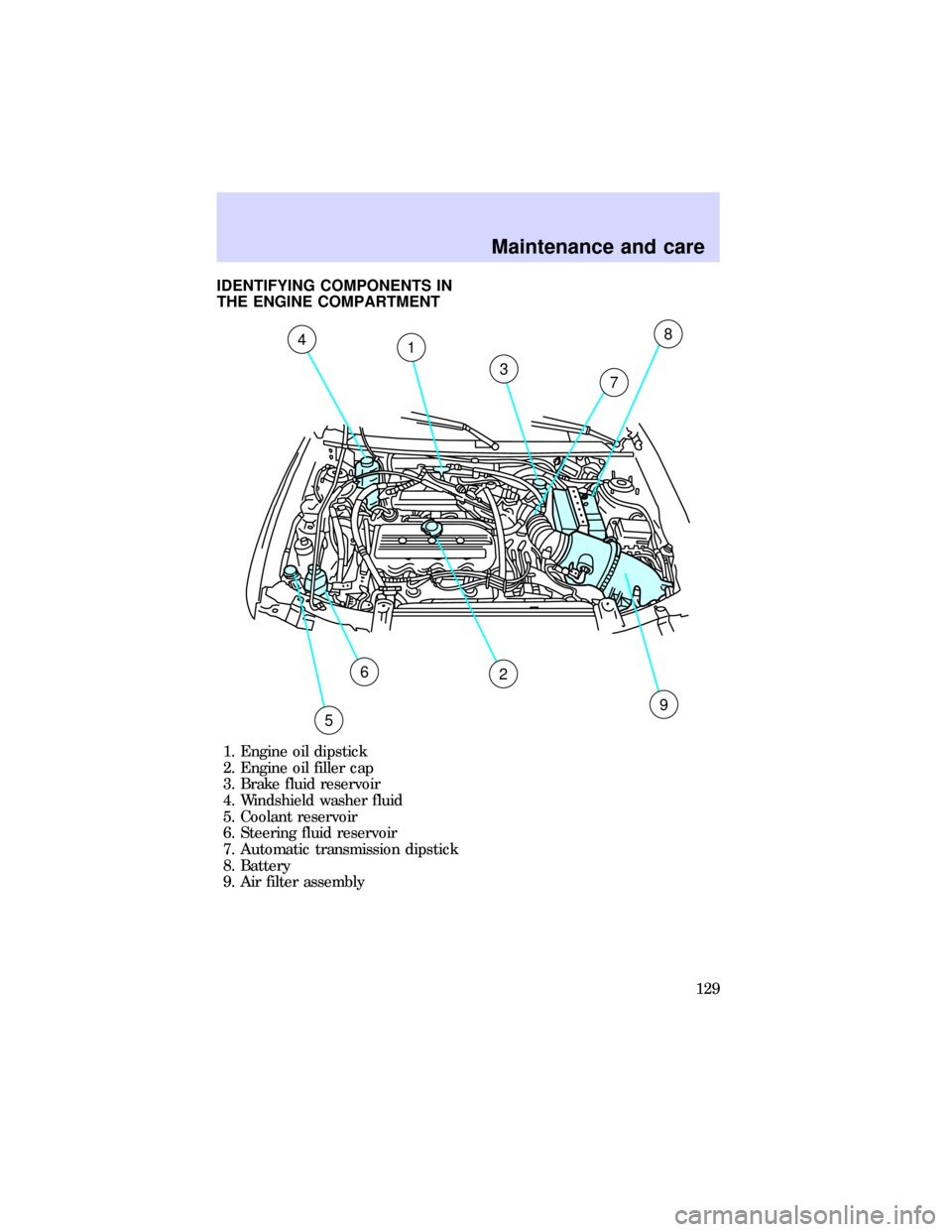
1. Engine oil dipstick
2. Engine oil filler cap
3. Brake fluid reservoir
4. Windshield washer fluid
5. Coolant reservoir
6. Steering fluid reservoir
7. Automatic transmission dipstick
8. Battery
9. Air filter assembly
Maintenance and care
129
Page 131 of 191
To check the engine oil, follow
these steps:
1. Once the engine is warm, turn
the engine off. Make sure the
vehicle is parked on level ground.
2. Automatic transaxle:
²Engage the parking brake.
²Place the gearshift in P.
Manual transaxle:
²Engage the parking brake.
²Depress the clutch and place
the gearshift in first gear.
3. Open the hood. If you need
assistance, refer toOpening the
Hoodin this chapter. Protect
yourself from engine heat.
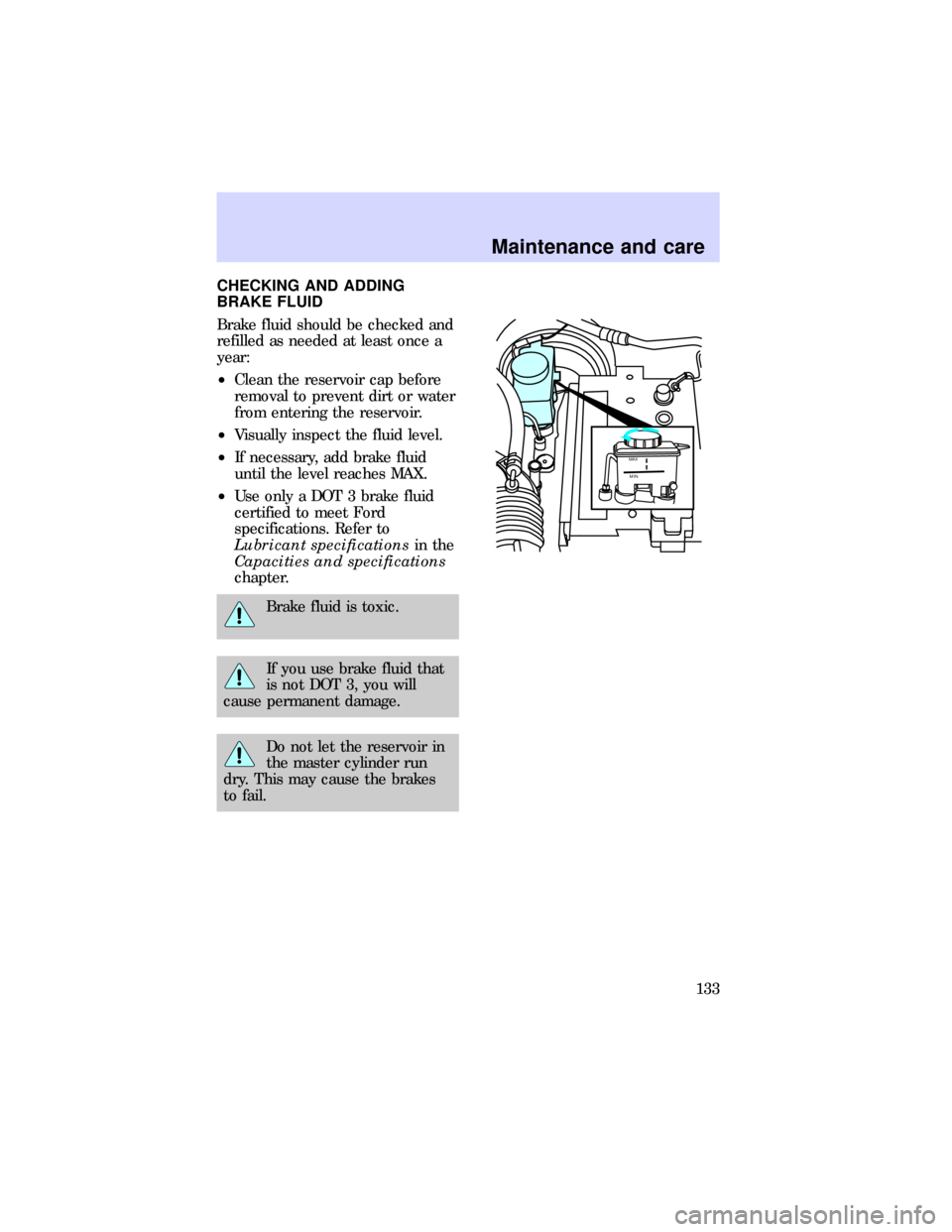
4. Remove the engine oil dipstick
and wipe it clean. Insert the
dipstick fully, then remove it again.
The oil level should be in the
range shown on the dipstick.
5. Carefully pull the dipstick out
again. If the oil level is below the
ADD arrow, add engine oil as
necessary. If the engine oil is
beyond the FULL arrow, engine
damage or high oil consumption
may occur and some oil must be
removed from the engine.
6. Put the dipstick back and
ensure that it is properly seated.
ADD FULL
Maintenance and care
131
Page 133 of 191
CHECKING AND ADDING
BRAKE FLUID
Brake fluid should be checked and
refilled as needed at least once a
year:
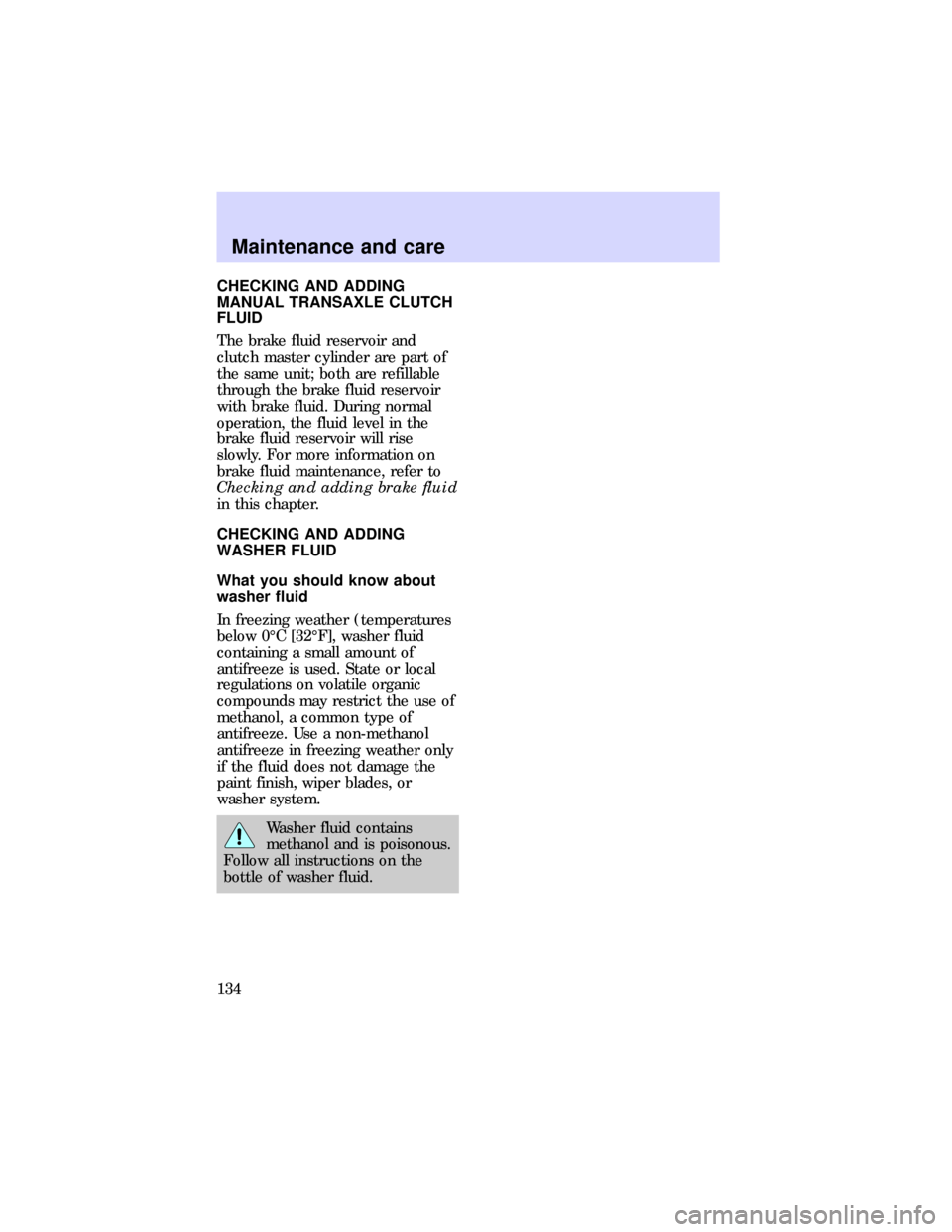
²Clean the reservoir cap before
removal to prevent dirt or water
from entering the reservoir.
²Visually inspect the fluid level.
²If necessary, add brake fluid
until the level reaches MAX.
²Use only a DOT 3 brake fluid
certified to meet Ford
specifications. Refer to
Lubricant specificationsin the
Capacities and specifications
chapter.
Brake fluid is toxic.
If you use brake fluid that
is not DOT 3, you will
cause permanent damage.
Do not let the reservoir in
the master cylinder run
dry. This may cause the brakes
to fail.
MAX
MIN
Maintenance and care
133
Page 134 of 191
CHECKING AND ADDING
MANUAL TRANSAXLE CLUTCH
FLUID
The brake fluid reservoir and
clutch master cylinder are part of
the same unit; both are refillable
through the brake fluid reservoir
with brake fluid. During normal
operation, the fluid level in the
brake fluid reservoir will rise
slowly. For more information on
brake fluid maintenance, refer to
Checking and adding brake fluid
in this chapter.
CHECKING AND ADDING
WASHER FLUID
What you should know about
washer fluid
In freezing weather (temperatures
below 0ÉC [32ÉF], washer fluid
containing a small amount of
antifreeze is used. State or local
regulations on volatile organic
compounds may restrict the use of
methanol, a common type of
antifreeze. Use a non-methanol
antifreeze in freezing weather only
if the fluid does not damage the
paint finish, wiper blades, or
washer system.
Washer fluid contains
methanol and is poisonous.
Follow all instructions on the
bottle of washer fluid.
Maintenance and care
134
Page 140 of 191
It is best to check the transaxle
fluid level at the normal operating
temperature, after approximately
35 km (20 miles) of driving. If the
transaxle fluid level must be
checked under different
circumstances, make sure the
outside temperature is above 10 ÉC
(50 ÉF) to obtain an accurate fluid
level check.
Checking the automatic
transaxle fluid
1. Park the vehicle on a level
surface.
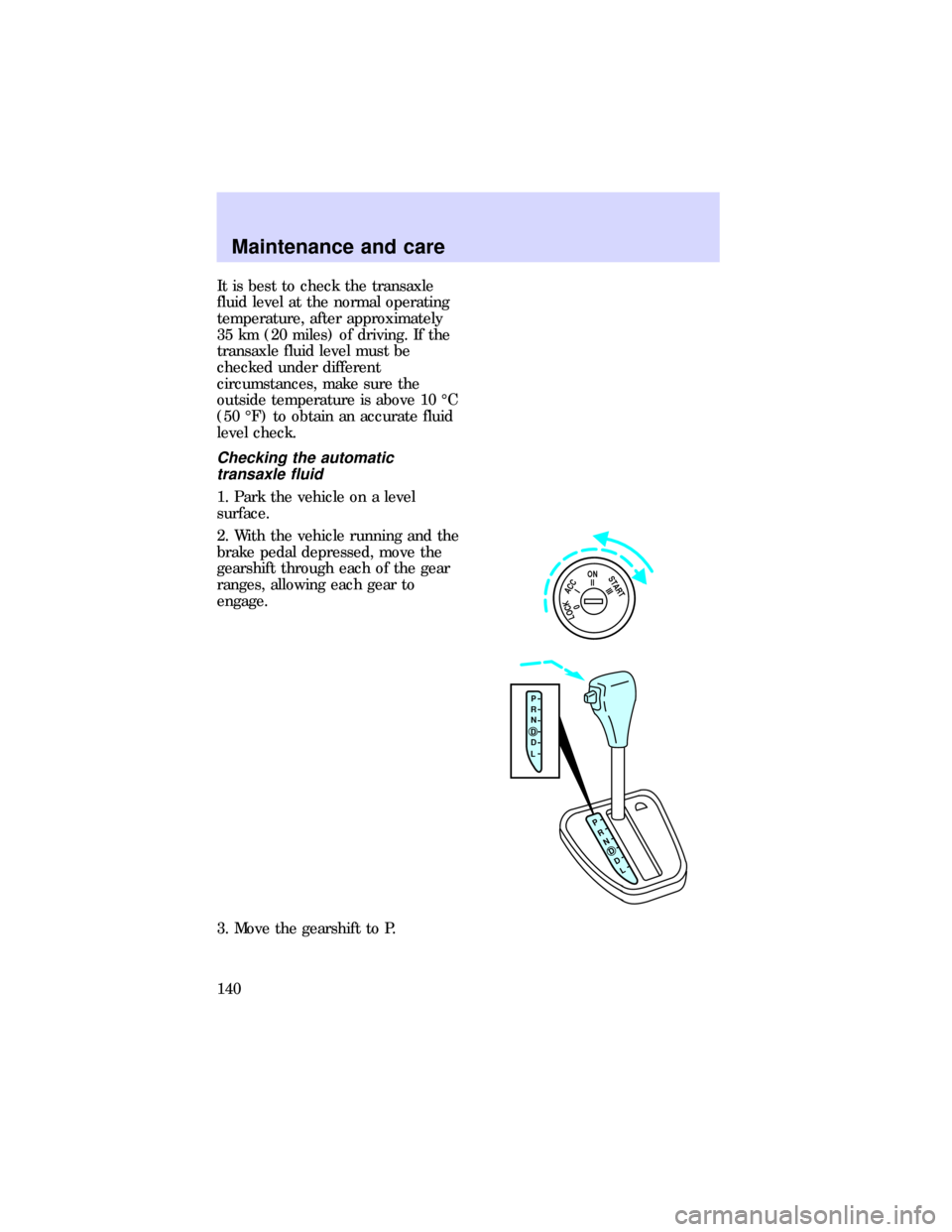
2. With the vehicle running and the
brake pedal depressed, move the
gearshift through each of the gear
ranges, allowing each gear to
engage.
3. Move the gearshift to P.
P
R
N
D
D
L
R
N
D
D
LP
ON
II
ACC
I
LOCK
0
START
III
Maintenance and care
140