Page 244 of 488
I A CAUTION:
Heater and radiator hoses, and other engine parts, can be very
hot. Don’t touch them.
If you do, you can be burned.
Don’t run the engine
if there is a leak. If you run the engine, it
could lose all coolant. That could cause an engine
fire, and you
could be burned. Get any leak fixed before you drive the vehicle.
I NOTICE:
Engine damage from running your engine without coolant isn’t
covered by your warranty.
If there seems to be no leak, start the engine again. See if the fan speed
increases when idle speed
is doubled by pushing the accelerator pedal down.
If
it doesn’t, your vehicle needs service. Turn off the engine.
How to Add Coolant to the Coolant Surge Tank
I NOTICE:
The diesel engine has a specific coolant fill procedure. Failure to
follow this procedure could cause your engine to overheat and be
severely damaged.
If you haven’t found a problem yet, but the coolant level isn’t at the COLD
mark, add a
50/50 mixture of cleun water (preferably distilled) and a proper
antifreeze at the coolant surge tank, but be sure the cooling system,
including the
coolant surge tank pressure cap, is cool before you do it. (See
“Engine Coolant”
in the Index for more information about the proper
coolant mix.)
5-20
ProCarManuals.com
Page 246 of 488
NOTICE:
In cold weather, water can freeze and crack the engine, radiator,
heater core and other parts.
So use the recommended coolant.
A CAUTION:
You can be burned if you spill coolant on hot engine parts.
Coolant contains ethylene glycol and it will burn if the engine
parts are hot enough. Don't spill coolant on
a hot engine.
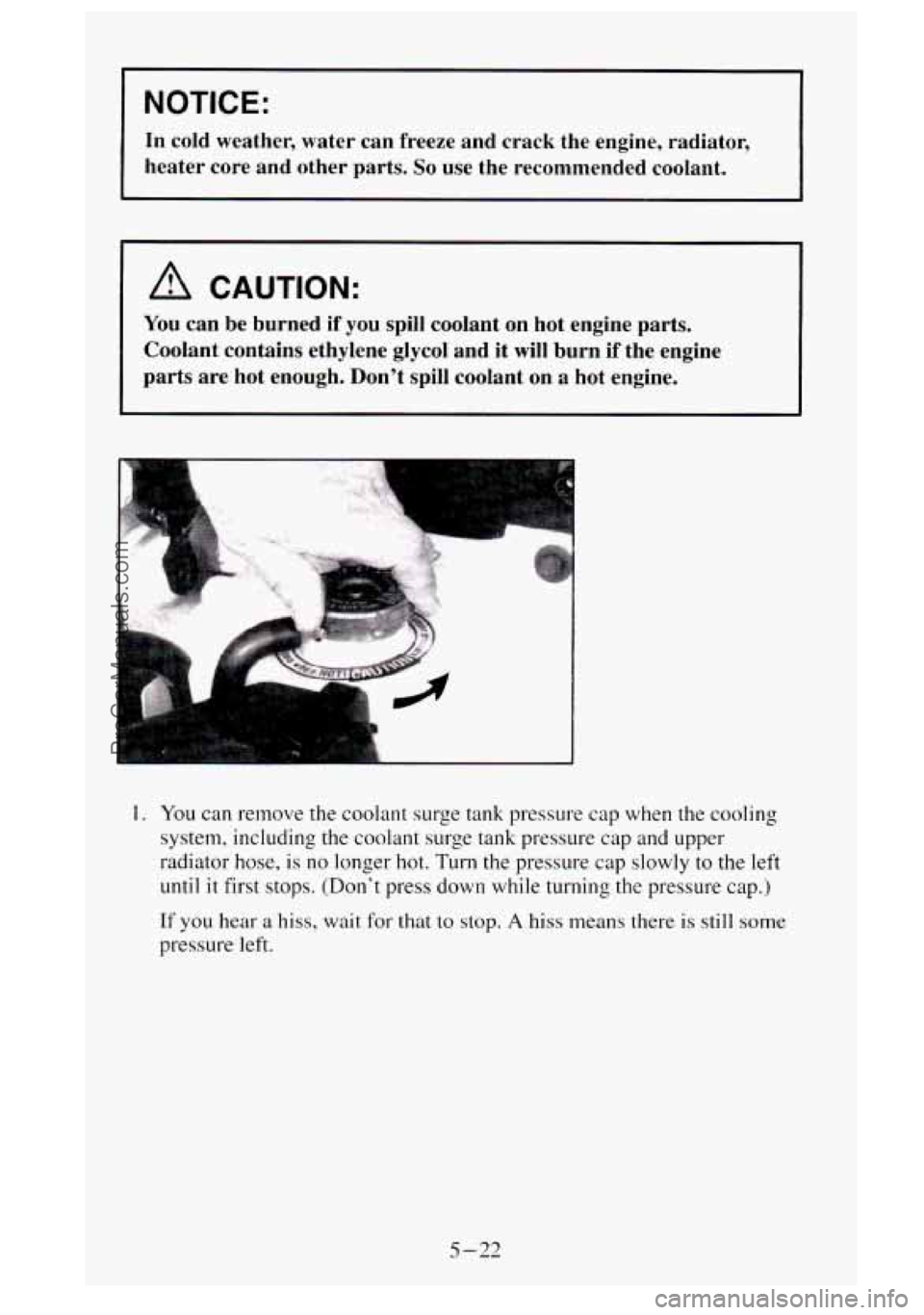
1. You can remove the coolant surge tank pressure cap when the cooling
system, including the coolant surge tank pressure cap and upper
radiator hose,
is no longer hot. Turn the pressure cap slowly to the left
until it first stops. (Don't press down while turning the pressure cap.)
If you hear a hiss, wait for that to stop. A hiss means there is still some
pressure left.
5-22
ProCarManuals.com
Page 248 of 488
-
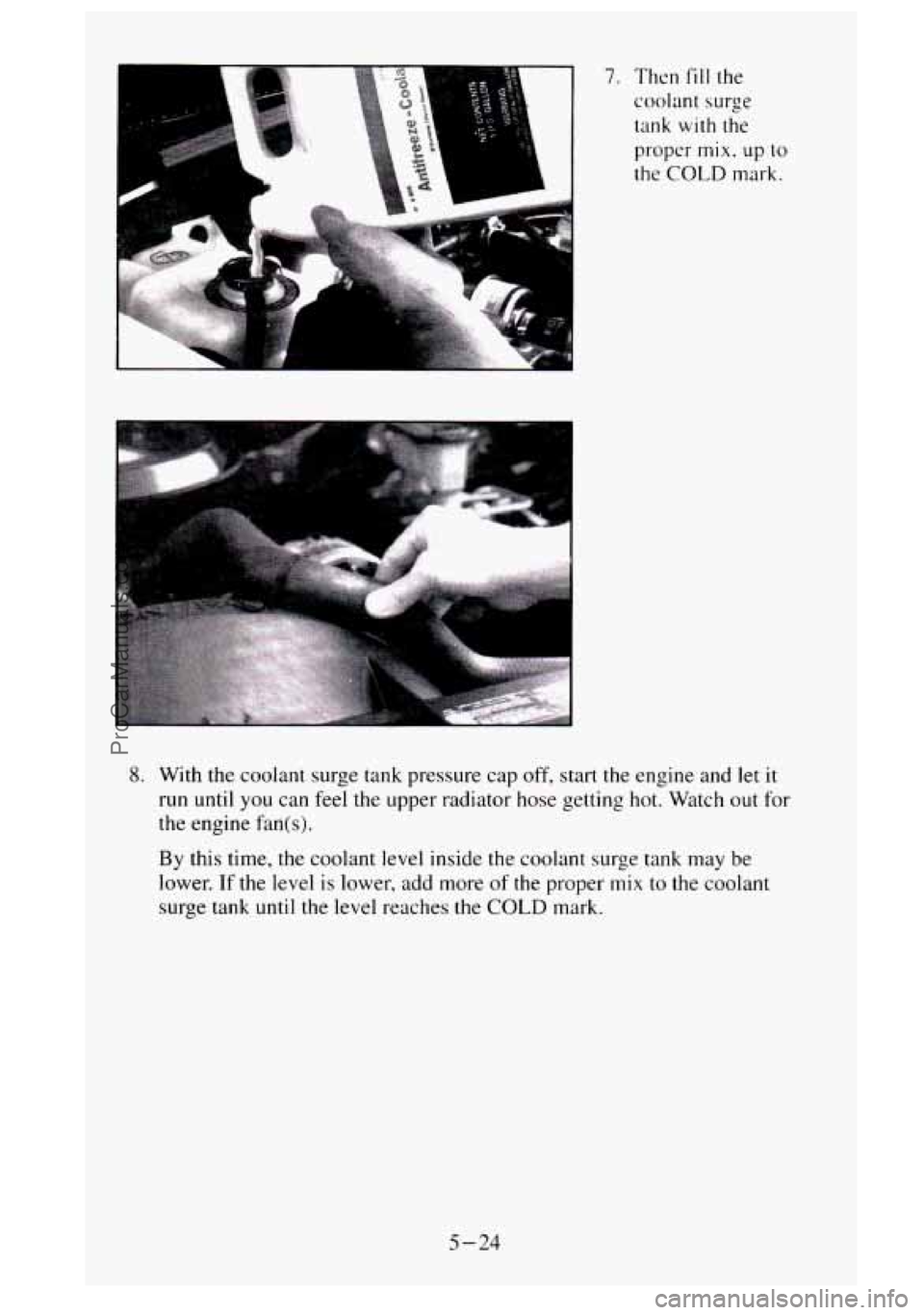
7. Then fill the
coolant surg,e
tank with the
proper
mix. up to
the COLD mark.
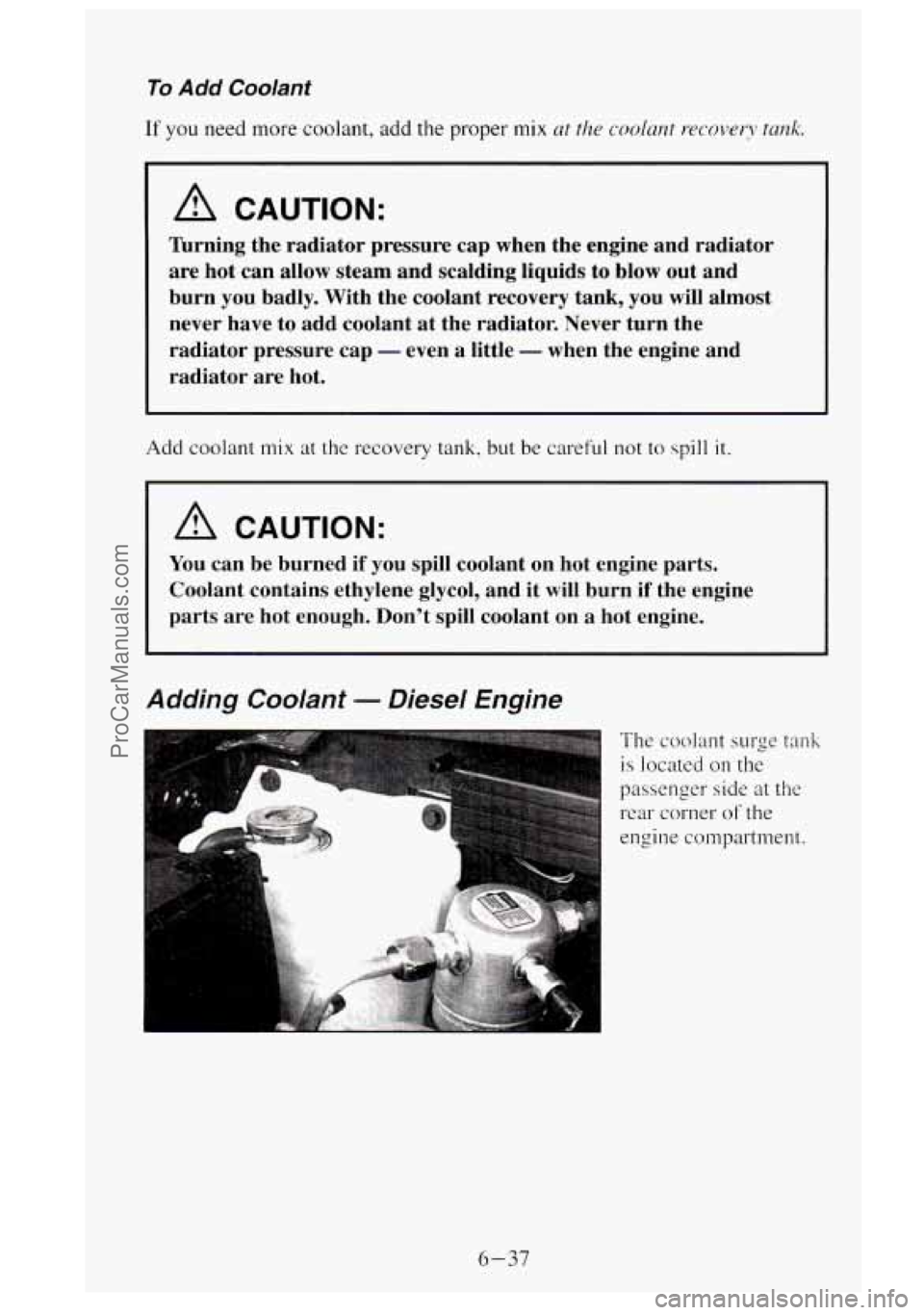
8. With the coolant surge tank pressure cap off, start the engine and let it
run until you can feel the upper radiator hose getting hot. Watch out for
the engine fan(s).
By this time, the coolant level inside the coolant surge tank may be
lower. If the level is lower, add more of the proper mix to the coolant
surge tank until the level reaches
the COLD mark.
5-24
ProCarManuals.com
Page 302 of 488
NOTICE:
If you use an improper coolant mix, your engine could overheat
and be badly damaged. The repair cost wouldn’t be covered by
your warranty.
Too much water in the mix can freeze and crack
the engine, radiator, heater core and other parts.
Some conditions. such as air trapped
in the cooling system. can affect the
coolant level
in thc radiator. Check the coolant level when the engine is cold
and
follow the steps under “Adding Coolant“ for the proper way to add
coolant.
If you have to add coolant more than lour timcs a ycar, have your dealer
check your cooling system.
NOTICE:
If you use the proper coolant, you don’t have to add extra
inhibitors or additives which claim to improve the system. These
can be harmful.
Adding Coolant - Gasoline Engine
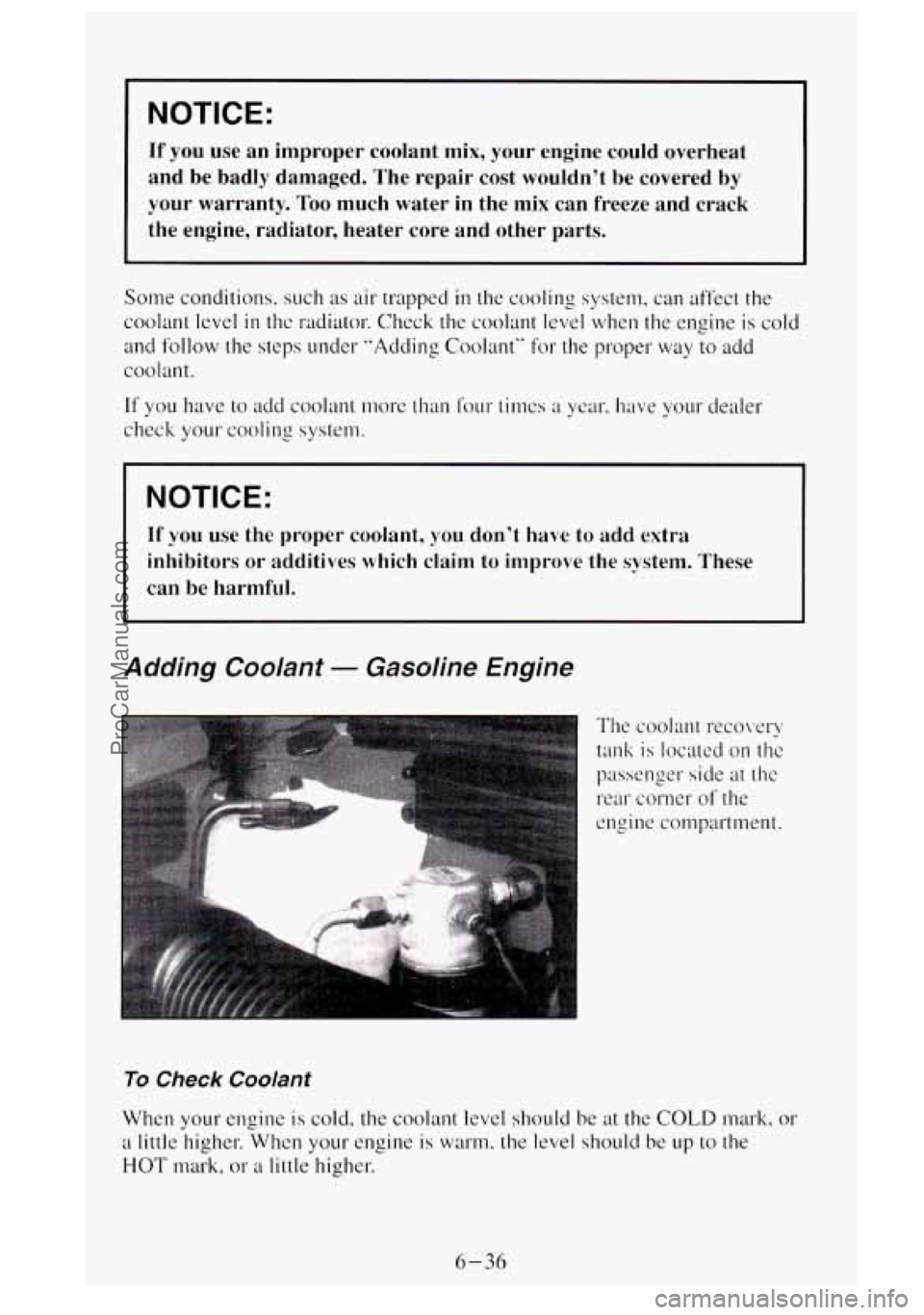
The coolant reco\wy
tank is located on the
passenger side
at the
rear comer
of the
engine compartment.
To Check Coolant
When your engine is cold, the coolant level should be at the COLD mark, or
a little higher. When your engine is warm, the level should be up to the
HOT mark, or a little higher.
6-36
ProCarManuals.com
Page 303 of 488
To Add Coolant
If you need more coolant, add the proper mix at the coolant recovery tank.
A CAUTION:
arning the radiator pressure cap when the engine and radiator
are hot can allow steam and scalding liquids to blow out and
burn you badly. With the coolant recovery tank, you will almost
never have to add coolant at the radiator. Never turn the
radiator pressure cap
- even a little - when the engine and
radiator are hot.
Add coolant mix at the recovery tank, but be careful not to spill it.
A CAUTION:
You can be burned if you spill coolant on hot engine parts.
Coolant contains ethylene glycol, and it will burn
if the engine
parts are hot enough. Don’t spill coolant on a hot engine.
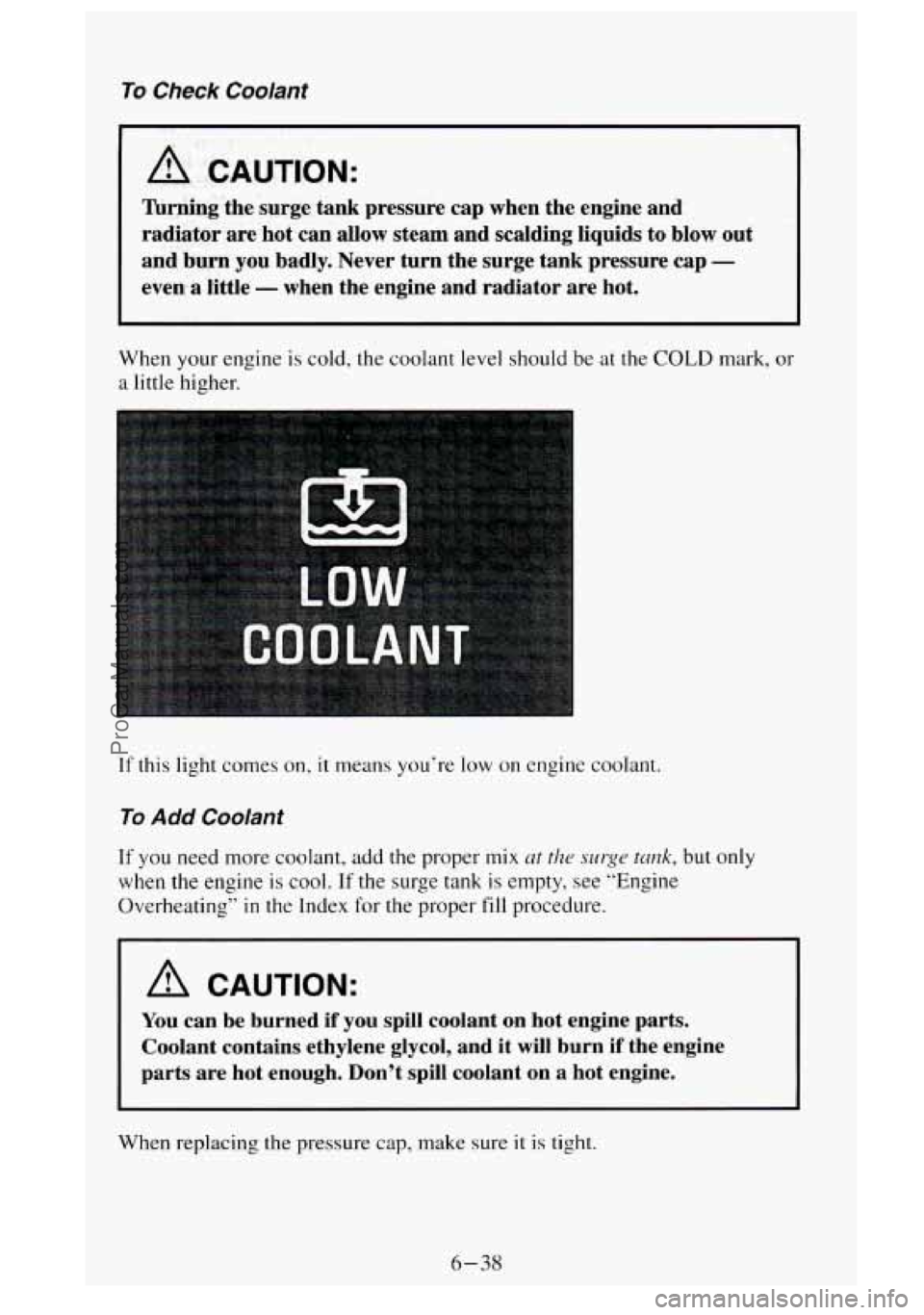
Adding Coolani - Diesel Engine
The coolant surge tank
is located on the
passenger side at the
rear corner of the
engine compartment.
6-37
ProCarManuals.com
Page 304 of 488
To Check Coolant
A CAUTION:
Turning the surge tank pressure cap when the engine and
radiator are hot can allow steam and scalding liquids to blow out
and burn you badly. Never turn the surge tank pressure cap
-
even a little - when the engine and radiator are hot.
When your engine is cold, the coolant level should be at the COLD mark, or
a little higher.
If this light comes on, it means you’re low on engine coolant.
To Add Coolant
If you need more coolant, add the proper mix ut the surge tmk, but only
when the engine is cool. If the surge tank is empty, see “Engine
Overheating”
in the Index for the proper fill procedure.
A CAUTION:
You can be burned if you spill coolant on hot engine parts.
Coolant contains ethylene glycol, and
it will burn if the engine
parts are hot enough. Don’t spill coolant on a hot engine.
When replacing the pressure cap, make sure it is tight.
6-38
ProCarManuals.com
Page 305 of 488
Radiator Pressure Cap - Gasoline Engine
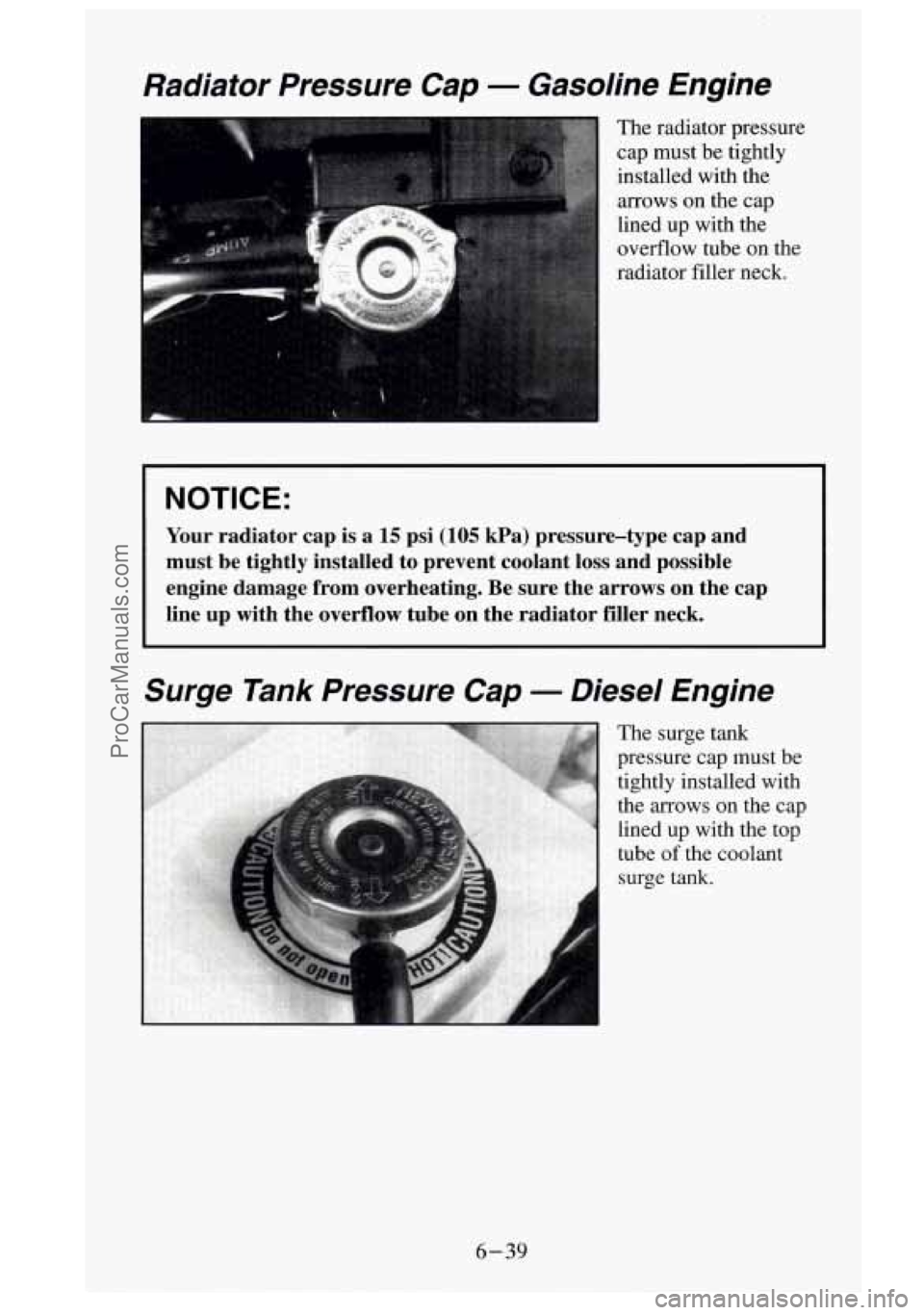
The radiator pressure
cap must be tightly
installed with
the
arrows on the cap
lined up with the
overflow tube on the
radiator filler neck.
NOTICE:
Your radiator cap is a 15 psi (105 kPa) pressure-type cap and
must be tightly installed to prevent coolant loss and possible \
engine damage from overheating. Be sure the arrows
on the cap
line up with the overflow tube on the radiator filler neck.
Surge Tank Pressure Cap - Diesel Engine
The surge tank
pressure cap must be
tightly installed with
the arrows on the cap
lined up with the top
tube of the coolant
surge tank.
6-39
ProCarManuals.com
Page 306 of 488
NOTICE:
Your surge tank pressure cap is a unique 15 psi (105 kPa)
pressure-type cap for use with surge tank cooling systems only.
It must be tightly installed to prevent coolant loss and possible
engine damage from overheating. Be sure the arrows on the cap
line up with the top tube of the coolant surge tank.
Thermostat
Engine coolant temperature is controlled by a thermostat in the engine
coolant system. The thermostat stops the flow
of coolant through the
radiator until the coolant reaches a preset temperature.
When you replace your thermostat, an AC@ thermostat is recommended.
Power Steering Fluid
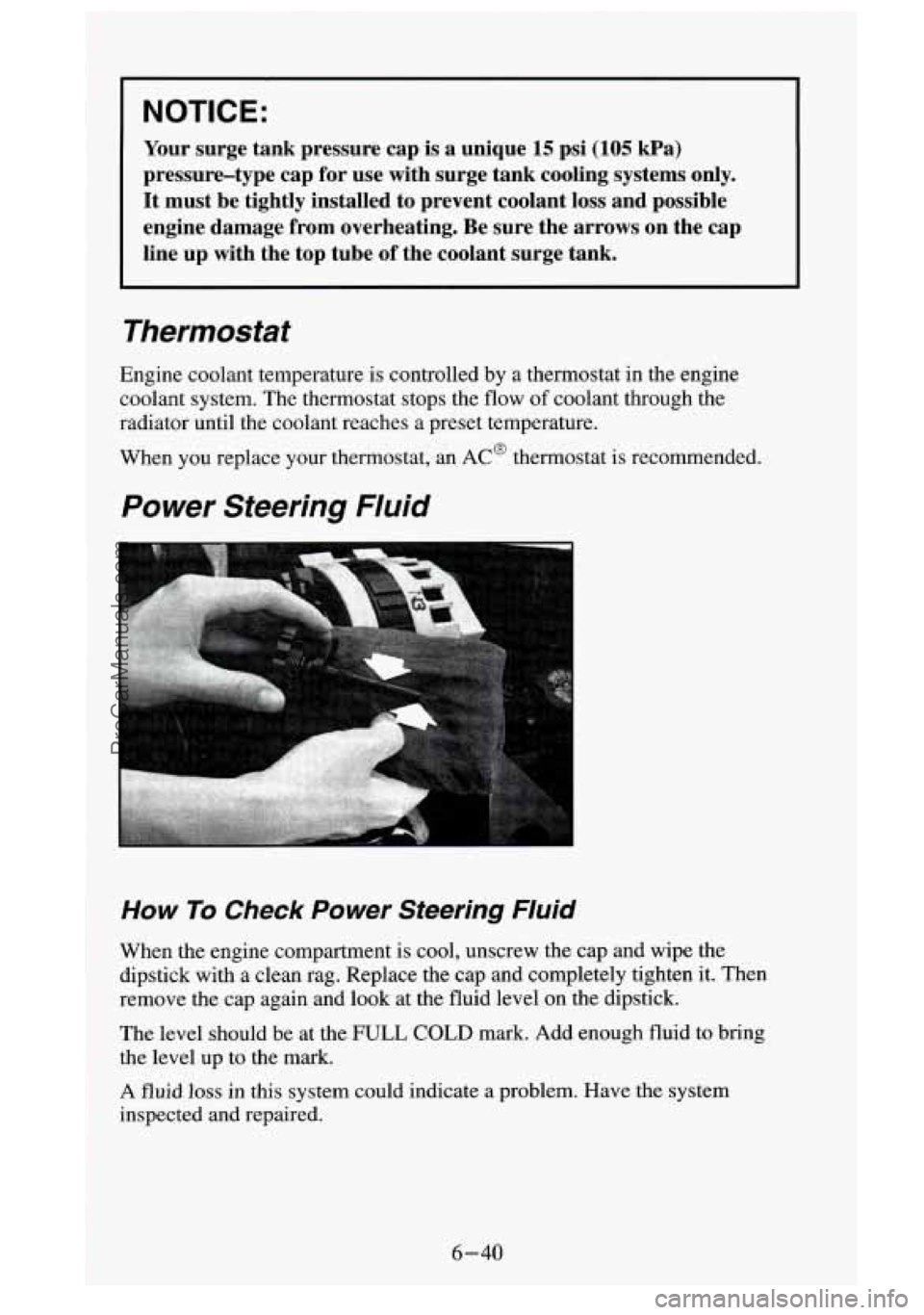
How To Check Power Steering Fluid
When the engine compartment is cool, unscrew the cap and wipe \
the
dipstick with a clean rag. Replace the cap and completely tighten it. Then
remove the cap again and look at the fluid level on the dips\
tick.
The level should be at the
FULL COLD mark. Add enough fluid to bring
the level
up to the mark.
A fluid loss in this system could indicate a problem. Have the system
inspected and repaired.
6-40
ProCarManuals.com