Break-in Schedule
Do not tow a trailer during the 600 mile (1,000 km) break-in period:
see page 2.
Maintenance
If you tow a trailer, your vehicle will require more frequent
maintenance due to the additional load. Refer to the "Maintenance
Schedule under severe driving conditions" on page 80 for specific
information.
Before Towing
With the car and trailer completely loaded and parked on a level surface, confirm that the tongue loading is correct. If the car has an
abnormal nose-up or nose-down attitude, check for improper cargo
distribution. Check also for excessive cargo weight, worn
suspension or other causes and correct the problem before driving.
Be sure the cargo is secured so it will not shift while driving. Check
that your rearview mirrors conform to any federal, state, or local regulations. If not, install rearview mirrors designed for towing.Before towing a trailer, practice turning, stopping and reversing with
a trailor in an area away from traffic until you learn the technique.
(cont'd)
ProCarManuals.comMain Menu t s
Appearance Care (cont'd)
Rust Prevention
Rusting is likely to occur in parts of the car where water is trapped
or where there is continual dampness. Water will collect inside doors and body panels if drain holes
become clogged.
Water which seeps under or soaks floor mats will subject floor sections to prolonged wetness or dampness. Road dirt or sand, which collects and fills recesses on the
underside of the car, retains moisture long after the rest of the
car has dried.
The removal of paint and undercoating by stones, gravel, and minor accidents immediately exposes metal to air and moisture.Rusting is increased by high humidity and by the presence of
corrosive substances in the air or on the roads.
Salt used for road de-icing will coat the bottom of the ear and
hasten rusting.Localities with high humidity have greater potential for rust
problems, especially where salt is also present on the road or in
moist sea air.
Industrial pollution will accelerate the deterioration of paint
finishes and promote rusting.
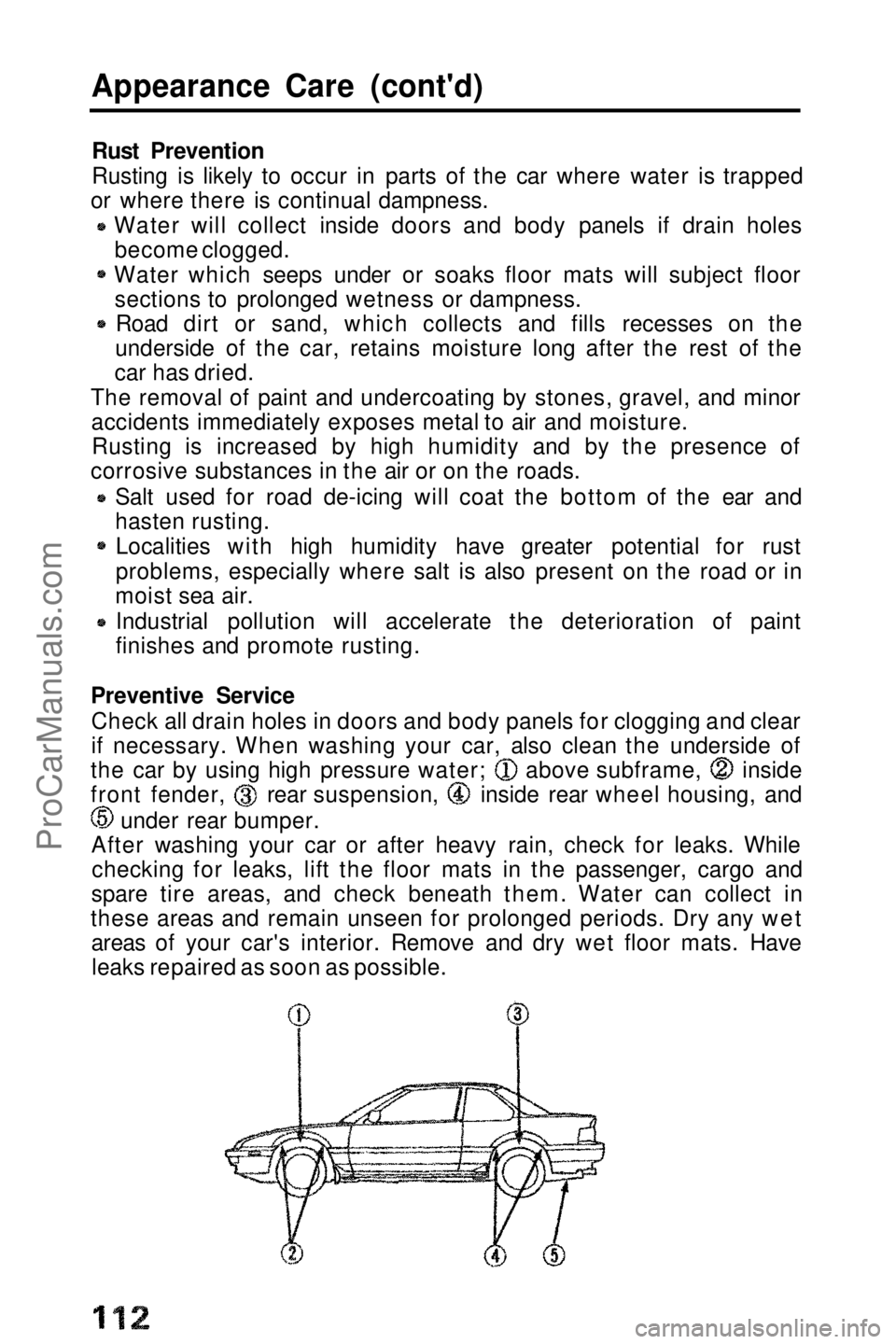
Preventive Service Check all drain holes in doors and body panels for clogging and clear
if necessary. When washing your car, also clean the underside of the car by using high pressure water; above subframe, inside
front fender, rear suspension, inside rear wheel housing, and
under rear bumper.
After washing your car or after heavy rain, check for leaks. While checking for leaks, lift the floor mats in the passenger, cargo and
spare tire areas, and check beneath them. Water can collect in
these areas and remain unseen for prolonged periods. Dry any wet areas of your car's interior. Remove and dry wet floor mats. Haveleaks repaired as soon as possible.ProCarManuals.comMain Menu t s