2022 KIA NIRO HYBRID EV maintenance
[x] Cancel search: maintenancePage 656 of 684
Maintenance
114 7
Window tinting precaution
Window tint(especially metallic film)
might cause communication disorder
or poor radio reception, and malfunc-
tion of the automatic lighting system
due to excessive change of illumina-
tion inside the vehicle. The solution
used might also flow into electric,
electronic devices causing disorder
and failure.
Page 657 of 684
7115
Maintenance
EMISSION CONTROL SYSTEM
The emission control system of your
vehicle is covered by a written limited
warranty. Please see the warranty
information contained in the
Warranty & Consumer Information
manual in your vehicle.
Your vehicle is equipped with an
emission control system to meet all
applicable emission regulations.
There are three emission control
systems, as follows.
(1) Crankcase emission control sys-
tem
(2) Evaporative emission control sys-
tem
(3) Exhaust emission control system
In order to assure the proper function
of the emission control systems, it is
recommended that you have your
vehicle inspected and maintained by
an authorized Kia dealer in accor-
dance with the maintenance sched-
ule in this manual.Caution for the Inspection and
Maintenance Test (With Electronic
Stability Control (ESC) system)
To prevent the vehicle from mis-
firing during dynamometer test-
ing, turn the Electronic Stability
Control (ESC) system off by
pressing the ESC switch.
After dynamometer testing is
completed, turn the ESC system
back on by pressing the ESC
switch again.1. Crankcase emission control
system
The positive crankcase ventilation
system is employed to prevent air
pollution caused by blow-by gases
being emitted from the crankcase.
This system supplies fresh filtered air
to the crankcase through the air
intake hose. Inside the crankcase,
the fresh air mixes with blow-by
gases, which then pass through the
PCV valve into the induction system.
2. Evaporative emission con-
trol (including ORVR:
Onboard Refueling Vapor
Recovery) system
The Evaporative Emission Control
System is designed to prevent fuel
vapors from escaping into the atmos-
phere.
(The ORVR system is designed to
allow the vapors from the fuel tank to
be loaded into a canister while refu-
eling at the gas station, preventing
the escape of fuel vapors into the
atmosphere.)
Page 658 of 684
Maintenance
116 7
Canister
Fuel vapors generated inside the fuel
tank are absorbed and stored in the
onboard canister. When the engine is
running, the fuel vapors absorbed in
the canister are drawn into the surge
tank through the purge control sole-
noid valve.
Purge Control Solenoid Valve
(PCSV)
The purge control solenoid valve is
controlled by the Engine Control
Module (ECM); when the engine
coolant temperature is low during
idling, the PCSV closes so that evap-
orated fuel is not taken into the
engine. After the engine warms up
during ordinary driving, the PCSV
opens to introduce evaporated fuel to
the engine.
3. Exhaust emission control
system
The Exhaust Emission Control
System is a highly effective system
which controls exhaust emissions
while maintaining good vehicle per-
formance.
Engine exhaust gas precautions
(carbon monoxide)
Carbon monoxide can be present
with other exhaust fumes.
Therefore, if you smell exhaust
fumes of any kind inside your vehi-
cle, have it inspected and repaired
immediately. If you ever suspect
exhaust fumes are coming into
your vehicle, drive it only with all
the windows fully open. Have your
vehicle checked and repaired
immediately.
WARNING - Exhaust
Engine exhaust gases contain
carbon monoxide (CO). Though
colorless and odorless, it is
dangerous and could be lethal if
inhaled. Follow the instructions
on this page to avoid CO poi-
soning.
Page 659 of 684
7117
Maintenance
Do not operate the engine in con-
fined or closed areas (such as
garages) any more than what is
necessary to move the vehicle in or
out of the area.
When the vehicle is stopped in an
open area for more than a short
time with the engine running,
adjust the ventilation system (as
needed) to draw outside air into the
vehicle.
Never sit in a parked or stopped
vehicle for any extended time with
the engine running.
When the engine stalls or fails to
start, excessive attempts to restart
the engine may cause damage to
the emission control system.Operating precautions for catalyt-
ic converters (if equipped)
WARNING- Catalytic
converter
Keep away from the catalytic
converter and exhaust system
while the vehicle is running or
immediately thereafter. The
exhaust and catalytic systems
are very hot and may burn you.
WARNING- Fire
Do not park, idle or drive the
vehicle over or near flamma-
ble objects, such as grass,
vegetation, paper, leaves, etc.
A hot exhaust system can
ignite flammable items under
your vehicle.
Also, do not remove the heat
sink around the exhaust sys-
tem, do not seal the bottom of
the vehicle and do not coat
the vehicle for corrosion con-
trol. It may present a fire risk
under certain conditions.
Page 660 of 684
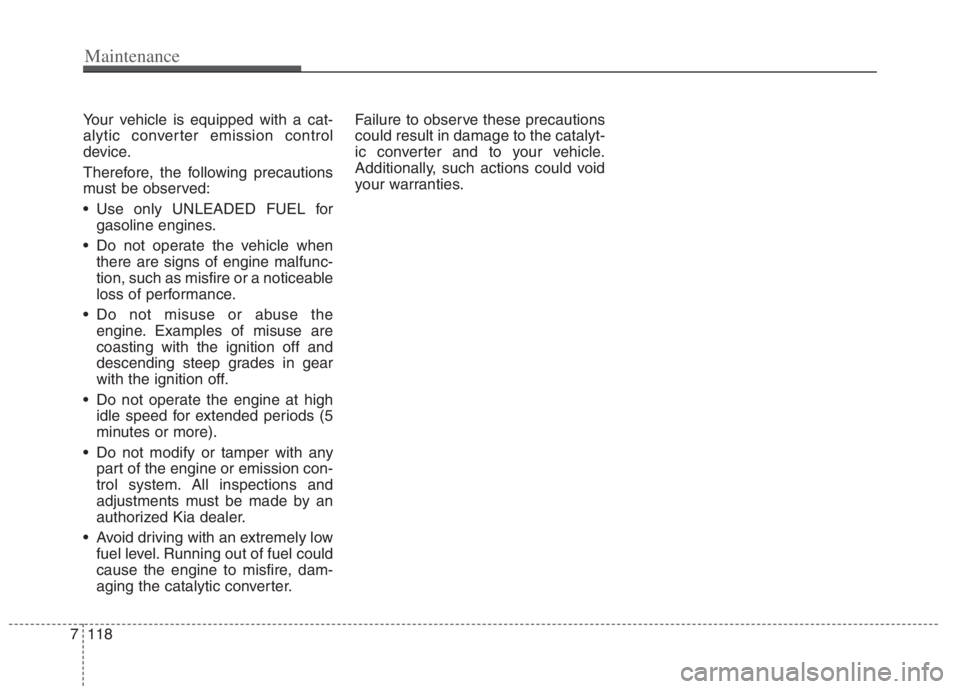
Your vehicle is equipped with a cat-
alytic converter emission control
device.
Therefore, the following precautions
must be observed:
Use only UNLEADED FUEL for
gasoline engines.
Do not operate the vehicle when
there are signs of engine malfunc-
tion, such as misfire or a noticeable
loss of performance.
Do not misuse or abuse the
engine. Examples of misuse are
coasting with the ignition off and
descending steep grades in gear
with the ignition off.
Do not operate the engine at high
idle speed for extended periods (5
minutes or more).
Do not modify or tamper with any
part of the engine or emission con-
trol system. All inspections and
adjustments must be made by an
authorized Kia dealer.
Avoid driving with an extremely low
fuel level. Running out of fuel could
cause the engine to misfire, dam-
aging the catalytic converter.Failure to observe these precautions
could result in damage to the catalyt-
ic converter and to your vehicle.
Additionally, such actions could void
your warranties.
7118
Maintenance
Page 677 of 684
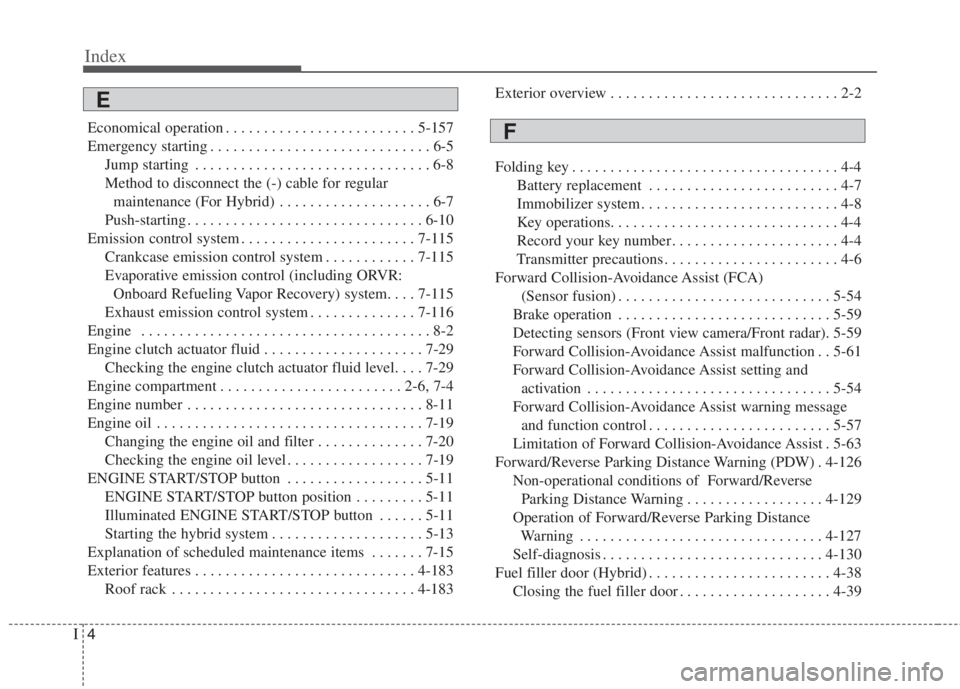
Index
4I
Economical operation . . . . . . . . . . . . . . . . . . . . . . . . . 5-157
Emergency starting . . . . . . . . . . . . . . . . . . . . . . . . . . . . . 6-5
Jump starting . . . . . . . . . . . . . . . . . . . . . . . . . . . . . . . 6-8
Method to disconnect the (-) cable for regular
maintenance (For Hybrid) . . . . . . . . . . . . . . . . . . . . 6-7
Push-starting . . . . . . . . . . . . . . . . . . . . . . . . . . . . . . . 6-10
Emission control system . . . . . . . . . . . . . . . . . . . . . . . 7-115
Crankcase emission control system . . . . . . . . . . . . 7-115
Evaporative emission control (including ORVR:
Onboard Refueling Vapor Recovery) system. . . . 7-115
Exhaust emission control system . . . . . . . . . . . . . . 7-116
Engine . . . . . . . . . . . . . . . . . . . . . . . . . . . . . . . . . . . . . . 8-2
Engine clutch actuator fluid . . . . . . . . . . . . . . . . . . . . . 7-29
Checking the engine clutch actuator fluid level. . . . 7-29
Engine compartment . . . . . . . . . . . . . . . . . . . . . . . . 2-6, 7-4
Engine number . . . . . . . . . . . . . . . . . . . . . . . . . . . . . . . 8-11
Engine oil . . . . . . . . . . . . . . . . . . . . . . . . . . . . . . . . . . . 7-19
Changing the engine oil and filter . . . . . . . . . . . . . . 7-20
Checking the engine oil level . . . . . . . . . . . . . . . . . . 7-19
ENGINE START/STOP button . . . . . . . . . . . . . . . . . . 5-11
ENGINE START/STOP button position . . . . . . . . . 5-11
Illuminated ENGINE START/STOP button . . . . . . 5-11
Starting the hybrid system . . . . . . . . . . . . . . . . . . . . 5-13
Explanation of scheduled maintenance items . . . . . . . 7-15
Exterior features . . . . . . . . . . . . . . . . . . . . . . . . . . . . . 4-183
Roof rack . . . . . . . . . . . . . . . . . . . . . . . . . . . . . . . . 4-183Exterior overview . . . . . . . . . . . . . . . . . . . . . . . . . . . . . . 2-2
Folding key . . . . . . . . . . . . . . . . . . . . . . . . . . . . . . . . . . . 4-4
Battery replacement . . . . . . . . . . . . . . . . . . . . . . . . . 4-7
Immobilizer system . . . . . . . . . . . . . . . . . . . . . . . . . . 4-8
Key operations. . . . . . . . . . . . . . . . . . . . . . . . . . . . . . 4-4
Record your key number . . . . . . . . . . . . . . . . . . . . . . 4-4
Transmitter precautions . . . . . . . . . . . . . . . . . . . . . . . 4-6
Forward Collision-Avoidance Assist (FCA)
(Sensor fusion) . . . . . . . . . . . . . . . . . . . . . . . . . . . . 5-54
Brake operation . . . . . . . . . . . . . . . . . . . . . . . . . . . . 5-59
Detecting sensors (Front view camera/Front radar). 5-59
Forward Collision-Avoidance Assist malfunction . . 5-61
Forward Collision-Avoidance Assist setting and
activation . . . . . . . . . . . . . . . . . . . . . . . . . . . . . . . . 5-54
Forward Collision-Avoidance Assist warning message
and function control . . . . . . . . . . . . . . . . . . . . . . . . 5-57
Limitation of Forward Collision-Avoidance Assist . 5-63
Forward/Reverse Parking Distance Warning (PDW) . 4-126
Non-operational conditions of Forward/Reverse
Parking Distance Warning . . . . . . . . . . . . . . . . . . 4-129
Operation of Forward/Reverse Parking Distance
Warning . . . . . . . . . . . . . . . . . . . . . . . . . . . . . . . . 4-127
Self-diagnosis . . . . . . . . . . . . . . . . . . . . . . . . . . . . . 4-130
Fuel filler door (Hybrid) . . . . . . . . . . . . . . . . . . . . . . . . 4-38
Closing the fuel filler door . . . . . . . . . . . . . . . . . . . . 4-39F
E
Page 681 of 684
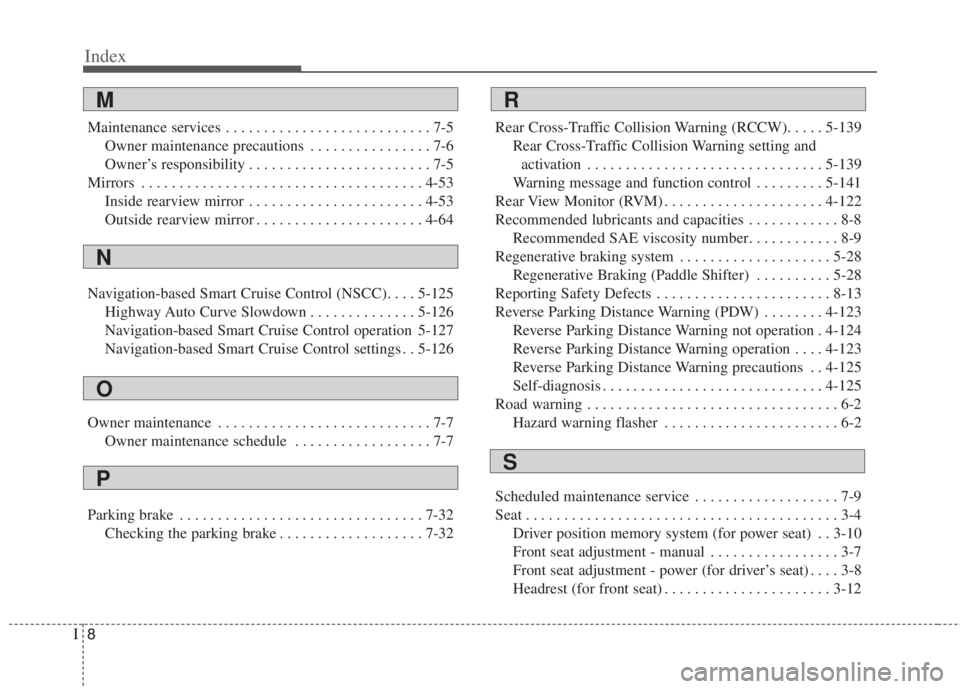
Index
8I
Maintenance services . . . . . . . . . . . . . . . . . . . . . . . . . . . 7-5
Owner maintenance precautions . . . . . . . . . . . . . . . . 7-6
Owner’s responsibility . . . . . . . . . . . . . . . . . . . . . . . . 7-5
Mirrors . . . . . . . . . . . . . . . . . . . . . . . . . . . . . . . . . . . . . 4-53
Inside rearview mirror . . . . . . . . . . . . . . . . . . . . . . . 4-53
Outside rearview mirror . . . . . . . . . . . . . . . . . . . . . . 4-64
Navigation-based Smart Cruise Control (NSCC). . . . 5-125
Highway Auto Curve Slowdown . . . . . . . . . . . . . . 5-126
Navigation-based Smart Cruise Control operation 5-127
Navigation-based Smart Cruise Control settings . . 5-126
Owner maintenance . . . . . . . . . . . . . . . . . . . . . . . . . . . . 7-7
Owner maintenance schedule . . . . . . . . . . . . . . . . . . 7-7
Parking brake . . . . . . . . . . . . . . . . . . . . . . . . . . . . . . . . 7-32
Checking the parking brake . . . . . . . . . . . . . . . . . . . 7-32Rear Cross-Traffic Collision Warning (RCCW). . . . . 5-139
Rear Cross-Traffic Collision Warning setting and
activation . . . . . . . . . . . . . . . . . . . . . . . . . . . . . . . 5-139
Warning message and function control . . . . . . . . . 5-141
Rear View Monitor (RVM) . . . . . . . . . . . . . . . . . . . . . 4-122
Recommended lubricants and capacities . . . . . . . . . . . . 8-8
Recommended SAE viscosity number. . . . . . . . . . . . 8-9
Regenerative braking system . . . . . . . . . . . . . . . . . . . . 5-28
Regenerative Braking (Paddle Shifter) . . . . . . . . . . 5-28
Reporting Safety Defects . . . . . . . . . . . . . . . . . . . . . . . 8-13
Reverse Parking Distance Warning (PDW) . . . . . . . . 4-123
Reverse Parking Distance Warning not operation . 4-124
Reverse Parking Distance Warning operation . . . . 4-123
Reverse Parking Distance Warning precautions . . 4-125
Self-diagnosis . . . . . . . . . . . . . . . . . . . . . . . . . . . . . 4-125
Road warning . . . . . . . . . . . . . . . . . . . . . . . . . . . . . . . . . 6-2
Hazard warning flasher . . . . . . . . . . . . . . . . . . . . . . . 6-2
Scheduled maintenance service . . . . . . . . . . . . . . . . . . . 7-9
Seat . . . . . . . . . . . . . . . . . . . . . . . . . . . . . . . . . . . . . . . . . 3-4
Driver position memory system (for power seat) . . 3-10
Front seat adjustment - manual . . . . . . . . . . . . . . . . . 3-7
Front seat adjustment - power (for driver’s seat) . . . . 3-8
Headrest (for front seat) . . . . . . . . . . . . . . . . . . . . . . 3-12
N
O
S
RM
P
Page 683 of 684
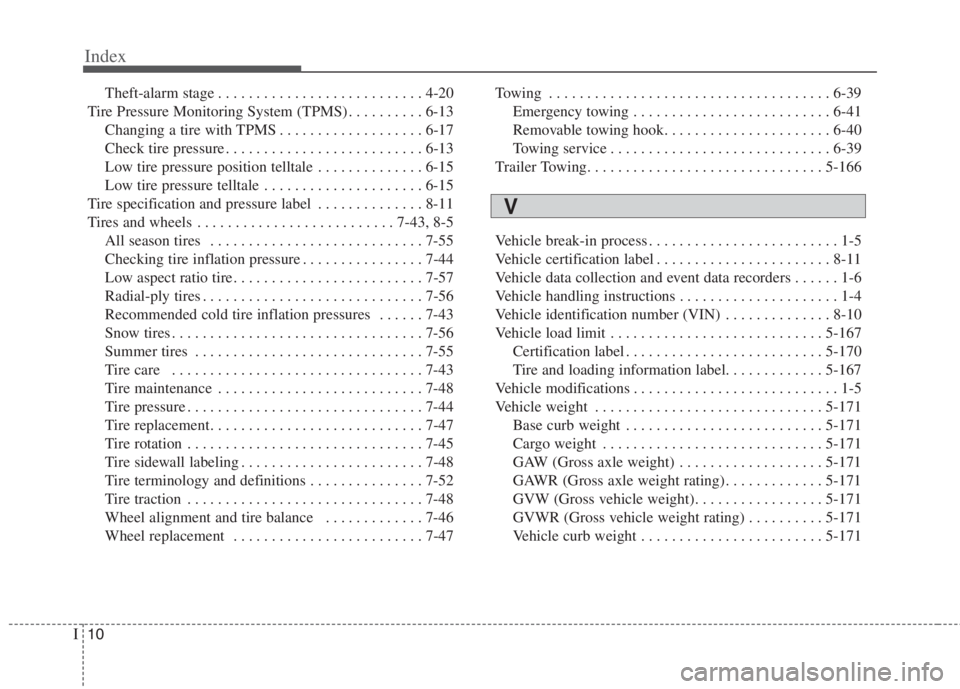
Index
10I
Theft-alarm stage . . . . . . . . . . . . . . . . . . . . . . . . . . . 4-20
Tire Pressure Monitoring System (TPMS) . . . . . . . . . . 6-13
Changing a tire with TPMS . . . . . . . . . . . . . . . . . . . 6-17
Check tire pressure . . . . . . . . . . . . . . . . . . . . . . . . . . 6-13
Low tire pressure position telltale . . . . . . . . . . . . . . 6-15
Low tire pressure telltale . . . . . . . . . . . . . . . . . . . . . 6-15
Tire specification and pressure label . . . . . . . . . . . . . . 8-11
Tires and wheels . . . . . . . . . . . . . . . . . . . . . . . . . . 7-43, 8-5
All season tires . . . . . . . . . . . . . . . . . . . . . . . . . . . . 7-55
Checking tire inflation pressure . . . . . . . . . . . . . . . . 7-44
Low aspect ratio tire. . . . . . . . . . . . . . . . . . . . . . . . . 7-57
Radial-ply tires . . . . . . . . . . . . . . . . . . . . . . . . . . . . . 7-56
Recommended cold tire inflation pressures . . . . . . 7-43
Snow tires . . . . . . . . . . . . . . . . . . . . . . . . . . . . . . . . . 7-56
Summer tires . . . . . . . . . . . . . . . . . . . . . . . . . . . . . . 7-55
Tire care . . . . . . . . . . . . . . . . . . . . . . . . . . . . . . . . . 7-43
Tire maintenance . . . . . . . . . . . . . . . . . . . . . . . . . . . 7-48
Tire pressure . . . . . . . . . . . . . . . . . . . . . . . . . . . . . . . 7-44
Tire replacement . . . . . . . . . . . . . . . . . . . . . . . . . . . . 7-47
Tire rotation . . . . . . . . . . . . . . . . . . . . . . . . . . . . . . . 7-45
Tire sidewall labeling . . . . . . . . . . . . . . . . . . . . . . . . 7-48
Tire terminology and definitions . . . . . . . . . . . . . . . 7-52
Tire traction . . . . . . . . . . . . . . . . . . . . . . . . . . . . . . . 7-48
Wheel alignment and tire balance . . . . . . . . . . . . . 7-46
Wheel replacement . . . . . . . . . . . . . . . . . . . . . . . . . 7-47Towing . . . . . . . . . . . . . . . . . . . . . . . . . . . . . . . . . . . . . 6-39
Emergency towing . . . . . . . . . . . . . . . . . . . . . . . . . . 6-41
Removable towing hook. . . . . . . . . . . . . . . . . . . . . . 6-40
Towing service . . . . . . . . . . . . . . . . . . . . . . . . . . . . . 6-39
Trailer Towing. . . . . . . . . . . . . . . . . . . . . . . . . . . . . . . 5-166
Vehicle break-in process . . . . . . . . . . . . . . . . . . . . . . . . . 1-5
Vehicle certification label . . . . . . . . . . . . . . . . . . . . . . . 8-11
Vehicle data collection and event data recorders . . . . . . 1-6
Vehicle handling instructions . . . . . . . . . . . . . . . . . . . . . 1-4
Vehicle identification number (VIN) . . . . . . . . . . . . . . 8-10
Vehicle load limit . . . . . . . . . . . . . . . . . . . . . . . . . . . . 5-167
Certification label . . . . . . . . . . . . . . . . . . . . . . . . . . 5-170
Tire and loading information label. . . . . . . . . . . . . 5-167
Vehicle modifications . . . . . . . . . . . . . . . . . . . . . . . . . . . 1-5
Vehicle weight . . . . . . . . . . . . . . . . . . . . . . . . . . . . . . 5-171
Base curb weight . . . . . . . . . . . . . . . . . . . . . . . . . . 5-171
Cargo weight . . . . . . . . . . . . . . . . . . . . . . . . . . . . . 5-171
GAW (Gross axle weight) . . . . . . . . . . . . . . . . . . . 5-171
GAWR (Gross axle weight rating) . . . . . . . . . . . . . 5-171
GVW (Gross vehicle weight). . . . . . . . . . . . . . . . . 5-171
GVWR (Gross vehicle weight rating) . . . . . . . . . . 5-171
Vehicle curb weight . . . . . . . . . . . . . . . . . . . . . . . . 5-171
V