Page 615 of 638
09
9-53
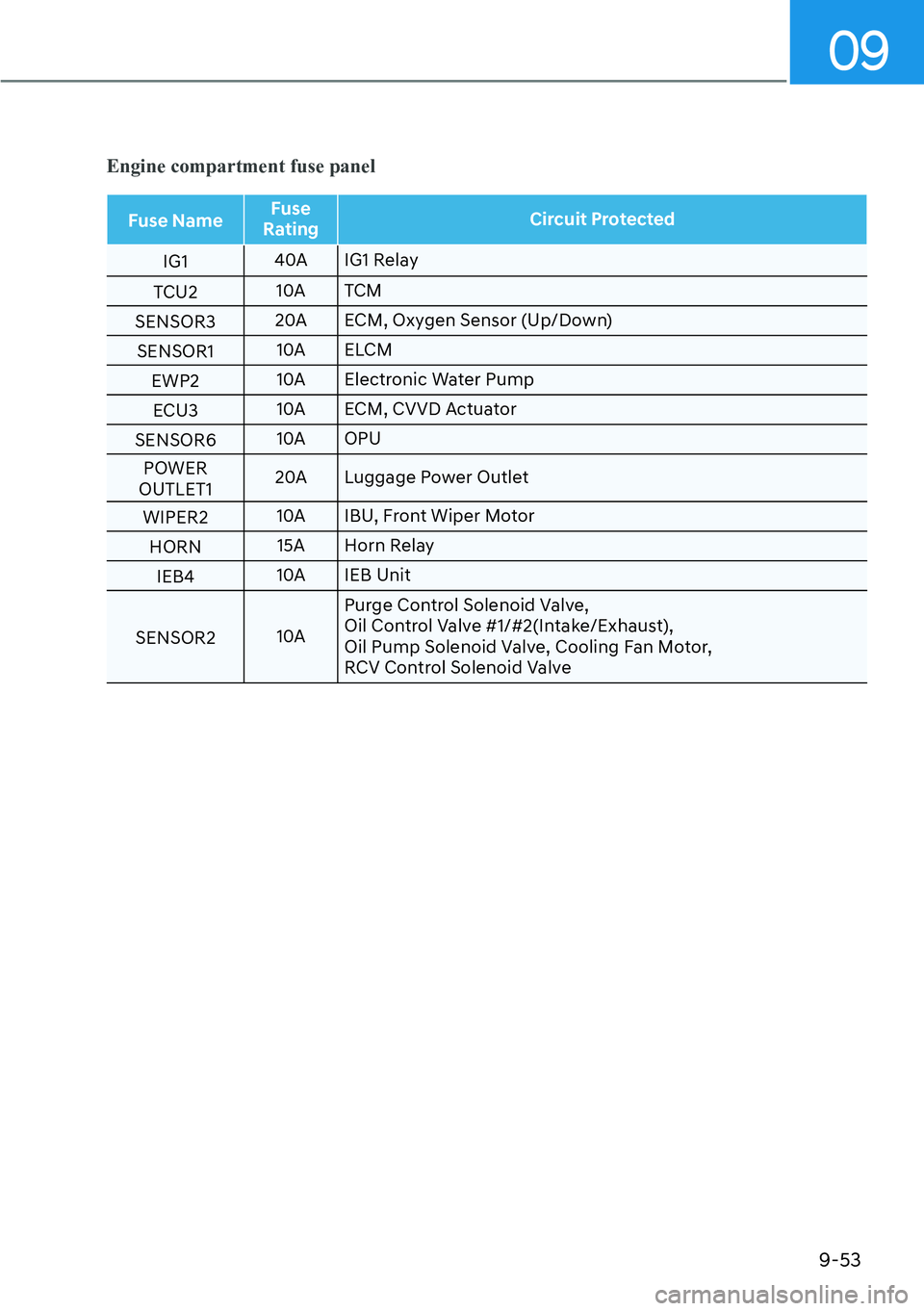
Engine compartment fuse panel
Fuse NameFuse
Rating Circuit Protected
IG1
40A IG1 Relay
TCU2 10A TCM
SENSOR3 20A ECM, Oxygen Sensor (Up/Down)
SENSOR1 10A ELCM
EWP2 10A Electronic Water Pump
ECU3 10A ECM, CVVD Actuator
SENSOR6 10A OPU
POWER
OUTLET1 20A Luggage Power Outlet
WIPER2 10A IBU, Front Wiper Motor
HORN 15A Horn Relay
IEB4 10A IEB Unit
SENSOR2 10APurge Control Solenoid Valve,
Oil Control Valve #1/#2(Intake/Exhaust),
Oil Pump Solenoid Valve, Cooling Fan Motor,
RCV Control Solenoid Valve
Page 616 of 638
Maintenance
9-54
Engine compartment fuse panel
Fuse NameFuse
Rating Circuit Protected
SENSOR4
15A Active Purge Pump
SENSOR5 10A E/R Junction Block (RLY. 5)
IGN COIL 20A Ignition Coil #1/#2/#3/#4
ACC 20A ICU Junction Block (Fuse – F37/F47)
POWER
OUTLET2 20A Front Power Outlet
WIPER1 30A Front Wiper Motor, Front Wiper (Low) Relay
E-SHIFTER3 10A SCU
FCA 10A Front Radar Unit
HPCU 2 10A HPCU
ECU1 15A ECM
ECU4 20A ECM
TCU1 15A TCM
RR HTD2 10A E/R Junction Block (RLY. 1)
Page 618 of 638
Maintenance
9-56
Engine compartment fuse panel
Type Fuse NameFuse
Rating Circuit Protected
FUSEIG1
40A IG1 Relay
TCU2 10A TCM
SENSOR3 20A ECM, Oxygen Sensor (Up/Down)
SENSOR1 10A ELCM
EWP2 10A Electronic Water Pump
ECU3 10A ECM, CVVD Actuator
SENSOR6 10A OPU
POWER
OUTLET1 20A Luggage Power Outlet
WIPER FRT2 10A IBU
HORN 15A Horn Relay
IEB4 10A IEB Unit
SENSOR2 10ACooling Fan Motor, Purge Control Solenoid
Valve,Oil Control Valve #1/#2, Oil Pump Solenoid
Valve,RCV Control Solenoid Valve
SENSOR4 15A Active Purge Pump
SENSOR5 10A E/R Junction Block (Fuel Pump Relay)
IGN COIL 20A Ignition Coil #1/#2/#3/#4
ACC 20A ICU Junction Block (Fuse - ACC)
POWER
OUTLET2 20A Front Power Outlet
WIPER1 30A Front Wiper Motor, Front Wiper (Low) Relay
E-SHIFTER3 10A SCU
FCA 10A Front Radar Unit
HPCU 2 10A HPCU
ECU1 15A ECM
ECU4 20A ECM
TCU1 15A TCM
REARHEATED2 10A E/R Junction Block (Rear Heated Relay)
Page 629 of 638
09
9-67
Exterior Care
Exterior general caution
It is very important to follow the label
directions when using any chemical
cleaner or polish. Read all warning and
caution statements that appear on the label.
Finish maintenance
Washing
To help protect your vehicle’s finish from
rust and deterioration, wash it thoroughly
and frequently at least once a month
with lukewarm or cold water.
If you use your vehicle for off-road
driving, you should wash it after each
off-road trip. Pay special attention to the
removal of any accumulation of salt, dirt,
mud, and other foreign materials. Make
sure the drain holes in the lower edges
of the doors and rocker panels are kept clear and clean.
Insects, tar, tree sap, bird droppings,
industrial pollution and similar deposits
can damage your vehicle’s finish if not
removed immediately.
Even prompt washing with plain water
may not completely remove all these
deposits. A mild soap, safe for use on
painted surfaces, should be used.
After washing, rinse the vehicle
thoroughly with lukewarm or cold water.
Do not allow soap to dry on the finish.
High-pressure washing
�[�When using high-pressure washers,
make sure to maintain sufficient
distance from the vehicle.
Insufficient clearance or excessive
pressure can lead to component
damage or water penetration.
�[� Do not spray the camera, sensors or
its surrounding area directly with a
high pressure washer. Shock applied
from high pressure water may cause
the device to not operate normally.
�[� Do not bring the nozzle tip close to
boots (rubber or plastic covers) or
connectors as they may be damaged
if they come into contact with high
pressure water.
WARNING
After washing the vehicle, test the
brakes while driving slowly to see
if they have been affected by water
before getting on the road. If braking
performance is impaired, dry the
brakes by applying them lightly while
maintaining a slow forward speed.
NOTICE
�[� Do not use strong soap, chemical
detergents or hot water, and do not
wash the vehicle in direct sunlight
or when the body of the vehicle is
warm.
�[� Be careful when washing the side
windows of your vehicle.
�[� Especially, with high-pressure water,
water may leak through the windows
and wet the interior.
�[� To prevent damage to the plastic
parts, do not clean with chemical
solvents or strong detergents.
�[� To prevent damage to the charging
door, make sure to close and lock the
vehicle doors when washing (high-
pressure washing, automatic car
washing, etc.) the vehicle.
APPEARANCE CARE