2022 CHRYSLER VOYAGER check oil
[x] Cancel search: check oilPage 235 of 316
IN CASE OF EMERGENCY233
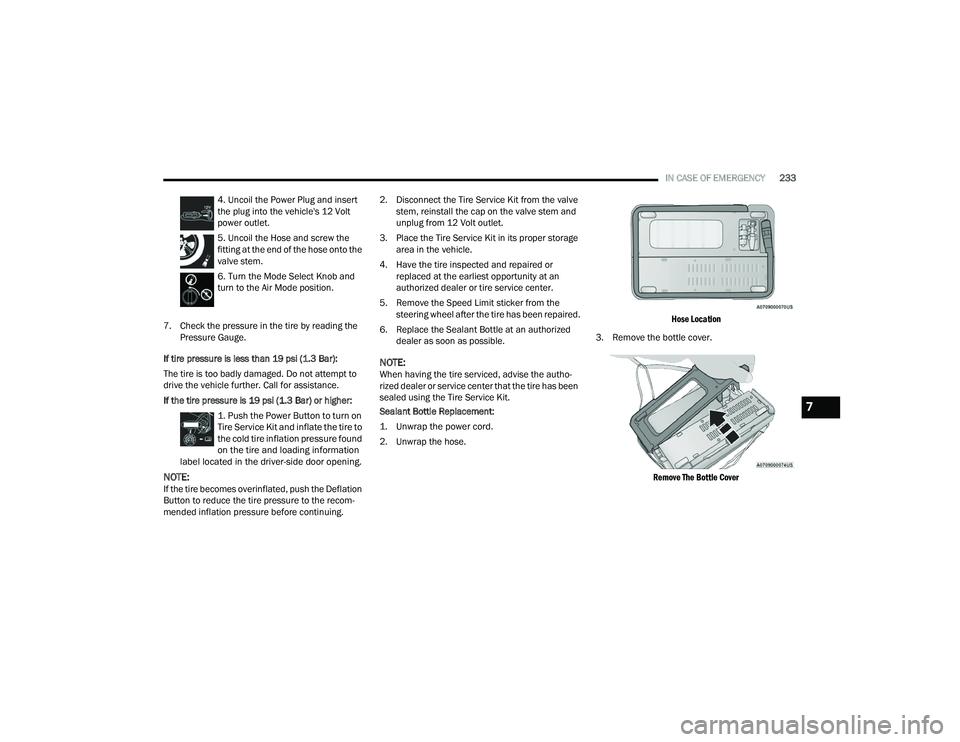
4. Uncoil the Power Plug and insert
the plug into the vehicle's 12 Volt
power outlet.
5. Uncoil the Hose and screw the
fitting at the end of the hose onto the
valve stem.
6. Turn the Mode Select Knob and
turn to the Air Mode position.
7. Check the pressure in the tire by reading the Pressure Gauge.
If tire pressure is less than 19 psi (1.3 Bar):
The tire is too badly damaged. Do not attempt to
drive the vehicle further. Call for assistance.
If the tire pressure is 19 psi (1.3 Bar) or higher:
1. Push the Power Button to turn on
Tire Service Kit and inflate the tire to
the cold tire inflation pressure found
on the tire and loading information
label located in the driver-side door opening.
NOTE:If the tire becomes overinflated, push the Deflation
Button to reduce the tire pressure to the recom -
mended inflation pressure before continuing. 2. Disconnect the Tire Service Kit from the valve
stem, reinstall the cap on the valve stem and
unplug from 12 Volt outlet.
3. Place the Tire Service Kit in its proper storage area in the vehicle.
4. Have the tire inspected and repaired or replaced at the earliest opportunity at an
authorized dealer or tire service center.
5. Remove the Speed Limit sticker from the steering wheel after the tire has been repaired.
6. Replace the Sealant Bottle at an authorized dealer as soon as possible.
NOTE:When having the tire serviced, advise the autho -
rized dealer or service center that the tire has been
sealed using the Tire Service Kit.
Sealant Bottle Replacement:
1. Unwrap the power cord.
2. Unwrap the hose.
Hose Location
3. Remove the bottle cover.
Remove The Bottle Cover
7
22_RUVG_OM_EN_USC_t.book Page 233
Page 245 of 316

243
SERVICING AND MAINTENANCE
SCHEDULED SERVICING
Your vehicle is equipped with an automatic oil
change indicator system. The oil change indicator
system will remind you that it is time to take your
vehicle in for scheduled maintenance.
Based on engine operation conditions, the oil
change indicator message will illuminate. This
means that service is required for your vehicle.
Operating conditions such as frequent short-trips,
trailer tow, extremely hot or cold ambient
temperatures will influence when the “Oil Change
Required” message is displayed. Have your vehicle
serviced as soon as possible, within the next
500 miles (805 km).An authorized dealer will reset the oil change
indicator message after completing the scheduled
oil change. If a scheduled oil change is performed
by someone other than an authorized dealer
Úpage 86.
NOTE:Under no circumstances should oil change
intervals exceed 10,000 miles (16,000 km),
12 months or 350 hours of engine run time,
whichever comes first. The 350 hours of engine
run or idle time is generally only a concern for fleet
customers.
Once A Month Or Before A Long Trip:
Check engine oil level.
Check windshield washer fluid level.
Check tire pressure and look for unusual wear
or damage. Rotate tires at the first sign of irreg
-
ular wear, even if it occurs before the oil indi -
cator system turns on.
Check the fluid levels of the coolant reservoir
and brake master cylinder, fill as needed.
Check function of all interior and exterior lights.
8
22_RUVG_OM_EN_USC_t.book Page 243
Page 250 of 316

248SERVICING AND MAINTENANCE
CHECKING OIL LEVEL
To ensure proper engine lubrication, the engine oil
must be maintained at the correct level. Check the
oil level at regular intervals, such as every fuel
stop. The best time to check the engine oil level is
about five minutes after a fully warmed up engine
is shut off.
Checking the oil while the vehicle is on level ground
will improve the accuracy of the oil level readings.
There are four possible dipstick types:
Crosshatched zone.
Crosshatched zone marked SAFE.
Crosshatched zone marked with MIN at the low
end of the range and MAX at the high end of the
range.
Crosshatched zone marked with dimples at the
MIN and the MAX ends of the range.
NOTE:Always maintain the oil level within the crosshatch
markings on the dipstick.
Adding 1 quart (1 liter) of oil when the reading is at
the low end of the dipstick range will raise the oil
level to the high end of the range marking.
ADDING WASHER FLUID
The fluid reservoir is located in the front of the
engine compartment. Be sure to check the fluid
level in the reservoir at regular intervals. Fill the
reservoir with windshield washer solvent (not
radiator antifreeze) and operate the system for a
few seconds to flush out the residual washer fluid.
When refilling the washer fluid reservoir, take
some washer fluid, apply it to a cloth or towel, and
wipe clean the wiper blades; this will help blade
performance.
To prevent freeze-up of your windshield washer
system in cold weather, select a solution or mixture
that meets or exceeds the temperature range of
your climate. This rating information can be found
on most washer fluid containers.
MAINTENANCE-FREE BATTERY
Your vehicle is equipped with a maintenance-free
battery. You will never have to add water, and
periodic maintenance is not required.
CAUTION!
Overfilling or underfilling the crankcase will
cause aeration or loss of oil pressure. This could
damage your engine.
WARNING!
Commercially available windshield washer
solvents are flammable. They could ignite and
burn you. Care must be exercised when filling or
working around the washer solution.
WARNING!
Battery fluid is a corrosive acid solution and
can burn or even blind you. Do not allow
battery fluid to contact your eyes, skin, or
clothing. Do not lean over a battery when
attaching clamps. If acid splashes in eyes or
on skin, flush the area immediately with large
amounts of water
Úpage 234.
Battery gas is flammable and explosive. Keep
flame or sparks away from the battery. Do not
use a booster battery or any other booster
source with an output greater than 12 Volts.
Do not allow cable clamps to touch each
other.
Battery posts, terminals, and related accesso -
ries contain lead and lead compounds. Wash
hands after handling.
22_RUVG_OM_EN_USC_t.book Page 248
Page 263 of 316

SERVICING AND MAINTENANCE261
(Continued)
BRAKE SYSTEM
In order to ensure brake system performance, all
brake system components should be inspected
periodically. For the proper maintenance intervals
Úpage 244.
Brake Master Cylinder
The fluid in the master cylinder should be checked
when performing under hood services or
immediately if the “Brake Warning Light” is
illuminated. Be sure to clean the top of the master cylinder area
before removing the cap. If necessary, add fluid to
bring the fluid level up to the requirements
described on the brake fluid reservoir. With disc
brakes, fluid level can be expected to fall as the
brake pads wear. Brake fluid level should be
checked when pads are replaced. However, low
fluid level may be caused by a leak and a checkup
may be needed.
Use only manufacturer recommended brake fluid
Úpage 300.
WARNING!
Riding the brakes can lead to brake failure and
possibly a collision. Driving with your foot resting
or riding on the brake pedal can result in
abnormally high brake temperatures, excessive
lining wear, and possible brake damage. You
would not have your full braking capacity in an
emergency.
WARNING!
Use only manufacturer recommended brake
fluid Úpage 300. Using the wrong type of
brake fluid can severely damage your brake
system and/or impair its performance. The
proper type of brake fluid for your vehicle is
also identified on the original factory installed
hydraulic master cylinder reservoir.
To avoid contamination from foreign matter or
moisture, use only new brake fluid or fluid that
has been in a tightly closed container. Keep
the master cylinder reservoir cap secured at
all times. Brake fluid in a open container
absorbs moisture from the air resulting in a
lower boiling point. This may cause it to boil
unexpectedly during hard or prolonged
braking, resulting in sudden brake failure. This
could result in a collision.
Overfilling the brake fluid reservoir can result
in spilling brake fluid on hot engine parts,
causing the brake fluid to catch fire. Brake
fluid can also damage painted and vinyl
surfaces, care should be taken to avoid its
contact with these surfaces.
Do not allow petroleum-based fluid to contam -
inate the brake fluid. Brake seal components
could be damaged, causing partial or
complete brake failure. This could result in a
collision.
WARNING!
8
22_RUVG_OM_EN_USC_t.book Page 261
Page 308 of 316

306
Fluid Check
....................................... 261, 300Master Cylinder........................................... 261Parking....................................................... 109Warning Light................................................ 95Brake/Transmission Interlock.........................113Brightness, Interior Lights................................. 58Bulb Replacement................................. 272, 274Bulbs, Light.................................. 215, 272, 274
C
Camera........................................................... 126Camera, Rear..................................................126Capacities, Fluid..............................................299Caps, Filler Fuel.............................................................127Oil (Engine)................................................. 247Radiator (Coolant Pressure)........................259Car Washes..................................................... 292Carbon Monoxide Warning..............................216CargoVehicle Loading
............................................ 77Cargo Area Cover.............................................. 77Cargo CompartmentLuggage Carrier............................................ 77Cargo Load Floor............................................... 77Cargo Tie-Downs............................................... 77Cellular Phone................................................. 157Certification Label........................................... 128Chains, Tire..................................................... 289Change Oil Indicator.......................................... 87
Changing A Flat Tire........................................ 220Chart, Tire Sizing............................................. 276Check Engine Light
(Malfunction Indicator Light)........................... 103Checking Your Vehicle For Safety................... 213Checks, Safety................................................ 213Child Restraint................................................ 197Child RestraintsBooster Seats............................................. 200Center Seat LATCH..................................... 206Child Seat Installation....................... 208, 210How To Stow An unused ALR Seat Belt................................................ 207Infant And Child Restraints........................ 198Lower Anchors And Tethers For Children................................................. 201Older Children And Child Restraints........... 199Seating Positions....................................... 201Using The Top Tether Anchorage................ 211Clean Air Gasoline.......................................... 296CleaningWheels....................................................... 288Climate Control..................................................60Manual..........................................................60Rear..............................................................64Cold Weather Operation................................. 107Compact Spare Tire........................................ 287Computer, Trip/Travel........................................94Contract, Service............................................ 302Cooling Pressure Cap (Radiator Cap).............. 259
Cooling System...............................................258Adding Coolant (Antifreeze)........................259Coolant Level.............................................. 260Cooling Capacity.........................................299Disposal Of Used Coolant........................... 260Drain, Flush, And Refill............................... 258Inspection......................................... 258, 260Points To Remember..................................260Pressure Cap.............................................. 259Radiator Cap...............................................259Selection Of Coolant (Antifreeze)...... 258, 299Corrosion Protection.......................................292Cruise Control.................................................119Cruise Light.....................................................101Customer Assistance...................................... 301Cybersecurity.................................................. 140
D
Daytime Brightness, Interior Lights................... 58Daytime Running Lights.................................... 54
Dealer Service.................................................249Defroster, Windshield.....................................214Delay (Intermittent) Wipers............................... 58Diagnostic System, Onboard........................... 102Dimmer SwitchHeadlight...................................................... 54DipsticksOil (Engine).................................................248Disable Vehicle Towing...................................240
22_RUVG_OM_EN_USC_t.book Page 306
Page 309 of 316

307
Disposal Antifreeze (Engine Coolant)
........................260Door Ajar.................................................... 96, 97Door Ajar Light........................................... 96, 97Driver’s Seat Back Tilt................................ 27, 28DrivingThrough Flowing, Rising, Or Shallow Standing Water
......................................138
E
Electric Brake Control System.........................159Anti-Lock Brake System..............................158Traction Control System..............................163Electric Parking Brake..................................... 109Electric Remote Mirrors.................................... 49Electronic Stability Control (ESC).....................160Electronic Throttle Control Warning Light.......... 96Emergency Braking......................................... 170Emergency Gas Can Refueling........................236Emergency, In Case OfHazard Warning Flasher............................. 217Jacking.............................................. 220, 223Jump Starting............................................. 234Overheating................................................237Towing........................................................240Emission Control System Maintenance...........103Engine.............................................................247Air Cleaner..................................................250Block Heater............................................... 108Break-In Recommendations.......................108
Checking Oil Level...................................... 248Compartment............................................. 247Compartment Identification....................... 247Coolant (Antifreeze).................................... 299Cooling....................................................... 258Exhaust Gas Caution.................................. 216Fails To Start.............................................. 107Flooded, Starting........................................ 107Fuel Requirements..................................... 296Oil...................................................... 249, 299Oil Filler Cap............................................... 247Oil Filter...................................................... 250Oil Selection...................................... 249, 299Oil Synthetic............................................... 250Overheating................................................ 237Starting...................................................... 104Enhanced Accident Response
Feature.................................................. 195, 242Ethanol........................................................... 297Exhaust Gas Cautions..................................... 216Exhaust System..................................... 216, 256Exterior Lighting....................................... 54, 274Exterior Lights........................ 54, 215, 272, 274
F
FiltersAir Cleaner
.................................................. 250Air Conditioning................................... 66, 252Engine Oil.......................................... 250, 299Engine Oil Disposal.................................... 250
FlashersHazard Warning.......................................... 217Turn Signals...................... 54, 101, 215, 274Flash-To-Pass............................................. 54, 55Flat Tire Changing........................ 220, 275, 286Flat Tire Stowage......................... 228, 275, 286Flooded Engine Starting..................................107Fluid Capacities...............................................299Fluid Leaks...................................................... 215Fluid Level ChecksBrake.......................................................... 261Engine Oil...................................................248Fluid, Brake.....................................................300Fog Lights................................................... 54, 56Fold In Floor (Stow ‘n Go) Seating..................... 36Fold-Flat Seats.................................................. 27Forward Collision Warning............................... 168Freeing A Stuck Vehicle...................................239Front Position Light.........................................274Fuel.................................................................296Additives.....................................................298Clean Air.....................................................296Ethanol.......................................................297Filler Cap (Gas Cap).................................... 127Gasoline.....................................................296Materials Added.........................................298Methanol.................................................... 297Octane Rating................................... 296, 299Requirements.............................................296Specifications.............................................299
11
22_RUVG_OM_EN_USC_t.book Page 307
Page 311 of 316

309
Bulb Replacement
............................ 272, 274Cruise......................................................... 101Daytime Running.......................................... 54Dimmer Switch, Headlight............................ 54Engine Temperature Warning....................... 97Exterior............................................. 215, 274Fog................................................................ 56Headlights............................................. 54, 55High Beam/Low Beam Select....................... 54Instrument Cluster........................................ 54Intensity Control............................................ 58Interior.......................................................... 57Lights On Reminder............................... 54, 56Malfunction Indicator (Check Engine)........... 99Parade Mode (Daytime Brightness).............. 58Park............................................................101Passing.................................................. 54, 55Reading........................................................ 57Seat Belt Reminder....................................... 97Security Alarm............................................... 98Service........................................................272Side Marker................................................274Traction Control..........................................162Turn Signals...................... 54, 101, 215, 274Warning Instrument Cluster Descriptions........................ 97, 101Load Floor, Cargo.............................................. 77Load Shed Battery Saver Mode......................... 93Load Shed Battery Saver On............................. 93Load Shed Electrical Load Reduction................ 93
Load Shed Intelligent Battery Sensor................93Loading Vehicle....................................... 77, 128Tires........................................................... 279Low Tire Pressure System............................... 171Lubrication, Body............................................ 253Lug Nuts......................................................... 295Luggage Carrier.................................................77
M
Maintenance Free Battery.............................. 248Maintenance Schedule................................... 243Malfunction Indicator Light
(Check Engine)........................................ 99, 103ManualPark Release.............................................. 238Service....................................................... 304Map/Reading Lights..........................................57Marker Lights, Side......................................... 274Media Hub.........................................................69Memory Seat.....................................................49Methanol........................................................ 297Mini-Trip Computer............................................94Mirrors...............................................................48Automatic Dimming.......................................48Electric Remote.............................................49Exterior Folding.............................................50Heated..........................................................48Outside...................................................48, 49Rearview............................................. 48, 217Vanity............................................................48
Modifications/AlterationsVehicle............................................................ 8Monitor, Tire Pressure System........................171Mopar Parts.................................................... 303MP3 Control...................................................... 69Multi-Function Control Lever............................. 54
N
New Vehicle Break-In Period........................... 108
O
Occupant Restraints.......................................174Octane Rating, Gasoline (Fuel).............. 296, 299Oil Change Indicator.......................................... 87Reset............................................................ 87Oil Filter, Change.............................................250Oil Filter, Selection.......................................... 250Oil Pressure Light.............................................. 97Oil, Engine............................................. 249, 299Capacity...................................................... 299Checking.....................................................248Dipstick.......................................................248Disposal...................................................... 250Filter................................................. 250, 299Filter Disposal.............................................250Identification Logo...................................... 249Materials Added To.....................................250Pressure Warning Light................................. 97Recommendation............................. 249, 299Synthetic.....................................................250
11
22_RUVG_OM_EN_USC_t.book Page 309