2021 HYUNDAI SONATA temperature
[x] Cancel search: temperaturePage 511 of 546
08
8-57
Consult an authorized HYUNDAI dealer
to replace most vehicle light bulbs. It is
difficult to replace vehicle light bulbs
because other parts of the vehicle must
be removed before you can get to the
bulb. This is especially true for removing
the headlamp assembly to get to the
bulb(s).
Removing/installing the headlamp
assembly can result in damage to the
vehicle.
Information
The headlamp and tail lamp lenses could
appear frosty if the vehicle is washed after
driving or the vehicle is driven at night
in wet weather. This condition is caused
by temperature difference between the
lamp inside and outside and, it does not
indicate a problem with your vehicle.
When moisture condenses in the lamp,
it will be removed after driving with the
headlamp on. The removable level may
differ depending on lamp size, lamp
position and environmental condition.
However, if moisture is not removed, we
recommend that your vehicle is inspected
by an authorized HYUNDAI dealer.
WARNING
• Prior to replacing a lamp, depress
the foot brake, move the shift button
into P (Park) apply the parking brake,
place the ignition switch to the
LOCK/OFF position, and take the key
with you when leaving the vehicle
to avoid sudden movement of the
vehicle and to prevent possible
electric shock.
• Be aware the bulbs may be hot and
may burn your fingers.
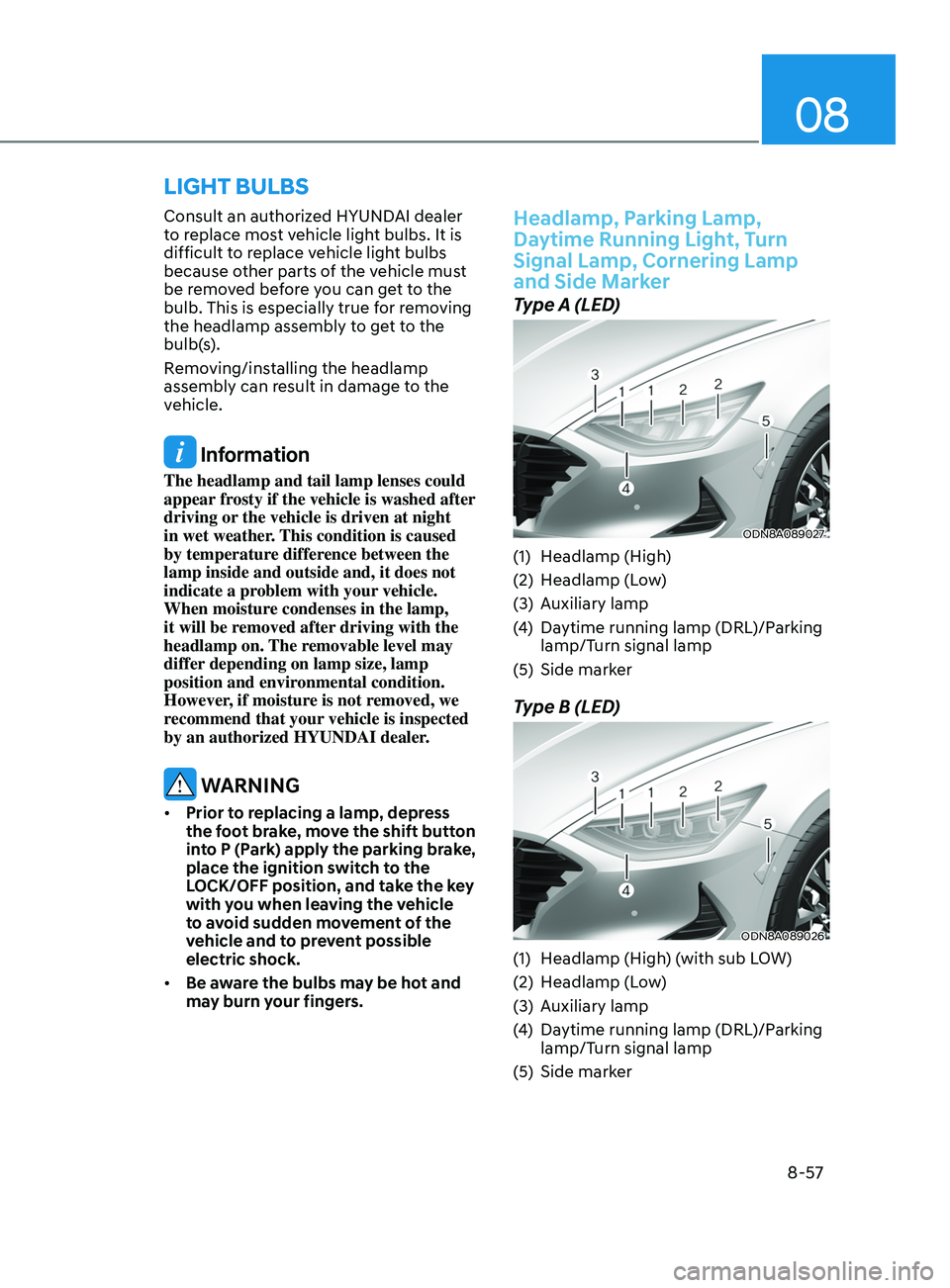
Headlamp, Parking Lamp,
Daytime Running Light, Turn
Signal Lamp, Cornering Lamp
and Side Marker
Type A (LED)
ODN8A089027
(1) Headlamp (High)
(2)
H
eadlamp (Low)
(3)
A
uxiliary lamp
(4)
Da
ytime running lamp (DRL)/Parking
lamp/Turn signal lamp
(5)
Side mark
er
Type B (LED)
ODN8A089026
(1) Headlamp (High) (with sub LOW)
(2)
H
eadlamp (Low)
(3)
A
uxiliary lamp
(4)
Da
ytime running lamp (DRL)/Parking
lamp/Turn signal lamp
(5)
Side mark
er
light BulBS
Page 518 of 546
Maintenance
8-64
ODN8A089039
NOTICE
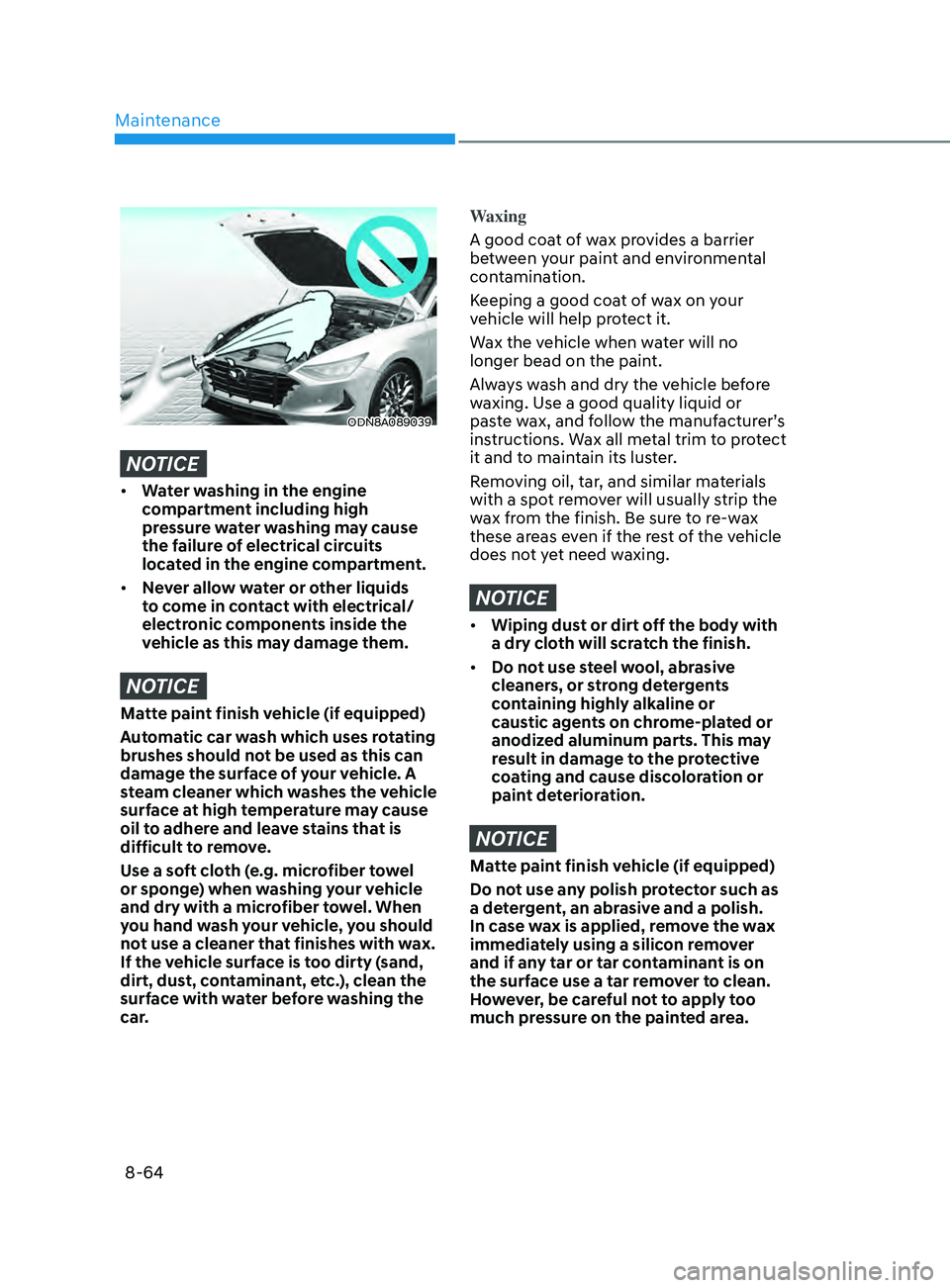
• Water washing in the engine
compartment including high
pressure water washing may cause
the failure of electrical circuits
located in the engine compartment.
• Never allow water or other liquids
to come in contact with electrical/
electronic components inside the
vehicle as this may damage them.
NOTICE
Matte paint finish vehicle (if equipped)
Automatic car wash which uses rotating
brushes should not be used as this can
damage the surface of your vehicle. A
steam cleaner which washes the vehicle
surface at high temperature may cause
oil to adhere and leave stains that is
difficult to remove.
Use a soft cloth (e.g. microfiber towel
or sponge) when washing your vehicle
and dry with a microfiber towel. When
you hand wash your vehicle, you should
not use a cleaner that finishes with wax.
If the vehicle surface is too dirty (sand,
dirt, dust, contaminant, etc.), clean the
surface with water before washing the
car.
Waxing
A good coat of wax provides a barrier
between your paint and environmental
contamination.
Keeping a good coat of wax on your
vehicle will help protect it.
Wax the vehicle when water will no
longer bead on the paint.
Always wash and dry the vehicle before
waxing. Use a good quality liquid or
paste wax, and follow the manufacturer’s
instructions. Wax all metal trim to protect
it and to maintain its luster.
Removing oil, tar, and similar materials
with a spot remover will usually strip the
wax from the finish. Be sure to re-wax
these areas even if the rest of the vehicle
does not yet need waxing.
NOTICE
• Wiping dust or dirt off the body with
a dry cloth will scratch the finish.
• Do not use steel wool, abrasive
cleaners, or strong detergents
containing highly alkaline or
caustic agents on chrome-plated or
anodized aluminum parts. This may
result in damage to the protective
coating and cause discoloration or
paint deterioration.
NOTICE
Matte paint finish vehicle (if equipped)
Do not use any polish protector such as
a detergent, an abrasive and a polish.
In case wax is applied, remove the wax
immediately using a silicon remover
and if any tar or tar contaminant is on
the surface use a tar remover to clean.
However, be careful not to apply too
much pressure on the painted area.
Page 520 of 546
Maintenance
8-66
NOTICE
•Do not use abrasive cleaner,
polishing compound, solvent, or wire
brushes on aluminum wheels.
• Clean the wheel when it has cooled.
• Use only a mild soap or neutral
detergent, and rinse thoroughly with
water. Also, clean the wheels after
driving on salted roads.
• Do not wash the wheels with high-
speed car wash brushes.
• Do not use any cleaners containing
acid or alkaline detergents.
Corrosion protection
Protecting your vehicle from corrosion
By using the most advanced design
and construction practices to combat
corrosion, HYUNDAI produces vehicles
of the highest quality. However, this is
only part of the job. To achieve the long-
term corrosion resistance your vehicle
can deliver, the owner’s cooperation and
assistance is also required.
Common causes of corrosion
The most common causes of corrosion
on your vehicle are:
•Road salt, dirt and moisture that is
allowed to accumulate underneath
the vehicle.
• Removal of paint or protective
coatings by stones, gravel, abrasion
or minor scrapes and dents which
leave unprotected metal exposed to
corrosion.
High-corrosion areas
If you live in an area where your vehicle is
regularly exposed to corrosive materials,
corrosion protection is particularly
important. Some of the common causes
of accelerated corrosion are road salts,
dust control chemicals, ocean air and
industrial pollution. Moisture breeds corrosion
Moisture creates the conditions in
which corrosion is most likely to occur.
For example, corrosion is accelerated
by high humidity, particularly when
temperatures are just above freezing. In
such conditions, the corrosive material is
kept in contact with the car surfaces by
moisture that is slow to evaporate.
Mud is particularly corrosive because it is
slow to dry and holds moisture in contact
with the vehicle. Although the mud
appears to be dry, it can still retain the
moisture and promote corrosion.
High temperatures can also accelerate
corrosion of parts that are not properly
ventilated so the moisture can be
dispersed. For all these reasons, it is
particularly important to keep your
vehicle clean and free of mud or
accumulations of other materials. This
applies not only to the visible surfaces
but particularly to the underside of the
vehicle.
To help prevent corrosion
Keep your vehicle clean
The best way to prevent corrosion is
to keep your vehicle clean and free of
corrosive materials. Attention to the
underside of the vehicle is particularly
important.
•
If you live in a high-corrosion area —
where road salts are used, near the
ocean, areas with industrial pollution,
acid rain, etc.—, you should take extra
care to prevent corrosion. In winter,
hose off the underside of your vehicle
at least once a month and be sure to
clean the underside thoroughly when
winter is over.
•
Page 522 of 546
Maintenance
8-68
NOTICE
Using anything but recommended
cleaners and procedures may affect the
fabric’s appearance and fire-resistant
properties.
Leather (if equipped)
• Features of seat leather
- L
eather is made from the outer skin
of an animal, which goes through a
special process to be available for
use. Since it is a natural product,
each part differs in thickness or
density.
Wrinkles may appear as a natural
result of stretching and shrinking
depending on the temperature and
humidity.
- The sea
t is made of stretchable
fabric to improve comfort.
- The parts con
tacting the body are
curved and the side supporting
area is high which provides driving
comfort and stability.
- W
rinkles may appear naturally
from usage. It is not a fault of the
products.
CAUTION
• Wrinkles or abrasions which appear
naturally from usage are not covered
by warranty.
• Belts with metallic accessories,
zippers or keys inside the back
pocket may damage the seat fabric.
• Make sure not to wet the seat. It may
change the nature of natural leather.
• Jeans or clothes which could bleach
may contaminate the surface of the
seat covering fabric. •
Caring for the leather seats
- V
acuum the seat periodically to
remove dust and sand on the seat. It
will prevent abrasion or damage of
the leather and maintain its quality.
- Wipe the na
tural leather seat cover
often with dry or soft cloth.
- U
se of proper leather protector may
prevent abrasion of the cover and
helps maintain the color. Be sure to
read the instructions and consult
a specialist when using leather
coating or protective agent.
- Ligh
t colored (beige, cream beige)
leather is easily contaminated and
the stain is noticeable. Clean the
seats frequently.
- A
void wiping with wet cloth. It may
cause the surface to crack.
• Cleaning the leather seats
- R
emove all contaminations
instantly. Refer to instructions below
for removal of each contaminant.
- Cosme
tic products (sunscreen,
foundation, etc.)
Apply cleansing cream on a cloth
and wipe the contaminated spot.
Wipe off the cream with a wet cloth
and remove water with a dry cloth. - Be verages (coffee, soft drink, etc.)
Apply a small amount of neutral
detergent and wipe until
contaminations do not smear.
- Oil R
emove oil instantly with
absorbable cloth and wipe with
stain remover used only for natural
leather.
- Che
wing gum
Harden the gum with ice and
remove gradually.
Page 524 of 546
Maintenance
8-70
1. Crankcase Emission Control System
The positive crankcase ventilation system
is employed to prevent air pollution
caused by blow-by gases being emitted
from the crankcase. This system supplies
fresh filtered air to the crankcase through
the air intake hose. Inside the crankcase,
the fresh air mixes with blow-by gases,
which then pass through the PCV valve
into the induction system.
2. Evaporative Emission Control System Including Onboard
Refueling Vapor Recovery
(ORVR)
The Evaporative Emission Control System
is designed to prevent fuel vapors from
escaping into the atmosphere. The
ORVR system is designed to allow the
vapors from the fuel tank to be loaded
into a canister while refueling at the gas
station, preventing the escape of fuel
vapors into the atmosphere.
Canister
Fuel vapors generated inside the fuel
tank are absorbed and stored in the
onboard canister. When the engine is
running, the fuel vapors absorbed in the
canister are drawn into the surge tank
through the purge control solenoid valve.
Purge Control Solenoid Valve (PCSV)
The purge control solenoid valve
is controlled by the Engine Control
Module (ECM); when the engine coolant
temperature is low during idling, the
PCSV closes so that evaporated fuel
is not taken into the engine. After the
engine warms-up during ordinary
driving, the PCSV opens to introduce
evaporated fuel to the engine.
3. Exhaust Emission Control System
The Exhaust Emission Control System is
a highly effective system which controls
exhaust emissions while maintaining
good vehicle performance.
When the engine starts or fails to start,
excessive attempts to restart the engine
may cause damage to the emission
system.
Engine exhaust (carbon monoxide)
precautions
• Carbon monoxide can be present
with other exhaust fumes. If you smell
exhaust fumes of any kind in your
vehicle, drive with all the windows
fully open. Have your vehicle checked
and repaired immediately.
WARNING
Engine exhaust gases contain carbon
monoxide (CO). Though colorless and
odorless, it is dangerous and could be
lethal if inhaled. Follow the instructions
on this page to avoid CO poisoning.
WARNING
CALIFORNIA PROPOSITION 65
WARNING
Engine exhaust and a wide variety of
automobile components and parts,
including components found in the
interior furnishings in a vehicle, contain
or emit chemicals known to the State
of California to cause cancer and
birth defects and reproductive harm.
In addition, certain fluids contained
in vehicles and certain products of
component wear contain or emit
chemicals known to the State of
California to cause cancer and birth
defects or other reproductive harm.
Page 530 of 546

Index
I-2
A
Air bag warning labels
........................................................................\
................. 3-57
Air bags
........................................................................\
........................................ 3-37
Driver’s air bag
........................................................................\
....................... 3-39
Passenger’s front air bag
........................................................................\
......... 3-39
Side air bags
........................................................................\
............................ 3-40
Curtain air bags
........................................................................\
....................... 3-41
How does the air bags system operate?........................................................... 3-42
SRS components and functions
....................................................................... 3-42
SRS warning light
........................................................................\
................... 3-43
What to expect after an air bag inflates
...........................................................3-46
Occupant Classification System (OCS)
.......................................................... 3-47
Why didn’
t my air bag go off in a collision
....................................................3-52
Air bag collision sensors
........................................................................\
......... 3-53
Air bag inflation conditions
........................................................................\
.... 3-54
Air bag non-inflation conditions
..................................................................... 3-54
SRS Care
........................................................................\
................................. 3-56
Additional safety precautions
........................................................................\
.. 3-57
Air bag warning labels
........................................................................\
............ 3-57
Air cleaner
........................................................................\
................................... 8-26
Air cleaner filter replacement
........................................................................\
...... 8-26
Air conditioning system specification
................................................................. 2-10
Antenna
........................................................................\
...................................... 5-152
Anti-lock Brake System (ABS)
........................................................................\
... 6-27
Appearance care........................................................................\
........................... 8-63 Exterior care
........................................................................\
............................ 8-63
Interior care
........................................................................\
............................. 8-67
Armrest
........................................................................\
........................................ 3-11
Audio / Video / Navigation system
.................................................................... 5-154
Auto defogging system
........................................................................\
.............. 5-141
AUT
O headlamp position
........................................................................\
............ 5-74
Auto LOCK - Enable on shift
........................................................................\
...... 5-34
Auto LOCK - Enable on speed
........................................................................\
.... 5-34
Auto UNLOCK - Enable on shift
........................................................................\
5-34
Auto UNLOCK -Air bag deployment
................................................................. 5-34
Automatic climate control system
..................................................................... 5-127
Automatic heating and air conditioning
........................................................5-128
Manual temperature control mode
................................................................ 5-129
Page 531 of 546

I
I-3
Mode selection ........................................................................\
...................... 5-130
Instrument panel vents
........................................................................\
.......... 5-132
Temperature control
........................................................................\
.............. 5-132
Air intake control
........................................................................\
.................. 5-133
Fan speed control
........................................................................\
.................. 5-134
Air conditioning
........................................................................\
.................... 5-134
OFF mode........................................................................\
.............................. 5-134
System operation
........................................................................\
................... 5-135
System maintenance
........................................................................\
.............. 5-136
Air conditioning refrigerant label.................................................................. 5-137
Automatic transmission
........................................................................\
............... 6-13
Transmission ranges
........................................................................\
................ 6-14
Paddle shifter (manual shift mode)
................................................................. 6-19
Shift-lock system
........................................................................\
..................... 6-15
Good driving practices
........................................................................\
............ 6-18
Parking
........................................................................\
.................................... 6-16
Automatic ventilation
........................................................................\
................ 5-143
AUX, USB and iPod
® port ........................................................................\
........ 5-152
B
Battery
........................................................................\
......................................... 8-31
Battery recharging
........................................................................\
................... 8-32
Battery saver function
........................................................................\
.................. 5-79
Before driving
........................................................................\
................................ 6-5
Blind-Spot Collision Warning (BCW)
................................................................. 6-67
Blind-Spot Collision-Avoidance Assist (BCA)
................................................... 6-67
Blind-Spot View Monitor (BVM)
....................................................................... 6-94
Blue Link
® center ........................................................................\
....................... 5-154
Bluetooth® Wireless Technology hands-free ..................................................... 5-154
Brake fluid
........................................................................\
................................... 8-24
Brake system
........................................................................\
................................ 6-20
Power brakes
........................................................................\
........................... 6-20
Disc brakes wear indicator
........................................................................\
...... 6-20
Electronic Parking Brake (EPB)
..................................................................... 6-21
Auto Hold
........................................................................\
................................ 6-24
Anti-lock Brake System (ABS)
....................................................................... 6-27
Electronic Stability Control (ESC).................................................................. 6-29
Vehicle Stability Management (VSM)
............................................................ 6-31
Good braking practices
........................................................................\
........... 6-32
Page 534 of 546

Index
I-6
Emission control system ........................................................................\
.............. 8-69
Crankcase emission control system
................................................................ 8-70
Evaporative emission control System
.............................................................8-70
Exhaust emission control system
.................................................................... 8-70
Engine compartment
........................................................................\
.............. 2-6, 8-3
Engine compartment panel fuse replacement
......................................................8-50
Engine coolant
........................................................................\
............................. 8-21
Engine coolant temperature gauge........................................................................\
. 4-4
Engine number
........................................................................\
............................. 2-14
Engine oil
........................................................................\
..................................... 8-19
Engine specification........................................................................\
....................... 2-7
Engine Start/Stop button
........................................................................\
................ 6-9
Evaporative emission control System
.................................................................. 8-70
Event Data Recorder (EDR)
........................................................................\
.......... 1-8
Exhaust emission control system
........................................................................\
. 8-70
Explanation of scheduled maintenance items
......................................................8-16
Exterior care........................................................................\
................................. 8-63
Exterior features........................................................................\
........................... 5-64 Hood
........................................................................\
........................................ 5-64
Trunk
........................................................................\
....................................... 5-65
Emer
gency trunk safety release....................................................................... 5-66
Fuel Filler Door
........................................................................\
....................... 5-70
Exterior overview Front view
........................................................................\
................................. 2-2
Rear view
........................................................................\
.................................. 2-3
F
Flat tire
........................................................................\
......................................... 7-12
Changing spare tire
........................................................................\
................ 7-12
Floor mat anchor(s)........................................................................\
.................... 5-151
Fluid Brake fluid
........................................................................\
............................... 8-24
Washer fluid
........................................................................\
............................ 8-25
Forward Collision-Avoidance Assist (FCA)
.......................................................6-40
FCA-Junction Turning function
...................................................................... 6-55
Forward/Reverse Parking Distance Warning (PDW)
..........................................5-99