2018 KIA RIO HATCHBACK heating
[x] Cancel search: heatingPage 305 of 492
657
Driving your vehicle
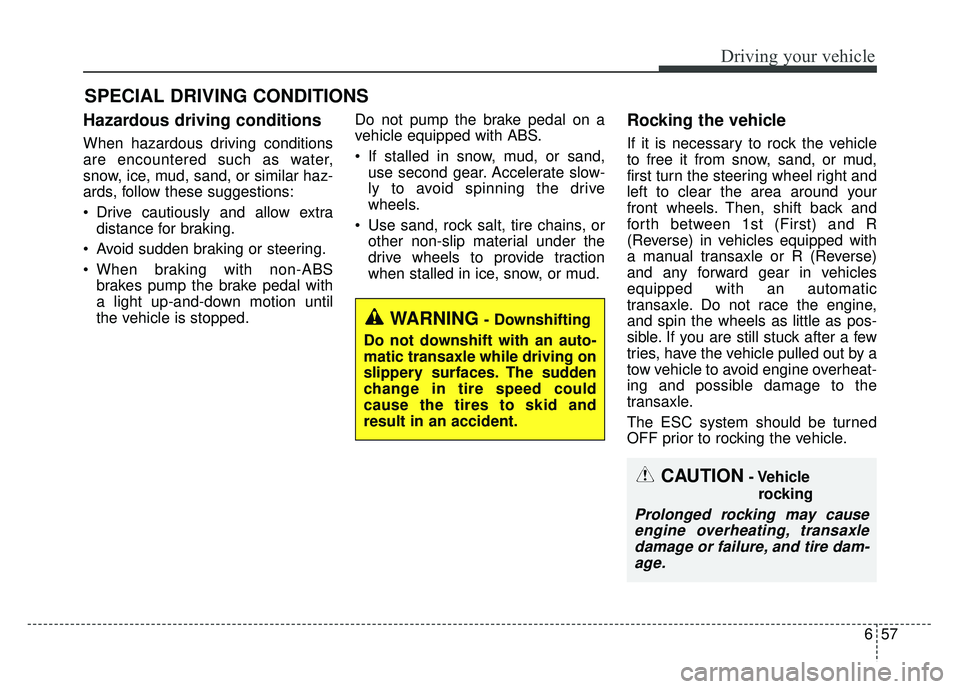
Hazardous driving conditions
When hazardous driving conditions
are encountered such as water,
snow, ice, mud, sand, or similar haz-
ards, follow these suggestions:
Drive cautiously and allow extradistance for braking.
Avoid sudden braking or steering.
When braking with non-ABS brakes pump the brake pedal with
a light up-and-down motion until
the vehicle is stopped. Do not pump the brake pedal on a
vehicle equipped with ABS.
If stalled in snow, mud, or sand,
use second gear. Accelerate slow-
ly to avoid spinning the drive
wheels.
Use sand, rock salt, tire chains, or other non-slip material under the
drive wheels to provide traction
when stalled in ice, snow, or mud.
Rocking the vehicle
If it is necessary to rock the vehicle
to free it from snow, sand, or mud,
first turn the steering wheel right and
left to clear the area around your
front wheels. Then, shift back and
forth between 1st (First) and R
(Reverse) in vehicles equipped with
a manual transaxle or R (Reverse)
and any forward gear in vehicles
equipped with an automatic
transaxle. Do not race the engine,
and spin the wheels as little as pos-
sible. If you are still stuck after a few
tries, have the vehicle pulled out by a
tow vehicle to avoid engine overheat-
ing and possible damage to the
transaxle.
The ESC system should be turned
OFF prior to rocking the vehicle.
SPECIAL DRIVING CONDITIONS
WARNING- Downshifting
Do not downshift with an auto-
matic transaxle while driving on
slippery surfaces. The sudden
change in tire speed could
cause the tires to skid and
result in an accident.
CAUTION- Vehicle rocking
Prolonged rocking may causeengine overheating, transaxledamage or failure, and tire dam-age.
Page 308 of 492
Driving your vehicle
60
6
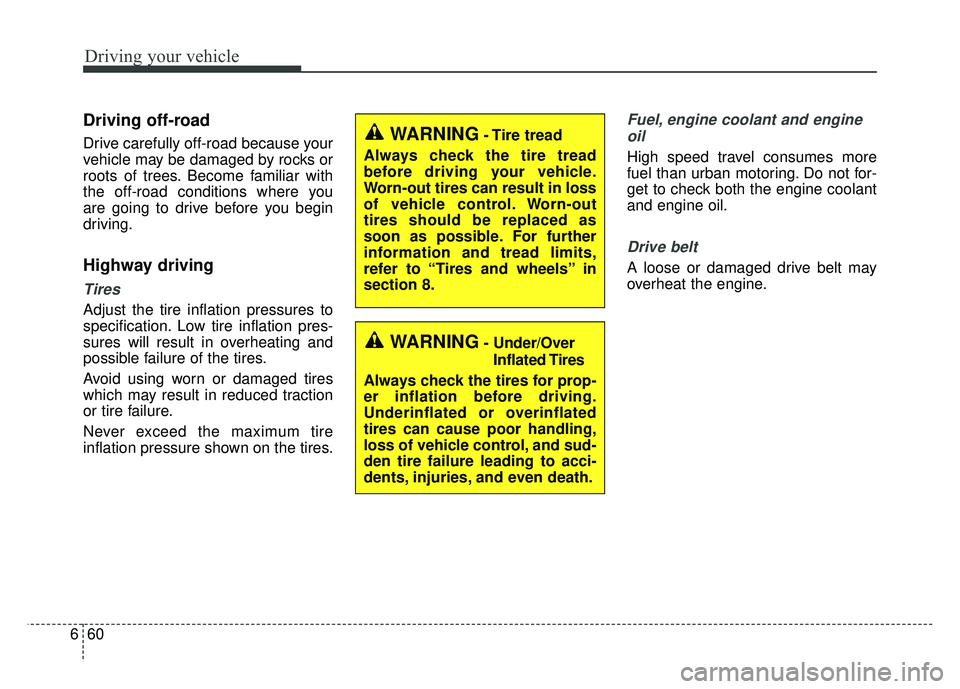
Driving off-road
Drive carefully off-road because your
vehicle may be damaged by rocks or
roots of trees. Become familiar with
the off-road conditions where you
are going to drive before you begin
driving.
Highway driving
Tires
Adjust the tire inflation pressures to
specification. Low tire inflation pres-
sures will result in overheating and
possible failure of the tires.
Avoid using worn or damaged tires
which may result in reduced traction
or tire failure.
Never exceed the maximum tire
inflation pressure shown on the tires.
Fuel, engine coolant and engine
oil
High speed travel consumes more
fuel than urban motoring. Do not for-
get to check both the engine coolant
and engine oil.
Drive belt
A loose or damaged drive belt may
overheat the engine.
WARNING- Tire tread
Always check the tire tread
before driving your vehicle.
Worn-out tires can result in loss
of vehicle control. Worn-out
tires should be replaced as
soon as possible. For further
information and tread limits,
refer to “Tires and wheels” in
section 8.
WARNING- Under/Over Inflated Tires
Always check the tires for prop-
er inflation before driving.
Underinflated or overinflated
tires can cause poor handling,
loss of vehicle control, and sud-
den tire failure leading to acci-
dents, injuries, and even death.
Page 325 of 492
What to do in an emergency
67
IF THE ENGINE OVERHEATS
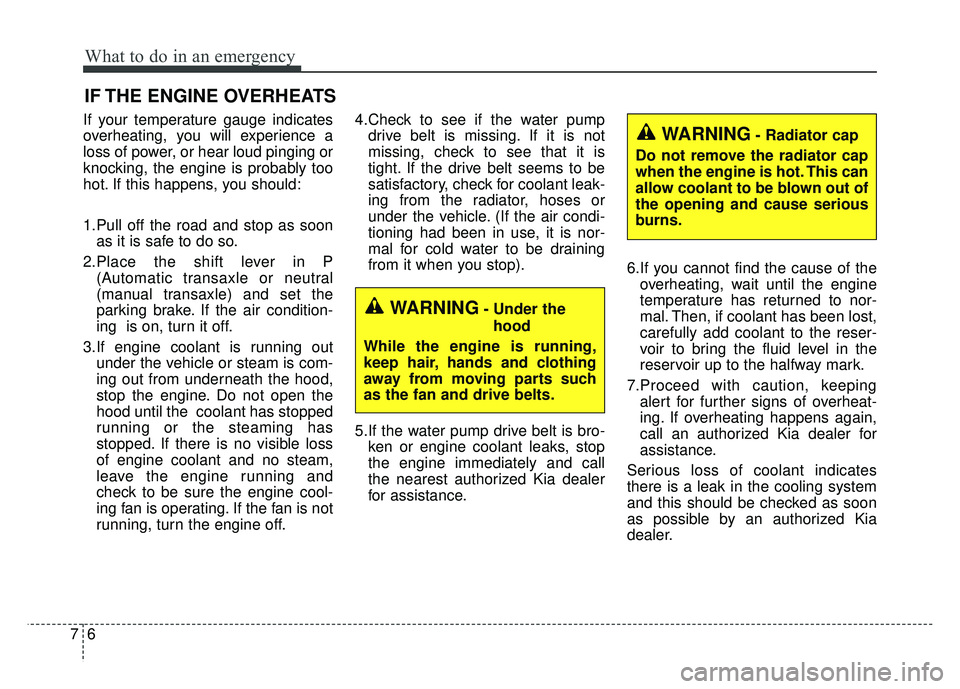
If your temperature gauge indicates
overheating, you will experience a
loss of power, or hear loud pinging or
knocking, the engine is probably too
hot. If this happens, you should:
1.Pull off the road and stop as soonas it is safe to do so.
2.Place the shift lever in P (Automatic transaxle or neutral
(manual transaxle) and set the
parking brake. If the air condition-
ing is on, turn it off.
3.If engine coolant is running out under the vehicle or steam is com-
ing out from underneath the hood,
stop the engine. Do not open the
hood until the coolant has stopped
running or the steaming has
stopped. If there is no visible loss
of engine coolant and no steam,
leave the engine running and
check to be sure the engine cool-
ing fan is operating. If the fan is not
running, turn the engine off. 4.Check to see if the water pump
drive belt is missing. If it is not
missing, check to see that it is
tight. If the drive belt seems to be
satisfactory, check for coolant leak-
ing from the radiator, hoses or
under the vehicle. (If the air condi-
tioning had been in use, it is nor-
mal for cold water to be draining
from it when you stop).
5.If the water pump drive belt is bro- ken or engine coolant leaks, stop
the engine immediately and call
the nearest authorized Kia dealer
for assistance. 6.If you cannot find the cause of the
overheating, wait until the engine
temperature has returned to nor-
mal. Then, if coolant has been lost,
carefully add coolant to the reser-
voir to bring the fluid level in the
reservoir up to the halfway mark.
7.Proceed with caution, keeping alert for further signs of overheat-
ing. If overheating happens again,
call an authorized Kia dealer for
assistance.
Serious loss of coolant indicates
there is a leak in the cooling system
and this should be checked as soon
as possible by an authorized Kia
dealer.
WARNING- Under the hood
While the engine is running,
keep hair, hands and clothing
away from moving parts such
as the fan and drive belts.
WARNING- Radiator cap
Do not remove the radiator cap
when the engine is hot. This can
allow coolant to be blown out of
the opening and cause serious
burns.
Page 480 of 492
Index
2I
Air bag inflation conditions ..........................................3-51
Air bag non-inflation conditions ..................................3-52
Air bag warning label ....................................................3-55
Air bag warning light ....................................................3-34
Air bags........................................................................\
..3-30Operation ....................................................................3-31\
Air bag warning light ..................................................3-34
SRS components and functions ..................................3-34
Occupant detection system ........................................3-37
Driver's and passenger's front air bag ........................3-44
Side air bag ................................................................3-47
Curtain air bag ............................................................3-48
Air bag inflation conditions ........................................3-51
Air bag non-inflation conditions ................................3-52
SRS care ......................................................................3-\
54
Adding equipment to or modifying your air bag-equipped vehicle ................................................3-55
Air bag warning label ................................................3-55
Air cleaner ....................................................................8-34\
Filter replacement ......................................................8-34
Air Conditioning System ................................................9-6
Anti-lock brake system (ABS) ......................................6-27
Appearance care ..........................................................8-101 Exterior care ..............................................................8-101
Interior care ..............................................................8-106 Audio (without touch screen) ..........................................5-7
Feature of your audio ....................................................5-8
Radio ........................................................................\
..5-14
SiriusXM ....................................................................5-16\
Media ........................................................................\
..5-18
Phone ........................................................................\
..5-28
Setup ........................................................................\
..5-36
Audio system ..................................................................5-2 Antenna ........................................................................\
5-2
AUX, USB port ............................................................5-3
Auto light position ........................................................4-89
Automatic climate control system ..............................4-114 Automatic heating and air conditioning ..................4-115
Manual heating and air conditioning ........................4-116
System operation ......................................................4-121
Automatic transaxle ......................................................6-18 Automatic transaxle operation ....................................6-18
Good driving practices ................................................6-22
Back-up lamp bulb replacement (4 door) ......................8-94
Back-up lamp bulb replacement (5 door) ......................8-89
A
B
Page 487 of 492

I9
Index
Maintenance schedule......................................................8-9Normal maintenance schedule ....................................8-10
Maintenance under severe usage conditions ..............8-20
Maintenance services ......................................................8-5 Owner’s responsibility ..................................................8-5
Owner maintenance precautions ..................................8-6
Manual climate control system....................................4-104 Heating and air conditioning ....................................4-105
System operation ......................................................4-110
Climate control air filter ..........................................4-112
Checking the amount of air conditioner refrigerant and compressor lubricant ..............................................4-113
Manual transaxle............................................................6-15 Manual transaxle operation ........................................6-15
Good driving practices ................................................6-17
Manual windows ............................................................4-35
Map lamp ......................................................................4-\
98
Map lamp bulb replacement ..........................................8-97
Mirrors ........................................................................\
..4-49 Inside rearview mirror ................................................4-49
Day/night rearview mirror ..........................................4-49
Outside rearview mirror ..............................................4-49
Remote control ............................................................4-50
Folding the outside rearview mirror ..........................4-51 Occupant detection system ............................................3-37
Odometer ......................................................................4-\
56
Oil (Engine) ..................................................................8-26
Online factory authorized manuals (U.S. ONLY) ........9-16
Operation(Air bags) ......................................................3-31
Outside rearview mirror ................................................4-49
Outside temperature gauge ............................................4-56
Over view (LCD windows) ..........................................4-59
Overheats ........................................................................\
7-6
Owner maintenance ........................................................8-7
Owner maintenance schedule ......................................8-7
Parking brake........................................................6-25, 8-33 Checking the parking brake ........................................8-33
Parking light position ....................................................4-88
Placing a passenger seat belt into the auto lock mode ..3-25
Position lamp + DRL (LED type) bulb replacement ....8-84
Power outlet ................................................................4-133
Power window lock button ............................................4-34
Precautions ....................................................................3-20\
Pre-tensioner seat belt....................................................3-17O
P