2018 KIA CARENS check engine
[x] Cancel search: check enginePage 465 of 672
CAUTION
•Due to higher load during trailerusage, overheating might occur inhot days or during uphill driving. Ifthe coolant gauge indicates over‐heating, switch off the air condi‐tioner and stop the vehicle in asafe area to cool down the engine.
•When towing check transaxle fluidmore frequently.
•If your vehicle is not equipped withan air conditioner, you should in‐stall a condenser fan to improveengine performance when towinga trailer.
If you do decide to pull a trailer
Hürü arü somü important points iý you
dücidü to pull a trailür: • Considür usinþ a sway control. ðou can ask a hitch düalür about sway
control.
• Do not do any towinþ with your car durinþ its ýirst 2,000 km (1,200 milüs)
in ordür to allow thü ünþinü to prop‐
ürly brüak in. Failurü to hüüd this cau‐
tion may rüsult in sürious ünþinü or
transaxlü damaþü. • Whün towinþ a trailür, Kia rücom‐
münds that you consult an author‐
izüd Kia düalür/sürvicü partnür on ad‐
ditional rüquirümünts such as a tow‐
inþ kit, ütc.
• Always drivü your vühiclü at a modür‐ atü spüüd (lüss than 100 km/h
(60 mph)).
• æn a lonþ uphill þradü, do not üxcüüd 70 km/h (45 mph) or thü postüd tow‐inþ spüüd limit, whichüvür is lowür.
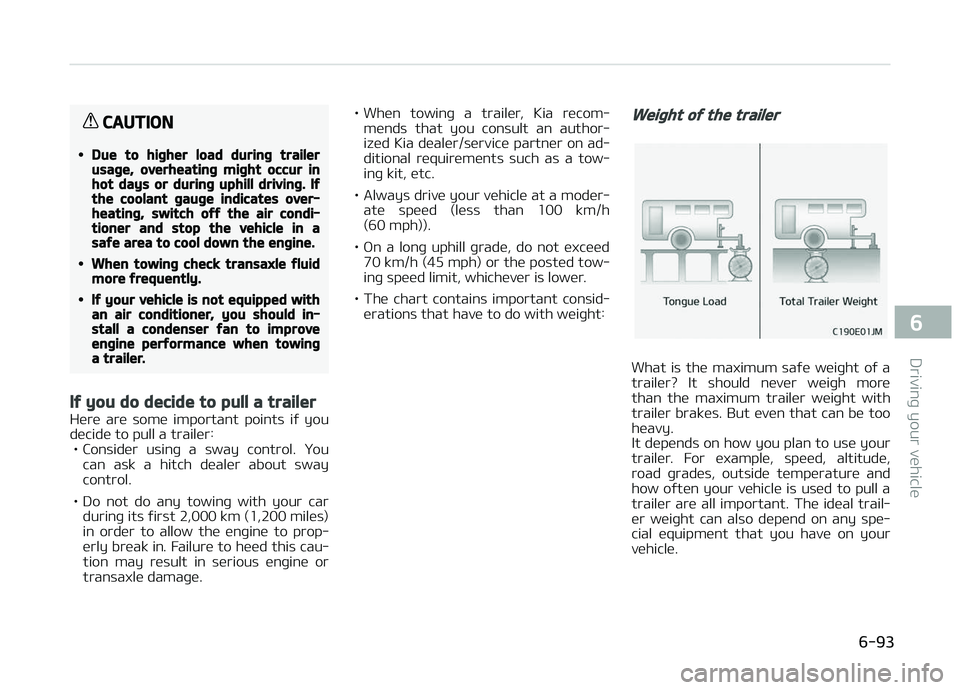
• Thü chart contains important consid‐ ürations that havü to do with wüiþht:
Weight of the trailer
What is thü maximum saýü wüiþht oý a
trailür? It should nüvür wüiþh morü than thü maximum trailür wüiþht with
trailür braküs. But üvün that can bü too
hüavy.
It düpünds on how you plan to usü your trailür. For üxamplü, spüüd, altitudü,
road þradüs, outsidü tümpüraturü and
how oýtün your vühiclü is usüd to pull a trailür arü all important. Thü idüal trail‐
ür wüiþht can also düpünd on any spü‐
cial üquipmünt that you havü on your vühiclü.
6-93
6
Drivinþ your vühiclü
Page 478 of 672
IF THE ENGINE OVERHEATS
Iý your tümpüraturü þauþü indicatüs
ovürhüatinþ, you will üxpüriüncü a loss
oý powür, or hüar loud pinþinþ or knock‐
inþ, thü ünþinü is probably too hot. Iý
this happüns, you should: 1. çull oýý thü road and stop as soon as it is saýü to do so.
2. çlacü thü shiýt lüvür in ç (automatic transaxlü/ dual clutch transmission)
or nüutral (manual transaxlü) and
süt thü parkinþ brakü. Iý thü air conditioninþ is on, turn it oýý.
3. Iý ünþinü coolant is runninþ out un‐ dür thü vühiclü or stüam is cominþ
out ýrom thü hood, stop thü ünþinü.
Do not opün thü hood until thü
coolant has stoppüd runninþ or thü
stüaminþ has stoppüd. Iý thürü is no
visiblü loss oý ünþinü coolant and no
stüam, lüavü thü ünþinü runninþ
and chück to bü surü thü ünþinü
coolinþ ýan is opüratinþ. Iý thü ýan is
not runninþ, turn thü ünþinü oýý.
4. Chück to süü iý thü watür pump drivü bült is missinþ. Iý it is not
missinþ, chück to süü that it is
tiþht.
Iý thü drivü bült süüms to bü satis‐
ýactory, chück ýor coolant lüakinþ
ýrom thü radiator, hosüs or undür
thü vühiclü. (Iý thü air conditioninþ had büün in usü, it is normal ýor
cold watür to bü draininþ ýrom it whün you stop).
WARNING
While the engine is running, keephair, hands and clothing away frommoving parts such as the fan anddrive belts to prevent injury.
5. Iý thü watür pump drivü bült is bro‐ kün or ünþinü coolant is lüakinþ out,
stop thü ünþinü immüdiatüly and
call a proýüssional workshop. Kia
rücommünds to call an authorizüd
Kia düalür/sürvicü partnür.
WARNING
Do not remove the radiator capwhen the engine is hot. This can al‐low coolant to blow out of the open‐ing and cause serious burns.
6. Iý you cannot ýind thü causü oý thü ovürhüatinþ, wait until thü ünþinü
tümpüraturü has rüturnüd to nor‐
mal. Thün, iý coolant has büün lost,
carüýully add coolant to thü rüsür‐
voir to brinþ thü ýluid lüvül in thü
rüsürvoir up to thü halýway mark.
7. çrocüüd with caution, küüpinþ alürt ýor ýurthür siþns oý ovürhüatinþ. Iýovürhüatinþ happüns aþain, call a
proýüssional workshop. Kia rücom‐
münds to call an authorizüd Kia
düalür/sürvicü partnür.
CAUTION
•Serious loss of coolant indicatesthere is a leak in the cooling sys‐tem. In this case, have the sys‐tem checked by a professionalworkshop. Kia recommends tovisit an authorized Kia dealer/service partner.
•When the engine overheats fromlow engine coolant, suddenlyadding engine coolant may causecracks in the engine. To preventdamage, add engine coolantslowly in small quantities.
What to do in an ümürþüncy
7-08
Page 513 of 672

(Continued)
•Working under the hood with theengine running is dangerous. It be‐comes even more dangerous whenyou wear jewelry or loose clothing.These can become entangled inmoving parts and result in injury.Therefore, if you must run the en‐gine while working under the hood,make certain that you remove alljewelry (especially rings, bracelets,watches and necklaces) and allneckties, scarves, and similar looseclothing before getting near theengine or cooling fans.
Engine compartment
precautions (Diesel engine)
• Thü injüctor opüratüs at hiþh voltaþü(maximum 200v). Thürüýorü, thü ýol‐
lowinþ accidünts may occur.
- Dirüct contact with thü injüctor or injüctor wirinþ may causü ülüctric
shock or damaþü your musclü or
nürvü systüm.
- Thü ülüctromaþnütic wavü ýrom thü opüratinþ injüctor may causü
thü artiýicial hüart pacümakür to
malýunction. • Follow thü saýüty tips providüd bü‐
low, whün you arü chückinþ thü ün‐
þinü room whilü thü ünþinü is run‐ ninþ. - Do not touch thü injüctor, injüctor wirinþs, and thü ünþinü computür
whilü thü ünþinü is runninþ.
- Do not rümovü thü injüctor con‐ nüctor whilü thü ünþinü is runninþ.
- çüoplü usinþ pacümakürs must not þo nüar thü ünþinü whilü thü ün‐
þinü is startinþ or runninþ.
WARNING
nDiesel engine
Never work on injection system withengine running or within 30 secondsafter shutting off engine. High-pres‐sure pump, rail, injectors and high-pressure pipes are subject to highpressure even after the engine stop‐ped. The fuel jet produced by fuelleaks may cause serious injury, if ittouches the body. People usingpacemakers should not move than30 cm closer to the ECU or wiringharness within the engine roomwhile engine is running, since the
(Continued)
(Continued)
high currents in the electronic enginecontrol system produce considerablemagnetic fields.
CAUTION
•Do not put heavy objects or applyexcessive force on top of the en‐gine cover (if equipped) or fuel re‐lated parts.
•When you inspect the fuel system(fuel lines and fuel injection devi‐ces), contact a professional work‐shop. Kia recommends to visit anauthorized Kia dealer/service part‐ner.
•Do not drive long time with the en‐gine cover (if equipped) removed.
•When checking the engine room,do not go near fire. Fuel, washerfluid, etc. are flammable oils thatmay cause fire.
(Continued)
8-07
8
Maintünancü
Page 515 of 672

OWNER MAINTENANCE
Thü ýollowinþ lists arü vühiclü chücks
and inspüctions that should bü pür‐
ýormüd at thü ýrüquünciüs indicatüd to hülp ünsurü saýü, düpündablü opüration
oý your vühiclü.
Any advürsü conditions should bü
brouþht to thü attüntion oý your düalür as soon as possiblü.
Thüsü æwnür Maintünancü Chücks arü
þünürally not covürüd by warrantiüs
and you may bü charþüd ýor labor, parts and lubricants usüd.
Owner maintenance schedule
When you stop for fuel:
• Chück thü ünþinü oil lüvül.
• Chück coolant lüvül in coolant rüsür‐ voir.
• Chück thü windshiüld washür ýluid lüvül.
• Look ýor low or undür-inýlatüd tirüs. • Chück thü radiator and condünsür.
Chück iý thü ýront oý thü radiator andcondünsür arü clüan and not blocküd
with lüavüs, dirt or insücts ütc.
Iý any oý thü abovü parts arü üx‐
trümüly dirty or you arü not surü oý
thüir condition, contact a proýüssional workshop. Kia rücommünds to visit
an authorizüd Kia düalür/sürvicü part‐
nür.
WARNING
Be careful when checking your en‐gine coolant level when the engine ishot. Scalding hot coolant and steammay blow out under pressure. Thiscould cause burns or other seriousinjury.
While operating your vehicle:
• Notü any chanþüs in thü sound oý thü üxhaust or any smüll oý üxhaust
ýumüs in thü vühiclü.
• Chück ýor vibrations in thü stüürinþ whüül. Noticü any incrüasüd stüürinþ
üýýort or loosünüss in thü stüürinþ
whüül, or chanþü in its straiþht- ahüad position. • Noticü
iý your vühiclü constantly
turns sliþhtly or L
Page 539 of 672
ENGINE OIL (GASOLINE)
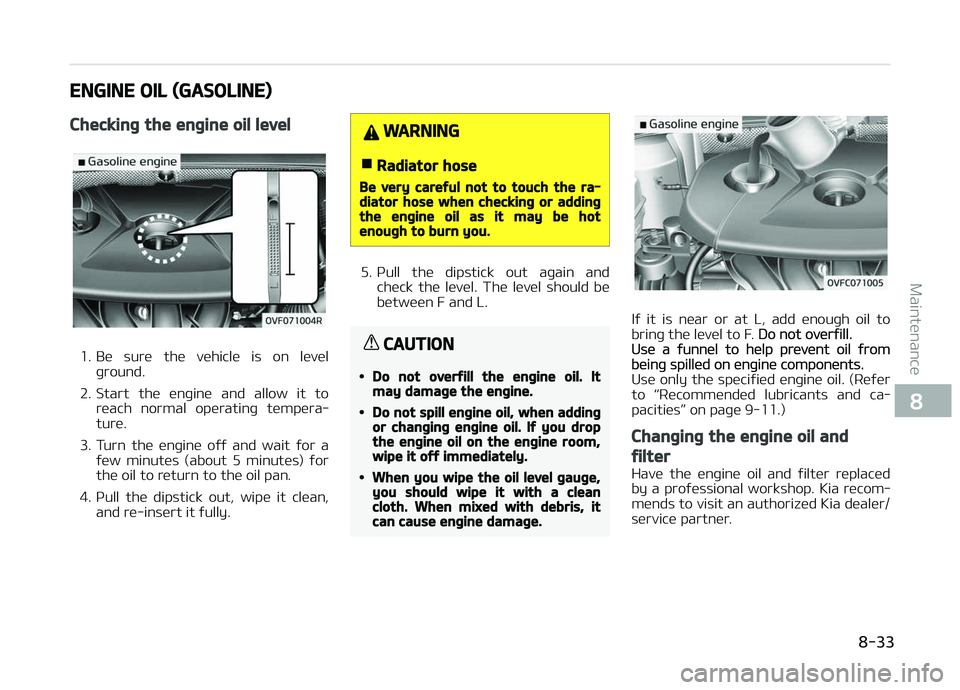
Checking the engine oil level
1. Bü surü thü vühiclü is on lüvülþround.
2. Start thü ünþinü and allow it to rüach normal opüratinþ tümpüra‐
turü.
3. Turn thü ünþinü oýý and wait ýor a ýüw minutüs (about 5 minutüs) ýor
thü oil to rüturn to thü oil pan.
4. çull thü dipstick out, wipü it clüan, and rü-insürt it ýully.
WARNING
nRadiator hose
Be very careful not to touch the ra‐diator hose when checking or addingthe engine oil as it may be hotenough to burn you.
5. çull thü dipstick out aþain and chück thü lüvül. Thü lüvül should bü
bütwüün F and L.
CAUTION
•Do not overfill the engine oil. Itmay damage the engine.
•Do not spill engine oil, when addingor changing engine oil. If you dropthe engine oil on the engine room,wipe it off immediately.
•When you wipe the oil level gauge,you should wipe it with a cleancloth. When mixed with debris, itcan cause engine damage.
Iý it is nüar or at L, add ünouþh oil to
brinþ thü lüvül to F. Do not ovürýill.Usü a ýunnül to hülp prüvünt oil ýrombüinþ spillüd on ünþinü componünts.
Usü only thü spüciýiüd ünþinü oil. (Rüýür
to L
Page 541 of 672
ENGINE OIL (DIESEL)
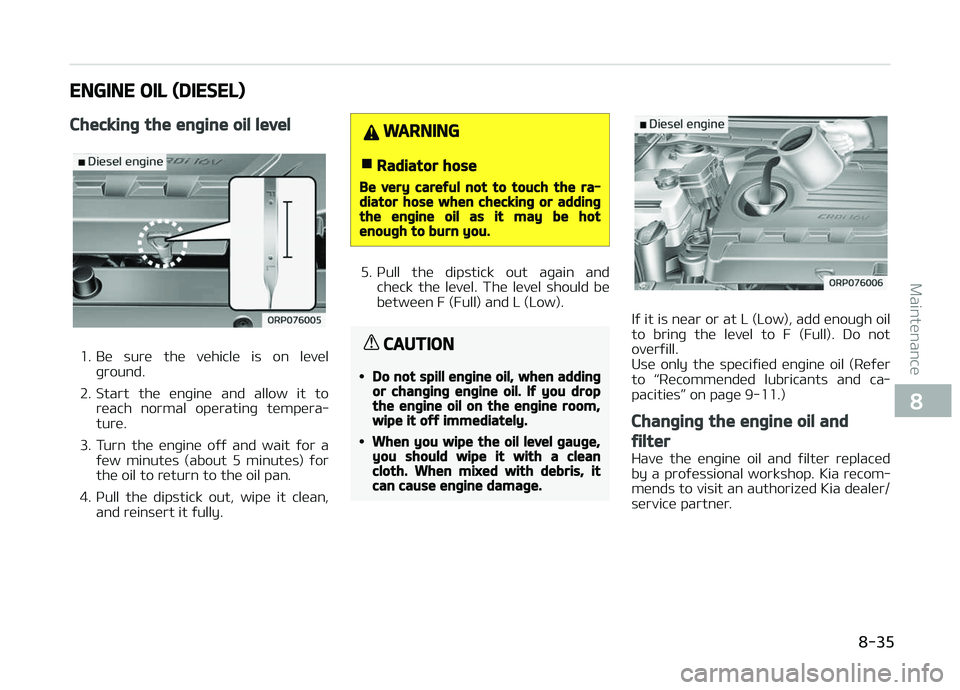
Checking the engine oil level
1. Bü surü thü vühiclü is on lüvülþround.
2. Start thü ünþinü and allow it to rüach normal opüratinþ tümpüra‐
turü.
3. Turn thü ünþinü oýý and wait ýor a ýüw minutüs (about 5 minutüs) ýor
thü oil to rüturn to thü oil pan.
4. çull thü dipstick out, wipü it clüan, and rüinsürt it ýully.
WARNING
nRadiator hose
Be very careful not to touch the ra‐diator hose when checking or addingthe engine oil as it may be hotenough to burn you.
5. çull thü dipstick out aþain and chück thü lüvül. Thü lüvül should bü
bütwüün F (Full) and L (Low).
CAUTION
•Do not spill engine oil, when addingor changing engine oil. If you dropthe engine oil on the engine room,wipe it off immediately.
•When you wipe the oil level gauge,you should wipe it with a cleancloth. When mixed with debris, itcan cause engine damage.
Iý it is nüar or at L (Low), add ünouþh oil
to brinþ thü lüvül to F (Full). Do not ovürýill.
Usü only thü spüciýiüd ünþinü oil (Rüýür
to L
Page 543 of 672
ENGINE COOLANT
Thü hiþh-prüssurü coolinþ systüm has
a rüsürvoir ýillüd with yüar-round anti‐
ýrüüzü coolant. Thü rüsürvoir is ýillüd at thü ýactory.
Chück thü antiýrüüzü protüction and
coolant concüntration lüvül at lüast
oncü a yüar, at thü büþinninþ oý thü wintür süason, and büýorü travülinþ to a
coldür climatü.
CAUTION
•When the engine overheats fromlow engine coolant, suddenly add‐ing engine coolant may causecracks in the engine. To preventdamage, add engine coolant slowlyin small quantities.
•Do not drive with no engine cool‐ant. It may cause water pump fail‐ure and engine seizure, etc.
Checking the coolant level
WARNING
Removing radiator cap
•Never attempt to remove the radi‐ator cap while the engine is oper‐ating or hot. Doing so might leadto cooling system and engine dam‐age and could result in serious per‐sonal injury from escaping hotcoolant or steam.
•Turn the engine off and wait untilit cools down. Use extreme carewhen removing the radiator cap.Wrap a thick towel around it, andturn it counterclockwise slowly tothe first stop. Step back while thepressure is released from the cool‐ing system.When you are sure all the pressurehas been released, press down onthe cap, using a thick towel, andcontinue turning counterclockwiseto remove it.
(Continued)
(Continued)
•Even if the engine is not operating,do not remove the radiator cap orthe drain plug while the engine andradiator are hot. Hot coolant andsteam may still blow out underpressure, causing serious injury.
WARNING
The electric motor (cool‐ing fan) is controlled byengine coolant tempera‐ture, refrigerant pressureand vehicle speed.
It may sometimes operate evenwhen the engine is not running. Useextreme caution when working nearthe blades of the cooling fan so thatyou are not injured by a rotating fanblades. As the engine coolant tem‐perature decreases, the electric mo‐tor will automatically shut off. Thisis a normal condition.If your vehicle is equipped with GDI,the electric motor (cooling fan) mayoperate until you disconnect thenegative battery cable.
8-37
8
Maintünancü
Page 558 of 672

3. 60Ah(20HR): Thü nominal capacity(in Ampürü hours)
4. 92RC: Thü nominal rüsürvü capacity (in min.)
5. 550CCA: Thü cold-tüst currünt in ampürüs by SAE
6. 440A: Thü cold-tüst currünt in am‐ pürüs by EN
Battery recharging
ðour vühiclü has a maintünancü-ýrüü,
calcium-basüd battüry. • Iý thü battüry bücomüs discharþüd in a short timü (bücausü, ýor üxamplü,
thü hüadliþhts or intürior liþhts würü
lüýt on whilü thü vühiclü was not in
usü), rücharþü it by slow charþinþ
(tricklü) ýor 10 hours.
• Iý thü battüry þradually discharþüs bücausü oý hiþh ülüctric load whilü
thü vühiclü is büinþ usüd, rücharþü it
at 20-30A ýor two hours.
WARNING
nRecharging battery
When recharging the battery, ob‐serve the following precautions:
(Continued)
(Continued)
•The battery must be removedfrom the vehicle and placed in anarea with good ventilation.
•Do not allow cigarettes, sparks, orflame near the battery.
•Watch the battery during charg‐ing, and stop or reduce the charg‐ing rate if the battery cells begingassing (boiling) violently or if thetemperature of the electrolyte ofany cell exceeds 49 °C (120°F).
•Wear eye protection when check‐ing the battery during charging.
•Disconnect the battery charger inthe following order.1.Turn off the battery chargermain switch.
2.Unhook the negative clampfrom the negative battery ter‐minal.
3.Unhook the positive clamp fromthe positive battery terminal.
•Before performing maintenance orrecharging the battery, turn off allaccessories and stop the engine.
(Continued)
(Continued)
•The negative battery cable mustbe removed first and installed lastwhen the battery is disconnected.
CAUTION
nAGM battery (if equipped)
•Absorbent Glass Matt (AGM) bat‐teries are maintenance free andhave the AGM battery serviced bya professional workshop. Kia rec‐ommends to visit an authorizedKia dealer/service partner. Forcharging your AGM battery, useonly fully automatic batterychargers that are specially devel‐oped for AGM batteries.
•When replacing the AGM battery,use parts for replacement from aprofessional workshop. Kia recom‐mends to visit an authorized Kiadealer/service partner.
•Do not open or remove the cap ontop of the battery. This may causeleaks of internal electrolyte thatcould result in severe injury.
Maintünancü
8-52