2018 AUDI S3 SEDAN ESP
[x] Cancel search: ESPPage 307 of 404

u. 00 .-< N l' N .-< 0 N > 00
provide supplementa l protection in certain fron
tal collisions .
A WARNING -
Not using a booster seat, using the booster
seat improperly, incorrectly insta lling a boos
ter seat or using the vehicle safety belt im
properly increases the risk of serious personal
injury and death in a collision or other emer
gency situat ion . To help reduce the r isk of se
r ious personal inj ury and/o r death:
- The shoulder belt must l ie as close to the
center of the child 's collar bone as poss ible
and must lie flat and snug on the uppe r
body . It must neve r lie across the t hroat or
neck . The lap be lt must lie across the pe lv is
and never across the stomac h or abdomen.
Make sure that the belt lies flat and sn ug .
Pull on the belt to tighten if necessary.
- Failure to proper ly route safety belts over a
child's body will ca use severe injuries in an
acc ident or other emergency situation
¢ page 260.
- The rear side of the child safety seat should be pos it ioned as close as poss ible to the
backrest on the vehicle seat.
- For adjustable head restraints: ad just o r re
move the rear seat head restraint if it is d if
ficult to install the child seat w ith the head
restra int i n place
¢ page 61 . Install the
head restraint again immediately once the
c hild seat is removed. Driving w ithout head
restra ints or w ith he ad restraints t hat are
not p roper ly adjusted increases the risk of
serious or fata l neck injury d ramatically.
- Never le t a child put the sho uld er be lt un der
the arm or be hind t he back, because it co ul d
cause severe injuries in a c rash .
- C hildren o n the front sea t of any car, even
with Adva nced Ai rbags, can be serio usly in
jure d or even killed when a n ai rbag inflates.
- Never le t a child stan d or knee l on any seat,
for example the front seat.
- Never le t a child ride in the c argo a re a of
yo ur vehicle.
- Alw ays remem ber th at a c hild leaning for
wa rd, s itting sideways or out of position in
any way during an accident can be struck by
Ch ild saf ety
a dep loying airbag. Th is w ill resu lt in serious
pe rsonal in jury or death.
- If you m ust insta ll a booster seat on the
front passenger seat because of exceptiona l
circumstances the
PASSENGER AIR BAG
OFF
li ght must come on a nd stay on, when
ever the ignit ion is switched on.
- If t he
PASSENGER AIR BAG OFF light does
not come on and stay on, perform the
checks described
Q page 281, Monitoring
the Advanced Airbag System .
-Take the child restraint off the front passen
ge r seat and install it properly at one of the
rear seat pos itions if t he
PASSENGER AIR
BAG OFF
ligh t does not stay on wheneve r
t he ig nit io n is sw itch ed on.
- Always read and heed all WAR NINGS whe n
eve r using a ch ild restrained in a vehicle is
be ing use d
Q page 260, Safe ty belts,
Q page 269, Airbag system and
Q page 294, Important information .
Securing child safety
seats
Securing a child safety seat using a safety
belt
Safety belts for the rear seats and the front pas
senger can be locked with the convertible locking
retractor to properly secure child safety seats .
The safety belts emergency loc king retr actors for
the rear seats safety be lts and for the front pas
senger's seat safety be lt have a convertible lock
ing retractor for child restraints . The safety be lt
must be locked so that be lt webb ing cannot un
reel. The retractor can be act ivated to lock the
safety belt and prevent the safety belt webbing
from loosening up dur ing norma l driving . A ch ild
safety seat can only be prope rly installed when
the safety be lt is locked so t hat the ch ild and
c hi ld safety seat will stay in place.
Always remember : Even though your veh icle is
equipped with an Advanced Airbag system, all
c hi ldren, especia lly those 12 yea rs and younger,
sho uld a lways r ide in t he bac k seat p roperly re-
st rained for thei r age and s ize.
..,..
305
Page 309 of 404

u. 00 .-< N l' N .-< 0 N > 00
-Never put the forward-facing child restraint
up, against or very near the ins trumen t pan
el.
- Always move t he front passenger seat to
the h ighest position in the up an d down ad
justment range and move it back t o the
r e armost position in t he seat's fore a nd aft
adjustment range, as fa r away from the air
bag as possib le, before insta lling the for
wa rd-facing child restra int.
- Always make sure that the safety belt upper
anchorage is beh ind the child restraint and
not next to or in front of the chi ld restrain t
so tha t the safety bel t will be properly pos i
tioned.
- Make sure tha t the
PASSENGER AIR BAG
OFF
light comes on and s tays on all the time
whenever the ignition is switched on .
A WARNING
Rearward-facing child restraints:
- A ch ild in a re arwa rd-facing child sa fety seat
installed on the front passenger seat wi ll be
seriously injured and can be killed if the
front airbag inflates
-even with an Ad
vanced Airbag System.
- The inflating airbag will hit the child safety
seat or infant carrier with great force and
will smash the ch ild safety seat and chi ld
against the backrest, center armrest , door
o r roof .
- Always be especially careful if you must in
sta ll a rearward facing child safety seat on
the fron t passenger seat in exceptional c ir
c u ms tances .
- Make sure that the
PASSENGER AIR BAG
OFF
light comes on and s tays on all the time
whenever the ignition is switched on.
- If the PASSENGER AIR BAG OFF light does
not come on and stay on, immedia tely in
st al l t he rear-fac ing ch ild safety sea t in a
re ar seat ing pos ition and have the airbag
system inspected by your Au di deale r.
Ch ild saf ety
Activating the convertible locking retractor
Use the convertible locking retractor to secure a
child restraint.
Always heed the c hild safety seat manufactu rer 's
i ns truc tio ns when instal ling a child restra int i n
your vehicle . To activate the convertib le locking
retractor:
.,. Place the child restraint on a seat, preferably
on the rear sea t.
.,. Slowly pull the belt all the way out .
.,. Route it arou nd or through the child restra int
be lt
path ~,&. .
.,. Push the c hild safety sea t down with yo ur full
weigh t to ge t the safe ty belt really tight.
.,. Insert t he be lt tong ue into the b uckl e for tha t
seating position .
.,. Guide the safety be lt back into t he ret ractor un
til the be lt lies flat and sn ug on the c hild safety
seat .
.,. You s hou ld hear a "cl icking" noise as the belt
w inds back into the inertia reel. Test the con
vert ib le lock ing retractor by pull ing on the belt .
You s hou ld no lo nger be able to pull the belt
ou t of the re tra cto r. T he convertib le lo ckin g re
t ra cto r is now activated.
.,. Ma ke sure that t he red release bu tton is facing
away from the c hild restraint so that it can be
unb uc kled quickly .
.,. Pull on the belt to make sure the safety belt is
properly t ight and fastened so that the seat
cannot move forward or sideways more t han
one inch (2 .5 cm) .
A WARNING
Using the wro ng ch ild rest raint o r an impro p
e rly instal led child restr aint can cause se rious
person al injury or death in a crash.
- Always make sure th at the s afety be lt re
tr act or is locked when installing a child
safety sea t. An un locked safe ty be lt retrac
tor cannot hold the ch ild safety seat in p lace
du ring norma l drivin g or in a c rash.
- Always buckle the child safety seat fi rm ly in
p lace even if a ch ild is not sitt ing in it . A
loose child safety seat can fly around dur ing
a sudden stop or in a crash.
~
307
Page 316 of 404

Checking and Filling
Checking and Filling Fuel
Gasoline grade
A pp lies to: ve hicles w ith gasoline engines
The correct gasoline grade is stated on the inside
of the fuel filler door .
The vehicle is equipped with a catalytic converter
and must only be driven with
unleaded gasoline .
Audi recommends using TOP TIER Detergent Gas
oline. Additional information on TOP TIER Deter
gent Gasoline can be found on the official web
site (www .toptiergas.com).
The individual gasoline grades are differentiated
by
octane ratings. This value is given with (R +M)/
2 equating to AKI or in RON.
The following headings match the corresponding
sticker in the fuel filler door .
UNLEADED FUEL ONLY MIN. (R+M)/2 87
Regular/ MIN. RON 91 Regular
Use regular gasoline with minimum 87 AKI/
91 RON
i::>@ .
The max imum eng ine power is only reached if
p rem ium gasol ine 91 AKI/ 95 RON is used.
UNLEADED FUEL ONLY PREMIUM MIN. (R
+M)/2 91 / SUPER MIN. RON 95
Using premium gaso line with minimum 91 AKI/
95 RON is recommended.
If premium gasoline is not available, you can also use regular gasoline 87 AKI/ 91 RON . However
this does reduce th e engine powe r slight ly.
0 Note
- Fillin g the tank just one time with leaded
fuel or other metallic additives will cause
permanent deter iorat ion to the catalytic
converter function.
- When gasoline with an octane rat ing that is
too low is used , h igh speeds or heavy engine
load can lead to engine damage.
314
(D Tips
The vehicle may be filled with fuel that has a
h igher octane rating than what is required by
the eng ine.
Blended gasoline
App lies to : vehicles wi th gaso line e ngi ne
Use of gasoline containing alcohol or MTBE
(methyl tertiary butyl ether)
You may use unleaded gasoline blended with al
cohol or MTBE (commonly referred to as oxygen
ates) if the blended mixture meets the following
criteria:
Blend of gasoline methanol (wood alcohol or
methyl alcohol)
- Anti-knock index must be 87 AKI or h igher.
- Blend must contain no more than
3% metha-
nol.
- Blend must contain more than
2% co-solvents.
Blend of gasoline and ethanol (grain alcohol or
ethyl alcohol)
-Anti-knock index must be 87 AK I or h igher.
- Blend must not conta in more than 15% etha-
nol.
Blend of gasoline and MTBE
- Anti -knock index must be 87 AKI or higher.
- Blend must not contain more than 15% MTBE.
Seasonally adjusted gasoline
Many gasoline grades are blended to perform es
pecially well for winter or summer dr iv ing . Dur
i ng seasonal change-over, we suggest that you
fill up at busy gas stat ions where the seasonal
adjustment is more lik ely to be made in t ime.
@ Note
- Methanol fuels which do not meet these re
quirements may cause corrosion and dam
age to plastic and rubber components in the
fuel system.
- Do not u se fue ls that fail to meet the speci-
fied criteria in this chapter.
...
Page 317 of 404

LL co .... N
" N .... 0 N > co
-If you are unable to determine whether or
not a particular fuel blend meets the speci
fications, ask your service station or its fuel
supplier.
- Do not use fuel for which the contents can
not be identified.
- Fuel system damage and performance prob
lems resulting from the use of fuels differ
ent from those specified are not the respon
sibility of Audi and are not covered under
the New Vehicle or the Emission Control
System Warranties .
- If you experience a loss of fuel economy or
driveability and performance problems due
to the use of one of these fuel blends, we
recommend that you switch to unblended
fuel.
Gasoline additives
A major concern among many auto manufactur
ers is carbon deposit build-up caused by the type
of gasoline you use.
Although gasoline grades differ from one manu
facturer to another, they have certain things in
common. All gasoline grades contain substances
that can cause deposits to collect on vital engine
parts, such as fuel injectors and intake valves.
Al
though most gasoline brands include additives to
keep engine and fuel systems clean, they are not
equally effective .
Audi recommends using TOP TIER Detergent Gas
oline. For more information on TOP TIER Deter
gent Gasoline, please go to the official website
(www.toptiergas .com) .
After an extended period of using inadequate
fuels, carbon deposit build-ups can rob your
en
gine of peak performance.
(D Note
Damage or malfunction due to poor fuel qual
ity is not covered by the Audi New Vehicle
Limited Warranty.
Checking and Filling
Refueling
Fueling
Applies to: vehicles without plug-in hybrid drive
Fig. 260 right rear side of the ve hicle: open ing the fuel
filler door
Fig. 261 Fuel filler door with attached fuel cap
Plug-in hybrid drive*: refer to the information un
der ¢pag e 103, Refueling .
The fuel filler door is unlocked or locked by the
central locking system.
.,. Applies to: vehicles with plug-in hybrid drive:
note the information
on¢ page 103, Opening
the fuel filler door.
.,. Applies to : vehicles without plug-in hybrid
drive: to open, press on the left side of the fuel
filler
door¢ fig. 260 .
.. Unscrew the tank cap counterclockwise .
.,. Place the cap from above on the open fuel fille r
door ¢
fig. 261.
.,. Insert the fuel pump nozzle all the way into the
fuel filler neck.
.,. Begin fueling. Once the fuel pump nozzle turns
off the first time, the fuel tank is full. Do not
continue fueling, or else the expansion space in
the tank will be filled with fuel.
.,.
315
Page 318 of 404
Checking and Filling
~ After the fuel pump has switched off, wait five seconds before removing it to allow the rest of
the fuel to finish dripping into the fuel tank.
~ Turn the fue l cap clockwise until you hear it
lock.
~ Close the fuel filler door and then press on the
left side until it latches .
The correct fuel type for your vehicle can be
found on a label located on the inside of the fuel
filler door. For additional information on fuel,
see
Qpage 314 .
For the tank capacity in your vehicle, refer to the
Technical Data
Qpage 382.
To reduce the risk of fuel leaking out or vapors
escaping, make sure that the fuel tank is closed
correctly. Otherwise
thP ¢..iff indicator light will
turn on.
If the centra l locking system malfunctions, the
fuel filler door may emergency release
Qpage317.
A WARNING
An improper fueling procedure and improper
handling of fuel can lead to explosions, fires,
severe burns and other injuries.
-Do not smoke and keep away from open
flames.
-The ignition must be switched off when re
fueling.
-Cell phones, radio devices and other radio
equipment should always be switched off
when refueling. Electromagnetic rays could cause sparks and start a fire.
-If you do not insert the fuel pump nozzle all
the way into the filler tube, then fuel can
leak out. Spilled fuel can ignite and start a
fire.
-Never get into the vehicle when refueling. If
there is an exceptional situation where the
vehicle must be entered, close the door and
touch a metal surface before touching the
fuel pump nozzle again. This will reduce the
risk of electrostatic discharge that can cause
flying sparks. Sparks can start a fire when
refueling.
316
A WARNING
We recommend that you do not transport any
fuel containers in the vehicle. Fuel could leak
out of the container and ignite, especially dur
ing an accident. This can cause explosions,
fires and injuries.
-If you must transport fuel in a fuel contain
er, please note the following:
-Always place a fuel container on the
ground before filling. Never fill the fuel
container with fuel while it is in or on the
vehicle. Electrostatic charge can occur
while refueling and the fuel vapors could
ignite .
-For fuel containers made of metal, the
fuel pump nozzle must always maintain
contact with the container to reduce the
risk of static charge.
-Insert the fuel pump nozzle as far as pos
sible into the filler opening while refuel
ing.
-Follow legal requirements when using,
storing and transporting fuel containers.
-Make sure that the fuel container meets
the industry standards, for example ANSI
or ASTM F852-86.
@ Note
-Remove fuel that has overflowed onto any
vehicle components immediately to reduce
the risk of damage to the vehicle.
-Never drive until the fuel tank is completely
empty. The irregular supply of fuel that re
sults from that can cause engine misfires.
Uncombusted fuel will enter the exhaust
system and increase the risk of damage to
the catalytic converter.
@I For the sake of the environment
Do not overfill the fuel tank, otherwise fuel
can leak out when the vehicle is warming up.
© Tips
The fuel filler door on your vehicle does not lock if you lock the vehicle from the inside us-
ing the central locking switch.
II>-
Page 327 of 404

LL co .... N
" N .... 0 N > co
Coolant additive
The coolant additive is made of anti-freezing and
corrosion protection agents. Only use the follow
ing coolant additives . These additives may be
mixed with each other .
Coolant additive Specification
Gl3 TL 774 J
Gl2++ TL 774 G
The amount of coo lant add itive that needs to be
mixed with water depends on the climate where
the vehicle will be operated .
If the coolant addi
tive percentage is too low, the coolant can freeze
and damage the engi ne.
Coolant Freeze protec-
additive tion
Warm min
.40% m in. -13 ° F
regions (-25 °C)
max. 45%
Cold min. 50% max . -40 °F
reg ions (-40 °C)
max. 55%
(D Note
- Before t he start of winter, have an author
i zed Audi dealer or author ized Audi Se rvice
Facil ity check if the coolant additive in yo ur
vehicle matches the percentage appropriate
for the climate . Th is is especially important
when driving in co lder climates .
- If the appropriate coolant additive is not available in an emergency, do not add any
other additive. You co uld damage the en
gine. If this happens, only use water and re
store the correct mixture ratio with the
spec ified coolant additive as soon as possi
ble .
- Only refill with new coo lant .
- Radiator sealant must not be mixed with
the coolant.
@ Tips
App lies to: RS models: In certain weather
conditions, moisture such as rain or snow may
evaporate on the rad iator after stopping the
Chec king and Filling
vehicle . This may cause s team to escape from
the front of the vehicle .
Adding coolant
Fig . 270 E ng in e co mpa rtment: ma rkings o n th e coo lant
expansio n
tan k
Observe the safety precautions r:::;, page 318,
Working in the engine compartment .
Checking the engin e coolant level
.,. Park the vehicle o n a level surface.
.,. Switch t he ignit ion off.
.,. Read the coolant level on the coolant expansion
tank
r:::;, fig. 2 70. The coolant level must be be
tween the markings when the eng ine in cold .
W hen the eng ine is warm it can be slig htly
above the upper marking.
Adding coolant
Applies to: vehicles with plug-in hybrid drive:
your vehicle has two coolant expans ion tanks
that are separate from each other. The smaller of
the two expansion tanks must not be opened
r:::;, page 102. Read and follow the important safe
ty preca utions
r:::;, .&. in Coolant on page 103 .
Requirement: there must be a residua l amount of
coolant in the expansion tank
c::> (D .
.,. Let the eng ine cool down.
.,. Place a cloth over the coolant expansion tank
cap and unscrew the cap counterclockw ise
c::> .&_ .
.,. Add coo lant m ixed in the cor rect ra tio
r:::;, page 324 up to the upper m arking .
.,. Make sure that the f lu id leve l remains stab le.
Ad d mo re coolant if necessa ry.
.,. Close the cap securely.
325
Page 330 of 404
Check ing and F illing
~ Applies to: vehicles with the vehicle battery in
the engine compartment: open the battery cov
er
¢ fig. 272 .
~ Applies to: vehicles with jump start point(+):
open the cover on the posi tive term inal
¢ fig . 273 .
~ Clamp the charger terminal clamps as instruct
ed on the
p os itiv e t erminal (+ ) and only on the
bo dy ground p oin t(-).
~ Inse rt the powe r cable for the charg ing device
into the socket and switch the device on.
~ At the end of the charging process, switch the
charger off and pull the power cab le out of the
socket.
~ Remove the charger terminal clamps.
~ Applies to: vehicles with the vehicle battery in
the engine compartment: fold the cover back
on the battery correctly .
~ Applies to: vehicles with jump start point(+):
close t he cover on the positive term inal.
~ Close the hood ¢ page 320.
A WARNING
-A highly exp losive mixture of gases can form
when charging batteries . On ly charge the
vehicle battery in well -venti lated areas.
- A drained vehicle battery can freeze at tem
peratures around 32
QF (0 QC). A frozen or
thawed vehicle battery must not be charged
and must not be used anymore. If ice forms,
the battery housing can crack and battery electrolyte can leak out, which increases the
risk of a n explos ion and chemical burns .
Contact an autho rized Aud i deale r or au
tho rized Aud i Serv ice Facility fo r more info r
mation .
-Do not connect o r disconne ct the c ha rg ing
cable while charg ing beca use th is increases
the risk of an exp losion.
(D Tips
-Only charge the vehicle battery through the
con nections in t he e ng ine compartment.
-Read all of the manufacture r's instructions
fo r th e cha rger befo re charg ing t he ve hicle
battery.
32 8
Windshield washer
system
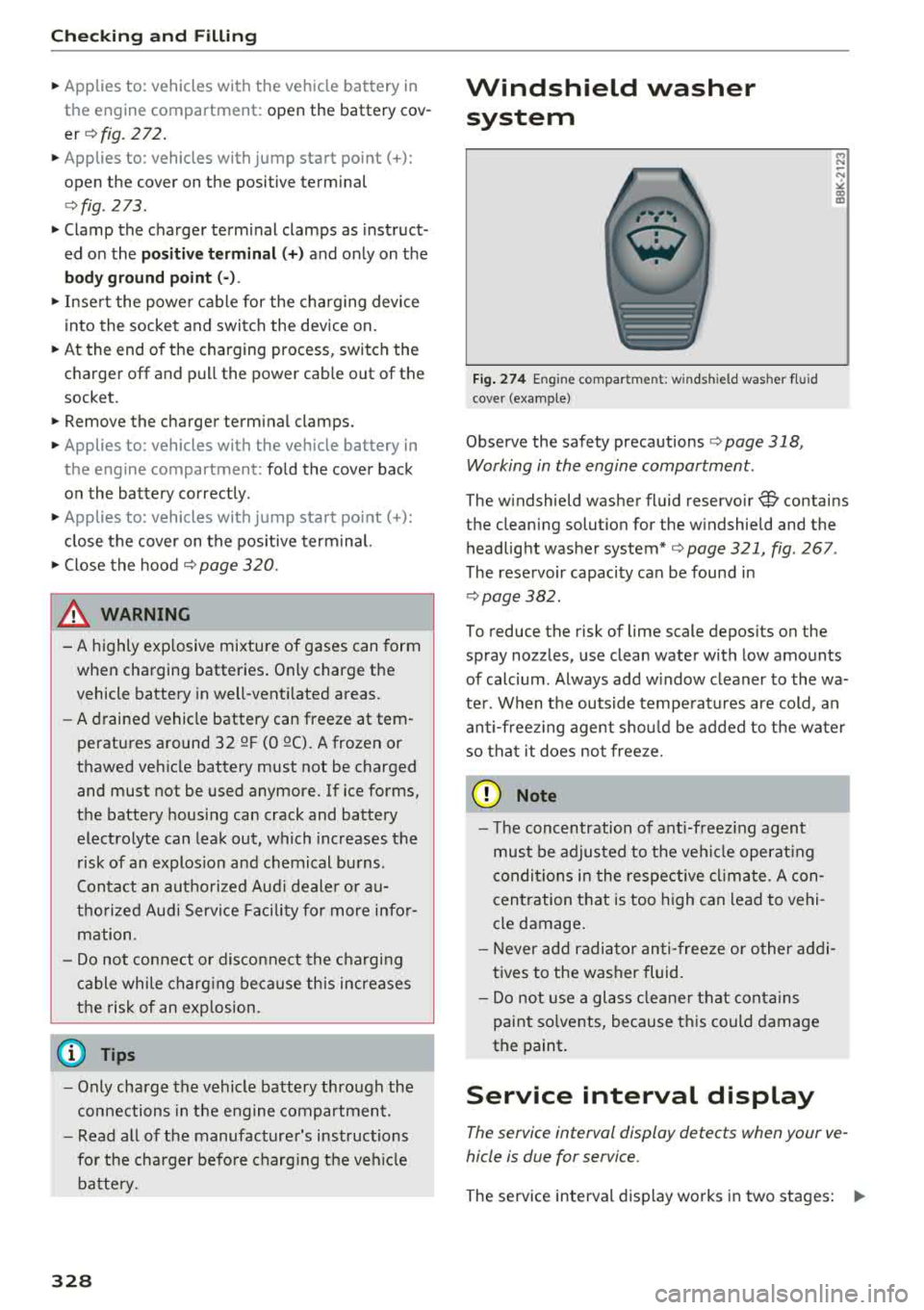
Fig . 274 En gin e compar tmen t: w inds hield was he r fl ui d
cove r (example)
Observe the safety precautions ¢ page 318 ,
Working in the engine compartment .
M N
-N
"' "' m
The windshield washer fluid reservo ir W contains
the cleaning solution for the w indshield and the
headlight washer system*
¢ page 321, fig . 267 .
The reservoir capacity can be found in
¢page 382.
To reduce the risk of lime scale depos its on the
sp ray nozzles, use clean water with low amounts
of calcium . Always add w indow cleaner to the wa
ter . When the outside temperatures are cold , an
ant i-freez ing agent sho uld be added to t he wate r
so that it does no t freeze.
@ Note
-Th e concentration of ant i-freez ing agent
must be adjusted to t he ve hicle operat ing
c ondi tions i n the respective clima te . A con
centration t hat is too high can lead to vehi
cle damage .
-Never add radia to r an ti- free ze o r o ther ad di
t ives to the washer fluid.
-Do not use a glass clea ner th at conta ins
paint so lvents, because t his could damage
the paint.
Service interval display
The service interval display detects when your ve
hicle is due for service .
The service interval display works in two stages: .,.
Page 335 of 404

u. a, ... N
" N ... 0 N > a:,
Glossary of tire and loading
terminology
Accessory weight
means the combined weight ( in
excess of those standard items
which may be replaced) of auto matic transmission , power steer
ing, power brakes, power win
dows, power seats, radio, and
heater, to the extent that these
items a re available as factory- in
stalled equipment (whether i n
stalled or not) .
Aspect ratio
means the ratio of the height to
the width of the tire in percent .
Numbers of 55 or lower indicate a
low s idewall for improved steer
ing response and better overall
handling on dry pavement.
Bead
means the part of the tire that is
made of steel wires, wrapped or
reinforced by ply cords and that is
shaped to fit the rim .
Bead separation
means a breakdown of the bond
between components in the bead .
Wheel s
Cord
means the strands forming the
plies in the tire .
Cold tire inflation pressure
means the tire pressure recom
mended by the vehicle manufac
turer for a tire of a designated
size that has not been driven for
more than a couple of miles (kilo
meters) at low speeds in the
three hour period before the tire pressure is measured or adjusted .
Curb weight
means the weight of a motor ve
hicle with standard equipment in
cluding the maximum capacity of
fuel, oil , and coolant, air condi
tioning and additional weight of
optional eq uipm ent .
Extra load tire
means a tire designed to operate
at higher loads and at highe r in
flation pressures than the corre
sponding standard tire . Extra load
tires may be identified as "X L",
"xl", "EXTRA LOAD", or "RF" on
the sidewall.
.,.
333