Table of Contents
FOREWORD
. . . . . . . . . . . . . . . . . . . . . . . . . . . . . . . . . . . . . . . . . . . . . . . . . . . . . . . . . . . . . . . . . . RAG–2
NISSAN EMERGENCY CONTACT INFORMATION . . . . . . . . . . . . . . . . . . . . . . . . . . . . . . . . . . RAG–2
IMPORTANT INFORMATION ABOUT THIS MANUAL . . . . . . . . . . . . . . . . . . . . . . . . . . . . . . . . RAG–2
1. ABOUT THE NISSAN LEAF® . . . . . . . . . . . . . . . . . . . . . . . . . . . . . . . . . . . . . . . . . . . . . . . . . . . RAG–5
1-1 LEAF IDENTIFICATION . . . . . . . . . . . . . . . . . . . . . . . . . . . . . . . . . . . . . . . . . . . . . . . . . . . . RAG–6 1-1.1 EXTERIOR . . . . . . . . . . . . . . . . . . . . . . . . . . . . . . . . . . . . . . . . . . . . . . . . . . . . . . . . . RAG–6
1-1.2 INTERIOR COMPONENT LOCATION . . . . . . . . . . . . . . . . . . . . . . . . . . . . . . . . . . . RAG–7
1-1.3 VEHICLE IDENTIFICATION NUMBER (VIN) LAYOUT . . . . . . . . . . . . . . . . . . . . . . . . RAG–8
1-1.4 WARNING AND INDICATOR LAMP INFORMATION . . . . . . . . . . . . . . . . . . . . . . . . RAG–8
2. BASIC HIGH-VOLTAGE INFORMATION . . . . . . . . . . . . . . . . . . . . . . . . . . . . . . . . . . . . . . . . . . RAG–9 2-1 HIGH-VOLTAGE-RELATED AND 12-VOLT-RELATED COMPONENT LOCATIONS AND DESCRIPTIONS . . . . . . . . . . . . . . . . . . . . . . . . . . . . . . . . . . . . . . . . . . . . . . . . . . . . . . . . . RAG–9
2-1.1 HIGH-VOLTAGE BATTERY PACK SPECIFICATIONS . . . . . . . . . . . . . . . . . . . . . . RAG–11
2-2 HIGH-VOLTAGE SAFETY MEASURES . . . . . . . . . . . . . . . . . . . . . . . . . . . . . . . . . . . . . . RAG–11 2-2.1 WARNING LABEL . . . . . . . . . . . . . . . . . . . . . . . . . . . . . . . . . . . . . . . . . . . . . . . . . . RAG–11
3. ROADSIDE ASSISTANCE RESPONSE STEPS . . . . . . . . . . . . . . . . . . . . . . . . . . . . . . . . . . . . RAG–12
3-1 INDICATIONS THE HIGH-VOLTAGE SYSTEM IS ON . . . . . . . . . . . . . . . . . . . . . . . . . . . RAG–12
3-2 VEHICLE IMMOBILIZATION AND STABILIZATION . . . . . . . . . . . . . . . . . . . . . . . . . . . . . . RAG–13
3-3 TURNING OFF THE POWER SWITCH . . . . . . . . . . . . . . . . . . . . . . . . . . . . . . . . . . . . . . RAG–14
3-4 WATER SUBMERSION . . . . . . . . . . . . . . . . . . . . . . . . . . . . . . . . . . . . . . . . . . . . . . . . . . . RAG–15
3-5 VEHICLE FIRE . . . . . . . . . . . . . . . . . . . . . . . . . . . . . . . . . . . . . . . . . . . . . . . . . . . . . . . . . . RAG–15
3-6 HIGH-VOLTAGE BATTERY DAMAGE AND FLUID LEAKS . . . . . . . . . . . . . . . . . . . . . . . . RAG–16
4. ROADSIDE ASSISTANCE . . . . . . . . . . . . . . . . . . . . . . . . . . . . . . . . . . . . . . . . . . . . . . . . . . . . . RAG–17 4-1 JUMP STARTING . . . . . . . . . . . . . . . . . . . . . . . . . . . . . . . . . . . . . . . . . . . . . . . . . . . . . . . RAG–174-1.1 JUMP STARTING PROCEDURES . . . . . . . . . . . . . . . . . . . . . . . . . . . . . . . . . . . . . RAG–18
4-2 P (PARK) POSITION RELEASE PROCEDURE . . . . . . . . . . . . . . . . . . . . . . . . . . . . . . . . . RAG–19 4-2.1 RESET PROCEDURE . . . . . . . . . . . . . . . . . . . . . . . . . . . . . . . . . . . . . . . . . . . . . . . RAG–21
4-3 TOWING . . . . . . . . . . . . . . . . . . . . . . . . . . . . . . . . . . . . . . . . . . . . . . . . . . . . . . . . . . . . . . RAG–22 4-3.1 VEHICLE SPECIFICATIONS . . . . . . . . . . . . . . . . . . . . . . . . . . . . . . . . . . . . . . . . . . RAG–22
4-3.2 TOWING GUIDELINES . . . . . . . . . . . . . . . . . . . . . . . . . . . . . . . . . . . . . . . . . . . . . . RAG–22
4-3.3 USE OF VEHICLE EQUIPPED HOOKS FOR RECOVERY OPERATIONS . . . . . . . RAG–24
4-4 STORING THE VEHICLE . . . . . . . . . . . . . . . . . . . . . . . . . . . . . . . . . . . . . . . . . . . . . . . . . RAG–25
4-5 JACKING UP THE VEHICLE AND CHANGING A TIRE . . . . . . . . . . . . . . . . . . . . . . . . . . RAG–25
RAG–3
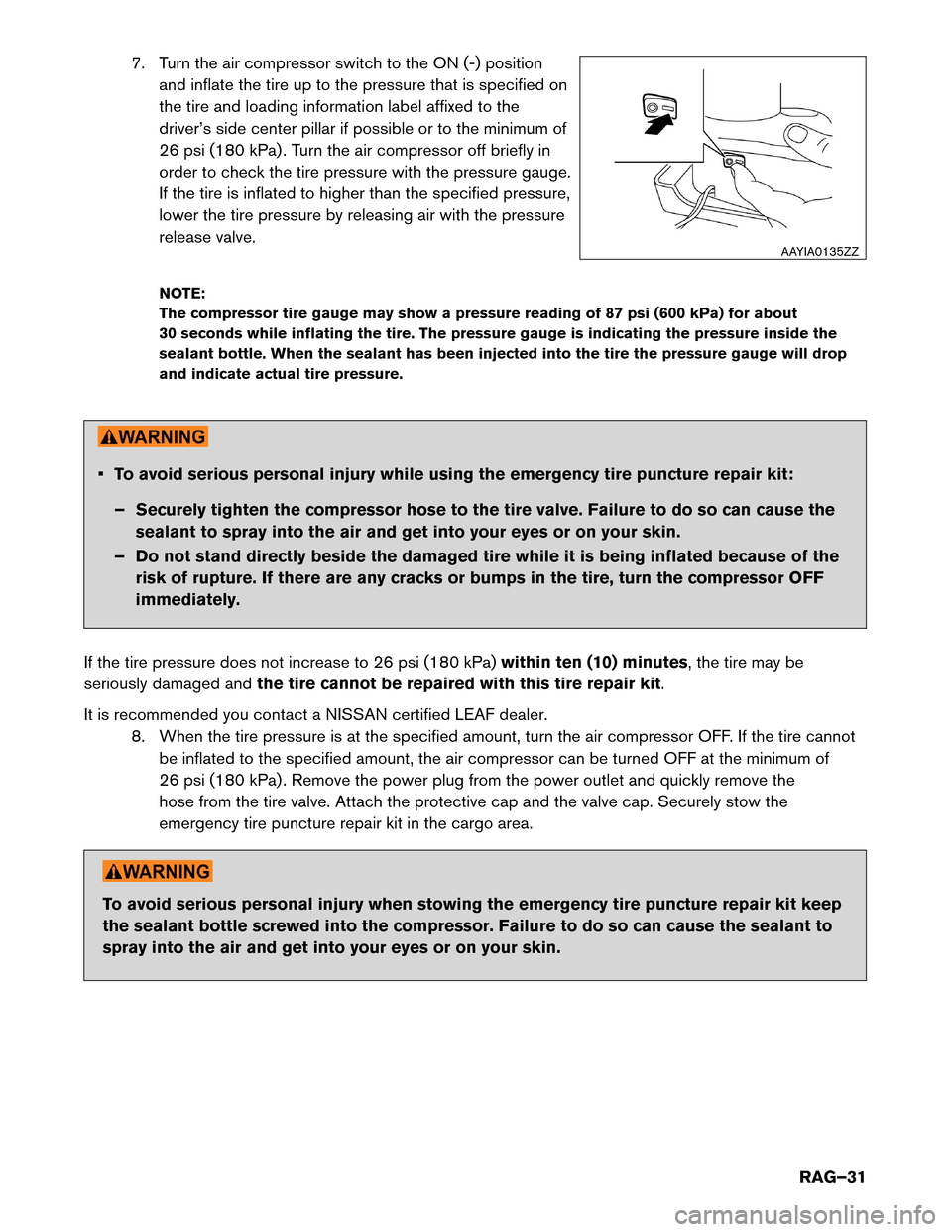
7. Turn the air compressor switch to the ON (-) position
and inflate the tire up to the pressure that is specified on
the tire and loading information label affixed to the
driver’s side center pillar if possible or to the minimum of
26 psi (180 kPa) . Turn the air compressor off briefly in
order to check the tire pressure with the pressure gauge.
If the tire is inflated to higher than the specified pressure,
lower the tire pressure by releasing air with the pressure
release valve.
NOTE:
The compressor tire gauge may show a pressure reading of 87 psi (600 kPa) for about
30 seconds while inflating the tire. The pressure gauge is indicating the pressure inside the
sealant bottle. When the sealant has been injected into the tire the pressure gauge will drop
and indicate actual tire pressure. • To avoid serious personal injury while using the emergency tire puncture repair kit:
–
Securely tighten the compressor hose to the tire valve. Failure to do so can cause the
sealant to spray into the air and get into your eyes or on your skin.
– Do not stand directly beside the damaged tire while it is being inflated because of the risk of rupture. If there are any cracks or bumps in the tire, turn the compressor OFF
immediately.
If the tire pressure does not increase to 26 psi (180 kPa) within ten (10) minutes, the tire may be
seriously damaged and the tire cannot be repaired with this tire repair kit.
It is recommended you contact a NISSAN certified LEAF dealer. 8. When the tire pressure is at the specified amount, turn the air compressor OFF. If the tire cannotbe inflated to the specified amount, the air compressor can be turned OFF at the minimum of
26 psi (180 kPa) . Remove the power plug from the power outlet and quickly remove the
hose from the tire valve. Attach the protective cap and the valve cap. Securely stow the
emergency tire puncture repair kit in the cargo area. To avoid serious personal injury when stowing the emergency tire puncture repair kit keep
the
sealant bottle screwed into the compressor. Failure to do so can cause the sealant to
spray into the air and get into your eyes or on your skin. AAYIA0135ZZ
RAG–31