2016 DACIA SANDERO STEPWAY TYRE
[x] Cancel search: TYREPage 68 of 174

ENG_NU_817-10_B90_Dacia_2
ADVICE: antipollution, fuel economy a")
2.8
ENG_UD22287_11
Conseils : antipollution, économies de carburant, conduite (B90 - U9\
0 - L90 Ph2 - F90 Ph2 - R90 Ph2 - H79 - Dacia)
ENG_NU_817-10_B90_Dacia_2
ADVICE: antipollution, fuel economy and driving (3/3)
– In vehicles fitted with air condi-
tioning, it is normal to observe an
increase in fuel consumption (es-
pecially in urban conditions) when
it is used. For vehicles fitted with
manual air conditioning, switch off
the system when it is not required.
Advice for reducing consumption
and therefore helping to preserve
the environment:
If the vehicle has been parked in the
sun, open the doors for a few mo-
ments to let the hot air escape before
starting the engine.
–
N
ever fill the fuel tank right to the
brim to avoid overflow.
–
D
o not leave an empty roof rack
fitted to the vehicle.
–
It
is better to fit a trailer for bulky ob-
jects.
–
W
hen towing a caravan, fit a wind
deflector and adjust it carefully.
Advice on use
– Electricity is fuel; switch off all the electrical components which are not
really needed.
However (safety first), keep your
lights on when the visibility is bad
(“see and be seen”).
–
U
se the air vents. Driving with the
windows open at 60 mph (100 km/h)
will increase fuel consumption by
4%. –
A
void using the vehicle for door-to-
door journeys (short journeys, with
long stops in-between) because in
these conditions, the engine never
reaches its ideal temperature.
Tyres
Increased fuel consumption could be
the result of:
–
insuf
ficient pressure,
–
using non-recommended tyres.
Page 109 of 174
tyre pressures ....................................... (up to the end of the DU)
tyres ...................................................... (up to the end of the DU)
tyre pressure......................................... (up to the end of the DU)
4.11
ENG_UD19741_9
Pressions de gonflage des pneumatiques à froid (B90 - U90 - L90 Ph2 \
- F90 Ph2 - R90 Ph2 - Dacia)
ENG_NU_817-10_B90_Dacia_4
Tyre pressures
TyRE PRESSURE
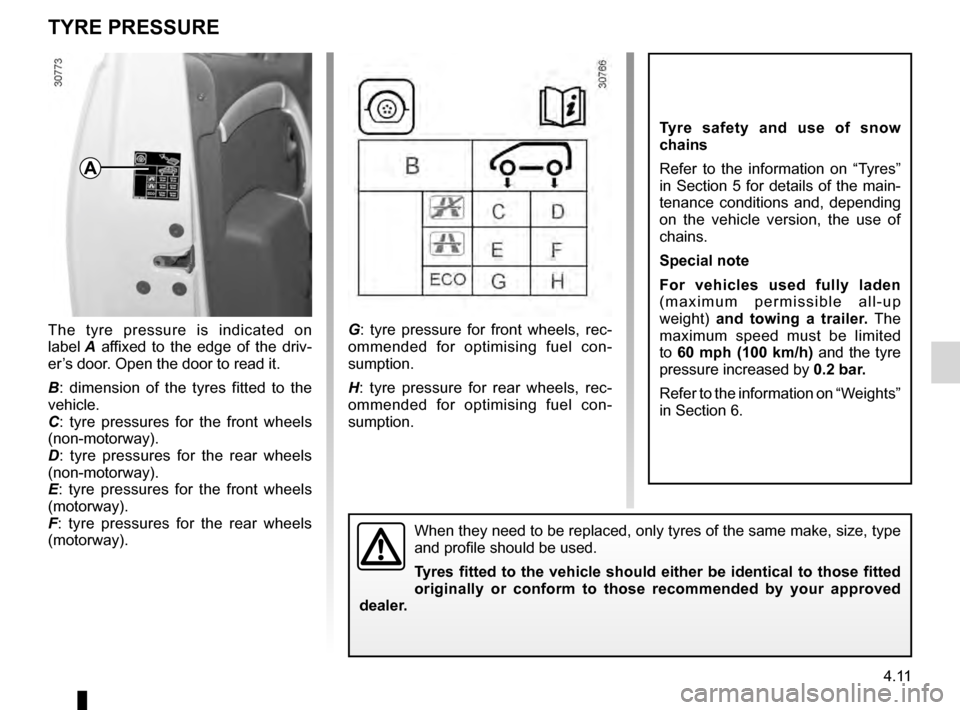
The tyre pressure is indicated on
label A
affixed to the edge of the driv-
er’s door. Open the door to read it.
B : dimension of the tyres fitted to the
vehicle.
C : tyre pressures for the front wheels
(non-motorway).
D : tyre pressures for the rear wheels
(non-motorway).
E : tyre pressures for the front wheels
(motorway).
F : tyre pressures for the rear wheels
(motorway). G
: tyre pressure for front wheels, rec-
ommended for optimising fuel con-
sumption.
H : tyre pressure for rear wheels, rec-
ommended for optimising fuel con-
sumption.
Tyre safety and use of snow
chains
Refer to the information on “Tyres”
in Section 5 for details of the main-
tenance conditions and, depending
on the vehicle version, the use of
chains.
Special note
For vehicles used fully laden
( m a x i m u m p e r m i s s i b l e a l l - u p
weight) and towing a trailer. The
maximum speed must be limited
to 60 mph (100 km/h) and the tyre
pressure increased by 0.2 bar.
Refer to the information on “Weights”
in Section 6.
When they need to be replaced, only tyres of the same make, size, type
and profile should be used.
Tyres fitted to the vehicle should either be identical to those fitted
originally or conform to those recommended by your approved
dealer.
A
Page 115 of 174

5.1
ENG_UD26897_12
Sommaire 5 (B90 - Dacia)
ENG_NU_817-10_B90_Dacia_5
Section 5: Practical advice
Tools .. . . . . . . . . . . . . . . . . . . . . . . . . . . . . . . . . . . . . . . . . . . . . . . . . . . . . . . . . . . . . . . . . . . . . . . . 5.2
Puncture
.
. . . . . . . . . . . . . . . . . . . . . . . . . . . . . . . . . . . . . . . . . . . . . . . . . . . . . . . . . . . . . . . . . . . . .
5.3
T
yre inflation kit
.
. . . . . . . . . . . . . . . . . . . . . . . . . . . . . . . . . . . . . . . . . . . . . . . . . . . . . . . . . . . . . . . .
5.4
Wheel trims, Wheels
. . . . . . . . . . . . . . . . . . . . . . . . . . . . . . . . . . . . . . . . . . . . . . . . . . . . . . . . . . . . .
5.7
Changing a wheel
.
. . . . . . . . . . . . . . . . . . . . . . . . . . . . . . . . . . . . . . . . . . . . . . . . . . . . . . . . . . . . . .
5.9
T
yres (tyre and wheel safety, use in winter)
.
. . . . . . . . . . . . . . . . . . . . . . . . . . . . . . . . . . . . . . . . . .
5.1
1
Changing bulbs
.
. . . . . . . . . . . . . . . . . . . . . . . . . . . . . . . . . . . . . . . . . . . . . . . . . . . . . . . . . . . . . . . .
5.14
Front lights
. . . . . . . . . . . . . . . . . . . . . . . . . . . . . . . . . . . . . . . . . . . . . . . . . . . . . . . . . . . . . . .
5.14
Fog lights
.
. . . . . . . . . . . . . . . . . . . . . . . . . . . . . . . . . . . . . . . . . . . . . . . . . . . . . . . . . . . . . . .
5.15
Rear lights
.
. . . . . . . . . . . . . . . . . . . . . . . . . . . . . . . . . . . . . . . . . . . . . . . . . . . . . . . . . . . . . .
5.16
Side indicator lights
.
. . . . . . . . . . . . . . . . . . . . . . . . . . . . . . . . . . . . . . . . . . . . . . . . . . . . . . .
5.18
Interior lights
. . . . . . . . . . . . . . . . . . . . . . . . . . . . . . . . . . . . . . . . . . . . . . . . . . . . . . . . . . . . . .
5.19
Fuses
. . . . . . . . . . . . . . . . . . . . . . . . . . . . . . . . . . . . . . . . . . . . . . . . . . . . . . . . . . . . . . . . . . . . . . . . .
5.22
Battery
. . . . . . . . . . . . . . . . . . . . . . . . . . . . . . . . . . . . . . . . . . . . . . . . . . . . . . . . . . . . . . . . . . . . . . . .
5.25
Radio frequency remote control unit: battery. . . . . . . . . . . . . . . . . . . . . . . . . . . . . . . . . . . . \
. . . . . . .
5.27
Wiper blades
.
. . . . . . . . . . . . . . . . . . . . . . . . . . . . . . . . . . . . . . . . . . . . . . . . . . . . . . . . . . . . . . . . . .
5.28
T
owing: breakdown
.
. . . . . . . . . . . . . . . . . . . . . . . . . . . . . . . . . . . . . . . . . . . . . . . . . . . . . . . . . . . . .
5.29
T
owing: towbar. . . . . . . . . . . . . . . . . . . . . . . . . . . . . . . . . . . . \
. . . . . . . . . . . . . . . . . . . . . . . . . . . . . .
5.31
Fitted audio equipment
.
. . . . . . . . . . . . . . . . . . . . . . . . . . . . . . . . . . . . . . . . . . . . . . . . . . . . . . . . . .
5.32
Accessories
. . . . . . . . . . . . . . . . . . . . . . . . . . . . . . . . . . . . . . . . . . . . . . . . . . . . . . . . . . . . . . . . . . . .
5.33
Operating faults
. . . . . . . . . . . . . . . . . . . . . . . . . . . . . . . . . . . . . . . . . . . . . . . . . . . . . . . . . . . . . . . . .
5.34
Page 117 of 174

practical advice ..................................... (up to the end of the DU)
puncture................................................ (up to the end of the DU)
emergency spare wheel ....................... (up to the end of the DU)
lifting the vehicle changing a wheel ............................ (up to the end of the DU)
5.3
ENG_UD25179_5
Crevaison (B90 - Dacia)
ENG_NU_817-10_B90_Dacia_5
Puncture
PUNCTURE
Emergency spare wheel
This is stored in cage 3 under the floor
at the rear of the vehicle.
T
o access it:
–
Open the tailgate.
–
U
ndo nut
1
with the wheelbrace
found in the luggage compartment;
refer to the information on “Tools” in
this section;
–
Detach the cage using handle
2
.
–
R
emove the emergency spare
wheel
4
.
1
324
In the event of a puncture,
depending on the vehicle,
you will have:An emergency spare wheel or tyre in-
flation kit (refer to the information on the
following pages).
If the emergency spare wheel has been stored for several years, have it checked by your Dealer to ensure that it is
safe to use.
Vehicles fitted with an emergency spare wheel which is different to the f\
our other wheels:
–
Never fit more than one emergency spare wheel to the same v
ehicle.
–
Repla
ce the emergency spare wheel as soon as possible with a wheel identical to the original one.
–
When
this is fitted to the vehicle, which must only be a temporary measure, the driving speed must not exceed the speed
indicated on the label on the wheel.
–
Fitting
an emergency spare wheel may alter the way the vehicle usually runs. Avoid sudden acceleration or deceleration and
reduce your speed when cornering.
–
If
you need to use snow chains, fit the emergency spare wheel to the rear axle and check the tyre pressure.
Page 118 of 174

5.4
ENG_UD22290_8
Kit de gonflage des pneumatiques (B90 - L90 Ph2 - F90 Ph2 - R90 Ph2 - D\
acia)
ENG_NU_817-10_B90_Da")
tyre inflation kit...................................... (up to the end of the DU)
5.4
ENG_UD22290_8
Kit de gonflage des pneumatiques (B90 - L90 Ph2 - F90 Ph2 - R90 Ph2 - D\
acia)
ENG_NU_817-10_B90_Dacia_5
Jaune NoirNoir texte
Tyre inflation kit
TYRE INFLATION KIT (1/3)
The kit repairs tyres with
tread A
damaged by ob-
jects smaller than 4 mm. It
cannot repair all types of
puncture, such as cuts of more than
4 mm, or cuts in tyre sidewall
B etc.
Ensure also that the wheel rim is in
good condition.
Do not pull out the foreign body
causing the puncture if it is still in
the tyre.
Do not attempt to use the
inflation kit if the tyre has
been damaged as a result
of driving with a puncture.
You should therefore carefully check
the condition of the tyre sidewalls
before any operation.
Driving with underinflated, flat or
punctured tyres can be dangerous
and may make the tyre impossible
to repair.
This repair is temporary
A tyre which has been punctured
should always be inspected (and re-
paired, where possible) as soon as
possible by a specialist.
When replacing a tyre repaired with
this kit, you must consult a special-
ist. When driving, vibration may be
felt due to the presence of the repair
product injected into the tyre.The kit is only approved for
inflating the tyres of the ve-
hicle originally equipped
with the kit.
It must never be used to inflate
the tyres of another vehicle, or any
other inflatable object (rubber ring,
rubber boat, etc.).
Avoid spillage on skin when han-
dling the repair liquid bottle. If drop-
lets do leak out, rinse them off with
plenty of water.
Keep the repair kit away from chil-
dren.
Do not dispose of the empty bottle
in the countryside. Return it to your
approved dealer or to a recycling or-
ganisation.
The bottle has a limited service
life which is indicated on its label.
Check the expiry date.
Contact an approved dealer to re-
place the inflation tube and repair
product bottle.
A
B
Page 119 of 174

ENG_NU_817-10_B90_Dacia_5
TYRE INFLATION KIT (2/3)
Depending on the vehicle, in")
JauneNoirNoir texte
5.5
ENG_UD22290_8
Kit de gonflage des pneumatiques (B90 - L90 Ph2 - F90 Ph2 - R90 Ph2 - D\
acia)
ENG_NU_817-10_B90_Dacia_5
TYRE INFLATION KIT (2/3)
Depending on the vehicle, in the event
of a puncture, use the kit located in the
boot. –
p
ress switch
5
to inflate the tyre to
the recommended pressure (check
the label affixed to the edge of the
driver’s door);
–
after
a maximum of
5 minutes, stop
inflating and read the pressure (on
the pressure gauge
4
);
Note: while the bottle is emptying
(approximately 30 seconds), pres-
sure gauge
4
will briefly indicate a
pressure of 6 bar, then the pressure
will drop.
–
a
djust the pressure: to increase
it, continue inflating with the kit, to
reduce it, turn button 7 located on
the inflation adapter.
If a minimum pressure of 1.8 bar is
not reached after 15 minutes, repair
is not possible; do not drive the vehi-
cle but contact an approved dealer .
1234
5
6
Before using this kit, park
the vehicle at a sufficient
distance from traffic, switch
on the hazard warning
lights, apply the handbrake, ask all
passengers to leave the vehicle and
keep them away from traffic.
8
Open the kit, remove caps 1 and 3 (it is
essential not to remove the cap from
the bottle) then screw bottle
2
to its sup-
port 3.
With the engine running and the
handbrake applied,
–
unscrew
the valve cap on the wheel
concerned and screw the inflation
adapter
6 onto valve;
–
c
onnect adapter
8
to accessories
socket
9
on the dashboard of the ve-
hicle;
9
7
Page 120 of 174

ENG_NU_817-10_B90_Dacia_5
TYRE INFLATION KIT (3/3)
Once the tyre is inflated correctly:
–
stop usin")
5.6
ENG_UD22290_8
Kit de gonflage des pneumatiques (B90 - L90 Ph2 - F90 Ph2 - R90 Ph2 - D\
acia)
ENG_NU_817-10_B90_Dacia_5
TYRE INFLATION KIT (3/3)
Once the tyre is inflated correctly:
–
stop using the kit;
–
close
the integrated cap on the bottle
again;
–
disconnect adapter
8;–
a
ff i x d r i v i n g r e c o m m e n d a t i o n
label
1
0
to the dashboard where it
can easily be seen by the driver;
–
store the kit;
–
after
the first inflation procedure the
tyre will still be leaking; it is vital to
drive in order to plug the hole;
–
s
tart immediately and drive at be-
tween 12 and 36
m
ph (20 and
60
k
m/h) to distribute the product
evenly throughout the tyre, stopping
after a distance of 2 miles (3 kilome-
tres) to check the pressure; –
i
f the pressure is above 1.3 bar but
lower than the recommended pres-
sure, readjust it (refer to the label
affixed to the edge of the driver ’s
door), otherwise contact an ap-
proved dealer: repair is not possible.
Note : after using the inflation kit, you
should visit an approved dealer to re-
place the inflation hose and the bottle
of repair product.
Precautions when using the
kit
The kit should not be operated for more
than 15 consecutive minutes.
Important: a missing or
loose valve cap may com-
promise the tyre seal and
cause a loss of pressure.
Always use valve caps which are
identical to the originals and fully
tightened.
Following repair with the kit,
do not travel further than
120 miles (200 km). In addi-
tion, reduce your speed and
under no circumstances exceed 48
mph (80 km/h). The sticker, which
you must affix in a prominent posi-
tion on the dashboard, reminds you
of this.
Depending on the country or local
legislation, a tyre repaired with the
tyre pressure kit will need to be re-
placed.
Nothing should be placed
around the driver ’s feet
as such objects may slide
under the pedals during
sudden braking manoeuvres and
obstruct their use.
8
10
Page 123 of 174

changing a wheel.................................. (up to the end of the DU)
practical advice ..................................... (up to the end of the DU)
jack ....................................................... (up to the end of the DU)
puncture................................................ (up to the end of the DU)
lifting the vehicle changing a wheel ............................ (up to the end of the DU)
5.9
ENG_UD20462_6
Changement de roue (B90 - Dacia)
ENG_NU_817-10_B90_Dacia_5
Present the jack horizontally, the jack
head must slide in the lower slot in the
body, as close as possible to the wheel
concerned.
Crank up the jack
1 by hand to align the
base plate (slightly inwards under the
vehicle). Place a plank of wood under
the base plate if on soft ground.
Changing a wheel
Switch on the hazard warn-
ing lights.
Keep the vehicle away from
traffic and on a level sur-
face where it will not slip (if neces-
sary, place a solid support under the
jack base).
Apply the parking brake and engage
a gear (first or reverse, or P for au-
tomatic transmissions). Ask the pas-
sengers to leave the vehicle and to
keep away from traffic.
If you have a puncture, re-
place the wheel as soon as
possible.
A tyre which has been punc-
tured should always be inspected
(and repaired, where possible) by a
specialist.
2
1
Vehicles equipped with a jack
and wheelbrace
If necessary, remove the wheel trim,
refer to the information on “Wheel trims/
Wheels” in this Section. Undo the wheel
bolts using wheelbrace
2 .
Fit it so that
you press downwards rather than pull-
ing upwards.
To prevent any risk of injury
or damage to the vehicle,
only crank the jack until the
wheel you are replacing is
a maximum of 3 centimetres off the
ground.
If the vehicle is parked on
the hard shoulder, you must
warn other road users of
your vehicle’s presence
with a warning triangle or with other
devices as per the legislation apply-
ing to the country you are in.
CHANGING A WHEEL (1/2)
If the vehicle is not equipped with a
jack or wheelbrace, you can obtain
these from your approved dealer.