2015 FORD TRANSIT brake light
[x] Cancel search: brake lightPage 196 of 461

Circuits protected
Fuse rating
Fuse
Anti-lock brake system with electronic stability
control valves.
25A
F13
Powertrain control module B+ relay.
5A
F14
Powertrain control module power relay.
40A
F15
Body control module power feed.
40A
F16
Ignition relay 3.
40A
F17
Modified vehicle connections.
40A
F18
Not used.
-
F19
Heated exterior mirror relay.
5A
F20
Modified vehicle ignition connections.
10A
F21
Passenger compartment fuse panel.
15A
F22
Air conditioning control module.
7.5A
F23
Cutaway body connectors.
10A
F24
Interior lighting.
7.5A
F25
Heated exterior mirrors.
10A
F26
Heated rear window.
20A
F27
Heated rear window.
20A
F28
Rear parking aid camera.
10A
F29 Lane keeping system.
Electro mirror.
Not used.
-
F30
Trailer brake ignition feed.
10A
F31
Interior lighting.
10A
F32
Not used.
-
F33
Not used.
-
F34
Power folding mirrors.
5A
F35
Horn.
20A
F36
SYNC module.
7.5A
F37
193Transit (TTH) Canada/United States of America, enUSA, Edition date: 03/2014 Fuses
Page 203 of 461

GENERAL INFORMATION
Have your vehicle serviced regularly to help
maintain its roadworthiness and resale
value. There is a large network of Ford
authorized dealers that are there to help
you with their professional servicing
expertise. We believe that their specially
trained technicians are best qualified to
service your vehicle properly and expertly.
They are supported by a wide range of
highly specialized tools developed
specifically for servicing your vehicle.
To help you service your vehicle, we
provide scheduled maintenance
information which makes tracking routine
service easy. See Scheduled
Maintenance (page 433).
If your vehicle requires professional service,
your authorized dealer can provide the
necessary parts and service. Check your
warranty information to find out which
parts and services are covered.
Use only recommended fuels, lubricants,
fluids and service parts conforming to
specifications. Motorcraft® parts are
designed and built to provide the best
performance in your vehicle.
Precautions
• Do not work on a hot engine.
• Make sure that nothing gets caught in
moving parts.
• Do not work on a vehicle with the
engine running in an enclosed space,
unless you are sure you have enough
ventilation.
• Keep all open flames and other burning
material (such as cigarettes) away
from the battery and all fuel related
parts. Working with the Engine Off
1. Set the parking brake and shift to
P
(Park).
2. Turn off the engine and remove the key
(if equipped).
3. Block the wheels.
Working with the Engine On WARNING
To reduce the risk of vehicle damage
and/or personal burn injuries, do not
start your engine with the air cleaner
removed and do not remove it while the
engine is running. 1. Set the parking brake and shift to
P
(Park).
2. Block the wheels
OPENING AND CLOSING THE
HOOD
Opening the Hood 1. Pull the hood release lever.
2. Slightly lift the hood.
200 Transit (TTH) Canada/United States of America, enUSA, Edition date: 03/2014 MaintenanceE175221
Page 211 of 461

Used engine coolant should be disposed
of in an appropriate manner. Follow your
community
’s regulations and standards
for recycling and disposing of automotive
fluids.
Severe Climates
If you drive in extremely cold climates:
• It may be necessary to have a Ford
authorized dealer increase the coolant
concentration above 50%.
• A coolant concentration of 60% will
provide improved freeze point
protection. Engine coolant
concentrations above 60% will
decrease the overheat protection
characteristics of the engine coolant
and may cause engine damage.
If you drive in extremely hot climates:
• It may be necessary to have a Ford
authorized dealer decrease the coolant
concentration to 40%.
• A coolant concentration of 40% will
provide improved overheat protection.
Engine coolant concentrations below
40% will decrease the corrosion or
freeze protection characteristics of the
engine coolant and may cause engine
damage.
Vehicles driven year-round in non-extreme
climates should use prediluted engine
coolant for optimum cooling system and
engine protection.
What You Should Know About Fail-
Safe Cooling
If you deplete the engine coolant supply,
this feature allows you to temporarily drive
your vehicle before you incur incremental
component damage. The fail-safe distance
depends on ambient temperatures, vehicle
load and terrain. How Fail-Safe Cooling Works
If the engine begins to overheat, the engine
coolant temperature gauge will move to
the red area and: The coolant temperature
warning light will illuminate.
The service engine soon
indicator will illuminate.
If the engine reaches a preset
over-temperature condition, the engine
will automatically switch to alternating
cylinder operation. Each disabled cylinder
acts as an air pump and cools the engine.
When this occurs the vehicle will still
operate. However:
• The engine power will be limited.
• This will disable the air conditioning
system.
Continued operation will increase the
engine temperature and the engine will
completely shut down, causing steering
and braking effort to increase.
Once the engine temperature cools, the
engine can be re-started. Take your vehicle
to an authorized dealer as soon as possible
to minimize engine damage.
When Fail-Safe Mode Is Turned On WARNING
Fail-safe mode is for use during
emergencies only. Operate the
vehicle in fail-safe mode only as long
as necessary to bring the vehicle to rest in
a safe location and seek immediate repairs.
When in fail-safe mode, the vehicle will
have limited power, will not be able to
maintain high-speed operation, and may
completely shut down and lose power
steering assist, and power brake assist,
which may increase the possibility of a
crash resulting in serious injury. 208
Transit (TTH) Canada/United States of America, enUSA, Edition date: 03/2014 Maintenance
Page 234 of 461

Alloy wheels and wheel covers are coated
with a clear coat paint finish. To maintain
their condition we recommend that you:
•
Clean the wheels weekly using
Motorcraft Wheel and Tire Cleaner.
Apply using manufacturer's
instructions.
• Use a sponge to remove heavy
deposits of dirt and brake dust
accumulation.
• Rinse thoroughly with a strong stream
of water when you have completed the
cleaning process.
• To remove tar and grease, use
Motorcraft Bug and Tar Remover.
VEHICLE STORAGE
If you plan on storing your vehicle for 30
days or more, read the following
maintenance recommendations to make
sure your vehicle stays in good operating
condition.
We engineer and test all motor vehicles
and their components for reliable, regular
driving. Under various conditions,
long-term storage may lead to degraded
engine performance or failure unless you
use specific precautions to preserve engine
components.
General
• Store all vehicles in a dry, ventilated
place.
• Protect from sunlight, if possible.
• If vehicles are stored outside, they
require regular maintenance to protect
against rust and damage. Body
•
Wash your vehicle thoroughly to
remove dirt, grease, oil, tar or mud from
exterior surfaces, rear-wheel housing
and the underside of front fenders.
• Periodically wash your vehicle if it is
stored in exposed locations.
• Touch-up exposed or primed metal to
prevent rust.
• Cover chrome and stainless steel parts
with a thick coat of auto wax to prevent
discoloration. Re-wax as necessary
when you wash your vehicle.
• Lubricate all hood, door and trunk lid
hinges, and latches with a light grade
oil.
• Cover interior trim to prevent fading.
• Keep all rubber parts free from oil and
solvents.
Engine
• The engine oil and filter should be
changed prior to storage because used
engine oil contains contaminates that
may cause engine damage.
• Start the engine every 15 days for a
minimum of 15 minutes. Run at fast idle
with the climate controls set to defrost
until the engine reaches normal
operating temperature.
• With your foot on the brake, shift
through all the gears while the engine
is running.
• We recommend that you change the
engine oil before you use your vehicle
again.
Fuel system
• Fill the fuel tank with high-quality fuel
until the first automatic shutoff of the
fuel pump nozzle.
231 Transit (TTH) Canada/United States of America, enUSA, Edition date: 03/2014 Vehicle Care
Page 259 of 461

9. Remove the valve cap from the valve
stem on the left rear tire. Decrease the
air pressure until the horn chirps.
Training is complete when the horn
chirps after the last system sensor (left
rear) has been trained and the system
indicator stops flashing.
10. Switch the ignition off. If two short horn chirps are heard, the reset
procedure was unsuccessful and
must be repeated.
Note: If after repeating the procedure two
short horn chirps are heard again, have your
vehicle checked by an authorized dealer as
soon as possible.
11. Set all four tires to the correct pressure See Maintenance (page
200). or the tire inflation pressure label
(located on the edge of driver door or
the B-Pillar).
CHANGING A ROAD WHEEL WARNINGS
The use of tire sealant may damage
your tire pressure monitoring system
and should only be used in roadside
emergencies. If you must use a sealant, the
Ford Tire Mobility Kit sealant should be
used. The tire pressure monitoring system
sensor and valve stem on the wheel must
be replaced by an authorized dealer after
use of the sealant. If the tire pressure monitor sensor
becomes damaged, it will no longer
function. See
Tire Pressure
Monitoring System (page 251). Note:
The tire pressure monitoring system
indicator light will illuminate when the spare
tire is in use. To restore the full function of
the monitoring system, all road wheels
equipped with tire pressure monitoring
sensors must be mounted on this vehicle. If you get a flat tire while driving, do not
apply the brake heavily. Instead, gradually
decrease your speed. Hold the steering
wheel firmly and slowly move to a safe
place on the side of the road.
Have a flat serviced by an authorized
dealer in order to prevent damage to the
system sensors
See Tire Pressure
Monitoring System (page 251). Replace
the spare tire with a road tire as soon as
possible. During repairing or replacing of
the flat tire, have the authorized dealer
inspect the system sensor for damage.
Dissimilar Spare Wheel and Tire
Assembly Information WARNING
Failure to follow these guidelines
could result in an increased risk of
loss of vehicle control, injury or death.
If you have a dissimilar spare wheel and
tire, then it is intended for temporary use
only. This means that if you need to use it,
you should replace it as soon as possible
with a road wheel and tire assembly that
is the same size and type as the road tires
and wheels that were originally provided
by Ford. If the dissimilar spare tire or wheel
is damaged, it should be replaced rather
than repaired.
A dissimilar spare wheel and tire assembly
is defined as a spare wheel and tire
assembly that is different in brand, size or
appearance from the road tires and wheels
and can be one of three types:
1.
T-type mini-spare: This spare tire
begins with the letter T for tire size and
may have Temporary Use Only molded in
the sidewall.
2. Full-size dissimilar spare with label
on wheel:
This spare tire has a label on
the wheel that states: THIS WHEEL AND
TIRE ASSEMBLY FOR TEMPORARY USE
ONLY
256 Transit (TTH) Canada/United States of America, enUSA, Edition date: 03/2014 Wheels and Tires
Page 452 of 461

A
A/C
See: Climate Control.......................................... 89
About This Manual...........................................7 Protecting the Environment................................ 7
ABS See: Brakes............................................................ 137
ABS driving hints See: Hints on Driving With Anti-Lock
Brakes................................................................. 137
Accessories.....................................................414 Exterior Style........................................................ 414
Interior Style......................................................... 414
Lifestyle.................................................................. 414
Peace of Mind...................................................... 414
Accessories See: Replacement Parts
Recommendation............................................ 10
Adjusting the Headlamps..........................215 Horizontal Aim Adjustment............................ 216
Vertical Aim Adjustment.................................. 215
Adjusting the Steering Wheel....................61
Airbag Disposal...............................................43
Air Conditioning See: Climate Control.......................................... 89
Air Vents............................................................89 Center Air Vents.................................................... 89
Side Air Vent.......................................................... 90
Alarm See: Anti-Theft Alarm........................................ 60
Anti-Theft Alarm...........................................60 Alarm System....................................................... 60
Arming the Alarm................................................ 60
Disarming the Alarm.......................................... 60
Triggering the Alarm........................................... 60
Appendices.....................................................416
Audible Warnings and Indicators..............77
Airbag Secondary Warning................................ 77
Door Ajar................................................................... 77
Exterior Lamps On............................................... 78
Gearshift Lever not in Park (P)........................78
Key in Ignition......................................................... 78
Parking Brake On.................................................. 78
Safety Belt Minder............................................... 78
Audio Control - Vehicles With: Touchscreen Display..................................62 Audio Control - Vehicles Without:
Touchscreen Display...................................61
Seek, Next or Previous........................................ 62
Audio Input Jack...........................................297
Audio System................................................282 General Information......................................... 282
Audio Troubleshooting
..............................299
Audio Unit - Vehicles With: AM/FM/CD/ SYNC/Satellite Radio.............................290
A
udio Unit - Vehicles With: AM/FM/CD/
SYNC.............................................................288
Audio Unit - Vehicles With: AM/ FM...................................................................283
A
UX Button.......................................................... 286
Clock Button........................................................ 285
Menu Button....................................................... 286
Sound Button..................................................... 286
Station Preset Buttons.................................... 286
Station Tuning Buttons................................... 285
Audio Unit - Vehicles With: Premium AM/FM/CD.................................................286
Autolamps........................................................67 Windshield Wiper Activated Rain
Lights.................................................................... 67
Automatic Transmission
............................133
Brake-Shift Interlock......................................... 135
Hints on Driving with an Automatic Transmission................................................... 135
Understanding the Gearshift Lever Positions of the Automatic
Transmission................................................... 133
Automatic Transmission Fluid Check............................................................209
Autowipers.......................................................64
Auxiliary Power Points................................103 A
C Power Point................................................... 103
Auxiliary Power Point Locations...................103
Auxiliary Switches........................................
415
B
Bonnet Lock See: Opening and Closing the Hood.........200
Booster Seats..................................................22 Types of Booster Seats...................................... 22
Bottle Holder
..................................................105
Brake Fluid Check.........................................210
44
9 Transit (TTH) Canada/United States of America, enUSA, Edition date: 03/2014 Index
Page 453 of 461
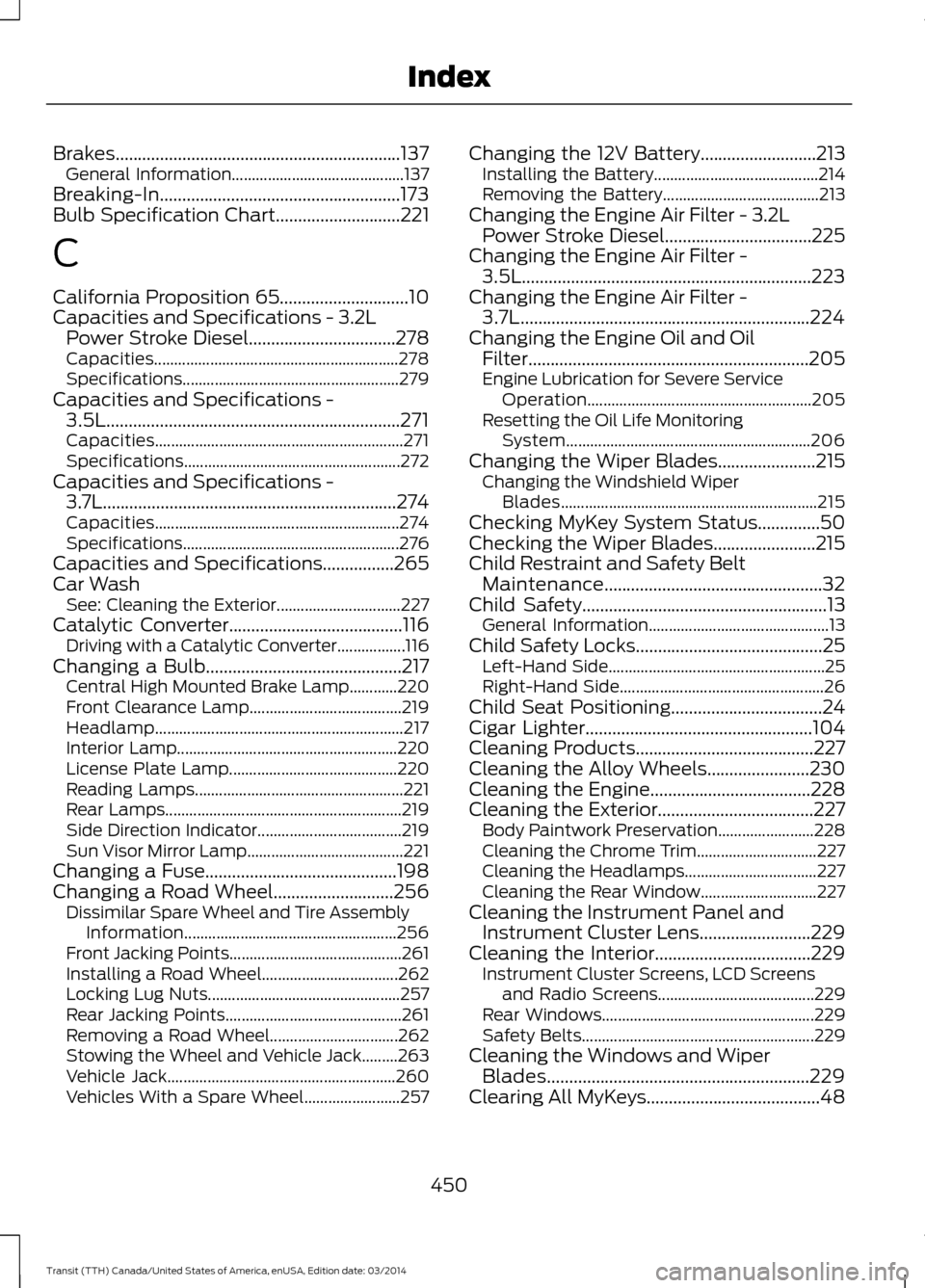
Brakes................................................................137
General Information........................................... 137
Breaking-In......................................................173
Bulb Specification Chart............................221
C
California Proposition 65.............................10
C
apacities and Specifications - 3.2L
Power Stroke Diesel.................................278
Capacities............................................................. 278
Specifications...................................................... 279
Capacities and Specifications - 3.5L..................................................................271
Capacities.............................................................. 271
Specifications...................................................... 272
Capacities and Specifications - 3.7L..................................................................274
Capacities............................................................. 274
Specifications...................................................... 276
Capacities and Specifications
................265
Car Wash See: Cleaning the Exterior............................... 227
Catalytic Converter
.......................................116
Driving with a Catalytic Converter.................116
Changing a Bulb............................................217 Central High Mounted Brake Lamp............220
Front Clearance Lamp...................................... 219
Headlamp.............................................................. 21
7
Interior Lamp....................................................... 220
License Plate Lamp.......................................... 220
Reading Lamps.................................................... 221
Rear Lamps........................................................... 219
Side Direction Indicator.................................... 219
Sun Visor Mirror Lamp....................................... 221
Changing a Fuse...........................................198
Changing a Road Wheel...........................256 Dissimilar Spare Wheel and Tire Assembly
Information..................................................... 256
Front Jacking Points........................................... 261
Installing a Road Wheel.................................. 262
Locking Lug Nuts................................................ 257
Rear Jacking Points............................................ 261
Removing a Road Wheel................................ 262
Stowing the Wheel and Vehicle Jack.........263
Vehicle Jack......................................................... 260
Vehicles With a Spare Wheel........................ 257Changing the 12V Battery
..........................213
Installing the Battery......................................... 214
Removing the Battery....................................... 213
Changing the Engine Air Filter - 3.2L Power Stroke Diesel.................................225
Changing the Engine Air Fil
ter -
3.5L.................................................................223
Changing the Engine Air Filter - 3.7L.................................................................224
Changing the Engine Oil and Oil Filter...............................................................205
Engine Lubrication for Severe Service Operation........................................................ 205
Resetting the Oil Life Monitoring System............................................................. 206
Changing the Wiper Blades......................
215
Changing the Windshield Wiper
Blades................................................................ 215
Checking MyKey System Status..............50
Checking the Wiper Blades.......................215
Child Restraint and Safety Belt Maintenance.................................................32
Child Safety.......................................................
13
General Information............................................. 13
Child Safety Locks
..........................................25
Left-Hand Side...................................................... 25
Right-Hand Side................................................... 26
Child Seat Positioning..................................24
Cigar Lighter
...................................................104
Cleaning Products........................................227
Cleaning the Alloy Wheels.......................230
Cl
eaning the Engine....................................228
Cleaning the Exterior...................................227 Body P
aintwork Preservation........................ 228
Cleaning the Chrome Trim.............................. 227
Cleaning the Headlamps................................. 227
Cleaning the Rear Window............................. 227
Cleaning the Instrument Panel and Instrument Cluster Lens.........................229
Cl
eaning the Interior...................................229
Instrument Cluster Screens, LCD Screens
and Radio Screens....................................... 229
Rear Windows..................................................... 229
Safety Belts.......................................................... 229
Cleaning the Windows and Wiper Blades...........................................................229
Clearing All MyKeys.......................................48
4
50 Transit (TTH) Canada/United States of America, enUSA, Edition date: 03/2014 Index
Page 456 of 461

Head Restraints..............................................95
Adjusting the Head Restraint.......................... 96
Installing the Head Restraint .......................... 96
Removing the Head Restraint......................... 96
Heated Windows and Mirrors....................93 He
ated Exterior Mirrors...................................... 93
Heated Rear Window......................................... 93
Heating See: Climate Control.......................................... 89
Hints on Controlling the Interior Climate.............................................................91
Cooling the Interior Quickly............................... 91
General Hints.......................................................... 91
Heating the Interior Quickly............................... 91
Maximum Cooling Performance in Instrument Panel or Instrument Panel
and Footwell Positions................................. 92
Recommended Settings for Cooling ...........92
Recommended Settings for Heating.............91
Side Window Defogging in Cold Weather.............................................................. 92
Vehicle Stationary for Extended Periods During Extreme High Ambient
Temperatures................................................... 92
Hints on Driving With Anti-Lock Brakes.............................................................137
Hood Lock See: Opening and Closing the Hood.........200
I
Ignition Switch..............................................106
In C
alifornia (U.S. Only).............................182
Information Display Control
.......................63
Information Displays.....................................79 General Information............................................ 79
Information....................................................395 911 Assist............................................................... 401
Alerts....................................................................... 401
Calendar................................................................ 401
Sirius Travel Link................................................ 398
SYNC Services (If Equipped, United States Only).................................................................. 395
Vehicle Health Report..................................... 403
Information Messages.................................84 Installing Child Seats.....................................14
Child Seats............................................................... 14
Using Lap and Shoulder Belts.......................... 15
Using Lower Anchors and Tethers for Children (LATCH).............................................. 17
Using Tether Straps.............................................. 19
Instrument Cluster.........................................73
Instrument Lighting Dimmer.....................68
Interior Lamps
.................................................69
Courtesy Lamp..................................................... 69
Reading Lamps..................................................... 69
Interior Mirror.....................................................71 Auto-Dimming Mirror........................................... 71
Introduction.........................................................7
J
Jump Starting the Vehicle
.........................178
Connecting the Jumper Cables..................... 179
Jump Starting....................................................... 179
Preparing Your Vehicle...................................... 178
Removing the Jumper Cables........................ 179
K
Keys and Remote Controls.........................44 Principle of Operation........................................ 44
L
Lane Keeping System.................................150 Lane Keeping Alert............................................ 150
Lighting Control..............................................66 Headlamp Flasher................................................ 67
High Beams............................................................ 66
Lighting Control Positions................................ 66
Parking Lamps....................................................... 67
Lighting..............................................................66 General Information........................................... 66
Load Carrying.................................................
153
Load Limit........................................................153
Vehicle Loading - with and without a
Trailer.................................................................. 153
Load Retaining Fixtures..............................
153
Securing Cargo.................................................... 153
453 Transit (TTH) Canada/United States of America, enUSA, Edition date: 03/2014 Index