2015 AUDI Q5 battery
[x] Cancel search: batteryPage 198 of 302

Smart Technolog y
A center differentia l distributes the driving power
variably to the front and rear axle. It works to
gether with selective wheel torque contro l, which
activates when driving through curves
c:::;,page 191.
The all-wheel drive concept is designed for high
engine power . Your vehicle is exceptionally pow
erful and has excellent driving characteristics bo th under normal driv ing condit ions and on
snow and ice . Always read and follow safety pre
cautions
c:::;, .&. .
Wint er tires
When driving in the winter, your vehicle with all
wheel drive has an advantage, even with regular
tires. In winter road conditions it may be advisa
ble to mount winter tires (or all-season tires) for
improved dr iveability and braking: these tires
must be mounted on
a ll four wheels . See a lso
c:::;, page 250, Winter tires.
Tire chain s
Where tire chains are manda tory on certain
roads, this normally also applies to vehicles with
all-wheel drive c:::;, page 250, Snow chains.
Repl acing wheels /tire s
Vehicles with all-whee l drive must always have
tires of the same size. Also avoid tires with differ
ent tread depths . For deta ils see page
c:::;, page 242, New tires or wheels .
A WARNING
Always adjust your driving to road and traffic
conditions. Do not let the extra safety afford
ed by all-wheel drive tempt you into ta king
extra r is ks.
- Althoug h the all-whee l dr ive is very effec
t ive, always remember that brak ing capac ity
is limited by tire traction . You should there
fore not drive at excessive speeds on icy or slippery road surfaces .
- On wet road su rfaces, be careful not to drive
too fast because the front wheels could be
gin to slide on top of the water (aquaplan
ing). If this should occur, you will have no
warning from a sudden increase in engine
speed as with a front -whee l drive vehicle.
196
Always drive at speeds which are suited to
the road cond it ions -risk of crash.
Energy management
Starting ability is optimized
Energy management controls the distribution of
electrical energy and thus optimizes the availa bility of electrical energy for starting the engine .
If a vehicle with a conventional energy system is
not driven for a long period of time, the battery
i s d ischarged by idling current consumers (e .g .
i mmob ili zer). I n certain c ircumstances it can re
s ul t in the re be ing insuffi cient energy available to
start the eng ine.
Intelligent energy management in your vehicle
hand les the d ist ribution of electrical energy.
Start ing ability is ma rkedly improved and the life
of the ba ttery is extended .
Bas ica lly, energy management consists of
bat
t e ry diagn osi s, idling curr ent man ag ement
and
d ynami c energy management .
Batte ry diag nosi s
Battery diagnosis continuously determines the
state of the battery. Se nsors determine battery
vo ltage, battery current and battery tempera
tu re. This determines the cu rrent state of cha rge
and the power of the battery .
Idling current management
Idling current management reduces energy con
sumption whi le the vehicle is standing . W it h the
i gnition switched off, it cont ro ls the energy sup
ply to the various electrical components. Data
from battery d iagnosis is cons idered.
Depend ing on the battery's state of charge , indi
v idual consumers are gradua lly tu rned off to pre
vent excessive discharge of the batte ry and thus
maint ain s tarting capability.
Dynamic ener gy management
While the vehicle is being driven, dynamic ene rgy
management distr ibutes the energy gene rated
accord ing to the needs of the individual compo-
nents. It regu lates consumption, so that more
II>
Page 199 of 302

M N
co
a:
co
,...., \!) ..,.,
N ..,., ,....,
electrical energy is not being used than is being
generated and ensures an optimal state of
charge for the battery.
(D Tips
- But even energy management cannot neg
ate the limits of physics. Consider that the power and life of a battery are limited.
- If starting ability is threatened, the indica
tor light (•] appears ~
page 33.
What you should know
The highest priority is given to maintaining start
ing capability.
The battery is severely taxed in short-distance
driving, in city traffic and during the co ld time of
year. Abundant electrical energy is required, but
only a little is generated. It is also critical if the
engine is not running and electrical components
are turned on. In this instance energy is being
consumed but none is being generated.
It is in precisely these situations that you wi ll no
tice energy management actively regulating the
d istribution of energy.
Vehicl e stands fo r an e xte nded p eriod
If you do not drive your vehicle over a period of
several days or weeks , e lectrica l components are
gradually cut back or switched off . This reduces
energy consumption and maintains starting ca
pability over a longer period . Some of the con
ve nience funct ions may not operate, such as the
interior lights or the power seat adjustment. The
conven ience functions wi ll be available again
when you switch on the ignit io n and start the en
g ine.
With the engine turned off
If you listen to the radio, for example, with the
engine turned off or use other MMI* functions ,
the battery is being d ischarged .
If starting capability is jeopardized due to energy
consumption, a message appears in the radio or MMI* display . The message indicates that the
system w ill be switched off automatically in a
Smart T echno log y
moment . If you wish to continue using the func
tions, you have to start the engine.
With the engin e running
Although electrical energy is generated when the
vehicle is be ing driven, the battery can become
discharged . This happens mostly when litt le en
ergy is being generated and a great dea l con
s u med and the batte ry's state of charge is not
opt imal.
T o bring the energy ba lance back into equilibri
u m, consumers which require especially large
amounts of ene rgy are temporarily cut back or
switched off. Heating systems in particu lar re
quire a great deal of energy. If you notice, for ex
amp le, that the heated seats* or the heated rear
window are not heating, they have been tempo
rar ily cut back or switched off . These systems w il l
be available again as soon as the energy ba lance
has been restored.
You w ill also notice that engi ne idle speed has
been increased slightly . T h is is normal and not a
cause for concern. By increasing eng ine idle
speed the additional energy requi red is generated
and the battery is ch arged .
197
Page 224 of 302

Checking and Filling
-Always let the engine cool down. Hot com
ponents will burn skin on contact .
- To reduce the risk of being burned, never
open the hood if you see or hear steam or
coolant escaping from the engine compart
ment . Wait until no steam or coolant can be
seen or heard before carefully opening the
hood.
- Keep children away from the engine com
partment .
- Never spill fluids on hot engine compo
nents . They can cause a fire .
- Never touch the radiator fan. The auxiliary
electric fan is temperature controlled and
can switch on suddenly.
- Never open the coolant reservoir cap when
the engine is still warm. The coolant system
is pressurized and hot coolant could spray
out .
- Protect your face, hands and arm from steam or hot engine coolant by placing a
thick rag over the cap when you open the coolant reservoir .
- Do not remove the engine cover under any
circumstances. This increases the risk of
burns.
- If work on the fuel system or the electrical
system is necessary :
- Always disconnect the battery.
- Never smoke or work near heaters or open
flames . Fluids in the engine compartment
could start a fire.
- Keep an approved fire extinguisher imme
diately available.
- To avoid electrical shock and personal injury
while the engine is running or being started, never touch:
- Ignition cables
- Other components of the high voltage
electronic ignition system.
- If you must perform a check or repair with
the engine running:
- First, fully apply the parking brake , move
selector lever of automatic transmission
to P (Park).
222
- Always use extreme caution to prevent
clothing, jewelry, or long hair from getting
caught in the radiator fan, V-belts or other
moving parts, or from contacting hot
parts . Tie back hair before starting, and do
not wear clothing that will hang or droop
into the engine.
- Minimize exposure to emission and chemi
cal hazards
~ ,&. .
&, WARNING
California Proposition 65 Warning:
- Engine exhaust , some of its constituents,
and certain vehicle components contain or
emit chemicals known to the State of Cali
fornia to cause cancer and birth defects and
reproductive harm. In addition, certain flu
ids contained in vehicles and certain prod
ucts of component wear contain or emit
chemicals known to the State of California
to cause cancer and birth defects or other
reproductive harm.
- Battery posts, terminals and related acces sories contain lead and lead compounds,
chemicals known to the State of California
to cause cancer and reproductive harms .
Wash hands after handling .
('.!) Note
When adding fluids, always make sure that
they are poured into the proper container or
filler opening, otherwise serious damage to
vehicle systems will occur.
@ For the sake of the environment
To detect leaks in time, inspect the vehicle
floor pan from underneath regularly. If you
see spots from oil or other vehicle fluids, have
your vehicle inspected by an authorized Audi dealer.
Page 232 of 302

Checking and F ill in g
The brake fluid reservoir is located at the rear
partition of the engine compartment on t he left
side ¢
page 223.
The fl uid level may drop slightly after some time
due to the automatic adjustment of the brake
pads. This is not cause for alarm.
If the b ra ke fluid level fal ls considerably below
the "MIN" mark, the brake warn ing/indicator
light (U.S. models:
1111 , Canadian models: . )
will come on¢
page 18 and ¢ page 28 . Do not
continue to operate the vehicle . The complete
brake system shou ld be thoroughly checked by an
author ized Audi dealer or qualif ied workshop and
the cause corrected. If the brake fluid level is too low, the brake warning/indicator light will illum i
nate. Contact an authorized Aud i dealer
immedi
a tel y.
Changing brake fluid
Have the brake fluid changed by an experienced technician.
Brake flu id abso rbs moisture from the a ir . If the
water content in the brake fluid is too high, cor rosion in the b rake system may result after a pe ri
od of time. The boiling point of the bra ke fluid
will also decrease conside rably and decrease
b ra ki ng per fo rmance .
Therefore, th e brake flu id must be changed
ev ery
tw o years .
Always use new b rake fluid w hich con
forms to Fede ra l Motor Vehicle Standa rd " FMVSS
1 16 DOT 4".
The brake fluid rese rvoir can be difficult to reach,
therefo re, we recommend that yo u have the
b rake fluid changed by your authori zed
Audi
dealer .
Your dealer has the cor rect too ls, the
right brake f luid and the know -how to do t his for
you.
A WARNING
- Brake fluid is po isonous. It must be stored
only in the closed orig inal container out of
the reach of children!
- Brake fai lure can result from old or inappro
pr iate brake fluid . Observe these precau
t ions:
230
- Use only brake fluid that meets SAE spec i
ficat io n
J 1703 and conforms to Federal
Motor Vehicle Sta ndard 116 . Always check
with your aut horized Aud i dea ler to make
su re you are using the correct brake fl uid .
The co rrect type of brake f lu id is also ind i
cated on t he b rake fluid reservoir.
- The brake fl uid must be new. Heavy use of
the b rakes can cause a vapor lock if the
brake fluid is left in t he system too long.
This can se riou sly affec t the efficiency of
the b rakes as well as yo ur sa fety. This
could result in an acc ident .
(D Note
Bra ke fluid will damage the pai nt of you r vehi
cle.
@ For the sake of the environment
B ecause of the prob lem of prope r disposal of
b rake fluid as well as the spe cial tools re
q ui red and the necessary ex pert ise, we rec
ommend that you have the brake f lu id
cha nged by yo ur autho rize d Aud i dea le r.
Battery
General information
U nder normal operat ing conditions , the battery
i n you r Aud i does not need any maintenance.
With
high outside tem pera tures or long d aily
drives we recommend that you have the e lectro
l yte level checked by an a utho rized Audi dea le r or
qualified workshop. The electrolyte leve l should
a lso be checked each time the battery is charged
¢ page 232.
Have the battery checked when yo u take your ve
hicle in for service. You a re well advised to re
place a battery that is older than 5 years.
With cer tain types of airbag deployment, t he bat
tery is disconnected from the vehicle elect rical
system for safety reasons
Q &. in Repair, care
and disposal of the airbags on page 165.
Hybrid drive *: yo u can find important information
abo ut the high voltage battery under ¢
page 98 . ..,.
Page 233 of 302

M N
co
a:
co
,...., \!) 1.1'1
N 1.1'1 ,....,
Disconnecting the battery terminals
Some vehicle functions (power window regula
tors , for example) are lost if the battery termi
nals are disconnected. These functions have to be
re learned after th e battery terminals are con
nected again. To prevent this, the batte ry should
only be disconnected from the ve hicle electrical
system when absolutely necessary for repairs.
Vehicles not driven for long periods
If you do not drive your vehicle over a period of
several days or weeks, e lectrica l components are
gradually cut back or switched off. This reduces
energy consumption and maintains starting ca pability over a longer period
c:> page 196.
Take into consideration that when you un lock
your veh icle, some convenience functions, such
as the interior lights or the power seat adjust
ment, may not be available . The convenience
functions will be ava ilable again when you turn
on the ignition and start the engine.
Winter operation
During the winter months, battery capacity tends
to decrease as temperatures drop. This is because
more power is also consumed while starting, and
the headlights, rear window defogger, etc ., are
used more often.
Avoid unnecessary power consumption, part icu
larly in city traffic or when traveling only short
d istances . Let your authorized Aud i dealer check
the capacity of the vehicle battery before w inter
sets in
c:> page 232. A well charged battery will
not only prevent s tarting problems when the
weather is cold, but will also last longer.
Working on the battery
Be especially careful when working on or near
the battery.
The battery is located in the luggage compart
ment under the floor. Before you check anything
in the lug gage compartment,
read and heed all
WARNINGS
c:> ,&. .
Hybr id drive*: you can find important informat ion
about the high vo ltage battery u nder
c:> page 98.
Checking and Filling
Always heed the safety warnings, when working
on the vehicle battery or the vehicle e lectrica l
system to prevent injury.
The following WARNINGS are very important
when working on the battery :
Always heed the following WARNING SYM·
BOLS and safety precautions when working on
the battery.
®
Always wear eye protection.
~
Battery acid contains sulfuric acid. Al·
ways wear gloves and eye protection.
@
No
· sparks
· flames
· smoking.
~
When a battery is charged, it produces
hydrogen gas which is explosive and
could cause personal injury.
®
Always keep the battery well out of reach
of children.
A WARNING
= -Whenever working on the battery or on the
e lectrica l system, there is the risk of injury,
accident and even fire . Read and heed the fol
lo w ing WARNINGS:
- Always wear eye protection. Do not let bat
tery acid or any lead particles get on your
skin or clothing. Shield yo ur eyes. Exp losive
gases can cause blindness or other injury.
- Battery acid contains sulfuric acid. Sulfuric
acid can cause blindness and severe burns .
- Always wear g loves and eye protection. Do
not tilt the battery because acid could leak
out of the ventilation openings.
-If you get battery acid in your eyes or on
your skin, immed iately r ins e with cold wa
ter for several minutes and get medical at
tent ion.
- If you should ingest any battery acid, seek
med ical attention immediate ly .
- Do not expose the battery to an open flame,
elec tric sparks or an open light.
- Do not smoke.
~
231
Page 234 of 302
Checking and Filling
-Do not interchange the positive and nega
tive cables .
- When working on the battery, be sure not to
short-circuit the terminals with tools or oth
er metal objects. This would cause the bat
tery to heat up very quickly, which could
lead to damage or explosion and personal
injury .
- When a battery is charged, it produces hy
drogen gas which is explosive and could
cause personal injury.
- Always keep the battery well out of the
reach of children .
- Before work is done on the electrical sys
tem, disconnect the negative ground cable .
- Before performing any work on the electri
cal system, switch off the engine and igni
tion as well as any electrical equipment. The
negative cable on the battery must be dis
connected. If you are just going to replace a
light bulb, then it is enough to switch off
the lights.
- Before disconnecting the battery, switch off
the anti-theft alarm system! Otherwise you
will set off the alarm.
- When disconnecting the battery, first dis
connect the negative cable and then the
positive cable.
- Before reconnecting the battery, make sure
all electrical consumers are switched off. Re
connect the positive cable first and then the
negative cable . Never interchange the ca
bles -this could start a fire!
- Never charge a frozen or a thawed-out bat
tery. It could explode! If a battery has fro
z en, then it must be replaced . A discharged
battery can freeze over at 32°F (O°C).
- Make sure the vent hose is always attached
to the opening on the side of the battery .
- Never use batteries which are damaged.
There is the danger of an explosion! Always
replace a damaged battery.
A WARNING
California Proposition 65 Warning:
- Battery posts, terminals and related acces
sories contain lead and lead compounds,
232
chemicals known to the State of California
to cause cancer and reproductive problems.
Wash hands after handling.
(D Note
- Do not disconnect the vehicle battery when
the ignition is switched on or when the en
gine is running, otherwise , you will damage
electronic components in the electrical sys
tem .
- If your vehicle is going to stand for a long
period of time without being driven, protect
the battery from "freezing", otherwise it
will be damaged and will then have to be re placed.
Battery charging
Starting the engine requires a well charged battery .
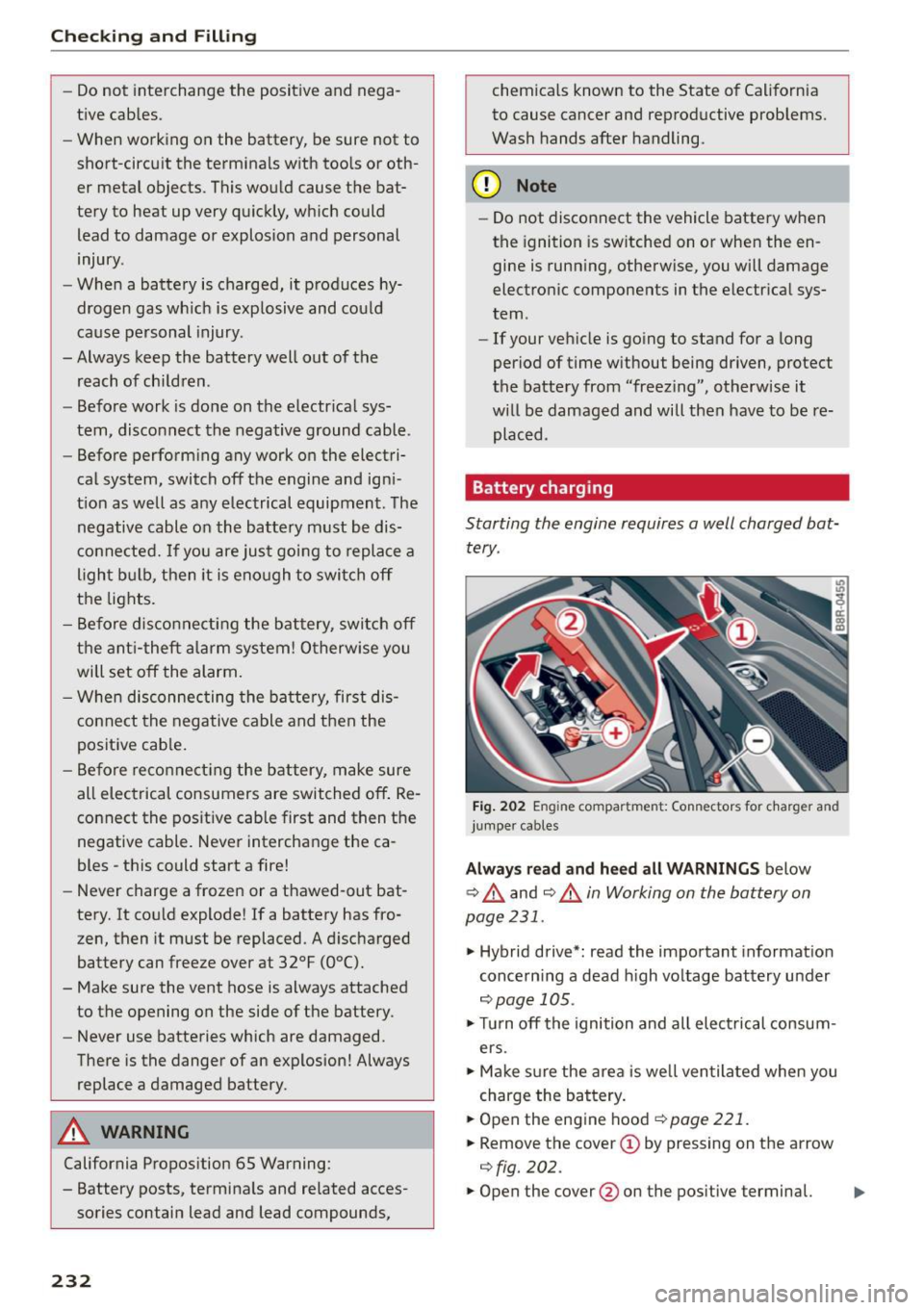
Fig. 202 Engin e compar tment : Co nnec tors fo r char ger and
jumper cables
Always read and heed all WARNINGS below
¢ .&. and
¢.&. in Working on the battery on
page 231 .
.. Hybrid drive*: read the important information
concerning a dead high voltage battery under
¢ page 105.
.. Turn off the ignition and all electrical consum
ers.
.. Make sure the area is well ventilated when you
charge the battery .
.. Open the engine hood
¢ page 221.
.. Remove the cover(!) by pressing on the arrow
¢fig. 202 .
.. Open the cover @on the positive terminal. .,.
Page 235 of 302
M N
co
a:
co
,...., \!) 1.1'1
N 1.1'1 ,....,
~ Connect the charger connectors according to
the instructions to the
j u mp st a rt b olt s. (Bo lts
under the cover= "posit ive", Bo lts with hex
head = "negat ive").
~ Only now plug the mains lead for the charging
equipment into the wall outlet and turn it on
c::> &_ .
~ Ma ke sur e th e chargin g rat e is not o ver
30 amp s/14 .8 Volt .
~ When the batte ry is f ully charged: Tu rn the
charging equ ipment
off and remove the mains
lead from the wall outlet .
~ Now remove the clamps for the charging equip
ment.
~ Close the cover@on the positive term inal and
re-install the
cover (D .
~ Close the hood c::> page 221 .
A discharged battery can freeze at temperatures
of only 32 °F (0 °C). Allow a frozen battery to
thaw completely before attempting to charge it
c::> ,& . However, we recommend not using a
thawed battery again because the battery casing
can be cracked due to ice formation and ca n leak
battery acid.
B attery ch arging (Maximum charging rate of
30 amps /14.8 Volt )
When charging at
Low voltages (e.g. w ith a tri ckl e
c har ger ),
the bat tery cables do not have to be
d isconnected first. The ba ttery caps shou ld
not
be opened when charg ing a battery .
I t is not necessary to
remove the batte ry from
t he luggage compa rtment.
F a st charging the b attery (charging rate
above 14.8 Volts )
F or technica l reasons do not use a battery charg
e r that uses voltage greater than 14.8 Vol ts to
charge your veh icle's batte ry.
A WARNING
Charging a batte ry can be dangerous.
- Always fo llow the oper ating instructions
provided by the battery charge r manufactur
er when charging your battery.
Checking and Fillin g
-Never charge a frozen battery. It may ex
plode because of gas trapped in the ice . Al
low a frozen battery to thaw out first.
- Do not reuse batteries wh ich were frozen.
The battery housing may have cracked and
weakened whe n the battery froze.
- Charge the battery in a well ventilated area. Keep away from open flame or electrical
spark. Do not smoke. Hydrogen gas generat
ed by the batte ry is explosive .
- To reduce the danger of explosion, never
connect or d isconnect charger cab les wh ile
the charger is operating.
- Fast charging a battery is dangerous and
should only be attempted by a competent
technician w ith the proper eq uipment.
- Battery acid that may sp ill dur ing cha rging
should be washed
off with a solut ion of
warm water and baking soda to neutralize the acid .
@ Note
Never use a fast charger as a booster to start
the eng ine . T his w ill ser iously damage sensi
tive elec tronic components, s uch as control
units, relays, radio, etc., as we ll as the battery
cha rger.
Battery replacement
The new battery must have the same specifica
tions and dimensions as the original equipmen t
battery.
Intelligent energy management in your vehicle is
r esponsible for distributi ng the elect rical energy
t h ro ugh out your vehicle
c::> page 196. T he intelli
gen t energy management system w ill keep the
engi ne battery charged better then vehicles with
out this system . To make s ure the additiona l elec
trical energy is avai lab le once again after you
have changed the battery, we recommend that
you install batteries of the same type and manu
facture on ly (the same as those installed at the
t ime you r vehicle was del ivered) . Specificat ions
are listed on the battery hous ing . Your autho r-
ized dea ler must code the battery in the ene rgy ..,.
233
Page 236 of 302

Checking and F ill in g
management system to enable you to use the en
ergy management functions correctly after re p lacing the battery .
If i t is not poss ible to use a battery of this type,
the new battery must have the same capacity,
voltage (12 vo lts), amperage, construction and
p lug sealing .
When insta lling the ba ttery, make sure the igni
tion and all electrical consumers are t urned
off .
(D Note
- M ake sure the ven tilat ion hose on the side
of the ba tte ry is co nne cte d, o therw ise
fumes o r batte ry acid can lea k out .
- Vehicles wi th the Start-Stop-System* are
equipped with a special cycle-proof AG M
b attery. Installing a different type of bat
tery can cause prob lems in the vehicle elec
trica l system. When replacing the vehicle
battery, always install one with the same
spec ificat ions as the or iginal battery.
@ For the sake of the environment
Because of the problem of proper disposa l of
a battery, we recommend your author ized
Aud i dea ler change the battery for you. Bat
teries conta in su lfuric ac id and lead and must
always be disposed of properly in compliance
w it h all environmental reg ulations. Disposing
of vehicle batte ries imprope rly is very dange r
ous to the e nvironme nt.
Windshield/headlight
washer container
F ig . 20 3 En gin e compart ment: cover o n the w inds hield
and headlig ht* w ash er flui d reservo ir
234
M N
-N
>< a, al
The washer fluid conta iner is mar ked w ith the
symbol
O on its cap ¢ fig . 203, ¢page 223,
fig . 197 .
.. Before yo u check any thing in the engine com
partment,
always re ad and heed all WARN
INGS ¢ A in Working in the engine compart
ment on page 221 .
.. Lift the f iller cap tongue to add washer fluid.
You can fill the container to the top.
.. Press the cap back o nto the f iller neck afte r fill -
ing the conta iner.
You can find the reservo ir
capacity in the table in
<=> page 2 78.
Clean water should be used when fi lling up . If
possib le, use soft water to prevent scaling on the
washer jets . Always add a g lass cleaner solution
(with frost protection in the winter).
(D Note
Do not mix engine coolant antifreeze o r any
other additives to fill up the winds hield wash
e r reservo ir .