2015 AUDI Q3 ECU
[x] Cancel search: ECUPage 181 of 258
M N M N
0 ::i co
rl I.O
"' rl
"' rl
Checking and filling Engine hood
Releasing and opening the engine hood
The engine hood is released from inside the
vehicle .
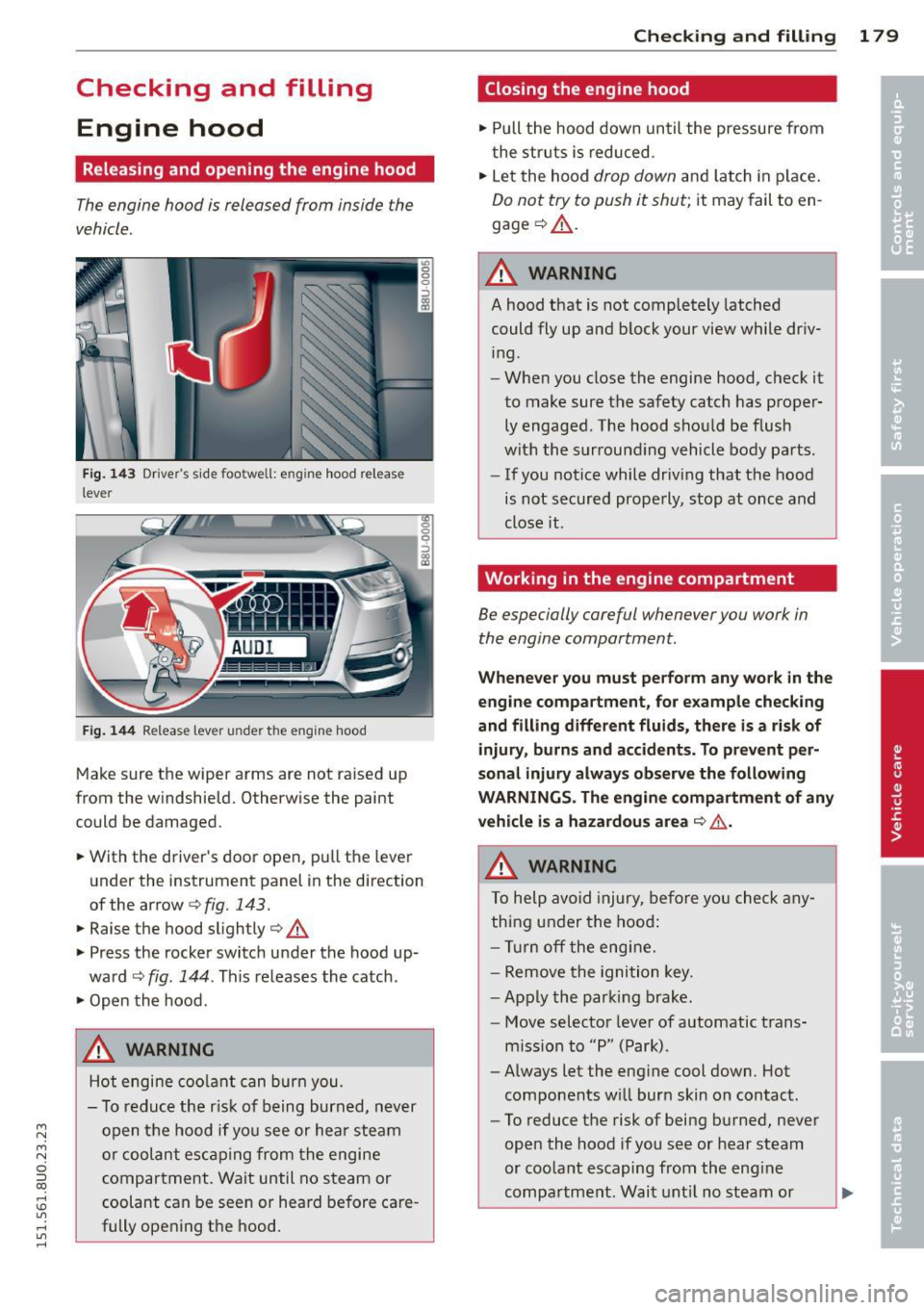
Fig. 1 43 Dr iver's side footwell: eng ine hood release
lever
F ig . 144 Re lease lever un der the engine hood
Make sure the wiper arms are not raised up
from the w indshield. Otherw ise the paint
could be damaged .
.. With the driver's door open, pu ll the lever
under the instrument panel in the direction
of the arrow
c> fig. 143.
.. Raise the hood slightly c> .&,
.. Press the rocker switch under the hood up
ward
c> fig. 144 . This releases the catch .
.. Open the hood.
A WARNING
Hot engine coo lant can burn you.
- T o reduce the r is k of being burned, never
open the hood if you see or hear steam
or coolan t escaping from the engine
compartment. Wait until no steam or
coolant can be seen or heard be fore care
fully opening t he hood.
Checkin g and fillin g 179
Closing the engine hood
.. Pull the hood down un til the pressure from
t he stru ts is reduced.
.. Let the hood
drop down and latch in p lace .
Do not try to push it shut; it may fail to en
gage¢ .&,.
A WARNING
-
A hood that is not completely latched
could fly up and b lock your view while dr iv
ing.
- When you close the engine hood , check it
to make sure the safety catch has proper
ly engaged. The hood shou ld be flush
with the surround ing vehicle body parts.
- If you notice while dr iving that the hood
is not secured properly, stop at once and
close it.
Working in the engine compartment
Be especially careful whenever you work in
the engine compartment.
Whene ve r you must pe rform an y wo rk in the
eng ine compa rtment , for e xample check ing
and filling different fluids, there is a risk of
injury , burns and accidents. To prevent per
so nal injury alway s observe th e foll owing
WARNINGS . Th e engin e compartm ent of an y
v e hicle i s a ha zardou s area
c> .&, .
A WARNING
To help avoid injury, be fore yo u check any
thing under the hood:
- Tu rn off the engi ne .
- Remove the ignition key.
- Apply the parking brake .
- Move selector leve r of automatic trans-
miss ion to "P" (Park) .
- Always let the engine cool down. Hot
components w ill bur n skin on contact.
- To reduce the risk of being burned, never
open the hood if you see or hear steam
or coo la nt escaping from the eng ine
compa rtment. Wait unt il no steam or
Page 205 of 258

M N
M N
0 ::i co ,...., \!) ..,.,
,...., ..,., ,....,
-If the ti re is not flat and y ou do not have
to change a wheel immed iate ly, drive at
reduced speed to the nearest service sta
t ion to check the tire pressure and add
air as required.
(D Note
Dr iving without va lve stem caps can cause
damage to the t ire va lves . To prevent this,
always make sure that factory installed
valve stem caps on all wheels are secu re ly
mounted on the va lve .
@) For the sake of the environment
Underinflated tires will a lso increase the
fue l consumption.
Tires and vehicle load limits
There are limits to the amount of load or
weight t hat any veh icle and any t ire ca n car ry.
A vehicle that is overloaded w ill not handle
well and is more difficult to stop. Overload ing
can not on ly lead to loss of vehicle contro l,
but can a lso damage important parts of the
vehicle and can lead to sudden tire failure, in
cluding a blowout and sudden deflation that
can cause the ve hicle to crash.
Your safety and that of yo ur passenge rs a lso
depends on making sure th at load limits are
no t exceeded. Vehicle load includes everybody
and everyth ing in and on the vehicle. These
load limits a re tech nica lly referred to as the
ve hicle's
Gross Veh icle Weight Rating
("GVWR").
The "GVWR" includes the we ight of the basic
ve hicle, all factory installed accessories, a full
tank of f uel, oil, coo lant and othe r fluids plus
max imum load. The maximum load includes
the number o f passenger s that the ve hicl e is
intended to carry ("se ating capacity") w it h an
assumed weig ht o f 150 lbs. (68 kg) for each
passenger at a designated seating position
and the tota l weight of any luggage in the ve
h icle. If you tow a trailer, the weight of the
trailer hitch and the tong ue weight of the
Tire s an d wheel s 203
loaded tra ile r must be included as part of the
vehicle load .
T he
Gro ss Ax le Weight Rating (" GAWR") is
the max imum load th at can be applied at each
of the vehicle's two axles .
T he Gross Vehicle Weight Rat ing and t he
G ross Ax le Weig ht Ra ting are l iste d on the
s af ety comp liance s tic ke r la bel lo cated on the
driver's side 8 -pillar . Yo ur Audi has 5 seating
positions, 2 in the front and 3 in the rear fo r
total seating capacity of 5. Eac h seating posi
tion has a seat be lt
c::> page 104, Safety bel ts.
T he fac t that there is an upper limit to yo ur
vehicle's G ross Vehicle Weight Rating means
that the total weight of whatever is being car
ried in the vehicle ( includ ing the weight of a
trai ler hitch and the tongue weight of the
l oaded tra ile r) is lim ited . The more passen
gers in the vehicle or passe ngers w ho are
heavi er than the standard we ights assumed
mea n that less we ight can be ca rried as lug
gage.
T he t ire pressure label o n your Aud i also lis ts
the max imum combined weight of a ll of the
occupants and l uggage or o ther cargo t hat
the ve hicl e can carry . Fo r th e lo cat ion of the
l abel
c::> page 199, fig . 152.
A WARNING
-=
Overloading a vehicle can cause loss of ve -
h icle cont ro l, a c rash or other accide nt, se
rious pe rsonal injury, and even death.
- Ca rrying more we ight than your vehicle
was des igned to carry wi ll prevent the
veh icle from handling pr oper ly and in
crease the risk of the loss of vehicle con
trol.
- The brakes on a vehicle that has been
overloaded may not be able to stop the
ve hicle w it hi n a safe distance.
- Tires o n a vehicle that has been over load
ed can fail s uddenly, incl uding a blowout
a nd sudden defla tion, causing loss of
con trol an d a crash . ..,.
•
•
Page 214 of 258

212 Tire s and wheel s
driving a few yards and correct if neces
sary. Follow the instructions from the
snow cha in manufacturer when doing so.
(D Tips
Where snow chains are mandatory oncer
tain roads, this normally also applies to
veh icles with all wheel drive .
Wheel bolts
Wheel bolts must always be tightened to the
correct torque.
The design o f whee l bolts is matched to the
factory insta lled rims . If different rims are fit
ted, the correct wheel bolts with the right l ength and correctly shaped bolt heads must
be used. This ensures that wheels are f itted
securely and that the brake system functions
correctly .
In certain circumstances, you may not use
wheel bolts from a different vehicle -even if it
is the same model¢
page 239.
.&_ WARNING
Improperly tig htened or maintained wheel
bolts can become loose ca using loss of
cont ro l, a co llision and serious p ersona l in
Jury.
- Always keep the wheel bolts and the
threads in t he wheel hubs clea n so the
wheel bolts can tu rn easily and be prop
erly tigh tened.
- N ever grease or oil the wheel bo lts and
the threads in the wheel h ubs. They can
become loose w hile d riving if greased or
oiled, even if tightened to the specified
torq ue.
- O nly use wheel bo lts that be long to the
rim being installed.
- N ever use different whee ls bolts on your
vehicle.
- Alw ays mai nta in the co rrec t tighte ning
tor que fo r the wheel bo lts to reduce the
risk of a wheel loss . If the tightening tor
que of the wheel bo lts is too low, they
can loosen and come out when the veh i- cle is moving.
If the tig
hte ning torq ue is
too high, the wheel bolts and threads
can be damaged and the wheel can be
come loose.
(D Note
The specified torque for the whee l bolts is
105 ft lbs. (140 Nm) with a tolerance of
± 7,4 ft lbs. (± 10 Nm). Torque whee l bolts
diagonally . After changing a wheel, the
torque must be checked as soon as poss i
ble with a to rque wrenc h - preferab ly by an
a uthorized Aud i dea le r or qualified wor k
shop.
Low aspect ratio tires
Your A udi is factory -eq uipped w it h low aspect
ratio tires. These tires have been thoroughly
tested and been se lected specifically for your
model for their superb performance, road fee l
and handling under a variety of driving condi
t ions . Ask your authorized Audi dealer for
more details .
The low aspect ratio of these tires is ind icated
by a numeral of
55 or less in the tire's s ize
designation . The numeral represents the ratio
of the tire's sidewall height in relation to its
t read width exp ressed in percentage. Conven
tiona l tires have a he ight/w idth rat io of 60 or
more.
The performanc e of low-a spect-ratio tire s is
pa rticularly sen sitive to improp er inflation
pre ssure. It i s therefor e important that low
a spe ct ratio tir es are inflated to the spe cified
pre ssure and that the inflation pre ssure i s
regula rly checked and mainta ined. Tire pre s
sure s should be checked at lea st once a
month and always befo re a long trip
¢ page 201, Checking tire pressure.
What you can do to avo id tire and rim
damage
Low aspect ratio tires can be damaged mo re
easily by impact w ith potholes, curbs, gul lies
or ridges on the road, particularly if the tire is
underinflated . ..,.
Page 218 of 258
216 What do I do now?
What do I do now?
General information
.. Park the vehicle as far as possible from mov
ing traffic in the event of a flat tire. In the
event of a flat tire, park the vehicle on a lev
el surface . It you are on a steep incline, be
especially careful.
.. Set the parking brake .
.. Switch the emergency flashers on .
.. Put on a reflective vest, if ava ilable .
.. Set up the warning triang le, if available .
.. Have the passengers exit the vehicle. They
should move to a safe place, for example
behind a guard rai l.
A WARNING
Pay attention to the steps above. They are
for your protection and the for the safety
of other drivers.
A WARNING
Improper use of the vehicle jack can cause
serious personal injuries.
- Never use the screw driver hex head to
tighten wheel bolts, since the bolts can
not attain the necessary tightening tor
que if you use the hex head, potentially
causing an accident.
- The factory-suppl ied jack is intended on
ly for your vehicle model. Under no cir
cumstances should it be used to lift
heavy vehicles or other loads; you risk in
jur ing yourself.
- Never start the engine when the vehicle
is raised, which could cause an accident.
- Support the vehicle securely with appro
priate stands if work is to be performed
underneath the vehicle; otherwise, there
is a potential risk for injury.
- Never use the jack supplied with your
Audi on another vehicle, particularly on a
heavier one . The jack is only suitable for
use on the vehicle it came with .
Vehicle tool kit with
lifting jack
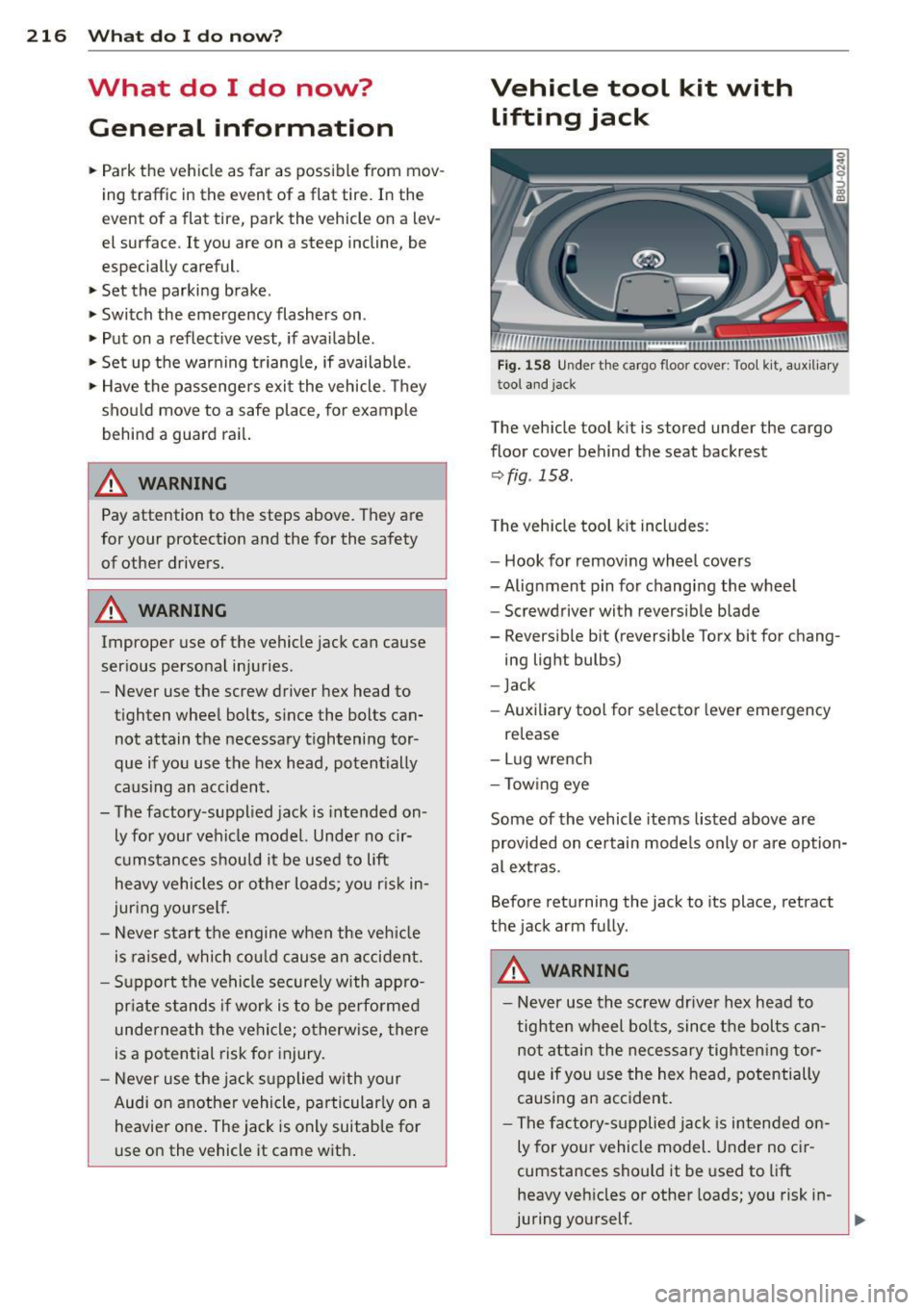
Fig. 158 Under the cargo floo r cover : Too l kit , auxiliary
too l and jack
The veh icle tool kit is stored under the cargo
floor cover behind the seat backrest
Q fig . 158 .
The vehicle tool kit includes :
- Hook for removing wheel covers
- Alig nment pin for changing the wheel
- Screwdriver with reversible blade
- Reversible bit (reversible Torx bit for chang-
ing light bulbs)
- Jack
- Auxil iary tool for selector lever emergency
release
- Lug wrench
-Towing eye
Some of the vehicle items listed above are
provided on certain models only or are option
al extras.
Before returning the jack to its place , retract
the jack arm fully .
A WARNING
-Never use the screw driver hex head to
tighten wheel bolts, since the bolts can
not attain the necessary tighten ing tor
que if you use the hex head, potentially
causing an accident.
- The factory-supplied jack is intended on
ly for your vehicle model. Under no cir
cumstances should it be used to lift
heavy veh icles or other loads; you risk in-
-
juring yourself. ~
Page 219 of 258

M N M N
0 ::i co
rl I.O
"' rl
"' rl
-Never start the engine when the veh icle
is raised, which cou ld cause an accident.
- Support the vehicle secure ly with appro
priate stands if work is to be performed
underneath the vehicle; otherwise, there
is a potential risk for injury.
Folding chocks
Applies to vehicles: with fold ing chocks
The folding chocks are part of the on board
tool kit.
------ - --
Fi g. 159 Opening foldi ng chocks
To use the chocks, you fi rst have to ra ise the
suppor t plate~
fig . 159 CD and then insert
the locking p late with the two "tabs" into the
e longated holes in the base plate@~&. .
&_ WARNING
-The chock cannot fulfil its function and
may lose its stability if the "tabs" on the
support plate are not inserted correctly into the elongated holes in the base
plate. If t his happens , the veh icle may
sta rt to move whi le a wheel is being
changed.
- Never use the folding chocks if they are
damaged or if they have not been assem
bled correct ly.
What do I d o now ? 217
Removing bass box
App lies to vehicles: wit h bass box
Before the spare tire can be taken out, the
bass box must be removed.
Fi g. 160 Spa re whee l well: Bass box
Removing bass box
.,. Lift up the cargo floor us ing the handle .
.,. Squeeze the locking tabs
CD ~ fig. 160 of
the connector .
.,. Disconnec t the conne ctor @and place the
le ad to one side .
.. Tur n the large screw counter-clockwise .
.. Carefully remove the bass box.
Installing bass box
.,. Carefully place the bass box in the wh eel.
The ins cription "FRO NT' ' on the bas s box
m ust face forward .
.. Reco nnect the connector that was removed .
.. Secure the bass box with the large screw.
.. Fold the cargo floor back down.
Space-saving spare tire
(compact spare tire)
.'II If Ill llf 1111 11
Fig . 16 1 Lu ggage compartme nt: Spa re tire
T he spare tire is on ly in tended for tempo rary
u se over short distances. After use, have it ...,
Page 223 of 258

M N M N
0 ::i co
rl I.O
"' rl
"' rl
Raising the vehicle
The vehicle must be li~ed with the jack first
before the wheel can be removed .
Fig. 165 S ill pane ls: markings
Fi g. 166 Sill: posit ion ing th e vehicle jack
The location of the jack point is indicated by
a n in den ta ti on on the underside of the vehicle
c::> fig . 165.
"'Activate the parking b rak e to prevent the
vehicle from ro lling u ninten tionally.
"' Move the selector lever to the P position .
"' Find the
markin g (imprint) on the si ll that is
nearest the wheel that w ill be changed
c::>fig. 165 . Behind the marking, there is a
lifting po int on the sill for the vehicle jack .
"' Turn the
vehicle jack located under the lift
ing point on the sill to raise the jack until
the jaw
c::> fig . 166 @ covers the notch on
the vehicle
c::> .&_ c::>0 .
"'Align the vehi cle jack so the jaw @covers
the notch and the base p late @ is flat on
t h e f loor. The base p late @ must be
vertical
under the lifting point @.
"' Install the rod on the vehicle jack : Insert the
rod into the opening on the handwheel. Turn
the rod left or right to secure it.
"' Continue raising the jack with the rod until
the wheel lifts off the ground slightly .
What do I do now ? 221
Position the vehicle jack only under the desig
nated lifting po ints on the si ll
c::>fig. 165 .
There is exactly one locat ion for each wheel.
The jack must not be positioned at any other
location
c::> .&. c::> (D .
Soft g round under the jack can cause the ve
hicle to slip off the jack. A lways p lace the jack
on firm ground. Use a f lat, stable support if
necessary. Use a non-slip surface such as a
rubber mat o n a
slippery surface such as tile.
A WARNING
- You or your passengers co uld be inju red
while changing a wheel if you do not fo l
low these safety p re ca utions:
- Position the vehicle jack on ly at the
designated lifting points and align the
j ack. Otherw ise, the vehicle jack could
slip and cause an injury if it does not
have sufficient hold on the vehicle.
- Use only the jack* supplied with your
vehicle to raise the veh icle . If you use a
j ac k from a different veh icle, you r vehi
cle may slip off the jac k -ris k of injury !
- Do not use the jack* supplied with yo ur
vehicle to raise other vehicles, as these
may s lip off the jack -risk of injury!
- A soft o r unstable surface unde r the
j ac k m ay cause the veh icle to slip off
the jack . Always prov ide a fi rm base for
the jack o n the ground.
If necess ary,
u se a st urdy board under the jack.
- On hard, sl ippery su rface (such as t iles)
u se a r ubber mat or s imi lar to prevent
the jack from slipping .
- To help prevent injury to yo urself and
your p asse ngers:
- Do not ra ise the vehicle until you are
sure the jack is securely engaged.
- Passengers must not remain in the ve
hicle when it is jacked up.
- Make sure that passengers wait in a
safe place away from the veh icle and
well away from the road and traffic .
- Make sure jack position is correct, ad
j ust as necessary and then cont inue to
raise the jack .
Page 232 of 258

230 Emergency sit uat ions
-When connecting jumper cables, make
sure that they cannot get caught in any
moving parts in the eng ine compart
ment.
- Do not bend over the batteries - danger
of chemical burns!
- The battery cell locking screws must be tightened securely.
- Before you check anything in the engine
compartment, always read and heed all
WARNINGS
r=>page 179.
Improper hook-up of jumper cables can r u
in the generator.
- Always connect POSITIVE( +) to POS I
TIVE(+), and NEGATIVE( -) to NEGATIVE
(-) ground post of the battery manager
control unit.
- Check that a ll screw plugs on the battery
cells are screwed in firmly. If not, tighten
plugs prior to connecting clamp on nega
tive battery terminal.
- Please note that the procedure for con
nect ing a jumper cable as described
above applies spec ifically to the case of
you r vehicle being jump started. When
you are givi ng a jump start to a nothe r ve
hicle, do
not connect the negat ive (-) ca
ble to the negat ive (-) term inal on the
discharged battery @r=>
fig. 172. In
stea d, securely connect the negative( -)
cable to e ithe r a solid metal component
that is firm ly bolted to the engine block
or to the engine block itse lf. If the bat
tery that is being charged does not vent
to the outside, escaping battery gas
could ignite and exp lode!
Emergency towing
with commercial tow
truck
General hints
Your Audi requires special handling for tow
ing.
T he following information is to be used by
commercial tow truck operators who know
how to operate their equipment safely.
- Ne ver tow your Audi , towing will cau se
damage to the engine and transmi ssion .
- Ne ver wrap th e safet y chains or winch ca
ble s around the brak e lines.
- To prevent unne cessar y damage, your Audi
must be tr an sp o rted with a flat bed tru ck.
- To load th e vehi cle on to the fl at bed, use
the towing l oop found in the ve hicle to ols
and atta ch to th e front or rea r anchorage
r=> page 231 and Qpage 231 .
& WARNING
= -
A vehicle being towed is not safe for pas-
sengers. Never allow anyone to ride in a
vehicle being towed, for any reason.
Page 234 of 258

232 Emergency situations
Vehicles with a trailer hitch*
.,. In stall the trailer h itch .
.,. Attach the towing bar or the towing cab le to
the trai ler hitc h.
Unscrew the towing loop agai n after use and
i nsta ll t he
cover in the b umpe r. Re tur n t he
towing loop to t he vehicle too lkit. Be sure to
have the towing loop stored in the vehicle at
a ll t imes.
A WARNING
- If the towing loop is not screwed in as far
as it will go, t he thread can pull out when
the vehicle is towed -potential risk of an
acc ident.
- If your veh icle has
a trailer hitch* on ly
use a specia l towing bar to p revent dam
aging the ball h itch . Th ese towing bars
have been specially designed for trailer
t owing hitches.
- If your veh icle has a
trailer hitch* use on
ly specia l towing cables .
Loading the vehicle onto a flat bed truck
Fig. 17 7 Veh icle on flat bed truck
F ront hook up
.,. Align the vehicle with the centerline of the
car carrier ramp .
.,. Attach the winch hook to the front towline
eye previously insta lled .
Rear hook up
.,. Align the vehicle wit h the centerline of the
car carr ier ramp.
.,. Attach the winch hook to the rear towline
eye previously installed.
(D Tips
Check caref ully to make sure t he hook -up
i s secure before mov ing the car up t he f lat
b ed truck ramp .
Lifting vehicle
Lifting with workshop hoist and with
floor jack
The vehicle may only be lifted at the lif ting
points illustr ated.
Fig. 17 8 Front lift ing point
Fig . 17 9 Rear liftin g po int
.,. Read and heed WARNI NG c::> .&_ .
.,. Locate lifting points c> fig. 178 and
c>fig. 179 .
.,. Adjust lifting arms of workshop ho ist or
floor jack to matc h ve hicle lift ing po ints .
.,. Insert a rubber pad between the floor jack/
workshop hoist and t he lift ing points .
If you must lift your vehicle with a floor jack
to work undern eath, be su re the vehicle is
safely supported on stand s intended for this
purpo se .
Front lifting point
The lifting poi nt is located on the floor pan re-
i nforcement abo ut at the same level as the
II>