2015 AUDI Q3 instrument panel
[x] Cancel search: instrument panelPage 116 of 258

114 Airbag sys te m
- Never permit salvaged or recycled air
bags to be installed in your veh icle.
Child restraints on the front seat - some
important things to know
~ Be sure to read the important informat ion
and head the WARNINGS for important de
ta ils about ch ildren and Advanced Airbags
c::>page 133.
Even though your vehicle is equ ipped with an
Advanced Airbag System, make certain that
a ll c hildren, especially those 12 years and
younger, a lways ride in the back sea t properly
restrained for their age and size . The airbag
on the passenger side makes the front seat a
potentially dangerous place for a chi ld to ride.
The front seat is not the safest place for a
child in a forward-facing child safety seat. It
can be a very dangerous place for an infant or
a child in a rea rward-facing seat .
The Advanced Airbag System in your veh icle
has been certified to comply with the Requ ire
ments of United States Federa l Motor Veh icle
Safety Standard 208 as applicable at the time
your veh icle was manufactured .
The Standard requires the front a irbag on the
passenger side to be turned off ("sup
pressed") if a ch ild up to about one yea r of
age restra ined in one of the rear-facing or fo r
ward-facing infan t restra ints listed in Federal
M otor Vehicle Safety Standard 208 w ith w hic h
the Advanced A irbag System in your vehicle
was certified has been installed on the front
passenger seat. Fo r a listing of the child re
straints that were used to certify compliance
with the US Safety Standard
c::> page 135.
The PASSENGER AIR BAG OFF light in the in
strument panel te lls you when the front Ad
vanced A irbag on the passenger side has been
turned off by the e lectronic control unit.
Each time yo u turn on the ignition, the
PAS
SENGER AIR BAG OFF
li ght wi ll come on for a
few seconds and:
- will stay on if the front passenger seat is not
occupied, -
w ill s tay on i f there is a small ch ild or child
restraint on the front passenger seat,
- will go off i f the front passenger sea t is oc
cupied by an adult as registered by the
weight-sensing mat
c::> page 123, Monitor
ing the Advanced Airbag System.
T he PAS SENGER AIR BAG OFF light comes on
whe n the control unit detects a tota l weight
o n the front passenger seat that req uires the
front airbag to be turned off .
If the total weight on the front passenge r
seat is more than that of a typica l 1 year -old
c h ild b ut less than the weight of a small
adult, the front airbag on the passenger side
can deploy (the
PASSENGER AIR BAG OFF
li ght does not come on). If the PASSENGER
AIR BAG OFF
light does not come on, the
front a irbag on the passenger side has not
been turned off by the elect ronic control unit
and can deploy if the cont rol uni t senses an
impact that meets the cond itions s tored i n its
memo ry .
For exampl e, th e ai rbag may deploy if;
- a small ch ild that is heav ier than a typical 1
year-old ch ild is on the front passenger seat
( r egardless of whether the child is in one of
the ch ild safety seats listed
c::> page 135) , or
- a child who has outgrown chi ld restraints is
on t he front passenger seat .
If the front passenger airbag is turned off, the
PASSENGER AIR BAG OFF light comes on in
the instrument cluster a nd stays on .
The front airbag on the passenger side may
not deploy (the PASSENGER AIR BAG OFF
light does not illum inate and stay lit) even if a
small adult o r teenager, or a passenger who is
not sitt ing up rig ht w ith their back against a
non- recl ined ba ck rest w it h their feet on the
vehicle f loor i n front o f the sea t is on t he front
passenge r seat
c::> page 95, Proper seating po
sition for the driver.
If the front passenger airbag dep loys, the
F edera l Standard req uires the airbag to meet
the "low risk" dep loyment criteria to red uce
t h e risk of injury t hro ugh interactio n with the ..,.
Page 119 of 258

M N
M N
0 ::i co ,...., \!) 1.1"1 ,...., 1.1"1 ,....,
-Therefore, always wear your safety belts
and make sure that everybody in your ve
hicle is properly restrained.
A WARNING
A person on the front passenger seat, es
pecially infants and small children, will re
ceive serious injur ies and can even be kil
led by being too close to the airbag when
it inflates.
- Although the Advanced Airbag System in
your vehicle is designed to turn off the
front passenger a irbag if an infant or a
small ch ild is on the front passenge r
seat, nobody can absolutely guarantee
that deployment under these special
conditions is impossible in all conceiva
ble s ituations that may happen during
the useful life of your vehicle.
- The Advanced A irbag System can deploy
in accordance with the "low risk" opt ion
under the U.S. Federa l Standard if a c hild
that is heavier than the typical one-year
old child is o n the front passenger seat
and the other cond itions for airbag de
ployment are met .
- Acc ident statist ics have shown that chil
dre n are generally safe r in the rea r seat
area than in the front seating posit io n.
- For their own safety, all children, espe
cially 1 2 yea rs and younger, sho uld al
ways ride in the b ack properly restrained
for their age and size .
Advanced front airbag system
-
Your vehicle is equipped w it h a front Advanced
Airbag System in comp liance with United
States Federal Motor Vehicle Safety Standard
208 as applicable at the time your vehicle was
manufactured.
The front Advanced Airbag System supp le
ments the safety belts to provide additiona l
protection for the driver's and front passeng
er's heads and upper bodies in frontal crashes.
The airbags inflate only in frontal impacts
when the vehicle decelerat io n is high enough .
Airbag system 117
The front Advanced Airbag System for the
front seat occupants is not a substitute for
your safety be lts . Rather, it is part of the over
all occupant restra int system in your vehicle.
Always remember that the airbag system can
only he lp to protect you, if you are sitting up
rig ht, wearing your safety belt and wear ing it
proper ly. This is why you and your passe ngers
mus t always be prope rly restrained, not jus t
because the law req uires you to be.
T he Advanced A irbag System in your vehicle
has been ce rtified to meet the "low risk" re
quirements for 3 and 6 yea r-old ch ildren o n
the passenger side and very small ad ults o n
the driver side . The low risk deployment crite
ria are intended to help reduce the risk o f in
jury through interaction with the front airbag that can occur, for example, by being too
close to the steering wheel and instrument
panel when the airbag inflates.
In addition, the system has been certified to
comply with the "s uppression" requirements
of the Safety Standard, to turn off the front
airbag for infants
12 months old and younger
who are restrained on the front passenger
seat in child rest raints that are listed in the
Standard ¢
page 135, Child restraints and
Advanced Airbags.
"Suppress ion" requires the front a irbag on the
passenger side to be turned off if:
- a child up to about one year of age is re
strained on the front passenger seat in one
of the rear -fac ing or forward-facing infant
restrai nts listed in Federal Motor Vehicle
Safety Standard 208 with which the Ad
vanced Ai rbag System in your ve hicl e was
cert ified . For a listing of t he chi ld res traints
tha t were used to certify you r vehicle's com
pliance with the US Safety Standard
¢ page 135,
-weight less than a thresho ld level stored in
the control unit is detected on the front pas
senger seat .
When a person is detected on the front pas senger seat, weighing more than the total
weight of a chi ld that is about 1 year old •
•
Page 127 of 258

M N
M N
0 ::i co ,...., \!) ..,.,
,...., ..,., ,....,
-accessory seat covers or cushions or other
things that may cause an incorrect reading
or impression on the weight-sens ing mat
under the upholstery of the seat have been
removed from the front passenger seat,
- a safety be lt extender has not been left in
the safety belt latch for the front passenger seat.
In addition to the
PASSENGER AIR BAG OFF
light in the center of the instrument panel,
the message
PASS ENGER AIR B AG O FF or
PAS SENGER AIR B AG ON will briefly appear
in the instrument cluster display . Th is is to in
form the driver of the current front passenger
a ir bag status .
Important safety instructions on
monitoring the Advanced Airbag System
A WARNING
An airbag system that is not functioning properly cannot provide supplemental pro
tection in a frontal crash .
- If the airbag indicator l ight
c> page 16
comes when the vehicle is be ing used,
have the system inspected immediately
by you r autho rized Aud i dea ler. It is pos
sible that the a irbag will inflate when it
is not supposed to, or w ill not inflate
when it sho uld .
A WARNING
If the front airbag inflates , a ch ild without
a child restraint, in a rearward-facing child
safety seat or in a forward-facing chi ld re
straint that has not been properly insta lled
w ill be seriously injured and can be k illed.
- Even though your veh icle is equipped
with an Advanced Airbag System, make certain that a ll children, especially 12
years and younge r, always ride o n the
back seat properly restrained fo r their
age and si ze.
- Always install forward or rea r-facing
child safety seats on the rear seat - even
with an Advance d Airbag System. A
irbag
sys tem 125
- If you must install a rearward-facing
child safety seat on the front passenger
seat because of exceptional circumstan
ces and the
PA SS ENG ER AIR BAG OFF
light does not appear and stay on, imme
diate ly install the rear-facing child safety
seat in a rea r seat ing pos ition and have
the airbag system inspe cted by your au
thorized A udi dealer.
- A t ight tether or other strap on a rea r
ward-facing child restraint attached to
the front passenger seat can p ut too
m uch pressure on the weight-sensing
mat in the seat and registe r more weight
than is actually on the seat. The heavier
weight registered can make the system
work as though an adult were on the seat
and deploy the Advanced Airbag when it
must be suppressed causing ser ious or
even fata l injury to the ch ild.
- If, in exceptiona l circumstances, you
must install a forward-fac ing ch ild re
straint on the front passenger seat, al
ways move the seat into its rearmost po
sition in the seat's fore and aft adjust
ment range, as far away from the airbag
as possible . The backrest must be adjust
ed to an upright pos ition. Make sure that
the
PASSENGER AIR BAG OFF light
comes on and stays on all the time when
ever the ignit ion is switched on.
A WARNING
...---
- If the PASSENGER AIR BAG OFF light
does not go out when an adult is sitting
on the front passenger sea t after taking
the steps described above, make su re the
adu lt is properly seated and restra ined at
one o f the rear seat ing pos itions.
- Have the airbag system inspected by
your author ized Audi dealer befo re trans
porting anyone on the front passenger
seat.
(D Tips
If the weight-sensing mat in the front pas
senger seat detects an empty sea t, the
front airbag on the passenger side wi ll be ..,.
•
•
Page 133 of 258

M N M N
0 ::i co
rl I.O
"' rl
"' rl
vehicle speed, etc. c> page 131, How side cur
tain airbags work .
Aside from their normal s afety func tion, safe
t y belts work to he lp keep the d river or front
passenger in position in the event of a co lli
sion so that the side curtain airbags can pro
vide protection.
The airbag system is not a s ubst itute for yo ur
safety be lt . Rather, it is part of the overall oc
cupant restraint system in your vehicle . Al
ways remember that the airbag system can
only help to protect you if you are wearing
your safety belt and wear ing it properly. Th is
is another reason why you shou ld always wear
your safety belts, not just beca use the law re
qu ires you to do so
c> page 104, General
notes.
It is important to remember that while the
side curta in a irbag system is designed to he lp
reduce the like lihood of serious injuries, other
i n ju ries, for example, swell ing, b ruising, and
minor abras ions can also be associated w ith
these airbags . Remember too, these a irbags
will dep loy only once and only in certain kinds
of accidents - yo ur safety belts are a lways
there to offer protection.
The side curtain airbag system basically
con sis ts of:
- The electronic contro l mod ule and externa l
s ide impact sensors
- The side curtai n airbags above t he front and
rear side windows with ejection mitigation
features
- The airbag indicator light in the instrument
panel
The a irbag system is monitored ele ct ron ic all y
to make certain it is functioning properly at a ll
times. Eac h time you turn on the ignition, the
airbag system indicator light will come on for
a few seconds (se lf diagnostics).
The side curtain airbag is not activated:
- if th e ign it io n is turned off,
- i n s ide collisions when the accelerat ion
measure d by the sensor is too low,
- in rear-end co llisions.
A irba g sy stem 131
A WARNING
-Safety belts and the airbag system will
only provide protection w hen occupants
are in th e proper seating position
c> page 51, Front seats .
- If the airbag indicator light c> page 16
comes when the veh icle is being used,
have the system inspe cted immediately
by your authori zed A udi dealer .
It is pos
sib le t hat the airbag will inflate when i t
is not supposed to, or will not inflate
when it should.
How side curtain airbags work
Side curtain airbags can work together with
side airbags to help reduce the risk of head and upper torso injuries for occupants who
are properly restrained .
Fig. 124 Illust rat io n of p rinciple: I nfla ted s ide cur tai n
a irbags on the left s ide
T he side c urta in airbags inflate be twee n the
occupant and the windows on the s ide of the
vehicle that is struck in a side collision
<=> fig. 124 .
When the system is t rigge red, the side curta in
a irbag is filled with propellant gas and b reaks
th ro ugh a seam above the front and rear side
windows identified by the AIRBAG labe l. In or
der to he lp provide this additional protection,
the side curta in a irbag must inflate within the
blink of an eye at very high speed and with
great fo rce . The side curta in a irbag could in
jur e you if your sea ting pos it io n is not prope r
o r uprig ht or if items are located in t he a rea
whe re the supplemen tal side curta in a irbag
infla tes . This applies espe cially to ch ildren
<=> page 133. II--
Page 136 of 258

134 Child Safety
-Always install rear-facing child safety
seats on the rear seat.
- If you must install a rearward facing
child safety seat on the front passenger
seat in exceptional circumstances and
the
PASSENGER AIR BAG OFF light does
not come on and stay on, immediately
install the rear-facing child safety seat in
a rear seating position and have the air
bag system inspected immediately by
your Audi dealer.
_& WARNING
If, in exceptional circumstances, you must
install a forward-facing child restraint on
the front passenger's seat:
- Always make sure the forward-facing
seat has been designed and certified by
its manufacturer for use on a front seat
with a passenger front and side airbag.
- Always follow the manufacturer's in
structions provided with the child safety
seat or carrier.
- Always move the passenger seat into its
rearmost position in the seat's fore and
aft adjustment range, as far away from
the airbag as possible before installing
the child restraint. The backrest must be
adjusted to an upright position .
- Always make sure that the
PASSENGER
AIR BAG OFF
light comes on and stays
on all the time whenever the ignition is
switched on.
(D Tips
Always replace child restraints that were
installed in a vehicle during a crash. Dam
age to a child restraint that is not visible
could cause it to fail in another collision
situation.
Advanced front airbag system and children
Your vehicle is equipped with a front "Ad
vanced Airbag System" in compliance with United States Federal Motor Vehicle Safety Standard (FMVSS) 208 as applicable at the
time your vehicle was manufactured.
The Advanced Airbag system in your vehicle
has been certified to meet the "low-risk" re
quirements for 3- and 6-year old children on
the passenger side and small adults on th e
driver side. The low ris k deployment criteria
are intended to reduce the risk of injury
through interact ion with the airbag t hat can
occur, for example, by being too close to the
steering wheel and instrument panel when
the airbag inflates . In addition, the system
has been certified to comply with the "sup
pression" requirements of the Safety Stand
ard, to turn off the front airbag for infants up
to 12 months who are restrained on the front
passenger seat in child restraints that are list
ed in the Standard.
Even though your vehicle is equipped with an
Advanced Airbag system , all children, espe
cially those 12 years and younger, should al
ways ride in the back seat properly restrained
for their age and size. The airbag on the pas
senger side makes the front seat a potentially
dangerous place for a child to ride . The front
seat is not the safest place for a child in a for
ward-facing child safety seat. It can be a very
dangerous place for an infant or a larger child
in a rearward-facing seat .
Advanced Airbags and the weight
sensing mat in the front seat
The Advanced Airbag System in your vehicle
detects the presence of an infant or child in a
child restraint on the front passenger seat us
ing the weight-sensing mat in the seat cush
ion and the sensor below the safety belt latch
on the front passenger seat that measures the
tension on the safety belt.
The weight -sensing mat measures total
weight of the child and the child safety seat
and a child blanket on the front passenger
seat. The weight on the front passenger seat
is related to the design of the child restraint
and its "footprint", the size and shape of the
bottom of the child restraint as it sits on the .,..
Page 181 of 258
M N M N
0 ::i co
rl I.O
"' rl
"' rl
Checking and filling Engine hood
Releasing and opening the engine hood
The engine hood is released from inside the
vehicle .
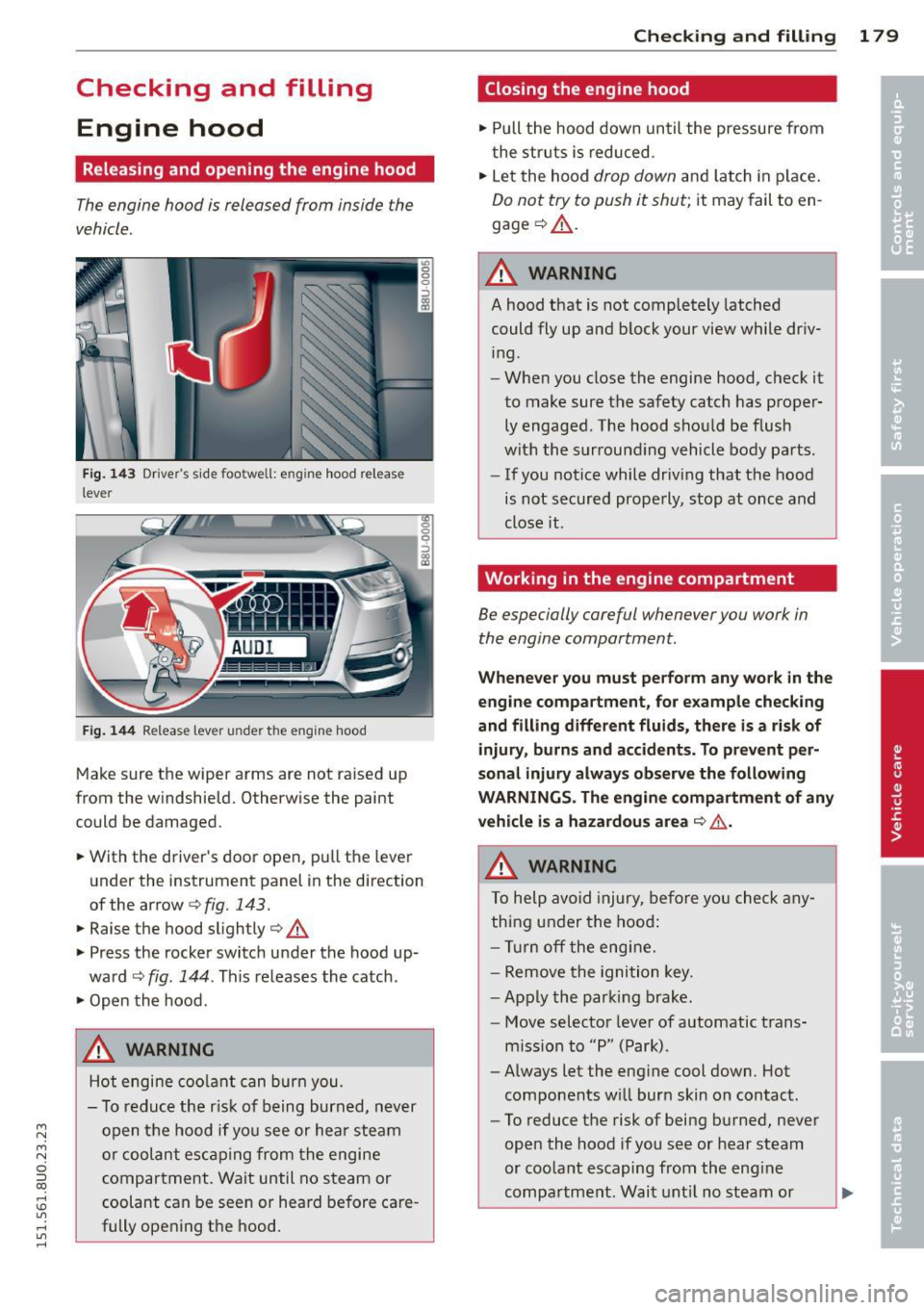
Fig. 1 43 Dr iver's side footwell: eng ine hood release
lever
F ig . 144 Re lease lever un der the engine hood
Make sure the wiper arms are not raised up
from the w indshield. Otherw ise the paint
could be damaged .
.. With the driver's door open, pu ll the lever
under the instrument panel in the direction
of the arrow
c> fig. 143.
.. Raise the hood slightly c> .&,
.. Press the rocker switch under the hood up
ward
c> fig. 144 . This releases the catch .
.. Open the hood.
A WARNING
Hot engine coo lant can burn you.
- T o reduce the r is k of being burned, never
open the hood if you see or hear steam
or coolan t escaping from the engine
compartment. Wait until no steam or
coolant can be seen or heard be fore care
fully opening t he hood.
Checkin g and fillin g 179
Closing the engine hood
.. Pull the hood down un til the pressure from
t he stru ts is reduced.
.. Let the hood
drop down and latch in p lace .
Do not try to push it shut; it may fail to en
gage¢ .&,.
A WARNING
-
A hood that is not completely latched
could fly up and b lock your view while dr iv
ing.
- When you close the engine hood , check it
to make sure the safety catch has proper
ly engaged. The hood shou ld be flush
with the surround ing vehicle body parts.
- If you notice while dr iving that the hood
is not secured properly, stop at once and
close it.
Working in the engine compartment
Be especially careful whenever you work in
the engine compartment.
Whene ve r you must pe rform an y wo rk in the
eng ine compa rtment , for e xample check ing
and filling different fluids, there is a risk of
injury , burns and accidents. To prevent per
so nal injury alway s observe th e foll owing
WARNINGS . Th e engin e compartm ent of an y
v e hicle i s a ha zardou s area
c> .&, .
A WARNING
To help avoid injury, be fore yo u check any
thing under the hood:
- Tu rn off the engi ne .
- Remove the ignition key.
- Apply the parking brake .
- Move selector leve r of automatic trans-
miss ion to "P" (Park) .
- Always let the engine cool down. Hot
components w ill bur n skin on contact.
- To reduce the risk of being burned, never
open the hood if you see or hear steam
or coo la nt escaping from the eng ine
compa rtment. Wait unt il no steam or