2015 AUDI A3 CABRIOLET seats
[x] Cancel search: seatsPage 129 of 302

....,
N
r--. > co
rl I.O
"' rl
"' rl
.. Secure all luggage and other items carefully
r=> page 65, r::!;>page 65.
.. Make sure that nothing can interfere w ith
the pedals .
.. Adjust front seat, head restraint and mirrors
correct ly for your height .
.. Instruct passengers to adjust the head re
stra ints according to their height .
.,. Make sure to use the right child restraint
correctly to protect children
r=> page 169 ,
Child Safety .
.. Sit properly in your seat and make sure that
your passengers do the same
r=:>page 60,
Front seats .
.. Fasten your safety belt and wear it proper ly.
Also instruct your passengers to fasten their
safety belts properly
r=> page 138 .
What impairs driving safety?
Safe driving is directly related to the condi
tion of the vehicle , the driver as well as the
driver's ability to concentrate on the road
without being distracted.
The driver is responsible for the safety of the
vehicle and all of its occupants. If your ability
to drive is impaired, safety r isks for everybody
in the vehicle increase and you a lso become a
hazard to everyone else on the road
r=> ,&..
Therefore:
.,. Do not let you rself be dist racted by passen
gers or by us ing a cellular telephone .
.. NEVE R dr ive when yo ur dr iv ing ability is im
paired (by medicat ions, alcohol, drugs, etc.).
.. Observe all traffic laws, ru les of the road
and speed limits and plain common sense.
.. ALWAYS adjust your speed to road, traffic
and weather conditions .
.. Take frequent breaks on long trips. Do not
drive for more than two hours at a stretch.
.. Do NOT drive when you are t ired, under
pressure or when you are stressed .
A WARNING
Impaired driving safety increases the risk
of serious personal injury and death when
ever a veh icle is being used.
Driving safety 127
Proper occupant
seating positions
Proper seating position for the driver
The proper driver seating position is impor
tant for safe, relaxed driving .
Fig. 123 Correct seat ing pos it ion
For your own safety and to reduce the risk of
injury in the event of an accident, we recom
mend that you adjust the driver's seat to the
follow ing position:
.. Adjust the driver's seat so that you can easi
ly push the pedals all the way to the floor
wh ile keeping your knee(s) slightly bent
r::!;> &,.
.. Adjust the angle of the seatback so that it is
in an upr ight position so that your back
comes in full contact w ith it when you drive.
.. Adjust the steering wheel so that th ere is a
distance of at least 10 inches (25 cm) be
tween the steering wheel and yo ur breast
bone r=:>
fig. 123. If not possible, see your au
thorized Audi dealership about adaptive
equipment .
.. Adjust the steering wheel so that the steer
ing wheel and airbag cover points at your
chest and not at your face .
.,. Grasp the top of the steer ing whee l with
your elbow(s) slightly bent.
.. For adjustable head restra ints: Adjust the
head restraint so the upper edge is as even
as possible with the top of your head. If that
is not possible, try to adjust the head re
straint so that it is as close to this position
as poss ible. Move the head restraint so that
it is as close to the back of the head as pos-
sible . .,.
Page 130 of 302

128 Driving safety
• Fasten and wear safety belts correctly
9page 141.
• Always keep both feet in the footwell so
that you are in control of the vehicle at all
t ime s.
Fo r detailed information on how to adjust the
driver's seat, see
<=>page 61 .
A WARNING
Drivers who are unbelted, out of position
or too close to the airbag can be seriously
injured by an airbag as it unfolds. To help
reduce the risk of serious personal injury:
- Always adjust the driver's seat and the steering wheel so that there are at least
10 inches (25 cm) between your breast
bone and the steering wheel.
- Always adjust the driver's seat and the
steering wheel so that there are at least
4 inches (10 cm) between the knees and
the lower part of the instrument panel.
- Always hold the steering wheel on the
outside of the steering wheel rim with
your hands at the 9 o'clock and 3 o'clock
positions to help reduce the risk of per
sonal injury if the driver's airbag inflates.
- Never hold the steering wheel at the
12 o'clock position or with your hands at
other positions inside the steering wheel
rim or on the steering wheel hub. Hold
ing the steering wheel the wrong way
can cause serious injuries to the hands,
arms and head if the driver's airbag in
flates.
- Pointing the steering wheel toward your face decreases the ability of the supple
mental driver's airbag to protect you in a
collision .
- Always sit in an upright position and nev
er lean against or place any part of your
body too close to the area where the air
bags are located.
- Before driving, always adjust the front
seats properly and make sure that all
passengers are properly restrained. -
For adjustable head restraints: before
driving, always also adjust the head re
straints properly.
- Never adjust the seats while the vehicle
is moving. Your seat may move unexpect
edly and you could lose control of the ve hicle .
- Never drive with the backrest reclined or
tilted far back! The farther the backrests
are tilted back, the greater the risk of in
jury due to incorrect positioning of the safety belt and improper seating posi
tion .
- Children must always ride in child seats
<=> page 169. Special precautions apply
when installing a child seat on the front
passenger seat <=>
page 146.
Proper seating position for the front
passenger
The proper front passenger seating position
is important for safe, relaxed driving.
For your own safety and to reduce the risk of
injury in the event of an accident, we recom
mend that you adjust the seat for the front
passenger to the following position:
• Adjust the angle of the seatback so that it is
in an upright position and your back comes
in full contact with it whenever the vehicle is
moving.
• For ad justab le head restra ints: adjust the
head restraint so the upper edge is as even
as possible with the top of your head. If that
is not possible, try to adjust the head re
straint so that it is as close to this position
as possible <=>
page 130 . Move the head re
straint so that it is as close to the back of
the head as possible.
• Keep both feet flat on the floor in front of
the front passenger seat.
• Fasten and wear safety belts correctly
<=> page 141.
For detailed information on how to adjust the
front passenger's seat, see
<=> page 60. ...
Page 131 of 302

M N
" > co ,...., \!) 1.1'1 ,...., 1.1'1 ,....,
A WARNING ,~ ~
Front seat passengers who are unbelted,
out of posit ion or too close to the airbag
can be seriously injured or k illed by the air
bag as it unfolds. To help reduce the r isk of
ser ious personal inju ry:
- Passengers must always s it in an upr ight
posit ion and never lean against o r place
any part of their body too close to the
area where the airbags are located.
- Passengers who are unbelted, out of po
sit ion or too close to the airbag can be
seriously injured by an airbag as it un
f olds with great force in the blink of an
eye.
- Always make sure that there are at leas t
10 inches (25 cm) between the front
passenger's breastbone and the instru
ment pane l.
- Always make sure that there are at least
4 inches (10 cm) between the front pas
senger's knees and the lower part of the
instrument panel.
- Each passenger m ust always s it on a seat
of the ir own and properly fasten and
wea r the safety belt be long ing to that
seat .
- Before driv ing, a lways adjust the front
passenger seat properly .
- For adjustable head restraints : before
dr iv ing, always a lso adjust the head re
straints properly .
- Always keep your feet on the f loor in
front of the seat . Never rest them on the
seat, instrument panel, out of the win
dow, etc. The airbag system and safety
belt w ill not be ab le to protec t you prop
e rl y and can even incre ase the ris k of in
jury in a crash .
- Never drive wi th the backrest recl ined o r
t il ted far bac k! T he farther the backrests
are t ilted back , the greater the ris k of in
jury d ue to incorrect positioning of the
safety belt and improper seating posi
t ion.
- Children must always ride in child seats
¢
page 169. Special precautions apply
Dri ving s afe ty 129
when instal ling a child seat on the front
passenger seat¢
page 146.
Proper seating positions for passengers
in rear seats
Rear sea t passengers mus t sit uprigh t wi th
both fee t on the floor consistent wi th their
physical size and be properly restrained whenever the vehicle is in use .
To reduce the risk of injury caused by an incor
rect seating posit ion in the event of a sudde n
braking maneuver or an accident, your pas
sengers on the rear bench sea t must always
obse rve the following:
... For ad justab le head restra ints: adjust the
head restra int so the uppe r edge is as even
as poss ible with the top of your head . If that
is not poss ible, try to adjus t the head re
s tr aint so that it is as close to this position
as poss ible
¢ page 130 .
... Keep both feet flat in the footwell in front of
the rear seat .
... Fasten and wea r safety be lts proper ly
¢ page 141 .
... Make sure that children are always properly
restrained in a child restraint that is appro
pr iate for the ir size and age
¢ page 169.
A WARNING
Passengers w ho are imp roperly seated on
the rea r seat can be se rio usly in jured in a
cr ash.
- Each passenge r must always si t on a seat
of their own and properly fa sten and
wear the safe ty belt belonging to that
seat.
- Safety belts only o ffer maximum pro tec
tion when the sa fety belts are properly
positioned on the body and securely
latched. By not sitting upr ight, a rear
seat passenger increases the r is k of per
sonal injury from imp roperly pos itioned
safety belts!
- For ad justab le head restra ints: always
ad just the head restraint properly so that
it can g ive maximum protect ion .
•
•
•
Page 132 of 302
130 Driving safety
Proper adjustment of head restraints
App lies to vehicles: with adj ustable head restraints
Correctly adjusted head restraints ore on im
portant port of your vehicle's occupant re
straint system and con help to reduce the risk of injuries in occident situations.
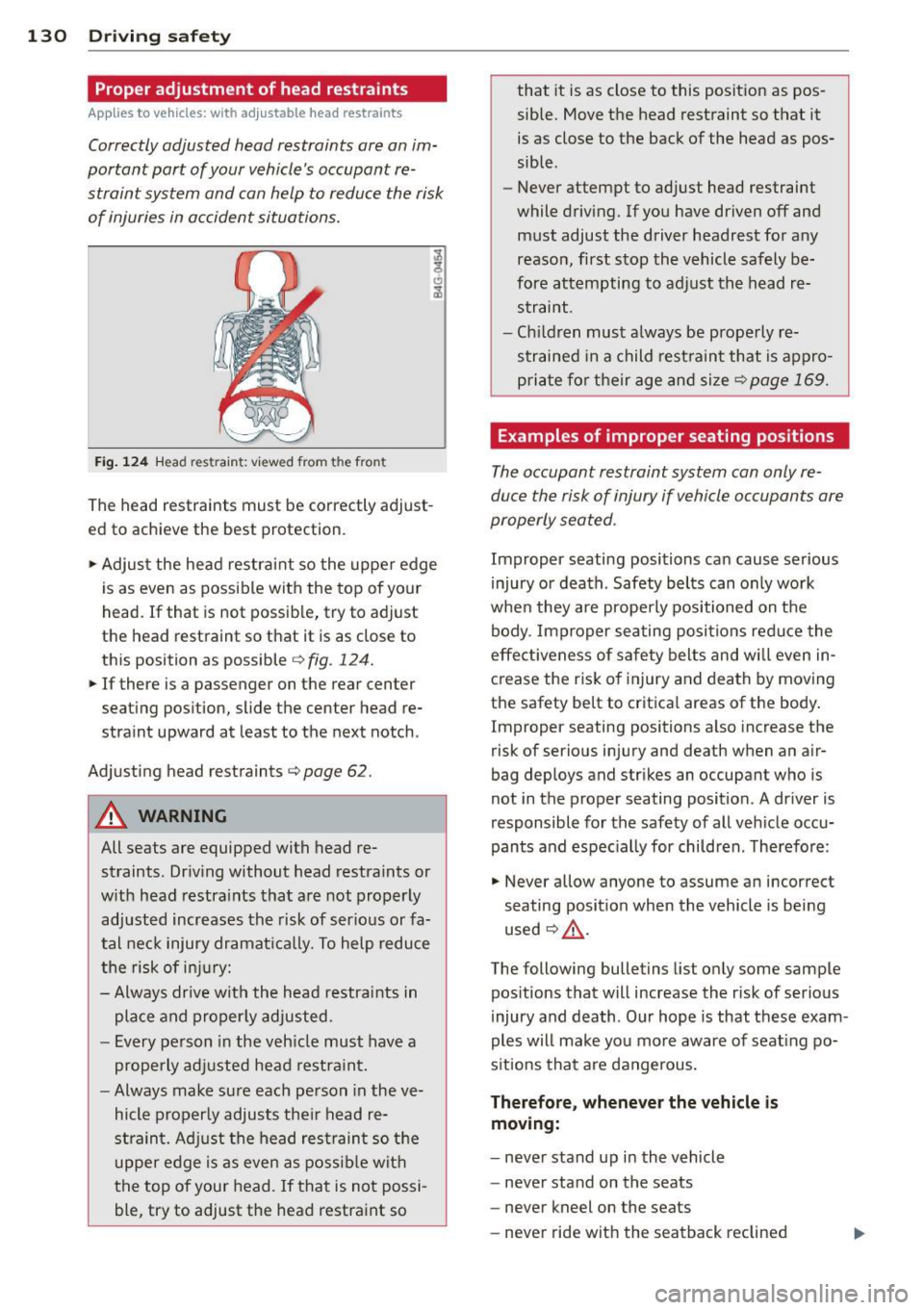
Fig. 124 H ead re str ain t: vi ew ed fro m the front
The head restraints must be correctly adjust
ed to achieve the best protection .
.. Adjust the head restr aint so the upper edge
is as even as possible with the top of your
head. If that is not possible, try to adjust
the head restraint so that it is as close to
this position as possible
c:> fig . 124.
.. If there is a passenger on the rear center
seating position, slide the center head re
stra int upward at least to the next notch .
Ad justing head restraints
c:> page 62.
A WARNING
All seats are equipped with head re
straints. Dr iving without head restraints or
with head restraints that are not properly
adjusted increases the risk of serious or fa
t al neck injury dramat ically. To help reduce
the risk of injury:
- Always drive with the head restra ints in
place and properly adjusted.
- Every person in the veh icle must have a
properly adjusted head restra int.
- Always make sure each person in the ve
hicle properly adjusts the ir head re
straint. Adjust the head restraint so the
upper edge is as even as possible wit h
the top of your head.
If that is not possi
ble, try to adjust the head restra int so that
it is as close to this posit ion as pos
sible. Move the head restraint so that it
is as close to the back of the head as pos
sible .
- Never attempt to adjust head restraint
while driving. If you have driven off and
must adjust the driver headrest for any reason, first stop the vehicle safely be
fore attempting to adjust the head re
straint .
- Ch ildren must always be prope rly re
strained in a child restraint that is appro
p ria te for their age and size
¢ page 169.
Examples of improper seating positions
The occupant restraint system con only re
duce the risk of injury if vehicle occupants ore
properly seated .
Improper seating positions can cause serious
injury or death. Safety belts can only work
when they are properly positioned on the body . Improper seating positions reduce the
effect iveness of safety belts and wi ll even in
crease the risk of injury and death by moving
the safety be lt to critica l areas of the body .
Imprope r seating positions a lso increase the
risk of serious injury and death when an air
bag deploys and strikes an occupant who is
not in the proper seating position . A dr iver is
responsible for the safety of all veh icle occu
pants and espec ially for children . T herefore :
.. Never allow anyone to assume an incorrect
seating position when the vehicle is being
used
c:> . &.
The following bulletins list only some sample
pos itions that will increase the risk of serious
injury and death . Our hope is that these exam
ples will make you more aware of seat ing po
s itions that are dangerous.
Therefore, whenever the vehicle is
moving:
- never stand up in the vehicle
- never stand on the seats
- never kneel on the seats
- never ride with the seatback reclined
Page 137 of 302

....,
N
r--. > co
rl I.O
"' rl
"' rl
Applicable to Canada
If you live in Canada and you
believe that your vehicle has a
defect that could cause a crash,
injury or death, you should im
mediately inform Transport
Canada, Defect Investigations
and Recalls. You should also no
tify Audi Canada.
Canadian customers who wish
to report a safety-related de
fect to Transport Canada , De
fect Investigations and Recalls,
may either call Transport Cana
da toll-free at:
Tel.: 1-800-333-0510 or
Tel.: 1-819-994-3328 (Ottawa region and from other coun
tries)
TTY for hearing impaired : Tel.:
1-888-675-6863
or contact Transport Canada by
mail at:
Transport Canada Motor Vehicle Safety Investiga
tions Laboratory
80 Noel Street
Gatineau, QC
J8Z 0Al
For additional road safety infor
mation, please visit the Road
Safety website at :
Driving safety 135
http://www.tc.gc.ca/eng/
roadsafety/menu. htm
Active rollover
protection system
. Function
Th e rollov er p rotection syst em prot ects v ehi
cl e o ccupants in th e ev ent of a ro llove r.
Fig. 126 Rear seats: roll ba r dep loy ment range
Fig. 127 Rea r seats : rollba r deploye d
The acti ve rollo ver p rotection s yst em consist s
o f:
- t wo r oll bar s
- t he safe ty b elts with b elt tensioners
- the wi ndshield frame
- the ro llover sensors
T he acti ve ro llover p rotec tion sys tem provi des
addi tion al sa fe ty in t he event of a rollover .
Within milli seco nds, sensors dep loy two roll
bars located be hind t he head restraints in the
rear seats ¢
fig. 127.
The roll bars, reinforce d w indsh ie ld frame and
b elt tensioners he lp protect fro nt and rear
passengers in th e event of a r ollove r.
Page 140 of 302

138 Safety belts
Safety belts
General notes
Always wear safety belts!
Wearing safety belts correctly saves lives!
This chapter explains why safety be lts are nec
essary, how they work and how to adjust and
wear them correctly .
.. Read a ll the information that fo llows and
heed all of the instructions and WARNINGS.
A WARNING
Not wearing safety belts or wearing them
improperly increases the risk of ser ious
personal in jury and death .
- Safety belts are the sing le most effective
means avai lab le to reduce the risk of se
r ious injury and dea th in a utomob ile acci
dents. For your protection and that of
yo ur passenge rs, always co rrectly wear
safety belts when the vehicle is moving.
- Pregnant women, injured, or physically
im paired perso ns m ust also use safety
belts. Lik e all veh icle occup ants, they are
more like ly to be ser iously injured if they
do not wea r safety be lts . The best way to
protect a fetus is to protect the mother -
throughout the entire pregnancy.
Number of seats
Your Audi has a total of four seating positions: two in the front and two in the rear. Each seat
ing position has a safety belt .
A WARNING
Not wearing safety belts or weari ng them
improp erly increases th e risk of ser ious
pe rsonal i njury and deat h.
- Never st rap more than one pe rson, in
cl uding small ch ild ren, into any belt.
It is
e speci ally dange rous to pla ce a safety
belt over a child s itting on yo ur lap.
- N ever le t mo re people ride in the ve hicl e
than there are s afe ty be lts avail able. -
Be s ure everyone riding in the vehicle is
properly restrained w ith a separate safe
ty belt or child restra int.
t Safety belt warning light
Your vehicle hos o warning system for the
driver and front seat passenger (on USA mod
els only) to remind you about the importance
of buckling-up .
Fi g. 130 Safety belt warni ng light in the instrument
cluster -en larged
Before driv ing off, alway s:
.. Fasten yo ur safety belt and make su re you
are wearing it properly .
.. Make s ure that your passengers also buck le
up and properly wear their safety be lts.
.. Protect childre n w ith a child restraint sys-
tem app ropriate for the s ize and age.
The warn ing light . in the instrument clus
ter lights up when the ign ition is on as a re
minder to fasten the safety be lts. In addition,
you w ill hear a warn ing tone for a ce rtai n pe ri
od of t ime.
Fasten you r safety belt and make sure that
your pass eng ers also properly put on the ir
s afety belt s.
A WARNING .....=-
-Safety b elts are the s ingle most eff ect ive
means avai lable to reduce t he ri sk of se
rio us inju ry and de ath in au tomobile a cci
dents. Fo r you r protection and that of
your passengers, a lways cor rectly wear
safety belts when t he vehicle is moving .
Page 142 of 302

140 Safety belts
occupant will slam violently into the steering
wheel, instrument panel, windshield, or what
ever else is in the way
c::> fig. 133. This imp act
with the vehicle interior has all the energy
t hey had just before the crash.
Never rely on a irbags alone for protection.
Even when they deploy, airbags provide only
additional protection. Airbags are not sup
posed to deploy in all kinds of accidents. Al
though your Audi is equipped with airbags, all
vehicle occupants, including the driver , must
wear safety belts correctly in order to mini
mize the risk of severe injury or death in a
crash.
Remember too, that airbags will deploy only
once and that your safety belts are always
there to offer protection in those accidents in
which airbags are not supposed to deploy or
when they have already deployed . Unbelted
occupants can also be thrown out of the vehi
cle where even more severe or fatal injuries
can occur.
It is also important for the rear passengers to
wear safety belts correctly. Unbelted passen
gers in the rear seats endanger not only them
selves but also the driver and othe r passen
gers ~
fig. 134. In a frontal collision they will
be thrown forward violently, where they can
hit and injure the driver and/or front seat pas
senger .
Safety belts protect
People think it's possible to use the hands to
brace the body in a minor collision . It's simply
not true !
Fig. 135 Driver is co rr ect ly re strain ed in a sudd en brak
ing maneuve r
Safety belts used properly can make a big dif
ference. Safety belts help to keep passengers
in their seats, gradually reduce energy levels
applied to the body in an accident, and help
prevent the uncontrolled movement tha t can
cause serious injuries . In addition, safety belts
reduce the danger of being thrown out of the
vehicle .
Safety belts attach passengers to the car and
give them the benefit of being slowed down
more gently or "softly" through the "give" in
the safety belts, crush zones and other safety
features engineered into today's vehicles. By
"absorbing " the kinetic energy over a longer
period of ti me, the safety belts make the
forces on the body more "tolerable" and less
likely to cause injury.
Although these examples are based on a fron
tal collision, safety belts can also substantial
ly reduce the r isk of injury in other kinds of
crashes. So, whether you're on a long trip or
just going to the corner store, always buckle up and make sure others do, too. Accident sta
tistics show that vehicle occupants properly
wearing safety belts have a lower risk of being
injured and a much better chance of surviving
an accident. Properly using safety belts also
greatly increases the ability of the supplemen
tal airbags to do their job in a collision . For
this reason, wearing a safety belt is legally re
quired in most countries including much of
the United States and Canada.
Although your Audi is equipped with airbags,
you still have to wear the safety belts provid
ed. Front airbags , for example, are activated
only in some frontal collisions. The front air
bags are not activated in all frontal collisions,
in side and rear collisions, in roll overs or in
cases where there is no t enough decelera tion
through impact to the front of the vehicle .
The same goes for the other airbag systems in
your Audi . So, always wear your safety belt
and make sure everybody in your vehicle is
properly restrained!
Page 144 of 302

142 Safet y belt s
To provide maximum protection, sa fety belts
must always be positioned correctly on the
wearer 's body .
.,. Adjust the front seat and head restr aint
properly ¢
page 60, Front seats .
.,. Make sure the seatback of the rear seat
bench is in an upright pos ition and securely
latched in place befo re using the belt¢.&, .
.,. Hold the belt by the tongue and pull it even
l y across the chest and pelvis¢.&, .
.,. Inse rt the tongue into the correct buckle of
you r seat until you hea r it latch securely
¢ fig . 136.
.,. Pull on the be lt to m ake s ure th at it is se-
curely latched in the b uckle .
Automatic safety belt retractors
Every safety belt is eq uipped w ith an automat
ic belt retractor on the shoulder be lt . T his fea
ture locks the be lt when the belt is pulled out
fast, dur ing hard bra king and in an acci dent.
The belt may also lock when yo u drive up or
down a steep hill or through a sharp curve. During normal driving the belt lets you move
freely .
Safety belt pret ensioners
The sa fe ty belts are equippe d wi th a be lt pre
tensioner that helps to tigh ten the safety bel t
and remove s lack when the pretensioner is ac
tivated ¢
page 144. The function of the pre
tensioner is monitored by a warning light
¢page 20.
Convert ible locking ret ractor
E very sa fe ty belt except the one on the dr iver
seat is eq uipped with a convertib le locking re
tractor that
must be used when the safety
be lt is used to attach a child seat. Be s ure to
read the important information about this
feature ¢
page 180 .
A WARNING
Improperly positioned safety belts can
cause se rious injury in an accident
¢ page 142, Safety bel t p osition.
- Saf ety belts offe r optim um pro te ction
only wh en the seatba ck is upr ight and be
lts are properly posit ioned on the
body.
- Never attach the safety be lt to the buck
le for another seat. Attaching the belt to
the wrong buckle will reduce safety be lt
effectiveness and can cause serious per
sonal injury .
- A passenger who is not proper ly restrain
ed can be seriously injured by t he safety
be lt itse lf w hen it moves from the stro n
ge r parts of the body into cr itica l areas
like the abdomen .
- Always lock the conve rtible locking re
tracto r when you are secu ring a child
seat in t he ve hicl e¢
page 182.
© Tips
Fo r information on safety belt pretens ion
ers, refer to¢
page 144.
Safety belt position
Correct belt position is the key to getting
maximum protection from safety belts .
Fig. 137 Safet y bel t pos it ion
Stan dard fea tures o n your veh icle he lp yo u ad
ju st the pos ition o f th e safety be lt to ma tch
your body s ize .
- he ight-adjus table fron t seats.
A WARNING
Imp ro pe rl y pos it io ned safety be lts ca n
cause ser ious perso nal injury in an a cci
dent.
-
- T he s hou lder be lt should lie as close to
the center o f the collar bone as possible
an d should fit well on the body. Hol d the
~