2015 AUDI A3 CABRIOLET child restraint
[x] Cancel search: child restraintPage 132 of 302
130 Driving safety
Proper adjustment of head restraints
App lies to vehicles: with adj ustable head restraints
Correctly adjusted head restraints ore on im
portant port of your vehicle's occupant re
straint system and con help to reduce the risk of injuries in occident situations.
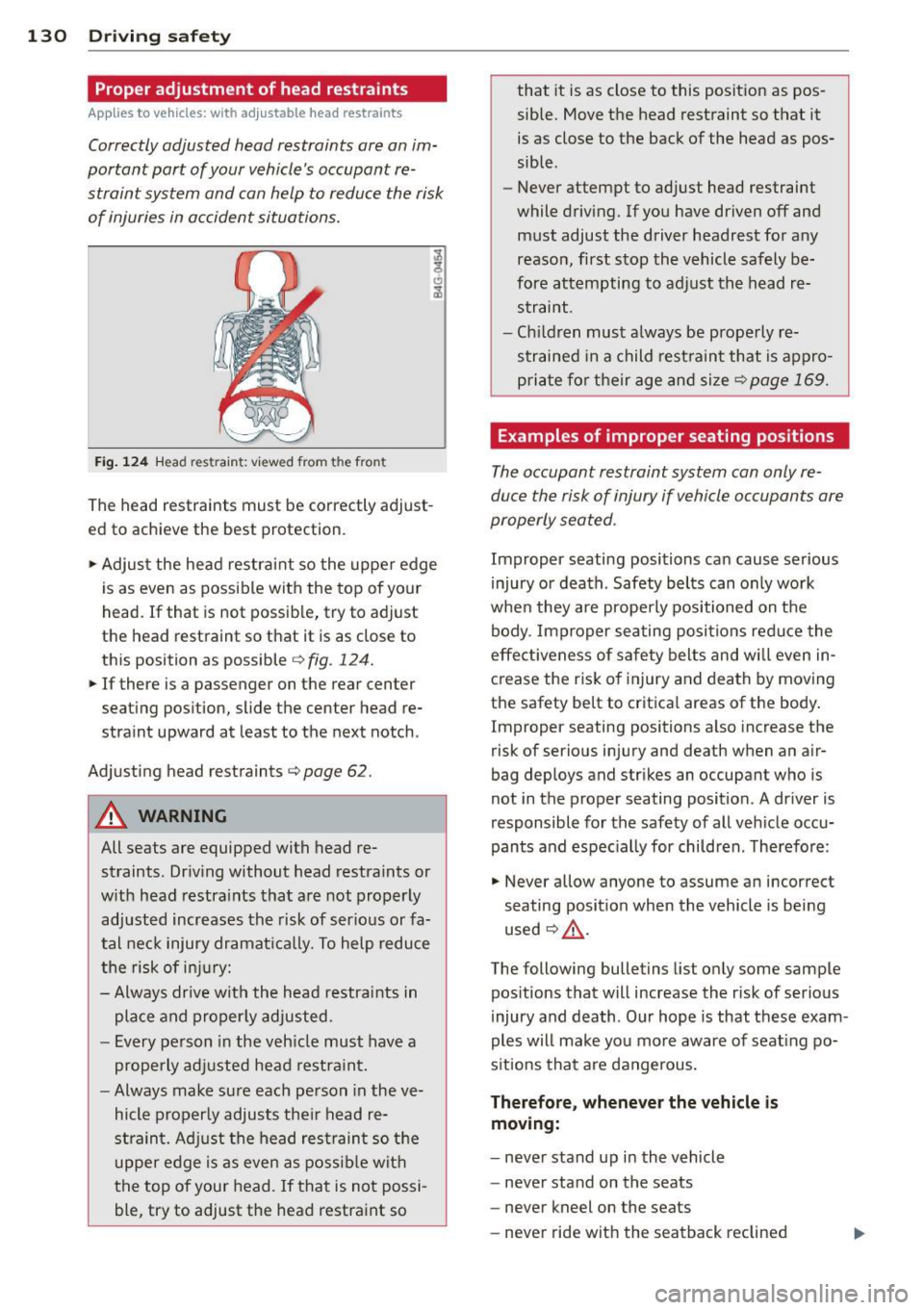
Fig. 124 H ead re str ain t: vi ew ed fro m the front
The head restraints must be correctly adjust
ed to achieve the best protection .
.. Adjust the head restr aint so the upper edge
is as even as possible with the top of your
head. If that is not possible, try to adjust
the head restraint so that it is as close to
this position as possible
c:> fig . 124.
.. If there is a passenger on the rear center
seating position, slide the center head re
stra int upward at least to the next notch .
Ad justing head restraints
c:> page 62.
A WARNING
All seats are equipped with head re
straints. Dr iving without head restraints or
with head restraints that are not properly
adjusted increases the risk of serious or fa
t al neck injury dramat ically. To help reduce
the risk of injury:
- Always drive with the head restra ints in
place and properly adjusted.
- Every person in the veh icle must have a
properly adjusted head restra int.
- Always make sure each person in the ve
hicle properly adjusts the ir head re
straint. Adjust the head restraint so the
upper edge is as even as possible wit h
the top of your head.
If that is not possi
ble, try to adjust the head restra int so that
it is as close to this posit ion as pos
sible. Move the head restraint so that it
is as close to the back of the head as pos
sible .
- Never attempt to adjust head restraint
while driving. If you have driven off and
must adjust the driver headrest for any reason, first stop the vehicle safely be
fore attempting to adjust the head re
straint .
- Ch ildren must always be prope rly re
strained in a child restraint that is appro
p ria te for their age and size
¢ page 169.
Examples of improper seating positions
The occupant restraint system con only re
duce the risk of injury if vehicle occupants ore
properly seated .
Improper seating positions can cause serious
injury or death. Safety belts can only work
when they are properly positioned on the body . Improper seating positions reduce the
effect iveness of safety belts and wi ll even in
crease the risk of injury and death by moving
the safety be lt to critica l areas of the body .
Imprope r seating positions a lso increase the
risk of serious injury and death when an air
bag deploys and strikes an occupant who is
not in the proper seating position . A dr iver is
responsible for the safety of all veh icle occu
pants and espec ially for children . T herefore :
.. Never allow anyone to assume an incorrect
seating position when the vehicle is being
used
c:> . &.
The following bulletins list only some sample
pos itions that will increase the risk of serious
injury and death . Our hope is that these exam
ples will make you more aware of seat ing po
s itions that are dangerous.
Therefore, whenever the vehicle is
moving:
- never stand up in the vehicle
- never stand on the seats
- never kneel on the seats
- never ride with the seatback reclined
Page 140 of 302

138 Safety belts
Safety belts
General notes
Always wear safety belts!
Wearing safety belts correctly saves lives!
This chapter explains why safety be lts are nec
essary, how they work and how to adjust and
wear them correctly .
.. Read a ll the information that fo llows and
heed all of the instructions and WARNINGS.
A WARNING
Not wearing safety belts or wearing them
improperly increases the risk of ser ious
personal in jury and death .
- Safety belts are the sing le most effective
means avai lab le to reduce the risk of se
r ious injury and dea th in a utomob ile acci
dents. For your protection and that of
yo ur passenge rs, always co rrectly wear
safety belts when the vehicle is moving.
- Pregnant women, injured, or physically
im paired perso ns m ust also use safety
belts. Lik e all veh icle occup ants, they are
more like ly to be ser iously injured if they
do not wea r safety be lts . The best way to
protect a fetus is to protect the mother -
throughout the entire pregnancy.
Number of seats
Your Audi has a total of four seating positions: two in the front and two in the rear. Each seat
ing position has a safety belt .
A WARNING
Not wearing safety belts or weari ng them
improp erly increases th e risk of ser ious
pe rsonal i njury and deat h.
- Never st rap more than one pe rson, in
cl uding small ch ild ren, into any belt.
It is
e speci ally dange rous to pla ce a safety
belt over a child s itting on yo ur lap.
- N ever le t mo re people ride in the ve hicl e
than there are s afe ty be lts avail able. -
Be s ure everyone riding in the vehicle is
properly restrained w ith a separate safe
ty belt or child restra int.
t Safety belt warning light
Your vehicle hos o warning system for the
driver and front seat passenger (on USA mod
els only) to remind you about the importance
of buckling-up .
Fi g. 130 Safety belt warni ng light in the instrument
cluster -en larged
Before driv ing off, alway s:
.. Fasten yo ur safety belt and make su re you
are wearing it properly .
.. Make s ure that your passengers also buck le
up and properly wear their safety be lts.
.. Protect childre n w ith a child restraint sys-
tem app ropriate for the s ize and age.
The warn ing light . in the instrument clus
ter lights up when the ign ition is on as a re
minder to fasten the safety be lts. In addition,
you w ill hear a warn ing tone for a ce rtai n pe ri
od of t ime.
Fasten you r safety belt and make sure that
your pass eng ers also properly put on the ir
s afety belt s.
A WARNING .....=-
-Safety b elts are the s ingle most eff ect ive
means avai lable to reduce t he ri sk of se
rio us inju ry and de ath in au tomobile a cci
dents. Fo r you r protection and that of
your passengers, a lways cor rectly wear
safety belts when t he vehicle is moving .
Page 143 of 302

....,
N
r--. > co
rl I.O
"' rl
"' rl
Important safety instructions about
safety belts
Safety belts must always be correctly posi
tioned across the strongest bones of your
body.
~ Always wear safety belts as illustrated and
described in this chapter.
~ Make sure that your safety belts are always
ready for use and are not damaged.
A WARNING
Not wearing safety belts or wearing them
improperly increases the risk of serious
personal injury and death. Safety belts can
work only when used correctly.
- Always fasten your safety be lts correctly
before driving off and make sure all pas
sengers are correctly restrained.
- For maximum protection, safety belts must always be positioned properly on
the body .
- Never strap more than one person, in
cluding small children, into any belt.
- Never place a safety belt over a child sit ting on your lap.
- Always keep feet in the footwell in front
of the seat while the vehicle is being driv
en .
- Never let any person ride with their feet
on the instrument panel or sticking out
the window or on the seat.
- Never remove a safety belt while the ve
hicle is moving. Doing so will increase
your risk of being injured or killed.
- Never wear belts twisted.
- Never wear belts over rigid or breakable
objects in or on your clothing, such as
eye glasses, pens, keys, etc., as these may cause injury.
- Never allow safety belts to become dam
aged by being caught in door or seat
hardware .
- Do not wear the shoulder part of the belt
under your arm or otherwise out of posi
tion .
Safety belts 141
-Severa l layers of heavy clothing may in
terfere with correct positioning of belts and reduce the overall effectiveness of
the system .
- Always keep belt buckles free of anything
that may prevent the buckle from latch
ing securely .
- Never use comfort clips or devices that
create slack in the shoulder belt . Howev
er, special clips may be requ ired for the
proper use of some child restraint sys
tems .
- Torn or frayed safety belts can tear, and
damaged belt hardware can break in an
accident. Inspect belts regularly.
If web
bing , bindings, buckles, or retractors are
damaged, have belts replaced by an au
thorized Audi dealer or qualified work shop.
- Safety belts that have been worn and
loaded in an accident must be replaced
with the correct replacement safety belt
by an authorized Audi dealer . Replace
ment may be necessary even if damage
cannot be clearly seen . Anchorages that
were loaded must also be inspected.
- Never remove, modify, disassemble, or
try to repair the safety belts yourself.
- Always keep the bel ts clean. Dirty belts
may not work properly and can impair
the function of the inertia reel~
ta
ble Internal cleaning on page 206.
Safety belts
Fastening safety belts
Safety first -everybody buckle up!
Fig. 136 Bel t b uckle and to ngue on the drive r's seat
Page 148 of 302

146 Airbag system
Airbag system
Important things to know
Importance of wearing safety belts and
sitting properly
Airbags are only supplemental restraints. For
airbags to do their job , occupants must al
ways properly wear their safety belts and be
in a proper seating position.
F or your safety and the safety of your passen
gers, before driving off, always:
• Adjust the driver's seat and steering wheel
properly
¢ page 127,
• Adjust the front passenger's seat properly
¢ page 60,
• Wear safety be lts properly ¢ page 141,
• Always properly use the proper child re-
straint to protect children ¢
page 169.
In a collision, airbags must inflate within the
blink of an eye and with considerable force.
The supplemental airbags can cause injuries if
the driver or the front seat passenger is not
seated properly . Therefore in order to help the
a ir bag to do its job, it is important, both as a
d river and as a passenger to sit prope rly at all
times.
By keeping room between your body and the
steering wheel and the front of the passenger
compartment, the airbag can inflate fully and
comp letely and provide supplemental protec
tion in ce rtain frontal collisions
¢page 127,
Proper occupant seating positions.
F or details
on the operation of the seat adjustment con
t rols ¢
page 60.
It's especially important that children are
properly restrained ¢
page 169.
There is a lot that the driver and the passen
ge rs can and must do to help the individual
safety features installed in your Audi work to
gether as a system.
Proper seating pos ition is important so that
the front airbag on the driver side can do its
job. If you have a physical impairment or con- dition that
prevents you from sitting properly
on the driver seat with the safety belt properly
fastened and reaching the pedals , or if you
have concerns with regard to the function or
operation of the Advanced Airbag System ,
please contact your author ized Audi dealer or
qualified workshop, or call Audi Customer Re
lations at 1-800-822-2834 for possible modi
ficat ions to your veh icle.
When the airbag system deploys, a gas gener
ator will f ill the a irbags, break open t he pad
ded cove rs, and inflate between the steering
whee l and the dr iver and between the instru
ment panel and the front passenger. The air
bags will deflate immediately after deploy
ment so that the front occupants can see
t hr ough the windshie ld again without inter
ruption .
All of this takes pla ce in the blink of an eye, so
fast that many peop le don't even realize tha t
the airbags have deployed. The airbags a lso
inflate with a great dea l of force and nothing
should be in their w ay when they deploy.
Front airbags in combination with properly
worn safety belts slow down and lim it the oc
cupant's forward movement . T ogether they
help to prevent the drive r and front seat pas
senger from hitting parts of the inside of the
vehicle while reducing the forces acting on the
occupant during the crash . In this way they
help to reduce the risk of injury to the head
and upper body in the crash. Airbags do not
protect the arms or the lower parts of the
body.
Both front airbags wi ll not inflate in all fronta l
collisions . The triggering of the airbag system
depends on the vehicle dece lerat ion rate
caused by the co llision and registered by the
electron ic control unit. If this rate is below
the reference value programmed into the con
t rol unit , the airbags will not be triggered,
even though the car may be badly damaged as
a res ult of the collision . Vehicle damage, re
pair costs or even the lack of vehicle damage
is not necessari ly an indication of whether an
airbag shou ld inflate or not.
IJll-
Page 149 of 302

Airbag system 147
Since the circumstances will vary considerab ly
also at greater risk of injury or death
between on e collision and another , it is not
through contact with an inflating airbag .
possible to define a range of veh icle speeds
-If you are unrestrained, leaning forward,
that will cover every possible k ind and angle
sitting sideways or out of position in any
of impact that will always trigger the a irbags .
way, your risk of injury is much higher.
Important factors include, for example, the -You will a lso receive serious injuries and
nature (hard or soft) of the object which the could even be killed if you are up against
•
car h its, the ang le of impact, vehicle speed ,
• the airbag or too close to it when it in-
etc. The front airbags will a lso not inflate in
flates - even with an Advanced A irbag.
side or rea r collisions, or in ro ll-overs .
-To reduce the risk of injury when an air-
Alwa ys re memb er: Airbags will deploy only bag inflates, always wear safety belts
once, and only in certa in kinds of co llisions. properly
c::;, page 141, Safety belts
.
Your safety belts are always there to offe r pro- -
Always make certain that ch ildren age 12
tection in those s ituations in which airbags or younger always ride in the rear seat. If
are not supposed to deploy , or when they have children a
re not properly restrained , they
already deployed ; for example , when your ve- may be severe
ly inju red or killed when an
hide strikes or is struck by another vehicle af- airbag inf
lates.
ter the first collision . -
Never let ch ildren ride un restra ined o r
This is just one of the reasons why an a irbag is improperly restrained
in the vehicle . Ad-
just the front sea ts prope rly.
a supp lementary restraint and is not a s ubsti -
-Never ride with the back rest reclined .
tute for a safety belt . The airbag system
-Always sit as far as possible from the
works most effect ively when used with the
steering whee l or the instrument panel
safety belts. Therefore, always properly wear
c::;, page 127 . your safety belts c::;, page 138 .
- Always sit upright with your back against
A WARNING the backrest of yo ur seat.
- Never p lace your feet on the instrument
Sitting too close to the steer ing whee l or
panel or on the seat . Always keep both
instrument panel will dec rease the effec-
feet on the floor in front of the seat to
tiveness of the airbags and will inc rease
help prevent serious in ju ries to the legs
the risk of pe rsonal injury in a co llision.
and hips if the airbag in fla te s.
- Never si t closer than 10 inches (2S cm)
-Never recline the front passenger's sea t
to the stee ring wheel or instr ument pan-
to transport objects. Items can a lso
el. move into the area of the s ide a irb ag or
- If you cannot si t mo re than 10 inches
the front airbag during bra king or in a
( 2 5 cm) from the steer ing whee l, investi-
sudden maneuver. Objects near the air-
ga te whethe r adap tive equipmen t may
bags can become projectiles and cause
be available to help you reach the pedals injury when an airbag inflates.
and increase your seating distance from
the steering wheel.
A WARNING
- All veh icle occupants and especia lly chil -
dren m ust be restrained properly when- A
irbags that have deployed in a crash must
ever riding in a vehicle . An unrestra ined be replaced.
or improperly restrained child could be -
Use on ly orig inal equipment airbags ap-
M injured by striking the inter ior or by be- proved by Audi and installed by a trained • N technician who has the necessary too
ls ~ ,.... ing ejected from the vehicle during a > co sudden maneuver or impact . An unre-...... \!) ..,., strained or imp roperly rest rained child is ...... ..,., ......
Page 150 of 302

148 Airbag sys tem
and dia gnostic equipment to properly re
place any a irbag in your vehicle and
assure system effectiveness in a crash.
- Never permit salvaged or recycled a ir
bags to be installed in your veh icle.
Child restraints on the front seat - some
important things to know
~ Be sure to read the impo rtant informat ion
and heed the WARNINGS for impo rtant de
ta ils about ch ild ren and Advanced Airbags
Qpage 169.
Even though you r vehicle is equ ipped with an
Advanced Airbag Sys tem, ma ke certain that
all c hildren, especially those 12 years and
younger, a lways ride in the back sea t properly
restrained for their age and size . The airbag
on the passenger side makes the front seat a potentially dangerous place for a child to ride.
The front seat is not the safest place for a
child in a forward-facing child seat. It can be a
ve ry dangerous p lace for an infant or a ch ild in
a rearward-facing seat.
The Advanced Airbag System i n your veh icle
has been certified to comply with the require
ments of United States Federa l Motor Ve hicle
Safety Standard 208 as applicable at the time
your ve hicle was manufactured.
The Standard requires the front a irbag on the
passenger side to be turned off ("sup
p ressed") if a c hild up to about one year of
age restra ined in one of the rear-facing o r fo r
ward -facing infan t restra ints listed in Federal
M otor Vehicle Safety Standard 208 with w hich
the Advanced A irbag System in your vehicle
was certified has been installed on the front
passenger seat. Fo r a listing of the child re
straints that were used to certify compliance
with the US Safety Standard
Q page 171.
The PASSENGER AIR BAG OFF light in the in
strument panel te lls you when the front Ad
vanced Airbag on the passenger side has been turned off by the e lectronic control unit. E
ach time you switch on the ignition, the
PAS
SENGER AIR BAG O FF
light will come on for a
f ew seconds and :
- w ill stay on if the fro nt passenge r seat is not
occupied,
- w ill stay on i f the e lec tric al ca pacit ance
meas ured by the capacitive passenger de
tection system for the front passenger seat equa ls the combined capacitance of an in
fant up to about one year of age and one of
the rearward-facing or forward-fac ing ch ild
restraints listed in Federal Motor Vehicle
Safety Standard 208 with wh ich the Ad
vanced Airbag System in your vehicle was
c e rt ified . Fo r a listing of t he chi ld restraints
t ha t were used to certify you r vehi cle's com
p lian ce w it h t he U.S. Safety Stand ard
Q page 171.
-w ill stay on if there is a small ch ild or child
restr aint on the front passenge r seat,
- will go off if t he front pa ssenge r seat is oc
cupied by an adult as regis tered by the ca
pacitive passenge r de tection sys tem
c::> page 158, Monitoring the Advanced Air·
bag System.
The PASSENGER AIR BAG OFF light comes on
when e lec trica l capacitance registered on the
front passenger seat is eq ua l to or less tha n
t h e comb ined capacitance of a typica l 1 year
o ld infant and one of the rearward-facing or
forward-facing chi ld restraints listed in Fede r
al Motor Vehicle Safety Standard 208 w ith
wh ich the Advanced Airbag System in your ve
hicle was certified.
If the total e lectr ica l capacitance registered
on the front passenger seat is more than that
of a typical 1 year -o ld child but less than the
weight of a small adu lt , the front airbag on
t h e passenger side can deploy (the
PASSEN
GER AIR BAG OFF
light does not come on).
If the
PASSENGER AIR BAG OFF light does
not come on, the front airbag on the passen
ger side has not been turned off by t he e lec
t ro nic cont ro l unit a nd can deploy if the con
t ro l u nit se nses an impact tha t mee ts the con-
di tions s tored in its memory .
1J1>
Page 151 of 302

M N ,....
> co ,...., \!) 1.1'1 ,...., 1.1'1 ,....,
Fo r exa mple, the airbag may depl oy if:
-a small child that is heavier than a typical 1
year-o ld child is on the front passenger seat
(regardless of whether the child is in one of
the chi ld seats listed
page 171), or
- a ch ild who has outgrown child rest raints is
on the front passenger seat.
If the front passenger airbag is turned off, the
P ASS ENGER AIR B AG OFF light comes on in
the instrument cluster and stays on.
If the front passenger airbag deploys, the
Federal Standard requires the airbag to meet
the "low risk" deployment criter ia to reduce
the r isk of injury through interaction with the
airbag. "Low risk" deployment occurs in those
crashes that take place at lower decelerations
as defined in the electronic control unit
r::> page 159, PASSENGER AIR BAG OFF light.
Always remember, a chi ld seat or infant carri
er insta lled on the front seat may be struck
and knocked out of position by the rapidly in
flating passenger's airbag in a frontal colli
sion. The airbag could greatly reduce the ef
fectiveness of the child restraint and even se
riously injure the child during inflat ion.
For this reason, and because the back seat is
the safest place for children - when properly
restrained according to their age and size - we
strongly recommend that children always sit
in the back seat
r::> page 169, Child Safety .
A WARNING
A child in a rearward-facing child seat in
stalled on the front passenger seat will be
ser iously injured and can be killed if the
front airbag inflates -even with an Ad
vanced Airbag System .
- T he inflating airbag will hit the child seat
or infant carrier with great force and wi ll
smash the child seat and child against
the backrest, center armrest, door or roof.
- Always install rear-facing child seats on
the rear seat.
- If you must install a rearward facing
child seat on the front passenger seat
-
A irbag system 149
because of exceptional circumstances
and the
PA SSENGER AIR BAG OFF light
does not come on and stay on, immed i
ately install the rear-fac ing child seat in a
rear seat ing pos ition and have the airbag
system inspected by your A udi dealer.
- Forward-facing child seats installed on the front passenger's seat may interfere
with the dep loyment of the a irbag and
cause serious persona l injury to the
child.
A WARNING
If, in except iona l circumstances, you must
install a forward -facing child restraint on
the front passenger's seat:
- Always ma ke s ure the forward-facing
seat has been designed and certified by its manufacturer for use on a front seat
with a passenger front and s ide a irbag.
- Never put the forward-facing child re
straint up against or very near the instru
ment panel.
- Always move the passenge r seat into its
rearmost pos ition in the seat's fore and
aft ad justment range, as far away from
the airbag as possible before installing
the forward-fac ing ch ild restra int. The
backrest must be adjusted to an upright
position.
- Make sure that the
PASSENGER AIR BAG
OFF
l ight comes on and stays on all the
time wheneve r the ig nit ion is switched
on.
A WARNING
To reduce the ri sk of ser ious injury, ma ke
sure that the
PASSENGER AIR BAG OFF
light wi ll be displayed whenever a child re
straint is insta lled on the front passenger
seat and the ignition is switched on.
- If the PASSENGER AIR BAG OF F light
does not stay on, perform the checks de
scribed
¢ page 158, Monitoring the Ad-
vanced Airbag System.
~
•
•
•
Page 152 of 302

150 Airbag system
-Take the child restraint off the front pas
senger seat and install it properly at one
of the rear seat positions if the
PA SS EN
GE R AI R BAG OFF
light does not stay on .
- Have the airbag system inspected by
your Audi dealer immed iately.
- Always carefully follow instructions from
child restraint manufacturers when in
sta lling child restraints .
A WARNING ,.
If, in exceptional c ircumstances, you must
install a forward or rearward-fac ing child
restraint on the front passenge r's seat:
- Improper installation of child restraints
can reduce their effectiveness or even
prevent them from providing any protec
t ion.
- An improperly installed child restraint
can interfere with the airbag as it de
ploys and serio usly injure or even kill the
child -even wi th an Advanced Airbag
System.
- Always carefully follow the manufactur
er's instructions provided with the child
seat or car rier .
- Always m ake su re that there is nothing
on the front passenger seat that will
cause the capacitive passenger detection
system in the seat to s ignal to the Airbag
System that the seat is occupied by a person when it is not, or to signal that it
is occupied by someone who is heavier
than the pe rson actually s itting on the
seat. The presence of additiona l objects
cou ld cause the passenger front airbag
to be t urned on w hen it sho uld be off, or
cou ld cause the ai rbag to work in a way
that is different from the way it wou ld
have worked without the object on the
seat.
Front airbags
Description of front airbags
The airbag system can provide supplemental
protection to properly restrained front seat occupants .
Fig . 14 0 Loc atio n of drive r air b a g : i n stee ring wheel
Fig. 141 Loc ation of fro nt passe nge r's a irbag: in the in
str umen t pa nel
Your vehicle is equipped with an "Advanced
Airbag System " in compliance with Un ited
States Federa l Motor Veh icle Safety Standard
(FMVSS) 208 as applicable at the time you r
vehicle was manufactured . The safety belts
for the seats have "pretensioners" that help to take slack out of the belt system. The pre
ten sioners are also act ivated by the electronic
control unit for the airbag system.
T he front safety belts also have load lim iters
to help reduce the forces applied to the body
in a crash.
The airbag for the driver is in the steering
whee l hub
c:> fig. 140 and the airbag fo r the
front pas senger is in the instr ument panel
¢ fig . 141. The gener al location of the a irbags
is marked "AIRBAG".
T here is a lot you need to know about the a ir
bags in your vehicle. We urge you to read the
II>