2014 KIA Sorento Eco
[x] Cancel search: EcoPage 72 of 508

Safety features of your vehicle58
3When an adult is seated in the front
passenger seat, if the PASSENGER
AIR BAG “OFF” indicator is on, turn
the ignition switch to the LOCK posi-
tion and ask the passenger to sit
properly (sitting upright with the seat
back in an upright position, centered
on the seat cushion with their seat
belt on, legs comfortably extended
and their feet on the floor). Restart
the engine and have the person
remain in that position. This will allow
the system to detect the person and
to enable the passenger air bag. If the PASSENGER AIR BAG “OFF”
indicator is still on, ask the passen-
ger to move to the rear seat.
✽ ✽
NOTICEThe PASSENGER AIR BAG “OFF”
indicator illuminates for about 4 sec-
onds after the ignition switch is
turned to the ON position or after
the engine is started. If the front
passenger seat is occupied, the occu-
pant detection sensor will then clas-
sify the front passenger after several
more seconds.
B990A01O
WARNING
Do not put a heavy load or an
active electronic device (ex. lap-
top computer, after market
DMB/navigation/satellite audio,
video game machine, MP3, etc.)
in the front passenger seatback
pocket or on the front passenger
seat. Do not hang onto the front
passenger seat. Do not hang any
items such as seatback table on
the front passenger seatback.
Do not place feet on the front
passenger seatback. Do not
place any items under the front
passenger seat. Any of these
could interfere with proper sen-
sor operation or turn on the air
bag warning light.
Proper position
WARNING
Do not allow an adult passenger
to ride in the front seat when the
“PASSENGER AIR BAG OFF”
indicator is illuminated because
the air bag will not deploy in the
event of a crash. If the "PAS-
SENGER AIR BAG OFF" indica-
tor remains illuminated after the
adult passenger repositions
themselves properly and the
vehicle is restarted, have the
passenger move to the rear seat
because the passenger's front
air bag will not deploy.
The "PASSENGER AIR BAG
OFF" indicator will not change
according to the occupants
posture after the vehicle has
been running for 30 seconds.
Front seat passengers must
stay properly seated to avoid
serious injury from a deploying
air bag.
XM(FL) CAN(ENG) 3.QXP 1/23/2013 3:26 PM Page 58
Page 73 of 508
359
Safety features of your vehicle
WARNING
Even though your vehicle isequipped with the occupant
detection system, never install a
child restraint system in the
front passenger's seat. A
deploying air bag can forcefully
strike a child resulting in seri-
ous injuries or death. Any child
age 12 and under should ride in
the rear seat. Children too large
for child restraints should use
the available lap/shoulder belts.
No matter what type of crash,
children of all ages are safer
when restrained in the rear seat.
If the PASSENGER AIR BAG “OFF” indicator is illuminated
when the front passenger's seat
is occupied by an adult and
he/she sits properly (sitting
upright with the seatback in an
upright position, centered on
the seat cushion with their seat
belt on, legs comfortably
extended and their feet on the
floor), have that person sit in the
rear seat.
(Continued)
(Continued)
Accident statistics show thatchildren are safer if they are
restrained in the rear, as
opposed to the front seat. It is
recommended that child
restraints be secured in a rear
seat, including an infant riding
in a rear-facing infant seat, a
child riding in a forward-facing
child seat and an older child
riding in a booster seat.
Air bags can only be used once – have an authorized Kia
dealer replace the air bag
immediately after deployment.
The occupant detection sys- tem may not work properly if
water, coffee or any other liq-
uid including rain gets on the
seat. Keep the front seat dry
at all times.
(Continued)
(Continued)
If the front passenger seat isoccupied by a child who is not
in a CRS, the "PASSENGER
AIR BAG OFF" indicator may
or may not be on and the pas-
senger air bag may or may not
deploy in a collision. Have the
child move to a rear seat to
increase their safety.
Do not modify or replace the front passenger seat. Don't
place anything on or attach
anything such as a blanket or
seat heater to the front pas-
senger seat. This can adverse-
ly affect the occupant detec-
tion system.
Do not place sharp objects on the front passenger seat.
These may damage the occu-
pant detection system, if they
puncture the seat cushion.
Do not use accessory seat covers on the front seats.
(Continued)
XM(FL) CAN(ENG) 3.QXP 1/23/2013 3:26 PM Page 59
Page 75 of 508

361
Safety features of your vehicle
The indication of the system's pres-
ence are the letters "AIR BAG"
embossed on the air bag pad cover
on the steering wheel and the pas-
senger's side front panel pad above
the glove box.
The SRS consists of air bags
installed under the pad covers in the
center of the steering wheel and the
passenger's side front panel above
the glove box.
The purpose of the SRS is to provide
the vehicle's driver and/or the front
passenger with additional protection
than that offered by the seat belt sys-
tem alone in case of a frontal impact
of sufficient severity. The SRS uses
sensors to gather information about
the driver's and front passenger's
seat belt usage and impact severity.The seat belt buckle sensors deter-
mine if the driver and front passen-
ger's seat belts are fastened.These sensors provide the ability to
control the SRS deployment based on
whether or not the seat belts are fas-
tened, and how severe the impact is.
The advanced SRS offers the ability
to control the air bag inflation with
two levels. A first stage level is pro-
vided for moderate-severity impacts.
A second stage level is provided for
more severe impacts.
The passenger’s front air bag is
designed to help reduce the injury of
children sitting close to the instru-
ment panel in low speed collisions.
However, children are safer if they
are restrained in the rear seat.
According to the impact severity and
seat belt usage, the SRSCM (SRS
Control Module) controls the air bag
inflation. Failure to properly wear
seat belts can increase the risk or
severity of injury in an accident.
WARNING
If the occupant detection sys-
tem is not working properly, the
SRS air bag warning light on
the instrument panel will illumi-
nate because the SRS air bag
warning light is connected with
the occupant detection system.
If the SRS air bag warning light
does not illuminate when the
ignition switch is turned to the
ON position, remains illuminat-
ed after approximately 6 sec-
onds when the ignition switch
is turned to the ON position, or
if it illuminates while the vehicle
is being driven, have an author-
ized Kia dealer inspect the
advanced SRS air bag system
as soon as possible.
XM(FL) CAN(ENG) 3.QXP 1/23/2013 3:26 PM Page 61
Page 81 of 508

367
Safety features of your vehicle
Curtain air bagCurtain air bags are located along
both sides of the roof rails above the
front and rear doors.
(Continued)
Do not install any accessorieson the side or near the side air
bag.
Do not place any objects over the air bag or between the air
bag and yourself.
Do not place any objects (an umbrella, bag, etc.) between the
front door and the front seat.
Such objects may become dan-
gerous projectiles and cause
injury if the supplemental side
air bag inflates.
To prevent unexpected deploy- ment of the side air bag that
may result in personal injury,
avoid impact to the side impact
sensor when the ignition
switch is on.
If seat or seat cover is dam- aged, have the vehicle checked
and repaired by an authorized
Kia dealer. Inform the dealer
that your vehicle is equipped
with side air bags and an occu-
pant detection system.
WARNING
The side air bag is supple-mental to the driver's and the
passenger's seat belt systems
and is not a substitute for
them. Therefore your seat
belts must be worn at all times
while the vehicle is in opera-
tion.
For best protection from the side air bag system and to
avoid being injured by the
deploying side air bag, both
front seat occupants should
sit in an upright position with
the seat belt properly fas-
tened. The driver's hands
should be placed on the steer-
ing wheel at the 9:00 and 3:00
positions. The passenger's
arms and hands should be
placed on their laps.
Do not use any accessory seat covers.
Use of seat covers could reduce or prevent the effec-
tiveness of the system.
(Continued)
OXM039055OXMA032056
XM(FL) CAN(ENG) 3.QXP 1/23/2013 3:26 PM Page 67
Page 92 of 508
Features of your vehicleFolding key . . . . . . . . . . . . . . . . . . . . . . . . . . . . . . . . 4-4• Record your key number . . . . . . . . . . . . . . . . . . . . . . . 4-4
• Key operations . . . . . . . . . . . . . . . . . . . . . . . . . . . . . . . . 4-4
• Transmitter precautions . . . . . . . . . . . . . . . . . . . . . . . . 4-6
• Battery replacement . . . . . . . . . . . . . . . . . . . . . . . . . . . 4-7
• Immobilizer system . . . . . . . . . . . . . . . . . . . . . . . . . . . . 4-8Smart key . . . . . . . . . . . . . . . . . . . . . . . . . . . . . . . . 4-11• Record your key number . . . . . . . . . . . . . . . . . . . . . . 4-11
• Smart key function . . . . . . . . . . . . . . . . . . . . . . . . . . . 4-11
• Loss of the smart key . . . . . . . . . . . . . . . . . . . . . . . . . 4-15
• Smart key precautions . . . . . . . . . . . . . . . . . . . . . . . . 4-15
• Smart key immobilizer system . . . . . . . . . . . . . . . . . . 4-16
• Battery replacement . . . . . . . . . . . . . . . . . . . . . . . . . . 4-18Theft-alarm system . . . . . . . . . . . . . . . . . . . . . . . . 4-19• Armed stage . . . . . . . . . . . . . . . . . . . . . . . . . . . . . . . . . 4-19
• Theft-alarm stage . . . . . . . . . . . . . . . . . . . . . . . . . . . . 4-20
• Disarmed stage. . . . . . . . . . . . . . . . . . . . . . . . . . . . . . . 4-20Door locks . . . . . . . . . . . . . . . . . . . . . . . . . . . . . . . . 4-21• Operating door locks from outside the vehicle . . . . 4-21
• Operating door locks from inside the vehicle . . . . . . 4-22
• Impact sensing door unlock system . . . . . . . . . . . . . . 4-24
• Auto door lock/unlock feature (Automatic transaxle) . 4-24
• Child-protector rear door lock. . . . . . . . . . . . . . . . . . 4-24Tailgate . . . . . . . . . . . . . . . . . . . . . . . . . . . . . . . . . . 4-25\
• Opening the tailgate . . . . . . . . . . . . . . . . . . . . . . . . . . 4-25• Closing the tailgate . . . . . . . . . . . . . . . . . . . . . . . . . . . 4-25
• Power tailgate . . . . . . . . . . . . . . . . . . . . . . . . . . . . . . . 4-26
• Emergency tailgate safety release . . . . . . . . . . . . . . . 4-32
Windows . . . . . . . . . . . . . . . . . . . . . . . . . . . . . . . . 4-33• Power windows . . . . . . . . . . . . . . . . . . . . . . . . . . . . . . 4-34Hood. . . . . . . . . . . . . . . . . . . . . . . . . . . . . . . . . . . . \
. 4-38• Opening the hood . . . . . . . . . . . . . . . . . . . . . . . . . . . . 4-38
• Closing the hood . . . . . . . . . . . . . . . . . . . . . . . . . . . . . 4-38Fuel filler lid . . . . . . . . . . . . . . . . . . . . . . . . . . . . . . 4-40• Opening the fuel filler lid . . . . . . . . . . . . . . . . . . . . . . 4-40
• Closing the fuel filler lid . . . . . . . . . . . . . . . . . . . . . . . 4-40
• Emergency fuel filler lid release . . . . . . . . . . . . . . . . 4-43Panoramic sunroof . . . . . . . . . . . . . . . . . . . . . . . . . 4-44• Sunroof open warning. . . . . . . . . . . . . . . . . . . . . . . . . 4-45
• Sliding the sunroof . . . . . . . . . . . . . . . . . . . . . . . . . . . 4-45
• Tilting the sunroof . . . . . . . . . . . . . . . . . . . . . . . . . . . . 4-46
• Sunshade . . . . . . . . . . . . . . . . . . . . . . . . . . . . . . . . . . . 4-\
47
• Resetting the sunroof . . . . . . . . . . . . . . . . . . . . . . . . . 4-48Steering wheel . . . . . . . . . . . . . . . . . . . . . . . . . . . . . 4-49• Electric power steering (EPS) . . . . . . . . . . . . . . . . . . 4-49
• Tilt and telescopic steering . . . . . . . . . . . . . . . . . . . . 4-50
• Heated steering wheel . . . . . . . . . . . . . . . . . . . . . . . . . 4-51
• Horn . . . . . . . . . . . . . . . . . . . . . . . . . . . . . . . . . . . . \
. . . 4-51
• Flex steer . . . . . . . . . . . . . . . . . . . . . . . . . . . . . . . . . . . 4-\
52
4
XM(FL) CAN(ENG) 4a(~158).QXP 1/23/2013 3:46 PM Page 1
Page 93 of 508

Mirrors . . . . . . . . . . . . . . . . . . . . . . . . . . . . . . . . . . 4-55\
• Inside rearview mirror . . . . . . . . . . . . . . . . . . . . . . . . 4-55
• Outside rearview mirror . . . . . . . . . . . . . . . . . . . . . . 4-64Instrument cluster . . . . . . . . . . . . . . . . . . . . . . . . . 4-68• Instrument cluster control . . . . . . . . . . . . . . . . . . . . . 4-69
• LCD display control . . . . . . . . . . . . . . . . . . . . . . . . . . 4-70
• Gauges . . . . . . . . . . . . . . . . . . . . . . . . . . . . . . . . . . . . \
. 4-71
• Transaxle shift indicator . . . . . . . . . . . . . . . . . . . . . . . 4-74LCD display . . . . . . . . . . . . . . . . . . . . . . . . . . . . . . 4-75• LCD modes. . . . . . . . . . . . . . . . . . . . . . . . . . . . . . . . . .\
4-75
• Service mode . . . . . . . . . . . . . . . . . . . . . . . . . . . . . . . . 4-76
• User settings mode. . . . . . . . . . . . . . . . . . . . . . . . . . . . 4-78
• A/V Mode . . . . . . . . . . . . . . . . . . . . . . . . . . . . . . . . . . . 4-\
80
• Turn by turn mode . . . . . . . . . . . . . . . . . . . . . . . . . . . 4-80
• Warning messages . . . . . . . . . . . . . . . . . . . . . . . . . . . . 4-81Trip computer . . . . . . . . . . . . . . . . . . . . . . . . . . . . . 4-87• Overview . . . . . . . . . . . . . . . . . . . . . . . . . . . . . . . . . . . 4-\
87
• Trip A/B . . . . . . . . . . . . . . . . . . . . . . . . . . . . . . . . . . . . \
4-88
• Fuel economy . . . . . . . . . . . . . . . . . . . . . . . . . . . . . . . . 4-89Warning and indicator lights . . . . . . . . . . . . . . . . 4-91• Warning lights . . . . . . . . . . . . . . . . . . . . . . . . . . . . . . . 4-91
• Indicator lights. . . . . . . . . . . . . . . . . . . . . . . . . . . . . . . 4-98Rear parking assist system . . . . . . . . . . . . . . . . . 4-102• Operation of the rear parking assist system . . . . . . 4-102• Non-operational conditions of
rear parking assist system . . . . . . . . . . . . . . . . . . . 4-103
• Rear parking assist system precautions . . . . . . . . . 4-104
• Self-diagnosis . . . . . . . . . . . . . . . . . . . . . . . . . . . . . . . 4-105
Rearview camera . . . . . . . . . . . . . . . . . . . . . . . . . 4-106
Hazard warning flasher . . . . . . . . . . . . . . . . . . . . 4-107
Lighting . . . . . . . . . . . . . . . . . . . . . . . . . . . . . . . . . 4-108• Battery saver function. . . . . . . . . . . . . . . . . . . . . . . . 4-108
• Headlight escort function . . . . . . . . . . . . . . . . . . . . . 4-108
• Headlight welcome function . . . . . . . . . . . . . . . . . . . 4-108
• Daytime running light . . . . . . . . . . . . . . . . . . . . . . . . 4-109
• Lighting control . . . . . . . . . . . . . . . . . . . . . . . . . . . . . 4-109
• High beam operation . . . . . . . . . . . . . . . . . . . . . . . . . 4-111
• Turn signals and lane change signals . . . . . . . . . . . 4-112
• Front fog light . . . . . . . . . . . . . . . . . . . . . . . . . . . . . . 4-112Windshield wiper/washers . . . . . . . . . . . . . . . . . . 4-113• Windshield wipers . . . . . . . . . . . . . . . . . . . . . . . . . . 4-114
• Front windshield washers . . . . . . . . . . . . . . . . . . . . . 4-115
• Rear window wiper and washer switch . . . . . . . . . 4-116Interior lights . . . . . . . . . . . . . . . . . . . . . . . . . . . . 4-117• Automatic turn off function . . . . . . . . . . . . . . . . . . . 4-117
• Room lamp . . . . . . . . . . . . . . . . . . . . . . . . . . . . . . . . . 4-117
• Map lamp . . . . . . . . . . . . . . . . . . . . . . . . . . . . . . . . . 4-118
• Luggage lamp . . . . . . . . . . . . . . . . . . . . . . . . . . . . . . . 4-119
• Vanity mirror lamp . . . . . . . . . . . . . . . . . . . . . . . . . . 4-119
4XM(FL) CAN(ENG) 4a(~158).QXP 1/23/2013 3:46 PM Page 2
Page 95 of 508
Features of your vehicle44Record your key number
The key code number
is stamped on the bar
code tag attached to
the key set. Should
you lose your keys,
this number will enable an author-
ized Kia dealer to duplicate the keys
easily. Remove the bar code tag and
store it in a safe place. Also, record
the code number and keep it in a
safe and handy place, but not in the
vehicle.
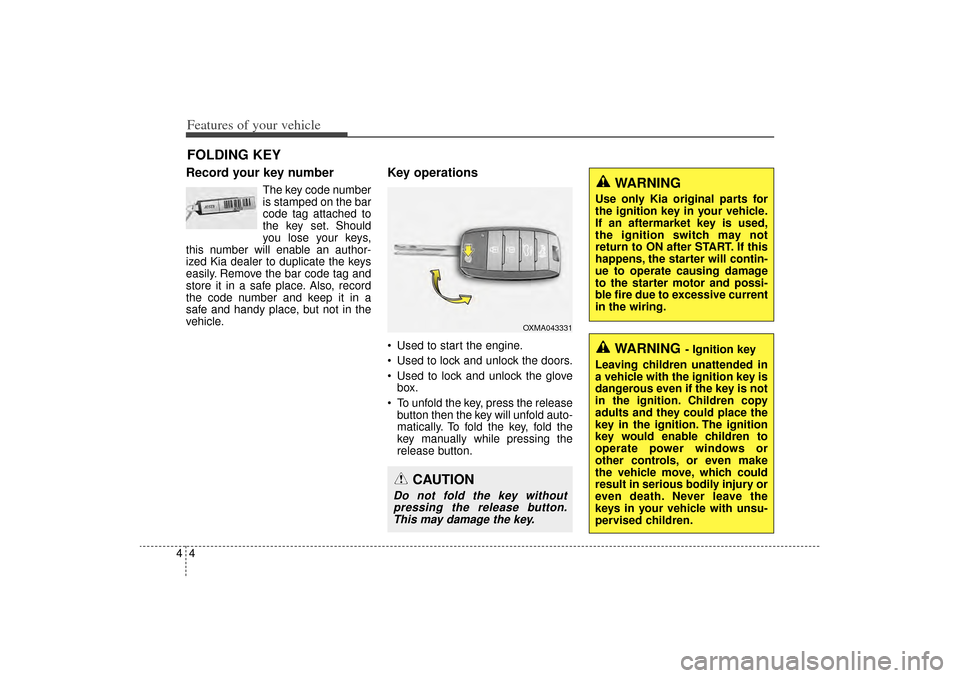
Key operations• Used to start the engine.
Used to lock and unlock the doors.
Used to lock and unlock the glove box.
To unfold the key, press the release button then the key will unfold auto-
matically. To fold the key, fold the
key manually while pressing the
release button.
FOLDING KEY
OXMA043331
CAUTION
Do not fold the key withoutpressing the release button.This may damage the key.
WARNING
- Ignition key
Leaving children unattended in
a vehicle with the ignition key is
dangerous even if the key is not
in the ignition. Children copy
adults and they could place the
key in the ignition. The ignition
key would enable children to
operate power windows or
other controls, or even make
the vehicle move, which could
result in serious bodily injury or
even death. Never leave the
keys in your vehicle with unsu-
pervised children.
WARNING
Use only Kia original parts for
the ignition key in your vehicle.
If an aftermarket key is used,
the ignition switch may not
return to ON after START. If this
happens, the starter will contin-
ue to operate causing damage
to the starter motor and possi-
ble fire due to excessive current
in the wiring.
XM(FL) CAN(ENG) 4a(~158).QXP 1/23/2013 3:46 PM Page 4
Page 96 of 508

45
Features of your vehicle
Door Lock (1)1. Close all doors, engine hood andtailgate.
2. Press the lock button(1).
3. All doors and tailgate will lock. The hazard warning lights will blink
once.
4. If the lock button is pressed once more within 4 seconds, the hazard
warning lights will blink and the
horn will sound once.
5. Make sure that doors are locked by checking the door lock button inside
or pulling the outside door handle.
Door Unlock (2) 1. Press the unlock button(2).
2. The driver's door will unlock. Thehazard warning lights will blink two
times.
3. Press the unlock button(2) twice within 4 seconds and all doors and
tailgate will unlock. The hazard
warning lights will blink two times.✽ ✽NOTICEYou can activate or deactivate the
Two Turn Unlock function. Refer to
"User settings" in this chapter.
Tailgate unlock (3)The tailgate is unlocked if the button
is pressed for more than 1 second.
Also, once the tailgate is opened and
then closed, the tailgate will be
locked automatically.
For Power Tailgate Only:
The Power Tailgate will open if the
button is pressed for more than 1
second. Also, once the tailgate is
opened and then closed, the tailgate
will be locked again automatically.
If the power tailgate is switched ‘Off’
using the button in the overhead con-
sole, the tailgate unlock button will
operate to unlock the tailgate as
described above.
See section 4-26 for more informa-
tion on the power tailgate option.
OXMA043317
XM(FL) CAN(ENG) 4a(~158).QXP 1/23/2013 3:46 PM Page 5