2014 AUDI S8 lock
[x] Cancel search: lockPage 151 of 314

To provide maximum protection, safety belts
must always be positio ned correctly on the
wearer's body .
... Adjus t the front seat and head restraint
properly
c::> page 58, General recommenda
tions .
... Hold the be lt by the tongue and pull it even
ly across the chest and pelvis
c::> &,. .
... Insert the tongue into the correct buckle of
you r seat until you hear it latch securely
c::> fig. 161.
... Pull on the belt to make su re that it is se-
c u rely latched in the buckle .
Automatic safety belt retractor s
Every safety belt is equipped with an automat
ic belt retractor on the shoulder belt. Th is fea
ture locks the belt when the belt is pulled out
fast, dur ing hard braking and in an accident .
The belt may also lo ck when you drive up or
down a steep hill or through a sharp curve .
D uring normal driving the belt le ts you move
freely.
Safety belt pretensione rs
The safety belts are equipped with a belt pre
tensioner that helps to t igh ten the safety belt
and remove s lack when the pretensione r is ac
tivated
c::> page 151. The function of the pre
tensioner is monitored by a warning light
c::> page 18 .
Switchable locking feature
E very safety belt except the one on the driver
seat is eq uipped w ith a switchab le locking fea
ture that
mu st be used when the safety belt is
used to attach a child seat. Be sure to read the important information about this feature
c:;,page 187.
A WARNING
Improperly positioned safety belts can
cause serious injury in an accident
c::> page 149, Safety belt position .
-Safety belts offer optimum protection
only when the seatback is up right and
belts are properly positioned on the
body.
-
Safety belts 149
- Never attach the safety belt to the buck
le for another seat. Attaching the belt to
the wrong buckle will reduce safety belt effectiveness and can cause serious per
sonal injury .
- A passenger who is not properly restrain
ed can be seriously injured by the safety
be lt itself when it moves from the stron
ge r parts of the body into critical ar eas
like the abdomen.
- Always lock the convertible locking re
tracto r when you a re secu ring a child
se at in the veh icle
c::>page 189.
@ Tips
For informat ion on safety belt pretension
e rs, refer to
c::> page 151 .
Safety belt position
Correct belt position is the key to getting
maximum protection from safety belts .
Fig. 1 62 Safety belt pos it ion
Use the heig ht adjus tment to change the posi
tion o f the shoulder belt of the front safety
belts.
A WARNING '-
Improperly positioned safety be lts can
cause ser ious persona l injury in an acc i
dent.
-
- The shou lder belt should lie as close to
the center of the collar bone as possible
and should fit well on the body. Hold the
be lt above the latch tongue and pull it
eve nly across the chest so that it sits as
low as possible on the pelv is and there is
no pressure on the ab domen. The belt .,_
Page 167 of 314

-the weight registered on the front passen
ger seat is equa l to or less than the com
bined weight of a typical 1 year -old restrain
ed in one of the rear-fac ing or forward
facing infant restraints listed in Federal Mo
tor Vehicle Safety Standard 208 with which
the Advanced Airbag System in your vehicle
was certified .
If the front passenger seat is not occupied,
the front airbag will not deploy, and the
PAS
SENGER AIR BAG OFF
light will stay on . Nev
er insta ll a rearward-facing child restra int on
the front passenger seat, the safest place for
a child in any kind of child restraint is at one
of the seating positions on the rear seat
¢ page 155, Child restraints on the front seat
- some important things to know
and
¢ page 177, Child Safety.
If the PASSENGER AIR BAG OFF light comes
on
when one of the conditions listed above is
met, be sure to check the light regularly to
make certa in that the
PASSENGER AIR BAG
OFF
light stays on cont inuously whenever the
ignit ion is on. If the
PASSENGER AIR BAG
OFF light does not appear on and does not
stay on all the time, stop as soon as it is safe
to do so and
- react ivate the system by switching the igni
t ion off and then switch ing it on again;
- remove and reinstall the child restraint .
Make sure that the child restraint is properly
installed and that the safety belt for the
front passenger seat has been correct ly
routed through the child rest raint as descri
bed in the child restrai nt manufactu rer's i n
str ucti ons;
- make sure that the conver tible locking fea
ture on the safety belt for the front passen
ger seat has been activated and that the
safety belt has been pulled tight. The belt
must not be loose or have loops of slack so
that the sensor below the safety belt latch
on the seat can do its job
¢ page 187.
- make sure that things that may increase the
weight of the chi ld and child seat are not be
ing transported on the front passenger seat;
Airbag system 165
-make sure that the safety belt tension sen
sor is not blocked. Shake the safety belt
latch on the front passenger seatback and
forth;
- If a strap or tether is being used to tie the
child seat to the front passenger seat, make
sure that it is not so t ight that it causes the
weight-sensing mat to measure more
weight than is actually on the seat .
If the PASSENGER AIR BAG OFF light still
does not come on
and does not stay on con
ti nu ously (when the ignition is switched on),
- take the child restraint off the front passen -
ger seat and install it properly at one of the
rear seat positions. Have the airbag system
inspected by your Audi dealer immed iately.
- move the ch ild to a rear seat position and
make sure that the child is properly restra in
ed in a ch ild restra int that is appropriate for
its size and age .
The
PASSENGER AIR BAG OFF light should
NOT come on when t he ignition is on and an
adult is sitting in a proper seating position on
the front passenger seat. If the PASSENGER
AIR BAG OFF
light comes on and stays on or
flashes fo r about 5 seconds wh ile d riving, un
der these circumstances , make sure that:
- the adult on the front passenge r seat is
prope rly seated on the center of the seat
cushion with his or her back up against the
backrest and the backrest is not re clin ed
¢ page 136, Proper occupant seating posi
tions,
- the adult is not taking weight off the seat by
holding on to the passenger assist handle
above the front passenger door or support
ing their weight on the armrest,
- the safety belt is being properly worn and
that there is not a lot of s lack in the safety
be lt webbing,
- accessory seat covers or cushions or other
things that may cause an incorrect reading
or impression on the weight-sensing mat
under the upho lstery of the seat have been
removed from the front passenger seat, ..,.
•
•
Page 182 of 314

180 Child Saf ety
Model Manufactured on or
after
Evenflo F irst Cho ice December 1, 1999
204
Graco Infant 8457 December 1, 1999
Graco Snugride September 25, 2007
Peg Perego Primo Vi -September 25, 200 7
aggio SIP IMUN00US
Subpart C - Forward-facin g and
con vert ible c hild re stra int s
Model Manuf actured on or
after
Britax Roundabout September 25, 2007
E9L02xx
Cosco Touriva 02519 December 1, 1999
Cosco Summit Deluxe September 25, 2007
High Back Booster
22-262
Cosco High Back September 25, 2007 Booster 22-209
Evenflo Tribute V September 25, 2007
379xxxx
Evenflo Medallion December 1, 1999
254
Evenflo Generations September 25, 2007
352xxxx
Graco Comfo rtSport September 25, 2007
Graco Toddler Safety September 25, 2007
Seat Step 2
Graco P latinum Ca rgo September 25, 2007
A WARNING
T o reduce the risk of serious injury, make
sure that the
PASSENGER A IR BAG OFF
light comes on and stays on whenever a
child restraint is installed on the front pas
senger seat and the ignition is switched
on.
- Take the child restraint off the front pas
senger seat and install it properly at one
of the rear seat positions if the
PASSEN
GER AIR BAG OFF
light does not stay on. -
Have the airbag system inspected by
your author ized Audi dealer immed iate
ly.
@ Tips
The child seats listed in categories A to C have been statically tested by Audi on ly for
the Advanced A irbag function.
Important safety instructions for using
child safety seats
Correct use of child safety seats substantially
reduces the risk of injury in an accident!
As the driver, you are responsib le for the safe
ty of everybody in the veh icle, especially ch il
dren:
.. Always use the right chi ld safety seat for
each child and always use it properly
¢page 183.
.. Always carefully follow the child safety seat
manufacturer's instruct ions on how to route
the safety belt properly through the ch ild
safety seat .
.. When using the vehicle safety belt to install
a child safety seat, you m ust first a ctivate
the convertib le locking retractor on the
safety belt to prevent the child safety seat
from moving
¢ page 187.
.. Push the ch ild safety seat down with your
full weight to get the safety belt really tight so that the seat cannot move forward or
sideways more than one inch (2 .5 cm) .
.,. If a strap or tether is be ing used to tie the
child safety seat to the front passenger
seat , m ake sure tha t it is not so tight that i t
causes the weight-sensing ma t to measure
more weight than is act ually on the seat.
.. Sec ure unused safety belts on the rear seat
¢ page 182.
Always remember : Even though your vehicle is
equipped with an Advanced Airbag system, all
children, especially those 12 years and young
er, shou ld always r ide in the back seat proper-
ly restrained for their age and size . .,.
Page 184 of 314
182 Child Safet y
as possible before insta lling the child
restra int.
- Always make sure t hat nothing pre
vents the front passenger's seat from being moved to the rearmost position
in its fore and aft adjustment range.
- Always make sure that the backrest is
in the upright position .
- Always buck le the child safety seat firmly
in place even if a child is not s itting in it.
A loose ch ild safety seat ca n fly around
dur ing a sudden stop or in a coll is ion .
- Always read and heed all WARNINGS
whenever using a child restrained in ave
hicle is being used
c::> page 145, Safety
belts,
c::> page 153, Airbag system and
c::> page 177, Child Safety.
A WARNING
To reduce the risk of serious injury, make
sure that the
PASSENGER AIR BAG OFF
light comes on and stays on whe never a
child rest raint is installed on the front pas
senge r seat and the ignition is switched
on.
- Take the child restraint off t he front pas
senger seat and install it proper ly at one
of the rear seat positions if the
PAS SEN
G ER AIR BAG OFF
light does not stay on.
- Have the airbag system inspected by
your authorized Audi dealer immediate ly.
Secure unused safety belts on the rear
seat
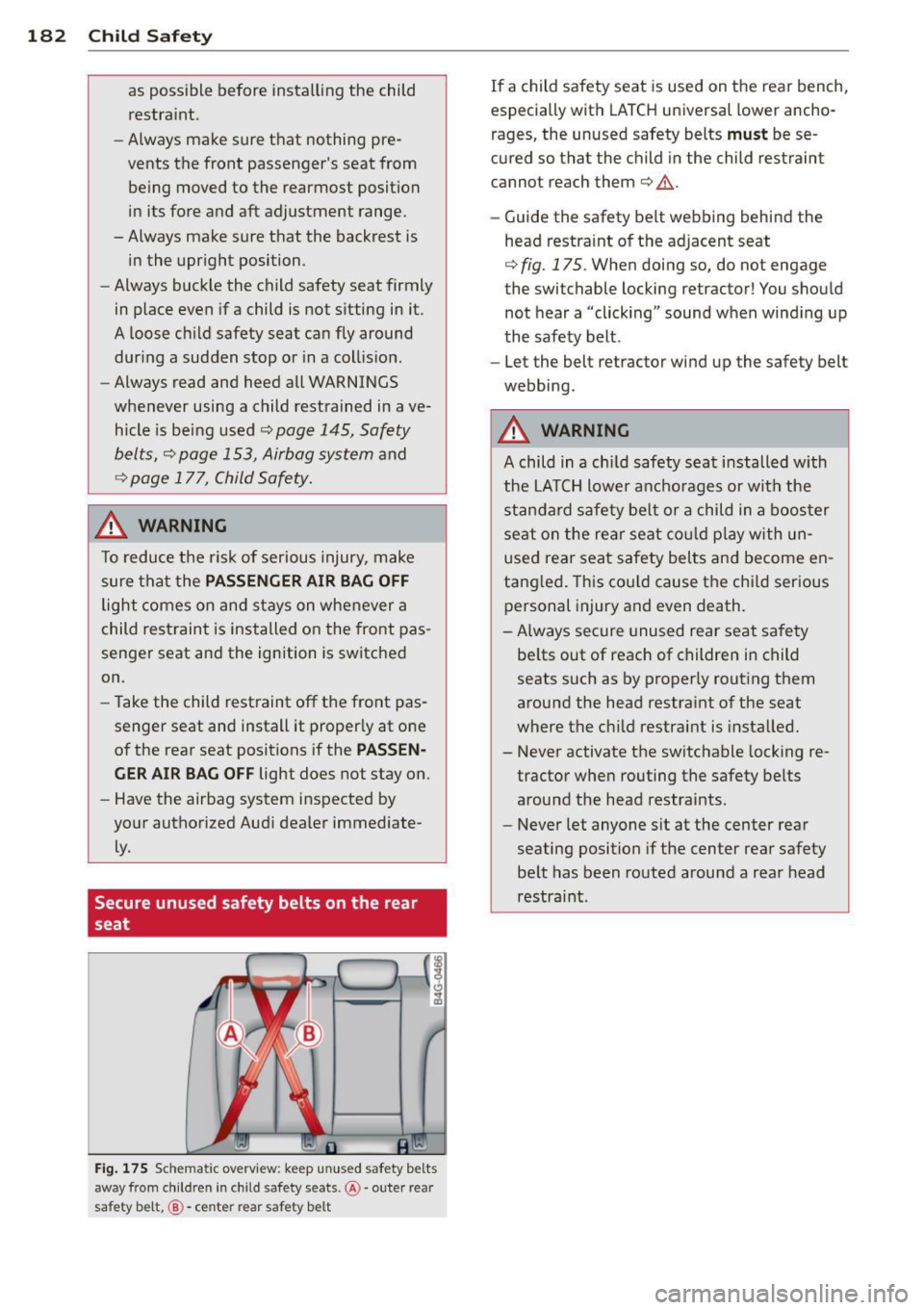
Fig . 175 Sche matic ove rview: keep un use d safety be lts
away from c hildre n in chil d safe ty seats. @· oute r rear
sa fety be lt, @ · ce nter rear sa fet y b elt
If a child safety seat is used on the rear bench,
especially with LATCH universal low er ancho
rages, the unused safety belts
must be se
cured so that the child in the child restraint
cannot reach them
c::> & .
-Guide the safety belt webbing behind the
head restra int of the adjacent seat
c::> fig. 175 . When doing so, do not engage
the switchable locking retractor! You should not hear a "click ing" sound when wind ing up
the safety belt .
- Let the bel t re tractor wind up the safe ty belt
webbing.
A WARNING ,-
A child in a chi ld safety sea t in stalled with
the LA TCH lower a nchorages or with the
standa rd safety be lt or a child in a boos ter
se at on the rea r seat co uld p lay with un
used rear seat safety belts and become en
tang led . This co uld cause the chi ld ser ious
personal injury and even death.
-Always secure unused rear seat sa fety
be lts out of reac h of children in c hild
seats such as by proper ly routing them
around the head restraint of the seat
where the ch ild restraint is installed.
- Never activate the switchable locking re
tractor whe n routing the safety be lts
around the head restraints.
- Never let anyone s it at the center rear
seating position if the center rea r safety
be lt has been routed around a rear head
restraint .
Page 185 of 314
Child safety seats
Infant seats
Babies and infants up to about one year old
and 20 lbs. or 9 kg need special rearward -fac
ing child restraints that support the back,
neck and head in a crash.
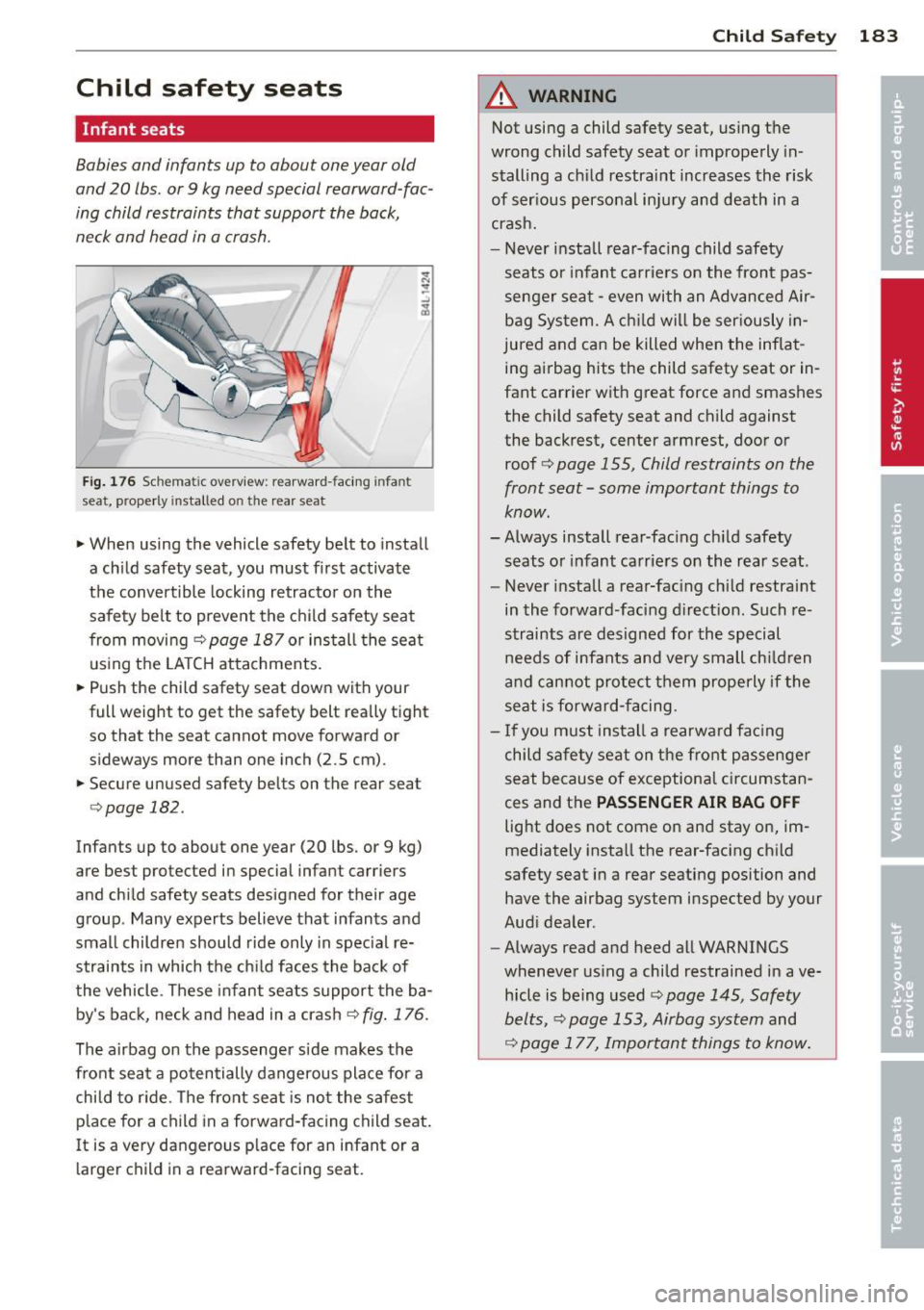
Fig . 176 Sche matic overv iew: rearward-fac ing infant
seat, properly installed o n the rear seat
.,. When using the vehicle safety belt to install
a ch ild safety seat, you must first activate
the convertible locking retracto r on the
safety be lt to prevent the child safety seat
from moving
¢ page 187 or install the seat
using the LA T CH attachments.
.,. Push the child safety seat down with your
full weight to get the safety belt rea lly tight
so that the seat cannot move forward or
sideways more than one inch (2.5 cm).
.,. Secure unused safety belts on the rear seat
¢page 182.
Infants up to about one year (20 lbs. or 9 kg)
are best protected in special infan t carriers
and child safety seats designed for their age
group . Many experts believe that infants and
small children should ride only in spec ial re
straints in which the ch ild faces the back of
the vehicle. These infant seats support the ba
by's back, neck and head in a crash ¢
fig. 176.
The airbag on the passenger side makes the
front seat a po tentially dangerous place for a
child to r ide . The front seat is not the safest
p lace for a child in a forward -facing child seat.
It is a very dangerous p lace for an infant or a
l arger ch ild in a rearward-facing seat.
Child Safety 183
A WARNING
Not using a child safety seat, using t he
wrong child safety seat or improperly in
stall ing a ch ild restraint increases the risk
of ser ious personal injury and death in a
crash.
- Never install rear-facing child safety
seats or infant ca rr ie rs on the front pas
senger seat -even with an Advanced Air
bag Sys tem. A ch ild will be ser iously in
jured and ca n be killed when the inflat
ing airbag hits the child safety seat or in
fant carrier with great force and smashes the child safety seat and child against
the backrest, center armrest, door or
roof ¢
page 155, Child restraints on the
front seat- some important things to
know .
-Always install rear-fac ing ch ild safety
seats or infant carriers on the rear seat .
- Never install a rear-fac ing ch ild restraint
in the forward-fac ing d irect ion. Such re
straints are designed for the special needs of infants and very small ch ild ren
and cannot prote ct them properly if the
seat is forward- facing.
- If you mus t insta ll a rearward fac ing
child sa fety seat on the fro nt passenger
seat because of exceptiona l circumstan
ces and t he
PASSENGER AIR BAG OFF
light does not come on and stay on, im
mediately insta ll the rear -fac ing ch ild
safety seat in a rear seating position and
have the airbag system inspected by your
Aud i dea ler .
- Always read and heed all WARNINGS
wheneve r us ing a child restrained in ave
hicle is being used¢
page 145 , Safety
belts, ¢ page 153, Airbag system
and
¢ page 177, Important things to know.
Page 186 of 314

184 Child Safet y
Convertible child safety seats
Properly used convertible child safety seats
can help protect toddlers and children over
age one who weigh between
20 and 40 lbs. (9
and 18 kg) in a crash.
Fig . 177 Schematic overv iew: installat ion of the at
t a chments appl icable to a LATCH seat
Fig. 178 Schematic overview: in stalla tion of t he sea t
using the vehicle's safety be lt system
.. When using the vehicle safety be lt to insta ll
a chi ld safety seat, you must f irst activate
the convertible locking feature on the safety
belt to prevent the child safety seat from
moving
c::> page 187 or insta ll the seat using
the LATCH attachments.
.. Push the child safety seat down with your
full weight to get the safety belt really t ight
so that the seat cannot move forward or s ideways more than one inch (2.5 cm)
c::>page 187.
.. If the child safety seat is eq uipped w ith a
tether strap, attach it to the tether anchors
¢page 194.
.. Secure unused safety belts on the rear seat
c::> page 182.
A toddler or child is usually too large for an in
fant restra int if it is more than one year o ld
and weighs more than 20 lbs. (9 kg) . T
oddlers and children who are older than one
year up to about 4 years old and weigh more
than 20 lbs (9 kg) up to 40 lbs. ( 18 kg) must
always be properly restrained in a child safety
seat certified for their size and weight
c::> fig. 177 and c::> fig . 178 .
The airbag on the passenger side makes the
front seat a potentia lly dangerous place for a
child to ride. The front seat is not the safest
place for a child in a forward-facing child safe
ty seat . It is a very dangerous place for a n in
fant or a larger ch ild in a rearward-facing seat.
_&. WARNING
No t using a child safety seat, us ing t he
wrong child safety seat o r imprope rly in
stalling a chi ld restraint increases the risk
of serious personal injury and death in a
collision or other emergency situat ion .
- Chi ld ren on the front seat of any ca r,
-
even with Advanced Airbags, can be seri
ously injured or even killed when an air
bag inflates . A ch ild in a rearward-facing
child safety seat installed on the front
passenger seat will be serious ly injured
and can be killed if the front airbag in
f lates -even with an Advanced Airbag
System .
- The inflating airbag will h it the ch ild
safety seat or infant carrie r with great
force and will smash the child safety seat and child aga inst the back rest, center
a rm rest, door or roo f.
- Always ins tall rear-fa cing ch ild safety
seats on the rear seat .
- If you must insta ll a rearwa rd fa cing
child safe ty seat on the fro nt passenger
seat because of exceptiona l circumstan
ces and the
PA SSENGER AIR BAG OFF
light does not come on and stay on, im
mediately insta ll the rear-fac ing child
safety seat in a rear seating position and
have the airbag system inspected by your
Aud i deale r.
- The rear side of the child safety seat
should be pos itioned as close as possib le ..,.
Page 187 of 314

to the backrest on the vehicle seat. Ad
just the rear seat head restraint if it is
difficult to install the child seat with the
head restraint in place
c::> page 139. Driv
ing with head restraints that are not
properly adjusted increases the risk of
serious or fatal neck injury dramatically.
- Always read and heed all WARNINGS
whenever using a child restrained in ave
hicle is being used
c::> page 145, Safety
belts,
c::> page 153, Airbag system and
c::> page 177, Important things to know.
_& WARNING
If exceptional circumstances require the
use of a forward-facing child restraint on
the front passenger's seat, the child's safe
ty and well-being require that the follow
ing special precautions be taken:
- Make sure the forward-facing seat has
been designed and certified by its manu
facturer for use on a front seat with a
passenger front and side airbag.
- Always follow the manufacturer's in
struct ions provided with the child safety
seat or infant carrier.
- Always move the front passenger seat in
to the rearmost position of the passen
ger seat's fore and aft adjustment range,
and as far away from the airbag as possi ble before installing the child restraint.
-A lways make sure that nothing prevents
the front passenger's seat from being
moved to the rearmost position in its
fore and aft adjustment range.
- Always make sure the backrest is in an
upright position.
- Make sure that the
PASSENGER AIR BAG
OFF
light comes on and stays on all the
time whenever the ignition is switched
on.
- If the light does not stay on, perform the
checks
c::> page 164, Monitoring the Ad
vanced Airbag System.
- Take the child restraint off the front pas
senger seat and install it properly at one
of the rear seat positions if the
PASS EN-
Child Safety 185
GER AIR BAG OFF light does not stay on
whenever the ignition is switched on.
Booster seats and safety belts
Properly used booster seats con help protect
children weighing between about 40 lbs. and
80 lbs. (18 kg and 36 kg) who ore less than 4
ft. 9 in. (57 inches/1.45 meters) toll.
l!! N 0 ± i,l;
Fig. 179 Rear seat: c hild properly restrained in a boos
ter seat
The vehicle's safety belts alone will not fit
most children until they are at least 4
ft. 9 in.
(57 inches/1.45 meters) tall and weigh about
80 lbs. (36 kg). Booster seats raise these chil
dren up so that the safety belt will pass prop
erly over the stronger parts of their bodies
and the safety belt can help protect them in a
crash.
.. Do not use the convertible locking retractor
when using the vehicle's safety belt to re strain a child on a booster seat.
.. The shoulder belt must lie as close to the
center of the child's collar bone as possible
and must lie flat and snug on the upper
body.
It must never lie across the throat or
neck. The lap belt must lie across the pelvis
and never across the stomach or abdomen.
Make sure the belt lies flat and snug . Pull on
the belt to tighten if necessary .
.. If you must transport an older child in a
booster seat on the front passenger seat,
you can use the safety belt height adjust ment to help adjust the shoulder portion
properly.
.. Secure unused safety belts on the rear seat
c::>poge 182. ...
Page 189 of 314

-Never let a child ride in the cargo area of
your vehicle.
- Always remember that a chi ld leaning
forward, sitting sideways or out of posi
t ion in any way during an acc ident can be
struck by a deploying airbag. This will re
sult in serious personal injury or death.
- If you must install a booster seat on the
front passenger seat because of excep
t ional circumstances the
PASSENGER
AIR BAG OFF
light must come on and
stay on, whenever the ignition is switch
ed on.
- If the
PASSENGER AIR BAG OFF light
does not come on and stay on, perform
the che cks described
¢ page 164, Moni
toring the Advanced Airbag System.
- Ta ke the child rest rain t off the fron t pas
senger seat and ins tall it proper ly a t one
of the rear seat posi tions if the
PASSEN
GER AIR BAG OFF
light does not stay on
whenever the ignition is switched on .
- Always read and heed all WARNINGS
whenever using a child restrained in ave
hicle is being used
¢page 145, Safety
belts,¢ page 153, Airbag system
and
¢ page 177, Important things to know.
Installing a child safety
seat
Securing a child safety seat using a
safety belt
Safety belts for the rear seats and the front
passenger can be locked with the convertible
locking retractor to properly secure child
safety seats.
The safety belts emergency lock ing retractors
for the rear seats safety belts and for the
fro nt passenger's seat safety belt have a con
vertible locking retracto r fo r child restra ints .
The safety belt must be locked so that belt
webbi ng cannot unreel. The retracto r can be
activ ated to lock t he safety be lt and p revent
t he safe ty belt webbing from loosening up
d uring normal driving . A child sa fety seat can
only be properly installed when the safety belt
Child Sa fet y 187
is loc ked so that the chi ld and child sa fety
seat wi ll stay in place.
A lw ays remember: Even tho ugh yo ur vehicle is
equipped with an Advanced Airbag system, all
c hi ldren, especially those 12 years and young
er, sho uld always ride in the back seat prope r
l y restrained for the ir age and size.
A WARNING
Imp roperly installed chi ld safety seats in
crease the risk of serious personal injury
and death in a co llision.
- Always make sure that the safety belt re
tracto r is locked when insta lling a child
safety seat. An unlocked safety belt re
trac to r cannot hold the child safety seat
in place dur ing norma l dr iving o r in a
crash.
- Always buckle the child saf ety seat firmly
in place even if a ch ild i s not si tt ing in it.
A lo ose child safe ty seat can fly aroun d
du ring a sudden stop or in a collision .
- Always ma ke sure tha t the rear seat
backrest to which the center rear safety
belt is attached is securely latched when
eve r the rear center safety belt is being
used to secure a ch ild restra int .
- I f the backrest is not securely la tched,
the child and the child restraint will be
thrown forward togethe r with the bac k
rest and will strike parts of the vehicle
interior. The child can be seriously in
jured or killed .
- Never install rear-facing child safety
seats or infant ca rrie rs on the front pas
senger seat. A child will be serious ly in
jured and can be killed when the passen
ge r airbag inflates.
- The infla ting airbag will h it the ch ild
safety seat or infant carrie r with gr eat
for ce an d
will smas h the child safety se a t
a nd child ag ainst the ba ckr est, cen ter
armrest, doo r or roof.
- Always install rear-fac ing ch ild safety
se ats or in fa nt c arrie rs on the rear se at. •
•