2013 DODGE CHALLENGER SRT radiator
[x] Cancel search: radiatorPage 436 of 520

The cap should be inspected and cleaned if there is any
accumulation of foreign material on the sealing surfaces.
WARNING!
•The warning words “DO NOT OPEN HOT” on the
cooling system pressure cap are a safety precaution.
Never add engine coolant (antifreeze) when the
engine is overheated. Do not loosen or remove the
cap to cool an overheated engine. Heat causes
pressure to build up in the cooling system. To
prevent scalding or injury, do not remove the
pressure cap while the system is hot or under
pressure.
• Do not use a pressure cap other than the one
specified for your vehicle. Personal injury or en-
gine damage may result.
Disposal Of Used Engine Coolant
Used ethylene glycol-based engine coolant (antifreeze) is
a regulated substance requiring proper disposal. Check
with your local authorities to determine the disposal
rules for your community. To prevent ingestion by ani-
mals or children, do not store ethylene glycol-based
engine coolant in open containers or allow it to remain in
puddles on the ground. If ingested by a child or pet, seek
emergency assistance immediately. Clean up any ground
spills immediately.
Coolant Level
The coolant bottle provides a quick visual method for
determining that the coolant level is adequate. With the
engine OFF and cold, the level of the coolant in the bottle
should be between the ranges indicated on the bottle.
The radiator normally remains completely full, so there is
no need to remove the radiator cap unless checking for
coolant freeze point or replacing coolant. Advise your
434 MAINTAINING YOUR VEHICLE
Page 437 of 520

service attendant of this. As long as the engine operating
temperature is satisfactory, the coolant bottle need only
be checked once a month.
When additional coolant is needed to maintain the
proper level, it should be added to the coolant bottle. Do
not overfill.
Points To Remember
NOTE:When the vehicle is stopped after a few miles/
kilometers of operation, you may observe vapor coming
from the front of the engine compartment. This is nor-
mally a result of moisture from rain, snow, or high
humidity accumulating on the radiator and being vapor-
ized when the thermostat opens, allowing hot engine
coolant (antifreeze) to enter the radiator.
If an examination of your engine compartment shows no
evidence of radiator or hose leaks, the vehicle may be
safely driven. The vapor will soon dissipate. •
Do not overfill the coolant expansion bottle.
• Check the coolant freeze point in the radiator and in
the coolant expansion bottle. If engine coolant (anti-
freeze) needs to be added, the contents of the coolant
expansion bottle must also be protected against freez-
ing.
• If frequent engine coolant (antifreeze) additions are
required, the cooling system should be pressure tested
for leaks.
• Maintain engine coolant (antifreeze) concentration at a
minimum of 50% OAT coolant (conforming to MS-
12106) and distilled water for proper corrosion protec-
tion of your engine which contains aluminum compo-
nents.
• Make sure that the coolant expansion bottle overflow
hoses are not kinked or obstructed.
7
MAINTAINING YOUR VEHICLE 435
Page 438 of 520

•Keep the front of the radiator clean. If your vehicle is
equipped with air conditioning, keep the front of the
condenser clean.
• Do not change the thermostat for Summer or Winter
operation. If replacement is ever necessary, install
ONLY the correct type thermostat. Other designs may
result in unsatisfactory engine coolant (antifreeze)
performance, poor gas mileage, and increased emis-
sions.
Brake System
In order to assure brake system performance, all brake
system components should be inspected periodically.
Refer to the “Maintenance Schedule” for the proper
maintenance intervals.
WARNING!
Riding the brakes can lead to brake failure and
possibly a collision. Driving with your foot resting or
riding on the brake pedal can result in abnormally
high brake temperatures, excessive lining wear, and
possible brake damage. You would not have your full
braking capacity in an emergency.
Master Cylinder – Brake Fluid Level Check
Check the fluid level in the master cylinder immediately
if the “Brake Warning Light” indicates system failure.
Check the fluid level in the master cylinder when per-
forming underhood services.
436 MAINTAINING YOUR VEHICLE
Page 451 of 520
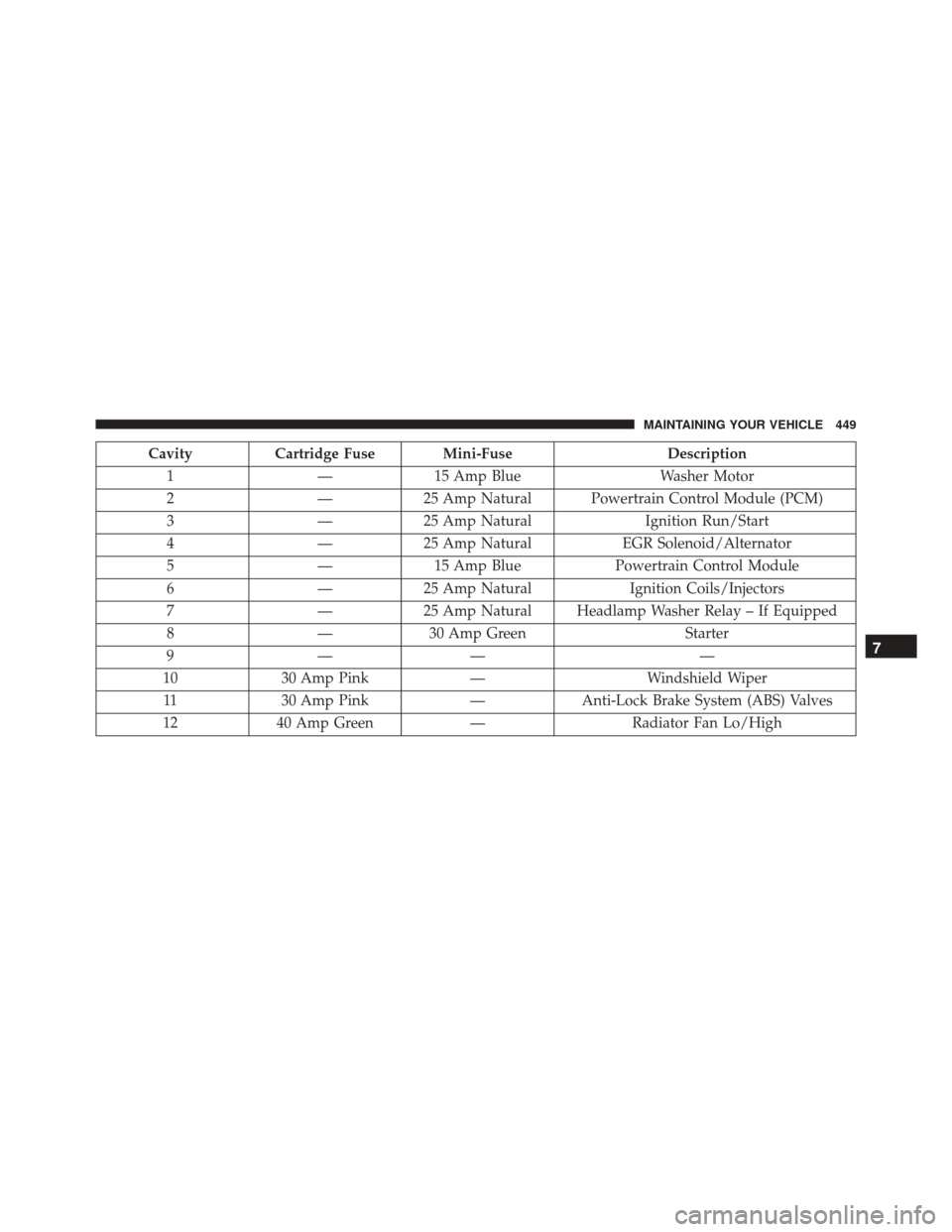
CavityCartridge Fuse Mini-Fuse Description
1 —15 Amp Blue Washer Motor
2 —25 Amp Natural Powertrain Control Module (PCM)
3 —25 Amp Natural Ignition Run/Start
4 —25 Amp Natural EGR Solenoid/Alternator
5 —15 Amp Blue Powertrain Control Module
6 —25 Amp Natural Ignition Coils/Injectors
7 —25 Amp Natural Headlamp Washer Relay – If Equipped
8 —30 Amp Green Starter
9—— —
10 30 Amp Pink —Windshield Wiper
11 30 Amp Pink —Anti-Lock Brake System (ABS) Valves
12 40 Amp Green —Radiator Fan Lo/High
7
MAINTAINING YOUR VEHICLE 449
Page 452 of 520
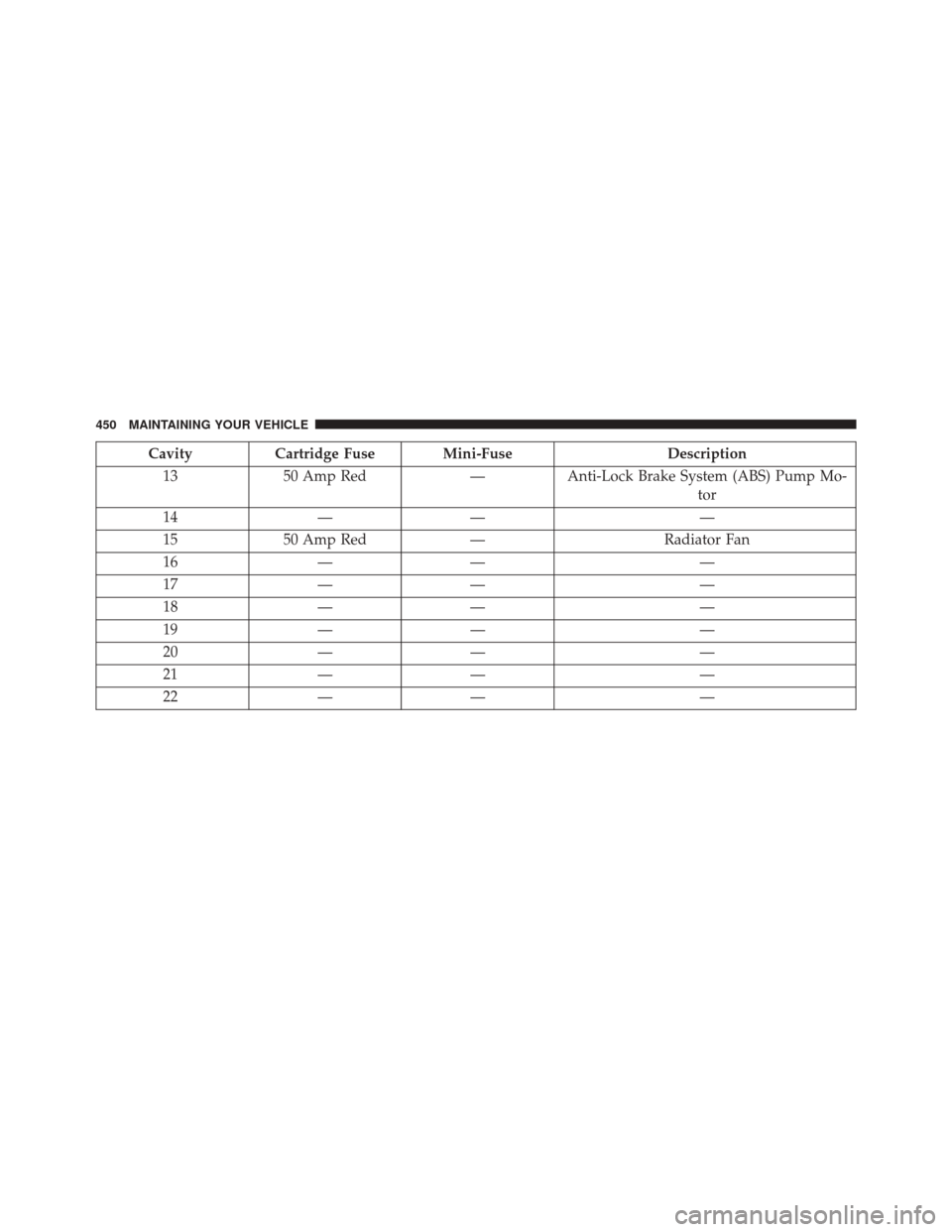
CavityCartridge Fuse Mini-Fuse Description
13 50 Amp Red —Anti-Lock Brake System (ABS) Pump Mo-
tor
14 —— —
15 50 Amp Red — Radiator Fan
16 —— —
17 —— —
18 —— —
19 —— —
20 —— —
21 —— —
22 —— —
450 MAINTAINING YOUR VEHICLE
Page 502 of 520

Caps, FillerFuel ................................ .379
Oil (Engine) .......................... .419
Radiator (Coolant Pressure) ................433
Carbon Monoxide Warning ...................95
Cargo (Vehicle Loading) ....................382
Car Washes ............................ .442
Cellular Phone .......................... .277
Center High Mounted Stop Light ..............461
Certification Label ........................ .382
Chains, Tire ............................ .364
Chart, Tire Sizing ........................ .346
Check Engine Light (Malfunction Indicator Light) . .415
Checking Your Vehicle For Safety ...............94
Checks, Safety ............................94
Child Restraint ............................73
Clean Air Gasoline ....................... .375
Cleaning Wheels .............................. .444Climate Control
......................... .278
Clock ................................. .242
Cold Weather Operation ....................297
Compact Disc (CD) Maintenance ..............277
Compass .............................. .234
Compass Calibration ...................... .234
Compass Variance ........................ .235
Computer, Trip/Travel ..................... .226
Connector UCI................................ .267
Universal Consumer Interface (UCI) ..........267
Console ............................... .201
Console, Floor .......................... .201
Console, Overhead ....................... .183
Contract, Service ......................... .491
Coolant Pressure Cap (Radiator Cap) ...........433
Cooling System .......................... .430
Adding Coolant (Antifreeze) ...............432
Coolant Capacity ...................... .463
500 INDEX
Page 503 of 520
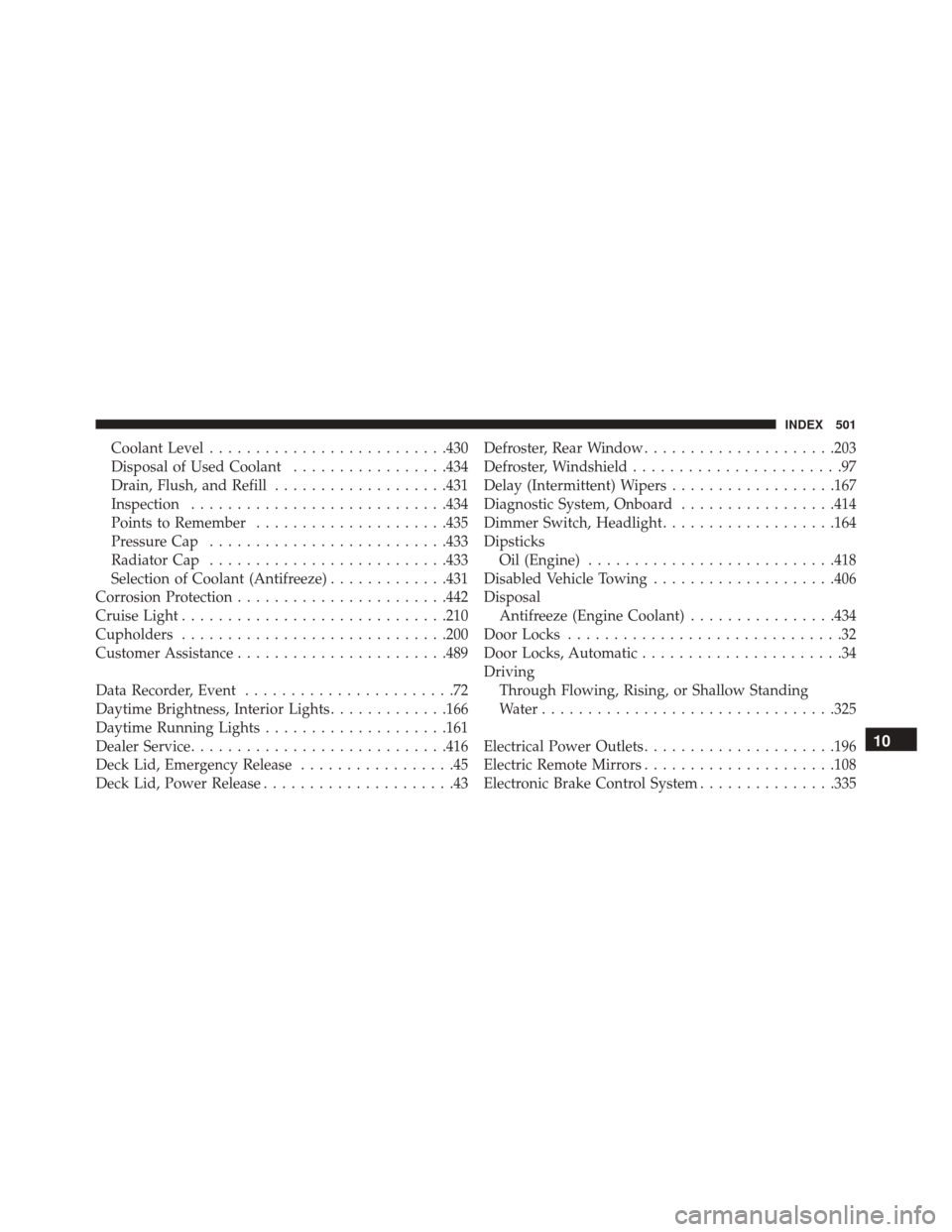
Coolant Level......................... .430
Disposal of Used Coolant .................434
Drain, Flush, and Refill ...................431
Inspection ........................... .434
Points to Remember .....................435
Pressure Cap ......................... .433
Radiator Cap ......................... .433
Selection of Coolant (Antifreeze) .............431
Corrosion Protection ...................... .442
Cruise Light ............................ .210
Cupholders ............................ .200
Customer Assistance ...................... .489
Data Recorder, Event .......................72
Daytime Brightness, Interior Lights .............166
Daytime Running Lights ....................161
Dealer Service ........................... .416
Deck Lid, Emergency Release .................45
Deck Lid, Power Release .....................43 Defroster, Rear Window
.....................203
Defroster, Windshield .......................97
Delay (Intermittent) Wipers ..................167
Diagnostic System, Onboard .................414
Dimmer Switch, Headlight ...................164
Dipsticks Oil (Engine) .......................... .418
Disabled Vehicle Towing ....................406
Disposal Antifreeze (Engine Coolant) ................434
Door Locks ..............................32
Door Locks, Automatic ......................34
Driving Through Flowing, Rising, or Shallow Standing
Water ............................... .325
Electrical Power Outlets .....................196
Electric Remote Mirrors .....................108
Electronic Brake Control System ...............335
10
INDEX 501
Page 512 of 520
Seats............................... .148
Steering ............................. .327
Sunroof ............................. .193
Windows ..............................41
Power Steering Fluid ...................... .465
Pregnant Women and Seat Belts ................58
Pretensioners Seat Belts ..............................56
Programmable Electronic Features .............236
Programming Transmitters (Remote Keyless Entry) . .22
Radial Ply Tires ......................... .359
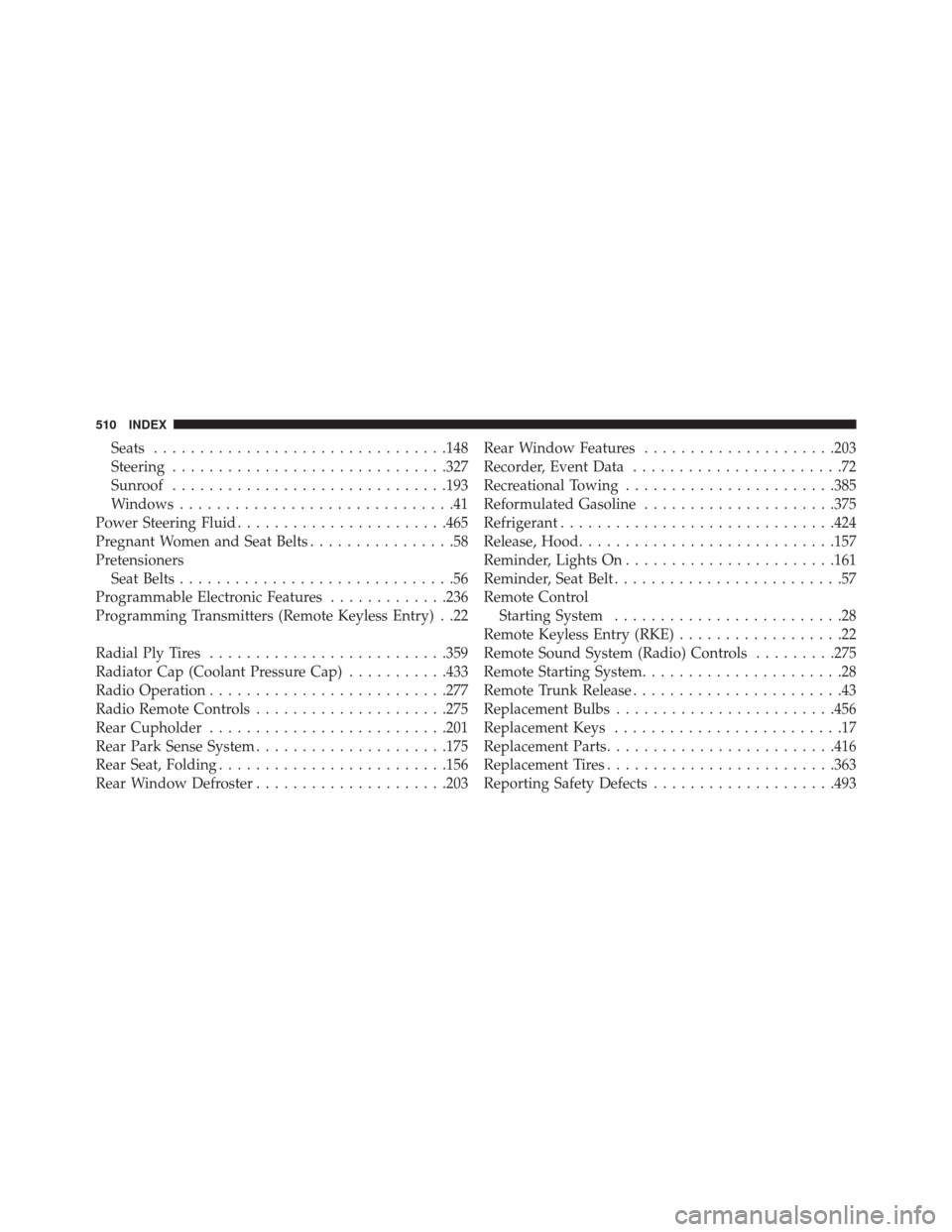
Radiator Cap (Coolant Pressure Cap) ...........433
Radio Operation ......................... .277
Radio Remote Controls .....................275
Rear Cupholder ......................... .201
Rear Park Sense System .....................175
Rear Seat, Folding ........................ .156
Rear Window Defroster .....................203 Rear Window Features
.....................203
Recorder, Event Data .......................72
Recreational Towing ...................... .385
Reformulated Gasoline .....................375
Refrigerant ............................. .424
Release, Hood ........................... .157
Reminder, Lights On ...................... .161
Reminder, Seat Belt .........................57
Remote Control Starting System .........................28
Remote Keyless Entry (RKE) ..................22
Remote Sound System (Radio) Controls .........275
Remote Starting System ......................28
Remote Trunk Release .......................43
Replacement Bulbs ....................... .456
Replacement Keys .........................17
Replacement Parts ........................ .416
Replacement Tires ........................ .363
Reporting Safety Defects ....................493
510 INDEX