2013 AUDI A4 SEDAN warning light
[x] Cancel search: warning lightPage 174 of 294
172 Child Safety
Convertible child safety seats
Properly used convertible child safety seats
can help protect toddlers and children over
age one who weigh between
20 and 40 lbs. (9
and 18 kg) in a crash.
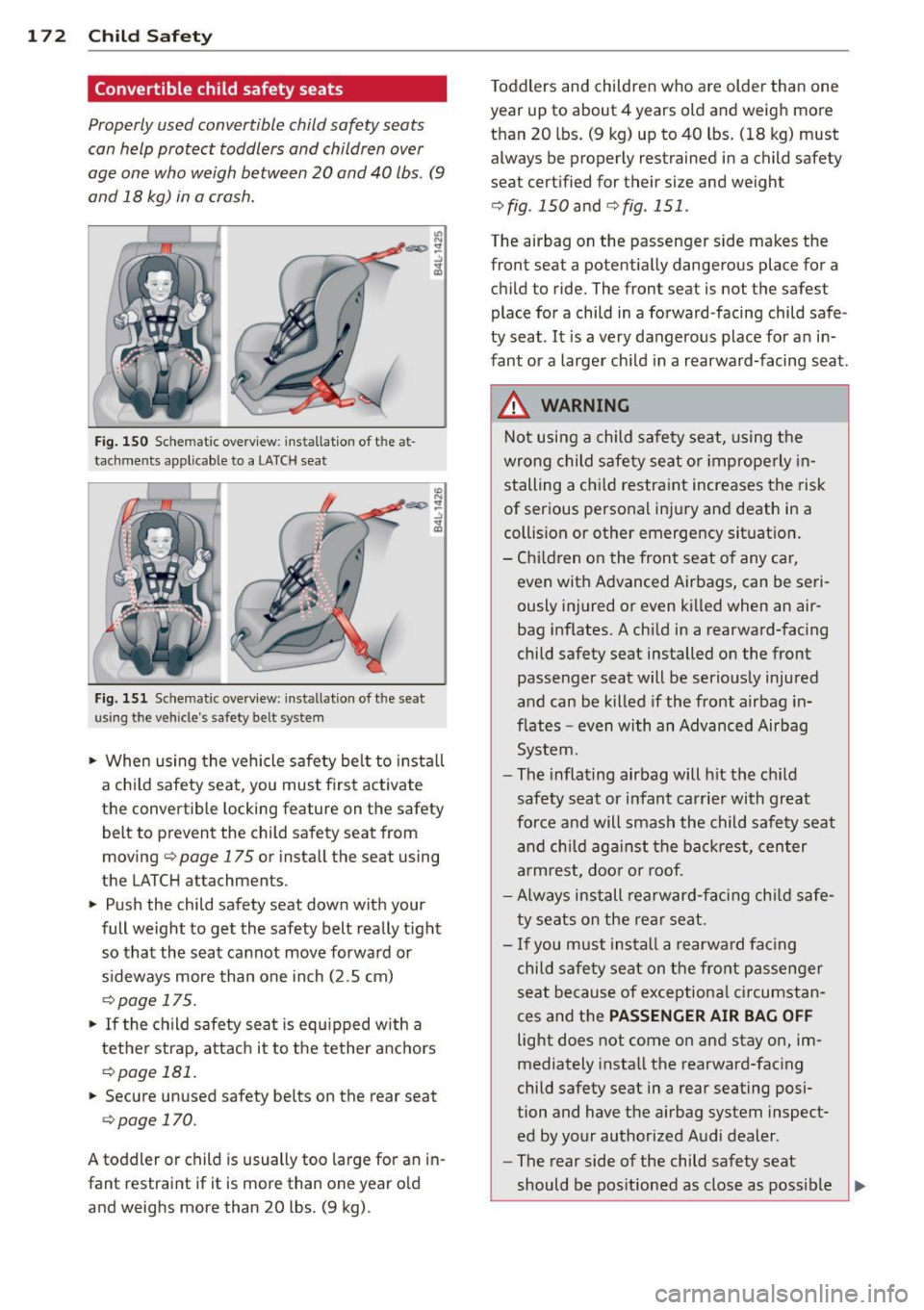
Fig. 150 Sche matic overview: installation of t he at
tachments applicable to a LATCH seat
Fig. 151 Schematic overview: installation of t he seat
us ing the veh icle's safety belt system
.. When using the vehicle safety belt to install
a child safety seat, you must first activate
the convertible locking feature on the safety
belt to prevent the child safety seat from
moving
c::> page 175 or install the seat using
the LATCH attachments .
.. Push the child safety seat down with your
full weight to get the safety belt really tight
so that the seat cannot move forward or sideways more than one inch (2.5 cm)
c::> page 175.
.. If the child safety seat is equipped with a
tether strap, attach it to the tether anchors
¢page 181.
.. Secure unused safety belts on the rear seat
c::> page 170.
A toddler or child is usually too large for an in
fant restraint if it is more than one year old
and weighs more than 20 lbs. (9 kg) . Toddlers
and children who are older than one
year up to about 4 years old and weigh more
than 20 lbs. (9 kg) up to 40 lbs. (18 kg) must
always be properly restrained in a child safety
seat certified for their size and weight
c::> fig . 150 and c::> fig . 151 .
The airbag on the passenger side makes the
front seat a potentially dangerous place for a
child to ride. The front seat is not the safest
place for a child in a forward-facing child safe
ty seat . It is a very dangerous place for an in
fant or a larger child in a rearward-facing seat.
_&. WARNING
Not using a child safety seat, using the
wrong child safety seat or improperly in
stalling a child restraint increases the risk
of serious personal injury and death in a
collision or other emergency situation.
- Children on the front seat of any car,
-
even with Advanced Airbags, can be seri
ously injured or even killed when an air bag inflates . A child in a rearward-facing
child safety seat installed on the front passenger seat will be seriously injured
and can be killed if the front airbag in
flates -even with an Advanced Airbag
System .
- The inflating airbag will hit the child
safety seat or infant carrier with great
force and will smash the child safety seat
and child against the backrest, center
armrest, door or roof.
- Always install rearward-facing child safe
ty seats on the rear seat.
- If you must install a rearward facing
child safety seat on the front passenger
seat because of exceptional circumstan
ces and the
PASSENGER AIR BAG OFF
light does not come on and stay on, im
mediately install the rearward-facing
child safety seat in a rear seating posi
tion and have the airbag system inspect
ed by your authorized Audi dealer .
- The rear side of the child safety seat
should be positioned as close as possible ..,.
Page 175 of 294

to the backrest on the vehicle seat. Ad
just or remove the rear seat head restraint if it is diff icult to install the
child seat w ith the head restraint in place
¢ page 57. Install the head restraint
again immed iate ly once the child seat is
removed. Driving without head rest raints
o r with he ad restraints that are not prop
erly adjusted increases the risk of serious
or fatal neck injury dramatically.
- Always read and heed all WARNINGS
whenever using a child rest rained in ave
hicle is being used
¢page 136, Safety
belts,
¢ page 144, Airbag system and
¢ page 165, Important things to know.
A WARNING
If except ional circumstances requ ire the
use of a forward-facing child restra int on
the front passenger's seat, the ch ild's safe
ty and well-being require that the follow
ing special precautions be taken:
- Make sure the forward-fac ing seat has
been designed and certified by its manu
factur er for use on a front seat with a
passenge r fron t and side airbag.
- Always follow the manufacturer's in
st ruct ions provided with the child sa fety
sea t or infan t carrier.
- Always mov e the front passenge r seat in
to the rearmost posit ion of the passen
ger seat's fore and aft ad justment r ange,
and as far away from the airbag as possi
ble before instal ling the child restraint.
- Always make sure that noth ing prevents
the front passenger's seat from bei ng
moved to the rearmost position in its
fore and aft adjustment range .
- Always make sure the backrest is in an upright position.
- Make su re that the
PASSENGER AIR BAG
OFF
light comes on and stays on all the
time whenever the ignition is switched
on.
- If the light does not stay on, perform the
checks
¢ page 155, Monitoring the Ad
vanced Airbag System.
-
Child S afety 173
- Take the chi ld restraint
off the front pas
senger seat and install it properly at one
of the rear seat positions if the
PASSEN
GER AIR BA G OF F
light does not stay on
whenever the ignit ion is switched on.
Booster seats and safety belts
Properly used booster seats con help protect
children weighing between about 40 lbs. and
80 lbs . (18 kg and 36 kg) who are less than 4
ft. 9 in . (57 inches/1 .45 meters) tall.
In .... N 0 ±
~
Fig . 152 Rear seat: ch ild properly res trained in a boos
ter seat
The vehicle's safety belts alone will not fit most children until they are at least 4
ft. 9 in .
(57 inches/1.45 me ters) tall and weigh about
80 lbs . (36 kg) . Booster seats raise these chi l
dren up so tha t the safety belt w ill pass p rop
erly over the stronger parts of the ir bodies
and the safety be lt can he lp protect them in a
crash.
.,. Do not use the conver tible locking ret ra ctor
when using the ve hicl e's s afety be lt to re
s train a ch ild on a booster seat.
... The shoulder belt must lie as close to the
center of the ch ild's collar bone as possible
and must lie flat and snug on the upper
body. It must never lie across the throat or
neck . The lap belt must lie across the pelvis
and never across the stomach or abdomen .
Make s ure the belt lies flat and snug. Pull on
th e belt to tighten if necessary.
.,. If you must transport an o lder ch ild in a
booster seat on the front passenger sea t,
you can use the safety be lt height adjust
ment to he lp ad just the shou lder portion
properly.
Page 177 of 294
-Children on the front seat of any car,
even with Advanced A irbags, can be seri
ous ly injured or even killed when an a ir
bag inflates.
- Never let a child stand or kneel on any
seat.
- Never let a child ride in the cargo area of
your vehicle.
- Always remember that a ch ild lean ing
forward, sitt ing sideways or out of posi
t ion in any way during an acc ident can be
struck by a deploying airbag . This will re
sult in se rious personal injury or death.
- If you must install a rearward facing
child safety seat o n the front passenger
seat because of exceptional circ umstan
ces the
PASSENGER AIR BAG OFF light
must come on and stay on, whenever the
ignition is switched on.
- If you must install a booster seat on the
front passenger seat because of excep
tional circumstances the
PAS SENGER
AIR BAG O FF
light must come on and
stay on, whenever the ignition is switch ed on.
- Take the child restraint off the front pas
senger seat and install it properly at one
of the rear seat positions if the
PA SS EN
GER AIR BAG OFF
light does not stay on
whenever the ignition is switched on .
- Always read and heed all WARNINGS
whenever using a child restrained in ave
hicle is being used
c::> page 136, Safety
belts,
c::> page 144, Airbag system and
c::> page 165, Important things to know.
Installing a child safety
seat
Securing a child safety seat using a
safety belt
Safety belts for the rear seats and the front
passenger's seat can be locked with the con vertible locking retractor to properly secure
child safety seats.
The safety belts emergency lock ing retractors
for the rear seats safety belts and for the
Child Sa fet y 175
front passenger's seat safety be lt have a con
vertib le locking retractor for child restraints .
The safety belt must be locked so that be lt
webb ing cannot unreel. The retractor can be
activated to lock the safety belt and prevent
the safety belt webbing from loosening up
dur ing normal dr iv ing . A child safety seat can
on ly be properly insta lled when the safety belt
is locked so that the chi ld and child safety
seat w il l stay in place .
Always remember: Even though your vehicle is equipped with an Advanced Airbag system, all
c hi ldren, especially those 12 years and young
er, shou ld always r ide in the back seat prope r
ly restrained for the ir age and we ight .
A WARNING
=
Improperly installed chi ld safety seats in-
crease the risk of serious personal injury
and death in a co llision.
- Always make s ure that the safety belt re
tractor is locked when insta lling a child
safety seat. An unlocked safety belt re
tractor cannot hold the child safety seat in place dur ing norma l dr iving or in a
crash .
- Always buckle the child safety seat firmly
in place even if a ch ild is not sitt ing in it .
A loose child safety seat can fly around
during a sudden stop or in a collision.
- Always make sure that the rear seat
backrest to which the cente r rear safety
be lt is attached is securely latched when
ever the rear cen ter safety belt is being
used to secure a ch ild restra int.
- If the backrest is not securely latched,
the child and the child restraint will be
thrown forward together with the back rest and will strike parts of the vehicle
interior. The child can be seriously in
jured or killed.
- Never insta ll rearward-facing child safety
seats or infant carriers on the front pas
senger seat. A child will be serious ly in
jured and can be killed when the passen- ger airbag inflates. .,_ •
•
Page 178 of 294
176 Child Safety
-The inflating airbag will hit the child
safety seat or infant carrier with great
force and will smash the child safety seat and child against the backrest, center
armrest, door or roof.
- Always install rearward-facing child safe
ty seats or infant carriers on the rear
seat.
- Forward-facing child safety seats or in
fant carriers installed on the front pas
senger's seat may interfere with the de
ployment of the airbag and cause serious
injury to the child.
-It is safer to install a forward-facing
child safety seat on the rear seat.
- Always read and heed all WARNINGS
whenever using a child restrained in ave
hicle is being used
¢page 165. Special
precautions apply when installing a child
safety seat on the front passenger seat
¢ page 145, Child restraints on the front
seat -some important things to know.
A WARNING
-
Always take special precautions if you
must install a forward or rearward -facing
child restraint on the front passenger's
seat in exceptional situations:
- Whenever a forward or rearward-facing
child restraint is installed on the front
passenger seat, the
PASSENGER AIR
BAG OFF
light must come on and stay on
whenever the ignition is switched on.
- If the PASSENGER AIR BAG OFF light
does not come on and stay on, perform
the checks described ¢
page 155, Moni
toring the Advanced Airbag System.
- Take the child restraint off the front pas
senger seat and install it properly at one
of the rear seat positions if the
PASSEN
GER AIR BAG OFF
light does not stay on
whenever the ignition is switched on.
- Improper installation of child restraints
can reduce their effectiveness or even
prevent them from providing any protec
tion. -
An improperly installed child restraint
can interfere with the airbag as it de
ploys and seriously injure or even kill the
child .
- Always carefully follow the manufactur
er's instructions provided with the child
safety seat or carrier.
- Never place additional items on the seat
that can increase the total weight regis
tered by the weight-sensing mat and can
cause injury in a crash .
A WARNING
-Forward-facing child restraints:
- Always make sure the forward -facing
seat has been designed and certified by its manufacturer for use on a front seat
with a passenger front and side airbag.
- Never put the forward-facing child re
straint up, against or very near the in
strument panel.
- Always move the passenger seat into its
rearmost position in the seat's fore and
aft adjustment range, as far away from
the airbag as possible before installing
the forward-facing child restraint. The backrest must be adjusted to an upright
position .
-Make sure that the PASSENGER AIR BAG
OFF
light comes on and stays on all the
time whenever the ignition is switched
on .
A WARNING
-
Rearward-facing child restraints:
- A child in a rearward-facing child safety
seat installed on the front passenger
seat will be seriously injured and can be killed if the front airbag inflates -even
with an Advanced Airbag System .
- The inflating airbag will hit the child
safety seat or infant carrier with great
force and will smash the child safety seat and child against the backrest, center
armrest, door or roof.
Page 179 of 294

-Always be especially careful if you must
install a rearward facing child safety seat
on the front passenger seat in exception
al circumstances.
- A tight tether strap on a rearward-facing
child restraint attached to the front pas
senger seat can put too much pressure
on the weight-mat in the seat and regis
ter a heavier weight in the Advanced Air
bag System. The heavier weight regis
tered can make the system work as
though an adult were on the seat and de ploy the Advanced Airbag when it must
be suppressed causing serious or even
fatal injury to the child.
- Make sure that the
PASSENGER AIR BAG
OFF
light comes on and stays on all the
time whenever the ignition is switched
on.
- If the PASSENGER AIR BAG OFF light
does not come on and stay on, immedi
ately install the rearward-facing child
safety seat in a rear seating position and
have the airbag system inspected by your
authorized Audi dealer.
Activating the convertible lock ing
retractor
Use the convertible locking retractor to se
cure a child restraint.
Always heed the child safety seat manufactur
er's instructions when installing a child re
straint in your vehicle. To activate the conver
tible locking retractor:
.. Place the child restraint on a seat, prefera
bly on the rear seat.
.. Slowly pull the belt
all the way out.
.. Route it around or through the child re
straint belt path¢.&,_.
.. Push the child safety seat down with your
full weight to get the safety belt really tight.
.. Insert the belt tongue into the buckle for
that seating position .
.. Guide the safety belt back into the retractor
until the belt lies flat and snug on the child
safety seat .
Child Safety 177
.. You should hear a "clicking" noise as the
belt winds back into the inertia reel. Test the
convertible locking retractor by pulling on
the belt. You should no longer be able to
pull the belt out of the retractor. The con
vertible locking retractor is now activated .
.. Make sure that the red release button is fac
ing away from the child restraint so that it
can be unbuckled quickly.
.. Pull on the belt to make sure the safety belt
is properly tight and fastened so that the
seat cannot move forward or sideways more
than one inch (2.5 cm).
A WARNING
Using the wrong child restraint or an im
properly installed child restraint can cause
serious personal injury or death in a crash.
- Always make sure that the safety belt re-
tractor is locked when installing a child
safety seat. An unlocked safety belt re
tractor cannot hold the child safety seat in place during normal driving or in a
crash.
- Always buckle the child safety seat firmly
in place even if a child is not sitting in it.
A loose child safety seat can fly around
during a sudden stop or in a crash.
- Always make sure the seat backrest to
which the child restraint is installed is in
an upright position and securely latched
into place and cannot fold forward. Oth
erwise, the seatback with the child safety
seat attached to it could fly forward in
the event of an accident or other emer
gency situation .
-Always read and heed all WARNINGS whenever using a child restrained in ave
hicle is being used
¢ page 165. Special
precautions apply when installing a child
safety seat on the front passenger seat
¢ page 145, Child restraints on the front
seat -some important things to know .
-
•
•
Page 184 of 294

182 Child Safet y
-Never attac h a tether strap to a tie-down
hook in the luggage compartment .
- Never use c hild restraint tether ancho
rages to secure safety belts or other
kinds of occupant restra ints .
- Never secure or attach any l uggage or
other items to the LATCH lower ancho
rages or to the tether anchors.
- If a tether or other strap is used to at
tac h a child restraint to the front passen
ger seat, make sure that it is not so
t ight, that it causes the weight -sensing
mat to measu re more weight than is ac
tua lly on the seat.
- The heav ier weight reg istered can make
the Advanced Airbag System wo rk as
though an adult we re on the seat and de
ploy the Advanced A irbag when it m ust
be s uppressed causing ser ious or even
fatal inj ury to the child.
- If you mus t install a rearward f acing
child safety seat on the front passenger
seat because of exceptional circ umstan
ces and the
PASSENGER AIR BAG OFF
light does not come on and stay on, im
mediately install the rear-facing child
safety seat in a rear seating position a nd
have the a irbag system inspected by you r
Audi dealer.
Installing the upper tether strap on the
anchorage
F ig . 1 58 Tethe r strap: prope r rou ting and mounting
Installing the tether strap
.,. Release or deploy the tether strap on the
child restra int acco rding to the child re
straint manufacturer's instruct ions . .,.
Guide the upper tether strap
under the rear
head restraint co
fig. 158 (raise the head re
straint if necessary).
.,. Tilt the recess flap up to expose the anchor
bracket.
.,. Attach the tether strap anchorage hook into
the opening of t he tether anchorage.
.,. Pull on the tethe r strap hook so that the
spri ng catch of the hook engages .
.,. Tight en t he te ther s tra p firmly fo llow ing
the child restraint manufac turer's instruc
tions .
Releasing the tether strap
.,. Loosen the tens ion fo llowing the child re
s traint manufa cture r's instr uctions.
.,. Depress the spring c atc h o n the hook and
release it from the ancho rage.
(D Note
If yo u leave the child restr aint w ith the
tethe r strap firm ly ins talled for several
days, this could leave a ma rk on the up
ho lstery on the seat cushion and backrest
i n the area where the tether strap was in
stalled. The upholstery would also be per
manently stretched around the tether
strap . This applies espec ia lly to leather
seats .
Using tether straps on rearward-facing
child restraints
Currently, few rearward-facing child res traint
systems come w ith a tether. Please read and
heed the c hild restra int system man ufactur
er 's instr uctions carefully to determine how to
properly install the tether .
A WARNING
-
-
A child in a rearward-fac ing ch ild safety
seat installed on the front passeng er seat
will be s erious ly inju re d and ca n be killed if
the fr ont air bag infla tes -even with an Ad
va nced A irbag Sys tem .
- Th e inflating airbag will h it th e chi ld
safety sea t or infant c arrie r wi th gre at
for ce and will sma sh the child s afety seat
~
Page 188 of 294

186 Intelligent technology
-Always accelerate with special care on
even, smooth surfaces such as those that
are wet or covered with ice and snow.
The drive wheels can spin even with
these assistance systems that cannot al
ways help to reduce the risk of loss of ve hicle control.
(i_) Tips
- ABS and ASR only work correctly when
all four wheels are equipped with identi
cal tires . Different tire sizes can lead to a
reduction in engine power.
- You may hear noises when the systems
described are working .
- If the indicator light
I] or l;S (USA
models);tl] (Canada models) appears,
there may be a malfunction ¢
page 19,
¢page 19.
Switching on /off
ESC turns on automatically when you start
the engine .
Fig. 159 Vers ion A: low er ce nter c onsol e, 1', OFF but
to n
.... .. [ I _j nw· 1-_, .. _ , 1 -- - .-=---1
I;· . i-a~ -~ ~-,' I ' .;- c;.il..-~ -~ 1,1
~' . -' '
1 ' ...... ~ ... ~- ;. '"~ l __,
Fig. 160 Versio n B: upper ce nter console,!'> OFF but
to n
Turning off ASR
In some situations, it may be useful to switch
ASR
off to allow the wheels to spin. For exam
ple:
- Rocking the vehicle to free it when it is stuck
- Driving in deep snow or on loose ground
- Driving with snow chains
Qu ickly press the
i.i, OFF I button ¢ fig. 159
and¢ fig. 160. The fi indicator light turns on
and the message
Traction control (ASR): Off.
Warning! Restricted stability
appears in the
display .
It is only possible to turn off the ASR up to
30 mph (SO km/h) for vehicles with front
wheel drive . At about 45 mph (70 km/h) it au
tomatically turns on again .
It is possible to
turn
off the ASR at any speed for vehicles with
all wheel drive.
Turning off ESC
Press and hold the I B OFFI button for three
seconds . The
Ii ESC indicator light turns on
and the message
Stabilization control (ESC):
off. Warning! Restricted stability
appears in
the display. ASR is also switched
off when ESC
is switched off.
Switching on
Press the 1 .$ OFFI button again. The 11 indica
tor light turns on and the message
Stabiliza
tion control (ESC): On
appears in the display .
_&. WARNING
- Drive wheels can spin and you can lose
control of the vehicle more easily when
ASR and ESC are switched off, especially
when the road is slippery .
- Switch ASR/ESC
off only when your driv
ing skills, traffic and weather conditions
permit.
(D Tips
You cannot switch ASR and ESC
off when
adaptive cruise control* is working.
-
Page 189 of 294

Braking
What affects braking efficiency?
New brake pads
During the first 250 miles (400 km), new
brake pads do not possess their full braking
effect, they have to be "broken in" first¢& .
You can compensate for this slightly reduced braking power by pushing harder on the brake
pedal. Avoid heavy braking loads during the
break-in per iod.
Operating conditions and driv ing habits
The brakes on today's automobi les are sti ll
subject to wear, depending largely on operat
ing conditions and driving habits¢.&. . On
vehicles that are e ither driven mostly in stop
and-go city traffic or are driven hard, the
brake pads should be checked by your author
ized Audi dealer more often than specified in
the
Warranty & Maintenance booklet . Failure
to have your b rake pads inspected can result
in red uced brake performance.
On steep slopes, you shou ld use the brak ing
effect of the engine. This way, you p revent un
necessary wear on the brake system.
If you
must use yo ur brakes, do not hold the brakes
down continuously. Pump the brakes at inter
va ls.
Operating noise
Noises may occur when braking depending on
the speed, braking force and outside condi
tions such as temperature and humidity.
Effect of water and road salt
In certain situat ions, for example after driving
through water, in heavy ra in, after overnight
condensation or after washing your car, the
braking effect can be reduced by moisture or
ice on the brake roto rs and brake pads . The
brakes must be dried first with a few careful
brake applications .
A t hi gher speeds and with the windshield w ip
ers turned on, the brake pads press against
the brake rotors for a short amount of time .
This occurs at regular intervals without the
Intelligent technology 187
driver noticing and provides for better brake
response time under wet conditions .
T he effectiveness of the brakes can be red uced
when the vehicle is driven on a sa lt-co vered
road and the b rakes are not used. Likewise,
you clean off accumulated salt coating from
brake discs and pads with a few cautious ap
plications of the brake ¢ & .
Corrosion
There may be a tendency for dirt to build up
on the brake pads and corrosion to form on
the discs if the car is not driven regu larly or
on ly for short trips with litt le use of the
brakes.
If the brakes are not used frequently, or if cor
rosion has formed on the discs, it is advisable
to clean off the pads and discs by braking
firmly a few times from a moderately high
speed ¢.&. .
Faults in the brake system
If you should notice a sudden increase in
brake pedal trave l, then one of the two brake
c ircuits may have failed ¢.&. .
Low brake fluid level
Malfunctions can occur in the brake system if
the brake fluid level is too low. The brake fluid
level is monitored electronica lly.
Brake booster
T he brake booster increases the pressure that
you generate with the brake peda l. It works
only when the engine is runn ing .¢ .&.
Brake lining wear status
Brake lining wear may be checked by visual in
spection of the condition of the brake pads
through the openings in the wheel. If neces
sary, the wheel may be removed fo r this in
spection ¢
page 252, Changing a wheel .
A WARNING
-
- New brake pads don't have the best stop
ping power and must be "broken-in" dur-
ing the initial 100 to 150 miles (150 to
~
•
•