2012 Seat Ibiza 5D trailer
[x] Cancel search: trailerPage 5 of 280

Table of Contents
Manual structure . . . . . . . . . . . . . . . . . . . . 5
Content . . . . . . . . . . . . . . . . . . . . . . . . . . . . . . . . 6
Safety First . . . . . . . . . . . . . . . . . . . . . . . . . . . . 7
Safe driving . . . . . . . . . . . . . . . . . . . . . . . . . . . . . . . 7
Brief introduction . . . . . . . . . . . . . . . . . . . . . . . . . 7
Proper sitting position for occupants . . . . . . . . . 10
Pedal area . . . . . . . . . . . . . . . . . . . . . . . . . . . . . . . 16
Storing objects . . . . . . . . . . . . . . . . . . . . . . . . . . . 16
Seat belts . . . . . . . . . . . . . . . . . . . . . . . . . . . . . . . . . 18
Brief introduction . . . . . . . . . . . . . . . . . . . . . . . . . 18
Why wear seat belts? . . . . . . . . . . . . . . . . . . . . . . 20
Seat belts . . . . . . . . . . . . . . . . . . . . . . . . . . . . . . . 24
Seat belt tensioners* . . . . . . . . . . . . . . . . . . . . . . 27
Airbag system . . . . . . . . . . . . . . . . . . . . . . . . . . . . . 29
Brief introduction . . . . . . . . . . . . . . . . . . . . . . . . . 29
Front airbags . . . . . . . . . . . . . . . . . . . . . . . . . . . . . 33
Side airbags . . . . . . . . . . . . . . . . . . . . . . . . . . . . . 37
Deactivating airbags* . . . . . . . . . . . . . . . . . . . . . . 40
Child safety . . . . . . . . . . . . . . . . . . . . . . . . . . . . . . . 42
Brief introduction . . . . . . . . . . . . . . . . . . . . . . . . . 42
Child seats . . . . . . . . . . . . . . . . . . . . . . . . . . . . . . . 44
Securing child seats . . . . . . . . . . . . . . . . . . . . . . . 47
Operating Instructions . . . . . . . . . . . . . 53
Cockpit . . . . . . . . . . . . . . . . . . . . . . . . . . . . . . . . . . . 53
Overview . . . . . . . . . . . . . . . . . . . . . . . . . . . . . . . . 53
Instruments . . . . . . . . . . . . . . . . . . . . . . . . . . . . . . 55 LPG system* . . . . . . . . . . . . . . . . . . . . . . . . . . . . . 56
Digital instrument panel display . . . . . . . . . . . . . 57
Warning lamps . . . . . . . . . . . . . . . . . . . . . . . . . . . 63
Steering column controls* . . . . . . . . . . . . . . . . . 76
General information . . . . . . . . . . . . . . . . . . . . . . . 76
Audio Control . . . . . . . . . . . . . . . . . . . . . . . . . . . . . 77
Audio + Telephone Control . . . . . . . . . . . . . . . . . . 78
Opening and closing . . . . . . . . . . . . . . . . . . . . . . 80
Central locking . . . . . . . . . . . . . . . . . . . . . . . . . . . 80
Keys . . . . . . . . . . . . . . . . . . . . . . . . . . . . . . . . . . . . 85
Radio frequency remote control* . . . . . . . . . . . . . 86
Anti-theft alarm system* . . . . . . . . . . . . . . . . . . . 88
Rear lid . . . . . . . . . . . . . . . . . . . . . . . . . . . . . . . . . . 91
Windows . . . . . . . . . . . . . . . . . . . . . . . . . . . . . . . . 93
Panoramic tilting sunroof* . . . . . . . . . . . . . . . . . . 96
Lights and visibility . . . . . . . . . . . . . . . . . . . . . . . . 98
Lights . . . . . . . . . . . . . . . . . . . . . . . . . . . . . . . . . . . 98
Interior lights . . . . . . . . . . . . . . . . . . . . . . . . . . . . . 105
Visibility . . . . . . . . . . . . . . . . . . . . . . . . . . . . . . . . . 106
Windscreen wipers . . . . . . . . . . . . . . . . . . . . . . . . 107
Rear view mirrors . . . . . . . . . . . . . . . . . . . . . . . . . . 110
Seats and storage compartments . . . . . . . . . . 113
The importance of correct seat adjustment . . . . . 113
Head restraints . . . . . . . . . . . . . . . . . . . . . . . . . . . 114
Front seats . . . . . . . . . . . . . . . . . . . . . . . . . . . . . . . 116
Rear seats . . . . . . . . . . . . . . . . . . . . . . . . . . . . . . . 118
Storage compartment . . . . . . . . . . . . . . . . . . . . . . 120
Ashtrays, cigarette lighter and power socket . . . 123
First-aid kit, warning triangle, fire extinguisher* 125
Luggage compartment . . . . . . . . . . . . . . . . . . . . . 126
Air conditioning . . . . . . . . . . . . . . . . . . . . . . . . . . . 128
Heating . . . . . . . . . . . . . . . . . . . . . . . . . . . . . . . . . 128
Air conditioning* . . . . . . . . . . . . . . . . . . . . . . . . . . 131 Climatronic . . . . . . . . . . . . . . . . . . . . . . . . . . . . . . 134
General notes . . . . . . . . . . . . . . . . . . . . . . . . . . . . 136
Driving . . . . . . . . . . . . . . . . . . . . . . . . . . . . . . . . . . . . 138
Steering . . . . . . . . . . . . . . . . . . . . . . . . . . . . . . . . . 138
Safety . . . . . . . . . . . . . . . . . . . . . . . . . . . . . . . . . . . 139
Ignition lock . . . . . . . . . . . . . . . . . . . . . . . . . . . . . . 139
Starting and stopping the engine . . . . . . . . . . . . 141
Start-Stop function* . . . . . . . . . . . . . . . . . . . . . . . 144
Manual gearbox . . . . . . . . . . . . . . . . . . . . . . . . . . 147
Automatic gearbox* . . . . . . . . . . . . . . . . . . . . . . . 148
Handbrake . . . . . . . . . . . . . . . . . . . . . . . . . . . . . . . 155
Acoustic parking aid system* . . . . . . . . . . . . . . . 157
Cruise speed* (Cruise control system) . . . . . . . . 159
Practical Tips . . . . . . . . . . . . . . . . . . . . . . . . . 163
Intelligent technology . . . . . . . . . . . . . . . . . . . . . 163
Brakes . . . . . . . . . . . . . . . . . . . . . . . . . . . . . . . . . . 163
Anti-lock brake system and traction control ABS 164
Electronic Stability Control (ESC)* . . . . . . . . . . . . 165
Driving and the environment . . . . . . . . . . . . . . . 168
Running-in . . . . . . . . . . . . . . . . . . . . . . . . . . . . . . . 168
Exhaust gas purification system . . . . . . . . . . . . . 169
Economical and environmentally friendly driving 171
Driving abroad . . . . . . . . . . . . . . . . . . . . . . . . . . . . 173
Trailer towing . . . . . . . . . . . . . . . . . . . . . . . . . . . . . 173
Vehicle maintenance and cleaning . . . . . . . . . 176
General notes . . . . . . . . . . . . . . . . . . . . . . . . . . . . 176
Care of the vehicle exterior . . . . . . . . . . . . . . . . . . 177
Vehicle interior maintenance . . . . . . . . . . . . . . . . 182
3
Table of Contents
Page 6 of 280

Accessories, replacement of parts and
modifications . . . . . . . . . . . . . . . . . . . . . . . . . . . . . 185
Accessories and spare parts . . . . . . . . . . . . . . . . 185
Technical modifications . . . . . . . . . . . . . . . . . . . . 185
Roof aerial* . . . . . . . . . . . . . . . . . . . . . . . . . . . . . . 186
Mobile telephones and two-way radios . . . . . . . . 186
Fitting a towing bracket* . . . . . . . . . . . . . . . . . . . 187
Checking and refilling levels . . . . . . . . . . . . . . . 189
Refuelling . . . . . . . . . . . . . . . . . . . . . . . . . . . . . . . 189
LPG system* . . . . . . . . . . . . . . . . . . . . . . . . . . . . . 191
Petrol . . . . . . . . . . . . . . . . . . . . . . . . . . . . . . . . . . . 194
Diesel . . . . . . . . . . . . . . . . . . . . . . . . . . . . . . . . . . . 194
Working in the engine compartment . . . . . . . . . . 195
Engine oil . . . . . . . . . . . . . . . . . . . . . . . . . . . . . . . . 198
Coolant . . . . . . . . . . . . . . . . . . . . . . . . . . . . . . . . . 202
Washer fluid and windscreen wiper blades . . . . 204
Brake fluid . . . . . . . . . . . . . . . . . . . . . . . . . . . . . . . 208
Vehicle battery . . . . . . . . . . . . . . . . . . . . . . . . . . . 209
Wheels . . . . . . . . . . . . . . . . . . . . . . . . . . . . . . . . . . 211
If and when . . . . . . . . . . . . . . . . . . . . . . . . . . . . . . . 218
Vehicle tools, spare wheel . . . . . . . . . . . . . . . . . . 218
Wheel change . . . . . . . . . . . . . . . . . . . . . . . . . . . . 219
Tyre repair kit* (Tyre Mobility-System) . . . . . . . . . 224
Fuses . . . . . . . . . . . . . . . . . . . . . . . . . . . . . . . . . . . 226
Bulb change . . . . . . . . . . . . . . . . . . . . . . . . . . . . . 229
Single headlight bulb change . . . . . . . . . . . . . . . 231
Double headlight bulb change . . . . . . . . . . . . . . . 233
Changing the bulbs of AFS headlights . . . . . . . . 237
Changing the fog light bulbs . . . . . . . . . . . . . . . . 238
Changing the rear, side and interior light bulbs . 239
Jump-starting . . . . . . . . . . . . . . . . . . . . . . . . . . . . . 242
Towing and tow-starting . . . . . . . . . . . . . . . . . . . . 246 Technical Specifications
. . . . . . . . . . . 249
Description of specifications . . . . . . . . . . . . . . . 249
Important information . . . . . . . . . . . . . . . . . . . . . 249
Information on fuel consumption . . . . . . . . . . . . 251
Towing a trailer . . . . . . . . . . . . . . . . . . . . . . . . . . . 251
Wheels . . . . . . . . . . . . . . . . . . . . . . . . . . . . . . . . . . 252
Technical specifications . . . . . . . . . . . . . . . . . . . . 253
Checking fluid levels . . . . . . . . . . . . . . . . . . . . . . . 253
Petrol engine 1.2 44 kW (60 PS) . . . . . . . . . . . . . 254
Petrol engine 1.2 51 kW (70 PS) . . . . . . . . . . . . . 255
Petrol engine 1.2 TSI 63 kW (85 PS) . . . . . . . . . . 256
Petrol engine/LPG 1.6 60 kW (81 PS) . . . . . . . . . 257
Petrol engine 1.4 63 kW (85 PS) . . . . . . . . . . . . . 258
Petrol engine 1.2 TSI 77 kW (105 PS) . . . . . . . . . 259
Petrol engine 1.2 TSI 77 kW (105 PS) Start-Stop 260
Petrol engine 1.6 77 kW (105 PS) . . . . . . . . . . . . 261
Petrol engine 1.4 110 kW (150 PS) . . . . . . . . . . . 262
Diesel engine 1.2 TDI CR 55 kW (75 PS) DPF
Start-Stop Ecomotive . . . . . . . . . . . . . . . . . . . . . . 263
Diesel engine 1.2 TDI CR 55 kW (75 PS) DPF . . . . 264
Diesel engine 1.6 TDI CR 66 kW (90 PS) DPF . . . . 265
Diesel engine 1.6 TDI CR 77 kW (105 PS) with/
without DPF . . . . . . . . . . . . . . . . . . . . . . . . . . . . . . 266
Diesel engine 2.0 TDI CR 105 kW (143 PS) DPF . 267
Dimensions and capacities . . . . . . . . . . . . . . . . . 268
Index . . . . . . . . . . . . . . . . . . . . . . . . . . . . . . . . . . . 269
4Table of Contents
Page 73 of 280
71
Cockpit
Brake system*
This warning lamp lights up if the brake fluid level is too low
or if there is a fault in the system.
This warning lamp lights up if
● the brake fluid level is too low ⇒ page 208.
● there is a fault in the brake system.
This warning lamp can light up together with the ABS system warning lamp.
WARNING
● If the brake warning lamp does not go out, or if it lights up when driv-
ing, the brake fluid level ⇒ page 208, Brake fluid in the reservoir is too
low. Risk of accident. Stop the vehicle and do not drive on. Obtain techni-
cal assistance.
● If the brake warning lamp lights up together with the ABS warning
lamp , the control function of the ABS could be out of action. This could
cause the rear wheels to lock quickly when you brake. This could cause
the rear to break away. Risk of skidding. Stop the vehicle and seek tech-
nical assistance.
Cruise speed (Cruise control)*
The warning lamp comes on when the cruise control system
is switched on.
The warning lamp lights up when the cruise control system is switched
on. For further information on the cruise control system, see ⇒ page 159.Tyre pressure*
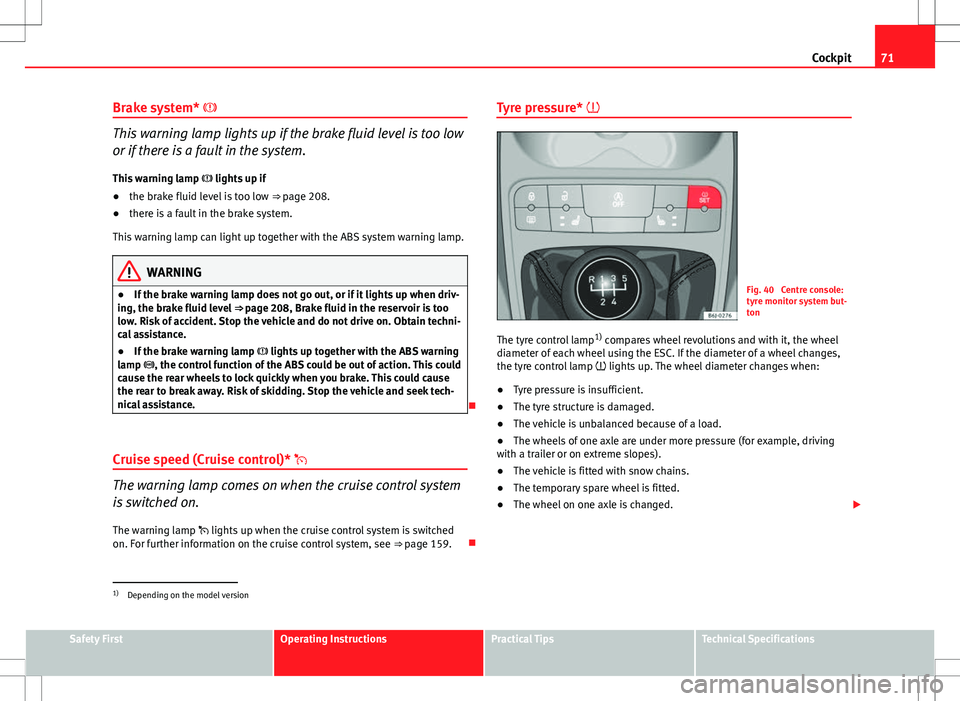
Fig. 40 Centre console:
tyre monitor system but-
ton
The tyre control lamp 1)
compares wheel revolutions and with it, the wheel
diameter of each wheel using the ESC. If the diameter of a wheel changes,
the tyre control lamp lights up. The wheel diameter changes when:
● Tyre pressure is insufficient.
● The tyre structure is damaged.
● The vehicle is unbalanced because of a load.
● The wheels of one axle are under more pressure (for example, driving
with a trailer or on extreme slopes).
● The vehicle is fitted with snow chains.
● The temporary spare wheel is fitted.
● The wheel on one axle is changed.
1)
Depending on the model version
Safety FirstOperating InstructionsPractical TipsTechnical Specifications
Page 74 of 280
72Cockpit
Tyre pressure adjustment
Following the modification to tyre pressure or changing one or more wheels,
the button ⇒ Fig. 40 must be kept pressed while the ignition is on until an
audible warning is heard.
If the wheels are under excessive load (for example, driving with a trailer or
heavy load), the tyre pressure must be increased to the recommended value
for a full load (see the sticker on the inside of the fuel flap). If the tyre moni-
tor system button is pressed down, the new tyre pressures are confirmed.
The tyre pressure control lamp lights up
If the tyre pressure of a wheel is much lower than the value set by the driver,
then the tyre pressure control lamp ⇒
will light up.
WARNING
● When the tyre pressure control lamp lights up, reduce speed immedi-
ately and avoid any sudden manoeuvre or braking. Stop when possible,
and check the tyre pressure and status.
● The driver is responsible for maintaining correct tyre pressures. For
this reason, tyre pressure must be regularly checked.
● Under certain circumstances (for example, when driving in a sports-
like manner, in winter conditions or on a dirt track) the tyre control lamp
may light up or function incorrectly.
Note
If the battery is disconnected, the yellow warning lamp lights up after
turning the ignition on. This should turn off after a brief journey. Speed selector lever lock*
The brake pedal must be depressed when this warning lamp lights up. This
is necessary when the automatic gearbox* selector lever is moved out of the
positions
P or N.
Fuel level/reserve
This symbol lights up to indicate that the fuel tank is under
the reserve level.
It lights up when only 7 litres of fuel remain in the tank. Moreover, an audi-
ble warning* is heard. It reminds you to fuel up the fuel tank as soon as
possible ⇒ page 189.
Indicates that the doors are open*
This warning lamp lights up if one of the doors or the rear
lid is open. The warning light should go off when all the doors are closed correctly.
Rear lid open*
The warning lamp should switch off when the rear lid is fully closed.
Page 107 of 280
105
Lights and visibility
Note
● The turn signals only work when the ignition is switched on. The corre-
sponding warning lamp or flashes in the instrument panel. The control
lamp flashes when the turn signals are operated, provided a trailer is
correctly attached and connected to the vehicle. If a turn signal bulb is de-
fective, the control lamp flashes at double speed. If the trailer turn signal
bulbs are damaged, control lamp does not light up. Change the bulb.
● The main beam headlights can only be switched on if the dipped beam
headlights are already on. The warning lamp then comes on in the instru-
ment panel.
● The headlight flasher comes on for as long as you pull the lever – even if
no other lights are switched on. The warning lamp then comes on in the
instrument panel.
● When the parking lights are switched on, the headlight and the tail light
on the corresponding side of the vehicle light up. The parking lights will on-
ly work if the key is removed from the ignition. If the lights are switched on,
an audible warning will be emitted while the driver door is open.
● If the turn signal lever is left on after the key has been taken out of the
ignition lock, an acoustic signal sounds when the driver door is opened.
This is a reminder to switch off the turn signal, unless of course you wish to
leave the parking light on. Interior lights
Front interior light
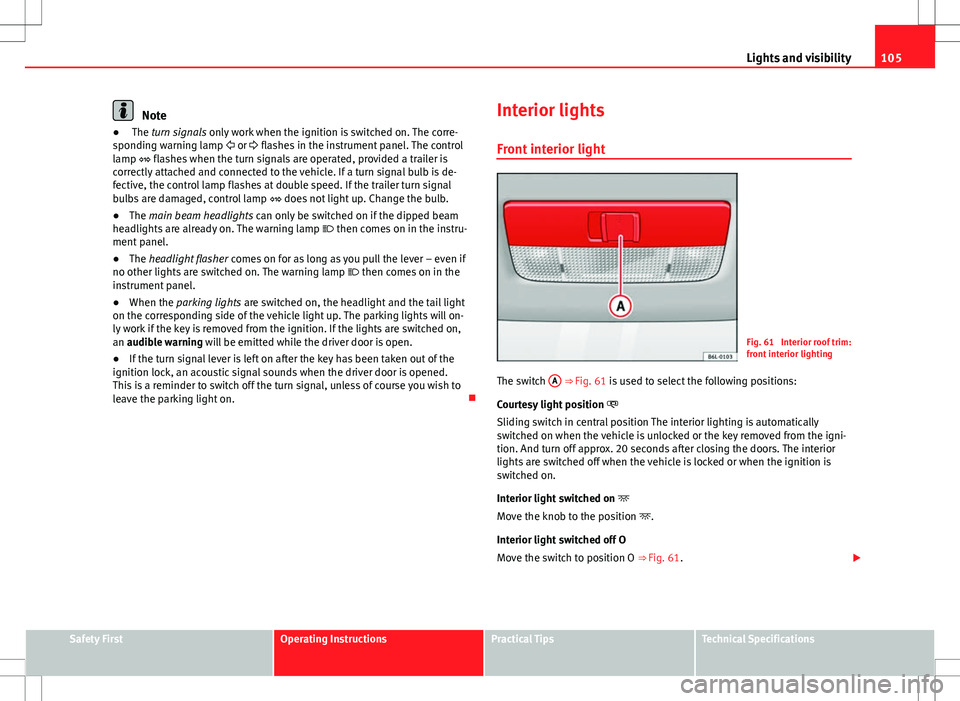
Fig. 61 Interior roof trim:
front interior lighting
The switch A
⇒ Fig. 61 is used to select the following positions:
Courtesy light position
Sliding switch in central position The interior lighting is automatically
switched on when the vehicle is unlocked or the key removed from the igni-
tion. And turn off approx. 20 seconds after closing the doors. The interior
lights are switched off when the vehicle is locked or when the ignition is
switched on.
Interior light switched on
Move the knob to the position .
Interior light switched off O
Move the switch to position O ⇒ Fig. 61.
Safety FirstOperating InstructionsPractical TipsTechnical Specifications
Page 141 of 280
139
Driving
Safety Electronic stability control (ESC)*
The ESC helps make driving safer in extreme driving condi-
tions.
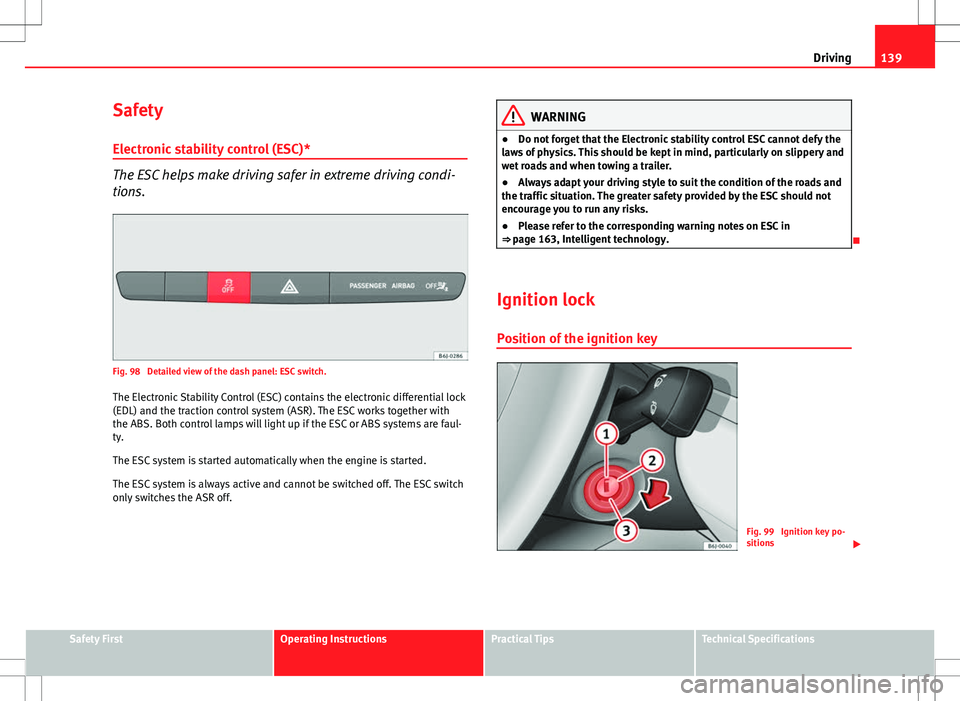
Fig. 98 Detailed view of the dash panel: ESC switch.
The Electronic Stability Control (ESC) contains the electronic differential lock
(EDL) and the traction control system (ASR). The ESC works together with
the ABS. Both control lamps will light up if the ESC or ABS systems are faul-
ty.
The ESC system is started automatically when the engine is started.
The ESC system is always active and cannot be switched off. The ESC switch
only switches the ASR off.
WARNING
● Do not forget that the Electronic stability control ESC cannot defy the
laws of physics. This should be kept in mind, particularly on slippery and
wet roads and when towing a trailer.
● Always adapt your driving style to suit the condition of the roads and
the traffic situation. The greater safety provided by the ESC should not
encourage you to run any risks.
● Please refer to the corresponding warning notes on ESC in
⇒ page 163, Intelligent technology.
Ignition lock Position of the ignition key
Fig. 99 Ignition key po-
sitions
Safety FirstOperating InstructionsPractical TipsTechnical Specifications
Page 147 of 280

145
Driving
Start-Stop function conditions
● The driver seat belt must be buckled.
● The bonnet must be closed.
● The engine must be at operating temperature.
● The steering wheel must be straight.
● The vehicle must be on flat ground.
● The vehicle must not be in reverse.
● A trailer must not be connected.
● The temperature of the interior must be within the convenience limits
( AC
button should be selected).
● The windscreen de-mist function must be off.
● If in an increase in airflow is not requested.
● The temperature must not be set to HI or LO.
● The driver door must be closed.
● The diesel particulate filter must not be in regeneration mode, for diesel
engines.
● The battery charge must not be low for the next start.
● The battery temperature must be between –1 °C and 55 °C.
Start-Stop function interruption
In the following situations, the Start-Stop function will be interrupted and
the engine will automatically start:
● The vehicle starts moving.
● The brake pedal is pressed several times in a row.
● The battery has been discharged excessively.
● The Start-Stop System is manually deactivated.
● The windscreen de-mist function is turned on.
● The temperature of the interior exceeds the convenience limits ( AC
but-
ton).
● If the airflow is increased by more than 3 presses. ●
Temperature setting HI or LO is selected.
● The engine coolant temperature is insufficient.
● The alternator is faulty, for example the V-belt has ruptured.
● If any of the conditions described in the previous section are not fulfil-
led.
WARNING
Never allow the vehicle to move with the engine off for any reason. You
could lose control of your vehicle. This could cause an accident and seri-
ous injury.
● The brake servo does not work with the engine off. You need more
force to stop the vehicle.
● Power steering does not work when the engine is not running. That is
why it is much more difficult to turn the steering wheel.
● Turn off the Start-Stop system when driving through water (fording
streams, etc.).
Note
● For vehicles with the Start-Stop function and a manual gearbox, when
the engine is started, the clutch must be pressed.
● When the conditions for the Start-Stop function are not fulfilled, the in-
strument panel displays the Start-Stop indicator dimmed.
● If the steering wheel is turned more than 270°, it will not be possible to
start the vehicle again. To start the vehicle, straighten the steering wheel so
that it is turned less than 270°.
Safety FirstOperating InstructionsPractical TipsTechnical Specifications
Page 159 of 280
157
Driving
WARNING
● If you do not start the vehicle immediately after taking your foot off
the brake pedal, the vehicle may start to roll back under certain condi-
tions. Depress the brake pedal or use the handbrake immediately.
● If the engine stalls, depress the brake pedal or use the handbrake im-
mediately.
● When following a line of traffic uphill, if you want to prevent the vehi-
cle from rolling back accidentally when starting off, hold the brake pedal
down for a few seconds before starting off.
Note
The Official Service or a specialised workshop can tell you if your vehicle is
equipped with this system.
Acoustic parking aid system* Rear parking aid
The parking aid system will use an audible warning to indi-
cate of the approach of any object towards the rear of the ve-
hicle. Description
The acoustic parking aid system will measure the distance between the rear
of the vehicle and any possible obstacle using four ultrasonic sensors loca-
ted on the rear bumper. The measuring range of the sensors starts approxi-
mately and depending on the nature of the obstacle at a distance of:
● side of the rear bumper: 0.6 m
● middle of the rear bumper: 1.6 m Activation
The system is activated by engagement of the reverse gear. A brief audible
warning confirms the activation and correct function of the system.
Reverse gear
The distance warning will begin as soon as an obstacle is detected by the
system. The frequency of the bleeps emitted by the system will increase rap-
idly as the vehicle approaches the obstacle.
After a distance lower than approximately 30 cm, a continuous signal
sounds (stop signal). The driver should not reverse any further.
Models with a factory-fitted towing bracket: When the vehicle is less than
0.35 m away from the obstacle the warning tone will sound continuously.
The driver should then not reverse any further.
The warning tone decreases by 30% after 3 seconds from the start of the
system.
Provided that it is not in continuous mode, the tone on the parking aid sys-
tem stops when it detects a wall parallel to the vehicle.
Trailer towing
For vehicles factory-fitted with a towing bar, the parking aid system will not
be activated by the engagement of the reverse gear when pulling a trailer,
as the trailer's electric connector will be plugged into the vehicle.
Possible faults
If a continuous beep sounds for some seconds when the reverse gear is en-
gaged, this indicates that there is a fault in the parking aid system.
If the fault continues until the ignition is turned off, the audible warning of
the fault will not be emitted every time the system is reactivated (by engag-
ing the reverse gear). Thus, the system ready indication will not sound ei-
ther. Have the fault repaired by a Technical Service as soon as possible.
If there is no ready signal or no acoustic warning signal, then the parking
aid loudspeaker is faulty and may not warn of obstacles.
Safety FirstOperating InstructionsPractical TipsTechnical Specifications